Rodeo Life

Author: Siri Stevens

  • On The Trail with Justene Hirsig

    On The Trail with Justene Hirsig

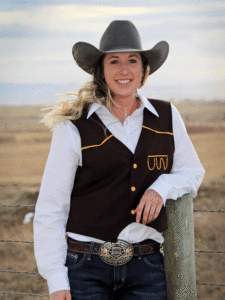
    Justene Hirsig from Cheyenne, Wyoming, turned 21 a year ago, and it’s been a great year for her. She won The Wrangler Team Roping Championships All Girl roping with Jimmi Jo Montera as well as second with Lee Sherwood. “I was first, second, and third high call,” she said. She also took third place in the Central Rocky Mountain Region with her partner, Denton Shaw, and is currently sitting ninth in the nation in the college standings and the only woman in the top ten.

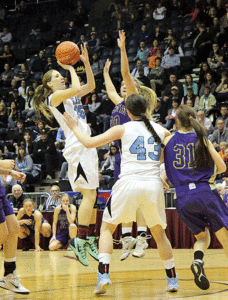
    She started roping when she was in eighth grade. “My dad (Tom) let us start chasing calves around the arena when he was still tripping steers. My sister (Jordan) and I started when I was about 8 – that lasted for a summer, but I didn’t get into it until later. I didn’t like it too much – I played basketball.” Justene played point guard and several other positions during her time on the court. “That was my first love.” She did both rodeo and basketball, and was leaning more towards rodeo when she received an offer to play basketball for Casper College. “I wanted to see if I could make it in the basketball world. I knew rodeo would be there forever.” She hurt her knee during practice and had to sit out for the year. After knee surgery in January of her freshman year, she called it quits. “I had another surgery last November.” Basketball played a huge role in what she’s accomplished. “I’ve had some tough coaches and they taught me how to put aside everyone else’s thinking about you and perform well. I took that from playing college basketball to rodeo – it’s the same thing –if you don’t perform well, you don’t get paid. It doesn’t matter what anyone thinks. I’ve played in a lot of close games and you have to perform when things are tight and you only have a few minutes to pull it off. That’s helped in short rounds. I can talk myself into it’s just another steer.”
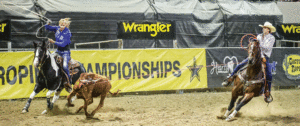
     

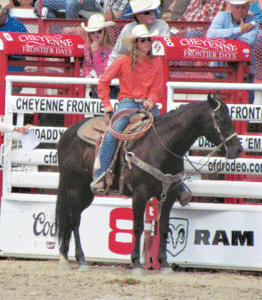
    The rodeo world is a very familiar place for Justene; she grew up going to Cheyenne Frontier Days. “My dad’s great great uncle (Charles Hirsig) was one of the cofounders of CFD. My family has been in the arena ever since. I’m carrying on the family tradition, picking up flank straps, or shagging cattle. I help where I can; I’m there every day.” Her dad is the CEO and President of Cheyenne Frontier Days. He is also the one Justene attributes her success in rodeo to. “He taught me how to rope and he knows so many people that have helped me – Tyler Magnus, Bobby Harris, JD Yates, Rod and Stephanie Lyman, and Rick and Jimmi Jo Montera – and he puts me on amazing horses.”

    “The thing that always amazes me about Justene is how well she rides. She sits a horse picture perfect. That has always been her best attribute when it comes to improving her skills. Denton Shaw doesnt get the credit he deserves sometimes because he is amazing in his consistency and dedication. They have been partners almost their entire careers and is one of the biggest parts of her success. A great young man,” said Tom Hirsig. She works on her mindset by reading books – one of her favorite authors is Joel Osteen – and one of his that she reads often is ‘You Can, You Will.’ “My mom (Debbie) always gets me set up with books.” Her mom also helps with lots of other things. “Mom hasn’t missed church in more than ten years. Whenever I’m struggling, she encourages me to go to church and pray about it. She’s always praying for me as a person – my mother is the backbone of everything.” She also pulls the machine around, turns out calves for breakaway roping, and does whatever needs doing to help Justene succeed. “Without my mom, none of this would be possible. I’ll ask her to turn calves or steers and anytime of the day she says yes. If a horse needs reshod or hauled to the vet, she does it. Without her, we wouldn’t be able to do this. She sends me books to read and finds churches for me to go to on the weekends.”
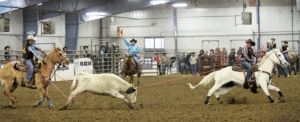
     

    “My dad gets me well mounted and I have that – and I’m blessed.” During the six-week long break at the University of Wyoming, after a short vacation, she and her dad headed to Arizona to rope for a few weeks. “My dad and I kept a horse for each of us in Arizona, and they were put on the walker every day and we’d fly back to rope. I think that’s a big part of my improving my roping.”

    She transferred to UW two years ago, pursuing a degree in business financing. “My plan is to get a pretty good degree here so I can have the lifestyle that affords me to go to Arizona in the winters. I wouldn’t want to live there year round.” She has two years left on her rodeo eligibility and plans to make the most of it. “I sold horses when I was heading to basketball, and after two knee surgeries, the last year didn’t go so well. Now I’m roping with Denton Shaw – it’s been great. We roped together in high school for three years and qualified for Nationals, and we decided to rope together this year. We figured we did well in high school and tried it in college and we’ll rope at the CNFR.”

    She sent her horses home so she could finish her finals. When she finished, she headed home to practice. “We have 22 to rope on. I have five head horses to practice on so I should be good.” She is excited to back into the box in Casper for the CNFR. “Making it is an end result of roping well in the college rodeos, and I’m looking at it as another rodeo. It’s going to be cool to make it there, but I’m going to rope like I always do – four more steers. I rope 50 a day if not more so that will be easy.”

    Long term she plans to continue roping. “I want to be one of the best girl headers that’s on the road. I’d like to start getting into horse training and horsemanship – that’s something I want to work on. I don’t know what I want my job to be when I grow up – but I want to be one of the wellknown ropers.”

    “Choose to dwell on thoughts that empower you, inspire you, and encourage you to have faith, hope and joy.”
    “I’m around a lot of the people trying to make it to the NFR and it’s not something I’d be opposed to. If I wanted to try after college, I think it would be cool to do,” she concluded. “I have tons more to improve –and I just got moved to a #6, and I’ve worked hard to get there.”
  • On The Trail with Red Top Ranch Trick Riding School

    On The Trail with Red Top Ranch Trick Riding School

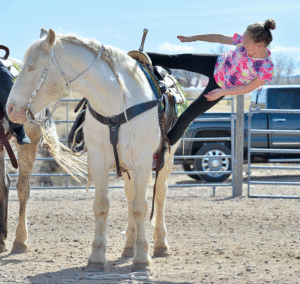
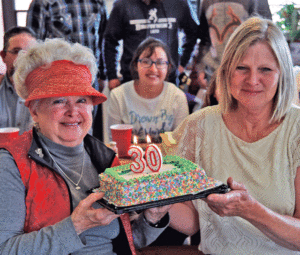
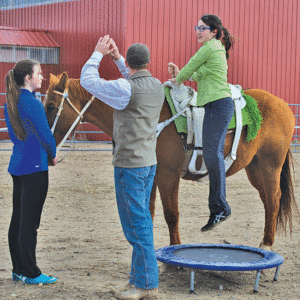
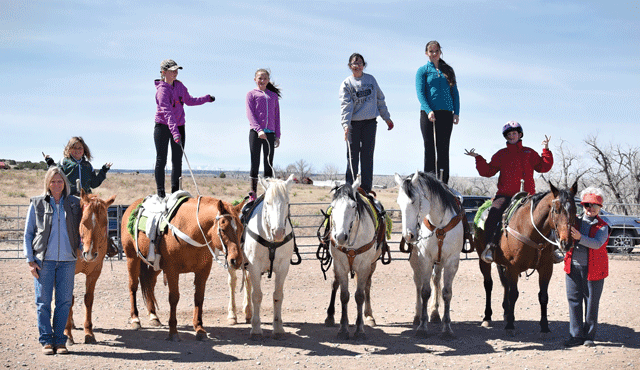
    Red Top Ranch Trick Riding school celebrated its 30th years at the Vold Ranch in Avondale, Colorado, this past March. Taught by Karen Vold and Linda Scholtz, a total of 28 students attended one of the four schools. Students traveled from Alaska, Oklahoma, Wisconsin, Pennsylvania, and New York and several other states to attend the three day school.

    Karen learned how to trick ride when she was young, “I learned from a lady that worked for us at the riding stables. I trick rode for a living from 14 to 27, when I went to work for Harry,” said Karen. “When I started going on the road, I didn’t have time to do it, so I started teaching.”
    Linda came to work for Karen when Karen and Harry’s daughter, Kirsten, was 5. She and her husband, Paul, did the church services and Linda taught Sunday school. She learned to trick ride from Karen in 1978. “I was watching Karen teach Kirsten and I’d never seen it before. I wondered what it was.” Karen told her that she would teach them both. That went on for a year before Linda decided to ride professionally and she got her card in 1980. She and Paul took off for 27 years, part of the All American Trick Riders (Vickie Tyer and Lori Orman). “I fell in love with it,” said Linda. She and Paul continued their ministry at rodeos all over the country.


    Linda rode with the All American Trick Riders for 14 years, and during that time someone wanted a lesson. “We started with one lesson in 1987. After that it started rolling along. It started with one weekend,” said Linda. “When we became an official school, we did them for a week. We coordinated it with the local spring break. We advertised a little and it snowballed from there.”
    Many of the staff were former students; one from Scotland, who came as a student, is still coming over once a year to rekindle friendships and teach the next generation. Lorna Campbell, from Trinty Gask in Scotland, came ten years ago. “I used to do vaulting and I was too old, and I’d seen it and it looked fun. I ended up getting a couple horses at home and continued.” She shows her talents at Agricultrual shows and Highland games. Unfortunately rodeo is illegal in Scotland, so she isn’t able to trick ride at those events.” Now the clinical trial monitor takes almost a month off to come over and visit and help train the next generation of trick riders. One of her trick riding friends, Mellissa Pfaff, from Broomfield, Colorado, started coming to the class when she was 15.

    Mellissa has a BA, four Masters degrees and is midway through her PhD in Education. She teaches high school science and takes time out of her schedule to come every weekend and help. After learning the art, Mellissa went and trick rode all over the country and ended up working for Cavalia for a year and a half. “We worked all over the Us and Canada. “I keep coming back because I love teaching and Linda and Karen changed my life – I’m a better person – trick riding has led me to everywhere I’ve been in my life. It’s a part of my identity.”


    The school is open to anyone seven years old and up and any level of experience. “We’ve had students as old 0as 48,” said Linda. “In the past, we’ve had several mothers who gave it a try.”

    “It’s harder than it looks,” said Karen. “But by the end of every school, everyone has mastered at least one trick. “We have people from Wisconsin who say this is the best vacation we had as a family.”

    Bob Brenner, from Pikes Peak Saddlery, comes one day during the school to help with straps and whatever the students need for the saddles, which belong to Karen and Linda. Linda brought all the horses.

    The staff consists of Aaron and Isaac Johnson – brothers. Mellissa and her sister, Mimi, and Lorna, Cory Young, Aaron and Isaac’s mother, Debbie, is one of the cooks, along with Karen’s lifelong friends, Bobbie Fritz. Gail Shivelry also helps in the kitchen along with Cindy Robinson.
    “We started this in the first place so the art wouldn’t die, and we’re still doing it,” said Karen. “We have really and truly a fabulous staff and they come back every year. I don’t know why they keep coming. Cory finds ways to share the Word through the avenue of trick riding. “We always have a church service at the last day of the school – It’s shocking when you see students that you had and they introduce you to their kids. It’s hard to imagine it’s been that many years.”

  • RODEOHOUSTON®

    RODEOHOUSTON®

    Courtesy of Houston Livestock Show and Rodeo

    RODEOHOUSTON® CHAMPIONS TAKE HOME THE $50,000 PRIZE DURING THE 2018 SUPER SERIES CHAMPIONSHIP — MARCH 17, 2018 — HOUSTON — FOR IMMEDIATE RELEASE — Eight RODEOHOUSTON 2018 Champions added another $50,000 to their previous winnings during the RODEOHOUSTON Super Series Championship Saturday, March 17.

    TIE-DOWN ROPING                         

    Tyler Milligan of Pawhuska, Oklahoma, won the RODEOHOUSTON Super Series Championship in Tie-Down Roping. Milligan said it is hard to put into words how blessed he feels to be here at RODEOHOUSTON for the first time and win.


    “Winning here in Houston means more than the money,” Milligan said. “This is such a prestigious Rodeo, and it is very humbling to win here.”


    Final Four Winners (total RODEOHOUSTON 2018 winnings):

    Tyler Mulligan: Pawhuska, Oklahoma — $56,000

    Randall Carlisle: Athens, Louisiana — $24,875

    Marcos Costa: Childress, Texas — $17,000

    Tuf Cooper: Decatur, Texas — $11,000

    Heith Demoss – photo courtesy of Houston Livestock Show and Rodeo

    BAREBACK RIDING

    Clint Laye of Pocatello, Idaho, won the RODEOHOUSTON Super Series Championship in Bareback Riding after advancing from the Wild Card Round. Laye said after he got off his horse he knew he had a good ride, just did not know how good.


    “My mind is going a million miles per hour and I know it is going to take a couple of weeks to really sink in,” Laye said.


    Final Four Winners (total RODEOHOUSTON 2018 winnings):

    Clint Laye: Pocatello, Idaho — $57,250

    Bill Tutor: Huntsville, Texas — $27,000

    Will Lowe: Canyon, Texas — $14,000

    Orin Larsen: Inglis, Manitoba, Canada — $9,250


    TEAM ROPING
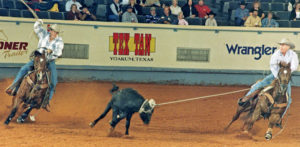
    Matt Sherwood of Pima, Arizona, and Walt Woodward of Stephenville, Texas, won the RODEOHOUSTON Super Series Championship in Team Roping after advancing from the Wild Card Round with an arena-record time of 4.0 seconds. Sherwood said after competing in Houston for 15 years, the feeling of winning is like no other.

    “I’m 48 years old and I feel better than ever after winning, even though I can’t see very well,” Sherwood said.

    Final Four Winners (total RODEOHOUSTON 2018 winnings):
    Matt Sherwood: Pima, Arizona, and Walt Woodard: Stephenville, Texas — $112,000

    Kaleb Driggers: Stephenville, Texas, and Junior Nogueira: Burleson, Texas — $45,000

    Cody Snow: Stephenville, Texas, and Wesley Thorp: Stephenville, Texas — $43,500

    Dustin Bird: Cut Bank, Montana, and Jake Minor: Milton-Freewater, Oregon — $21,000


    SADDLE BRONC RIDING

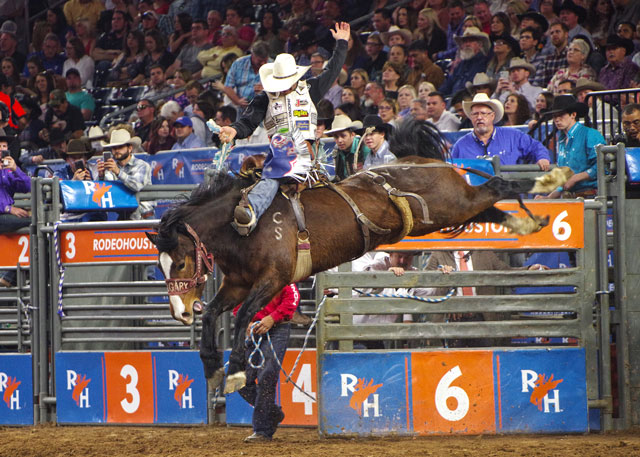
    Cody Demoss of Heflin, Louisiana, is now a two-time RODEOHOUSTON Super Series Saddle Bronc Riding Champion, after his win tonight. Demoss said he remembers competing in the Astrodome like it was yesterday, but there is still nothing like winning at this Rodeo.


    “Praise God! I thank the Lord for this opportunity today,” Demoss said. “It still hasn’t sunk in quite yet.”


    Final Four Winners (total RODEOHOUSTON 2018 winnings):
    Cody Demoss: Heflin, Louisiana — $56,250

    Wade Sundell: Coleman, Oklahoma — $27,000

    Ryder Wright: Beaver, Utah — $16,000

    Zeke Thurston: Big Valley, Alberta, Canada — $12,875


    STEER WRESTLING

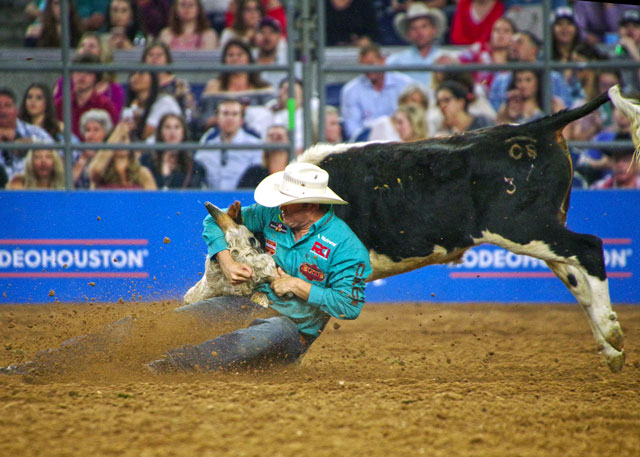
    Timmy Sparing of Helena, Montana won the RODEOHOUSTON Super Series Championship in Steer Wrestling. He said he started to Rodeo because of John Wayne, and the childhood dream of Rodeo came true tonight.


    “The Rodeo is amazing,” Sparing said. “It’s life-changing. The committee, the crowd, it’s awesome.”


    Final Four Winners (total RODEOHOUSTON 2018 winnings):
    Timmy Sparing: Helena, Montana — $53,500

    Scott Guenthner: Provost, Alberta, Canada — $26,000

    Tyler Pearson: Louisville, Mississippi— $15,500

    Baylor Roche: Tremonton, Utah — $11,500


    BARREL RACING

    Nellie Williams-Miller of Cottonwood, California, won the RODEOHOUSTON Super Series Championship in Barrel Racing. Williams-Miller is a mother whose children watched her win tonight, and she said she owes the win to her horse, Sister, whom she described as willing, honest and consistent.


    “I was raised in a Rodeo family,” Williams-Miller said. “I started running barrels around [age] 12 and kept it up.”


    Final Four Winners (total RODEOHOUSTON 2018 winnings):

    Nellie Williams-Miller: Cottonwood, California — $58,750

    Hailey Kinsel: Cotulla, Texas — $27,000

    Carley Richardson: Pampa, Texas — $18,000

    Fallon Taylor: Collinsville, Texas — $15,000


    BULL RIDING

    Parker Breding of Edgar, Montana, won the RODEOHOUSTON Super Series Championship in Bull Riding. Breding said he could not have imagined being here at RODEOHOUSTON today, even though he grew up in rodeos and his father was a bull rider who also rode at RODEOHOUSTON.


    “I couldn’t have imagined being here in these shoes today. Rodeo has been part of my life forever and I’ve always been infatuated with it,” Breding said. “Probably first thing I’ll do is call my dad.”


    Final Four Winners (total RODEOHOUSTON 2018 winnings):
    Parker Breding: Edgar, Montana — $57,500

    JW Harris: Goldthwaite, Texas — $27,500

    Cole Melancon: Hull, Texas — $13,750

    Aaron Pass: Kaufman, Texas — $12,250


    The RODEOHOUSTON Super Shootout: North America’s Champions® presented by Crown Royal, will close the show on Sunday, March 18.

  • Back When They Bucked with Howard Haythorn

    Back When They Bucked with Howard Haythorn

    Horses have been part of Howard Haythorn’s life since he was a kid. Actually, they run through the genes of his family. Haythorn, a National Finals Steer Roping contestant, grew up on the back of them, rode them for rodeo, and raised and trained them.
    The Maxwell, Neb. cowboy was born in 1927, the great-grandson of Harry Haythornthwaite, a stow-away on a ship from England to America in 1877. When the captain found the sixteen-year-old boy and discovered the boy was raised on a farm, he was assigned to care for the Hereford cattle on the ship. When he arrived in America, he eventually made his way to Ogallala, Neb., where he shortened his name, married, and began the family tradition.
    Howard, the son of Harry Jr. and Emaline (Menter) Haythorn, was born in 1927 north of Ogallala. When the Kinglsey Dam was built in 1941, part of the Haythorn ranch was taken for the dam, and Harry Jr. split the cattle with his brother Walter and headed east to Maxwell, Neb., to begin his own ranch. Harry Jr.,’s ranch was the Haythorn Ranch Co. (not to be confused with his brother Walter’s ranch, the Haythorn Land and Cattle Co., north of Ogallala, and now owned by Walter’s grandson Craig Haythorn.)
    Before he could drive, Howard was calf roping at rodeos with his Uncle Walter. Uncle Walt, a saddle bronc rider as well as a roper, would load him up and take his nephew with him. There was no high school rodeo in those days, so they competed together at local shows. In addition to calf roping, Howard showed cutting horses and team roped.
    He attended high school at St. John’s Military School in Salina, Kan., (“my mother thought I needed more direction,” he quipped), graduating in 1945. He had an appointment to the U.S. Military Academy in West Point, but his dad died when he was nineteen, and he was needed on the ranch.
    Then Uncle Sam called; Howard went to Korea, serving for eighteen months, and “I saw all the action I wanted to see.”
    When he came home, his rodeo career was about to change. Waldo, Walter’s son who was also a roper, told him, “You can throw away your calf rope. I found us a new sport. We’re going to start tripping steers.”

    The two of them, fast friends, began their rodeo career together. They had the natural talent to rope, and the horse power, but they got some additional help from a world champion. Three-time world champion steer roper Ike Rude spent several summers at the Haythorn Ranch, teaching Waldo and Howard the intricacies of steer roping, while they trained his horses. They rodeoed together, the three of them competing, with Waldo and Howard sharing a horse in the early days.
    In those days, nearly every little town had a rodeo, but not all of them had steer ropings. The two of them traveled near and far, hitting the local shows but also going as far as Cheyenne Frontier Days and Pendleton, Oregon.
    Howard competed at the National Final Steer Roping in 1959 and 1963, finishing fourth in the average and twelfth in the world in 1963. The prior year, he and Clark McEntire flagged the finals. Waldo qualified for the NFSR four times (1958, 1960-61, and 1963).
    The two also competed in a lot of match ropings, which were common back then. Entry fees might range from $300 to $500, usually with no purse, and only ten to twenty competitors. The matches might be four or six head, and they paid on the rounds and the finals.
    Howard raised and trained nearly all of his roping horses. The best steer roping horse he ever had was a black horse, Little Pick, who started as a tie-down horse. When he and Waldo started steer roping, he turned Little Pick into a steer roping horse. “You could do everything on him,” Howard said. Howard roped right handed on him, and Craig, Waldo’s son, roped left handed on him. Pick was a kind, gentle horse, and when he got some age on him, Howard gave him to three little neighbor girls to show in 4-H. A few years later, at a jackpot in North Platte, Howard’s horse wasn’t doing so well, so he called the girls’ dad and asked him to bring the horse to town. Howard won the rodeo on Pick, the girls lost their 4-H horse, and Pick got turned out to pasture, never to leave the ranch again.
    He loved all the rodeos, but two especially stick out in his mind. Pendleton was a favorite, because of its grass arena and no chutes. But when he was roping calves, the Ak-Sar-Ben rodeo in Omaha, Neb., was the best. They provided each contestant with a twelve-foot box stall, a forty-acre polo field on which to exercise horses, a sack of oats, a bale of hay, and straw.

    Howard bought his Rodeo Cowboys Association card before he went to Korea in 1951, but the ranch and his family were his first priority. He married Sue Ann Cochran the same year, and after competing at the NFSR in in 1963, he slowed down, not rodeoing full time after that. “I never intended to go to the National Finals (Steer Roping). That was not my deal. I had a ranch to run. I just went because I had the chance.”
    The Haythorn Ranch was known for its Herefords and its horses. Harry Haythornthwaite, the English stow-away, had gathered 500 head of horses from Burns, Ore. in the late 1800’s and railed them to Nebraska. Howard continued the tradition of raising, training and selling quarter horses on the approximately 20,000 acre ranch in the Nebraska Sandhills. The operation has about 1,500 cows and replacement heifers, and 20 to 30 mares that are bred to four stallions.
    Waldo and Howard were best of friends, Howard said, “probably closer than if we’d have been brothers. We never had an argument. I could tell him what I wanted, and he could tell me, and it didn’t bother either of us.” They were cousins, but also brothers-in-law, having married sisters. The two traveled together till Waldo suffered a stroke in 1989. Howard said, “If he can’t go, I quit. I didn’t want to go if he couldn’t go.”
    Howard and Sue Ann, who passed away in 2010, had three children: Mary Helen, Margaret, and Harry Byron. Mary Helen passed away in 2015. Margaret is married to Darrell Ruh, and they live in Kenesaw, Neb. Harry Byron and his wife Londa live just a quarter-mile east of where Howard lives. “He comes to the ranch every morning,” Harry said, “to check on us, to make sure we’re out of the bunkhouse and doing our job.” Howard plays cribbage in Brady, a small town near the ranch, and occasionally rides. Last year, he went to ride with his eight-year-old great-grandson, Harry Edward, and Howard asked one of the ranch cowboys to saddle his horse for him. The cowboy didn’t want to, saying he’d get in trouble. Why? Howard demanded. Harry and Londa don’t want you to ride anymore, was the answer. Howard told him, “if you don’t saddle my horse, you’re going to get in trouble with me.”
    In 2009, Howard was honored by the AQHA for breeding American Quarter Horses for 50 consecutive years. The ranch won the AQHA’s Remuda Award as well. Howard is an inductee in the Hall of Great Westerners at the National Cowboy and Western Heritage Museum in Oklahoma City, and he was given the 1983 Trail Boss Award from NebraskaLand Days in North Platte. He is a gold card member of the PRCA. He, his father, and his grandfather have all been inducted in the Nebraska Sandhills Cowboy Hall of Fame.
    Life has been good: his rodeo friends, school friends, and ranching. “That’s all I’ve ever wanted to do,” he said. “I’d starve to death, doing anything else. I’ve enjoyed everything. I’ve enjoyed it all.”

  • The Buck Starts Here

    The Buck Starts Here

    Corporate Partnership

    It’s not just about putting your hand out.

    Corporate sponsorship is a two-way street; the sponsor and the sponsored both have goals. We’re here to help you meet those goals.

    Dave Jordan is the corporate partnership coordinator for several organizations, including two NASCAR teams, horse organizations and the WPRA. He grew up in Colorado Springs, and spent five years with Randy Bernard and the PBR. When Randy left the PBR, Dave moved on to the PRCA, and ended up starting his own consulting business.

    Steve Gander has years of experience in rodeo production and marketing. He wrote a column for Rodeo News called the Business of B.I.T.S. (Butts in the seats)

    We will deliver a column once a month combining these two expert opinions and welcome your input.

    Our goal is to teach you how to compete for Corporate Partnership dollars and how to put together strategic marketing plans for events and associations. We’ll address things from marketing strategies to timelines, and to how to effectively locate partnerships and close the deal.

    His first word of advice? Don’t get caught up in excessive pride about an event. Be realistic. Would you rather have 10 sponsors at $500 a piece, or none at $5,000? It all goes in the bank, plus you have the opportunity to upsell them the following year if you do a great job with your clients. Businesses are inundated with those who use the hand-out approach without delivering anything in return … even on a local level. When presenting a partnership, remember that partnerships of varying “levels” (gold, silver, bronze, etc.) went out in the 1990s. The days of slapping up an arena banner and doing a PA announcement and expecting thousands of dollars are gone. Potential Corporate Partners expect you to create a package that best helps them leverage their brand and accomplish their Corporate goals and objectives.

    The best approach is a PowerPoint, ending with a summary slide to showcase what you have to offer. Allow the company to put together a package that works best for them.

    The best partnership options out there are local businesses. To present to them, email the PowerPoint to the business (it has to get to the right person) and follow that up with a phone call to set up a meeting.  On the national level, you have to have a connection within the company to get someone to pay attention to you – that’s the only way they are going to do it.

    If you plan to hire someone to help, you need to be prepared to give them a stipend each month to cover their time. A minimum of $500 to $1,000 a month plus 15 percent is what is required to shop your event out.

    First Things First

    Before you even begin strategizing, building a PowerPoint presentation is critical. The days of sending out sheets of paper went out in the 90s. I am amazed at how many people still use that method. Take that information and put it into a PowerPoint that tells your story.


    It has to be fresh. Come up with a slide background that pops – avoid plain white, black, or red. Remember: You have three to five minutes to capture your prospect’s attention.

    The cover slide should simply be the name of your event across the top of the screen, a logo underneath, and the words “Corporate Partnership Opportunities” at the bottom. Add a “Presented to” line, and type in the name of the company you are sending it to.

    In the very bottom left, list the name of the presenter (likely you), and in the opposite corner, place the logo of the organization or event to whom you are presenting.

    Second slide: If you have the resources to add a 30-45 second action clip from your rodeo, great. If not, this is an “About Us” slide, giving a history of the rodeo. A short paragraph here is perfect.


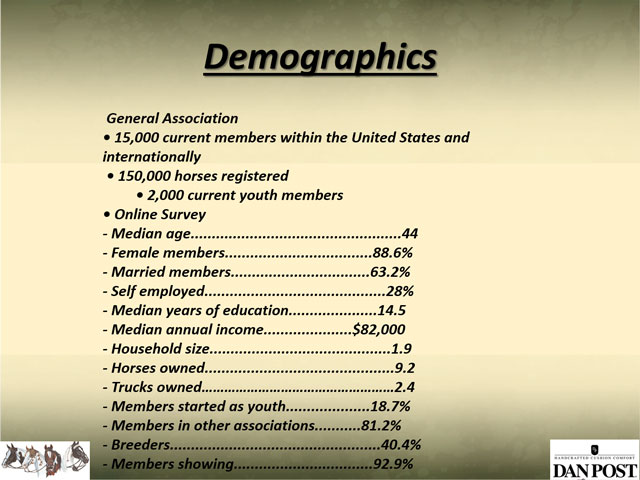
    The third slide is about the demographics – the real teeth of your presentation. Scarborough Multi-Market is a demographics leader, and a valuable resource. You can also send out questionnaires to members and have someone floating through the stands with a clipboard to begin collecting the kinds of statistics you need.


    The fourth slide is the place to go into signage. This is where you have photo examples of the chutes, arena and out-gates to give a visual presentation of the opportunities available. You want to have enough room to cut and paste your prospect’s logo onto the images – break this into two slides for clarification if you need to. It’s imperative to use a clear photo and make sure you can get their logo in.

    The fifth slide should be printed program opportunities. This is an area that is often lacking. Many rodeo programs are simply an avenue to place sponsor ads, and contain no editorial information of value. Here is where you can share the history of your rodeo, information about the contestants, photos from past rodeos, information about additional events, schedules, and other items of interest. This information will make your rodeo program much more readable, collectible and valuable. We’ll talk about this again in a later article.

    The sixth slide should explain VIP seating and hospitality. If you don’t offer this, you should. Here, you would put a photo of the designated VIP area, saying, “Special area for you and your valued clients and dealers.”


    We will cover the summary slide in the next issue, but for now, the value of the PowerPoint cannot be underestimated. Keep it short and to the point, with great images, to define the opportunities at your event.

  • Back When They Bucked with Audrey Griffin

    Back When They Bucked with Audrey Griffin

    Audrey Griffin grew up in the silver-screened atmosphere of Santa Monica, California, but she was destined for the dusty and daring show business of the arena. Her father, Ray O’Brien, was the head of the property department for MGM Studios, and her mother, Hazel O’Brien, was a hairdresser to the stars. Her older brother, Douglas O’Brien, became a firefighter and later worked for MGM Studios as well, and though their parents never encouraged Audrey to enter the movie industry, her head was already turned to the equine world. “When Mother would take my father to work in the car, I would go along with her as a youngster,” Audrey recalls. “There was a little pony ride on Venice Boulevard, and I’d jump up and down and say I wanted to ride the ponies. I think I was born with the passion of horses, and I still have that passion.”
    When she was 11, Audrey went riding with her father at Sunset Ranch in nearby Culver City. A girl near her age, Sis Smith, guided them on the trail ride, then invited Audrey to come back and spend the following day with her. “If it wasn’t for her, I wouldn’t be where I am today. She taught me how to Roman ride and drive wagons and tie a bolen. We’re still best friends.” Her first time to ever ride Roman — standing with one foot on the back of each horse — Audrey loped and jumped the team with ease. “It was not hard at all. Either you’re a natural and you can do it and you have the will to do it, or you can’t do it at all. You have to be gutsy to jump those big jumps.”

    Sunset Ranch became her second home, and Audrey and Sis provided the specialty act for the Sunday rodeos the ranch put on. “I Roman rode the team I drove hay wagons with — they were big and slow — and Sis had two quarter horses, so she always won the race.” Audrey also started working at the stables, giving riding lessons and driving hay wagons for birthday parties. “I think I got paid 25 cents an hour, and I got a dollar for harnessing the team and a dollar for driving the hay wagons, so some days I could make seven dollars.” She even drove a route from Culver City to UCLA when she was 16. “I would stop at the frat houses, and the guys and girls would get off and new kids would get on. I drove right down the thick of Wilshire Boulevard and up Veteran, right to UCLA. It was 1952, and I would get home at about midnight, but everything was so safe then.”
    Audrey’s world rapidly expanded beyond California when she was invited to perform with The Flying Valkyries, a troupe of three girls and six white horses who traveled throughout the United States and Canada performing in rodeos and horse shows. “One of the girls broke her ankle, and I was the only other young lady at 19 that knew how to Roman ride and jump, so they invited me to go with them. We were chaperoned by Sidney Hall’s mom, Lois. After talking about integrity and morals and church on Sunday, and the things you talk to parents about, my mother finally let me go. My parents were the most fabulous parents ever.”
    Their first rodeo just two weeks away in Lake Charles, Louisiana, The Flying Valkyries practiced twice a day. “When I traveled with the Valkyries and we jumped two horses, the jumps were four feet two inches, and the other jumps with three or five horses abreast were about three feet. I would sleep, eat, and dream the perfect jump, and when you get that perfect jump, it’s totally euphoric. We were very unique,” Audrey adds. “Cotton Rosser said we were the best act going down the road at the time. We worked a lot for him, Harry Knight, the Steiners, and many other stock contractors.”
    Seven horses, a dog, and the girls’ suitcases traveled in a red semi announcing The Flying Valkyries in white lettering across its trailer. They traveled nearly nine months out of the year, and the girls were responsible for all of the horse care. “It was something we all loved to do,” says Audrey, whose Roman team consisted of Lady, a white Arabian, and Sunbeam, a white quarter horse. After jumping Lady and Sunbeam, another horse was added to Audrey’s team, then two more, until she was jumping five abreast. During the second act, she came out driving six horses, standing on the two at the back, called wheeler horses, and jumping obstacles on both sides of the arena. “I had six lines, three in each hand. The reins for the horses I was standing on were like roping reins, and the other four were lines I would just take a tight hold of, and I could pretty much guide them wherever I wanted to go. They told me what to do if I had a runaway, but that’s something you never practice, so I had to remember. In Billings, Montana, they put up sawhorses for the arena, and after the first jump, my team saw a space that two horses could go through and they took off. I was thinking, ‘My parents are spending their 25th wedding anniversary here, and they’re seeing their daughter running off into the sunset!’ I’d been told to drop the four lines and pull up my wheeler horses so they’d sit back on their heels, never knowing if that would happen, but it works. I stopped the horses and gathered the reins up, and I drove back into a standing ovation.”

    Audrey performed with The Flying Valkyries for two years, 1956–1957, then went to work at Campbell’s Clothing Store briefly. The following year, she and the other Flying Valkyries were invited to perform in the Wild West Show and Rodeo starring Casey Tibbs in Brussels, Belgium. “I was there for two months performing, and it was a wonderful time. All the horses and cattle they flew over in stock planes, and then the cowboys and cowgirls flew from LAX to Denver to Brussels.” The Wild West Show and Rodeo featured today’s standard professional rodeo events, along with pole bending, square dancing on horseback, and performances by the trick riders and a number of Native Americans. In addition to performing daily at their arena, formerly a bombed-out gas shelter, Audrey and the other trick riders helped in a variety of ways, from caring for the horses, to entertaining visitors, including American actor, dancer, and politician, George Murphy, and his family. “You had to be really cordial, and it was important that you got along with everybody, because we were kind of a close-knit family,” Audrey recalls. “We stayed in little boarding houses for a while, and then moved closer to the rodeo grounds in a big apartment building. We had drivers to drive us to the rodeo grounds, and we did a lot of sightseeing too.”
    Audrey returned to work at Campbell’s Clothing Stores once she was back in Santa Monica, and married Dick Campbell in 1960. They had six children, though sadly, their young son passed away. “I was a full-time mom, and I would take my kids riding. I didn’t have my own horse until I was 50. I would take my youngest with me, and I would put a pillow in front of me and they’d sit on the pillow. When they got older, they’d sit behind me. I rode one or two days a week, and I had friends that wanted me to exercise their horses for them, which worked out really nice.”
    Audrey remarried, and she and her second husband, Gary Griffin, who had seven children of his own, moved to the Santa Ynez Valley in 1991 and were married for 12 years. In 1986, Audrey bought her very first horse, a Thoroughbred off the track, and she was given a quarter horse that she started team penning, roping, and sorting on. “I kept my first horse out at Glen Randall’s place in Newhall, and he and his wife, Lynn, were fabulous people. They trained all the Triggers and Black Beauties — any horse that sat in a car was trained by Glen. He taught me how to do a chest letdown with my horse, which is like a bow. I eventually bought a reining cow horse, and I did that for 10 to 12 years. It was really fun, and reining cow horse really puts the icing on the cake as far as your riding goes. Now I do a lot of team roping, and I go to a lot of brandings in the spring and rope at those.”
    At 81, Audrey has three horses and loves riding on her friends’ ranches and working with cattle. She heels in the team roping, and enters the Fiesta Rodeo in Santa Barbara every year. Come summertime, she ropes once a week for the guests at the Alisal Guest Ranch & Resort in Santa Barbara. All 12 of her grandchildren and her two great-grandchildren have learned to ride with Audrey, just like her five daughters did growing up. “My life is really fun,” says Audrey. “I know a lot of knowledgeable cowboys and cowgirls, and I’m still learning from each and every one of them. Glen Randall told me, ‘Audrey, if you keep your eyes and ears open, you will learn a lot out of this ranch.’” And with a smile on her face, she did just that.

  • On The Trail With Tuker Carricato

    On The Trail With Tuker Carricato

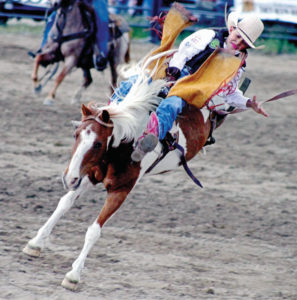
    Tuker Carricato has spent his whole life in Saratoga, Wyoming; until last year. This sixth grader’s quest for a championship in the mini bareback riding at the Junior National Finals Rodeo in Las Vegas led his family all over the country – he got on 32 horses last year and won 22 of the events he entered. He and his parents (Trisha and Tony) traveled to eight states to get the job done.

    His career as a mini bareback rider began by watching a video. His dad, Tony, was a bareback rider from Gunnison, Colorado, who competed in high school, National Little Britches, and college rodeoed in Cheyenne, Wyoming. “I didn’t mind it because of the size of the horses, and the difference between me and Tuker is he’s in shape and I learned the hard way.” Tony bought Tuker his first riggin’ and he started riding with his dad’s advice. He got on his first mini bareback in Rock Springs, Wyoming, riding in the Winter Series put on by Casey Riggs, R and R Rodeo. His first ride was spent trying to think of everything his dad taught him. “I taught him how to hold his feet and how to lift – if they can’t get that down, they will go over the front end. We started with the spur board and Tuker is a natural athlete and picked it up. He’s very strong. Athletics and conditioning is a major part of this.”


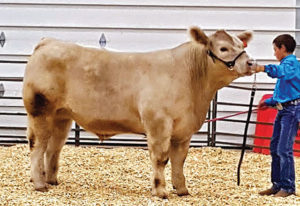
    Tuker is used to athletics – he plays football, basketball, and wrestles. He also is very active in 4-H, showing sheep, goats, and cattle. He has five goats (boars) and still shows them. He ropes on the ranch all the time. “I don’t have the horses to rope or the equipment to practice, but I would compete if I could.” He also co-owner 20 Suffolk/Hampshire cross sheep with his older brother, Chaze, that they breed for show lambs to show and sell.

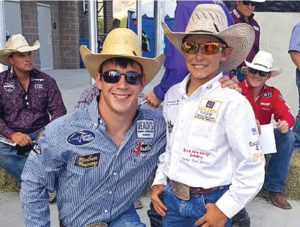
    His riding career took a huge leap forward when he met Kelly Timberman, World Champion Bareback Rider and 7x NFR qualifier, who now sponsors Tuker. “We pick who we sponsor based on criteria that includes a strong community involvement, grades, personality, and incentive to achieve goals,” said the 2017 Mountain States Circuit Finals Bareback Champion. “When it comes to rodeo, they need to have the incentive to work to purchase their own equipment, travel expenses, etc. Tuker works that off himself – any kid that’s willing to work to get his own equipment shows ambition.” Kelly and his fiancé, Shannon Pearman, have started a program called Champions Go9-oh at their home in Casper, Wyoming. “We are teaching these kids how to be good men – never seeking mediocracy and going for their dreams. We help them go after them, setting up yearly goals and the building blocks of success.” Tuker followed that to a tee – he took time on Sundays to travel to Casper – two and a half hours from his home – to practice. He sent videos to Kelly and asked for advice. “He’s a young man that is very dedicated to his purpose and what he wants.”

    Tuker has learned a lot from Kelly. “He teaches me rodeo and stuff like that. He taught me how to respect people – being yourself and not being rude.” Tuker’s family owns Battle Pass Outfitting and Tuker helps spot and retrieve game with his mother. They hunt deer and elk in the mountain range by the ranch where Tuker will spend time in the mornings and evenings looking through a spotting scope and will call his dad if he sees any. Tuker helps pack the archery elk hunters to the wilderness camp by horse back where he helps load pack horses and takes his own string of horses in and out of camp. He can’t wait until he is 18 so he can get a guides license and guide with his dad and oldest brother Chaze. Chaze graduated college from Western Dakota Tech in Rapid City, South Dakota, and Wyatt is a senior at Saratoga high school.


    After his first ride in Wyoming, where he missed covering by .25 seconds, he kept getting better and progressing. “My mom researched where the rodeos were and we’d drive there.” He bases his decision on where to go on payouts and entry fees and how far away they. “I have to pay for it – by my winnings.” Tuker has his own checking account and he balances monthly his earnings to his expenses. “I save for entry fees and rodeos. I have two different accounts – one for rodeo and one for fair.” There were lots of long nights and when the family headed to a rodeo and they relied on family to do the chores at home. “My cousin or brother would stay home and take care of my animals.” Tuker shows Maine Angus cross cattle. “They are popular and grow good.” He keeps them in barns where it’s cool and dark.
    As the year progressed, his riding continued to improve. “I had a goal to get there (Junior NFR); when I kept winning them all and doing good I kept going. I just practice – my mind and muscle memory.” When Tuker found out the end of August he had made his way back to Vegas for the JR NFR, he checked his books and did some research where to get the best riding chaps, he had his dad call and make an appointment with Tim Bath to go pick out his colors so he would have brand new ones for Vegas. They match his new riggin that he had bought in June. He enjoyed his trip to Vegas for the Junior NFR. “It’s warmer than here. There were lots of people and crowds and big.” He would do it again and he plans to.

    This year he is old enough to join the National Junior High Rodeo Association, competing in the bareback steer riding. He plans to continue all his sports, but admits that he would give them up for rodeo. “Rodeo makes me money and I like it better than the other sports,” he said. “I want to be a cowboy when I grow up – not much else. Rodeo and be a world champion bareback rider.”


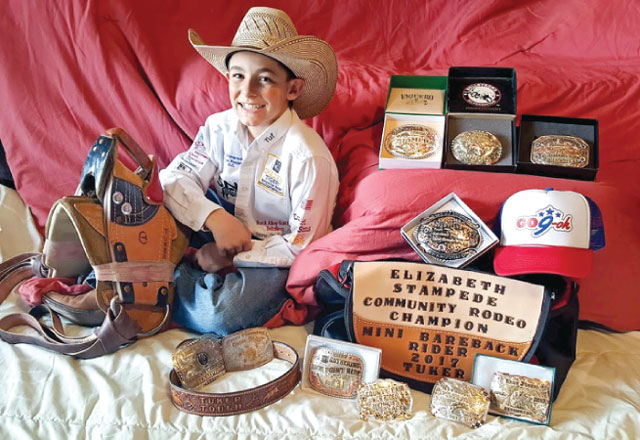
    Tuker with 2017 winnings – photo by Trisha Carricato


  • Back When They Bucked with Tom Miller

    Back When They Bucked with Tom Miller

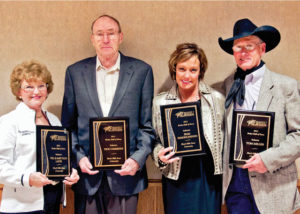
    From competing in college rodeo, to the PRCA, to becoming a judge and a coach, Tom Miller has left his mark on the rodeo world. Excelling in both ends of the arena, Tom led a rodeo team at Black Hills State University that dominated the National Intercollegiate in the 1970s, winning All Around Champion in 1970 and 1971.Tom was also the Badlands Circuit Saddle Bronc Champion in 1979 and 1980. Tom qualified for the NFR six times and shares the record for most saddle bronc average titles.
    Tom was recently inducted into the National Cowboy & Western Heritage Museum Rodeo Hall of Fame in Oklahoma City. His friend and 1974 world champion saddle bronc rider, John McBeth nominated him. “Tom is of the quality of bronc rider that should be in there. He is world championship quality – in fact – one year he lost it by $5.28 – 1981. Everything about Tom is outstanding, from ranching to judging – he has his principles and he holds to them.”
    Born in Rapid City, South Dakota, on December 27, 1948, Tom was raised 100 miles from there on a ranch in between Faith and Red Owl, that his dad (JP Miller – Bub) put together. “I was born before the blizzard of 1949 – it took two weeks for them to get me home,” he said. His dad roped calves, but Tom and his older brother, John, never competed until high school. “We stayed home and worked – when we quit in the evening, we would rope. Nobody competed much in youth rodeos back then – there wasn’t the activities going on for the youth like there is now.” His mother (Patsy) didn’t want him riding broncs or bulls so he rode bareback until his junior year in high school. “My folks had gone to Texas and I snuck off to ride a bronc – it was easy. I didn’t get on a bull until I started college.” He learned from the hired man until he met John McBeth. “I was riding broncs pretty good but I didn’t think I was riding them right. So I called John and went to his school. He put me on 16 head in two days and it turned me around. It got me doing things I didn’t know I could do. John is a great teacher.”
    He went to Black Hills State University where he competed in every event. “My dad let me take one horse, so I had to do all the events on that horse.” He studied education. “My dad gave me a choice when I got out of college – after I won the NIRA All Around for the World – he said – ‘are you going to rodeo or are you going to come home.’ He said if I was going to rodeo, he was going to sell the place. I went home for three years. I felt like I had to go try it.” He made a deal with his dad. “He said: ‘If you don’t go to the Finals, you go home, put the saddle up and we won’t talk about it.’ He also added he wasn’t a sugar daddy – my dad was black and white, right or wrong, that’s the way it was. When I first cracked out I rode all three events. It was looking like it was going to break me, so I stuck with bronc riding.”

    When Tom won the average at the finals the first year, his dad was in the arena and said ‘You can’t quit now can you?’ “I’d spend falls at home and calving in March and April.” He met his wife, Vivian, at a match bronc riding in Texas. He met her again in Fort Worth at a rodeo. “She had a boy’s saddle from South Dakota that she thought he needed it that night. There was only two or three of us there yet – I’d flown in – and she gave me his saddle.” Three years later they were married.
    He continued rodeoing, making the finals three more times after their marriage. He was the Badlands Circuit Saddle Bronc champion from 1977 to 1980. He qualified for the National Finals Rodeos six times, and won the average in 1975, 1979 and 1981, coming up short of winning the world title in 1981 by $5.28. He was able to hit multiple rodeos in one weekend due to his traveling partners, Johnny Morris, a bareback rider, and Bobby Brown, a bronc rider, who also had a plane and flew Tom to many rodeos.
    Tom broke his leg one fall riding a good horse – doctoring yearlings. “He rolled over me and broke my leg in 1982. I didn’t get on one after that. I was in a cast for quite a while – all winter actually. The screws in my leg made it hard to ride again.” Johnny Holloway, who he worked with for years putting on bronc schools, invited him to a match bronc riding the next year, and one horse laid on his leg in the chute. “I thought the screw heads were going to come through my leg,” Tom said. “I was at the age — I was getting into my upper 30s — where it’s hard to get it back; it took a long time to get over that injury.”
    He focused his attention on his ranch, his family; two boys – Jeff and Ryan – and his judging, which included judging five National Finals Rodeos. “When I started judging, there weren’t any judging schools. They started them shortly after that and it’s a good thing. Really familiarize yourself with the rules.” He served on the Rules committee, requested to do so by Shawn Davis.
    His priorities shifted again the past couple years, and he has stayed close to the ranch. “My great great granddad came over as an immigrant from Germany – he kept a diary every day. He said the best cow country was in South Dakota – Western South Dakota. He put together 168,000 acres in Coleman County in Texas; he built a boulevard, library and built on to the Methodist Church,” explains Tom. “My grand dad took over management of that ranch at 18. When my dad got out of World War II, he went to South Dakota to find that best cow country.
    “I always felt like I had so many big shoes to fill,” said Tom about his family. “My dad flew over the signing of the treaty of WWII – he didn’t tell me that – he flew and was the youngest one in his crew.” He passed away at the age of 85. “The day before, I called him and told him we needed some more cows in Texas. I asked him if he could go and check out some cows for me. He said how about if I sell you my cows. And he knew exactly what they were worth. He died the next day. He was sharp as a tack.”
    Tom has carried on that legacy, priding himself in raising good cows and horses. He has been inducted in the Black Hills State University Rodeo Hall of Fame and the Casey Tibbs Foundation. He wants to be remembered as kind and considerate; a good horseman, and a good cowman. “The rodeo part of the deal –I’m getting honored for something I was going to do anyway. My roots are in the cow business and I’d hope to be remembered as one of the better cowboys in our country.”

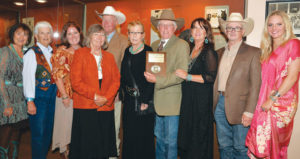
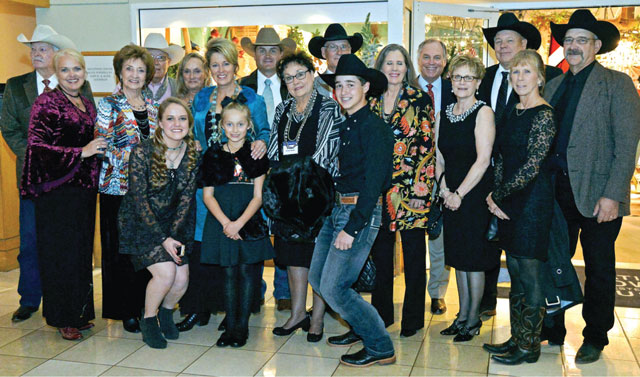
    Tom with his family at the 2017 National Cowboy Hall of Fame – Rodeo News
  • Breeding with Brains

    Breeding with Brains

    [ Race Horse Turns, Roping Horse & More ]

    Brian and Lisa Fulton bought A Streak of Fling (Streaker) in October of 2003. “Brian retired off the (rodeo) road in 2001 when he blew his knee out,” recalls Lisa. “He couldn’t find the type of horse he wanted to rodeo on while he was rodeoing, so his idea was to find a stud that he thought would produce rodeo type horses and raise our own.” Lisa laughs as she admits she figured she would be 100 before he found the stud because Brian was so picky. “We found him in October and we were shipping cattle – so Brian didn’t have a lot of time to go look.” Jerry Sipes had advertised Streaker in the back of the Speed Horse magazine in two lines and no picture. There were a lot of people that called on him but did not buy him.
    Jerry Sipes bought Streaker off the race track from Jack Marley. “I had him for six months and I bought him for three reasons – He’s the only sire I’ve seen that is colored like that – it’s like looking for a movie star – there’s something unique about them – in Streaker’s case, he was from an exceptional race horse named Streakin Six – he was a great big stout 16 H, 1,300 lb. race horse. His mother, a mare named Moon Fling, had a speed index of 102 AAAT. He’s the prettiest bay roan you’ll ever see.” When Streaker was a long yearling, Jerry had an offer to buy him, and he turned it down. Streaker qualified for the Blue Ribbon Futurity, but cracked a tendon bone and was scratched from the Finals. The horse showed great ability, but still made money. Jerry has no regrets selling Streaker to Brian and Lisa. “The horse went where he needed to be and I doubt anyone in the country would have promoted that horse as good as Lisa and Brian did. I’m thrilled they spent the money to promote him and invest in him the way they did. It takes lots of guts.”
    Brian was dragging his feet to head to Oklahoma City to look at a stud right in the middle of fall cattle work. “I bought Brian a one-way ticket to Oklahoma City and had phoned Billy Etbauer and to see if he could pick Brian up and then also called John Rothwell whom was in Texas and headed back to Nebraska and asked him if he could call Brian and if Brian bought the stud could John come through Norman, OK to pick them up.” Brian and Billy looked at the horse, and Brian dickered with Jerry. They then left for coffee and took some time to think it through. “Brian bought him with the condition that he could take him home and ride him before Jerry cashed the check.”
    Brian and Billy were longtime good friends, and for Billy, it was a simple act of kindness. “I was picking a friend up and looking at a horse – it was fun to see Brian and it helped him out. I could never have imagined – but I’m glad it worked out that way – that would be a guy’s dream. Thankfully it all worked out – it was a tough decision for him and a lot of kicking the dirt, but it all worked out.”

    John Rothwell was hauling calves from that area. “I was in the truck south of Oklahoma City when Brian called me – he always knew how to get things done. He said he was trying to buy this horse and I met him in Oklahoma City. We sat there for a couple hours while Brian got the sale done. We threw the horse in the back of the trailer and we drove all the way back to Brian and Lisa’s ranch.” Streaker was loaded in the dark into a canvas topped stock trailer that had the last gate plyboarded off at the end of the trailer; he was sharing the ride home with calves. “He was in the back – he got the cold spot,” said John, who was hauling calves back to Nebraska. They drove straight through and got home and unloaded Streaker. That was the story – Streaker came home in a cattle trailer.
    Brian rode him the next day and called Jerry and told him to cash the check. Brian had Streaker roping in the indoor barn less than 8 weeks after the 700-mile trip from Oklahoma to South Dakota. “To come off the track and transition so easily into roping – he can run and he has a brain,” said Lisa. “Sometimes when they come off the track they are frazzled. Streaker was easy for Brian to train.” The first year Streaker stood in Ainsworth, Nebraska and bred 100 mares at $1,000 a pop. Thirteen years later the fee has gone up to $5,500.
    The first weanlings were sold in Kearney, Nebraska, in 2005. The first riding 2-year-old was the 2007 crop which included 23 Streakers between weanings and 2-year-olds. There were a total of 66 horses on the sale that year. “We were still standing our Frenchmans Bullet stud and sold 7 head out of him,” said Lisa. There was no sale in 2006, which was a good thing. “The weekend that we should have had a sale was the weekend that Brian had his first brain tumor, 9/11/2006. Fortunately we didn’t have a sale.” The sale continued for two more years in Kearney and then moved to Valentine, NE in 2009.
    2010 was the last year Streaker stood in the north country, Ainsworth Vet Clinic with Dr Chris Finney 2004-2010, seven years. “We moved Streaker for Business reasons to Oklahoma where we thought more people could view him. We knew we had to get him in the horse mecca world,” said Lisa. “The James Ranch stood A Streak Of Fling for five years and then the boys & I moved Streaker the year after Brian passed to High Point Performance Horses in Pilot Point, TX in July of 2016.” 2013 A Streak Of Fling booked full for the first time. “We closely monitor the number of mares Streaker breeds each year. He is a very fertile stud and has been a plentiful producer. We will continue to breed him until he tells us it is time to retire.”
    “One day A Streak of Fling will come home to retire with us here at the ranch when he stops producing.”
    For now, he continues to prove his genetics with offspring taking contestants to the past six Wrangler National Finals Rodeos. “Breeding with brains, along with speed is obviously Streaker’s game.” concludes Lisa about Streaker. “I want to thank all the people that believed in us and had faith in us and Streaker when we first started standing him and all the breeders, buyers and trainers that continue to believe in Streaker. “The dream of a cowboy of finding the right type of stud to help bring more rodeo type horses into our part of the world are the reasons for Streaker’s prominence in the Horse World.”
  • Setting the Bar

    Every year in Las Vegas the toughest competitors in our sport gather to battle it out for ten days to determine the World Champion. Each year in December someone sets the bar and everyone works to raise their game for the next year. Who will be the champions this year?
    If you are a rodeo fan you know there isn’t a huge turnover of contestants at the WNFR every year. The talent level is very high in all of the competitors and they have all put in a lot of work and miles to get there. They understand the commitment that it takes to make it to the WNFR and more importantly they are willing to make that commitment each year.
    Luke Branquihno, set the bar for the steer wrestlers for the past decade. He is not at the WNFR this year but many of the competitors who are at the WNFR are better competitors because of the standard he has set. This year someone will set the new standard, and Luke and many others will be back in the practice pen working to compete on that level for the winter rodeos. It is a never ending cycle and it happens in every event, every year.
    From the professional level it carries over to college level, and even down to the high school level. The top contestants have made a commitment to compete at the highest level. As you advance through high school, to college and then to the professional level, the level of commitment has to increase as well.
    It is exciting to see the contestants at the WNFR every year. I have had the opportunity to coach many of them, and watch them come up from the high school ranks through college and now on to the professional level. Some have been dominant since they were in high school. Others have had the dedication to improve each year until they are among the elite in our sport. Each of them has continued to improve, for some it is a slow process, and for a select few it is a quick jump to the top.
    Every year I am surprised at how many people think they are going to make the finals the next year. Many of them have the talent, but they are not willing to make the commitment and the sacrifices it takes to make the finals. Many people think they can just turn on a magical switch and make the finals. For most the journey to the WNFR started years before.
    This is why I am a fan of the WNFR. Every one of the contestants at the WNFR has a story and most of them are not fairy tale rises to the top. Everyone there has earned their spot, and the respect of their peers and fans.

  • On The Trail with Tyson Durfey

    On The Trail with Tyson Durfey

    Tyson, Shea & their daughter Praise Royal – Dashing Darling Photography

    Tyson Durfey is making his tenth appearance at the Wrangler National Finals Rodeo, defending his world champion title from last year in the tie down roping. Tyson grew up in Savannah, Missouri, training horses and ranching with his dad, Roy, and older brothers, Travis and Wes. “It was a miniature boot camp for guys. It was always me, my brothers, dad and at least one or two people there roping with us.,” said the 34 year old, who makes his home in Weatherford Texas with his wife, Shea Fisher, and 14 month old daughter Praise Royal. “We lived in a single wide trailer house – 10 feet wide by 75 feet long, with 75 spare tires holding the tin on the roof.” He remembers waking up to ice in his water glass. “Keeping the fire going was a huge part of life. Dad would wake us up and we would feed, then eat breakfast, then doctor cattle – ropers and feeders. We always said yes ma’am and no ma’am, but it was a bachelor pad. We’d rope from 9am until midnight every day, riding about 25 head of horses. Most Sundays were jackpot days at the Durfey Ranch and everyone would come by – we were the calf roping hub of the Midwest.”
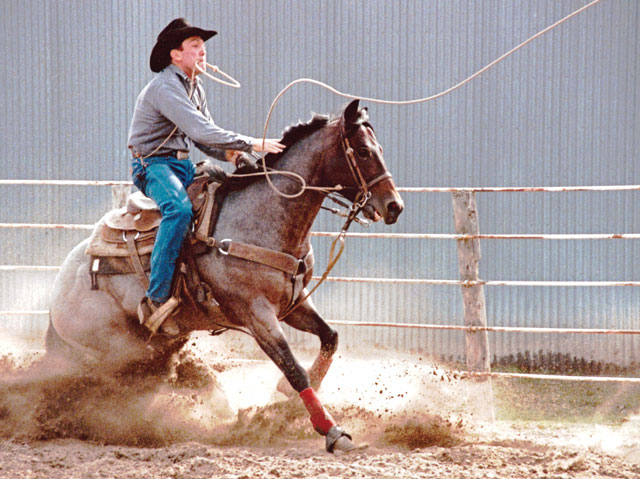
    Tyson’s parents divorced when he was 2 and he spent the first five years with his mom. “I was pretty rotten – I would skip school. By the time fourth grade rolled around, I was hanging around with rough kids, riding skate boards. It wasn’t looking so good for me in school, and my dad told mom that we needed to come with him and he would straighten us out. My dad ruled with an iron fist – what he said was the way it was.” Tyson was in every learning disability class, and was getting Ds and Fs. His dad told him he was going to get straight As, and was expected to work as well. “I didn’t believe him, and one night I’d fallen asleep studying, and he gave me a whooping and it put the fire in me. I graduated with honors and it was because I had the motivation to apply myself.” Roy roped in the PRCA and passed that to his boys. At nine, Tyson competed at his first rodeo. “I wasn’t a stand out, but by the time I was 12, I would match people roping for money. I would sell horn knots, and sell pop cans.”

    That also gave Tyson a taste of money. “We grew up poor; we would light the hot water heater once a week and all share the same bath water,” he explained. “I wanted the fancy truck and Capri camper.” By the time he was 16, he was making $30,000 a year shoeing horses plus what he was winning. “Dad gave me the resources; cattle, horses, and ability, but never gave me a dime. I kept track of it all through FFA in a notebook.” His life was pretty routine – he’d get up around 4:30, flank and tie calves, go to school, get out and go shoe horses, then go home and rope.

    Tyson competed in Missouri High School rodeo, winning state his junior and senior year. “There was no prom or sports or extracurricular activities.” He went to Missouri Valley College in 2003 on a full ride rodeo scholarship. “I stayed in college for two months. I’ve always had a sense of urgency to be the best I can be, and I didn’t like the college atmosphere, so I left and cracked out rodeoing.” At nineteen years old, Tyson hit the rodeo trail, living in the back of his truck, and crisscrossing the country. “That first year was tough for me. My very first pro rodeo was Indianapolis, Indiana. I drove 14 hours to get there and the barrier rope wrapped around the stirrup, ripping it off and I fell off my horse.” He remembers the crowd laughing at him. He drove 45 hours to get to the next rodeo in Portland, Oregon, and broke the barrier. He won second in Spokane, and then drove straight through to Brent Lewis’s house in Arizona where he stayed for a few months working for him and learning from him. “From there it was history, I was off.” His achievements include three Canadian World Championships (the first ever non-Canadian resident to achieve this feat), winning “The American” in 2014, Winning Houston Rodeo in 2015, qualifying ten times for the WNFR, and 2016 world champion with well over one million dollars in PRCA earnings.


    His dad played another major role in Tyson’s career. “In 2007, before the Reno rodeo, I had a family friend call wanting to sponsor me,” he said. “It was my first sponsorship, and that $10,000 helped propel me to win Reno and another $25,000 over the week. I found out later that my dad had given this guy the $10,000 because he knew I wouldn’t take it from him.”

    Tyson met his wife, Australian country music singer, Shea Fisher, at Rodeo Houston in 2010. “I saw her in the hospitality room. For me, I knew I was going to marry her right then, but she didn’t know for a few years. I had gone to a movie after the rodeo, and I saw her in the horse area after the rodeo. I walked up and visited with her again. We sent Facebook messages back and forth for six months. She kindly rejected my request for her phone number nor would she agree to go to dinner with me. I was persistent – she never told me to get lost. I finally got her phone number and we visited for another 9 months on the phone before she went out on a date with me.” He flew to Nashville with roses in a shoe box in his suitcase to spend one day with her. “She told me if we are going to be official, you have to ask my parents. That couldn’t happen for four more months, when I met her parents at the WNFR.” They dated for one year, were engaged for 10 month and were married October 6, 2013 at Vista West Ranch, in Dripping Springs, Texas.
    The couple have launched several businesses together including Shea Michelle Buckle Designs which was launched by Shea in 2010. Designs by Shea and Designs by Durfey were launched in 2015. Shea’s dad had started a buckle company in Australia and Shea brought that knowledge to the company.

    Shea Baby is the latest launch. “It’s a baby boot line that we designed,” explained Tyson. “We had planned it out a couple years from having kids. My wife is very talented with design and how things come together. I had seen a pair at a store in Brazil, and knew we could make them really cute and neat. As fate would happen, we put a lot of time into it, but we stumbled onto really good manufacturers and sourced a really good leather, so they are all natural.” Praise Royal is a great model for the company.

    Tyson has also designed and launched his own line of boots TD Performance through Corral Boots that are available now at Boot Barn. “I like to credit myself as a pretty smart guy because I named all the businesses after my wife! The businesses fit my wife’s personality she is the workforce behind getting things done.”

    They travel as a family to all the rodeos. Shea has started entering as well, pocketing just over $20,000 this past year. “Now that I have a family, rodeo is not my main priority anymore,” he said. “At the end of the day I compete because I love to and I love the fans.” They travel in a pickup and Cimarron trailer. Most of the summer, they were traveling with Shea’s parents, who helped with Praise. “I get tired of the road sometimes, but when I get to come back to the trailer and see Praise smiling at me, it makes it all worthwhile.”


    The family has recently purchased some land in Texas, and Tyson is excited to get back into hunting, something he used to do a lot. “My family has a pheasant and deer hunting property in South Dakota, and deer season opens next week in Texas. I’m looking forward to setting up some feeders on that property in Texas and disappearing after the WNFR for a few weeks.”

    Tyson has his sights on one more world title. He is preparing for the NFR by training a lot, working out, spending time in the Bible. “We all go out there expecting to win. The way I train and prepare is to prepare for everything. It’s easy to win when you’re on a hot streak, but after you’ve been cold, it is hard. I’ll envision my emotions and body language if the calf kicks and how do I prepare for the next round. A lot of people will think they have to push … I like to go back to the basics and not push. If you have a bad day and push harder, then you could have a worse day.” He falls asleep listening to audio Bible readings. “It just downloads information in my mind and allows me to handle situations in my flesh. My overall favorite book is Proverbs – there is so much wisdom in there, second is James – I’m Irish, pale skin and have a temper. I’ve known that for a long time, and I have been able to train myself how to act.” James 1:19 is one of his favorite verses. My dear brothers and sisters, take note of this: Everyone should be quick to listen, slow to speak and slow to become angry,

    “I want to be a motivator for people – I want them to look at me and say that if you can do it, I can do it too. I’ve read or listened to a couple hundred self-help books – Tony Robbins is my all-time favorite, I’m obsessed with processes that can make people better human beings and understanding why people do certain things. “A wise man learns from other people’s mistakes and avoids his own.” Tyson continues to help people wherever he can. “I will always share what I learn and continue to learn about how to become the best reflection of myself. The greatest failure of all is to reach the pinnacle of your career and still be unhappy. I can use my title to motivate and help other people. We are put here to inspire, encourage, and help others.”

  • Back When They Bucked with Butch Morgan

    Back When They Bucked with Butch Morgan

    Butch Morgan believes his biggest accomplishment in life was marrying his wife, Charlene, 55 years ago. His life, like most, is a series of opportunities and change, culminating in doing the very thing he is best at – promoting the Western way of life through the trophy business and his more than three decades with Western Horseman.
    Albert Lewis Morgan was born June 13, 1940. He was nicknamed Butch by the Baggs Postmaster because of Butch Cassidy, the outlaw, who ran in the same country as they ranched. His dad, Lewis, was a rancher, running sheep and cattle near Baggs, Wyoming. His mother was killed in a water-heater explosion when he was nine months old. His father remarried but Butch was mostly raised by his sister, Carol Laramore Gipson. When he was in high school, he played basketball, selected twice to be on the all-state team. When he was a teenager, he moved in with his sister and her husband, Bill Laramore, who taught Butch how to rope. Since there was no high school rodeo, the only place he could compete was at the little local ropings.
    He went to Casper College on a basketball scholarship, but was pulled to the rodeo side of things early on. “I grew up in the western way of life and thought the rodeo life was cool,” said the 77 year old, who is only 5’10”. “I wouldn’t have made it as a basketball pro.” He competed in tie down roping and steer wrestling. After earning his associate’s degree, he transferred to Colorado State University and won the CSU men’s All-Around title in 1961, the same year teammate Charlene Hammond, received the All Around Women’s title.

    They met at the party after the awards. “I had a nice horse and she liked him. A year and a half later we got married.” Charlene’s brother, Dick Hammond, was a trick rider and wanted Butch to try it out. Turns out, he was pretty good at it and the couple started traveling with a group called the Fireballs, Dick and Deb Hammond, Karen Womack Vold and Butch. They worked all the major rodeos, Ft. Worth, Calgary and all over the United States and parts of Canada (Alberta, B.C. and Manatoba). The group traveled for three summers working for Harry Vold in Canada. They hauled in an old pickup and camper, then a van and four horse trailer. “We slept in the back of the camper shell back then.”
    Karen Vold was one of the members of that group and remembers Butch’s abilities. “Butch was so athletic it came easy for him. He could make more mistakes than anybody because he could bounce right back. People loved him; he was a crowd pleaser, and he was fun to work with.”
    Butch and Charlene traveled with the group for a three years and then decided it was time to settle down. When their first daughter was born, they moved to southeastern Colorado, where Charlene opened a ceramics shop and Butch got a job teaching fifth grade at Ordway. He made $300 a month, and he got his bus driver’s license because there were kids that had never gotten out of Ordway. Butch would take them on field trips. He taught for three years, traveling to rodeos and ropings in the summer.”
    He gave up teaching to join Charlene in the ceramic shop, expanding the business into a full line of trophies called Blue Ribbon Trophies, in 1964. “Charlene did a lot of sculpturing and that’s what helped our deal. The horse and livestock industry was our Trophy Stones that Charlene created.” Charlene created sculptured relief figures for every event that were then molded, cast, and finished. She did the creative art work and Butch did the marketing and sales. Things grew and they moved that business to Colorado Springs. What started in a little chicken coop grew to 50 employees. “We did the awards for American Quarter Horse Association, Reiners, Cutters – we concentrated on the horse events. That’s when I started roping steers.”
    He team tied with Dick Yates and Chuck King in the 1960’s and dally team roped in the early 70’s. When team roping came to Colorado around 1978, he lost his right thumb in the coil. “I had to learn to rope again, I was feeling pretty sorry for myself. I saw a sign in my doctor’s office that read: I used to gripe that I had no shoes, then I saw a man that had no feet. I remember it like it was yesterday.” In Butch’s typical witty personality, he has been known to pretend his thumb is stuck between the elevator doors and other objects and pull out the stub. He made the steer roping Finals in 1979, after he lost his thumb. “We had Blue Ribbon Trophies, it was hard to go team roping because I couldn’t always go when my partners wanted to, so I concentrated on steer roping.”
    The couple has three children, and all of them have won high point championships and continue the parents’ passion for the Western way of life. The oldest daughter, Rhonda Holmes, and her husband own Triple J Ranch in Sarasota, Florida. Jay is an AQHA and NRCHA world champion and they breed and train cutting, roping, and working cow horses. Their daughter, Morgan (22), attends Texas Tech and has won six world titles. Butch and Charlene winter there, heading south after the Wrangler National Finals Rodeo, which they have attended for nearly 40 years, every performance.

    Their son, C.L and his wife, Renee have two sons, Braxton and Brayden, who both rodeo and have started their own collection of award saddles. Braxton has eight saddles and Brayden has five. CL won the open at the US Finals when he was 21 and is the superintendent for a large contractor in Colorado Springs. Christy, the youngest, is in the top 20 in the non pros in the reining world for the past two years, and has a little boy, Cooper.
    Butch and Charlene sold the trophy business and Butch was managing Penrose Stadium in Colorado Springs when he was approached in 1988 by Pat Close and Randy Whitte to become the Director of Marketing for the Western Horseman magazine. “The first week I worked for them, I had to go to Scottsdale and got to play golf two days and rope three days – that was my first week. It’s been great.” His title changed about five years ago when the office moved to Ft. Worth. “I am now called Ambassador at Large. My job now is the face of the magazine –we go to a lot of shows and events and do the fun stuff.”
    He ropes a lot in the winter in Florida, and spends his summers roping with his grandsons in Colorado. The #4 Elite spends his mornings on the computer and his afternoons roping or playing golf. “I want to watch my grandkids grow up and help them as much as we can and teach them how to play. I’ve been pretty lucky – when Charlene and I got married, I had $60, she had $40. We had a horse trailer, one car and two good horses.”
    He attributes his success to the people he has known around the world that have helped him along. One of those people is his best friend, PRCA Commissioner, Karl Stressman. “We’ve roped a ton of steers together and laughed a lot over the past 30 years. Butch is good for a person’s soul – he’s a guy that really enjoys life and can get anybody rolling.” People refer to him as the ambassador of the Western Industry. “We need more people like Butch Morgan in the future to take on that responsibility. Butch and Western Horseman are complimentary to each other. We’ve been through thick and thin and anytime I needed somebody to fight or hold the light, it’s been Butch Morgan.”