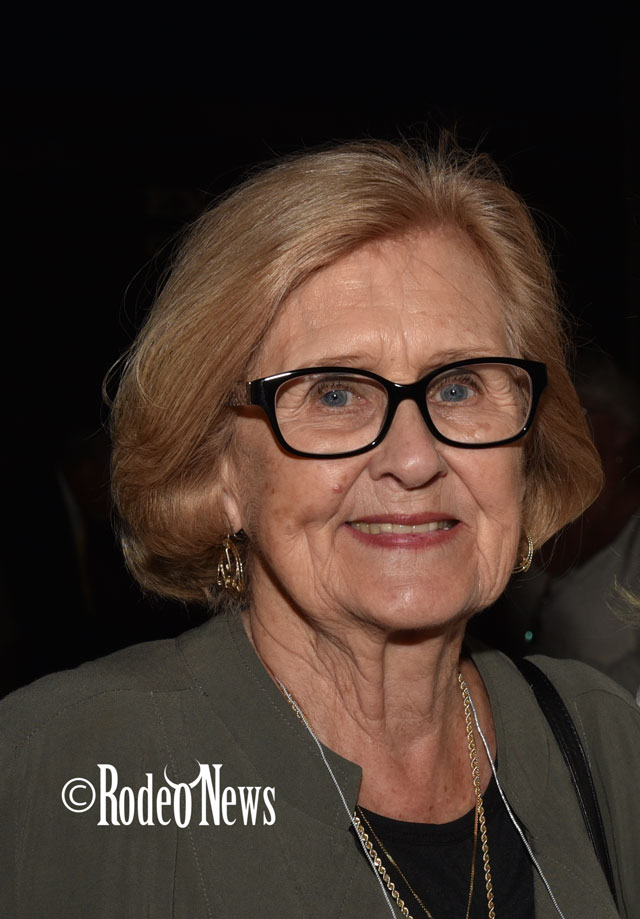
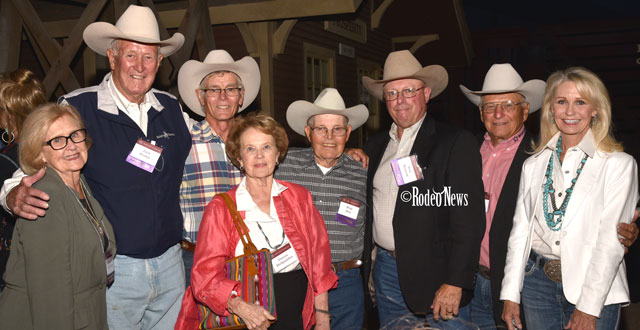
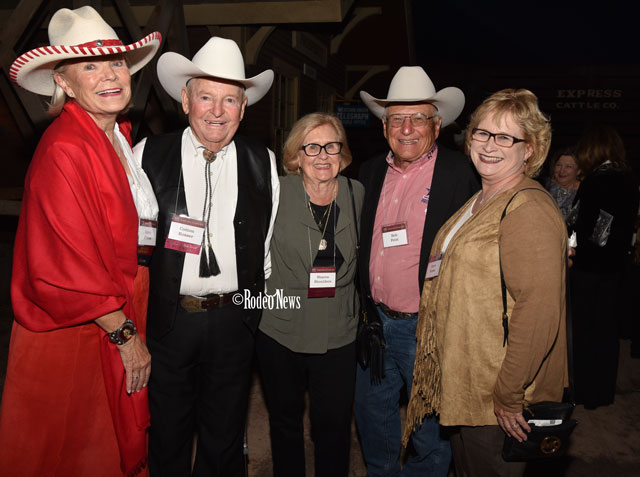
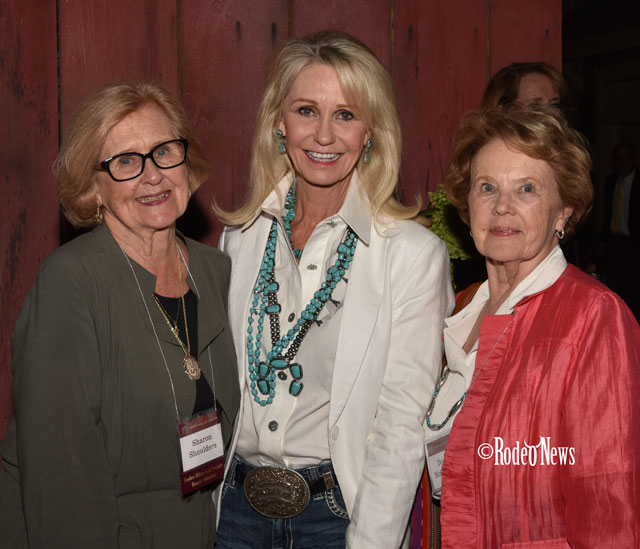
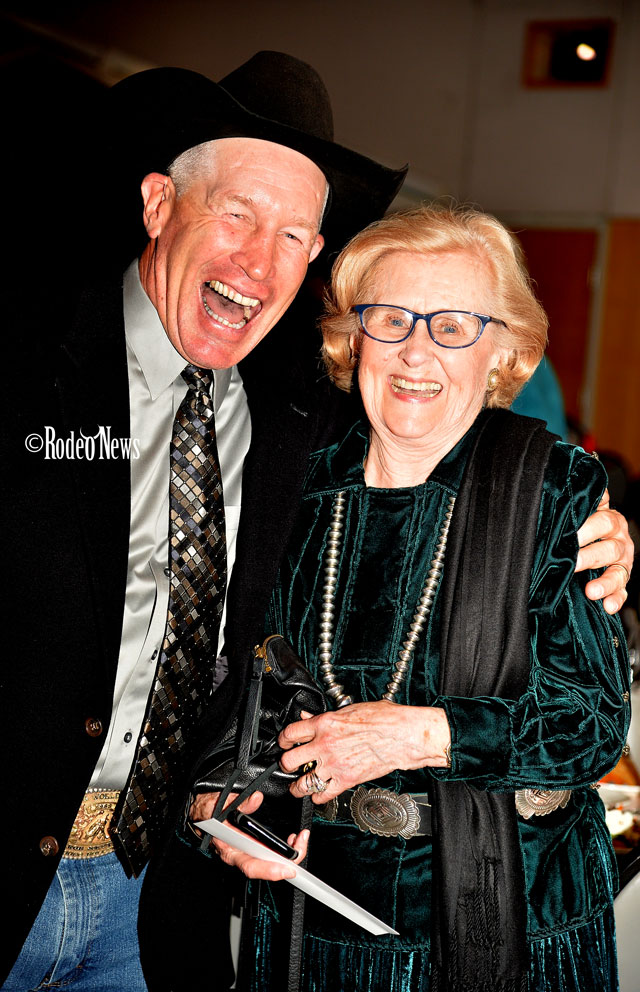
Sharon Shoulders passed away, Saturday, January 30th, 2021, at home with family. She was the wife and partner of Jim Shoulders, 16 time World Champion PRCA All-Around and roughstock rodeo competitor, stock-contractor/rodeo producer, and icon of rodeo. She should be called “MRS RODEO” because she did it all – except compete.
“I never met a cowboy, until I met Jim Shoulders,” said Sharon. She was born December 30, 1929 in Bell, California. Her family moved to Oklahoma in 1941 where she met Jim Shoulders in high school. The year they graduated high school, 1947 in Tulsa, they were married. Their honeymoon that fall was at a Madison Square Garden rodeo in New York City. Sharon, only 17, was asked to ride a horse in the rodeo parade, and she had to borrow the proper rodeo clothes. But she never forgot the older rodeo wives she met there. “They were so kind to me, she remembered. “ I wanted to be just like them.”
Sharon always had a huge heart and a natural tendency to care for others. It started with their children; Jamie, born in 1948, Marvin Paul in 1951, Jana in 1956, and Marcie in 1961. They bought a ranch at Henryetta, Oklahoma, in 1951, and Sharon ran it, while Jim was away at rodeos, making the money needed to pay for it. She learned to saddle and ride a horse to check their cows, she took laundry to town to wash for years, she even took the children several miles to catch the school bus, in a less than an adequate vehicle. She even became the President of the Salorn Cattle Association, (French Salers and Texas Longhorn) and had one of the first Salorn cattle in Oklahoma. They were was striving for a breed of cattle to produce leaner beef. Regardless of what she was doing she was happy and remembered it all with the fondest of memories.
In time she began helping in their community, church, rodeo and so much more. Jim began producing rodeos, and holding rodeo schools, so she learned to time and secretary, plus so much more. She and good friend, Donna McSpadden, plus other rodeo wives, began the Ladies Fashion Show and Luncheon during the National Finals when it was held in Oklahoma City, and donated the profit to the Justin Cowboy Crisis Fund. This luncheon is still being held at the NFR today.
Sharon and Jim were committed to the development of the National Cowboy Hall of Fame, in Oklahoma City, where many of the Jim Shoulder’s memorabilia are housed today. In fact, they attended the ground-breaking of the building, on a cold, blustery day in the early 1950s, when Jim turned over the first shovel of dirt on Persimmon Hill. She also spent many years on the Board of Directors of the Rodeo Historical Society, housed in the Hall, and became President in 2016-2017.
As a long-time Sunday School teacher and active member of the First United Methodist Church Sharon held practically every position in the church and seldom missed attending. The family originated the local PRCA rodeo and it has been called the Jim Shoulders Living Legends Rodeo, in Henryetta for many years. The entire family never misses being in the bleachers during each performance.
Since 2010 the Professional Bull Riders started giving a Sharon Shoulders Award, recognizing the work, partnership and faith of one of the wives of a bull rider in the PBR. Jim’s association with Wrangler, the clothing manufacturer, as a sports icon and representative, until his death, is the longest association any sportsman had with a continuing sponsor. Sharon has continued that family association with Wrangler since Jim’s death in 2007.
Sharon’s good friend, Donna McSpadden shared with her desire to form a group of rodeo women to assist rodeo people with problems and financial needs. H.A.N.D.S. (Help A Needy Diva Survive) was started in 2003 and Sharon became one of the first to join, along with June Ivory, Liz Kesler and Donna. The membership of 50 women continue to send cards, and assist financially if needed, to those in the rodeo world who lose a family member, have a serious injury or health issue, or other serious problems. Sharon has always been at the forefront of this important organization.
Sharon always had a smile for everyone she met, and her giving so much of her self to others. Her kindness has definitely been recognized and applauded by those that have been fortunate enough to know her.
She is survived by her brother, James Heindselman; her daughters, Jana and husband Robert Soza; Marcie and husband, Joel Roth; and son Marvin Paul and wife, Lori Shoulders; grandchildren; Dana, Justin and wife, Kim, James, Rob, Patty, Ellie, Buzz, Grace, Derek, Ashton, Langley and Logan. She was preceded in death by husband Jim, and daughter Jamie.
A celebration of life is being postponed at this time due to the restrictions of gatherings during the Covid-19 pandemic. The casket remained closed and no public viewing was held. Burial was at the New Sonora Cemetery with immediate family only. A public memorial will be held, when it is safe to gather, at the First United Methodist Church in Henryetta, OK.
Contributions can be made in Sharon’s behalf to the First Methodist Church, 1212 Lake Road, Henryetta, OK 74437 or the Justin Cowboy Crisis Fund, 101 ProRodeo Drive, Colorado Springs, CO 80919.
When searching for information about rodeo history, it is not unusual to be diverted in my quest to find a cowgirl or cowboy with unusual and interesting experiences other than rodeo. My attention goes directly to that person. Florence Hughes Randolph is just such a person. Her experiences just have to be re-told!
Cleo Alberta Holmes was born to John and Mary Holmes in Augusta, Georgia in 1898. She didn’t like her name and let it be known. Her father, in jest, called her Florence instead. The name stuck and when she began her career it was Florence, not Cleo or Alberta, that she chose to call herself.
She spent as many days as she could with her grandfather, on his cotton plantation, making rounds. She rode behind him on a mule. When she began riding alone, at age 13, she wasn’t satisfied with the mules. She rode horses instead, and eventually persuaded her mother to let her travel with a circus equestrian family as an apprentice.
She loved the excitement of the Colonel King’s IXL Ranch Wild West. She practiced with tutors, did the hard work she was also asked to do, and watched others, to learn, as they practiced their specialties with horses. She became a trick and Roman rider and a trick roper. A few years later, 1915, the troupe disbanded and Florence was free to do what she wanted.
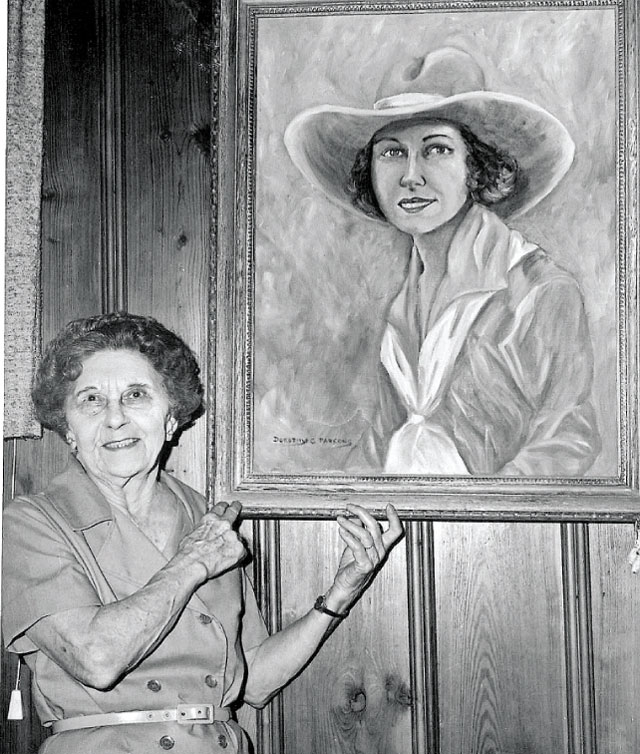
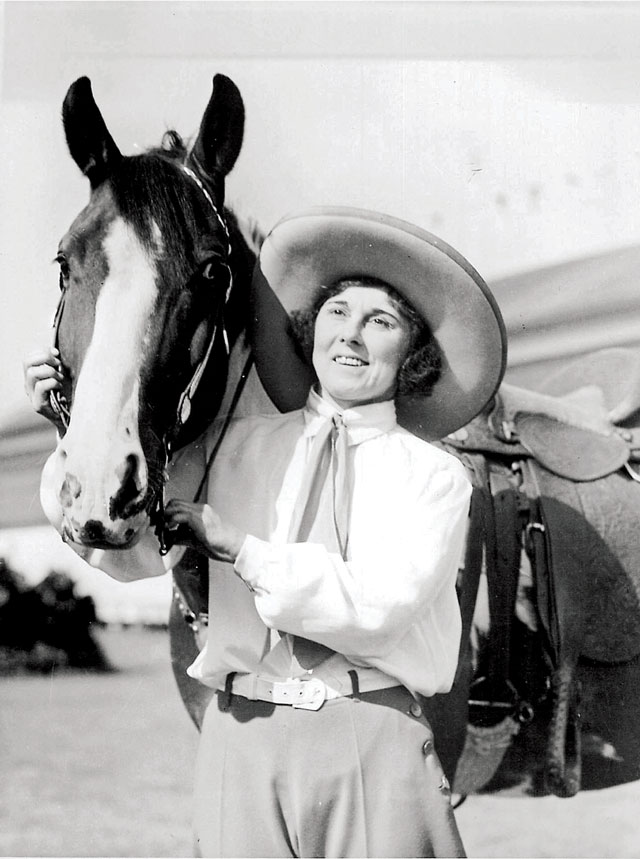
Florence – Courtesy of granddaughter, Madonna Pumphrey
Florence never grew very big. She was four feet six inches tall and weighed all of 90 pounds, but her experiences had allowed her to gain so much confidence during those years she formed her own show. She named it ‘Princess Mohawk’s Wild West Hippodrome’. The group grew to sixty people, which in addition to the performers, included cooks and crew to set up and tear down. Often they traveled with other shows and carnivals. It lasted several years until a disaster struck in Kentucky. The bleachers collapsed on opening night and numerous spectators were injured. Florence lost everything!
There was no time to waste, she had to earn some money! She joined the Barnum & Bailey Circus. While there Florence learned resinback riding from May Wirth, a well-known specialist in that endeavor. She learned much from this fine lady, including how to turn a backward somersault from one horse to another. Florence’s ability to perform could amaze and excite the audience.
Meanwhile, between circus engagements she began to enter rodeos as a bronc rider and trick rider to try and win money. It took awhile to prove herself in rodeo as she was known as a ‘wild west gal’. In 1919 she heard of the rich purses offered at the Calgary Stampede and hungry for money she headed that way. Florence entered the three mile Roman standing race. The winner would receive the Prince of Wales Trophy and a silver mounted saddle. She was the only woman entered against eight men. When it was over she had won, the only woman to ever win that event. Plus the Prince of Wales trophy she won a silver-mounted saddle worth $1,500. She quickly sold the saddle to Edith Sterling, a silent movie actress. She needed the $1,500 much worse than the saddle.
After this Canadian win she had confidence galore, and began entering all the big rodeos, such as Cheyenne Frontier Days, Pendleton RoundUp, Chicago and Fort Worth. Florence competed under the last name Holmes, Hughes, King, Fenton and Randolph, and occasionally as Princess Mohawk. Florence married a bronc rider named Angelo Hughes who was killed in an automobile accident at Mexia, Texas four months later. Suddenly she had to support herself plus support her mother and two younger sisters.
When a Phoenix rodeo ended she went to Hollywood to visit friends. While there she was encouraged to double for Shirley Mason, a movie star. Florence would get two or three hundred dollars for doing risky horse riding chores, that actors refused to do for movies, such as riding horses over cliffs. She also posed as a Mack Sennett bathing beauty. But the desire to rodeo won out. Back in Texas she threw her saddle behind an open cockpit of a Curtiss bi-wing at Love Field in Dallas and took off in to the air to promote the Dallas Dunbar Rodeo.
Her first New York competition was Tex Austin’s 1923 Championship Rodeo at Yankee Stadium. She entered all three cowgirl events – Bronc Riding, Trick Riding and Relay Racing. Later in life she was quoted as saying, “I didn’t win all the time, but I got my share of the prizes most of the time.”
Florence – Courtesy of granddaughter, Madonna Pumphrey
The rough and tumble world of rodeo did cause Florence to experience some bad spills. In Houston a bronc named ‘Dumbell’ fell on her and she was dragged to safety by world champion Bob Crosby. At the Shrine convention rodeo in Washington D. C. a notorious bronc named ‘School Girl’ turned a somersault and landed on Florence, who was declared dead, but after going to the hospital by ambulance she came back to ride again! Once, when she was taken to the hospital after a serious accident, Ruth Roach went with her. Florence had been unconscious and was coming to when she heard the doctor tell Ruth that she would never walk again. Florence bolted, got up and ran out, heading to the front door, with the doctor and Ruth after her, when she realized she was only wearing a sheet! One of her most embarrassing moments.
In 1924 Florence was asked to go with the Tex Austin entourage to London, England, to compete in Wembley Stadium, the first rodeo ever held in England. It was a 14 day trip by ship with the cowboys and cowgirls, and the stock. The Prince of Wales, who by then was the Duke of Windsor, took a group of competitors to supper after one performance. He had remembered Florence when she won the Prince of Wales Trophy at Calgary five years earlier and was fascinated by her. Later he escorted her to Buckingham Palace to be presented to his parents, George VI and Queen Mary. He also took her to view the crown jewels of Great Britain.
In 1925 she met Floyd Randolph of Ardmore, Oklahoma, who was judging a rodeo at Dewey, Oklahoma. He also furnished stock for the big rodeos, including 200 head of horses and steers for the first Madison Square Garden rodeo. They were married at Newkirk, OK later that year. They went on to the next rodeo since there was no money for a honeymoon. Florence’s desire to win at the Garden caused her to have an arena made, to the same dimensions as Madison Square Garden, at the Randolph ranch near Ardmore, Oklahoma. Regardless of the weather Florence could be found working out in the arena every day of the year.
She also made and designed her own costumes. New ones were made for each season. Sometimes as many as sixteen costumes or more were made yearly. Many were made out of satin and when they wore out she would rip them up and make satin quilts from the fabric.
Florence had several horses she trained for trick riding. The most famous was “Boy” a five year old that she bought completely untrained. During his training Florence lost two teeth to his wild ways, but she and husband Floyd finally got him settled down. “Boy” and Florence were featured at many rodeos. At one of their Madison Square Garden performances a representative of ‘Ripley’s Believe it or Not’ discovered ‘Boy’ had a clear map of the United States on his right side. Believe it or not, Florence had never noticed it before. In Philadelphia they were invited to a Rotary Club gathering and ‘Boy’ traveled by elevator up sixteen floors in the Bellvue-Stratford Hotel. She had him wear special made rubber boots so he would not slip on the tile floors.
The SesquiCentennial in Philadelphia, 1926, is where she won her first All-Around cowgirl trophy. It was presented to her by Jack Dempsey, the well-known boxer of the era. All together she had won $6,000 there with wins in bronc riding and trick riding. She moved on to the Chicago rodeo and won the same two events there.
Madison Square Garden rodeos were held in late October or November. Through the years the New York rodeo became bigger and bigger, with standing room only at times. Florence was one of the favorite cowgirl competitors and always sought out by various reporters. In 1927 she won the Cowgirl All Around Championship, plus the Cowgirl Trick Riding Championship. She was the first cowgirl to win the Metro-Goldwyn-Mayer Trophy, valued at $10,000. The trophy would not be given to a cowgirl to keep until someone had three consecutive wins.
During her rodeo years Florence continued to go to the Madison Square Garden Rodeo. She remembered in 1932 when Mrs. William Randolph Hearst, Chairman of the Milk Fund, had a luncheon for the cowgirls competing that year. Mrs. Hearst gave each of them a purse for their enthusiastic participation in the rodeo which aided her favorite charity. After the presentation the cowgirls became silent. Florence got to her feet, in behalf of the group, and thanked Mrs. Hearst for her kindness and hospitality. From that time forward Florence became the ‘unofficial’ spokesperson for the cowgirls whenever there was any public speaking required.
Florence – Courtesy of granddaughter, Madonna Pumphrey
Her achievements were amazing. She won the Metro-Goldwyn-Mayer $10,000 Trophy; the George W. Nixon trophy for World Champion Girl Bronc Rider in Chicago in 1926; the Juergens and Anderson World Champion Cowgirl Trick Rider in 1927 and 1928; and the Champion All-Around Cowgirl at Philadelphia in 1930, plus many more.
In 1939 Florence “Princess Mohawk” Hughes Randolph announced she was hanging up her saddle. “I have done everything in rodeo that I set out to do,” she reported. Her retirement dinner was held at Madison Square Garden, and she was presented a huge bouquet by Paul Whiteman, a popular bandleader of that era.
She did not retire when going home, but began teaching her granddaughter, Madonna, age 5, to trick ride. Floyd’s daughter, Mary Louise had married Jim Eskew, Jr., world champion trick roper, and Madonna was their child. As a teenager Madonna became a well-known trick rider and trick roper. She retired from trick riding at 16, but continued to perform as a trick roper.
Florence did many things during her retirement in Ardmore including assisting her husband politically when becoming sheriff. She was also active in her church. Madonna said, ‘There was never a Sunday that she didn’t have me at Sunday School and Church at the First Christian Church in Ardmore.’ Additionally, she and Floyd also helped start the Ardmore VFW Rodeo in 1946, and worked on it for many years.
Florence was inducted into the Rodeo Hall of Fame at the National Cowboy & Western Heritage Museum in 1968. The only two women to be honored in that Hall of Fame at that time was Florence and Tad Lucas. Many of her trophies she had won during her rodeo career are housed there in the Oklahoma City Hall. Her most treasured were The Metro-Goldwyn-Mayer Trophy which she won in 1927 as “a tribute to the charm and courage of western womanhood’. The second trophy, also from Madison Square Garden, was from 1933 when she won as the Champion Trick Rider. She was also inducted to the National Cowgirl Hall of Fame in Fort Worth in 1994 posthumously. Florence had passed away April 14, 1971.
The cowgirls from the 1920s and 1930s were fiercely driven and it was extremely difficult in those days. Once they honed their rodeo skills, won some prize money, learned how to travel from one rodeo to the next, and became friends with other cowgirls and cowboys, you couldn’t keep them away. It became their life, and some excelled at it, like Florence.
Gail Woerner, rodeo historian, is writing a book about professional rodeo from 1920 to 1959, with an emphasis on the Madison Square Garden rodeos. She has always called the early day Madison Square Garden Rodeos the ‘unofficial’ predecessor to the National Finals.
Monroe Veach was fascinated when he saw his first cowboys. His dad took him to Pawnee Bill’s Wild West Show in Saint Jo, Missouri, when he was eight. He was amazed at how they dressed, their horsemanship and ability to rope. He saw a Charro spin a rope like he’d never seen before. Once he got home he began to practice trick roping, he trained his horse to do tricks — he was hooked!
Monroe Veach was born in Missouri in 1896. The frontier had moved westward by then so when he was offered a job to cowboy near Eads, Colorado, in 1916. When he arrived at the train depot he unsaddled and unbridled his horse, slapped him on the butt and his horse headed home. Monroe took the saddle and bridle with him. He didn’t tell his family he was leaving. He hopped a freight train and headed west. He knew how they felt about his ‘cowboy ways’ so he wrote a letter when he arrived in Colorado. The folks thought Monroe’s cowboy dreams were a young man’s folly and he would grow out of it. Although his father raised sheep and trapped he wasn’t surprised at Monroe’s choices and accepted his decision.
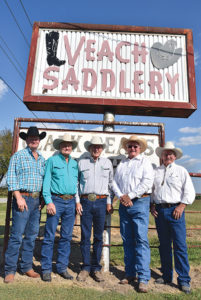
Craig Robinson, Peggy Veach Robinson, Robert Robinson, taken at Veach Saddlery Co. Trenton, Missouri – Diane Lowrey – and the Trenton Republican-Times
The following year his cowboy job ended due to World War I. He joined the Army and was sent to Fort Riley, Kansas, to the cavalry division, which he hoped would allow him to utilize his horsemanship skills. Much to his dismay his military time was spent in the saddle and equipment repair shop. Little did he realize how much impact this brief time in the saddle and equipment repair shop would mould his later career and allow him to continue in cowboy fashion. This was the only professional leather-making training he ever got. Monroe’s training as well as his creativity in working with leather expanded his horizons.
Monroe left the Army in 1919 and went home to Missouri and started a leather shop in a small building on his home place near Trenton. Mostly repairs on harness, saddles and such kept him busy in the shop. Shortly thereafter he married his childhood sweetheart, Alta. They had six children over a span of twenty years; with Billy, the oldest, Imogene, Mary, Letty, Ben and Peggy, the youngest.
When a friend asked if he could build a western saddle he had enough experience with saddle repairs that he knew he could do it. He made the saddle to the friend’s satisfaction. Meanwhile, as his children grew up he introduced them all to the leather-making business and at one time or another they were all trained in various aspects of the business, particularly saddles.
But Monroe had other talents as well. He loved ‘The West’ and his trick roping talents had expanded. He was asked to entertain at the local movie theater between silent movies. He also joined Foghorn Clancy’s rodeo and performed trick roping and trick riding. Trick riding was just getting popular and Monroe could see how necessary and important for the trick riding saddle to be strong enough, with the rider’s variety of tricks. They generally always used the saddle as their base. It is not surprising that his children also became fascinated and were passionate about the rodeo world of competition and performing.
His shop on the family place finally became too small for all the work he was hired to do. After a time, 1938, he moved to a location in Trenton on Main Street. The following year, Fred Lowry, a well-known steer roper who had won many of the biggest rodeos in the country, contacted Monroe. Lowry had won a trophy saddle, made by Monroe, and liked it so well he wanted a second saddle made like it with a few minor adjustments. The adjustments Lowry requested were for a stronger saddle than generally made. Lowry roped steers weighing 800 pounds or more and the weight was hard on a regular saddle. Lowry wanted a double rawhide saddle tree for additional strength. Once Monroe had made the new saddle and named it the, “Fred Lowry Roper” the orders from steer ropers all over the country came pouring in.
When World War II began Monroe found that the few companies who furnished a saddle-tree, which is the basis of every saddle, were hard to come by. Most all materials were going to the war-effort and were difficult to get for any reason other than the military. Monroe decided to make his own saddle trees. He used the Linn tree for wood, because it was strong and would not split when nails were used. He brought it to the shop to dry. Letty’s husband, George McAlister, ran the first ‘tree shop’. Monroe was very innovative in this endeavor, as he was in many things he did through his life.
He tried to get a foundry to produce metal saddle horns, but again the war-effort was using the majority of the metal. Monroe explained he was building saddles for ranchers, the very people who raised cattle to feed the soldiers. Once the company executives heard that they immediately agreed to provide them. “Those boys need beef!” He got their attention, and his metal saddle horns!
Monroe set the standards high in saddle-making. He set the trends for years to come and demanded a product (saddle) that was not only functional but of the best materials. He became the premier trick riding saddle-maker and had as many as ten people working in his shop. Having been a trick rider he had an edge on knowing what was most important in the development of trick saddles and made sure they were of the finest quality. Today an old Veach trick riding saddle is an important find, but a retired trick rider will seldom let their Veach saddle go.
Monroe and son, Billy, produced rodeos by Veach Rodeo Company. While Monroe ran the shop, Billy did the ramrodding of a rodeo but Monroe would perform, and act as secretary and timer. Other family members were always present to handle a variety of duties and responsibilities required to put on a good rodeo. At one of the rodeos son-in-law George McAlister was the announcer, and just prior to the Saturday night rodeo, a deluge of rain came and the performance had to be postponed until Sunday. George couldn’t stay over until Sunday afternoon because he had to head back to Trenton. When he let Monroe know he enlisted Clem McSpadden to take over his first announcing chores.
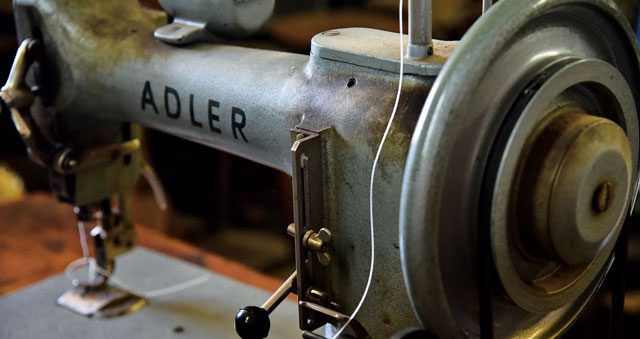
The Veach Saddlery grew and a boot department was added. His daughter, Imogene loved working in the shop and learned to weave cinches and stitching boot tops on a treadle sewing machine. In time, she got to do more intricate designs made by Monroe. He always had a pencil handy and once he created a design Imogene would then stitch it out.
When Peggy was ten or eleven, she recalled the pony business was booming and a gentleman in the Midwest had a large pony ranch and held a two day sale every year. He commissioned Veach Saddlery to make pony halters out of white latigo leather so each pony he sold was wearing a white halter at the sale. Monroe had all the leathers cut, and Peggy could put together a gross (144 halters) in a day. Peggy remembered her dad took her to the pony sale one year and saw all her halters leaving the auction area on those ponies. The Veach Saddlery was truly a ‘family affair’.
When Robert Robinson, Peggy’s husband, went to work for Monroe he built saddle trees. Robert remembered being taken to the tree shop, and Monroe showed him the patterns, the band saw, and described the process of making a saddle tree. “When I went to ask a question I turned around and Monroe was gone” recalled Robert. “He let his employees learn from their mistakes,” said Robert and Peggy’s son, Craig, who also has been on the payroll since he was fourteen. Monroe never got mad. He’d just say “Don’t let that dog bite you again.”
Veach Saddlery sold to numerous dealers across the country. They began putting out a catalog of their various leather goods and inventory. Robert Robinson was their salesman and he traveled and called on dealers in Iowa, Illinois, Kansas, Oklahoma, Missouri and Indiana. They also had a booth at the Western Market in Denver in the 1960s and 1970s. Other dealers ordered from the catalog. The last catalog was sent out in 1983 and was #14.
In 1976, the Bicentennial USA year, Monroe went to the Smithsonian Institute in Washington D. C. at their invitation to do a saddle-making demonstration. It was held near the Washington Monument Mall and in addition to the saddle that he made there, he brought a completed ‘Bicentennial’ saddle that he gave to the Smithsonian. Bryan Dew, a film-maker from New Zealand, attending the event watched Monroe build the saddle. Visiting with Bryan, Monroe’s passion for the West became evident and Dew began an extensive film shoot featuring Monroe. Dew and his crew worked on this project for ten years. Although it took longer to complete than Dew had anticipated Peggy remembers that it was her job to keep Monroe in the same shirt, hat, etc. – – – for the ten year span so the resulting documentary looked like it was done in a brief length of time. “A Ten Dollar Horse and a Forty Dollar Saddle” was the result, and was released in 1986. It was all about Monroe and his talents in the leather-making industry, his love of rodeo and performing as a trick roper, and telling tales of the West and so much more. When it was completed Dew learning that Monroe was ninety years old, and not in good health, hurried to Trenton and the film was shown at the local junior college for the entire community. Monroe passed away that year on Christmas Day. Two years later “A Ten Dollar Horse and a Forty Dollar Saddle” was given a Bronze Wrangler Award by the National Cowboy & Western Heritage Museum in Oklahoma City, OK. In 1993 Monroe Veach was inducted to the Rodeo Hall of Fame there as well.
Veach Saddlery has continued to prosper, with Peggy, husband Robert and son Craig in charge. Things have changed somewhat but the basic principles taught family members, spouses and friends have never been forgotten. In fact, knowing how far-reaching Monroe’s creativity and his love of the West have spread, it seems the entire family can be called ‘Throwbacks’. The definition of throwback is: ‘a return to a former type or ancestral characteristic’. A tradition in the family of Monroe Veach and his talents and desires that have carried over and influenced the lives of each and every generation since then.
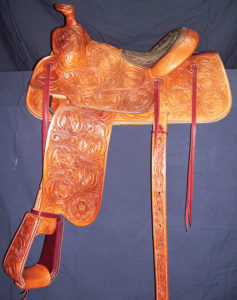
Peggy, Robert and Craig, have continued to build saddles and leatherworks. Craig started his career sweeping floors. He has moved up to the responsibility of becoming their custom saddle expert. Peggy, who has kept her dad’s books which include the list of saddles by serial number (which is the actual number of the saddle made at the shop) remembered that in 1932 the first trick riding saddle was made for Lucyle Richards, a beautiful trick rider and lady bronc rider that the family kept a friendship with for her lifetime. Peggy also reported that the last saddle finished at the end of 100 years was number 18,949!
In their spare time the Robinsons have been ropers. In fact, Peggy, cut her thumb off roping, a common roping injury. Fortunately, she was able to have it reattached. They also attend and keep up with the rodeo world and the people in it, not only in their home state but across the country and in Canada. Through the customers they have satisfied during the past century they can name people from every state, as well as Canada, and they have sent saddles to Belgium and South Africa.
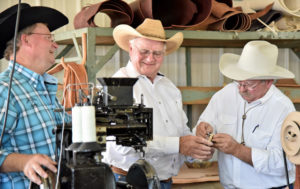
Drew Clark, Kenny Veach and Cary Veach, taken in saddle shop ,Drew Clark Saddles at Veach Saddlery, Clark-Beals Ranch, Colcord, Oklahoma – Rodeo News
100th Anniversary saddle – Courtesy
Drew Clark, Duke Clark, Robert Robinson, Kenny Veach, Cary Veach (all saddlemakers) at the Clark-Beals Ranch
Billy, Munroe’s first born, put on rodeos until he was killed in a truck accident in 1957. Many members in the family came together to complete his rodeo contracts, after his demise, then sold the rodeo stock. Billy’s sons, Kenny and Cary both worked in Monroe’s shop, and now have their own shops. Kenny Veach Custom Leather is in Mount Vernon, Missouri. Cary after being a saddle bronc contestant makes and repairs rodeo equipment for the roughstock events, and is located in Ankeny, Iowa.
Roughstock rider, Charley Beals, married oldest daughter, Imogene, and once World War II was over Charley worked for Monroe and learned the trade. In 1945 they opened Veach Saddlery in Tulsa Oklahoma. Rodeo cowboys traveling through Tulsa never hesitated to stop at the shop and say hello. Charley and Imogene had one daughter, Donna Kay. She married Duke Clark, a roughstock rider from Trenton, who also trained horses, played polo, and has competed in pulling horse contests and presently ranches. Duke did work in the Tulsa shop and Imogene trained him to tool and make saddles. Charley retired in 1985 and closed the shop. In 2007 their grandson, Drew re-opened it at Colcord, OK. One of his specialties is the Doug Clark Roping Saddle. Doug, another grandson, was All-Around Cowboy at Cheyenne Frontier Days and Steer Roping Winner at Pendleton RoundUp, two of the largest, prestigious rodeos in the country. He also trains timed-event horses and has had horses he trained in National Finals rodeos every year for over 35 years. Doug and wife Linda’s daughter, Darcy, and her husband, Billy Good are roping presently and doing well. Third grandson to Charley and Imogene, Derek, was a saddle bronc contestant and qualified for the National Finals Rodeo fifteen times.
Mary, second daughter of Monroe, and husband Al Cunningham, had a Veach Saddlery shop in Branson, Missouri, for a time. Both are deceased. Letty, Monroe’s third daughter, and husband, George McAlister, not only handled the tree shop in the beginning for Monroe, but also announced rodeos for the Veach Rodeo Company. Letty in her younger years was a trick rider and she and her three sisters were always available when Monroe did his trick roping horse catch of the four girls.
Ben, Monroe’s youngest son, invented a stainless steel, one piece, stirrup buckle. He was the rodeo clown in the 1940s rodeos for Veach Rodeo Company .
Throwbacks, each and every member of Monroe Veach’s family and their off-spring and the next three generations are connected in some way to the world he created. When interviewing these individuals their answer to the question: “Have you ever considered doing anything else?” The answer is always the same, “No, why should I? I love what I do.”
A hundred years later there is no question to the stability of Veach Saddlery in Trenton, Missouri, and the others scattered around the country that came from Monroe’s passion for the cowboy life. The legacy he created and left has only expanded the commitment and desire for saddle-making, trick roping, trick riding, and competing in rodeo. Some of his youngest family members may not do it all, but they at least are involved in one or more aspects of the life he lived.
Monroe Veach was posthumously inducted to the National Cowboy & Western Heritage Museum’s Rodeo Hall of Fame in 1993. His son-in-law Charley Beals was inducted in 2010. His great-grandson, Derek Clark was inducted in 2018. His daughter, Imogene was the recipient of the Tad Lucas Memorial Award, and his great-grandson, Doug Clark was the recipient of the Ben Johnson Memorial Award. These honors were bestowed on these members of Monroe and his family because “they loved what they did for a living”. Can it be any better than that?
Liz was born to Chesley Russell and Irene Faulkner Russell on June 10, 1926 in Clay County, Texas just south of Henrietta. She had one sister, Margie, two years older. They lived in a two story home on a farm/ranch located on Old Joy Shannon Road which had belonged to her paternal great-grandparents. Her daddy was born in that house, too.
Their young lives were idyllic for young country girls. Liz and Margie had dolls galore, buggies for dolls, paper dolls, and a trike to ride. They had a swing and playhouses under the trees. They also got together with other children in the community at Sunday School as well as socials that were held in the area.
When Liz was old enough to go to school she went to the Bluegrove School for the first nine grades. There were 15, or so, in her class and several grades were in one room with one teacher. They had programs for parents with students performing. The principal, Mr. Gilbert and his son both played the fiddle. Mr. Gilbert taught Liz to play the bass fiddle. It took some doing, not because Liz had trouble learning, but because Liz wasn’t tall enough to stand and play the bass fiddle. First they removed the peg from the bottom of the fiddle to make it shorter, but Liz was still to short. Solution: They stood her on a box and she played just fine!
Liz was always an honor student and was valedictorian at her grade school graduation. She only attended school for eleven years and the last two years she was at Henrietta High School where she took typing, bookkeeping and regular courses.
Liz Kesler and Dr. Greer
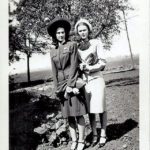
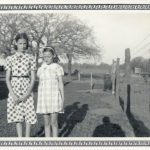
1944 – Margie and Elizabeth Russell
1934 – Margie and Elizabeth Russell
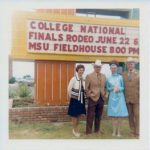
Anna Lee and Bud Purdy, Liz and Reg Kesler
Her dad was always interested in rodeos, both in Henrietta and in Fort Worth. The family always went with him to rodeos and Liz found it a special treat. She was always interested in the events and the rodeo people. When Liz was 17, at the rodeo in Henrietta, one of the timers did not show up. The announcer saw Liz as she was finding her seat in the grandstand and asked her if she would time. She did not hesitate. Obviously she did a good job because it wasn’t very long before she was asked to time other area rodeos.
She was hired by Mr. Gilbert, her former principal, who had become the Superintendent of Schools in Clay County. Her position was Assistant County Superintendent of Schools for Clay County. Her office was located in the court house in Henrietta. She held that position for eight years. Later Liz attended Draughan’s Business College in Wichita Falls to get more business training. She was an excellent administrative person and was eager to gain more knowledge and skills.
Liz met June Bull from Pampa, Texas, and when June finished high school her parents hoped she would want to go to college. Instead it was June’s desire to barrel race. Being their only child her parents were patient with her and agreed. Liz traveled with June Bull to various rodeos around Texas and beyond. At first, Mrs. Bull traveled with them. They always had such a good time and found people in rodeo easy to get to know. It wasn’t long before the rodeo people they met seemed just like family. By the early 1950s they were going to rodeos further from home. Cheyenne Frontier Days, Madison Square Garden Rodeo in New York City, the Boston Garden Rodeo and many others. By this time Liz had resigned her job as Assistant County Superintendent and could travel the country.
In time, Liz went to work for Standard Oil Company, and was offered a transfer with a substantial increase in salary and title. The transfer took Liz to Liberal, Kansas, which seemed like ‘the end of the world’ to her. Fortunately she could still see friends when she worked at a rodeo. She and June learned to secretary rodeos together and soon their reputations as ‘outstanding’ rodeo secretaries spread through the rodeo world.
She often worked in the rodeo office for Everett Colborn, who was the ramrod of the World’s Championship Rodeo. He had some of the biggest and the best rodeos in the country. His daughter, Rosemary, who married World Champion All-Around Cowboy, Harry Tompkins, was generally her dad’s secretary and often Liz would assist or do whatever was necessary.
In 1954 June Bull and Buster Ivory, a bronc rider, were married during the Cheyenne Frontier Days at a Methodist church in Cheyenne. Liz was maid of honor and Jo Decker was matron of honor. Casey Tibbs, World Champion saddle bronc rider and Bill Ward, also a bronc rider were Buster’s attendants. Bill Linderman, All-Around World Champion and President of the Rodeo Cowboy Association, gave June away. Mr. Bull was not ready to give his only daughter up and refused to attend the wedding. It was truly a rodeo wedding.
Liz met Reg Kesler, in Oklahoma City during the 1966 National Finals Rodeo. Liz was a good friend with Jim and Sharon Shoulders, Clem and Donna McSpadden as well as June and Buster Ivory. All these people were good friends with Reg. He was a former three-time All-Around Champion cowboy in Canada who worked every event. He was from Alberta, Canada and went to college there, but was more interested in playing hockey or riding bucking horses. It was evident his life was going to be rodeo. He also collected bucking horses and in 1951 he produced his first rodeo. He had become a well known stock contractor and produced rodeos in Canada and the United States until 1995. Later they became an item.
They married in Bozeman, Montana in 1971 during the NIRA (National Intercollegiate Rodeo Association) Finals. Those attending their wedding in the Methodist Church were Liz’s mother, and niece, Phyllis Jones, and good friends Bud and Anna Lee Purdy. Liz remembers that Byron Walker and Martha Tompkins were among the college students competing at the rodeo. She assisted announcer Don Harrington by identifying the various college contestants and what colleges they represented.
Two days after their wedding Liz was secretary and timer at the Red Lodge, Montana, rodeo. The newlyweds lived in Missoula, Montana and Rosemary, Alberta, Canada, but traveled most of their time on the ‘rodeo road’. They produced rodeos in Denver, Houston, San Antonio, all over the province of Alberta, all over Montana, Idaho and too many other places to mention. Often Reg would be hauling stock to one rodeo and Liz would be heading another direction and putting on a rodeo somewhere else. Reg trusted Liz and knew she had the skills and ability to run a rodeo the right way. Liz often was responsible for getting the cowboys monies to the bank and traveled by herself many miles with never a problem. They were a good team.
Reg was very instrumental with two other men in starting the ProRodeo Cowboy Association Circuit Finals in 1987. It was held in Pocatello, Idaho, and Reg not only helped organize it, he backed it financially, as well as offered his knowledge and his stock for the event. This allowed all 12 circuits in the United States to send their best cowboys in each event to compete against each other. A circuit was made up of one state, or more, depending on the rodeo activity in the states. PRCA cowboys could register for one of the twelve circuits. Liz was the secretary at the very first circuit rodeo held, which was in Montana. She, also secretaried the first National Circuit Finals in Pocatello. This additional level of competition helped the cowboys, who held jobs or were needed on their own ranches and couldn’t rodeo full time, earn more money.
Reg had outstanding broncs for both Saddle Bronc and Bareback events. He had good stallions that bred good bucking stock. Liz once said, “Reg only had to see a horse buck one time to know if it was going to be a good bucking horse.” His horses were chosen as top horses many years in the RCA, PRCA and the National Finals Rodeo. He also had some bucking bulls that were tops, too. He continued in the rodeo business until 1995, when his grandson, Duane Kesler, bought the business. Reg was inducted in to the ProRodeo Hall of Fame, the Canadian Rodeo Hall of Fame, Alberta Sports Hall of Fame and the Rodeo Historical Society Rodeo Hall of Fame in Oklahoma City. He was well respected and appreciated in the rodeo world.
Liz also began teaching others to secretary rodeos and held schools in Canada and also helped train secretaries in the U. S. At that time in rodeo the secretary was much more involved with those entering rodeos as it was all done by telephone directly calling the secretary. There was so much more ‘hands on’ administrative work done by the secretaries. They were working without all the technical machines and computerized programs that are in use today.
Liz, Donna McSpadden, Sharon Shoulders, June Ivory, Irene Harris and Nell Shaw started a Ladies Fashion Show during the National Finals Rodeo held in Oklahoma City in 1967. In the beginning they used contestant’s wives and mothers to model the clothing in the show. The local stores and boutiques were so gracious and allowed the gals to come in to the store and pick whatever they wanted to model. This style show has continued annually during the National Finals Rodeo in Las Vegas. It is still being organized by the wives of today’s contestants. The proceeds from the show, including sales of auction items and cost of the show are now given to the Justin Crisis Fund which helps cowboys that are injured or have a serious financial problem pay bills other than their medical bills.
When Liz’s mother became ill she and Reg came back to live with Mrs. Russell so Liz could help care for her. In 2001 Reg went back to his Canadian ranch on business and was tragically killed in an automobile accident. He was 82. It was a big shock to Liz and the entire rodeo world, Reg was still very active in rodeo.
Reg and Liz were involved with Buster and June Ivory in holding the Cowboy Reunion, during the National Finals each year. Today Liz is the ramrod of the event, held in Las Vegas, and still gathers the ‘movers and shakers’ in rodeo, from all across the United States and Canada, each year. The proceeds from this 501c3 organization, are given to the Justin Crisis Fund, the ProRodeo Hall of Fame and Museum of the American Cowboy and the Rodeo Historical Society.
Presently Liz lives in the family home which has a 130 year history for the Russell family. When her mother died, at the age of 98, Liz became much more active in the community and the county. She is a founding member of the Clay County Historical Society, and was a chairperson for the renovation of the museum. She is also involved in the Pioneer Reunion and rodeo and was chosen Pioneer Reunion Queen in 2000. She is a member of the Bluegrove Baptist Church. Her great-grandparents gave an acre of land for the Bluegrove Cemetery of which she is a member of the cemetery board. She also is a Clay County Memorial Hospital Foundation board member. In 2010 Liz received the Silver Award from the Retired Senior Volunteers of North Texas (which includes 17 counties). In 2013 she was honored as the Outstanding Senior Citizen of Clay County.
In the rodeo world she was honored by the Women’s Professional Rodeo Association in 1984 for her contribution to them which involved making each PRCA rodeo in Montana also a WPRA rodeo for the barrel racing event. At that time WPRA had to get each rodeo committee to agree to their requirements and Liz got the entire state committed. She also received the Montana Governor’s Award for the preservation of our western heritage in 1986. In 1988 Reg and Liz were honored as Outstanding Citizens of Missoula Montana. The Kesler outstanding bucking horse, Three Bars was inducted in to the ProRodeo Hall of Fame in 2004 and Liz accepted. In 2008 Liz and Reg were inducted in to the Texas Rodeo Cowboy Hall of Fame. Liz received the Tad Lucas Memorial Award at the National Cowboy & Western Heritage Museum, in 2010, which is given to women who give above and beyond what is expected of them in rodeo as did the namesake, Tad Lucas. That same year Liz and Reg were inducted in to the Montana Wall & Hall of Fame in Billings. In 2013 Liz was given an American Cowboy Culture Award as Pioneer Woman at the Cowboy Symposium held in Lubbock, TX.
She helped organize and is a member of H.A.N.D.S. which stands for Help A Needy Diva Survive. It is a fifty member group of rodeo women, dedicated to helping any rodeo family member who has been injured or has medical problems and may need help either financially, or emotionally.
Liz has enjoyed her life immensely. She has worked hard at everything she has done, and accomplished much. She has never hesitated to assist when anyone needs help. Liz is actually an important part of three families. Her own family, including her sister Margie, Margie’s children, grandchildren and great-grandchildren, as well as Reg’s children, grandchildren, and great-grandchildren and the rest of her relatives; her second family is the rodeo family which includes everyone who has had the good fortune to meet her or worked with her at rodeos and rodeo functions. Especially the young cowboys, who were just starting out in rodeo and love her so much for all the help she gave them when they were still ‘wet behind the ears’; and last but not least her Clay County family which grows with each and every event Liz participates in.
Liz is truly proud of her heritage and deep Texas roots. She has the manners and demeanor of a lady. She gains the respect of everyone she meets because of her gracious ways. She is no where near finished making memories and living her life to the fullest. Don’t expect to see her sitting in a rocking chair and watching the world go by. She still has much she wants to do, so many events to attend and so many friends to see.