Rodeo Life

Blog

  • ProRodeo targeting Memorial Day weekend for rodeo competition

    ProRodeo targeting Memorial Day weekend for rodeo competition

    COLORADO SPRINGS, Colo. – ProRodeo is targeting Memorial Day weekend for a return to competition, PRCA CEO George Taylor told The Cowboy Channel in an interview Saturday.


    Taylor addressed several topics in the interview, including the affect the COVID-19 pandemic is having on PRCA rodeos and a timetable for the possible return of rodeos.


    “You know, sooner is better, for sure,” Taylor said. “We’re really hopeful Memorial Day weekend (May 23-25) that we can get something started. We’re working very closely right now with Fort Smith (Ark.) and the local officials there in order to have a rodeo. Whether that means it is a fan-less event or reduced occupancy style of event, that’s really our direction and what we are going to try to pull off because we do need to get the rodeo engine going and have everybody in these communities see some encouraging things. We are really excited about the potential of starting that on Memorial Day weekend.”


    The “Kick Open the Chutes” PRCA incentive plan, which will help rodeo committees, is also something Taylor discussed.


    “The big focus of this is, ‘How do we get going?’” Taylor said. “What we are going to do as the PRCA is we’re looking to partner with PRCA rodeo committees to begin to understand what they can do to just say, ‘Yes.’ … These are challenging times. How can we supplement some of the things the local committees are trying to do, whether they have lost sponsors, their gate might be reduced substantially, or maybe we are just helping to try and give them a backstop of some additional funds.


    “The PRCA wants all our committees and communities to know that we are very flexible, that we work with them on the format, the number of days, but we really want to get going and create some good for all of our membership, for the committees and the communities they serve, as well as their charities. We are starting out looking through June initially just to provide some incentive and some additional stimulus to get rodeo going.”


    Taylor also touched on the 2020 Wrangler National Finals Rodeo in Las Vegas, Dec. 3-12.


    “We’re having regular conversations with them and we have gone to weekly meetings,” Taylor said. “We’re really working on what’s the format going to be in terms of additional entertainment we might have and how do we make this NFR even better than the last one. We’re beginning to have some of those discussions now and (are) working with them. Obviously, it’s really critical for Las Vegas to open back up. We’re hearing some rumors that in May, early June, we will start to see some of the casinos open again. We can just hope and pray that there’s no additional spikes of activity relative to the virus and that we can get that planned and have our season and have that crowning of our world champions on our normal schedule.”


    Taylor also talked about the Paycheck Protection Plan (PPP) and encouraging members to apply with new stimulus money available.


    “The President (Donald Trump) just signed nearly another $500 billion into stimulus that will help fund that,” Taylor said. “Our membership, much of it, is eligible for those types of forgivable loans as they go forward. So, we’re really wanting to make sure that our members are utilizing those things and pursuing them. The money had run out, but now it has been replenished, and we need to act fast and keep everybody with money and food on the table, if you will.”

  • IFYR postponed until next year

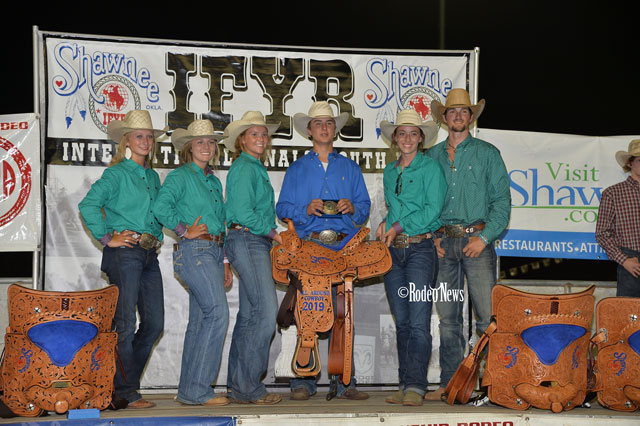
    IFYR postponed until next year

    To Our IFYR Family,

    After much discussion and reflection the Board of Trustees for the Shawnee Civic

    & Cultural Development  Authority have decided to postpone the International

    Finals Youth Rodeo activities scheduled for July  12th – 17th 2020 until next year. The

    2021 dates will be July 11th 16 th right  here in Shawnee, Oklahoma.

    The decision was not made lightly and the health of our athletes and their families, volunteers, rodeo personnel and staff is the top priority of the board during this unprecedented time.

    The IFYR is more than an event it is a family. Those who have been involved through the years know the importance of the relationships, memories and opportunities fostered during rodeo week and we anticipate this to continue with the 2021/FYR.

    To our athletes, volunteers, staff and fans know that you are in our prayers as we all face this together and we will be back next year ready to go.Watch for updates as they become available.

    We will see you next year at IFYR 2021!

    Shawnee Civic & Cultural  Development Authority

    Board of Trustees

  • ProRodeo Hall of Fa  me announces 2020 inductees

    ProRodeo Hall of Fa me announces 2020 inductees

    COLORADO SPRINGS, Colo. – Renowned bareback horse Grated Coconut of Calgary Stampede headlines an award-winning, eight-member class of inductees that will be enshrined in the ProRodeo Hall of Fame in Colorado Springs, Aug. 1.


    Grated Coconut, who won a PRCA-record six Bareback Horse of the Year awards, is joined by six-time world champion Cody Ohl (tie-down roping, 1997-98, 2001, 2003, 2006 and all-around, 2001); world champion bull rider Butch Kirby (1978); stock contractor Jim Sutton Jr.; contract personnel Suni Deb Backstrom; notable Randy Witte; rodeo Ellensburg Rodeo and world champion barrel racer Martha Josey (1980).


    Grated Coconut – Bareback Horse


    Grated Coconut has no equal as a PRCA bareback horse. He was named Bareback Horse of the Year in 2003-04 and 2006-09 and was the top horse of the National Finals Rodeo in 2008.


    “We’re excited to say the least,” Calgary Stampede’s Keith Marrington said. “For the Calgary Stampede, this is a great honor to have one of their animals recognized on the world stage. We retired him in 2010 because we needed to use his services to keep our program alive and (for) more years to come. He’s a very unique horse and the face of the Calgary Stampede breeding program. We’re just delighted to have him recognized by such a great organization as the PRCA. That’s the ultimate recognition when you retire, and you go into the Hall of Fame and you are recognized by your peers is pretty special.”


    Grated Coconut, 23, lives on the Calgary Stampede ranch in Hanna, Alberta.


    “He was special in and out of the arena,” Marrington said. “When he was in the arena, the guys knew anytime they drew Grated Coconut they had the opportunity to make money. He was that special horse. He was very consistent. He was athletic and honest. He would give the guys an opportunity to get out on him in a respectful style. He did his job and if guys did their job, they certainly had the opportunity to make money. Outside the arena, he was just a different horse, he was very gentle. The horse was halter broke. He has a great demeanor and has passed those genetics on to his offspring.”


    Grated Coconut was inducted into the Canadian Professional Rodeo Association Hall of Fame (2012) and the Ellensburg (Wash) Rodeo Hall of Fame (2013).


    Cody Ohl – Tie-down roper, all-around


    At 46 years old, six-time world champion Ohl will add the title of ProRodeo Hall of Famer to his long list of accomplishments.


    “It’s the greatest feeling in the world,” Ohl said. “You dream of being a world champion your whole life, and it only gets to be real for so many. To be inducted into the Hall of Fame for a great career is pretty amazing.”


    After winning the 1994 PRCA Overall Rookie of the Year, the Texas cowboy collected six world champion buckles. He also qualified for the Wrangler National Finals Rodeo 20 times (1994-2001 and 2003-14) and the Clem McSpadden National Finals Steer Roping three times (1999-2001).


    With $3.5 million in career earnings, Ohl is second only to Trevor Brazile in total money won in ProRodeo competition.


    Ohl’s 20 NFR qualifications ties him for second-most in tie-down roping with Fred Whitfield. Only Mike Johnson has more with 23.


    Perhaps Ohl’s most memorable run came in a round at the 2003 Wrangler NFR when he clocked a time of 6.5 seconds, tying for the third-fastest time ever witnessed in ProRodeo.


    During his final trip to the Wrangler NFR, he won at least a share of first place in three rounds to extend his tie-down roping event record total to 52 round wins.


    Ohl also shares the record for most round wins in a single year, and he did it on two occasions. Ohl won five rounds in 2001 and 2013. The only other tie-down roper to win five rounds was Dave Brock in 1978.


    “Just to be surrounded by the ones in this class (of inductees) and the ones continuing to go in means the world,” Ohl said. “The money and prizes were great, but without all the awesome fans, none of it would be possible. Not only is it a great deal to be inducted, it’s awesome to have such a following.”


    Butch Kirby – Bull rider


    Gary William “Butch” Kirby started trick riding at 4 years old.


    He never really stopped, though his trick turned into staying on bulls for eight seconds at a time.


    Kirby won the 1978 PRCA world title in bull riding, earning $15,000 at the National Finals Rodeo that year, when roughstock world champions were decided by money won at the NFR.


    “I was a little bit surprised,” said Kirby, who will be 65 on April 24. “It’s an honor to be in this hall, especially because my heroes are in there.”


    Kirby qualified for the NFR eight times (1973-75, 1977-78, 1980-82). In addition to his world title, he also finished third twice and fifth once.


    When his bull riding career ended, Kirby never left rodeo. Instead, he became a pro official for 25 years for the PRCA. When the Wrangler NFR comes around in December, it will mark Kirby’s 30th NFR as a judge.


    Originally born in Salem, N.J., Kirby made Stephenville, Texas, his hometown.


    In 1975, he and his brothers Sandy and Kaye were the first trio of brothers to qualify for the Finals in the same year, with Butch qualifying in bull riding, Kaye in bareback riding and Sandy in both of those events.


    All three were trick riders before going on to careers in ProRodeo.


    Jim Sutton Jr. – Stock contractor
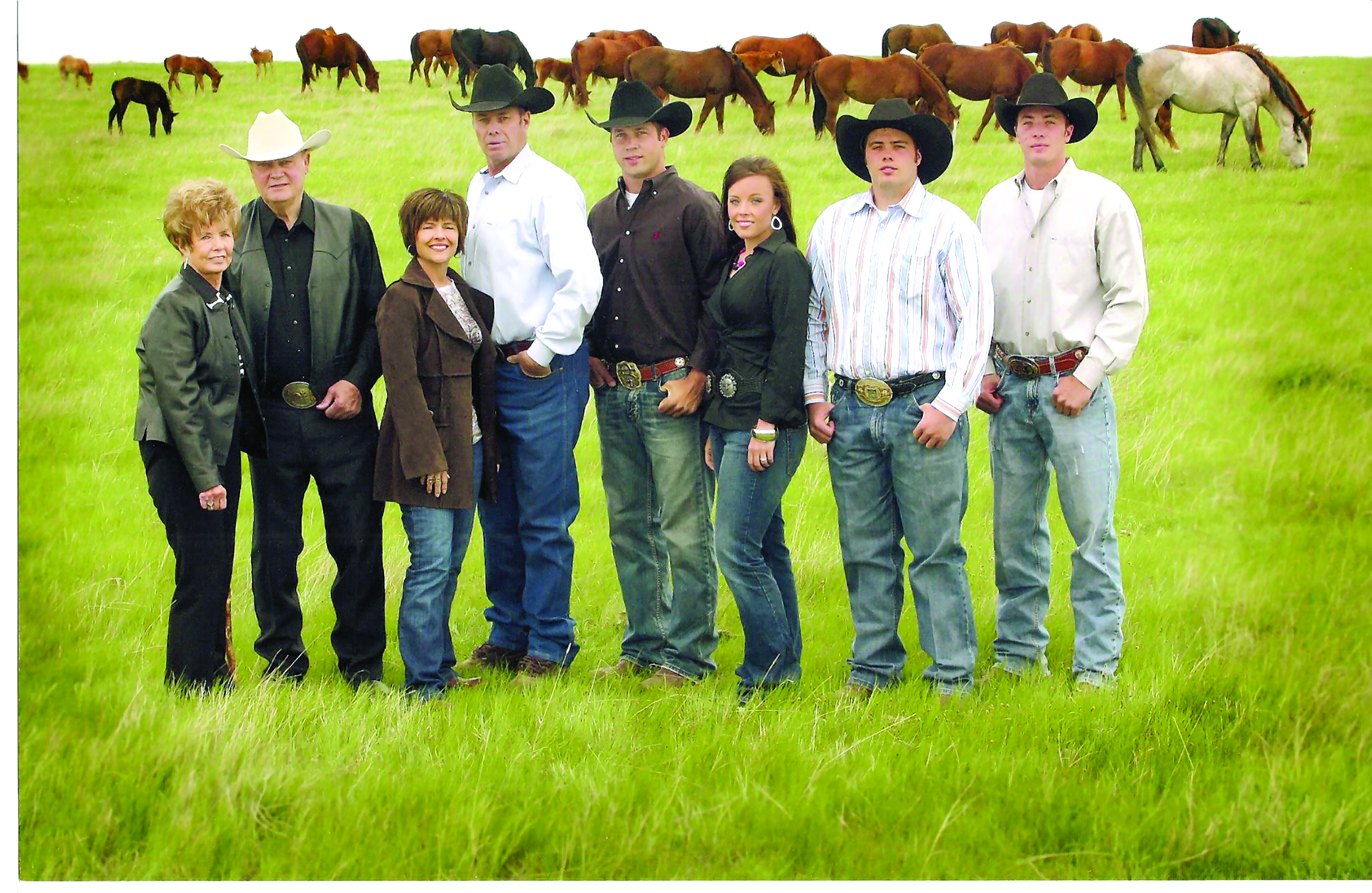
     

    Sutton is the patriarch of Sutton Rodeo, and he and his wife, Julie, have a six-generation family operation still running strong. Sutton Rodeo is based in Onida, S.D. Jim and Julie were the recipients of the 2017 PRCA Donita Barnes Contract Personnel Lifetime Achievement Award.


    Sutton Rodeo has had three PRCA Horse of the Year awards: saddle bronc horse Deep Water in 1979, bareback horse Big Bud in 1985 and saddle bronc horse Chuckulator in 2012. Chuckulator also was the top saddle bronc horse of the 2012 NFR. Sutton Rodeo stock has been selected to perform at every NFR since its inception in 1959 but one.


    “It’s my birthday (today, April 20), so this was quite the gift,” said Sutton, 85. “This is something I really appreciate. I have been inducted into a half dozen halls of fame, and if there’s one I wanted to be in this would be it. This is the best award I have ever received.”


    Jim and Julie took the company to the next level with a focus on production and innovation. Jim began the Black Hills Stock Show Rodeo in 1978, a rodeo nominated 15 times for PRCA Indoor Rodeo of the Year, winning the award in 2002-03. Jim originated the Wrangler Bullfights and the Bailey Bail-Off. He is famous for his pageantry and colorful rodeo openings, including the openings at the NFR in 1995-96. Jim has been nominated four times as Stock Contractor of the Year.


    “I put up with 20 of the best bullfighters in the world for 20 years, I thought that was a pretty good feat,” Jim said.


    The roots of the Suttons being involved in the rodeo business can be traced to 1926 when the Edwin Sutton family – Edwin was Jim’s grandfather – began producing rodeos on the home ranch in Sully County, S.D.


    James H. Sutton Sr. took Sutton Rodeo to the next stage in the 1950s when he entered a partnership with Erv Korkow. As one of the first members of the Rodeo Cowboys Association, Sutton/Korkow stock performed at the first National Finals Rodeo in Dallas in 1959.


    James was inducted into the ProRodeo Hall of Fame in 1982.


    “I don’t know anybody else I would rather follow,” Jim said.


    In 1968, James (Jim) Sutton Jr. became a partner with his dad, forming Sutton Rodeo Company.


    Sunni Deb Backstrom – Contract Personnel


    Backstrom, of Congress, Ariz., is a 17-time NFR Secretary (1991, 2000, 2003, 2006-19) who has earned PRCA Secretary of the Year 10 times, more than any other recipient, for her outstanding work as a rodeo secretary.


    She served as the contestant office manager at the 2005 Finals and three times as an NFR timer (1975, 1980, 1984).


    Backstrom was at a loss for words when she was notified that she was going into the Hall of Fame as contract personnel. Her mother, Ellen, was inducted under the same category in 1995, making them the first mother and daughter to be inducted into the Hall.


    “My mom was the first woman inducted into the ProRodeo Hall of Fame,” said Sunni Deb Backstrom, 61. “It was one of my proudest days. My entire life is the rodeo industry and always has been. It was my family’s life. It’s very overwhelming, I can’t tell you how much this means to me.”


    Ellen Backstrom was a four-time NFR secretary and was elected in the late ’70s to serve on the PRCA Board of Directors as contract personnel director, making her the only female to ever serve on the Board. She passed away March 22, 1988.


    “I can only aspire to be half as good as she was,” Sunni Deb Backstrom said. “She’s the epitome of a great rodeo secretary and loved the industry as much as I do. What I admired most about her was that she was so honest. She was really dedicated, smart and a forward-thinker.”


    Sunni Deb Backstrom received her first Rodeo Cowboys Association card in 1968 and her PRCA card in 1976. She works about 120 performances a year for prestigious rodeos such as Denver, San Antonio, Houston, Nampa, Idaho, and Waco, Texas. She has worked for Cervi Championship Rodeo since 1980.


    Randy Witte – Notable


    Witte hasn’t been one to be at a loss for words. He spent a career putting them down on paper.


    But when he was notified he was going into the ProRodeo Hall of Fame in 2020 as a notable, he wasn’t sure what to say.


    “That was the farthest thing on my mind,” Witte said. “I’m pretty much speechless. … It’s hard to sink in. I just told the rest of my immediate family. What a tremendous honor. It brings back a flood of memories.”


    Witte worked on the RCA news bureau and wrote for ProRodeo Sports News for seven years before transitioning to Western Horseman, where he worked for 29 years – the last 17 as the publisher.


    His career revolved around rodeo, even if he didn’t make it as a bull rider.


    “When I started out, I was going to be a bull rider,” Witte said. “I made some rides I was proud of. I had help from (Hall of Famer) Jerome Robinson. He taught me and other guys. But he was a lot more dedicated. In my case, it didn’t take me long to find my real course of life was rodeo writing not rodeo riding.”


    Witte, who lives in Peyton, Colo., worked in the RCA office in Denver leading the RCA news bureau. His job was to produce the weekly news release. He would also contribute to PSN, taking over as editor from 1976-77. Working at Western Horseman added to a career he thoroughly enjoyed.


    “I thought I had to go to where I could to tell the rodeo story,” he said. “It felt like I was doing good publicizing it the way I could. I got to meet past and present cowboys who were so interesting to talk to.”


    Ellensburg Rodeo – Committee


    With its centennial year on the horizon, the Ellensburg (Wash.) Rodeo has another cause for celebration as a 2020 ProRodeo Hall of Fame inductee.


    “This is great news, we feel very honored,” said Dan Morgan, Director for the Ellensburg Rodeo. “With everything going on lately, you know there’s been a lot of not-so-happy news out there right now, and it felt really good to get a call like this and brighten the day.”


    Since 1923 the Ellensburg Rodeo has grown into one of the largest ProRodeo competitions of the regular season.


    “The fact we have been around for almost 100 years is special, and we’re trying to continue on the sport of rodeo for the contestants, the fans and for the stock, and to support the Western heritage of our county, our state and our country,” Morgan said.


    While the Ellensburg Rodeo boasted a $368,274 payout in 2019, it’s also home to the Xtreme Bulls Tour Finale, which presented an additional $101,520 in prize money for an overall total of $469,974 – a staggering amount considering the population of Ellensburg is about 21,000.


    “Ellensburg is a small town, relatively speaking,” Morgan said. “The Ellensburg Rodeo is the biggest event in our town. It brings in a lot of revenue, and for a lot of businesses, that’s their big boom, Labor Day weekend.”


    Since 1998, three Ellensburg Rodeo directors have been awarded the prestigious John Justin Committeeman of the Year Award – Ken MacRae (1998), Joel Smith (2007) and Steve Adler (2013).


    “Our rodeo is 100% put on by volunteers, and our volunteers are more important than anything to us,” Morgan said. “We have our board of directors, our top hands and then there’s hundreds of volunteers. You don’t really think about just how many people it takes until you go to the rodeo and see the same people year after year. I’ve seen the same people volunteer for as long as I can remember, and I’ve been here my whole life.”


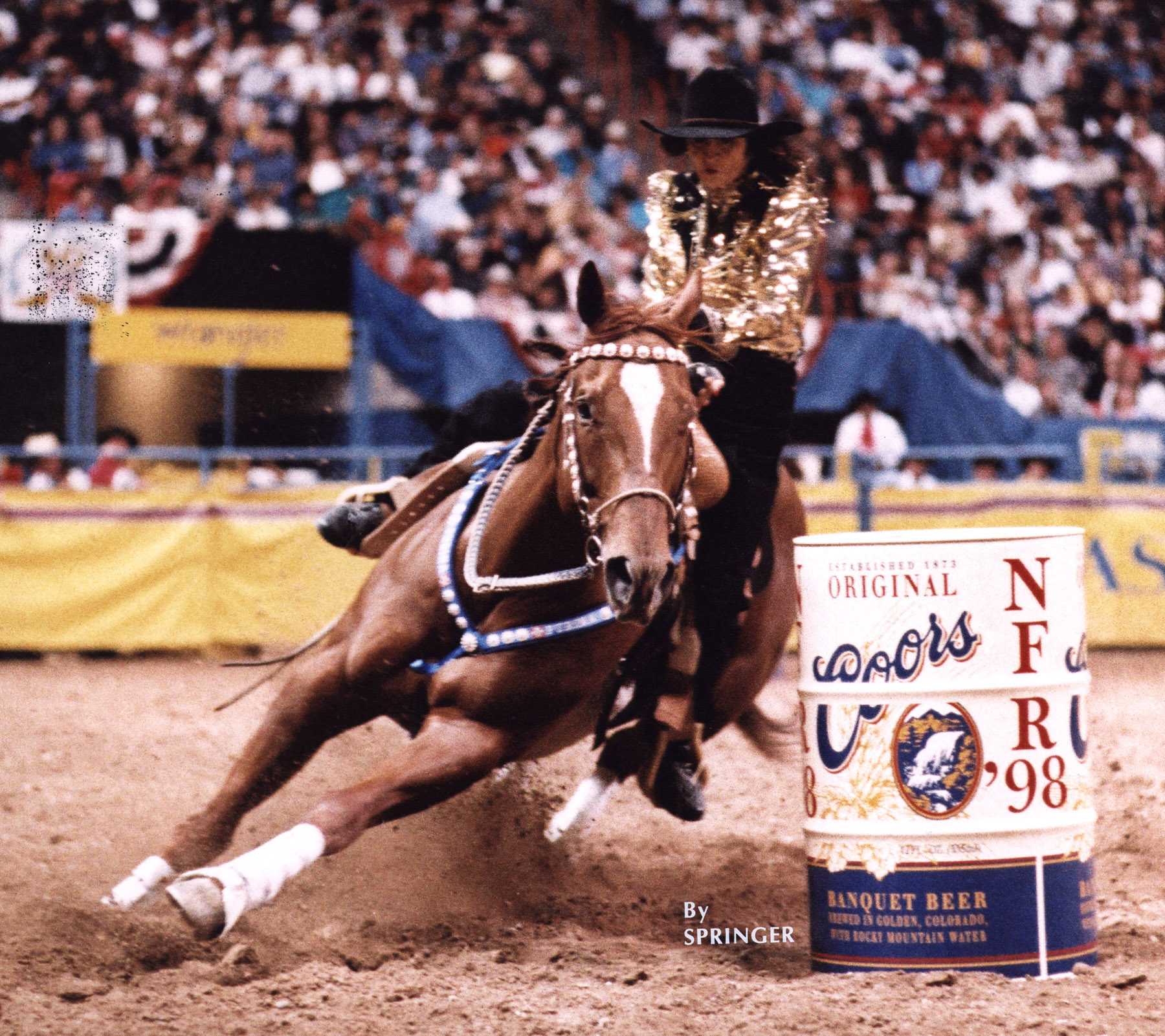
    Martha Josey – Barrel Racer


    Josey not only became a world champion barrel racer but got the opportunity to compete in rodeo during the 1988 Winter Olympics in Calgary, Alberta, that pitted the United States vs. Canada. Josey won an individual bronze medal and helped Team USA capture the team title.


    Josey, who resides in Karnack, Texas, qualified for the National Finals Rodeo 11 times on four different horses across a span of four decades. She won her world title in 1980 on Sonny Bit O’ Both, the same year the duo also won the AQHA World Championship, a feat that hasn’t been matched.


    “I am so excited and just don’t know what to say, I am in shock,” the 82-year-old said upon learning of her induction. “I have received some great honors in the past, but this is among the very highest. It is a true honor to be included in the ProRodeo Hall of Fame in the WPRA category alongside so many great athletes and personnel.


    “I thought four years ago when the WPRA inducted their first class it was just magnificent, and to get the call today is just wonderful. I am so honored.”


    Not only did she make a name for herself in the arena but also has given back to the sport through her clinics. She and husband, R.E., started conducting barrel racing clinics in 1967 at their ranch in Texas. Many of today’s world champions credit Martha Josey with helping them achieve their goals. Her clinics have grown to average more than 1,500 students annually.


    In addition, the Joseys have been involved in creating new and innovative barrel racing saddles, pads, protective boots, knot reins, and combination bits. The result has been increased safety and increased barrel racing skills.


    She can add ProRodeo Hall of Fame to the list of halls she has been induction to, including the National Cowgirl Hall of Fame, the National Cowboy and Western Heritage Museum, the Texas Cowboy Hall of Fame, the Texas Rodeo Cowboy Hall of Fame, and the Ark-La-Tex Hall of Fame.


    The WPRA contributed to this report.
  • Back When They Bucked with Bob Click

    Back When They Bucked with Bob Click

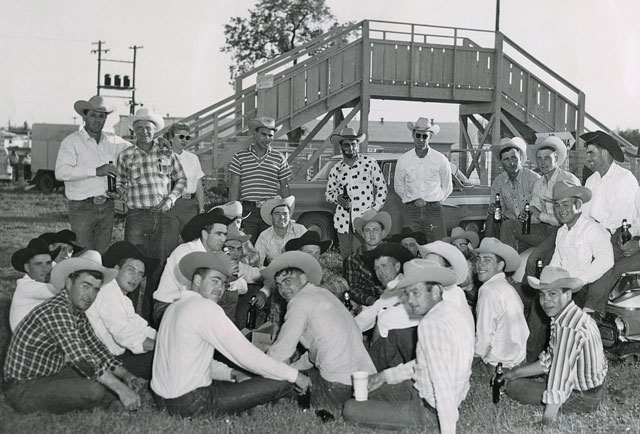
    Bob Click was never a threat to any big-name cowboys, but he loved to compete. “Jim Shoulders never lost any sleep over me,” Bob quipped, “although I knew him personally and liked him.”
    Born the son of O.B. and Thelma Click, on the family farm near Warren, Oregon, just south of St. Helens, Bob rode calves and cows at junior rodeos, helped feed the polled Herefords on the farm, and was derisively nicknamed “Cowboy Bob” by his classmates at school.
    He and a buddy, both farm kids, were members of 4-H and FFA and “we were taunted at school,” Bob remembers. “They thought you were a clod and a hick” if a person did 4-H and FFA.
    But rodeo remained a constant throughout Bob’s life.
    In junior rodeos, he competed in every event, but in high school, it was narrowed to bareback horses and very few bulls, “mostly to please my mother, because she didn’t want me getting on bulls,” Bob remembered. He qualified for the Oregon amateur finals (now the Northwest Pro Rodeo Association) in the bareback riding, and added bull riding to his repertoire.
    In 1954, at the age of seventeen, he enlisted in the U.S. Navy. He saw guys, during their leave, who would buy a bottle, sneak it into the movie theater, finish off the bottle and sleep it off, then head back to the boat after leave. That was not for him. “I saw enough of that that I wanted no part of it,” he said. One day, in the paper, he saw a rodeo being advertised in Santa Anna, Calif., so he got a Greyhound bus ticket, headed to Santa Anna, and watched the rodeo.


    The bucking bulls didn’t look any tougher than what he’d ridden back at home. “I looked at the stock, and it didn’t look any worse than what I was getting on at amateur rodeos,” Bob said.
    At the time, the Rodeo Cowboys Association, the predecessor to the PRCA, was allowing those serving in the military to compete without having a card, so Bob went for it.
    And any time he had “liberty,” or leave, he was at a rodeo. “I had a 72 hour pass every weekend,” he said. Stationed at Mare Island Naval Ship Yard in Vallejo, Calif., northern California was full of rodeos in the summertime. “I was at a rodeo every weekend, sometimes two a weekend.”
    In 1957, before Bob left the Navy, he bought his RCA card. Stationed in an active submarine, he made port in Japan, and mailed his membership fees to Denver, so he could compete at the Cow Palace in San Francisco, Calif.
    After the Navy, he got a job at the phone company and continued to ride bulls. He wasn’t the best bull rider around, but that didn’t bother him. “I was getting bucked off bulls all the time, but I didn’t care,” he said. “I loved being there, being part of it.”
    He’d come to work with the typical bull riding injuries, and be put on “light duty.” After a six month probation, workers couldn’t be fired, so he knew that wasn’t an issue. But one day, his supervisor pulled him aside. “You’re a hard worker,” he told Bob, “when you can work, and we love your rodeo stories. But you can’t make a career out of light duty.” Bob told him he’d take his words under advisement.
    Not long after that, in 1963, Bob was in a bad car wreck, breaking vertebrae, and his bull riding days were over.
    After he healed, he did some scuba instructing. He had learned to scuba dive in the Navy for submarine escape training and took instruction on shooting a camera underwater. His parents had given him a Brownie Kodak camera for eighth grade graduation, and he enjoyed taking pictures. This knowledge would come in handy down the road.
    Married to his first wife Beverly in 1958, she loved rodeo as much as he did, and even after he got hurt, they would attend rodeos. But it was hard to buy a ticket and sit in the grandstand when he was used to being behind the chutes.
    One year, the county fair was happening in Vancouver, Wash., and Bob noticed there was a bull-a-rama. He bought a ticket, grabbed his camera, and took a few pictures.


    The next week, at a rodeo in Longview, Wash., he took his developed pictures from the prior week and went behind the chutes. Ron Hall, a bull rider whose dad, Tom Hall, had been one of Bob’s rodeo peers, grabbed his buddies and said, “come look at this guy’s pictures,” Bob said. “I had printed eight by tens, and they bought them all immediately. I was hooked then,” he remembered.
    Bob also helped his friend, Jim Smith, a tie-down roper, with a roping jackpot he produced near Molalla. Bob was the chute boss, but he brought his camera along and took pictures. The cowboys “loved having pictures of themselves,” he remembered.
    His underwater photography learning came in handy. “I learned the basics of photography from my underwater photography,” Bob said. “That helped more than anything.” The use of a strobe light in dark settings, like underwater, was similar to the use of a strobe shooting rodeo pictures after the sun went down.


    His hobby grew. It was the early 1990s and he was still working for the phone company, and taking rodeo pictures in the evenings and weekends. At the time, there were six rodeos in the Portland area that he could work and still be home every night.
    Being adept at photography and understanding rodeo didn’t necessarily mean that rodeo photography was easy, he said. “I had a lot of rodeo experience and a lot of photo experience but I did not have rodeo photography experience,” he said. “I had to learn it.”
    One of the people who helped him was Fred Nyulassy, also a rodeo photographer. “I was very fortunate to meet a nice guy,” Bob said. The two were Navy veterans, and they hit it off. “He is one of the best.”
    Bob also worked for three different news services, providing rodeo photos for them. The East Oregonian (Pendleton, Ore.), the Bend (Ore.) Bulletin, and the Spokane (Wash.) Spokesman-Review used his photos and loved them.
    Before he retired from the phone company, Bob worked as many as twenty rodeos a year, including the National Finals Rodeo, which he photographed for eighteen years.
    He retired from the phone company in 2003, and by this time, he had remarried. Jean, his second wife, had helped care for his three kids while Bob was on the road doing construction for the phone company. They became close, and married in 1963.
    In 2013, while he was shooting the National Finals, he got a call as he traveled home. Jean had died in her sleep. He had adopted her daughter, Michelle, who is handicapped and lives with Bob. The next year was his last one to work the National Finals; he couldn’t be gone from Michelle, who needs him at home.
    Now retired, he takes photos at about a dozen rodeos a year: Red Bluff and Redding Calif.; Sisters, St. Paul, Hermiston, Canby and Pendleton, Ore.; and Bremerton and Ellensburg, Wash.


    Rodeo photography has changed since he started snapping pictures at the bull-a-rama in Washington. The technology has advanced, Bob said. “When I started, everyone shot film. It has improved so much, and it’s so much easier to do than when I started.” One of his photographer heroes is Devere Helfrich, who shot rodeo pictures from the 1940s through the 70s. “I didn’t realize, when I was riding, how good Devere was. He didn’t have the great cameras they have now, and all the support, like Photoshop. Photography has changed dramatically in a twenty-five year period. Frankly, it’s not that hard to do anymore.”
    And it will require fewer skills to be a photographer in the future, Bob believes. Cell phone cameras have improved, and he foresees the day when high quality still shots can be pulled out of video.
    When he was riding bulls, he dreamed of the day his picture might be in the Western Horseman. He did have pictures in the magazine, but they were taken by him, not of him.
    Bob is the 2010 PRCA Media Award for Excellence in Rodeo Photography winner.
    But it’s not the awards and honors that satisfy him. It’s the friends he’s made.
    “It’s like you’re all one family,” he said. “We’re not blood related but we’re still family to each other.”
    Rodeo is one of the best parts of his life, he said. “All the unhappiness you see,” in the world, is forgotten when a person attends a rodeo. “With rodeo, for the most part, you get away from it. Rodeo people care about each other.”

  • Back When they Bucked with Sammy Thurman Brackenbury

    Back When they Bucked with Sammy Thurman Brackenbury

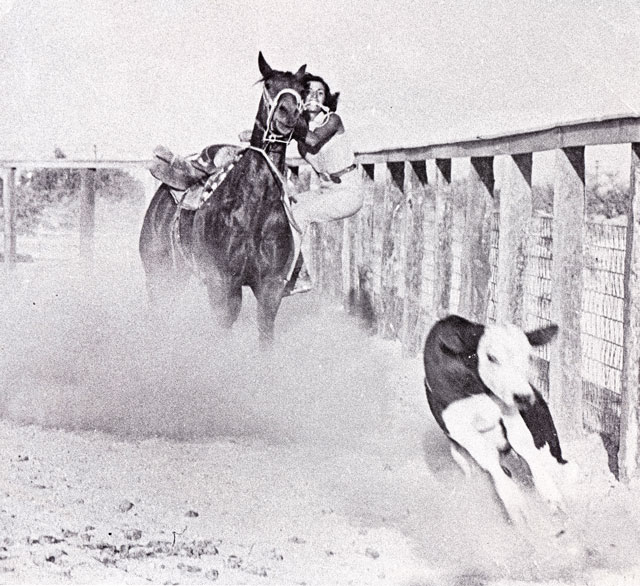
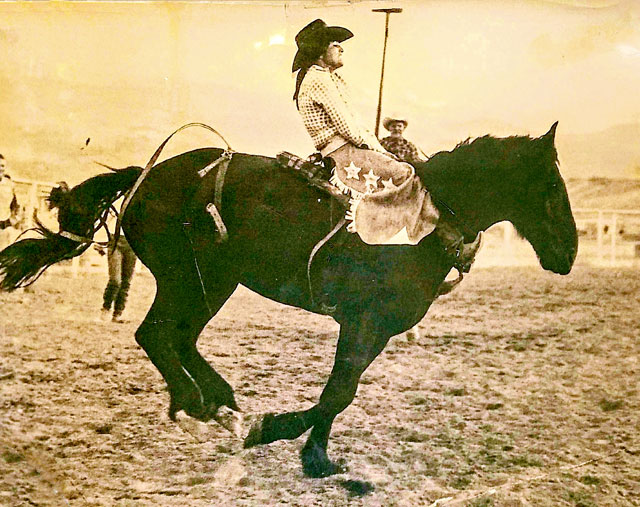
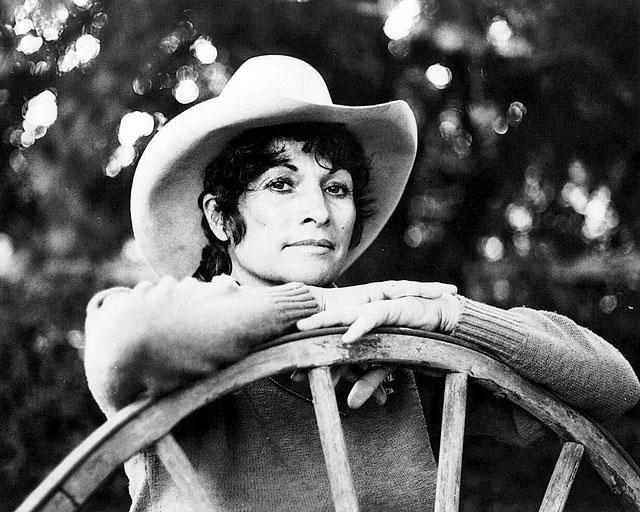
    Whether it was with wild horses, barrel horses or movie horses, Sammy Thurman Brackenbury lived her life with spirit, a sense of adventure, and a shot of adrenaline. By the age of seven she was breaking mustangs with her dad and selling them.
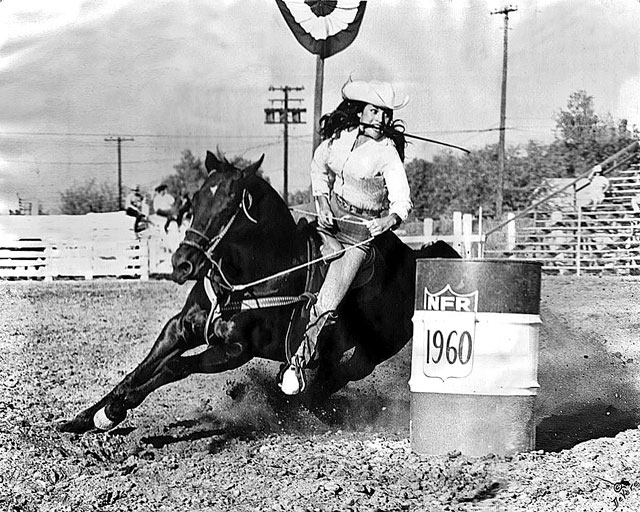
    At the age of 27, she ran barrels at her first of what would be eleven consecutive National Finals Rodeos, and five years later, she was the world champion barrel racer.
    She even doubled famous movie stars in the industry, doing horse riding and other stunts for them.
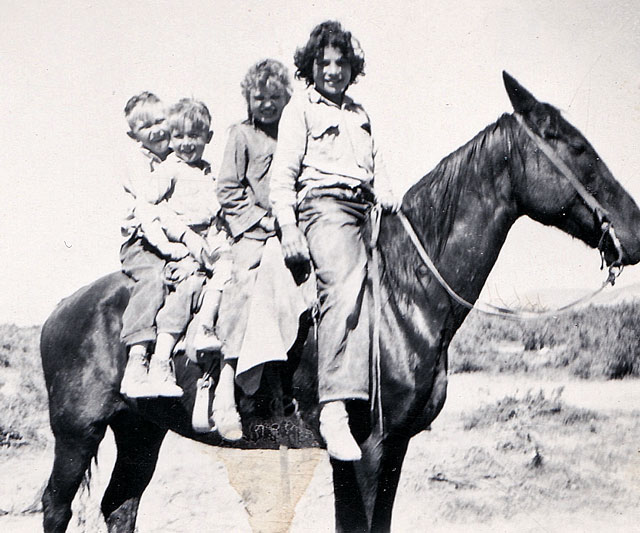
    She was born in 1933 on a ranch in the Big Sandy, near Wickieup, Ariz., the daughter of Sam and Mamie Fancher. Her mother had three children from a previous marriage, but they were grown and out of the house. Named after her dad, he wanted a boy and treated her like one. “I did everything a boy would do,” she said.
    Her father ran a ranch in Arizona, and when she was five years old, he quit his job to rodeo. The family moved to California to be closer to rodeos, since there weren’t a lot in Nevada at the time. After Sammy’s dad’s horse was injured, the family packed up again, this time moving near Imlay, Nevada, to work on another ranch. Her dad had bought interest in the ranch and rodeoed again to help pay the bills, and the mustangs Sammy broke were sold as kids’ ponies, which brought in a bit more income for the family.

    She attended rodeos with her dad, but few of them included women’s barrel racing. Barrel racing hadn’t found its way to California yet; it was more common in Oklahoma and Texas. She match raced, riding her dad’s horses, and rode calves, and read all she could about the Girls Rodeo Association, the forerunner to the Women’s Pro Rodeo Association.
    By this time, the family was living near Las Vegas, Nev., and Sammy was sixteen. Every horse her dad had she turned into a barrel horse. One fall, she and her cousin tried to convince the organizers of a small rodeo in Las Vegas to add barrel racing. They talked them into it, and the first year, with forty entries, Sammy won first and her cousin won second.
    By about 1950, a California rodeo advertised it was adding barrel racing, and Sammy went there, excited to run. But when she got there, there was no barrels; it was poles. She rode her barrel horse, having to “rein him through” the pattern. The girl who promoted the pole bending won the event. Sammy got even; on the second run, she got her dad’s rope horse: “you could do anything on him,” she said, “and he smoked the poles and I won the second round.”


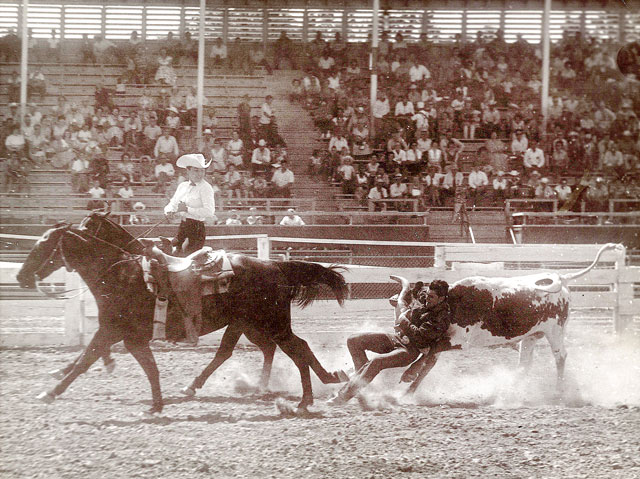
    Sammy’s life was full of training horses, running barrels, and roping with her dad. Her first time competing with him at an RCA rodeo came about by accident. His partner didn’t show up, so she took his place. She hadn’t dally roped much, and her dad “was as nervous as a whore in church,” she laughed, about his daughter. “I got out perfect, laid it on (the steer),” Sammy said, “and when I roped him, my dad was looking at me to see if I was getting my dally, and went right on past the steer.”
    Her daddy spoiled her, she said. One time, at a rodeo in Delano, Calif., she ran her rope horse in the barrels. When it was announced she’d have to run again because they missed her time, she told her dad she was going to ride Punkin, an exceptional palomino that her father used for the hazing, bulldogging, heading, heeling and calf roping. “No, you’re not,” he told her, and she replied, hide and watch! “I was a brat,” she laughed.
    At the time, women were not allowed to compete in RCA rodeos, but Sammy and her dad were friends with Bill Linderman, RCA secretary and former president.
    Linderman helped Sammy out several times, paving the way for her to rope with her dad. Bill told her, “when you want to enter, you tell them I said you could enter. If they give you grief, have them call me. So I started roping with my dad,” she said.


    Because she did so well in the barrel racing, the Utah and Idaho rodeos often barred her from entering. She’d call on her friend Linderman again, and he’d say, “you tell them if they won’t let you enter, they can’t have barrels at the rodeo,” she remembered.
    By then, barrel racing was becoming more common and more rodeos were including it. It helped, Sammy said, that world champion Wanda Bush and Florence Youree came to California to promote the event.
    In 1960, she qualified for her first National Finals Rodeo. Living in Nevada, she competed in her home state and across California, Utah and Idaho. She and her dad made all the horses she rode, including what she considers her best horse, a bay mare named Ugh “because she was ugly,” Sammy remembers. The first time she had a chance to buy the mare, who wasn’t papered, the cost was $350. Her husband at the time, Anson Thurman, wouldn’t let her buy the horse. By the time she got her, the price was $850. But Ugh was worth it. “She was an outstanding barrel horse. You could do anything on her.”
    Sammy qualified for the NFR every year from 1960-1970, winning the world in 1965. That year, she rode Ugh for most of the season but due to injury, the horse was out for the NFR. She rode a borrowed horse, Roanie and still finished third in the average. Sammy didn’t often rodeo back east; it was too far. But when she did, she borrowed horses, to cut down on the expense of driving a horse trailer and because the rodeos didn’t pay well enough to haul a horse.
    One of the more innovative things she did for the sport was switching hands between the first and second barrel. Her dad taught her that. While most barrel racers ran with one hand, leading to the neck rein making horses stiff in the turn, Sammy changed hands between the first and second barrels. “Left hand, left turn, right hand, right turn,” she would chant to the students she later taught at clinics.
    Sammy won rodeos all over: Rodeo Salinas (Calif.) several times; the Grand National at the Cow Palace in San Francisco; Phoenix; Red Bluff; Oakdale; Redding; Tucson; Denver; and Caldwell, among others.

    In the mid 1960s, she began hosting barrel racing clinics. The concept was relatively new; Wanda Bush and Florence and Dale Youree had done some, and so had horse trainer Monte Forman, after whose she patterned hers. Barrel racing was so new that many of her students had only seen the event on TV.
    They were three days in length, with the first day for observation. “I’d give (the students) a paper to fill out, a brief story on them and their horse. Then I’d watch them all make a run and analyze their runs,” she said. On day two, Sammy worked with each girl on any problems they might have, and the third day was competition, for students to put into practice what they had learned. She did the clinics for ten years.Another part of her life was doing stunt work in Hollywood. When she was eighteen, she had a part in the movie In Cold Blood. Then movie work was put on the back burner to rodeo, but after she married husband Bill Burton, a team roper, steer wrestler, bull rider, and stuntman, she became involved in movies again. In addition to horse riding, she did whatever stunts were needed, including swimming, even though she couldn’t swim. In the 1993 movie Another Stakeout, she had to jump off the dock into the Fraser River in Vancouver. “I told them I couldn’t swim,” she said, “and they had security guys all over to keep me safe.” After jumping in and coming up, she swam for the ladder. The safety man said, “I thought she can’t swim,’ and she told him, “I can sure swim when I need to,” she laughed.
    She doubled for well-known actresses like Kathy Bates, Linda Evans, Jane Fonda and Dolly Parton. She was a charter member of the United Stuntwomen’s Association.
    She also held positions in the GRA, serving as west coast director in the early 1970s and director at large. In 1975, she was voted president of the GRA, but didn’t stay in that role for long. Her new marriage to Burton and her work with the picture business kept her busy.


    Sammy ran at her last pro rodeo in 1990, the same year she married her seventh husband, Jesse Brackenbury, a reined cow horse trainer, “possibly the best horse trainer I know,” Sammy said. She had her first daughter, Patti Parker, “before I was born,” she quips, joking about her age. She has two other daughters, Jodi Branco and Syd Thurman. Two of Jodi’s children, Stan Branco and Roy Branco, have continued the rodeo tradition. Stan, a steer wrestler, competed at the 2013 NFR and Roy has qualified for the California Circuit Finals in the tie-down roping. Her step-children include Billy Burton, Jr., David Burton, and Heather Gibson-Burton, along with six grandkids and four great-grandkids.
    Thurman was inducted into the Pro Rodeo Hall of Fame in August of 2019 and is a member of the National Cowboy & Western Heritage Museum’s Rodeo Hall of Fame. She has also been honored with the 2013 WPRA California Circuit True Grit award and the WPRA California Circuit Pioneer Cowgirl award in 2016.
    The best part of her life, she says, started “when I was one year old and it’s still happening. I love my life, I love everything that’s happened in my life. I worked the picture business, I rodeoed, I loved it all and I still do.”

  • Former MPCC Bull Rider to Rejoin Team as Assistant Coach

    Former MPCC Bull Rider to Rejoin Team as Assistant Coach

    The Mid-Plains Community College rodeo team will have a new assistant coach beginning this summer.

    Aukai Kaai, a former bull rider for the team, has been transitioning into the role for the past several months. He will officially take over the assistant title July 1, after the current rodeo season is over, and will work primarily with the team’s roughstock competitors.

    “It feels awesome to be able to give back to the program that opened so many doors for me,” Kaai said. “After Mid-Plains, I transferred to a university. Altogether, I did five years of college and got all my school paid for because of rodeo. I’m looking forward to helping others succeed through rodeo as well.”

    Up to this point, the team has been led by Garrett Nokes, timed event coach, and Dustin Elliott, roughstock coach. Kaai will take over much of Elliott’s responsibilities as Elliott steps back into more of a volunteer role.

    “I’ve come to a point where I have to minimize obligations to free up time for other things,” Elliott said. “My kids are my priority right now, and they just keep getting busier. I’ve also accepted the head wrestling coach position at Hershey Public Schools.”

    Although he might not go to every rodeo, Elliott will still be at the MPCC Stampede in the fall and will be available to offer advice and assistance to Kaai if needed.

    “I will still go to practices if he wants me to and will help him on the recruiting side,” Elliott said. “The thing I’ve enjoyed the most is also what I’m going to miss the most. That’s building relationships with student athletes – not just the high ability kids, but the ones who want to try, who show up when they’re supposed to and give it their all.”

    He thinks Kaai is a good fit for the role of assistant coach.

    “Aukai is a little bit closer to the age of the kids that we need to try to get here,” Elliott said. “He’s going to bring some energy to the program and was a good bull rider, himself. He also has an in with securing bulls to practice on and that’s a huge element to the program. I think a young, enthusiastic mentality will be good.”

    Nokes is excited about the venture, too.

    “I’m sure looking forward to working with Aukai,” Nokes said. “Over the years, he was one of my favorite kids. We kept in contact some after he graduated, and when he moved back to Nebraska, I was hoping he could be involved with the team again. I think this is good timing for everybody and a good opportunity for him. I’m really pumped about Aukai being part of the program.”


    Kaai’s story

    Kaai is originally from Waimānalo, Hawaii. The four-time National High School Finals Rodeo qualifier and three-time state champion was recruited by Elliott in 2014. Kaai competed for MPCC from 2014-16 in both the bull riding and team roping events.

    While at Mid-Plains, he finished fourth and fifth, respectively, in the Great Plains Region bull riding standings.

    “The quality of coaching and the scholarships I was offered to rodeo were the deciding factors in me coming to MPCC as a student,” Kaai said. “Once I got here, I learned a lot about the business side of rodeo and how to be presentable.”

    Kaai went on to rodeo for Colorado State University, in Fort Collins, Colo., where he earned a bachelor’s degree in Agricultural Business. As of last year, he also had a pro card. He hopes to continue competing professionally, but for now, that has taken a backseat to buying his own bucking bulls.

    “I have a couple right now I’ve been letting the MPCC rodeo team use,” Kaai said. “I’ve basically just been helping the guys learn fundamentals up to this point.”

    He is, however, already starting to think about recruits. Kaai has his sights set on a few roughstock riders that he either knows from the past or found through social media.

    “I’m looking forward to seeing how far the team can go in terms of winning national titles, but I’m especially looking forward to watching MPCC athletes excel as individuals and further the sport of rodeo,” Kaai said. “I hope they give it everything they’ve got and have fun doing it. That’s all I can ask for. I appreciate Dustin and Garrett for allowing me to step up to this role. I have a big set of shoes to fill.”

  • Rooftop Rodeo Postponed Until 2021

    Due to the COVID-19 pandemic, officials focus their efforts toward next year.

    ESTES PARK, Colo. – Due to uncertainties brought on by the COVID-19 Coronavirus pandemic, the organizers of Rooftop Rodeo have decided to postpone this year’s event.

    “This was a difficult decision, but one made in the interest of our community. We will focus our energy on bringing the Rooftop Rodeo back July 5-10, 2021,” said Rob Hinkle, the Events and Visitor Services Director for the town of Estes Park.

    Rooftop Rodeo has been a staple in the Rocky Mountain resort town, which annually sees more than four million visitors come through town. The annual rodeo has also been a fixture for those who make Estes Park their home.

    “Of course, we’d love to have a community celebration when we come out of this pandemic this year, but that’s just not a viable option at this point,” said Mark Purdy, chairman of Estes Park Western Heritage Inc., a group of volunteers that works with the Town of Estes Park to produce the annual rodeo. “The reality is, Rooftop Rodeo exists because the businesses and the people of this town — and our national and regional sponsors — support it each year.

    “Right now, we need time to help our community recover. As we begin to plan for 2021, we hope to utilize Rooftop Rodeo as a way for this community to celebrate its recovery and resilience in trying times.”

  • Swift Built Trailers

    Swift Built Trailers

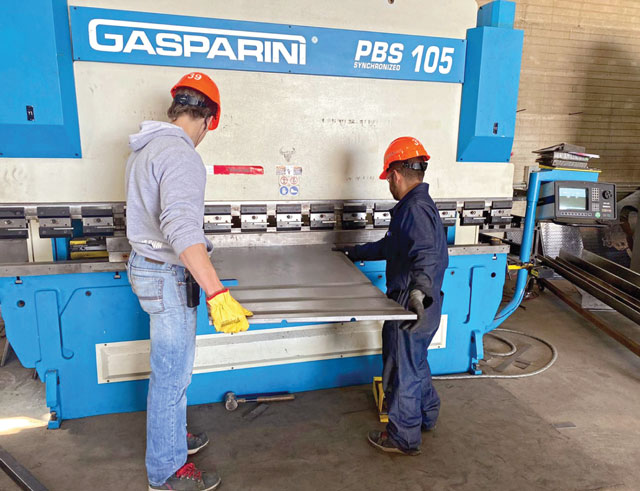
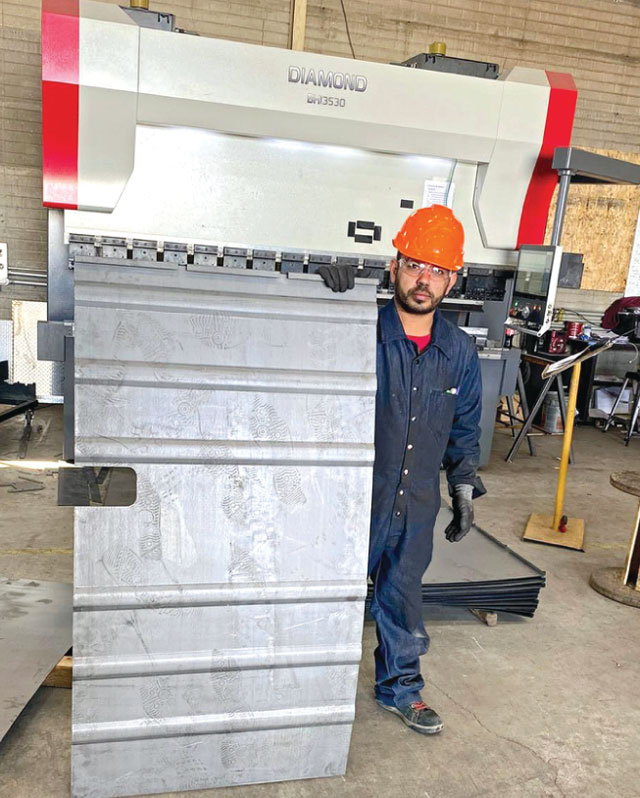
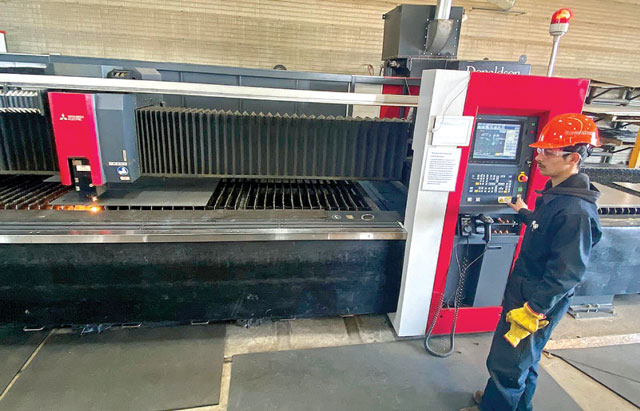
    It’s time to get Punchy! Punch Hole siding with our in-house corrugated side sheets creates a versatile siding for a livestock trailer, by corrugating the metal and making the punch holes, the steel is actually strengthened in this process through the corrugation. The punch hole siding is perfect for the rancher who lives in a hot climate but also wants to keep the public eye off their cattle and keep them cooler at the same time.

    The Swift pipe trailer revolution continues as Swift Trailers introduces the Punched Side option –
    24’ punch sided stock combo.
    “We started Swift Trailers 6 years ago to be the best in a crowded livestock trailer industry,” said Swift Trailers CEO and managing director, John Murdock. The pipe steel trailers were started to fill a need in the industry. “This style of trailer is rugged and fully suits the needs of ranchers. Our trailer was designed to never see an easy day on the ranch and to live a hard life. It takes being a tough person to be a rancher, and a rancher needs a tougher trailer.”
    “All along the way, our motto has been to listen to the customer. The success of the company has been built on the partnership between our dealers, friends, and customers. Piece by piece we continue to improve our trailer with feedback from ranchers who use the trailer.”
    The company continues to test and work on new options and designs based on the needs of the customer. “The Punch Side design is important for those haulers requiring more air flow,” explained John. “This concept was born in the hot humid south where more air flow was critical to keeping livestock comfortable.” Along with that, the limited rattle concept has also been incorporated into the New Cattle Puncher Swift model. “As on all of our Swift Trailers, we hand corrugate the side sheets in house – now we punch the sides in house as well.” Corrugating the side sheets increases the strength of the sides.


    “Even as we continue to grow bigger and better we have not forgotten our roots. Swift Built was started by people who saw the need for an affordable trailer that could handle any job, whether that’s hauling horses to the branding, taking two track roads to your pasture, or going off road and finding that sick bull, we just want to build the perfect trailer for you that will hold up to the hardest conditions.”
    The basic sizes of Swift Trailers has expanded in the last two years to expand on the standard 6.5’ wide to now include 5’, 6’, 6.5’, 7’, and 8’. The revolutionary powder coat application is second to none as is the laser cut assembly process.
    The new 2021 punch side will be showing up on dealers’ lots soon.

  • From Jim Wakefield in Nebraska:

    From Jim Wakefield in Nebraska:

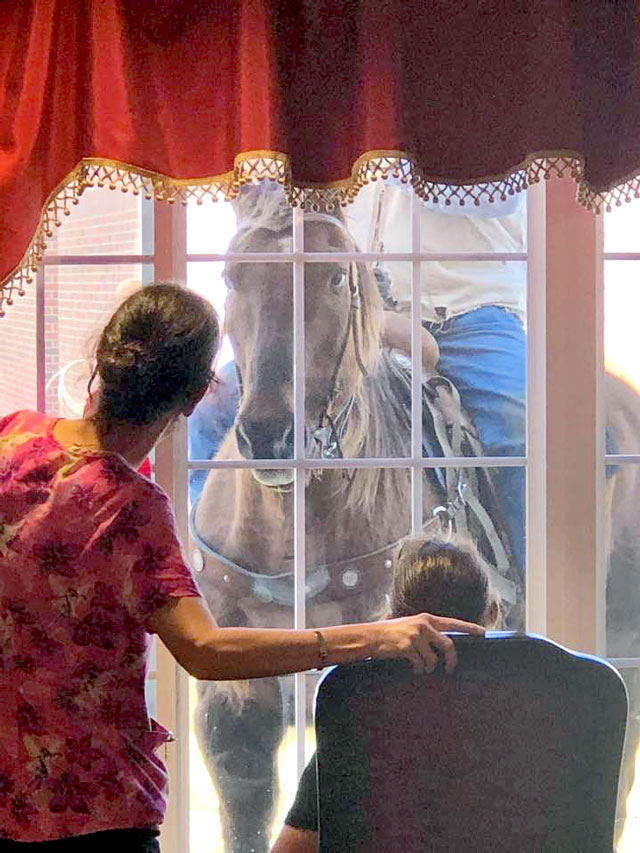
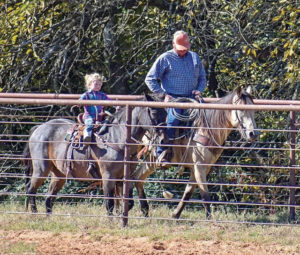
    This image was taken at the Evergreen Assisted Living Facility last week. I’m confident there were residents who enjoyed Riley, Chester and Strawberry, however, I am certain no got more joy out of the experience than we did.

    The opportunity to give a moment of happiness and distraction will always be a treasured memory.

    Brady Wakefield’s first head horse Chester may have found his highest and best gift.

  • From the Publisher

    From the Publisher

    I have spent the last few weeks being still and waiting on the Lord. Most of you know me well enough to realize this is a real challenge … I’m always on the move and the go … have been my entire life.

    The message yesterday from church was about what the meaning of the word quarantine is … a period, originally 40 days, of detention or isolation imposed upon ships, persons, animals, or plants on arrival at a port or place. It also reminds us of the 40 year journey into the unknown for those following God’s instruction.

    Ok … that doesn’t work for a magazine full of deadlines and an office that cannot be entered except on Tuesdays or Thursdays by one – not five.

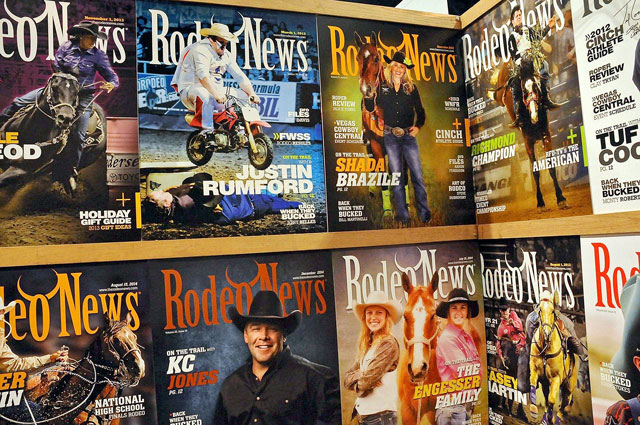
    Top that off with May marks the 28th anniversary of the Rodeo News and we will not be printing this May issue of Rodeo News – it makes me sad … but I hope and pray that the future will make that option available in one shape or form – what has Rodeo News meant to you?

    My bio includes more than 40 years in the print industry, with a passion for human interest stories and taking photographs, so publishing the Rodeo News is a perfect fit.

    This is straight from the website: “Everything I’ve done in my life has led me to this – the perfect job. I give all the credit to the Lord for allowing the Rodeo News to thrive and provide a great resource for Rodeo News. My background in cooking has helped keep my staff as well as clients happy. I drive more than 30,000 miles a year looking for the next great picture.

    Here I am, working from home and diligently working on the next book – the history of the American Hat Company – and cleaning out an office that hasn’t seen the light of day in 15 years.

    In the meantime – lets share our favorite rodeo recipes … Go!!! And let me know what you’d like to see the Rodeo News being after this is all over. We have more than half a million on FaceBook and 28,000 unique visits per week on the website … rodeonews.com … and if you belong to an association, all your meet the members are archived on our website = please look and share them …

    And last – we also have posters of all the covers for the past 5 years … if you’re interested in your’s let me know – it would cost $150 plus shipping ($50) to get them to you .

  • LJHSRA Meet the Member: LJHSRA Braxton Guillot

    LJHSRA Meet the Member: LJHSRA Braxton Guillot

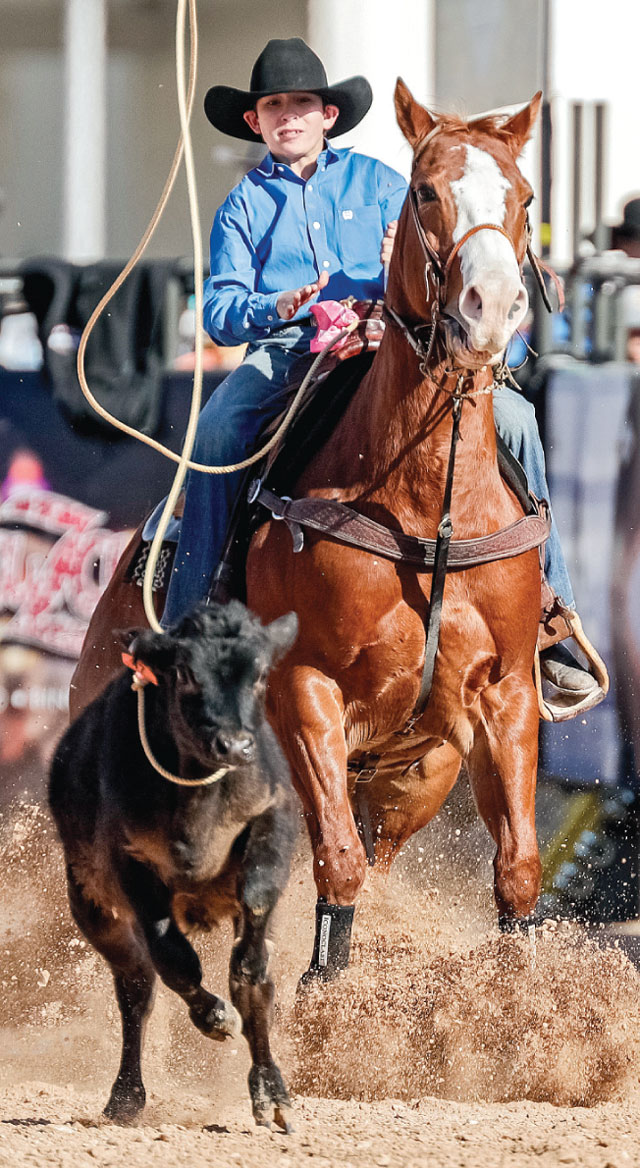
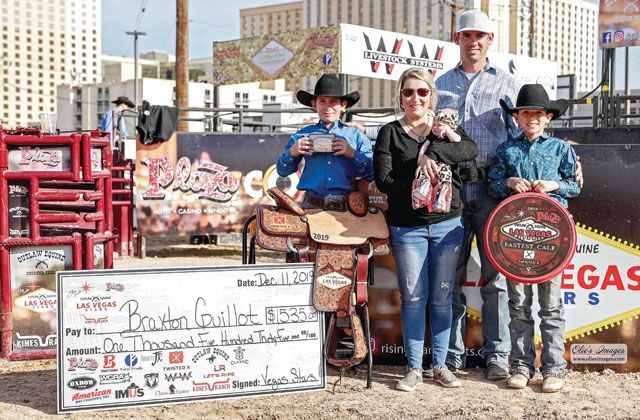
    At 12 years old, 7th grader, Braxton Guillot, has already been rodeoing half of his life, and certainly has roping calves on his mind for the rest of it. As the oldest of Janea and Brandon Guillot’s three children, Braxton is grateful to be following in his father’s footsteps and especially appreciates competing in the Louisiana High School Rodeo Association, knowing his father is an LHSRA alumni. In his second year with LHSRA’s junior division, Braxton is competing as a tie-down roper and ribbon roper, roping calves for the 2nd season for his partner, Grace Dubois.
    Tie-down roping has always been Braxton’s favorite event, and he was glad to win a bet with his dad last season so he could compete in the event this year. As a 6th grader, Braxton competed in breakaway roping under an agreement that if he qualified for national finals in breakaway roping, they would discuss Braxton switching to tie-down roping for his 7th grade season. If Braxton won the state breakaway title, he could switch to tie-down this season for sure. Braxton was determined to achieve this goal and gladly took on the challenge. As a rookie, he finished the season as LJHSRA’s 2019 champion breakaway roper and went on to national finals where he finished 4th out of the top boy breakaway ropers in the world. “It was exciting doing so well at nationals last year, but tie-down roping is a lot more fun, I love getting off and tying.”
    Braxton attends school at Leonville Elementary, where his favorite class is math. When he was younger, he played basketball and baseball, but has focused his energies on roping for a few years now. Braxton’s dad works as a farrier with a large portion of his clientele being racehorses; and his mom stays at home to care for Braxton, his 10-year-old brother, Colt, and 4-month-old sister, Josie. The family also raises beef cattle and trains performance horses. Braxton’s dad still competes in amateur rodeos, seasoning many of the performance horses he is readying as future mounts for Braxton and his siblings. The success Braxton had in breakaway roping last season was even sweeter because it was accomplished on a 12-year-old chestnut mare named Big Momma, that his dad had trained for him. Braxton also competes on a home-raised and trained 8-year-old sorrel bald-faced gelding named Ocho.


    After school, Braxton cleans stalls, helps feed livestock, and spends most days practicing for his next rodeo. “I rope almost every day and I tie my Perfect Calf dummy a lot.” Besides competing in the LJHSRA, Braxton has made trips to Las Vegas, Nevada for major youth rodeo competitions in the past two years. Last season, Braxton competed at Mike and Sherrylynn Johnson’s Vegas Tuffest Jr. World Championship, and also at Chris Neal’s Las Vegas Stars, where he won the champion 12-and -under breakaway roper title, and his brother Colt won the fastest time in the same roping with a 2.4 second run on his dun pony, Squirrel. Braxton looks forward to having Colt competing in the LHSRA as soon as he is old enough. “I like competing in the LJHSRA and hanging out with all my friends there. It will be fun when Colt is competing in the association too.”
    For the future, Braxton hopes to train performance horses and have a professional tie-down roping career like his favorite professionals, Joe Beaver and Shane Hanchey. Although he aspires to compete at the professional level, he plans to do it his way. “My main goal is just to be the best version of me that I can be.”
    Braxton is very grateful to his sponsors for their support: Lone Star Feed, T-Pop Leather Shop, Equine Catalyst, Kaylon Rodriguez, Backyard Bits & Spurs, Cowboy’s Western Store, and Delta Equine Veterinarian.

  • IPRA Meet the Member: Big Horn Rodeo Company

    IPRA Meet the Member: Big Horn Rodeo Company

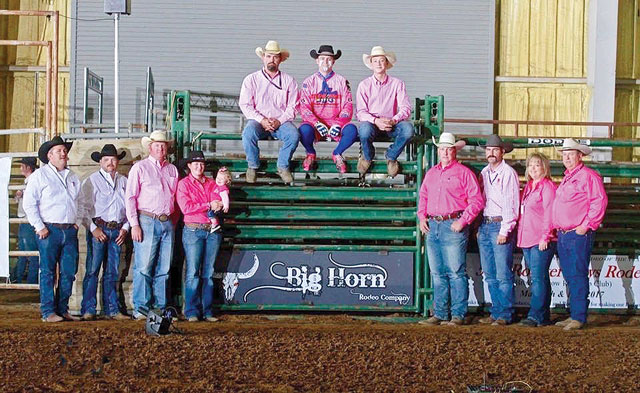
    Big Horn Rodeo Company of Lamar, Oklahoma has been proudly offering quality rodeo livestock and full personnel and rodeo options for committees since 2009. Kyle Robison always knew as he grew up on the competitor side of the rodeo business, that working as a stock contractor was what he wanted to do one day in his future. Big Horn Rodeo Company has been a part of International Professional Rodeo Association events for 5 years now, and they’ve had the honor of bringing their bucking horses to the IFR for the past 3 years.
    Growing up, Kyle mainly competed as a team roper and tie-down roper. He was a member of the Oklahoma High School Rodeo Association, and after graduating high school he went on to compete at the college level at Bacone College in Muskogee, Oklahoma. Kyle graduated from Bacone College in 2006 with an associate degree in natural resource management and a bachelor’s degree in business administration. After competing in amateur rodeos for a few years, he started his rodeo company and does approximately 23 rodeos each year. “We own everything, the horses, bulls, steers, and calves. We used to lease some bulldogging steers or bulls when we started out, but now we own most everything that we use.” Big Horn Rodeo Company keeps approximately 15 to 18 hauling bulls, plus about 60 horses for the saddlebronc and bareback events. “Four years ago, we started our own bucking horse breeding program, and we have about 8 mares that we breed. So far, we have a lot of young horses that we are just starting to buck, but we’re looking forward to seeing this generation of our bucking horses in the rodeo arena soon.”


    Kyle, and his longtime girlfriend, Amber Butler have three children: 4-year-old daughter, Liz Robison, 2-year-old son, Leigh Robison, and their newest addition, 2-month-old daughter, Anelle Robison. “I couldn’t do what I do without the support of my family and all the great people that work for me.” Their oldest daughter, Liz, helps them gather stock from the back of her little bay roan pony, Mighty Mouse. “Liz will help run a gate when we are sorting; the kids love being out there with us. This is a lifestyle I always liked and knew I wanted for my own family from the time I was a little kid myself.”
    Each rodeo that Big Horn Rodeo Company is a part of, has its own special significant value to Kyle. They are generally gone about 40 weekends per year between the IPRA rodeos, junior rodeos, ranch rodeos, and other events they are a part of producing. “This year we have 9 IPRA-first rodeos and 14 that are IPRA co-approved. It was really neat being a part of the IFR50 at the Lazy E Arena and always feels like a reward to be included at the IFR. One of the best things about the IPRA is seeing how hard they work to always make the association better.”


    Of course, with the COVID-19 pandemic on everyone’s mind, Kyle is discouraged with the rodeo cancellations that are taking place and what that means for a family in the industry his is in. “It doesn’t scare me or bother me; we will keep going on with what we have to do to take care of the stock and we just hope and pray that we will all resume like we were soon.”