Rodeo Life

Blog

  • WCRA ANNOUNCES COMPETITION FORMAT FOR AUGUST STAMPEDE AT THE E

    WCRA ANNOUNCES COMPETITION FORMAT FOR AUGUST STAMPEDE AT THE E

    Courtesy 

    WCRA ANNOUNCES COMPETITION FORMAT FOR AUGUST STAMPEDE AT THE E

    –New Opportunity For Youth and Open Athletes To Compete In $300,000 Main Event–


    AUSTIN, TEXAS- WCRA (World Champions Rodeo Alliance) today announced format details regarding the August 11-15 Stampede at The E along with entry dates. The newly added open qualifying pool format will give both DY (youth) and open timed event athletes the opportunity to enter and potentially qualify to compete in the August 15 one-day $300,000 rodeo.


    Contestants in nine disciplines—bareback riding, women’s breakaway roping, saddle bronc riding, steer wrestling, tie-down roping, barrel racing, bull riding, and team roping (heading and heeling)—will compete for their piece of the $300,000 purse. Athletes in each discipline will compete for a share of $28,000 in the main event with the champions walking away with a minimum of $12,500 each. All 10 qualifiers will earn money in the main event.


    “As far as we can see, this $300,000 main event will be one of the single biggest opportunities this year,” said WCRA President Bobby Mote. “Paired with a qualifier, the projected payout could be greater than $600,000.”


    WCRA also announced that open timed event athletes will now have the opportunity to compete in the Stampede At The E through the “Open to the World Qualifying Pools”. These pools will give any open athlete the opportunity to enter and earn a spot in the August 15 one-day $300,000 rodeo. In addition, the timed events will be multiple entry allowing athletes to potentially compete in both the WCRA Pool and Open Pool.


    In addition; DY athletes (competing in timed events only) can enter the DY qualifying pool  and compete in a two head aggregate where the number one youth athlete in each timed event discipline will advance to the main event and go head-to-head with the pros at the Stampede At The E for their share of the $28,000 per discipline.


    DY athletes will have the option to enter in either the open pools or the DY pool. All youth athletes that have been participating in segment six have until Friday, July 10 to contact support@wcrarodeo.com to switch to the DY pool.


    All timed event athletes competing in the Open To The World Qualifying Pools will compete in two rounds of competition with 16 athletes advancing to the progressive round of competition.


    In the progressive round- the 16 athletes from the open pools in each discipline will compete in a single pool with the top four advancing to the main event.


    Entries for the Open to the World pool will open July 13 at Noon CT and close August 5 at 5 p.m. CT. Entry fees for the open division will be $625 while DY fees will be $500. All entries will be taken on entrytool.com.


    Athletes from around the globe have the opportunity to compete in the Stampede at the E and may qualify and earn points by nominating their efforts through the WCRA Virtual Rodeo Qualifier (VRQ) until July 26. All timed event athletes ranked 1-16 on the segment six leaderboard as of July 26 will not be required to pay an entry fee. All timed event athletes ranked 17-64 will be required to pay a reduced entry fee of $250. The confirmed athletes advancing through the WCRA Leaderboard will enter the event on August 4 at 9 a.m. CT through August 5 at 5 p.m. CT.


    The number one athlete on the segment six leaderboard in each discipline as of July 26 will earn a direct spot in the $300,000 main event. The number one athlete will also have the option to enter and compete in the qualifying rounds if they choose without forgoing their position.


    All timed event athletes ranked in the top 64 on the leaderboard as of July 26 will compete in a separate pool. Following two-rounds of competition, 16 will advance to a one-run progressive round consisting of a single pool. The top four times in each discipline will advance to the main event, joining the number one athlete from the leaderboard, the number one DY athlete, and the four open pool qualifiers.


    Rough stock athletes ranked 1-10 on the segment six WCRA leaderboard as of July 26 will earn a direct position into the $300,000 main event on August 15 with no entry fees.

    The Stampede at the E will be coupled with the historic Lazy E Arena Bullnanza, a PBR (Professional Bull Riders) event, creating a weekend of can’t miss western sports action. Details regarding bull riding format will be released at a later date.

    The CBS Television Network will broadcast the Stampede At The E on Saturday, Aug. 29.


    All rodeo athletes interested in learning more about the VRQ should be directed to wcrarodeo.com or contact support@wcrarodeo.com

    Since launching in May of 2018, the WCRA and its partners have awarded more than $7,300,000 in new money to rodeo athletes.
  • WCRA ANNOUNCES $300,000 STAMPEDE AT THE E TO REPLACE PUGET SOUND SHOWDOWN

    WCRA ANNOUNCES $300,000 STAMPEDE AT THE E TO REPLACE PUGET SOUND SHOWDOWN

    Courtesy 

    –Event to Offer Open Entry For Both Youth And Open Athletes–


    AUSTIN, TEXAS- World Champions Rodeo Alliance (WCRA) today announced that in light of COVID-19 restrictions in the state of Washington, the Puget Sound Showdown will be replaced with a one-day $300,000 rodeo in Guthrie, OK at the Lazy E Arena on August 15. The “Stampede At The E” will be coupled with the renowned Bullnanza on May 14, creating a weekend of premier western sports action.


    The Stampede At The E will be preceded by timed event and rough stock qualifier August 11-14 which will raise the week’s total payout upwards of $600,000. The top eight athletes in each discipline from the qualifier will earn a spot in the Saturday night Stampede At The E main event.


    Contestants in nine disciplines—bareback riding, women’s breakaway roping, saddle bronc riding, steer wrestling, tie-down roping, barrel racing, bull riding, and team roping (heading and heeling)—will compete for their piece of the $300,000 purse. Athletes in each discipline will compete for share of $28,000 in the main event with the champions walking away with a minimum of $12,500 each.


    Bull riders will compete for a total $78,000 purse as the $50,000 payout from Kansas City is carried over due to no qualified rides in the showdown round at the Royal City Roundup. The bull riding event champion will earn a minimum payout of $62,500.


    Athletes from around the globe have the opportunity to compete in the Stampede at the E and may qualify and earn points by nominating their efforts through the WCRA Virtual Rodeo Qualifier (VRQ) until July 26 at 11:59 p.m. CT. The number one athlete on the segment six leaderboard in each discipline as of July 26 will earn a direct spot in the $300,000 main event.


    WCRA also announced any athlete has the opportunity to compete at Stampede At The E through the addition of the “Open to the World Qualifying Pools” for the opportunity to compete in the August 15 main event.


    Youth athletes ages 13 and up will also have an opportunity of their own to run at the Stampede At The E, as the WCRA also announced the addition of DY Youth Pool of competition.


    Open To The World Entries for the Stampede at The E will begin on July 13 at Noon CT and close on August 5 at 5 p.m. CT. Early entry fees for the open division will be $625 while youth fees will be $500. All entries will be taken on entrytool.com.


    A total of 10 positions in timed events and nine positions in rough stock will be available in the Stampede at The E with multiple combinations of pay-outs available throughout all stages of qualification.


    All athletes ranked 1-16 on the WCRA Leaderboard in timed events and 1-9 in rough stock will not be required to pay an entry fee.


    Additional details on open entry, entry fees, and event format will be released next week.


    If WCRA athletes would like to request a refund for their segment six nominations, please email support@wcrarodeo.com by Friday June 26 at Noon for a full refund.


    All rodeo athletes interested in learning more about the VRQ should be directed to wcrarodeo.com or contact support@wcrarodeo.com

    Since launching in May of 2018, the WCRA and its partners have awarded more than $7,300,000 in new money to rodeo athletes.
  • PRESS RELEASE

    PRESS RELEASE

    Courtesy 

    June 10, 2020

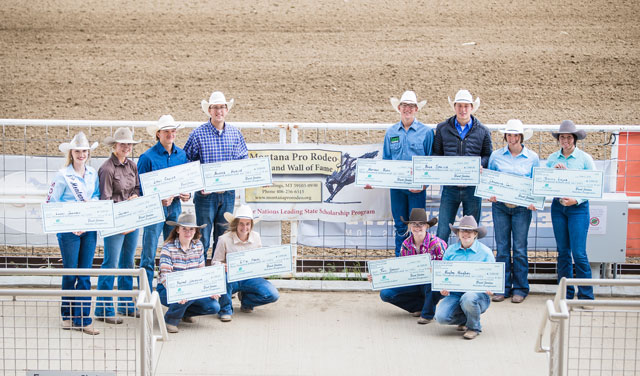
    The Montana Pro Rodeo Hall and Wall of Fame awarded their 2020 collegiate scholarships to twelve deserving high school seniors at The Montana High School Rodeo State Finals in Baker Montana.  These scholarships are awarded based on academics, rodeo participation, community service and need.

    This year marks the sixteenth year that these scholarships have been awarded to deserving Montana high school rodeo athletes.  This year’s recipients are Blayne Hubing- Circle MT, Nathan Ruth-Big Timber,  Bode Spring-Bozeman MT, Rachael Stevenson-Hobson MT, Sadie Johnson-Lewistown MT, Cheyanne Carl- Ballantine MT, Teanna Layne-Valier MT, Tori Yeager-Choteau MT, Kaylee Hughes-Butte MT, Ellie Meeks- Geraldine MT, Ethan Frasier-Ashland MT, and Laney Johnson-Havre MT (Miss Montana High School Rodeo 2020).

    The Montana Pro Rodeo Hall and Wall of Fame is the largest provider of scholarships to high school rodeo participants in the nation.  In sixteen years, $570,000.00 has been awarded to 190 students.  The MPRHWF is a non-profit organization dedicated to preserving the western and rodeo heritage of Montana, as well as providing Montana high school students the opportunity to continue their education.  For more information about our organization, please visit our website at www.montanaprorodeo.org


  • The Greeley Stampede Fireworks Show

    The Greeley Stampede Fireworks Show

    Courtesy 

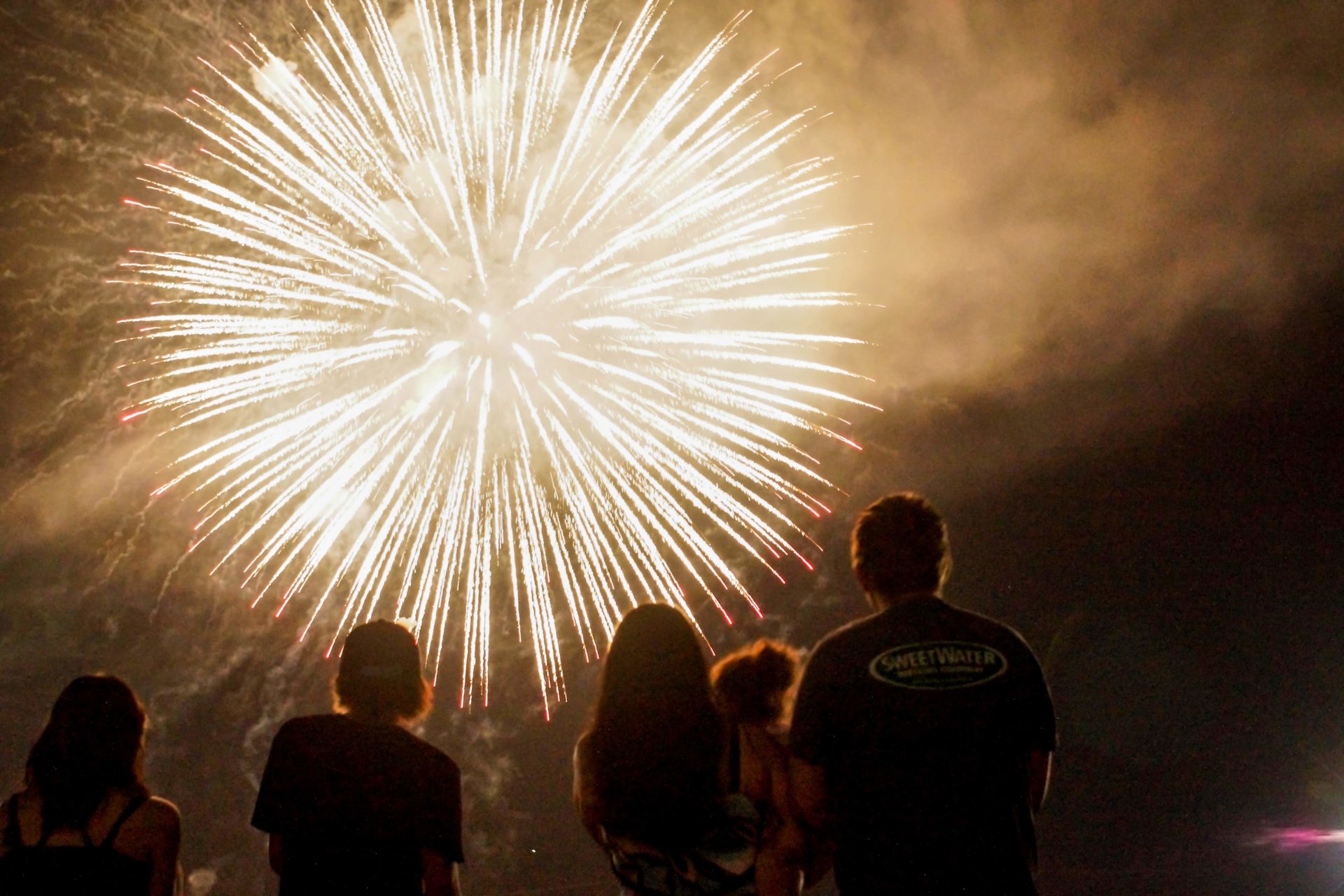
    The smell of barbeque is already in the air as we quickly approach Independence Day this weekend. Joining the community in celebrating the holiday, the Greeley Stampede will continue the traditional fireworks show. With the help of sponsors and community members, this year’s show will be bigger and brighter!

    To enjoy the fireworks show, the Greeley Stampede is asking community members to watch from a distance. “We want everyone to stay safe and healthy as they enjoy the holiday & the fireworks,” commented Justin Watada, Greeley Stampede General Manager. “The fireworks are visible from at least 10 miles from the park, so there is plenty of space around the Greeley-area to watch the fireworks from.” There will be no organized activities or amenities in the park this year. If people do choose to come to Island Grove Park, they are encouraged to practice social distancing between groups and follow the City of Greeley’s park rules. The fireworks are scheduled to begin at 9:30pm, July 4th (weather dependent) and will go for approximately 20 minutes.

    Adding to the at-home experience of watching the fireworks, country music station and Greeley Stampede sponsor, BIG 97.9 will have a customized soundtrack to go with the show. “We have worked with the fireworks crew to sync the music to the show,” said Shawn Patrick, Big 97.9 Afternoon Show Host. “Having the music playing in the background really adds something special to the fireworks and brings the show to another level.” To listen to the custom soundtrack, tune into Big 97.9 on the radio or on the iHeart app before the show starts.

    In addition to the customized soundtrack, 9News will be livestreaming the fireworks for those that are unable to make it to Greeley or prefer to watch the show from the comfort of their home. The livestream will be available on the 9News Facebook page as well as their YouTube Channel, 9News.com and apps.

    The Greeley Stampede would like to thank all of the sponsors and community members that helped make this year’s fireworks show possible.


    Gold Level Sponsors:

    • JBS
    • Power Services Company


    Red Level Sponsors:

    • Great Western Bank
    • Renaissance Insurance
    • Slaughter Roofing


    White Level Sponsors:

    • Aims Community College
    • Atmos Energy
    • BIG 97.9
    • 9NEWS
    • BURNCO
    • Five Rivers Cattle Feeding
    • J&M Displays
    • McCreery & Sun
    • Weld County Garage


    Blue Level

    • 5280 Stone
    • Buckle Equipment
    • Harold & Carol Evans
    • Murdoch’s Ranch & Home Supply
    • Reeedesign Concepts
    • RE/MAX Alliance
    • SCHEELS
    • Warren & Julie Yoder
    • Wranglers, Inc


    Community Supporter

    • Doubletree by Hilton Greeley
    • Tessa Kaufman & Friends
  • Rookie Emily Taylor Outruns Veterans in Crossett

    Rookie Emily Taylor Outruns Veterans in Crossett

    Courtesy of Ann Bleiker

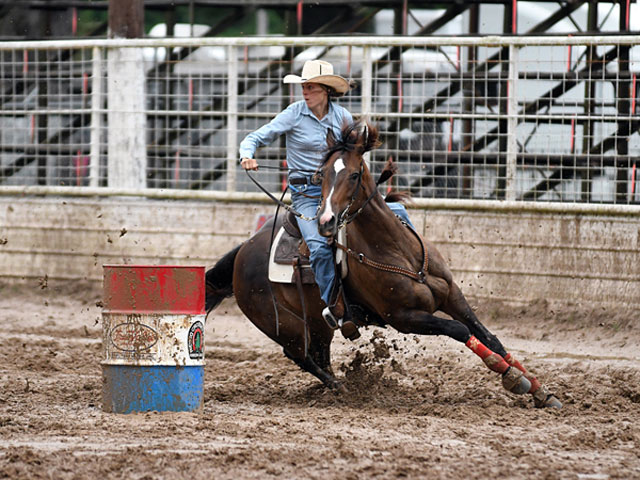
    Emily Taylor of Emory, Texas, turned in her biggest weekend of her young WPRA rodeo career winning the Crossett Riding Club 72nd Annual PRCA Rodeo and placing seventh at the Mesquite Championship Rodeo.

    The muddy conditions in Crossett, Arkansas, didn’t seem to bother first year member Taylor and her mare Czech as they stopped the clock in 17.67 seconds.

    “Czech took the lead at Crossett, AR after a perf and slack,” wrote Taylor on her Facebook page on Thursday, June 25. “It was a sloppy mess, but I don’t think she even noticed. Three more perfs to go and the ground will probably dry up a lot these next few nights. Here’s hoping we hang in there for a check!”

    Taylor most definitely got a check the largest of the weekend taking home $2,495 ahead of Wrangler NFR qualifier Tiany Schuster who took second in a time of 17.96 seconds and $2,121.

    Taylor then made her way to Mesquite, Texas, where she rode her other mare she calls Diva. The duo stopped the clock in 15.35 seconds to finish seventh and added $277 to her weekend total.

    “It was such a great and fun week,” wrote Taylor on Facebook. “I got to see some friends at each rodeo and even made a couple of new ones! I have no idea what I did to deserve these two mares, but I’m thankful for them every day.

    With her success over the weekend, Taylor is now ranked 10th in the WPRA Rookie Standings.

    Fellow Texan Jill Wilson of Snyder joined Taylor in having a profitable weekend winning the Mesquite Championship Rodeo in a time of 15.11 seconds to pocket $968 and was fourth in Crossett in a time of 18.20 to add $1,497 to her 2020 standings. Wilson is currently ranked fourth in the world and looking for her first Wrangler NFR qualification.

    Brandy Gilbert of Springtown, Texas, was lightening fast in the breakaway roping in Mesquite stopping the clock in 1.9 seconds. Gilbert edged 17-time WPRA World Champion JJ Hampton who finished with a 2.0-second run.

    The other ProRodeo over the weekend featuring breakaway roping was in Kadoka, S.D., where Rickie Engesser and Sawyer Gilbert tied for the win. Engesser and Gilbert both turned in 2.0 second runs to outdistance Rickie’s sister, Taylor, who stopped the clock in 2.4 seconds.

    Winning the barrel racing in Kadoka was Callahan Tryan with a 17.72 second run. Tryan earned $1,424. Kelley Wheelhouse was second in 17.86 seconds, while Wrangler NFR qualifier Jessica Routier was third in 17.89 seconds.

    This week will find contestants crisscrossing the United States on what has annually become known as “Cowboy Christmas.” While the 2020 edition will take on a whole new look with many contestants venturing to rodeos they have never been, it will by far be the busiest week of rodeos this year with 14 rodeos on the schedule (June 29-July 6) spread between Texas, Arkansas, Kansas, Arizona, Utah, Wyoming, Montana, North Dakota and South Dakota. WPRA Breakaway roping will be featured at six of those rodeos.

    The Digital Rodeo Tournament presented by The Cowboy Channel came to a close last week with champions being named in each event over the weekend Live on the Cowboy Channel. No. 14 ranked barrel racer at the start of the tournament, Brittany Barnett won the barrel racing fan voting over No. 8 Carly Taylor. A total of 60,255 voted in the final round with Barnett receiving 54.44% of the votes to Taylor’s 45.56%. Both ladies are looking for their first qualification to the Wrangler NFR this year and hoping they will have as much success in the real arena as they did in the digital arena. Congratulations to both and thanks to everyone who took the time to vote.

    ###


    Results:

    Crossett, AR – 1. Emily Taylor, 17.67 seconds, $2,495; 2. Tiany Schuster, 17.96, $2,121; 3. Leia Pluemer, 18.00, $1,746; 4. Jill Wilson, 18.20, $1,497; 5. Kindyl Scruggs, 18.36, $1,247; 6. Victoria Williams, 18.37, $873; 7. Ivy Hurst, 18.47, $624; 8. Jimmie Smith, 18.55, $499; 9. Jennifer Sharp, 18.64, $437; 10. Kelley Carrington-French, 18.66, $374; 11. (tie) Josey Owens and Lisa Thornton, 18.75, $281 each.


    Mesquite, TX – Barrels – 1. Jill Wilson, 15.11 seconds, $968; 2. Stevi Hillman, 15.23, $830; 3. Megan Swint, 15.25, $692; 4. Kindyl Scruggs, 15.28, $599; 5. Paige Jones, 15.30, $461; 6. Emily Miller, 15.31, $369; 7. Emily Taylor, 15.35, $277; 8. Shelby McCamey, 15.39, $184; 9. Jackie Ganter, 15.42, $138; 10. (tie) Cheyenne Wimberley and Shelley Morgan, 15.43, $46 each.


    Breakaway – 1. Brandy Gilbert, 1.9 seconds, $763; 2. JJ Hampton, 2.0, $632; 3. Loni Kay Lester, 2.1, $500; 4. McKenzie Ray, 2.2, $368; 5. (tie) Kayelen Helton and Lari Dee Guy, 2.4, $184 each.


    Kadoka, SD – Barrels – 1. Callahan Tryan, 17.72 seconds, $1,424; 2. Kelly Wheelhouse, 17.86, $1,221; 3. Jessica Routier, 17.89, $1,017; 4. Kristen Zancanella, 17.90, $882; 5. Amanda Welsh, 17.93, $678; 6. (tie) Erin Williams and Ginalee Sinner, 17.94, $475 each; 8. (tie) Lakken Bice and D’Ann Gehlsen, 18.01, $237 each; 10. Heather Crowley, 18.03, $136.


    Breakaway – 1. Rickie Engesser and Sawyer Gilbert, 2.1 seconds, $1,819 each; 3. Taylor Engesser, 2.4, $1,438; 4. (tie) Moriah Glaus and Emma Charleston, 2.5, $1,058 each; 6. (tie) Kristi Steffes and Ginalee Sinner, 2.8, $550 each; 8. Amber Crowley, 2.9, $169

  • Fuller and Ward win $155K at one-of-a-kind BFI in Oklahoma

    Fuller and Ward win $155K at one-of-a-kind BFI in Oklahoma

    Courtesy Julie Mankin – Ullman-Peterson Events

    GUTHRIE, Okla. (June 21, 2020) – By just seven hundredths of a second over six steers, professional team ropers Kal Fuller of Bozeman, Montana, and Reagan Ward of Purcell, Oklahoma, won the richest event of their sport and split a first-place paycheck worth a record $150,000 at the 43rd Annual Bob Feist Invitational. The event is part of Wrangler BFI Week presented by Yeti, held for the first time inside the Lazy E Arena in Guthrie, Oklahoma, since its usual venue in Reno, Nevada, was shut down due to the pandemic.

    “Words can’t describe this,” said Ward, who won in virtually his hometown, riding a horse he bought from world champion Kollin Von Ahn. “My header is pretty phenomenal. I’ve never met a 20-year-old that can do the stuff he can do. Most people can’t even do what he can do.”

    The BFI is the most lucrative but challenging team roping event for professionals in America. Under the traditional format, the 100 best teams in the world are invited to rope six steers that have an 18-foot head start, for a purse of more than $600,000 in cash and prizes. Organizers allowed 140 teams this year behind a 20-foot head start, due to the location change, which pushed the purse over $700,000.

    Fuller and Ward, 32, were fourth-fastest going into the finals and made a snappy run of 6.04 seconds to win the round and add $5,000 to their total haul. National Finals Rodeo veterans Billie Jack Saebens and Junior Nogueira each roped just one leg. Then the leading team after five rounds, Utah’s Pace Freed and Cole Wilson, roped their last steer in 8.35 but fell just short in the aggregate to settle for second and split $100,000.

    The number of contestants competing in so many rounds meant the first team roped in Guthrie at 9 a.m. and the final round kicked off at 8 p.m. The BFI has long been a test of mental endurance, which adds to the bragging rights of a championship. Ward actually took a nap in his trailer in the three hours between his first two runs, while Fuller said he tried to keep moving throughout the day.

    “I blocked all the pressure out in my mind and tried to just think of it as another practice steer,” said Fuller, who had practiced at the home of two-time world champion Chad Masters and at Ward’s place prior to the event.

    Fuller had only entered the BFI once prior to this year. He credits much of his win to the sorrel horse he calls Marshall that he purchased from Nick Pullara. Meanwhile, Ward’s brother Andrew placed fourth in the aggregate with former BFI champ Buddy Hawkins, which meant the Ward brothers took $104,500 back to their native Edmond – less than 20 miles from Guthrie.

    The annual Rickey Green Overall Fast Time Award went to Cory Clark and Wyatt Cox, whose 4.65-second time won the fourth round and was the only sub-5-second run of the day. The Montana Silversmiths Head Horse of the BFI Award went home with Chris Francis. He and Cade Passig, both of Las Vegas, N.M., placed seventh in the aggregate this year. Today and in 2018 when they won the BFI together, Francis rode Ima Monty Leo (“Dude”), the 13-year-old sorrel he bought from Kaleb Driggers.

    And Trey Yates of Pueblo, Colorado, won the Heel Horse of the BFI award for his black gelding, In The Nic Of Shine. “Tux” was a tie-down roping horse before the Yates family converted him to heeling. Yates said he’s ridden the horse at the past four or five BFIs.

    Several more competitions are on tap in Guthrie as Wrangler BFI Week continues. For more information, visit www.bfiweek.com.


    Complete results from the 2020 Bob Feist Invitational:


    First Round:  1. Cody Snow and Junior Nogueira, 7.04 seconds, $8,000; 2. Austin Crist and TJ Watts, 7.10, $6,000; 3. Casey Hicks and Steve Orth; Colby Lovell and Paul Eaves, 7.24 each; $3,000 each.


    Second Round:  1. Justin Johnson and Cole Curry, 5.85 seconds, $8,000; 2. Aaron Macy and Jason Johe, 5.95, $6,000; 3. Rhen Richard and Jeremy Buhler, 6.09, $4,000; 4. Wyatt Imus and Joseph Harrison, 6.6, $2,000.


    Third Round:  1. Brooks Dahozy and Brandon Bates, 5.30 seconds, $8,000; 2. Cole Morgan and Jett Hillman, 5.95, $6,000; 3. Colby Lovell and Paul Eaves, 6.06, $4,000; 4. Riley Minor and Brady Minor, 6.08, $2,000.


    Fourth Round:  1. Cory Clark and Wyatt Cox, 4.65 seconds, $8,000; 2. Clay Tryan and Jake Long, 5.24, $6,000; 3. Clay Smith and Jade Corkill, 5.31, $4,000; 4. Dustin Egusquiza and Travis Graves, 5.58, $2,000.


    Fifth Round:  1. Cory Kidd and Clay Futrell, 5.15 seconds, $8,000; 2. Clay Smith and Jade Corkill, 5.67, $6,000; 3. Riley Minor and Brady Minor, 5.83, $4,000; 4. Jake Barnes and Rich Skelton, 5.85, $2,000.


    Wrangler/Priefert Short Round:  1. Kal Fuller and Reagan Ward, 6.04, $5,000; 2. Chris Francis and Cade Passig, 6.33, $3,000; 3. Casey Hicks and Steve Orth, 7.11, $2,000; 4. Andrew Ward and Buddy Hawkins, 7.13, $1,000.


    Aggregate:  1. Kal Fuller and Reagan Ward, 46.89 seconds on six, $150,000; 2. Pace Freed and Cole Wilson, 46.96, $100,000; 3. Paul D. Tierney and Matt Kasner, 49.46, $74,000; 4. Andrew Ward and Buddy Hawkins, 49.92, $54,000; 5. Tyler Wade and Billie Jack Saebens, 50.67, $41,000; 6. Casey Hicks and Steve Orth, 50.79, $30,000; 7. Chris Francis and Cade Passig, 51.37, $24,000; 8. Matt Sherwood and Trey Yates, 51.63, $16,000; 9. Cody Snow and Junior Nogueira, 52.47, $14,000; 10. Derrick Begay and Ty Romo, 52.66, $13,000; 11. Riley Minor and Brady Minor 54.07, $12,000; 12. Trey Blackmore and Kory Bramwell, 61.16, $11,000; 13. Tate Kirchenschlager and Ross Ashford, 41.16 on five, $10,000; 14. Lane Ivy and Dillon Wingereid, 41.39, $9,500; 15. Jr Dees and Cody Cowden, 44.87, $9,500.

    ###


    About Wrangler BFI Week: 
    Phoenix-based Ullman-Peterson Events has owned and produced the Bob Feist Invitational since 2012. Founded by notable rodeo announcer and publisher Bob Feist in 1977, the BFI is the richest team roping event for professionals and one of the most prestigious, due to its limited roster and long head-start for steers. Founded by Perry Di Loreto in 1996 and now with additional categories, the high-stakes amateur roping events surrounding the BFI are the most lucrative one-day events of their kind.

  • Bud Tillard

    Bud Tillard

    For the first time in history, three generations of one family will qualify for the National Finals Steer Roping, held in Amarillo, Texas, Nov. 19 – 21. Steer roping is the only Pro Rodeo Cowboys Association (PRCA) final event not held at the Thomas and Mack Arena in Las Vegas, Nev., Dec. 3-12. “The arena isn’t big enough to rope steers,” explains Ann Bleiker, Senior Media Coordinator for the PRCA.

    Wyoming rancher, Bud Tillard, qualified for the National Finals Steer Roping twice. “I made it in ’68,” says the 81-year-old who decided not to go that year. “I had some shipping dates,” he explained. “I never sacrificed my business for roping.”

    Tillard qualified again the next year, and headed to Pecos, Texas, with his wife, Betty. “It was hot and the arena was not that good” recalled Bud. There were no commemorative T-shirts that year, only Tillard’s back number that hangs in his home. “They didn’t make a big to-do out of the finals then. I remember we went to a picnic there,” he said. “The tables were set up as long as this house. They were lined with brown bags full of whiskey. There were no bars in Pecos; it was a dry county.” Tillard borrowed a horse, didn’t do any good, and went home. He continued roping until 1971. “I roped my last steer in Pendleton,” recalls Bud. “I won the second day.”

    He quit roping cold turkey and has had to work around it ever since. “I don’t pack a rope,” he admits. “I might want to rope something.”

    Tillard and his wife, Betty, grew up together and they were married in 1947. “She took to the place,” he said. “You either like this or you don’t.” They raised three boys; Andy, Marty, and Tim.

    “I taught all the boys to rope,” says Tillard (arena is pictured above). “We roped calves to start.” Tillard built a calf-roping arena below the house and doubled the size (250 yards long) to accommodate steer roping. “We roped every night,” recalls son, Marty. “Dad made sure we had that. Steer roping was my passion because it was available.” Little did he know at the time that Tillard was making sure his boys were too tired to drive into town. “He was keeping us off the road,” explains Marty. “It was great. We didn’t know any different.”

    “Dad raised us that the ranch is first,” says Marty, the second generation to qualify for the finals. “Steer roping was my passion because it was available.”

    Marty, went to the finals two times; the first one was in Laramie, Wyo., the second in Guthrie, Okla. “I placed in some gos and won one or two.” Then Marty followed family tradition and went home to ranch.

    Competing on the road was always a struggle for the Tillards. “Somebody stayed home at all points and time to watch the chicken coop,” explained Tillard. “Back in my time there weren’t many steer ropings, maybe three all summer. It’s different now.”

    Troy Tillard is the 26-year-old son of Tillard’s son, Tim. “I’m sitting thirteenth right now,” says the grandson who lives “down the creek” from his grandfather. “There are a couple of rodeos left and if I have to, I’ll go.” As long as he is in the running for the National Steer Roping Finals in Amarillo, Texas, he’ll stay on the ranch and work rather than attend any more rodeos.

    When the Tillard family enters a roping, there are six entries with the same last name. “The whole family steer ropes,” explains Marty. “It’s a bad habit.”

    Tillard’ son, Andy, passed away from cancer when he was 42. The Isenbergers, good friends, put on a memorial roping in his honor every year at their place. A saddle is given away each year. Many of the ropers that have won saddles have passed them on to either Andy’s sons or grandsons. “All of them have saddles now,” says Tillard.

    The Tillard ranch encompasses 100,000 acres of rolling rough country north of Douglas, Wyo. It takes three road graders to maintain the roads, of which 17 miles are the driveway. Upkeep on the fences requires 2,000 steel posts a year. Nine thousand sheep and 1,200 cows call the ranch home.

    Publisher’s Note: This story was published in November of 2004 (added to story in 2020) Bud Tillard and Glee Net at the 2019 Don King Days
  • BE A WARRIOR!

    BE A WARRIOR!

    “I don’t think I would be able to handle your situation like you do.” This is a statement I’ve heard a lot since September, 2018. Although, this is meant to be compliment, to me it raises questions and wonders on why people think this. What do I do that makes people think this? Why does everyone think so down on themselves? What do I do that makes me be able to handle this situation the way I do?
    Being made children of God and being blessed to live in the United States we all have free choices every moment that we are awake. We choose what to wear, whether to go to work or not, where to live, what vehicle to buy, and my favorite choice, how many cups of coffee to drink in the morning before doing chores. For me, I choose a lot of coffee before starting the day. With these free choices we also get to choose what to think, what to believe, and how much effort we want to put in.
    I grew up wrestling from a young age. From the time I was five until I graduated high school, I endured long seasons of grueling practices, tough competitions, tournaments, and weight cutting. I would spend the off seasons at training camps to better my skills. I traveled all over the country to regionals, nationals, and every big tournament there was. I would spend time before practice working on drills and stay after practice to get more conditioning. I learned fast, the harder you worked the more reward you received from it. All the blood, sweat, and tears shed from my wrestling career carried over into my rodeo career.
    I began riding bareback horses going into my freshman year of high school. Through high school and college I competed in all three rough stock events. To compete in the three most physically demanding sports in the world I knew I would have to train harder than everyone else. I trained in the gym before school. Then I would come home after school and ride my spur board and drop barrel for hours. I went to every practice I could and got on as many animals as they would run under me. Sometimes, between the three events I would get on upwards of fifteen animals in one practice.
    I knew that to go to the National Finals Rodeo someday and be a World Champion I was going to have to be the best. They don’t just hand out gold buckles and I knew that. I put in the time when I was young and it catapulted me into my professional career. By the time I was eighteen and graduated high school I was ready. I was ready to compete against the big dogs. I had the skills to compete but I learned fast that I needed more skills then I had. I had to learn how to travel smart. How to enter rodeos correctly to utilize time and money. I had to learn how to battle through slumps. How to keep a positive mind when everything seemed to be going wrong. But, from wrestling I had learned at an early age how to train like a champion, and how to fight like a warrior.
    After the paralyzing wreck in 2018, I decided to fight this battle the same way. Train like a champion and fight like a warrior!
    How does a warrior fight? By being prepared before he goes to battle. You see, I grew up in a spiritual family, I accepted Christ and was baptized at nine years old. I was steered in the right direction from a young age. Although, I took some back roads growing up, and veered off course, I always ventured back to my faith that started young. I learned at a young age to trust God’s plan. How to search the Word. And, how to seek the father in prayer for my needs and wants with thanksgiving. I learned that when we battle with Christ on our sides nothing can stop us!
    How do we battle with Christ? Just like any warrior does. We put on our armor and face the battle with courage. Our armor can be found in Ephesians. “Stand your ground, putting on the belt of truth and the body armor of God’s righteousness. For shoes, put on the peace that comes from the Good News so that you will be fully prepared. In addition to all of these, hold up the shield of faith to stop the fiery arrows of the devil. Put on salvation as your helmet, and take the sword of the Spirit, which is the word of God.” Ephesians 6:14-17
    As warriors we must put on God’s armor. The belt of truth is the centerpiece of the armor, it holds everything together. The belt of truth is Jesus. We must first and foremost make Jesus the absolute unequivocal Lord of our lives.
    Jesus told him, “I am the way, the truth, and the life. No one can come to the Father except through me.” John 14:6
    Putting on God’s armor starts by giving our lives to Jesus daily. Reading our Bibles, spending time alone in prayer, humbly laying down ourselves and worshipping him are all ways we can give our lives to Jesus. Turn off the TV. Get off Facebook and Instagram. Spend time with Jesus laying out our worries, cares, needs and wants at his feet.
    Next, is the body armor of God’s righteousness. This is the breast plate which is similar to our rodeo vests or a bullet proof vest. The vest protects against internal damage from bulls feet when you get stepped on, or horses flipping in the chutes. Or, like a bullet proof vest that protects our military and police force from bullets entering the chest cavity. The breastplate of righteousness is what protects our hearts. “Guard your heart above all else, for it determines the course of your life.” Proverbs 4:23 NLT. We have to be sure that our hearts are protected and filled with Jesus. By daily pouring God’s word into our hearts we can have confidence that we are being led in the right direction and apply it to our lives so that we steer away from sin.
    The next piece of armor is the shoes of peace. The shoes of peace come from the Good News. The Good news is that God sent his only son to die for us on the cross as a sacrifice for our sins and a promise of eternity with him in heaven if we accept him as our savior (John 3:16). The shoes of peace keep us moving forward no matter what our circumstances are because we know we aren’t staying here. No matter how bad it seems nothing can keep us down when we know we are going to heaven. The shoes of peace keep us moving, and it’s hard for the enemy to hit a moving target. The shoes keep us prepared to do God’s work wherever we are and whatever situation we are in. We can always be thankful for something and we should all be prepared to share the good news with others at anytime.
    The shield of faith comes next. This is what stops the flaming arrows of the enemy. Our faith is so important. When the enemy attacks physically, mentally, emotionally, or spiritually, our shield is what stops his attacks. Our shield is what keeps us in the game. Our belief in God’s promises are what give us hope for a better future. Our belief in Jesus as our savior is what gives us a hope for eternal life in heaven. Our belief in God’s word reminds us that he can do the impossible, we can face anything through him who gives us strength, and that no matter what our current circumstances are, he alone can give us a breakthrough. “I have told you all this so that you may have peace in me. Here on earth you will have many trials and sorrows. But take heart, because I have overcome the world.”
    John 16:33 NLT
    The helmet of salvation is like our bull riding helmets, or a helmet of any kind. It is what protects our brains from head to head collision with a bull, or wreck in any other action sport. The helmet of salvation is what guards our minds. Just like it is important to guard our hearts it is also important to take control and guard our minds and our thoughts. If the enemy can’t crack us with a physical blow he often tries a more subtle approach and it can often be heard as a voice in our heads. “You’re not good enough. You can’t. God won’t heal you.” These are all voices we may hear. It is important to take control of what goes in our minds. What we dwell upon. And what we think about.
    “And now, dear brothers and sisters, one final thing. Fix your thoughts on what is true, and honorable, and right, and pure, and lovely, and admirable. Think about things that are excellent and worthy of praise.” Philippians 4:8 NLT. What we think and believe of a situation often times is what becomes. If you think you can’t, you won’t. If you think you can you will. Engrave God’s promises and words in your mind to often reflect on and let his word guide your thoughts.
    Lastly, is the sword of the spirit. The rest of the armor has been defensive and offers protection. The sword of the spirit is how we fight back. This is our weapon.This is how we attack. This is like the spurs on our boots as we prepare to nod our heads and challenge the beast that we sit upon. The sword of the spirit is the Word of God. “For the word of God is alive and powerful. It is sharper than the sharpest two-edged sword, cutting between soul and spirit, between joint and marrow. It exposes our innermost thoughts and desires.” Hebrews 4:12 NLT.
    When we read God’s word, bury it in our hearts, and apply it to our lives it changes everything. John 1:1 tells us that in the beginning was the word, and the word was with God, and the word was God. So, since the word of God is Jesus when we use the word against the enemy we allow Jesus to fight our battles for us. We don’t have to take them on ourselves. We can stand by God and let him do the fighting for us. “What shall we say about such wonderful things as these? If God is for us, who can ever be against us?” Romans 8:31 NLT.
    In this time of chaos and turmoil. Whatever battle you face whether financial, physical, or mental. Whenever you feel like you can’t keep going, when life is hard or unfair. Whenever you feel like there is no way, put on your armor and fight back with the promises from the word of God. Don’t give up and keep fighting. Be courageous. Be a WARRIOR!

  • ProFile: Kamry Davis

    ProFile: Kamry Davis

    story by Kendra Elder

    “I can do all things through Christ who strengthens me.” -Philippians 4:13
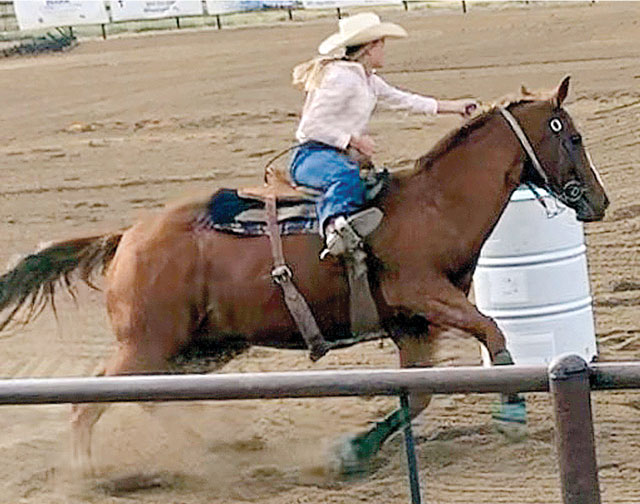
    Thirteen-year-old Kamry Davis, from Buffalo, Wyoming, is a junior high rodeo competitor who portrays courage and service to her community. Kamry is the daughter of Kim and Zach Davis. “My parents rodeoed and now run our family ranch.” Kamry explained. She said she is thankful for her parents support and love. “They support me and are with me every step of the way, as well as my three siblings: Kaden (18), Karly (12), and Karson (8).”
    Growing up around horses on her family ranch helped Kamry find an understanding for rodeo. Kamry watched her 18-year-old sister (Kaden) rodeo for many years. “I look up to my sister because she always pushes me to be my best.” After years of watching Kaden compete in events, Kamry assured herself she would rodeo one day. “I joined the National Little Britches Rodeo Association when I was eight,” Kamry said, and she loved her experience with the association and hasn’t stopped rodeoing since.
    Kamry will be in eighth grade this coming school year at Buffalo Middle School. She is a member of the Wyoming Junior High and High School Rodeo Association. She competes in barrel racing, breakaway, pole bending, goat tying, and ribbon roping. “My favorite event is barrel racing,” Kamry said. “I grew up competing in this event and I enjoy it the most.” Two of Kamry’s role models barrel race. “I look up to Hailey Kinsel Lockwood and Lisa Lockhart,” Kamry said. She enjoys watching them barrel race because they stay dedicated and motivated.
    Kamry enjoys rodeoing for the Wyoming Junior High and High School Rodeo Association because everyone is connected. “We help each other out,” Kamry said. “I started rodeoing with them in the 6th grade and I love the people.”
    Kamry was awarded the Encouraged, Character, and Community award from the National High School Rodeo Association this spring. Kamry said she was surprised to receive this award. “I did not even know this award existed. I read more about the meaning of the award and then understood why I was a strong candidate,” she added. The award is given to an individual who portrays a helping hand to the rodeo community. Kamry defines showing character, courage, and community service as stepping out of her comfort zone to help whenever she can. “I enjoy helping out when I can and lending a helping hand,” Kamry said. “I was honored.”
    Kamry was disappointed when learning that rodeos were canceled due to Covid-19. She would have qualified for three events in the National Junior High and High School Rodeo Finals. “I used this time to get better in my events and grow as an athlete.” she said. Kamry explained that not being on the rodeo trail has helped open her eyes to appreciate the good and bad times. She is focusing on her future goals, which include winning a saddle at nationals.
    When Kamry is not rodeoing, she is playing basketball, volleyball, and running track. “I am the setter in volleyball and point guard in basketball,” Kamry said. “I did not get to run track this year because of Covid-19.” She looks forward to competing in these sports again next year. You can also find Kamry helping out on the family ranch.
    Kamry exemplifies heart, courage, and dedication. When she is on her horse, on the court, or with her family; she will always be looking for a way to help her ‘team’ out.
    “Courage is being scared to death, but saddling up anyway.” -John Wayne

  • Featured Athlete: Cole Younger

    Featured Athlete: Cole Younger

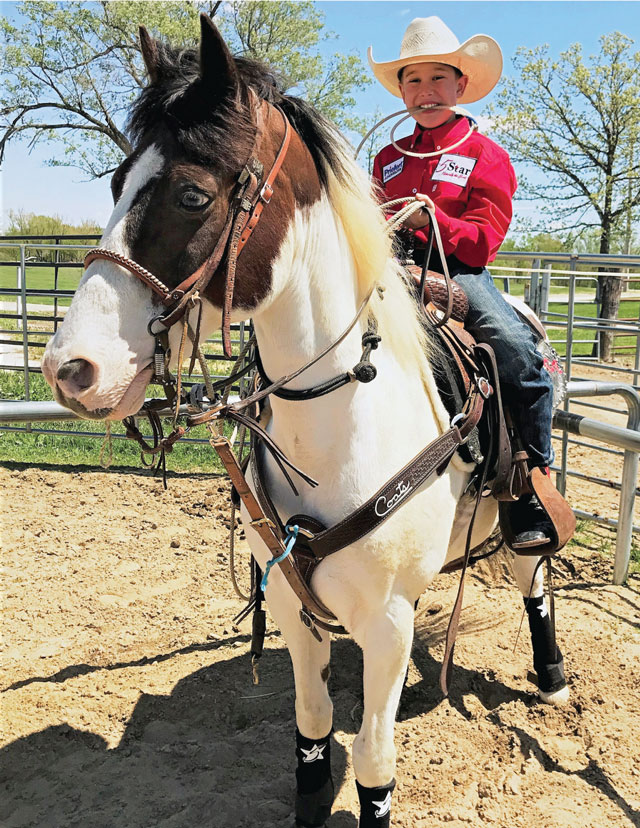
    Cole Younger is a 5 Star Equine Products team member.
    The nine-year-old cowboy, a resident of Oskaloosa, Iowa, competes in the breakaway roping, tie-down roping, goat tying and team roping (as a heeler for his dad.) Of his events, tie-down is his favorite because “you’re always moving and there’s no time to dilly-dally,” he said.
    As a 5 Star member, he appreciates their products. “I use the Rancher one-inch saddle pad with fleece lining, the 5 Star Patriot boots, and the Pegasus bell boots. The boots give good support all the way around, and they last a really long time if you take care of them.”
    His parents, Morgan and Derrick, appreciate the 5 Star Equine products. “One of the things Cole did was design his own pad,” Morgan said. “He was able to make it his own, to personalize it for himself.” The long-lasting high quality goods are another selling point for the Youngers. “To have him using high quality products gives him an extra boost of confidence in the arena,” she said. “As he learns new things, like horsemanship and how to tie and work with his horse, we don’t have to worry, ‘are the boots on right? Is the pad ok?’ It’s one less thing to worry about.”
    For the tie-down, Cole rides two horses: Charlie, a horse he got earlier this spring, and Bear, a 26-year-old horse his dad competed on. For the heeling and breakaway, he rides Tex, a twenty-year-old sorrel. For the goat tying and breakaway, he rides Pearl, a nine-year-old roan. His favorite is Charlie, “because he’s more my size. I’m a little guy and all my other horses are big.” Charlie has a good personality, too. “He’s a really good calf horse. He’s really friendly and he likes it when you come out and pet him. He’s not shy.”
    Cole just finished his fourth grade year, and, due to COVID-19, did online school through Zoom meetings. He prefers school work at home. “You get done way earlier and you get to rope way more.”
    His favorite subject is science “because you learn about animals and I’m really into animals.” His favorite animals are horses (first choice); cows (second choice) and zebras (third choice.) He also plays basketball.
    The best food his mom makes is homemade macaroni and cheese. His favorite dessert is bunny tracks ice cream (caramel and chocolate pieces in vanilla), and his favorite meat is steak He loves sweet corn, apples and Snickers and likes to wash it down with a diet Pepsi.
    The best trip he’s taken was to Chris Neal’s Future Stars Calf Roping in Oklahoma. Cole attended it twice last year and will go again this spring. He learned lots and was one calf away from finishing in the top ten.
    The Younger place has a variety of pets: a “ton” of cats, one dog, and chickens. Some of the cats are tame, some are wild, and the dog loves to chase all of them. The dog is a Corgi named Annie who Cole has trained to hunt rabbits.
    When he grows up, he would like to be a professional tie-down roper and make multiple trips to the National Finals Rodeo. He looks up to Tyson Durfey because “he’s a really good calf roper and he’s a good guy.”
    Cole has a younger brother, Carter who is four years old.

  • Back When They Bucked with Jan Youren

    Back When They Bucked with Jan Youren

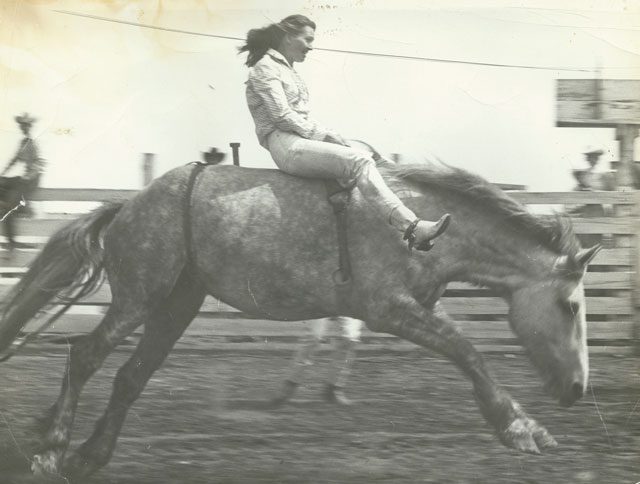
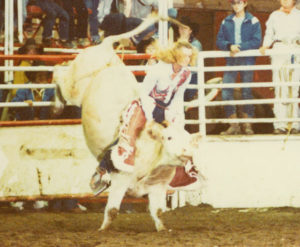
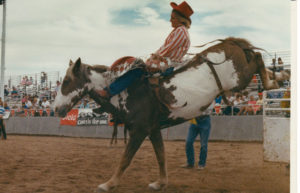
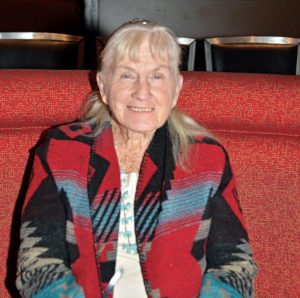
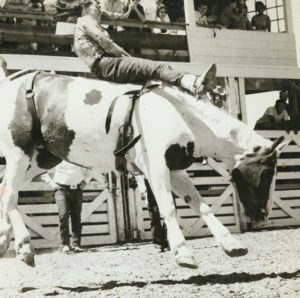
    If the boys could do it, Jan Youren was there to prove that girls could do it, too.
    The Idaho woman was a roughstock cowgirl for nearly all of her life.
    Born in 1943 as the second oldest child of Sterling and Madelyn Alley, the family lived on a farm and ranch near Garden Valley, Idaho.
    The Alley place was the last house on the road up Alder Creek, Jan said, and it was seven miles to town. “When I was six years old, I would ride to Crouch,” a village near her home, Jan remembered.
    She wasn’t big enough to saddle her own horse, and they didn’t have an extra saddle for her anyway, so she rode bareback, “all the time, all over the mountain. I was a bit of a wild child, so most time it was at a high rate of speed.”
    That’s how she was raised, she said. “You did your chores and the day was yours. You could go do what you wanted to, if dad and mom didn’t have anything special for you to do.”
    By the age of eleven, Jan was riding bareback broncs and bulls. Her daddy produced the first full all-girl rodeo, and he entered her in every event. The rodeo was in Emmett, Idaho, and she placed in two events: the bareback broncs and cow riding. “I won $54 for twenty-four seconds of work and I thought I was on the road to riches,” she said.
    Jan competed at junior rodeos and all-girl rodeos, and in 1960 she graduated from high school.
    She was married and had her first two children within eleven months.
    After her first two babies were born, she continued to ride barebacks, but not with the skill she had possessed before.
    It was 1962, and her dad told her something she didn’t want to hear. “My dad said, ‘Babe, you better quit and be a mom. You’re just not riding like you used to.’” That set a spark back into Jan. “You talk about waving a red flag in my face,” she said.

    She went to prove him wrong. At a rodeo in Glenns Ferry, Idaho, she drew a buckskin horse. Her timing was right, she spurred him, and her dad changed his mind. “He came up to me and said, ‘Babe, I take it all back. That’s the best ride I’ve ever seen you make.’ I was in seventh heaven.”
    She continued to rodeo at all-girl events. She was a charter member of the Idaho Girls Rodeo Association then the Girls Northwest Rodeo Association, which included events in Oregon, Washington and Montana.
    In 1966, she was invited to an invitational international all girl rodeo in Calgary.
    The rodeo was organized by Pearl Borgul, a public relations person who was excellent at promoting rodeo but didn’t always understand the sport. Jan remembered one time that Pearl insisted the contestants wear corsages donated by the chamber of commerce. She balked at that. “I said, ‘Pearl, I am not riding a bucking horse with a three-inch pin under my chin.’” Pearl conceded.
    From that rodeo, the Girls International Rodeo League (GIRL) was formed, and Jan became a charter member of that organization, too. The League had good events. “They were probably the best, and the best paying rodeos,” she said.
    All the time, she continued to work as a waitress, a job she had started as a twelve-year-old girl at her aunt and uncle’s restaurant.
    By this point, she had divorced her second husband, Roger, in 1965.
    At a rodeo in 1970, she met her third husband, Dee Edmondson. He rodeoed, and when Jan’s oldest daughter was old enough to ride, Jan and the kids moved to Texas, where the spring and fall shows took place. Dee moved to California and worked for Cotton Rosser.
    A few years later, at the Cow Palace in San Francisco, Jan ran into her uncle, Jim Youren. Jim had been married to her mother’s sister, and his wife died of cancer. Jan knew Jim well; Aunt Carol had lived with her family when she was dating Jim.
    They began to call each other. Jim wanted to marry her, but Jan wasn’t ready yet. But he persisted, and they married on January 31, 1984. “I saved the best till last,” Jan joked. “I tell people practice makes perfect.”
    Jan continued to rodeo. Bareback riding was her best event, in part because she had ridden bareback so many years as a kid. For the first twenty-five years of her rodeo career, she did the timed events too. But when she moved to Texas with the kids, she didn’t have an arena and access to calves, and it was cheaper to throw a riggin’ bag in a truck and leave.
    She never felt discriminated against by cowboys. She never competed against the men; it was only women’s rodeos that she competed in. And the men knew she wasn’t trying to be one of them. “Too many girls thought you were doing a man’s event and had to act like one,” she said. Her daddy had set her straight years ago. “My dad told me, you are a lady. You can be as tough as you can, but when you start getting rough, you’re done.” Usually, she said, after the men realized she was a professional at her sport, they accepted her. “Most of them were very respectful and helpful to us,” she said, recalling that Lane Frost and world champion Bruce Ford had pulled her rigging many times.

    In 2006, she and Jim moved from their ranch in Bruno, Idaho, to Cimarron, Kansas. Horse properties in Idaho were expensive, and Jim was tired of flood irrigating 400 of the ranch’s 700 acres. They were there seven years, then they moved back to Idaho. Jim didn’t appreciate the never-ending wind, and they missed home.
    Jan’s list of accolades stretches far. In 1965, she won the first saddle for the all-around in the Idaho Girls Rodeo Association, also winning the bareback riding and tie-down roping. In 1981, she won the bareback riding in the Girls Rodeo Association, and in 1987 she won it again, this time with a broken back. “I didn’t realize my back was broken,” she said. “I thought I was just being wimpy.” In 1994 and ‘95, she won the bareback riding again.
    Through this, she was taking her kids rodeoing and supporting them at their events.
    Between her and Jim, they have fifteen kids. Hers are Tonya, Jim, Todd, Dawnita, Susie, Kristen, and Ty. Jim’s are Deanie, Deb, Dusty, Dixie, Doug, Don, Dodi, and together, their last child, is Cole. Jan rode against all four of her daughters throughout her career.
    She always said she’d quit when her granddaughters beat her. In 2005, she shattered her arm at a rodeo in Grand Valley, Idaho in August, breaking it in seven places. The repair work required plates, a rod and three pins. The finals were in October, and she wasn’t supposed to ride, but she did. Her second granddaughter, Tavia, got ahead of her in points, and at the finals, Tavia beat her grandma for the year-end title, finishing one place ahead of her. That was her last professional rodeo; she had competed for 51 years.
    Her last ride was six years ago, at a women’s roughstock reunion when she was nearly seventy years old. Son Cole and grandson Zane discouraged her from riding, hiding her riggin’ bag and then, when they realized she couldn’t be stopped, finding a horse that was as safe as possible. Cole chose a good bronc, instead of the runaway, because she wasn’t able to get off on the pickup man. She got on, but after the whistle, her dismount was straight to the ground. “I was satisfied with my last ride but when I bailed off, I hit the ground like a ton of bricks.” She told Jim, “I didn’t bounce.”
    Jim passed away in 2014. She fills her life with her kids, grandkids (there are 64 of them) and great-grandkids (97 of them and counting.) Most of the grandkids are in Idaho, but some are scattered from Washington to Florida and she loves being grandma. “I said I’d see them all at least twice a year so they know who I am.” She goes to whatever activities they participate in: rodeo, football, basketball, track, and more.
    Rodeo was great to her. “I was on the road for a lot of years and had a lot of riches, but not necessarily monetary,” she said.
    Her family is her biggest accomplishment. “I raised nine kids that have never been in any serious trouble and never into drugs.
    “I tell everybody I’m the most blessed woman in the world. I have all those kids, grandkids, and great-grandkids, and they’re all healthy. I did something I thoroughly enjoyed my whole life and had a small measure of success at it. And I still get around as well as most women my age, and they didn’t have half the fun I’ve had.”

  • On The Trail with The Steiners

    On The Trail with The Steiners

    “I don’t know many people do what we do – all for one.” Bobby Steiner


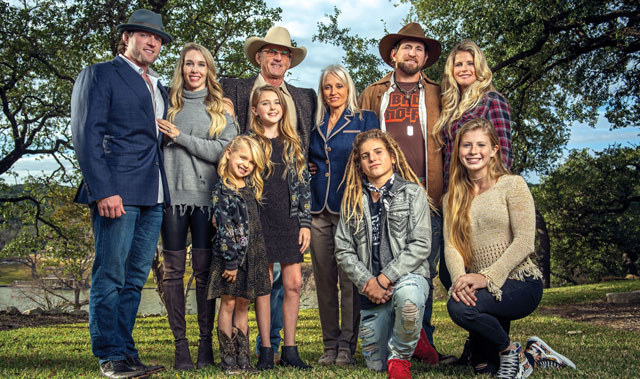
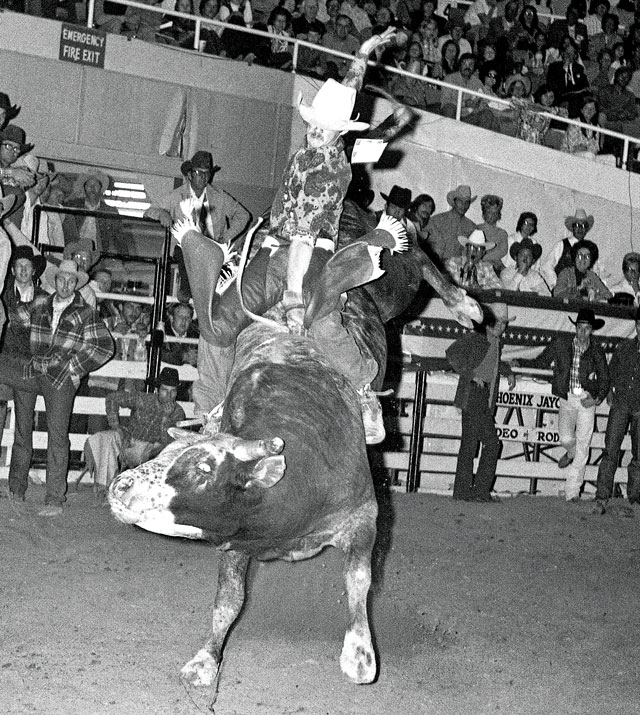
    Bobby Steiner won his gold buckle when becoming the World Champion Bull Rider in 1973. “It was really something being born into a rodeo family that owned a rodeo company,” said Bobby. “The bull riders were my heroes from the time I was a kid. I dreamed of being in the Gold Buckle Club. I wasn’t just thrilled for me when I won it. I was happy for my wife, Joleen, my mom and dad, and all the people that had so much to do with my accomplishment. Everybody put so much into it.” Bobby was 22 when he won the world. He quit competing to help his dad, Tommy, with the Steiner Rodeo Company. “I had accomplished what I dreamed about,” he said.

    The legacy of Steiner Rodeo Company began with Buck Steiner, an early day entrepreneur in many areas, including saddle making and rodeo. Buck helped Tommy run the Rodeo Company. “My dad, Tommy, was a great showman in the rodeo business,” said Bobby. “I can remember he had big entertainers at our rodeos, Roy Rogers and Dale Evans . . the crew from Gunsmoke and Bonanza television programs, and so many more big stars. As a kid I didn’t know how special that was.”


    Bobby riding on 17 General Ismo – Jerry Gustafson

    Tommy and Bobby ran the Rodeo Company together for the next nine years. Joleen also helped time and secretary when rodeos overlapped. She had seen success in barrel racing, qualifying for the NFR in 1970 and 1971. When they sold the Rodeo Company in 1982, Bobby and Joleen spent their time raising their sons, Sid and Shane, and ranching.

    “When we sold the Rodeo Company, the boys were 6 and 7 years old. I never wore my gold buckle, and never talked about rodeo. About a year later the boys asked me if they could ride the calves that were in the pens,” he recalled. “I agreed to let them ride. I’d put on rodeo schools before – but I had no equipment for them to use. It was going to be like the farm boys getting on. They rode to the back of the arena, got off, and never talked about it again. I did coach baseball and football,” Bobby recalled.


    Before Sid started steer wrestling, the family took to the water – courtesy

    Sid doesn’t remember much about the Rodeo Company. He remembers growing up playing football and baseball. He and his brother are 14 months apart. “When we grew up on the ranch we were all we had, we played together and fought together. But we took different paths – we’ve both had success, and it was really a neat time. Rodeo wasn’t talked about — and there were no rodeo photos in the house.” Then Sid went to Ranger College, in Ranger, Texas, to play football. “That was the first time I’d been away from home, in Austin, and I wasn’t happy so I came home and worked on the ranch. A long-time friend and I started team roping in 1994. We would go to the arena and I’d borrow a horse. I didn’t really know how to saddle a horse, but we decided to team rope. I don’t think I even told my dad that I was roping, at first,” said Sid.

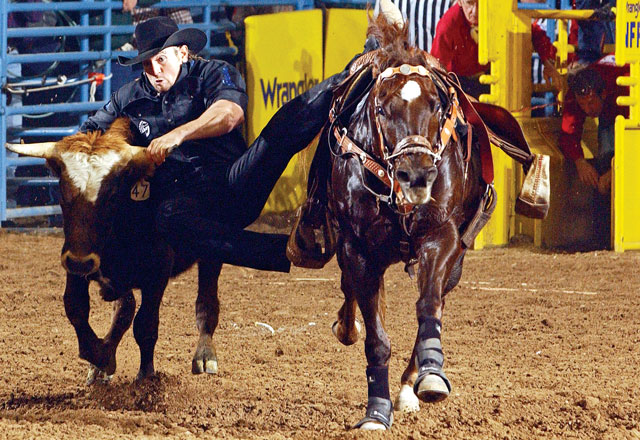
    “A guy that was hauling cattle for us was a bulldogger and asked me to his house in 1995 to throw some steers down. I went and just kept working at it and getting better, but rodeo was the furthest from my mind. Joe Morris had some practice steers — I practiced with him for a month. Then I bought my permit and started going to pro rodeos. My mom entered me in Greeley in 1995 and I was off! Two months later I filled my PRCA permit.” Sid finished 18th in the PRCA Steer Wrestling in 1997 and that was a heart-breaker for him. “It took me three more years to get to the NFR,” recalled Sid. “My daughter, Steely, was born in 2001, and I decided not to rodeo any more.” Sid came home and watched the NFR from home. “That lit the fire under me again. I came out fresh in 2002 and knew exactly what I wanted out of it. I think everyone’s goal when they rodeo is to win the big title – that’s what we work for. I like to think I ‘outworked’ everybody. I was focused on what I wanted – I practiced hard, lifted a lot of weight and really tried. Sid won the gold buckle in steer wrestling in 2002. Like his father, that was it when he won, and he quit competing.


    Jamie barrel racing at NFR 2000 – Hubbell

    Sid met his wife, Jamie, at a rodeo in Caldwell, Idaho. Jamie grew up on the race track where her father was a jockey. “They didn’t want me to be a jockey so I ran barrels instead,” Jamie said. Sid and Jamie got engaged in December, 1999. She made the NFR the same year as Sid, in 2000. They got married in April of 2001. Steely, their daughter, was 11 months old at the 2002 National Finals when Sid won the world. “I’ve always been a stay-at-home mom,” Jamie explained. “Sid does real estate, buying places, fixing them up and selling them — I think we’ve moved seven times so far.”

    “Every time we’ve moved it’s been exciting,” said Sid. “I like to buy places and improve them, then I find something else I want to go do. Our place here near Weatherford works really well for us – everybody is happy here. I’m fortunate to spend most of my days with my wife and kids. Steely rides horses, everybody’s got the things they like to do here, and we’re always trying to get better every day.”


    Sid at the 2002 NFR – Hubbell

    While the kids were young, they lived near Lake Austin and the family spent many hours on the lake, waterskiing. “Rocker started wakeboarding when he was three,” said Sid. “Steely wasn’t in to the water — horses were her way. She still wakeboards, but prefers her horses.”

    “I’ve been riding since I was way little,” said 18 year-old Steely. “I got my first pony when I was three and rode it around like a banshee.” Steely just graduated from Brock High School. Her goal for this year was to fill her WPRA barrel racing permit. “The plan was to go out and rodeo a little bit, but there’s nothing to go to,” she said, “So I’ll wait until next season to go.” She’s spending her time riding and practicing. “I have a few young horses and it’s fun to bring them along.” She is hoping to start down the rodeo road next year and then consider an online college to study business and accounting to help the family. She was Reserve Champion at the Junior American in 2018 in barrel racing, as well as the short round at the International Finals Youth rodeo. “I’m grateful for my family – we want to win and we work real hard and always put in the effort. We are there for each other,” stated Steely.


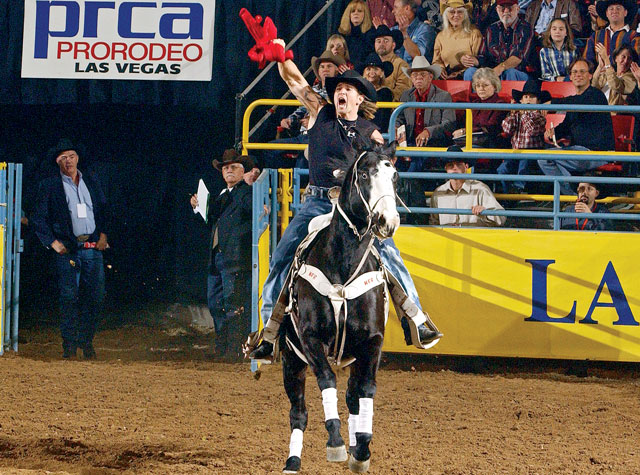
    Taking his celebration lap – Hubbell

    Her younger brother, Rocker, has lived up to his name. “He’s been a rock star from the time he was able to walk,” said granddad Bobby. “He thinks different – he was 8 when he tried a flip on the wakeboard and landed it. Rocker had competed all over the nation in wakeboarding. Rocker wasn’t raised in a family that was actively rodeoing but he decided he wanted to try rodeo. We put him on some bareback horses and he loved it. We’ve gotten him some broncs to practice on. He has a lot of body balance – Ty Murray has worked with him from the start and has even lent him the spurs Larry Mahan gave Ty, both great champions had ridden in them. You can never blame your ride on spurs,”
    Bobby admitted, “I disliked being away from home when I was rodeoing. But I appreciate the rodeo world for what it is. I had forgotten the traveling road-show family and I’d forgotten how special that time was with my family.”


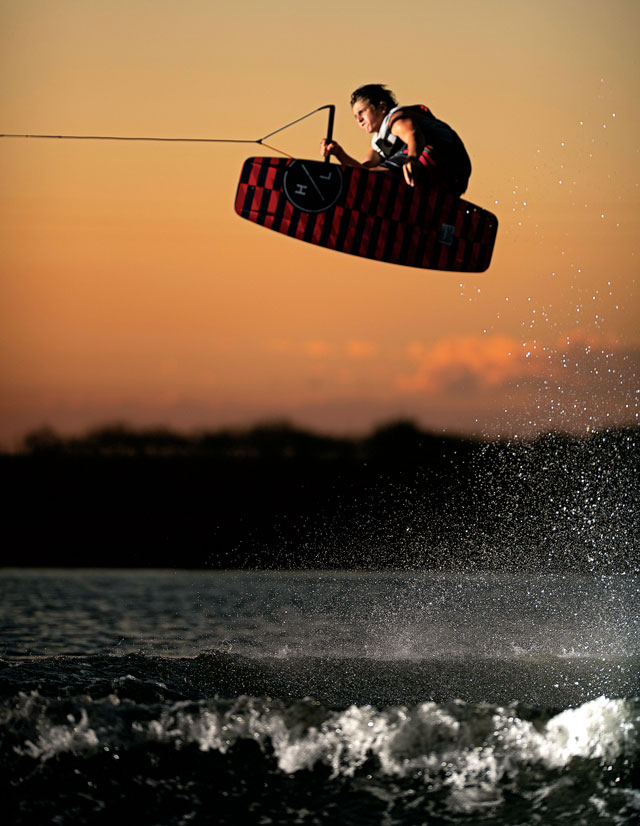
    Rocker Steiner wakeboarding

    “Wakeboarding is something fun to do with friends,” said Rocker. “But being four feet off the ground on a wild animal is an ginormous adrenalin kick. Bareback riding has an adrenalin rush. You can’t even know if you’re going to make it out of the arena alive.” Rocker got on his first bareback horse August 29, 2016 – almost four years ago. “I was pretty certain I was the worst bareback rider ever. I didn’t do very good and I was scared to death,” he admitted. He got on ten horses a week, five at each practice, rode spur board and bucking machine daily. “My grandfather helped me every day. I had to make a deal with myself that I wasn’t going to be scared and the more I got on, the less I was scared,” he discovered.


    Rocker at the Riggin Rally – Rodrigo Donoso www.rodrigosnaps.com @rodrigosnaps @rodrigosnaps

    Like his grandfather and dad, Rocker has set his goals high. “My main goal is make the Finals my rookie year, and I want that to be when I’m 18, and see if we can’t come home with a gold buckle – or something. I’m going to work every day to get there.”

    With very few PRCA rodeos to go to these days, he’s had a couple of PRCA bareback riders staying at his home near Weatherford, Texas. “We (Leighton Berry and Cole Reiner) work out and try to get better every day – been doing that for the last couple of months since they’ve been here,” Rocker reported. They go to a little gym at Tesky’s in Weatherford. Cole is winning rookie this year, and both Leighton and Cole are on the road to the National Finals. “Seeing my buddies go and hit the road is going to push me and make me want to be on their level,” Rocker admitted. Rocker has two more years to go. “I’m not planning on doing any rodeos until I’m 18 – and I am going to keep doing this until I get my PRCA card. I want to be a world champion like my grandfather and dad – I wouldn’t be where I’m at without them – I appreciate that more than they’ll ever know.”


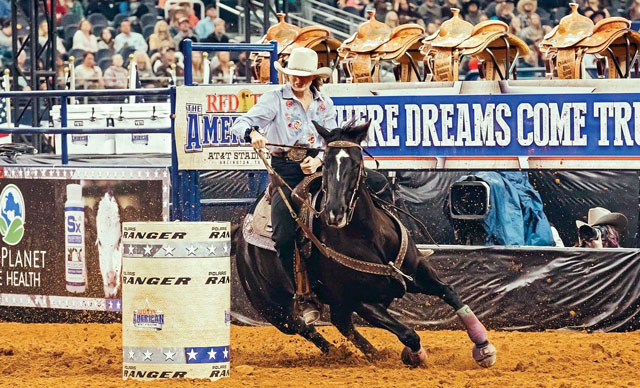
    Steeley at the AMERICAN – Skylar Jo Photography

    “I try to make my kids the best they can be,” said Sid. “We have a ranch outside Weatherford and we raise bucking horses. My wife, Jamie, and daughter, Steely, raise barrel horses. I do whatever I can do to help my family. I’m just real proud of my family – and that’s what I tried to do with rodeo – being proud of your last name and wanting to add something to it. That’s what keeps pushing us. We only got one shot at this deal, we might as well get after it.”

    “I think if you look at the history of the Steiners, we’ve never talked about anything but great – we expect it,” concluded Bobby. “It’s way better watching your kids and grandkids have achievements – it’s a euphoric feeling.”