Rodeo Life

Blog

  • Built for the Belt: Taylor Munsell’s Breakaway Breakthrough

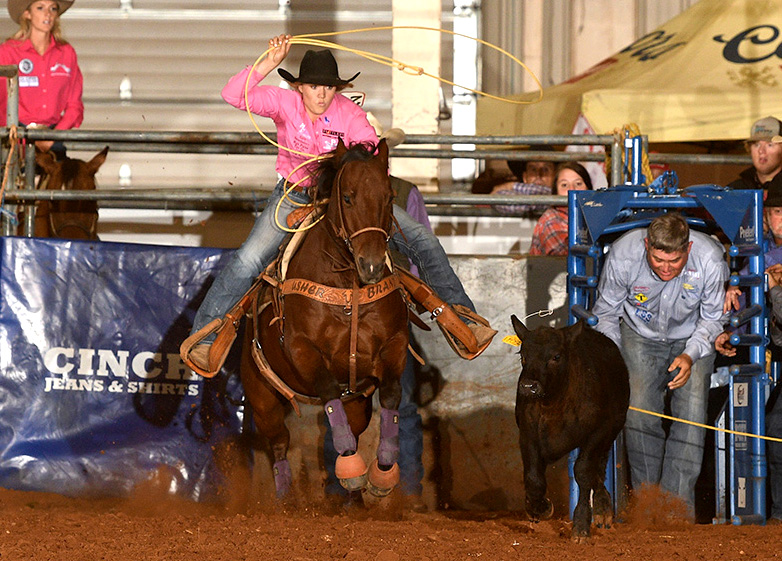
    Built for the Belt: Taylor Munsell’s Breakaway Breakthrough

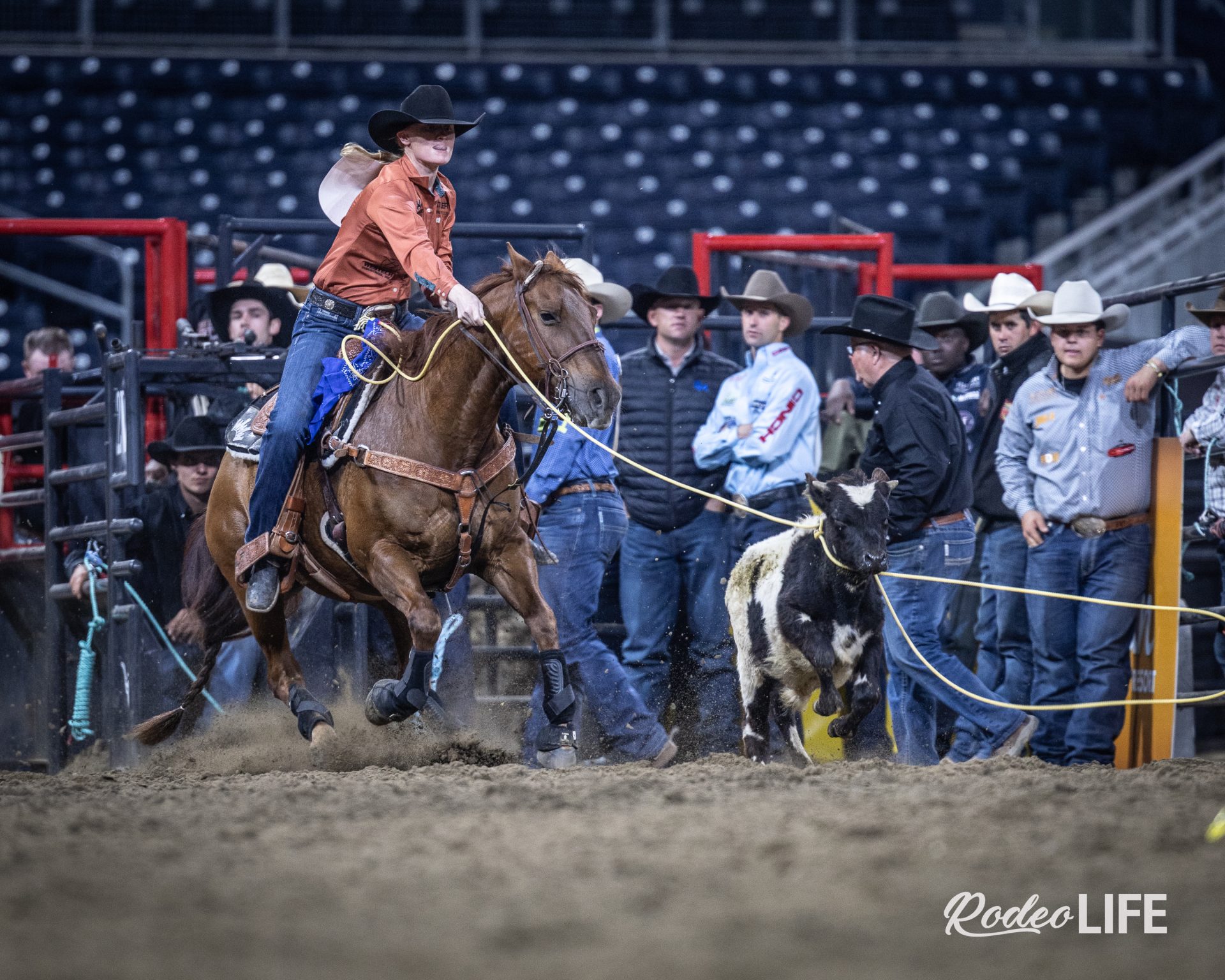
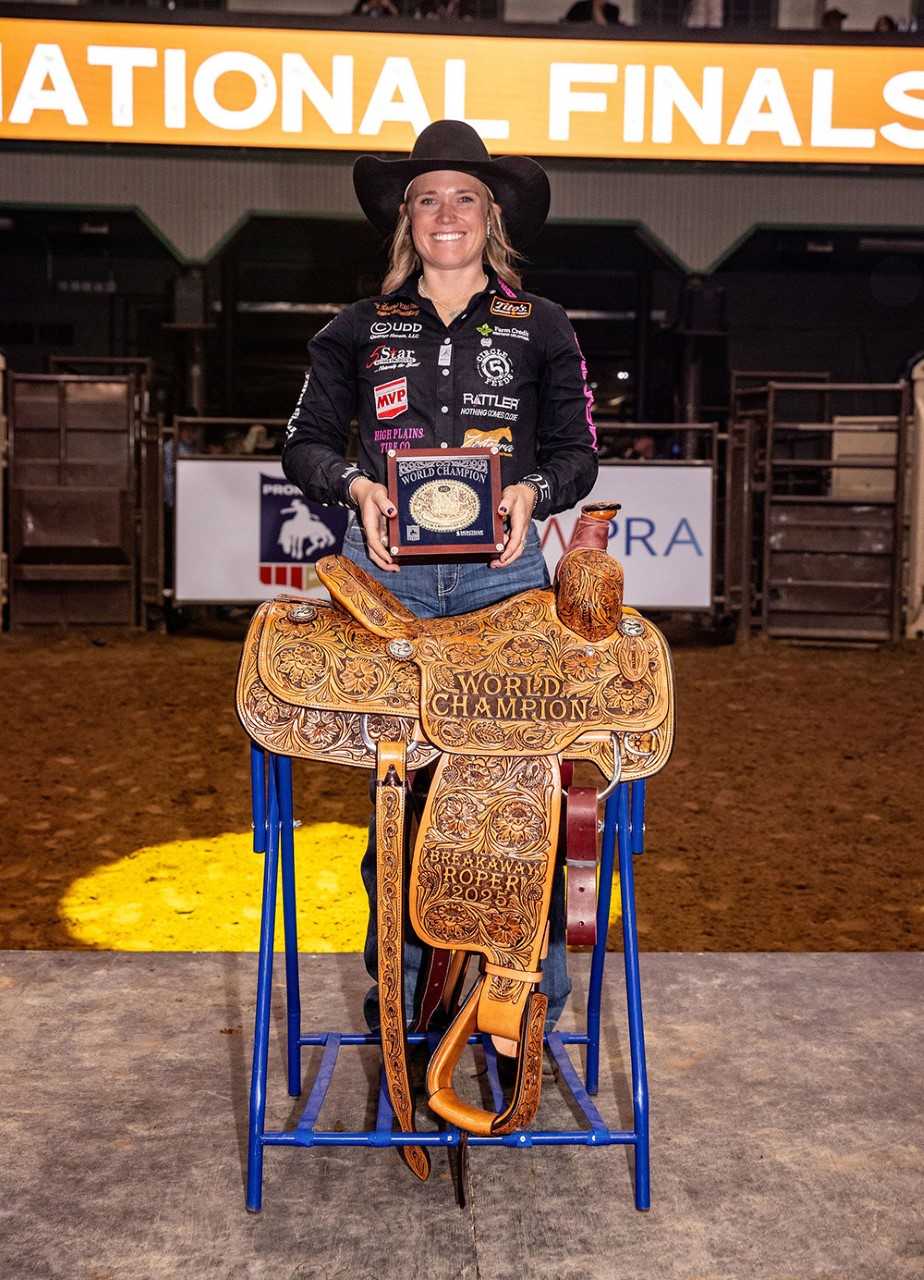
    The golden piece of designed metal weighing about half a pound hasn’t even arrived, but Taylor Munsell knows exactly where it’s going when it does.

    “Oh, it’ll for sure go on my belt,” said Munsell, the 2025 world champion breakaway roper from the northwest Oklahoma community of Alva. “Those things are meant to be worn.”

    Gold buckles are the most coveted trophy in rodeo, wearable hardware that is more than a device to tighten a belt. It symbolizes a lifetime of dreams, 365 days of work and a year’s worth of excellence. It identifies the best in a given season, and Munsell is certainly fitting.

    Raised by a roping family in the western Oklahoma hamlet of Arnett (population 495), she has always been an athlete. She thrived in the spotlight and, as a teenager, learned how to work through thoracic outlet syndrome, which is a group of disorders caused by compressed nerves or blood vessels in the space between the neck and shoulder. It had been affecting her while shooting a basketball and roping, and she’s been ardent about the stretches and exercises she needs to do to keep it at bay.

    “It was kind of a blessing in disguise that everything happened when it did for me with it coming about before I got super competitive,” she said. “It was just part of my whole journey to becoming competitive, and I was navigating that as well and taking care of it versus already being super competitive and having a shoulder injury and having to relearn to do all these things.”

    It was just a path for her. She moved to Alva to attend Northwestern Oklahoma State University and be part of the Rangers’ rodeo team, just like her big brother, Hunter, and her little sister, Lindy. While there, Taylor Munsell became Northwestern’s first cowgirl to win an intercollegiate title, taking the breakaway roping crown in 2019. Six and a half years later, she added rodeo’s gold to her resume in her fifth straight qualification to the National Finals Breakaway Roping.

    “It’s still pretty hard to wrap your head around,” Munsell said in late January. “There was a lot of craziness that led up to it.”

    Yes, there was. She won RodeoHouston and earned $70,000 for that, then won the Reno (Nevada) Rodeo for the second straight year. In November, the equine herpesvirus changed everything. The breakaway finals was postponed, then moved from Las Vegas to Fort Worth nine days after the National Finals Rodeo instead of two days prior.

    “We were all practicing with a purpose, but an unforeseen purpose, because we didn’t know when or where we were going to have the finals,” she said. “Being in Fort Worth was super cool. They welcomed us with opening arms and put on a great show.”

    Her life is considerably different than when she reigned over college rodeo. Breakaway roping has blossomed, and she’s been riding the wave. Munsell set the regular-season ($195,175) and season (209,021) earnings records in the WPRA. She’ll always be a world champion, but 2025 is already in her rearview mirror.

    “The day after the NFR, the standings had already updated top 2026, so it’s pretty easy for me to stay motivated,” Munsell said. “After winning the world title, I was pretty motivated to keep the ball rolling. Nobody’s done it twice, so that would be a cool thing, but at the end of the day, it’s all the same for me: I’ve got to win to pay my bills.”

    _____________________________________________________________________________________________________________________________________

    Photo by Kristen Schurr

  • Prairie Circuit Finals Return Despite EHV Challenges, Headed to Pawhuska

    Prairie Circuit Finals Return Despite EHV Challenges, Headed to Pawhuska

    There were questions and concerns. Ordinary people sought advice from medical professionals. The uncertainty was real, and what followed were cancellations and postponements with no real end in sight.

    On a smaller scale than the COVID pandemic five years earlier, live-event Western sports were affected by the equine herpesvirus outbreak in November. The Kimes Ranch Million Dollar Breakaway Roping moved from just the end of that month to mid-December. The National Finals Breakaway Roping was postponed and rescheduled from Las Vegas to Fort Worth, Texas. The grand entry for the National Finals Rodeo was scrubbed, and the 118 contestants, queens, and flag girls walked onto the dirt from the out-gate.

    The Prairie Circuit board faced the same uncertainty, and like the others, approached it wth an abundance of caution. Just days after the confirmation of the EHV outbreak, board members met and agreed to cancel initially, then postpone the regional championship, which had been scheduled for the week before Thanksgiving at Mulvane, Kansas.

    “It’s been kind of a headache to say the least,” said Dru Melvin, an NFR-qualifying bulldogger who serves on the board. “We felt like we owed it to our contestants, our committees that put on rodeos throughout the year, and our contractors to put on a finals. We had a couple of options, and we ended up with Pawhuska, Oklahoma. They opened their arms and said, ‘Come on.’ ”

    The Prairie Circuit finale moved dates and places and will be Jan. 30-31 at the Osage County Fairgrounds in Pawhuska, a community of about 3,000 souls in northern Oklahoma. The town will be the sixth home of the regional championship over the past two decades, the last several having been hosted by an organizational committee in Duncan, Oklahoma.

    “They did us a great job for 13 years,” Melvin said. “We appreciate everything they did, and then we understand if it’s not feasible for them, whether it was financial or they just couldn’t get volunteers. That’s all important for a committee like that.”

    The circuit board has served as its own committee in producing the finale for the 2025 season. The board is made up of representatives for contestants, stock contractors, and rodeos, and creating a rodeo isn’t typically within the purview of the governing body. Board members have been working diligently anyway.

    “As a board, we’re always open to opportunities, and we wouldn’t be doing our jobs for the people we represent if we didn’t look for those opportunities,” Melvin said. “We wouldn’t be doing them justice if we didn’t explore options. If there are options out there, we’d love to hear from people to know what they are.”

    That may mean another move; the possibilities are creating a long-term relationship with a contingent in Pawhuska, returning to Mulvane, or opening the doors to some other community interested in hosting the circuit championship.

    “Everyone deserves to have a circuit finals, and we’re glad we can have one,” Melvin said. “Yeah, it’s a little bit of a scramble, but we’re ready to go.”


    _____________________________________________________________________________________________________________________________________

    Reigning world champion breakaway roper Taylor Munsell was raised in the Prairie Circuit and is a past champion of the region. After the equine herpesvirus forced the cancelation of the Prairie Circuit Finals Rodeo at Mulvane, Kansas, circuit board members opted to move the championship to Jan. 30-31 at Pawhuska, Oklahoma. (PHOTO BY DALE HIRSCHMAN)

  • A NEW YEAR – 2026

    IT’S A NEW YEAR!

    A new year to be prosperous in the Lord and in every area of your lives.

    The Bible says in Psalm 35 that God takes pleasure in your prosperity.

    God wants you to prosper not only in the financial realm but in every area of our life—spirit, soul, and body. No matter where you are or who you are, God wants to see you delivered from every adverse situation.

    Why? Well, that’s a good question. Because He loves you and has a job for you to do. He wants you to help meet the needs of mankind, and He’s smart enough to know that you can’t give away what you do not have.

    You can’t give to spread the gospel or buy food for the hungry when you’re broke. You can’t lay hands on the sick when you are laying in a hospital bed. You can’t minister joy to others when you’re being held captive by depression.

    You have to be blessed to be a blessing.

    If you really want to tap into the riches of God today, make up your mind to be a blessing to others, and before you know it, you’ll be receiving more from God than you ever dreamed.

    It is time to develop a lifestyle of giving. As Christians, we should live and love to give!

    Let 2026 be your year of fulfillment! You will be fulfilled in every area of your life. Jaime and I pray and believe with you for the blessings of the Lord on your life and for an awesome and prosperous 2026.

    Blessings,
    Pastor Corey Ross


    Cowboy Ministries Outreach Center
    P.O. Box 1121
    Liberty Hill, TX 78642

    Corey: 214-632-2036
    cmnpartners1@gmail.com
    www.cowboyministersnetwork.org


    YOU CAN TEXT TO GIVE
    Simply by texting “GIVE” to (855) 346-9473
    or use the QR Code for Tithely

  • It’s a New Year!!!

    It’s a New Year!!!


    A new year to be prosperous in the Lord and in every area of your lives.

    The Bible says in Psalm 35 that God takes pleasure in your prosperity.

    God wants you to prosper not only in the financial realm but in every area of our life—spirit, soul, and body. No matter where you are or who you are, God wants to see you delivered from every adverse situation.

    Why? Well, that’s a good question. Because He loves you and has a job for you to do. He wants you to help meet the needs of mankind, and He’s smart enough to know that you can’t give away what you do not have.

    You can’t give to spread the gospel or buy food for the hungry when you’re broke. You can’t lay hands on the sick when you are laying in a hospital bed. You can’t minister joy to others when you’re being held captive by depression.

    You have to be blessed to be a blessing.

    If you really want to tap into the riches of God today, make up your mind to be a blessing to others, and before you know it, you’ll be receiving more from God than you ever dreamed.

    It is time to develop a lifestyle of giving. As Christians, we should live and love to give!

    Let 2026 be your year of fulfillment! You will be fulfilled in every area of your life. Jaime and I pray and believe with you for the blessings of the Lord on your life and for an awesome and prosperous 2026.

    Blessings,
    Pastor Corey Ross


    Cowboy Ministries Outreach Center
    P.O. Box 1121
    Liberty Hill, TX 78642

    Corey: 214.632.2036
    cmnpartners1@gmail.com
    www.cowboyministersnetwork.org


    YOU CAN TEXT TO GIVE
    Simply by texting “GIVE” to (855) 346-9473
    or use the QR Code for Tithely

  • Get Gritty

    Get Gritty

    The other night, while announcing the bull riding at a rodeo, God showed me something incredible.

    A bull rider nearly made the whistle after 7 long seconds. He gave a valiant effort of grit and determination. With every jump of the bull, the cowboy had an answer for the daring ride he was trying to finish. When the clock hit seven seconds, just one second away from a qualified ride, the cowboy lost his battle. He was bucked off, and the bull claimed victory.

    What was almost a victorious ride turned into disappointment. It almost seemed like he became overconfident, or like he thought he had already made the buzzer.

    My question is this: how often do we put in the work and the effort, only to come up short? We get complacent and settle for the status quo. Chasing after a God-given dream requires grit and determination. It is more than doubling down. Grit is the combination of persistence and passion. It is the choice, in every moment, to stay hooked. It is a not-letting-go mentality.

    You never know how close you are to the breakthrough, the promotion, the sale, or the new connection. To put it into cowboy terms, when life throws a punch, you might have to take the hit. But do not be afraid to get gritty. Be resilient and be filled with passion. It is time to chase that dream, because we know the dream will not chase you back.

    Hebrews 12:1 2

    “Therefore, since we are surrounded by such a great cloud of witnesses, let us throw off everything that hinders and the sin that so easily entangles. And let us run with perseverance the race marked out for us, fixing our eyes on Jesus, the pioneer and perfecter of faith.”

  • Montie Montana: The Cowboy Who Roped the World

    Montie Montana: The Cowboy Who Roped the World

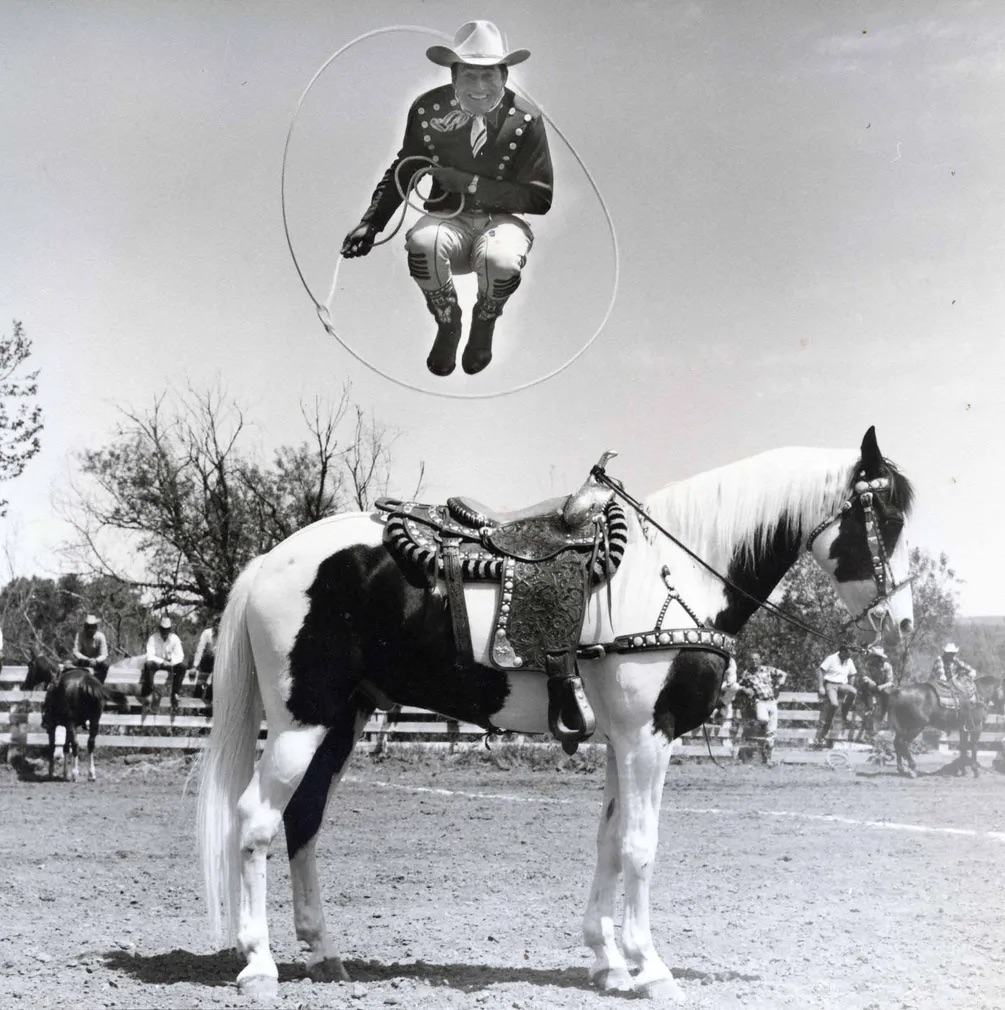
    There are legends, and then there are legends who could literally rope a president. Montie Montana wasn’t just a rodeo star. He was a walking, riding, grinning piece of Americana. From the dusty arenas of Montana to the bright lights of Hollywood, and sixty Rose Parades straight, Montie spun his rope through history and never once lost his shine.
    Montie Montana, born Owen Harlan Mickel back in 1910, came from a line of horseback preachers, wild-horse traders, and performers. His father carried a Bible. His mother cracked a whip. And Montie carried both grit and grace into every arena he entered.
    By the time most kids were learning to tie their shoes, Montie was tying loops. He practiced on chickens, dogs, and classmates alike. Any moving target would do. At fifteen, he rode into the Miles City Rodeo and, when the announcer forgot his name, was introduced as “that kid from Montana.” Montie liked the sound of it. From that day forward, Montie from Montana stuck, and so did the showmanship.

    Hollywood came calling in the late ’20s, and Montie rode straight into it with a rope in one hand and confidence in the other. He could ride, act, stunt, and charm like no one else. He shared scenes with Roy Rogers and John Wayne, but it wasn’t the company he kept that made him a legend. It was the sparkle in his performance.
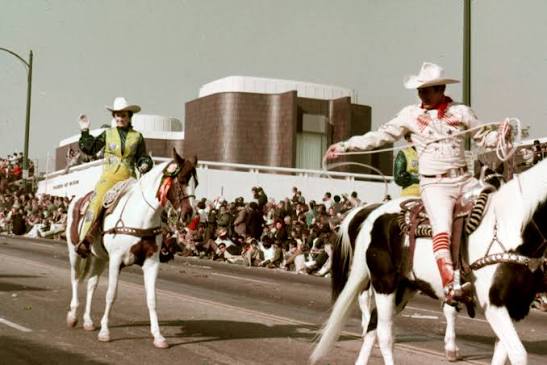
    And then came the parades. Sixty consecutive Tournament of Roses appearances. Imagine it: Montie astride his pinto Rex, silver saddle gleaming, rope twirling against the morning sun, crowds cheering as if the West itself was riding by.
    But the defining moment came in Washington, D.C., in 1953. President Dwight Eisenhower stood tall for his inaugural celebration. Montie tipped his hat, got permission, and with a flick of the wrist, lassoed the President of the United States. The crowd erupted. Cameras flashed. History was made, all with one perfectly thrown loop and a cowboy grin.
    For Montie, the rope was more than a prop. It was his language, his music, his message. He could spin a lariat into shapes that seemed to dance with him. He once roped five galloping riders at once, then turned to the crowd as if to say, “Just another day in the saddle.”

    He wasn’t just a performer. He was a teacher and an encourager. For decades, Montie visited schools across California, teaching children the art of roping and inspiring them to believe in themselves. He left behind millions of smiles. He made rodeo personal.
    Montie passed in 1998, but every rope loop still spinning under the arena lights feels a little like his. Every cowboy tipping a hat to the crowd owes a nod to the man who made rodeo entertainment, not just competition.
    He rode in with joy, rode out with grace, and left us all with a little more sparkle in our step and hope in our hearts.
    Montie didn’t just ride in rodeos.
    He rode through history.

    Montie at a Glance

    Montie’s Famous Horses: Every one of them was named Rex

    Signature Move: The five-rider loop

    Presidential Highlight: 1953 Inauguration, Dwight D. Eisenhower

    Career Span: 70 years of riding, roping, and radiating joy

    Hall of Fame: Inducted 1994, ProRodeo Hall of Fame

    Catchphrase: “Keep smiling, keep riding, and keep your rope ready.”

    Rodeo Life Magazine

    Celebrating the legends who make the West unforgettable.

    Photos Courtesy of SCV Historical Society / SCVHistory.com

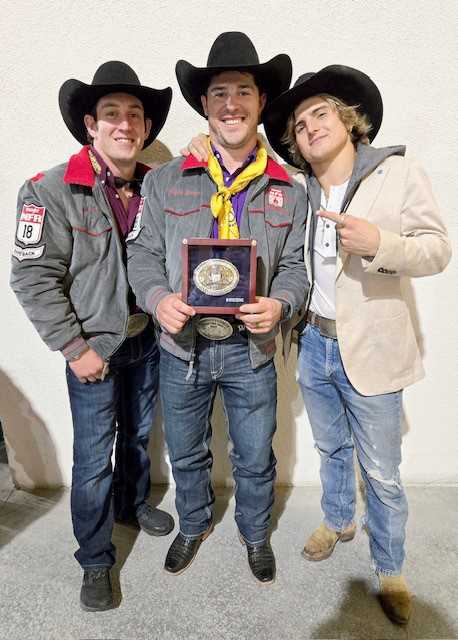
  • Cole Franks and Rocker Steiner Celebrate Waylon Bourgeois’ Third-Round Victory at the 2025 National Finals Rodeo.

    Cole Franks and Rocker Steiner Celebrate Waylon Bourgeois’ Third-Round Victory at the 2025 National Finals Rodeo.

    By Ted Harbin

    The only thing separating them as siblings is genetics.

    They share many of the same passions, primarily centered on rodeo. That’s what brought them together in the first place, but the camaraderie is what’s kept them in the saddle through the rigors of the sport’s season. It’s genuine.

    Traveling partners coexist out of necessity. In the rodeo business, sharing expenses is a crucial ingredient in cutting costs and maintaining a strong bottom line. The goal for any trade is to be profitable, and the same goes for cowboys and cowgirls who compete for prize money. In the process, though, true kinships develop and fortify.

    During his rookie campaign, bareback rider Cole Franks traveled with Tim O’Connell and Jess Pope, both of whom have won world titles. They were instrumental in Franks’ first qualification to the National Finals Rodeo and Resistol Rookie of the Year award.

    “When I got in with Tim and Jess, that was like a day-and-night difference,” Franks said in November. Everything they did, mentality-wise and with my riding, completely changed. Tim and Jess built me, and they helped me fine-tune everything.”

    All three were at that 2021 NFR and finished the year among the top 10 in the world standings. This past December, Franks returned to Las Vegas with his new posse, which included first-timer Waylon Bourgeois and eventual world champion Rocker Steiner. The three were more than associates; they were pals.

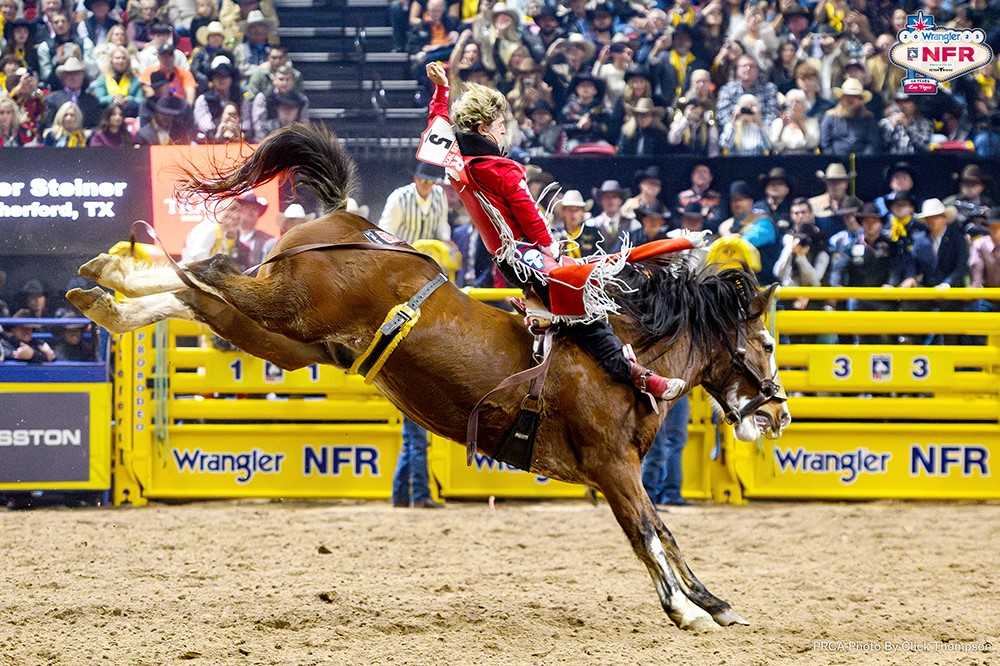
    Steiner said as much multiple times over the last two years. Of course, he wanted that gold buckle, but also atop his goal list was making sure Bourgeois was on the sport’s biggest stage. The feeling was reciprocated.

    “We mess with each other all the time,” Bourgeois said. “We’re together for three months at a time. They’re like brothers to me. I want them to do just as well as I do.

    “Just to qualify for my first NFR and have those two guys – that had my back throughout the entire season, pushing me to be better – is super special.”

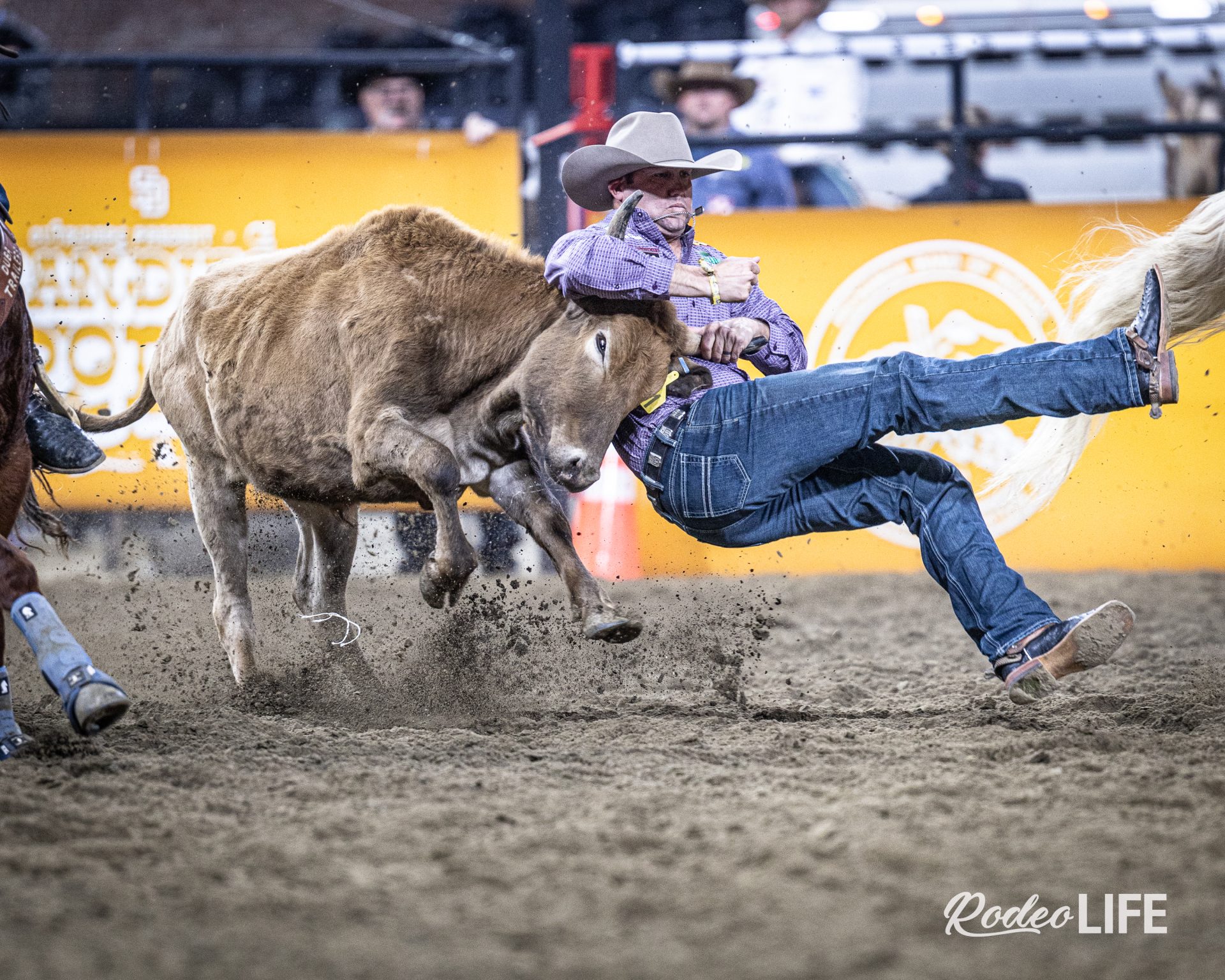
    It’s not just roughstock cowboys, either. In the midst of his world-championship run at the NFR, steer wrestler Tucker Allen might have been most excited for the ninth round, when Justin Shaffer – his traveling partner and owner of Banker, the Steer Wrestling Horse of the Year that Allen rode to gold – won the night. It was just his fourth NFR payday and his only go-round win in two qualifications.

    “I am very pumped up for him,” Allen said of his traveling partner. “That’s a long time coming.”

    Sentiments like that come from the heart and serve as a strong reminder of the bond between traveling buddies.


    In the photo, Cole Franks, left, and Rocker Steiner, right, celebrate Waylon Bourgeois’ third-round victory at the 2025 National Finals Rodeo.
  • INDOOR RODEOS

    INDOOR RODEOS

    By Ted Harbin

    Indoor winter rodeos offer an escape from the elements, whether it’s blistering cold in St. Paul, Minnesota, or avoiding cold rain and potential ice at Fort Worth, Texas.

    The first four months of the year feature a plethora of indoor events for good reason. While outposts in Tucson, Arizona, and Los Fresnos, Texas, are far enough south that being outdoors during winter works, that’s not the case for most rodeos this time of year. The logistics of producing an indoor rodeo are considerably different than doing summertime shows in the great outdoors.

    “It’s a nightmare,” said Will O’Connell, who owns Championship Pro Rodeo with his wife, Dusta. “You’ve got to find housing for the stock to stay that has, compared to the majority of summer rodeos, where you pull in and back up, then unload your stock. When the rodeo’s over, you load up and go home, and you never have to leave the facility.

    “Last week at Des Moines (Iowa), we had to truck 50 miles back and forth every day from where we were keeping the stock to the building. Then you’ve got to worry about the weather, getting to and from the arena, making sure it’s not 40-below zero where you are in order to keep your stock safe. You have to find feed and make sure wherever you go has water or water that’s not going to freeze. I would say it’s triple the amount of work as it is going somewhere in the summertime.”

    That’s a hefty load. O’Connell was raised in the business and in the extreme elements that hit northeastern Iowa. His father, Ray, was a pickup man who was selected to work the Great Lakes Circuit Finals Rodeo 16 times, and there’s not much in the sport Will O’Connell hasn’t done.

    In the existing role, he’s had to deal with bad road conditions and icy water, driving a semi tractor-trailer through city streets and backing into narrow alleys to arena docks. He also manages a team of animal athletes, so he has to know what each can do, whether it’s in a small pen like Columbus, Ohio, or a big arena like Guymon, Oklahoma.

    “A stock contractor is like a coach, and you have to know your players,” O’Connell said. “You have to know what horses will be like in the different arenas, so you have to know where you’re going to take each horse. A baseball coach ain’t going to put a guy up at the plate that’s been struck out 19 times by that pitcher.”

    It’s one of the many logistical challenges producers must overcome, but it’s vital to the growth of rodeo across North America

  • The Making of Riley Webb

    The Making of Riley Webb

    By Lori Bizzell
    Photos courtesy of American Hat Co.

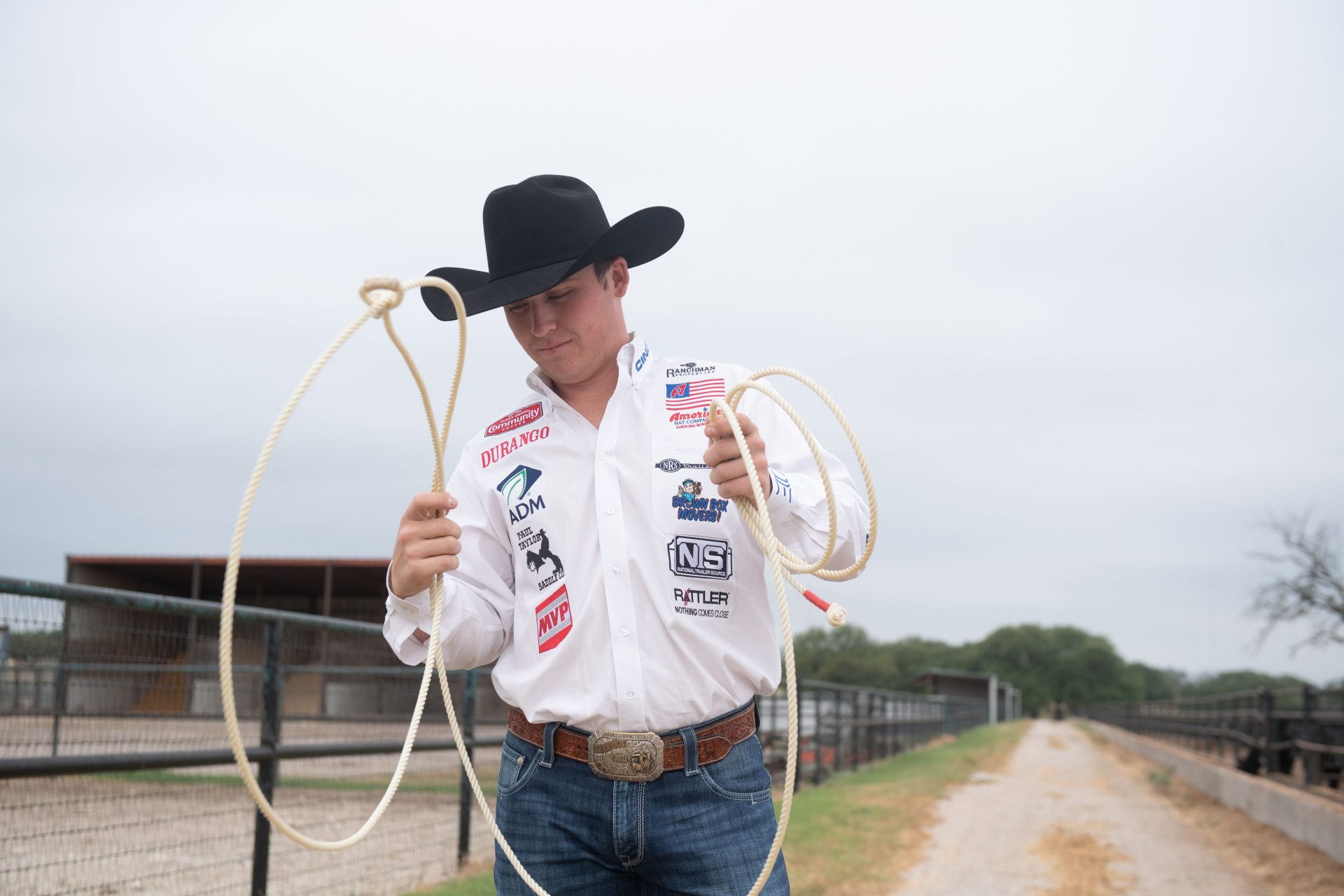
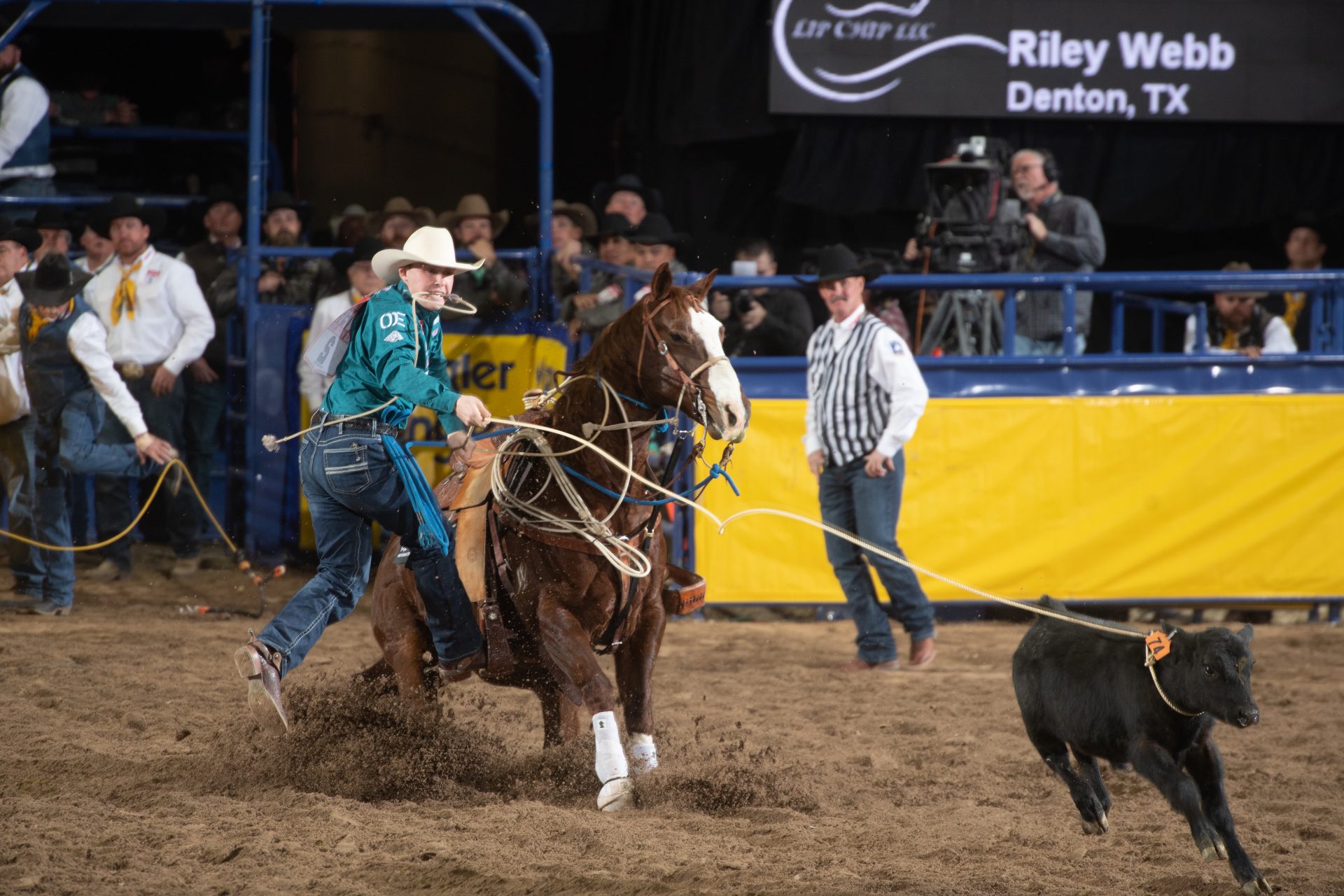
    In an arena where speed is celebrated and pressure is unforgiving, Riley Webb has built his career on something quieter: steadiness, not just in his hands or his timing, but in his heart. At a remarkably young age, Webb has become a three-time PRCA World Champion in tie-down roping, not by chasing moments, but by honoring a process shaped by faith, family, and an unwavering respect for his horses.

    Riley Webb didn’t grow up learning how to win fast. He grew up learning how to do things right. In Texas, surrounded by roping, livestock, and long days that reward consistency more than flash, he learned early that rodeo doesn’t hand anything out. You earn it quietly, over time. And along the way, you learn something else: in a sport built on trust, what you wear and who you ride for matters. In that spirit, Webb has aligned with brands that earn it. He is an American Hat Company athlete, riding with a brand known for upholding the highest standards of craftsmanship and character.

    Riley’s foundation was built long before he ever stepped into a PRCA arena. He comes out of Denton, Texas, and even early on, he wasn’t only focused on tie-down roping. He also has experience as a team roping header, which speaks to the depth of his roping background and the way he’s been shaped by multiple disciplines. Behind that is a family deeply woven into the rodeo world. His parents, Dirk and Jennifer Webb, operate Webb Roping Productions, producing sanctioned cattle for major youth events, including breakaway and tie-down qualifiers connected to the Junior World Finals. And the rodeo influence doesn’t stop there. With Dirk serving in leadership at The American Rodeo and Jennifer supporting in an official capacity, Riley grew up around real operations, real standards, and real expectations. That kind of environment doesn’t guarantee success, but it does cultivate a competitor who understands professionalism, pressure, and what it takes to consistently show up and deliver. It’s no surprise, then, that even early in his pro rise, he was already sitting inside the world’s top tier, proving he wasn’t just talented, but prepared.

    Family played a defining role. Expectations mattered. Work ethic wasn’t optional. Accountability wasn’t something you feared. It was something that sharpened you. That foundation shows in Webb today, in how he handles wins without arrogance and losses without unraveling. There’s a maturity to him that goes beyond age, rooted in being raised by people who understood that character lasts longer than trophies.

    Rodeo can tempt competitors into riding on adrenaline alone. Webb rides on something deeper. While he doesn’t make a show of it, there’s a faith-shaped restraint in the way he competes. It looks like believing preparation matters, humility protects you, and pressure doesn’t have to steal your peace.

    You see it in his runs. Clean. Controlled. Intentional. He doesn’t rush moments that don’t need rushing, and he doesn’t force what isn’t there. That kind of patience doesn’t come from confidence alone. It comes from trusting that your job is to be faithful to the work, not obsessed with the outcome.

    When Webb entered the professional ranks, he didn’t arrive loudly. He arrived ready. His rookie season hinted at something special, but it was his composure that caught attention.

    While others fought the nerves of the big stage, Webb treated it like an extension of the practice pen.

    That mindset carried him into his first world title, then his second, then a third. It’s a feat that demands more than talent. Winning once takes ability. Winning three times requires mental endurance, emotional control, and the humility to stay teachable when you’re already on top.

    Tie-down roping is often reduced to times and scores, but Webb understands the truth: the run starts long before the barrier. His success is inseparable from his partnership with his horses. He rides with feel, awareness, and respect, never asking for more than the moment calls for.

    To Webb, a rope horse isn’t equipment. It’s a teammate, one with instincts, limits, and a need for trust. His horsemanship reflects patience and gratitude, the kind that produces consistency under pressure. Something is reassuring about a constant in a world that runs hard. That respect for what’s earned also shows up in what he puts his name beside. American Hat Company represents craftsmanship that’s made to be worked in,not just worn, and you can understand why a champion would value that kind of steady presence on the road.

    The Wrangler National Finals Rodeo has a way of exposing who you really are. Ten nights. Ten chances. No room for excuses. Webb doesn’t change under that weight. He becomes clearer. He manages pressure rather than reacting to it, understanding that championships aren’t won by heroics, but by protecting your average, your mindset, and your horse.

    Despite the accolades, Webb carries himself with humility that resonates deeply in the rodeo world. He speaks with gratitude, credits his circle, and never forgets the horses and people who made the wins possible. That posture has quietly made him a role model, not just for young ropers, but for anyone learning how to carry success without being consumed by it.

    Three world titles would mark a finish line for many. For Riley Webb, they feel more like mile markers. His career is still unfolding, his approach still grounded, and his priorities still intact.

    Faith in the process. Family at the center. Horses first. That’s the formula, and it’s why Riley Webb isn’t just winning championships. He’s building a legacy that will last long after the arena lights go dark.

    Riley Webb | Accolades & Earnings Snapshot

    • Three-time PRCA World Champion (Tie-Down Roping)

    A rare three-peat at the top of the sport.

    • Career earnings (PRCA): $1,443,890

    Reported as of December 4, 2025.

    • Record-setting season earnings (example): $475,214 in 2024

    A season total reported after his second straight world title.

    • 2025 NFR Average Champion: 82.3 seconds on 10 head

    Earned $94,036 for the average title and finished the 2025 NFR with $240,412 in NFR earnings.

    • Go-round wins on rodeo’s biggest stage

    Including a Round 3 win at the 2025 NFR (7.0 seconds; $36,668).

    • Not just wins, but high finishes under pressure

    Example: a second-place finish in Round 7 at the 2025 NFR that added $28,980 to his NFR earnings.

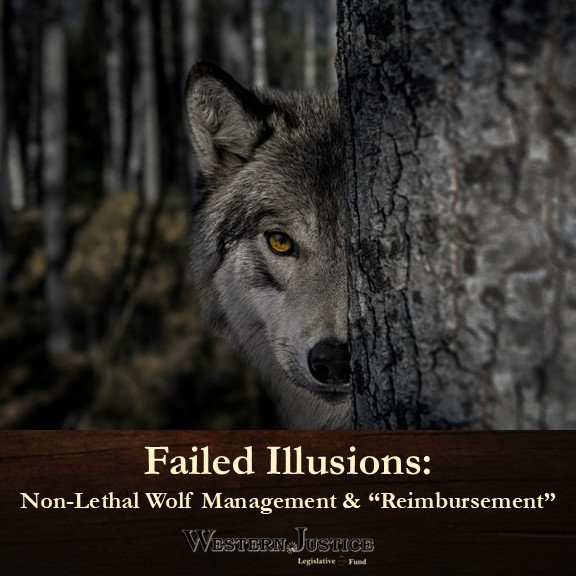
  • Failed Illusions


    For years, pro-wolf activists have insisted that ranchers have nothing to complain about. When wolves kill cattle, “you get compensated.” When calves come up missing, “get range riders.” According to the urban fantasy version of wolf management, a handful of people riding around vast expanses of mountainous livestock range can prevent predation, and whatever they can’t prevent, the government will pay back.

    But the people who actually work in wolf country know that both of these promises, range riding as prevention and compensation as cure, are nothing more than carefully crafted political illusions.

    Wolf-conflict specialist Jeff Flood has spent more than a decade on the ground in Washington, and he is brutally clear: range riding does not stop wolf depredation, and compensation does not fix the damage. Together, they form a system that looks good on paper while quietly dismantling rural families, cattle herds, ranching legacies, and the agricultural economy of the region.

    The Myth of Range Riding Is the First Lie Ranchers Are Told

    The public imagines range riders galloping across the landscape, intercepting wolves just in time, heroically pushing predators away from cattle. In reality, Flood says, that never happens. Wolves kill at night, in timber, in ravines, in “some old dark hole.” Riders simply cannot be everywhere at once, and wolves know it. Range riding is not predator deterrence; it is extra labor. Riders check cattle, find carcasses, document kills, and push scattered cows back together. These tasks matter, but they do nothing to prevent wolves from killing. And even the one thing riders can do, find carcasses early, only feeds into the next failure in the system: the compensation maze.

    The Second Lie: Compensation Will Make Ranchers Whole

    When a rider or rancher finds a dead calf quickly enough and there is still sufficient evidence left to examine, the state may confirm a depredation. But even then, payment rarely matches the true economic loss. Flood works with a producer who already has more than $30,000 in confirmed wolf kills, while Washington’s entire statewide compensation budget for 2025 is also $30,000. That’s for all ranchers, all depredations, all year. Meanwhile, the open (not pregnant) cows, missing calves, lightweight calves, and cows run to exhaustion are not compensable at all.

    The program covers only what the rider finds soon enough to be documented, and wolves are incredibly good at eliminating the evidence.

    Flood says what ranchers whisper to each other privately:

    “When this gets bad, the dead ones are the least of your worries.”

    Range Riders Can’t Stop Wolves, but They Do Help Wolves Learn

    In states without public wolf hunting and trapping, wolves quickly habituate to human presence. Without lethal consequences, the highly intelligent wolf learns that range riders are just another predictable feature of the landscape. Wolves smell them, watch them, hide from them, and then go right back to killing cattle the moment the rider is over the ridge. 

    Flood warns that range riding often makes wolves bolder:

    “All we’re doing is habituating wolves to humans.”

    A wolf that repeatedly experiences human scent, sound, and presence without lethal consequences becomes more confident, not less. And a confident wolf is a killing wolf.

    But even worse, range riding, which is touted as a mandatory step before the state will authorize lethal removal, delays decisive action, allowing wolf packs to become fully habituated to non-threatening human presence and to livestock as easy, plentiful prey.

    That delay is catastrophic because once one or two wolves learn to kill cattle, the entire pack quickly follows.

    Flood has seen this pattern countless times.

    And that is exactly where the compensation trap snaps shut.

    Compensation Is Not a Safety Net, It Is a Shackle

    Once the pack has learned to kill cattle, the rancher is losing calves, losing cows, losing condition, losing pregnancies, and losing money and morale every single day. Yet instead of removing the problem wolves early, the state requires more range riding, more documentation, and more checking of meaningless bureaucratic boxes.

    Meanwhile, the wolves continue killing.

    And then the state says, “Don’t worry, you’ll be compensated.”

    Except:

    • You won’t be compensated fully

    • You won’t be compensated for indirect losses

    • You won’t be compensated for stress-induced abortions

    • You won’t be compensated for weight loss

    • You won’t be compensated for calves that simply disappear

    • You won’t be compensated for the long-term change in herd behavior and hardiness

    And worst of all, Flood warns, compensation is a political muzzle:

    “We can make you rich for a year or two, but you’ve got to keep your mouth shut.”

    Once a rancher accepts compensation dollars, they become targets for harassment and outright threats from activist groups. Because of this, and the bureaucratic procedural quagmire, some ranchers with plenty of verifiable wolf depredations simply quit seeking compensation. And by seeking compensation, they effectively lose their public voice. They are viewed as “paid off.” And when compensation funds run dry, which they always do, the rancher is still left dealing with a wolf pack now fully trained to kill cattle.

    Compensation doesn’t save ranching operations. It buys time for the state to avoid making decisions, while the situation on the ground grows unmanageable.  The ultimate decision quite often ends up being lethal removal of entire packs.  In contrast, states that allow the public to hunt and trap wolves have very little trouble with wolves killing livestock.

    Together, Range Riding and Compensation Create the Perfect Storm

    The public is told that nonlethal deterrent methods and compensation somehow create a utopian coexistence. Flood’s experience says otherwise. Without lethal management methods, the highly intelligent wolf quickly learns that there are no real consequences to preying on livestock. Compensation simply allows the state to postpone making hard decisions. It kicks the can down the road until a pack becomes so deeply habituated to killing cattle that lethal removal, full pack removal, often becomes the only remaining option. 

    This isn’t coexistence.  It’s irresponsible management that produces more conflict, more cattle killed, and ultimately more wolves killed.

    Flood sees the tragedy clearly:

    “This isn’t a wolf problem. It’s a management problem.”

    Neither non-lethal deterrent programs or compensation programs prevent depredation. Neither protects ranchers. Neither improves coexistence. In fact, Flood argues that they produce the opposite result:

    • Wolves become habituated to non-lethal deterrents.

    • Beyond the confirmed kills, cattle become stressed and unproductive.

    • Ranch families become financially crippled.

    • Entire wolf packs eventually must be removed because the problem has escalated too far.

    When ranchers finally reach their breaking point, emotionally, financially, or both, they sell off land that they have preserved as open rangeland for generations. And when that land becomes housing developments and ranchettes, it is wolves, deer, elk, and every other wild species that lose.

    The very people who claim to be “protecting wilderness” by pushing wolves onto ranchers are the ones accelerating the destruction of open space.

    The Truth No One in Power Wants to Admit

    Range riding does not prevent wolf conflict. Compensation does not repair wolf conflict. Combined, they institutionalize wolf conflict.

    They are not designed to solve the problem; they are designed to delay responsibility while ranch families absorb the cost in silence.

    Flood’s warning cuts through the political fog:

    “I’ll help you get compensation if you want it, but I’m telling you, it’ll be the end of you.”

    Range riding won’t save a ranch. Compensation won’t save a ranch. Only honest, timely, decisive wolf management will.
    WOLF Coalition Info

    Join the Coalition

    Western Justice Legislative Fund is a Non-Profit, 501(c)(4) Organization
    Internal Revenue Code: EIN # 85-1738984 Registered in Wyoming.
    Mailing address ~ P.O. Box 454 Hermiston, OR 97838

    Disclaimer: Contributions to WJLF are not deductible as charitable contributions for federal income tax purposes. They may be deductible as trade or business expenses, if ordinary and necessary in the conduct of the taxpayer’s business. Please consult with your tax adviser.

  • Bentli Taylor: Learning to Win Without Losing What Matters

    Bentli Taylor: Learning to Win Without Losing What Matters

    By Lori Bizzell
    Photos Courtesy of Bentli Taylor

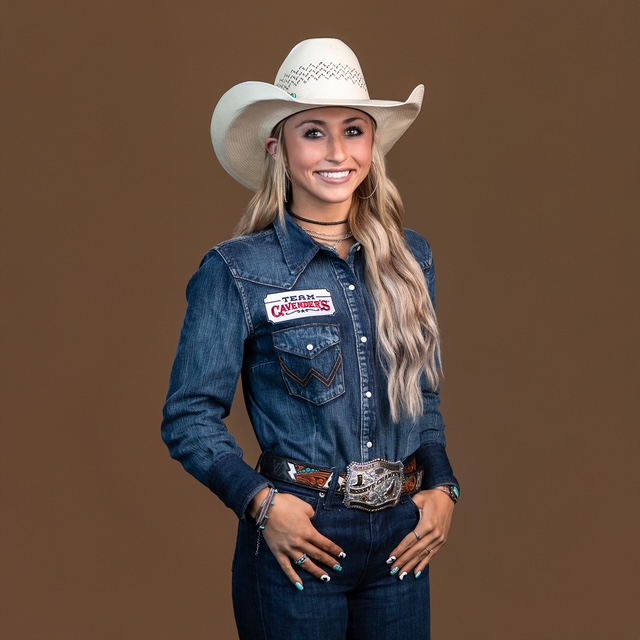
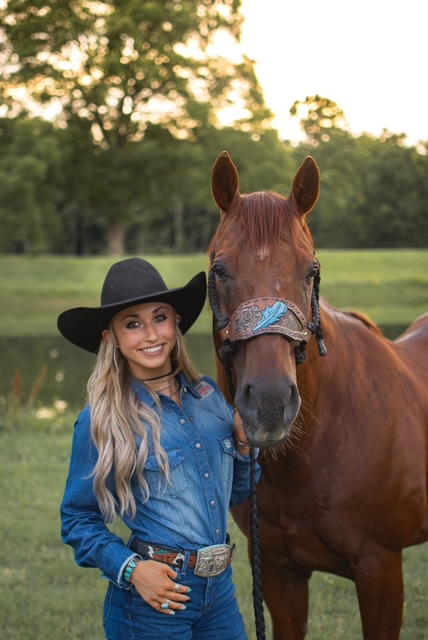
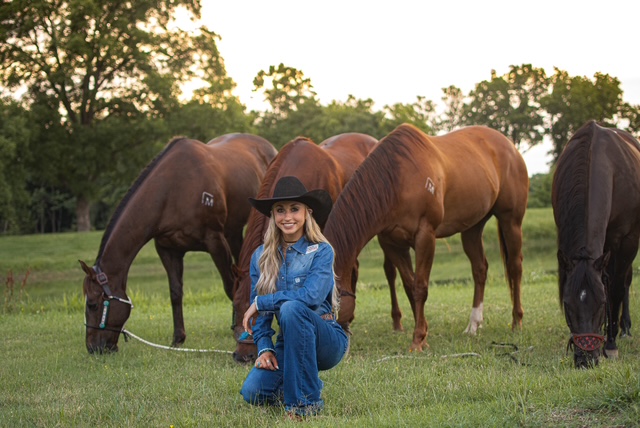
    I had a chance to connect with Bentli, and what stood out to me first wasn’t an impressive list of titles; it was her heart. She’s learning how to win without losing what matters, and that kind of growth is worth paying attention to.

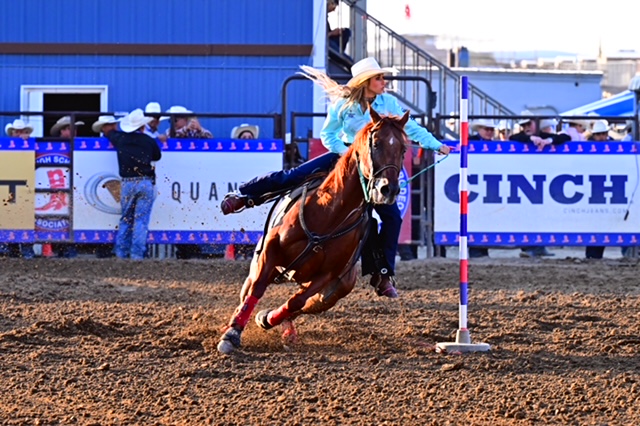
    Team Cavender’s athlete Bentli Taylor understands that growth in rodeo often requires difficult choices. “As you get older, rodeo competition gets tougher, and you have to become more focused. Sometimes that means making choices,” she says. Once a competitive gymnast and cheerleader, Bentli reached a point where she knew she couldn’t give her best to everything at once. “I decided that I could not be successful at everything. I decided  to dedicate my time to rodeo and plan to compete in College Rodeos.”

    That decision opened the door to steady progress. Bentli moved from junior high and high school state short go rounds into national-level competition, qualifying for both the National Junior High Rodeo and the National High School Rodeo while continuing to compete across multiple events.

    For Bentli, growth hasn’t come from a single source. It has come through experience ~through horses, pressure, people, and faith…..each shaping her along the way.

    Pole bending is where Bentli feels most at home. “The pole horses fit my personality. Every pole horse that I have ridden loves the event just as much as I do.” She knows quickly whether a horse belongs there. “I can tell when I get on a horse if they are a pole horse or not by the way they walk down the alleyway.”

    Her journey has been shaped by special horsesRodeo and Coloneland now by Queen. “They all have known their job and gave me 100 percent every run.” What draws her in is the intensity. “To me, there is a thrill weaving through the poles at a high rate of speed.”

    That partnership has carried her onto major stages, including the WCRA Cinch World Championship junior rounds and a Top 10 finish at the International Finals Youth Rodeo, as well as multiple championships and a reserve state title. 

    Bentli’s approach in competition is deliberate. “I try not to think about what other people do and just focus on making my run.” Afterward, she evaluates honestly. “After my run, I celebrate a good run or think about corrections I need to make before the next run.”

    When something feels off, she goes to work. “I try to figure out what went wrong. Sometimes I need to make a bit of a change or tune in the practice pen.” Then she resets. “I try to let it go and think about the next run.”

    Competing in multiple events has taught her resilience. “I have always competed in more than one event, so I cannot worry about one bad run. I have to get on the next horse and get my mind right for the next event.” Staying calm is intentional. “I focus on the run in front of me. I must stay calm because my horse feeds off my energy.”

    Loss has been one of rodeo’s hardest lessons. “Heartbreak. Your horses become members of the family, and when you lose one, it is like losing a family member or a best friend.” Much of that reality is unseen. “People do not see the hours of practice spent in the arena.”

    Bentli faced that heartbreak at the National High School Finals Rodeo when her pole horse died. Seeded for the WCJR semi-finals the following week with nothing to ride, she relied on the kindness of others. “A nice family let me borrow a horse to get through the week.” Despite the weight of grief, she finished the job. “With all my emotions, I just wanted to go home. I pushed through and finished what my horse had started for me.”

    Her priorities are clear. “My horses are part of my joy for the sport. No matter how much I want to win, I am going to put them first and make sure they are taken care of.”

    Today, she rides a team she’s proud of. “I am extremely proud of my team of horses ~ Chief, Forrest, Queen, and Viper.” Chief brings speed. Forrest brings consistency. Queen is a fireball, and Viper is quick across the line.

    Now in her third year with Team Cavender’s, Bentli embraces what representation means. “It’s a leadership role. I represent Team Cavenders. I am proud and thankful for that, and I take my role seriously.” That responsibility fuels her drive. “It makes me strive to be better because I not only want to win for myself, I want to win for my team and the Cavender’s name.”

    The team has shaped her beyond competition. “They have taught me at team summits every year how to build my image through social media.” Their presence matters. “The Cavender’s Team supports me at large events such as the National High School Finals and IFYR.”

    Bentli values the culture. “It is the best team to be part of. Not only is it a great family environment, but they also support you all year round.” The annual summits motivate her. “It is great motivation when you meet professional athletes who speak at the meetings. They try to prepare you in every aspect to get you ready for your future in rodeo.”

    Those lessons are shaping her character. “It has taught me how to be a more well-rounded person and a good teammate. They teach us how to be good role models.” She carries that responsibility daily. “I know that my actions are a reflection of the team, and I just try to be a good person and demonstrate good sportsmanship in and out of the arena.”

    When asked what she hopes to represent, Bentli answers simply. “To be a good person and a Christian. To never give up your dreams.” She adds, “I try to keep a positive attitude and drive to keep going no matter the outcome.” Looking ahead, she sees preparation. “It will help prepare me for bigger opportunities in my future.”

    Her foundation is steady. “My family has supported me through highs and lows.” “My faith keeps me grounded.” When things are uncertain, she trusts God. “I know that God has a plan. I may not always see it when things are rough, but I always know He is in control.” She releases the outcome. “I pray about it and leave it in God’s hands.” One verse she leans on is Proverbs 16:9: “In their hearts humans plan their course, but the Lord establishes their steps.”

    What Bentli hopes people see goes beyond results. “I would want them to see my love for the sport and that I always put my horses first. There are days I make mistakes, but I always come back stronger.” And her encouragement to others is heartfelt. “Enjoy the little things ~not just the wins. Enjoy the time you spend with your horses. Each horse teaches you something along the way. Appreciate the genuinely good people you meet on this journey. Keep going. You will be amazed at what you accomplish.”
    Her hope for the future is simple. “That I was a good horseman, and I took good care of my animals. I hope they remember how much I loved and appreciated each horse.”

    Keep your eye on Bentli! We’re proud to spotlight the growth happening in her life, on the dirt and off it. The wins will come, but what’s even more meaningful is the kind of horseman, teammate, and young woman she’s becoming ~and Team Cavender’s has a young athlete worth rooting for.

  • Rodeo Life Magazine Reaffirms Ownership and Expands National Storytelling Reach

    Rodeo Life Magazine Reaffirms Ownership and Expands National Storytelling Reach

    Rodeo Life Magazine confirms that ownership of the publication remains solely with Rick and Lori Bizzell, founders and publishers of the Rodeo Life brand. As Rodeo Life enters an expanded season of growth, the Bizzells are implementing strategic updates designed to strengthen editorial direction, partnerships, and long-term reach.

    As part of these updates, Rodeo Life Magazine is finalizing the appointment of a new editor. This transition reflects Rodeo Life’s continued commitment to serving the people who carry this way of life—the ranch families, rodeo athletes, small-town arenas, and the military men and women whose values of grit, honor, sacrifice, and loyalty run parallel with the Western spirit. Rodeo Life exists to steward stories with respect, protect the integrity of the community, and preserve the legacy that binds Western and military culture together.

    In 2026, Rodeo Life will broaden its national footprint, from the West to the East Coast, and North to South, bringing readers the stories of not only the well-known champions, but also the everyday cowboy and cowgirl whose grit, faith, family, and work ethic rarely make headlines. Rodeo Life is also expanding purposeful coverage that includes veteran cowboys and cowgirls, honoring their service and their contribution to the Western way of life.

    “Rodeo Life has always been about honoring the heart and soul of the West,” said Lori Bizzell, Publisher. “We’re building a broader platform, one that elevates the voices you don’t always hear, while protecting the integrity of the people and the culture we love and cover.”

    Rodeo Life is also actively strengthening relationships with rodeo associations nationwide as part of its broader outreach and community connection efforts.

    Rick and Lori Bizzell remain actively involved in all editorial, operational, and strategic decisions. These updates reflect internal realignment and forward growth only and do not change ownership, brand identity, or Rodeo Life’s commitment to the communities it serves.

    Media and partnership inquiries can be directed to Rick and Lori Bizzell at contact@mwdatademo1.com, by phone at 307-761-9053, or through RodeoLife.com.