Rodeo Life

Blog

  • Dara Short

    Dara Short

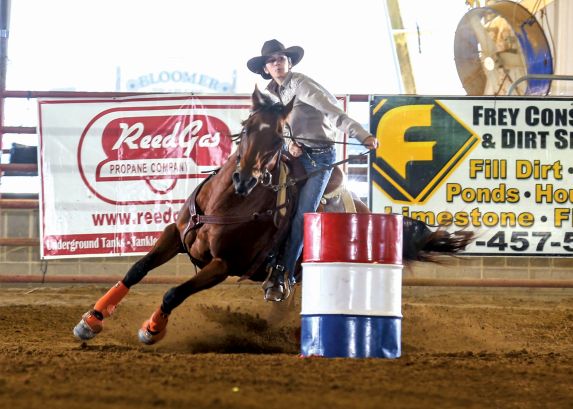
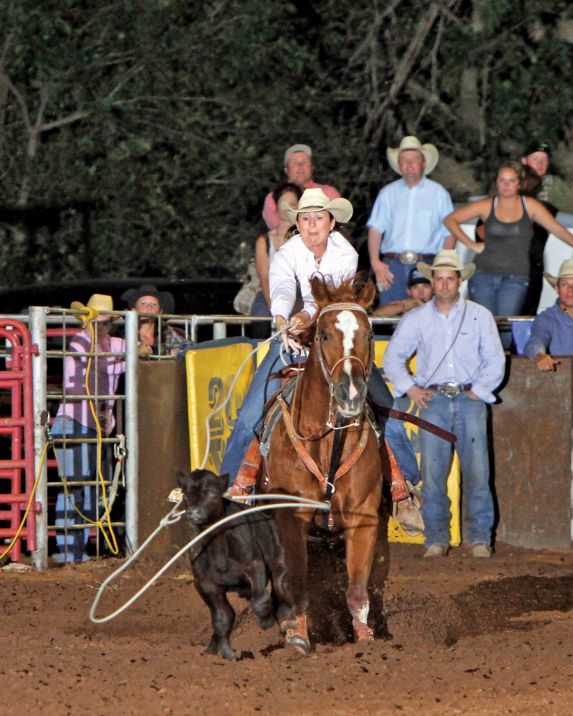
    Kansas Professional Rodeo Association (KPRA) breakaway roping director, Dara Short, has just wrapped up her fourth year-end title by dominating the event throughout the season. “It was an excellent summer. I started clicking with my horse to the point that we could trust each other and just go rope,“ she said. Placing in the money or winning 18 out of the 20 regular season rodeos, she wrapped up the year by finishing fourth in the finals average to take the saddle by approximately $4,000 above her closest competitor. “It was one of those dream summers. We won a couple big ones in there, but I owe a lot to Rocky,” she said of her nine-year old horse, whom she started on four summers ago. “I’ve been seasoning him and letting him mature. I just wanted to get him going, while gaining confidence to be successful,” she explained.

    Also competing from the heading box, Dara finished 12th in the 40/40 team roping standings to win her fifth runner-up all-around title with a little over $10,000 between her two events. Obviously, not new to the winner’s circle, Dara’s KPRA resume also includes two all-around titles (2007, 2009) and three breakaway year-end runner-up titles (2004, 2005, 2007). “I have been very blessed with quite a bit of success,” she modestly said.

    Growing up in Goodwell, Okla., Dara and her sister (Tanya Goad, two-time KPRA breakaway year-end champion) took to the loops early on in life. Learning from their dad (Dwayne), who is a team roper within the KPRA and the United States Team Roping Championships (USTRC), the sister-duo started their competition in the National Little Britches Rodeo Association and then the National High School Rodeo Association. “Dad started us when we were young and it just stuck with us,” she said of her start in rodeo. Progressing through the years, Dara received a rodeo scholarship to Oklahoma Panhandle State University (OPSU) and, soon after, won the Rookie of the Year in the KPRA in 2000. Her mom (Joyce) does not compete, but is her family‘s biggest fan. “She is our time keeper, secretary, photographer and supporter. She is our everything,“ Dara detailed. Joyce, too, has found her ties within the organization and has served as a secretary for the past nine years. “My family has supported the KPRA for several years and I have always enjoyed the family aspect of the sport, which is something that the KPRA offers,” Dara said of the association. Among the family ties, Tanya’s husband (Travis Goad) competes within the organization as well.

    The 32-year old cowgirl’s sensational summer started off with an engagement to calf roper, Kyle Belew, back in May. The couple were brought together through rodeo in the NLBRA, but were reunited about three years ago while both competing in the KPRA. They have set the day for March of 2014 and Dara says she does not know how hard she will travel next season. “It will all depend on how we settle in,” she said. In the mean time, Dara continues to reside in Goodwell, where she is the Administration Counselor and Enrollment Coordinator at OPSU.

    “I mainly breakaway rope in the summer and team rope in the winter,” she said. Dara competed with her dad at the USTRC Finals in Oklahoma City and recently with her uncle (Byron) at the World Series Team Roping in Las Vegas, where she won fast time of the rotation, earning each of them $3,000. “Team roping with my dad and uncle is something that is pretty special to me. They have taught me so much and it feels great to be able to compete with them,“ she said. “I just want to rope the best that I can and be as successful as I can.” While Dara enjoys riding and roping as often as she can, her roots remain with her family. “I like to spoil my nephew (Kyler, 8) and niece (Kynlee, 4) and spending time with the whole family. It doesn’t matter what it is, just as long as we’re all together,” she said.
  • Cole McNamee

    Cole McNamee

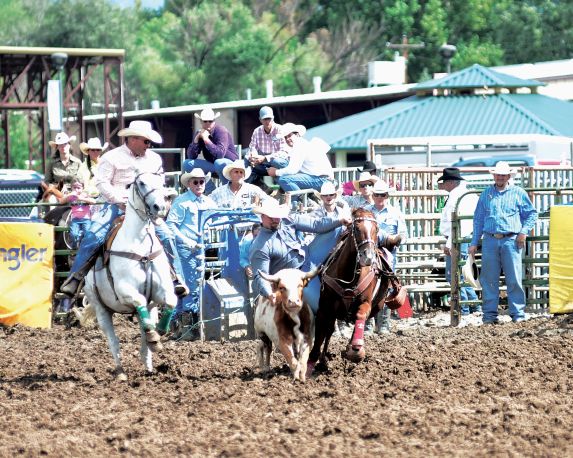
    First year Colorado Pro Rodeo Association (CPRA) member, Cole McNamee, threw down in the steer wrestling during the 2013 season and was crowned the year-end champion with almost $5,600 won throughout the year. “I had a very blessed season. I just drew well and had luck go my way,” he said. The 27-year old cowboy was found in the money at 14 of the association’s 29 regular season rodeos, but battled every inch of the way with reserve champion, Kyle Maez. “Kyle and I had been going back-and-forth through the whole season and I was able to pull away after my last two rodeos, but he made a come back with a great finals,” explained Cole.

    With a long running steer in the first-round of the CPRA Finals, Cole was unable to pull a check until the second-go, where he took second place to win $354, but a stopper in the third-round caused Cole to go over the top and miss the average. In the meantime, Maez was closing the gap by placing in all three rounds and winning the average title with an aggregate time of 15.4 on three head. “The only thing that saved the year-end for me was my traveling partner [Dan Cathcart, three-time CPRA steer wrestling champion] tied for first with Kyle in the third-round, which helped me seal the deal,” said Cole of the close call and he walked away with the saddle by $12.96 above Maez.

    Living east of Pine Bluffs, Wyo., Cole had been a primary member of the Wyoming Rodeo Association (WRA), but had been to quite a few CPRA rodeos through co-sanctioning prior to this season. “I knew the finals were good, but besides that it’s a good all-around association. They put on good shows and try to have everything run smooth,” Cole said of why he likes the CPRA. “On top of having good cattle and good business backing, they treat the contestants right.” His early season goal was to buy both cards and win the year-end title in both associations. Goal accomplished. He was also crowned the WRA steer wrestling champion by approximately $2,300 above Cathcart. “I had a good finals,” he said after finishing second in the average and first in the shoot-out round.

    Cole grew up around the sport. His dad (Steve) is a former steer roper and his uncle (Mark) steer wrestled and traveled with Cathcart in his day. Although Cole roped through junior high, school sports soon consumed his life and he got away from the arena. His football talents found him playing at the college level for a year as a running back for Black Hills State University in Spearfish, S.D., before suffering an injury to his shoulder. Knowing that his career on the field was coming to an end, Cole transferred to the University of Wyoming in Laramie, where he graduated in 2010 with a degree in animal science. He currently works for his dad on the family ranch running approximately 100 head of cattle in a cow/calf operation. While his mom (Dawn) never competed in rodeo, she grew up in Colorado and likes the ranching life. “She enjoys watching rodeo and both parents are very supportive,” Cole said. “A special thanks goes out to my family, especially my parents, for all of their constant support and help.” He also included that he would like to thank Dan Cathcart and his family for all of their help and support as well. “I’m very blessed to have such great friends and family,” he said.

    He returned to rodeo in August of 2009. “It is action packed and gives me the adrenaline rush that I was missing from sports. I’ve loved it since the first time that I tried it,” he said. An immediate click with his event allowed Cole to purchase his permit within the Professional Rodeo Cowboys Association (PRCA) in 2010. By 2011, he had filled his permit and went full force in his rookie year in 2012. “It’s the atmosphere. Everyone feels blessed to be there and it feels like a distant family with the people that you are around all of the time. It’s a community that you become apart of,” he said of why he likes to rodeo.

    Starting the 2013 season working for a qualification to the Mountain States Circuit Finals, Cole changed his focus after getting a new horse half-way through the season. In a more settling state with his four-legged companion, he hopes to go at it stronger in the 2014 season and fulfill his goal.

  • Ray Beechy

    Ray Beechy

    Ray Beechy is a cowboy who has overcome many obstacles. When he was 12 years old, he was involved in a sawmill accident, which resulted in his right arm having to be amputated below the elbow. The loss of his hand did not slow him down for long, however. It served to make him very competitive and he quickly became adept with using one hand. “It’s never kept me from much of anything other than shuffling cards – or clapping,” Ray said with a laugh.

    As Ray grew up Amish, he did not start competing in rodeo until after he moved away from the Amish community when he was 16. He tells the story. “I was 16 when I really took an interest in the rodeo circuit. A friend of mine that lived close by was riding bulls at the time, and got me interested.” Ray was given a boost into rodeo by Galen “Peewee” Helmuth. “He got me started way back in the day and has taught me more than anyone else,” says Ray. He has also been inspired by Ray Cox, owner of Lazy C Rodeo School in Jacksonville, Ill.

    Ray rode bulls for five years until he had a serious accident in the arena with a bull. “I broke my entire face,” Ray explained. “My thought was that I might try to build a career that has a better retirement plan than bull riding,” he said with a hint of humor. “I can pick up good trade skills, but I got tired of watching bull riding and I needed a hobby.” After four years, Ray climbed once more onto the back of a bull. He practiced on 20 bulls and set off to a rodeo. By his second rodeo he was winning money with a renewed vigor in the sport. After his four year retirement from bull riding, Ray, now 27 says, “I approached it with a completely different mindset, and learned the respect you have to have for the sport of bull riding.” He further explains his mindset about riding bulls. “You don’t think about the ride until you nod your head. I try to think about anything other than bull riding right before I go to the chutes.”

    While the rodeo season is fairly slow for the CSRA during the winter, Ray works his full time job as a concrete finisher. Having use of one hand has not slowed him down in rodeo, nor in anything else. The avid outdoorsman lives in Hammond, Ill., and whether golfing or playing sports, he pursues it all enthusiastically. He also enjoys music of all varieties and loves going to concerts and supporting local bands in his area. One of Ray’s favorite things is to work with horses, and while he doesn’t have any of his own right now, he helps his friends with training and riding. “I’ve developed my own training techniques and routine I go through. It’s a combination of a lot of other successful trainers,” Ray says.

    This winter, Ray is helping his friend Galen Helmuth put on rodeos every other week at the “Blue Barn”, a barn that Helmuth is leasing near Sadorus, Ill. “Rodeo is pretty popular in my state, just not in the area I live,” Ray explains. “We’re trying to promote this for young people and help them get exposed to rodeo.” Ray and Galen are additionally putting on ranch rodeos and bull ridings in an effort to introduce their community to several aspects of rodeo.

    Ray’s goal for his rodeo competition is to win the bull riding in the CSRA in 2014. “I want to get on as many bulls and win as much money as I can,” says Ray. During 2013 in the CSRA, he won the bull riding in Kankakee and Brownstown. He is considering competing in several other rodeo associations as well, but his fondness for the CSRA is evident when he says, “I like having a rodeo association in Illinois, and my main goal is to do whatever I can to make it an even better rodeo association.”

  • Wade Hazlet

    Wade Hazlet

    Wade Hazlet has been fighting bulls for nearly 12 years. Today he is a bull fighter for the APRA and the IPRA, as well as high school and local rodeos. Wade is the 2013 Funny Man of the Year in the APRA, and he has fought bulls for the associations finals on three different occasions.

    The funny man and bull fighter grew up in North Washington, Penn. While his family did not farm, Wade experienced farm life whenever he helped his dad’s cousin on his ranch – riding, moving cattle, and doing field work. Wade also helped behind the chutes at the North Washington Rodeo every year, which is what inspired him to want to ride bulls. Before Wade had a chance to ride any bulls, however, he and his best friend, Jarrod Sankey, met a bull fighter named Cory Wall. Wall was fighting bulls at a local rodeo. “Cory Wall happened to have been through a Sankey rodeo school,” says Wade. “We got to talking and found out that Jarrod was related way off to Lyle Sankey.” This news, combined with their keen interest in bull fighting, sent Wade and Jarrod to a Sankey Rodeo School in Rose Hill, Kan. “We were fighting bulls for the guys learning to ride at the school,” Wade recalls. “It was there I turned away from wanting to ride bulls and decided that the safety of the riders was more important.”

    Over the four days of the school, Wade and the other Sankey students had the opportunity to fight 300 – 400 bulls. Wade describes some of the ways he learned to bull fight at the school. “We’d watch some videos, but mainly we were chased around by a guy with a wheelbarrow. A person with a wheelbarrow can’t turn a tighter circle than a bull can, so you learn how to maneuver out of the way.” Wade, 20 years old and fresh from the rodeo school, was ready to start his career as a bull fighter. “When I came home from the rodeo school, it was a year and a half before I found a stock contractor who would let me into the arena. It’s extremely hard to find a stock contractor who has an opening or is willing to let you step into the arena. Sam Swearingen from Rawhide Rodeo Company helped me get my IPRA card, and Bill Slader helped me get my APRA card.”

    Along with bull fighting, Wade explains the other aspect of his rodeo career – working as a funny man. “Bill McEnaney got me my start as a funny man, as well as Rockin’ Robbie Hodges, another funny man. They let me borrow acts from them to get started. I’m kind of a natural with acting funny and being able to come up with stuff. I’m quick on my feet and my mind is always working.” Wade travels the Northeast through the summer, fighting bulls for APRA and IPRA rodeos, as well as high school rodeos. In 2013 he worked more as a funny man than a bull fighter since he was working on strengthening his knee, which he had torn in 2012 at the beginning of his rodeo season. “I had enough rodeos lined up to fight bulls at the IFR but then I ended up tearing my ACL. I had to have reconstructive surgery. But I made a comeback in 2013.”

    Not all of Wade’s time is spent in the arena, however. When rodeo season is slow, Wade works at his full time job as a bridge repairman. He is happily married to his wife, Renee, and together they are raising their 10 month old son, Walker. When he has the opportunity, Wade also enjoys trekking through the great outdoors and hunting.

    At 32,  Wade plans to log many more years in the rodeo business before retiring, and he continues to work toward his goal of fighting bulls at the IFR.

  • Edward Young

    Edward Young

    Edward Young was born and raised in Walker, La. and he still calls the town home to this day. He has been competing in the CRA since he was 16 years old, competing in the association’s finals for the first time as a teen. Today, 35, Edward still enjoys competing in the CRA, and makes time to rodeo even with his full schedule. “I love it,” Edward says about of the sport. “I love the competition and the horses. I’ve loved it since I was a little kid. Now it’s my favorite hobby and I do it between raising kids and working.”

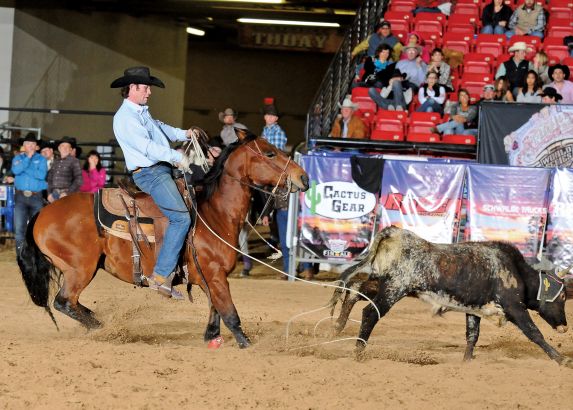
    Edward competes in team roping as a heeler. For several years he also competed in calf roping, but he says, “I’ve broken far too many bones to step off a calf horse anymore.” Edward’s team roping partner is his longtime friend Lane Holland. They grew up a mile from each other and still live nearby today. Even though both men have children to raise and full time jobs, they still get together once or twice a week to practice roping. “It’s pretty fun to travel with a guy that has become my best friend. It works good for us. We may rope early in the morning or right at dark, be we get it in when we can.”

    Two men who have been very influential in Edward’s life and rodeo pursuits are George Milton and Wendy Windorn. “I would be nowhere close to where I am today without those two guys, “ Edward said gratefully. “They are pioneers for this part of the world and I’ve spent a lot of time around them. I’ve known Mr. Wendy all my life – he lived across the road when I was growing up. Mr. George helped me rope when I got to roping. They’re both longtime family friends.”

    Edward makes a living as an Assistant Fire Chief in Livingston Parish. He has been a fireman for nearly 10 years. Additionally, Edward is raising his two daughters, Cheyenne, age six, and Katelyn, age four. “Cheyenne lives and breathes horses and rodeo,” Edward says happily. “She is goat throwing, pole bending, and barrel racing in youth rodeos.” His daughter Katelyn has started doing some goat tail pulling, but she hasn’t caught the rodeo bug quite yet. Another member of the Young family is Edward’s team roping horse, an American Paint. “He’s got a real original name,” Edward said with a laugh. “His name is Paint.” Paint has been Edward’s roping horse for nine years and has also proven to be a wonderful sort of babysitter for Edward’s daughters. “I’ll put my four-year-old on him and he’ll walk around and never break into a run. Then I’ll put my six-year-old on him and he’ll run a 20 second barrel pattern, and then I can get on him and rope. He’s proficient.”

    While Edward doesn’t have much spare time on his hands, if he were to have a day to spend however he chose, he says, “I’d rope at the CRA slack in the morning, have a good fun day with my kids, then go to a football game that night. I have season tickets to see the LSU Tigers and I see them play whenever they’re at home.”

    In pursuit of his other hobby, rodeo, Edward won 2013 Champion Heeler at the CRA finals. He has competed in the association’s finals every year since joining as a teenager. Edward was quite pleased when the CRA started up again after the association was dissolved for several years. “Billy Allemand started it back up and I’m sure glad he did. He’s doing a great job with it.” Edward is the association’s Team Roping Director (Heeler) for 2014, and he summed up his goals for the coming rodeo season by saying, “I want to keep having fun and win as much as I can.”

  • Lane Gilbreath

    Lane Gilbreath

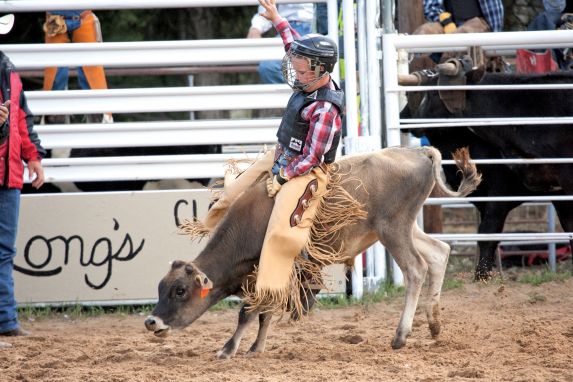
    Lane Gilbreath is a calf rider in the KJRA. He rode sheep for three years in the association and has progressed to calf riding. “My dad rode bulls and that’s what interested me in rodeo,” says the 10-year-old from Emporia, Kan. Lane’s dad, Mike Gilbreath, coaches him in calf riding, and Lane says, “I look up to my dad – he’s my role model.” Lane has several friends that compete in the KJRA as well. “I think it’s fun (rodeo), and it’s a good sport.”

    Lane lives with his parents, Mike and Tracy Gilbreath, in the country outside of Emporia, Kan. Lane also has an older sister, Bailey. “We have a dog and a cat and a horse,” Lane says. His horse, a mare named Maggie, has won Grand Champion Mare at the Chase County Fair for two years, 2012 and 2013. Lane competes in saddle club shodeos during the summer in barrel racing, pole bending, goat tying, and flag racing. In 2013 he was the All-Around Cowboy in the 7 – 9 age division in the Burlinggame Saddle Club series, and the Reserve All-Around Cowboy in the Eagle Creek Saddle Club/Olpe Downhome Days.

    The Gilbreath family enjoys hunting together in the winter, as well as playing darts, cards, and checkers. During the rest of the year, they are busy rodeoing and helping their neighbors haul hay and work cattle. Lane also loves to play catch with his dad and he spends a great deal of time roping the dummy, as well as practicing for his event on the mechanical bull. In his spare time, Lane enjoys reading the I Survived historical series by Lauren Tarshis, and listening to Red Dirt.

    Lane is a fifth grader at Chase County Elementary School, where he was on the A honor roll last school year. His two favorite subjects are math and social studies. “In math I like multiplying and dividing and doing fractions, and in social studies we’re learning about Native Americans and explorers.” Lane loves to play sports, and he plays on his school’s football, basketball, and baseball teams. He is also very active in 4-H. His projects this year are horse, goats, shooting sports, and welding. Lane has been in 4-H for four years, and this will be his first year in the goat project. For his welding project last year, Lane made a table that he was very pleased with. His grandpa also welds and they enjoy working together. At the Chase County Fair, Lane has been the Grand Champion in the Shooting Sport – BB Gun for two years in a row.

    During the 2013 KJRA rodeo season, Lane finished third in the 7 – 9 calf riding. What he is most excited about is competing in steer riding in 2014. It will be the first year that he can compete in the event. “I want to try to win first place in the KJRA in steer riding,” he says. Lane is sure that he wants to keep rodeoing as he gets older, and his motto for riding roughstock is, “If you ride, you ride, and if you buck off, you get back on!”

  • Waylon Davis

    Waylon Davis

    Waylon Davis has been team roping competitively for only a year, but in 2013 he roped himself a chance to compete in the World Series of Team Roping Finale. The 24-year-old cowboy came home from the famous event with $130,600. For Waylon, the journey to the WSTR took hard work and smart thinking. “You’ve got to do your homework, work hard, and practice a lot,” he says. “A lot of people have helped me along the way.”

    Waylon grew up in Breckinridge, Texas with a rope in hand, but he didn’t become involved in rodeo until he was 12. “My older brother (Reece Clark) took me around with him when I was 12 and let me cowboy with him. I started riding horses and broncs and roping and shoeing.” When he was 16, Waylon started competing in ranch rodeos and ranch bronc ridings, as his serious pursuit of roping was yet to come.

    After graduating from high school, Waylon went to Ranger Junior College with a rodeo scholarship and competed on the school’s rodeo team in saddle bronc riding. Funding his schooling required working several jobs, and after a semester and a half of such a demanding schedule, Waylon decided to quit school. He began working day jobs at ranches, riding colts, and shoeing horses. “I cowboyed mainly until everyone shipped their cattle out during the drought. Then I got a chance to go to TCU (Texas Christian University) for the ranch management program. I graduated and that’s how I go to Weatherford (Texas).”

    Following his graduation from TCU, Waylon found a place to live in Weatherford where he met Slick Robison. Robison trains roping horses, and ended up being the person to help Waylon with his big start in team roping. “I was roping and riding with him every day,” says Waylon. “We’d go to jackpots around home. I started out a #4 header and heeler. I got my card and the first one (WSTR team roping) I went to I won $5,000. Then we went to Stephenville (Texas) with the same #4 card. I roped with A.P. Jones and we won $3,200 in that one. After that they finally bumped me to a 5 elite. I went to Graham and entered the #12 finale and won that and split $35,000 with my partner, Clint Johnson.”

    During this whirlwind of team roping, Waylon and a group of cowboys he knew from ranching were competing in ranch rodeos. At the Western Heritage Classic in Abilene, Texas, Waylon won Top Hand, earning him a bit and a hand tooled saddle. Not long after that, he won Top Hand at the All-Around Performance Horse Ranch Rodeo Challenge in Glenrose, Texas and came home with another saddle. At that same ranch rodeo in Glenrose, Waylon and his teammates Nathan Carter, Cody Carter, Slick Robison, and Reid McGee won the entire rodeo. Over roughly 30 days during the spring, Waylon won nearly $30,000 dollars from team roping. He is the owner of eight new saddles and more belt buckles than he can recall. Team roping has turned into his fulltime job.

    After Waylon qualified for the WSTR Finale, his main team roping horse, a six-year-old bay called Day Trash was kicked in the knee in early November. X-rays showed that it was a bone chip. Day Trash was still able to compete in Las Vegas, where he helped Waylon win the big money in the #10 roping. Waylon had been practicing with the brother-sister duo Shawn and Danielle Darnall while preparing for the WSTR in Las Vegas. Among the roping horses that Waylon drove to Las Vegas was Funny Face, a head horse that he borrowed from Danielle Darnall and her boss, Jeff Busby.. Waylon set off to Vegas with the Darnells, splitting the 20 hour trip into two days.

    Waylon’s roping partners for the WSTR were John C. Brian, Clint Johnson, Troy Brown, Bud Lowrey, and Chase Harris. Waylon competed in five ropings altogether, but ropings #10 and #13 are where he and his partners had successful runs. Waylon was heeling for John C. Brian in the #10 when they won $250,000, cutting a $125,000 check for each cowboy. He topped off his winnings with the $5,600 that he won heading with Clint Johnson in the #13. “It turned out really good for all three of us,” says Waylon. His girlfriend, Hannah Flowers, flew in to surprise him in Las Vegas, arriving just after he won the #10. When it was all over after 11 exciting yet long days away from home, Waylon was ready to put his truck into gear and head home.

    In one year, Waylon’s team roping has earned him nearly $180,000. He is greatly encouraged by his success in 2013, and in conclusion, he said, “I’m just going to keep team roping and try to qualify again (for the WSTR Finale) next year. I’m going to keep doing what I’m doing and try to be more successful.”

  • Bill Feddersen

    Bill Feddersen

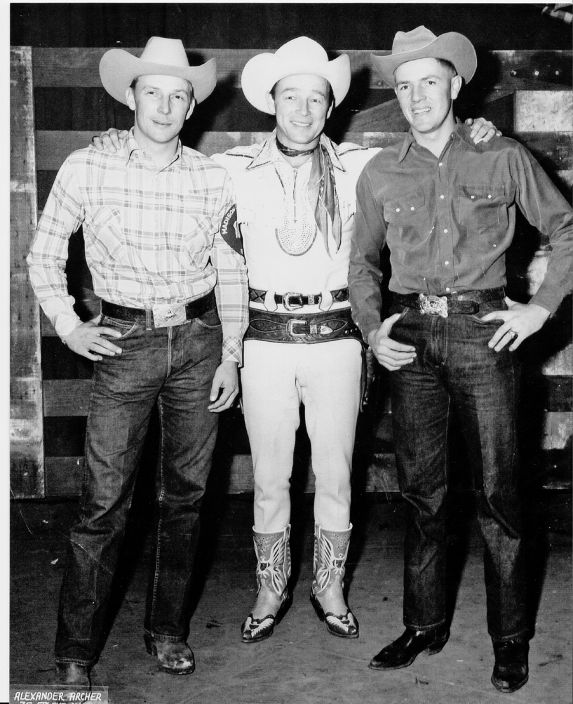
    Bill Feddersen was the first saddle bronc rider out of the chutes at the first NFR in 1959. At the time, the NFR took place in Dallas, Tex. and $10,000 was put up as prize money for each of the five events. Bill reflected on the difference just in prize money alone between today’s NFR and the first one held in 1959. “A few years ago I was going home with a cowboy from Oklahoma after going to the NFR. We were talking, and he told me that he rode four bulls at the finals and won $53,000. I told him, ‘You got more money riding four bulls than all of the money put together for the first NFR!’. Although, we probably ended up with as much money then as they do now, since gas was only 25 cents and a hamburger was a dime.”

    Bill was born in Union City, Okla. in 1927. He had a younger brother, Don, and their family ran a farm and raised beef cattle. Bill loves to tell the story about his first “horse”. “When I was four years old, I told my mother that all I wanted in life was a horse. One day she got me a horse and I ran outside all excited. It was a stick horse and I loved that horse. I taught it to walk and trot and backup, and I even rode it to school. I tied it up with the big horses. One day I came out of school and someone had stolen my stick horse. But what bothered me the most is that I had to walk home.” In high school, Bill rode a four legged horse the four miles between home and the schoolhouse. It was in high school that Bill had his first chance to compete in rodeo. “Ed Curtis was a rodeo cowboy and he moved down by me. I rode horses and calves and cows – everything I could get on. When I was in high school, he (Ed) took me to my first rodeo in 1943.” Bill loved his first rodeo, held on a baseball field, and became further involved in the sport when he joined the Cowboys’ Turtle Association. In 1946, the association became the Rodeo Cowboys’ Association (RCA), which would later become the PRCA. Bill’s rodeo pursuits were put on hold, however, when he was drafted into the Army during WW II. He got out of the Army in 1948 and continued on with the RCA. Altogether, he was their vice president for seven years, and Bill helped start the association’s first rodeo judging school. “That was quite an experience for me. I didn’t have anything written down on how to judge. I asked a lot of questions and we had to change some rules. It was just start from scratch and we figured out how to watch the barrier and where to stand and how the calves should be tied down. I went all over the United States and Canada teaching schools. I did that for about five years.”

    Bill met his wife, Donna, in 1948 and they married soon after. It was in 1952 that Bill began rodeoing professionally, competing in the rodeos at Madison Square Garden and Boston Garden. “I rode down Fifth Avenue on horseback in New York City. They had a parade to advertise for the rodeo.” When Bill was embarking into rodeo competition, there were not many rodeo schools to attend or instructional films. “It was just learning by watching people and practicing with people,” Bill explains. Over the first few years, Bill experimented in all of the events, trying them out and seeing what he was best at. “I may hold a record in the rodeo business,” he said with a laugh, “I placed in nine different events. Bull riding, bareback, saddle bronc, team roping, bull dogging, calf roping, wild cow milking, the wild horse race, and the steer decorating up in Canada.” Bill settled in with bull dogging and saddle bronc riding and went to compete at the first NFR in both events. His brother, Don, joined him at the NFR in 1960, and they were the first brothers to compete in a timed event at the finals. They often hazed for one another. Bill says about bull dogging, “I weighed 163 pounds and I looked like a water boy to the Green Bay Packers.” He and his brother won the bull dogging at the Cow Palace three years in a row, from 1959 – 1961. Bill also won the saddle bronc riding in 1960 at the Los Angeles Coliseum in front of 98,000 people. He travelled down the road with his rodeo buddies Ed and Andy Curtis and Marty Wood, and Bill always admired Casey Tibbs when it came to rodeo idols. Bill was also travelling with his family to rodeos. “It was kind of a family affair. A lot of cowboys had their wives and kids with them.” One of the highlights for the Feddersen family was going on a free trip to Hawaii when Bill was invited to compete in a rodeo there. Another favorite memory of Bill’s is the day that Marty Wood gave him a pair of chaps and nick named him Good Times. “I always had a good time at the rodeo,” Bill remembers.

    When Bill retired from rodeo in 1962, he had ridden approximately 4,000 saddle broncs in his rodeo career and in all those rides, he never once was injured badly enough to go out in the ambulance. During his last year of rodeo, Bill went to 55 rodeos and placed 76 times. After retiring from the sport, he continued his job as a switchman for Rock Island Railroad. He had been working for the railroad since 1950, even through all of his years as a professional cowboy. “Jim Shoulders said he couldn’t believe that anyone could hold a job and go the NFR in two events. The railroad treated me real good.”

    Today, Bill lives with his wife of 65 years, Donna, in El Reno, Okla. They have two children, two grandchildren, and three great-grandchildren. Bill and Donna are sure to go watch the WNFR every year, which for Bill, brings back memories of the years he competed there during his rodeo career. Fittingly, Bill was inducted into the National Cowboy Hall of Fame in 2013, and he concluded, “After all those years of rodeoing, it’s an honor for me to make the Cowboy Hall of Fame.”

  • Wyatt Crowder

    Wyatt Crowder

    Wyatt Crowder is a good businessman. He knows how to work, how to see things from a different perspective, and the 18 year old cowboy is on his way to a well-established business.

    The Ft. Lupton, Colo. man found his bucking bull passion four years ago, when he and his uncle bought a cow and five bucking bulls. Wyatt had helped uncle Mike Hadley produce a bull riding futurity in Loveland, and when uncle Rick Harris offered to partner with him on the cow and bulls, he jumped at the chance. After breeding them, they sold them and Wyatt bought his most famous bull so far, The Rocker.

    Last October, as a four year old, The Rocker won the Classic at the PBR Finals in Las Vegas. The Classic is an American Bucking Bull event, where bulls are ranked coming into the PBR Finals and are scored. Bulls are scored as they are ridden by PBR Finals qualifiers, and then owners are paid, just as a bull riding event is paid out.

    The Rocker bucked off Luke Snyder in the first go-round and Kody Lostroh in the second, scoring an 86.75 and an 89.25 to win. As Classic champ, The Rocker won a gold buckle, trailer, and $200,000. Wyatt had a plan for his earnings: a new truck to replace the old one, and the rest of the money into his business.

    Wyatt bought The Rocker as a yearling, unseen. His mom watched him buck at a sale, and “she pretty much told us, go ahead and buy him and trust her, he’s that good,” Wyatt remembers. “We actually kind of stole him for as cheap as he was.” The Rocker required quite a bit of work, however. “I had to do a lot of work with him as a two year old.” Because he had so much kick, he had a tendency to fall to his knees when Wyatt put the dummy rider on him. “I had to do a lot of work teaching him not to fall down.” As a three year old, he began his first year of breeding, and it was last year that Wyatt began hauling him to Classic events.

    Prior to high school, Wyatt competed in the tie-down roping and the team roping, but he was getting burned out. “I’d won everything you could win.” That’s when The Rocker entered the picture, and “ever since then, it’s been bulls, bulls, bulls.”

    When he started in the bull business, he knew he needed to learn more. “I went down to the big guys (bull stock contractors Darrel Hargis and Dillon and H.D. Page) and learned how to do stuff, and it’s paying off.” He gives credit to Hargis and the Pages. “I got a lot of tips from them. They’ve helped me out quite a bit.” Wyatt’s Uncle Mike also offered advice and helped him get a good start in business.

    Not only has Wyatt gotten into the bull business, he’s helped create a bucking bull supplement. With his first bulls, he was feeding the liquid Performance Essential of Formula 707. He really liked it, but it was hard to administer to each bull. He approached Melanie Luark with Formula 707 with suggestions, and she asked for his help in making a bucking bull product. They combined the Performance Essential with other ingredients, and Wyatt is pleased with the result. “It really, really, really works good. I wouldn’t feed my bulls anything else. I won’t take my bulls off 707. Formula 707 bends over backwards to help me out.”

    Wyatt graduated from high school in May of 2013, and his future is in his bucking bulls. He has a herd of 50 cows and 25 bulls, and The Rocker has a set of coming two year olds who look really good, with a chance for one of them to go to futurities next summer.  He also owns The Rocker’s sire and a brother who is “possibly as good as (The Rocker) is.” He plans on turning The Rocker out on more cows next year, and hauling him to more PBR events. And whatever happens with his business, Wyatt is ready for it. “If you do something, you have to give it 100 percent, or there’s no sense in doing it.”

    Formula 707 is one of Wyatt’s sponsors, as is Estes Park Feed Store, Greeley Hat Works, and Knobbs Chiropractic. Wyatt’s parents are Robert and Missy Crowder, and his younger sister, Peyton, also owns some bucking bulls.

  • Mandy Bari

    Mandy Bari

    Mandy Bari rides a horse with a disability, but the horse has no idea that he is at a disadvantage. Her ten year old barrel horse, Forest (named after the character in the movie “Forest Gump”), is blind in one eye. Forest, whose registered name is Forest Firewater, was born ten years ago, after his dam carried him for twelve months. When he was born, his front legs wouldn’t straighten out, so he wore braces.

    As a four year old, Mandy made the Barrel Futurities of America Finals in Oklahoma City on him. When he was seven, he developed an irritation in the eye. In the process of doctoring it over a month and a half period, he scratched it while rubbing it, and an ulcer developed. The veterinarian treated the ulcer for another three weeks, but it never improved. Forest was in so much pain, that the vet advised Mandy that the eye should be removed. Mandy agreed, and Forest’s right eye was removed. Two days later, Mandy brought him home. “He was fine, he was running and playing and had no pain.”

    And Forest has no idea that he only has his left eye. As he runs the barrel pattern, he loses sight of the first barrel, but rarely knocks it over. “He runs exactly the same as if (the eye) was in there,” Mandy says. “He runs normal to me.” And the loss of the eye hasn’t changed his temperament, either. “Most horses I know that have lost an eye are skittish and you have to be careful around them. But not him. My little girl is around him all the time, and he knows right where you’re at.” Mandy speculates that the loss of his sight in the eye was gradual, so Forest never realized his vision was gone.

    Mandy has competed on Forest at three of the ten Arkansas Cowboys Association Finals Rodeos for which she has qualified. She rode him in 2010 at the Finals, just four days after his eye had been removed. In 2011, she was second in the average on him, and in 2012, she won the average.

    The Arkansas Cowboys Association member has lived in Jonesboro, Ark. her entire life. Before she had Forest, she grew up on a little gray mare, Dolly. “Everybody in the state remembers ol’ Dolly,” Mandy says. She went to the ACA Finals on Dolly three times, and after Dolly, she rode a bay mare named Hazel, who also carried her to the Finals.

    Mandy is a graduate of Westside High School in Jonesboro and Arkansas State University, where she graduated with a degree in animal science. She worked as a secretary for a construction company and as a vet tech, until May of 2012, when she had her daughter, Laura Mae. Now she is a stay at home mom.

    She and her husband Chuck married in 1999. Chuck has never competed in rodeo but loves it, “more than I do,” Mandy says. He goes with her and helps get Forest ready. This year, he’s helped babysit Laura Mae while Mandy runs. He also drives tractor to do the groundwork at some of the big barrel races, including the Lucky Dog Barrel Races.

    Mandy also competes in the International Pro Rodeo Association, the Women’s Pro Rodeo Association, and in 4Ds. Laura Mae travels with her mom and dad, unless it’s going to be a late night, and then she stays with her grandma. Mandy’s dad and brother, Randy and Cody Emerson, are also ACA members.

  • Tina Deshotels

    Tina Deshotels

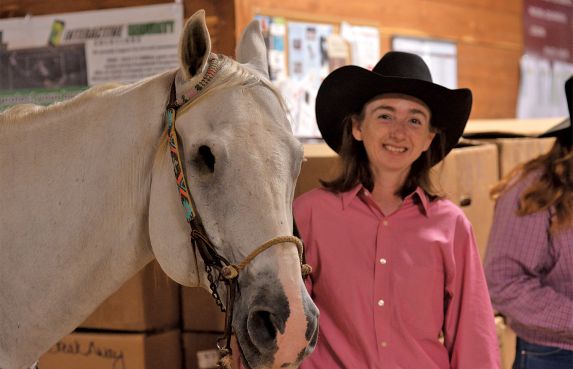
    Tina Deshotels is a barrel racer in the Louisiana High School Rodeo Association. The eighteen year old cowgirl, who lives in Mamou, La., is in her third year of high school rodeo.

    She rides a thirteen year old bay gelding named Dennis the Menace, whose name fits him well. “He’s very high maintenance,” Tina says. “We make plenty of trips to the vet, chiropractor, and the dentist.” Menace, as he is nicknamed, also loves company. “He’s very much a people horse,” she says. “He’s very cuddly and in everybody’s business. He’s always hanging around.”

    The senior in high school is homeschooled, and dispels the rumor that home schooling is easy. “You don’t get to do it in your pajamas like everybody thinks.” The best part of homeschooling is that she can finish early and ride. The worst part of homeschooling is the self-discipline, “to sit down and do your work.” But being self-disciplined is beneficial, she believes. Homeschool, she believes, also helps a person mature faster. “You learn a lot more around your parents than you do in school.” She’s learned how to change a blown-out tire, for example. “You learn to grow up a little bit more. You have to be mature about it.”

    In school, her favorite subject is math, and she has enjoyed Bible class, where the class has studied not just the Bible but personal finance. When her school day is over, Tina rides and works for her dad. Her dad has a real estate business and a septic tank business, so she answers the phone, does computer work, writes receipts, and runs errands.

    Her earnings go towards payments on the Hummer H3 that she bought last summer. Even though the Hummer is new to her, she’s thinking about replacing it with a truck. The Hummer “isn’t too good on gas, not at all,” she admits, and the truck would be useful for hauling her horse.

    Tina has two older brothers, Alec, 26, and Robbie, 24, and an older sister, Valli, who is 21. She also has two nephews, Eli and Cy, who are both two years old, and love their Aunt Tina, or “Nana,” as they call her. She loves to play with them and read books to them.

    After high school, she hopes to attend college and major in a business related field. She may not college rodeo but will focus on her studies. Tina will compete in local open barrel racings, and someday, wants to join the Women’s Pro Rodeo Association to rodeo professionally. She is the daughter of Luke and Jonell Deshotels.

  • Krista Romero

    Krista Romero

    Krista Romero’s family loves it when she’s baking in the kitchen. The thirteen year old cowgirl’s specialties are cakes, cookies, and cupcakes, especially red velvet cupcakes with cream cheese frosting. Everybody in her family loves her red velvet cupcakes, and sometimes she even decorates them with sprinkles or pretty patterns cut out of fondue.

    The Church Point, La. cowgirl competes in the Louisiana Junior High Rodeo Association as a barrel racer and pole bender, with barrels being her favorite event.She rides the same horse for both events, an eleven year old named Pete. Pete is really good, but really smart, and he can be a troublemaker. He sometimes gives her problems in the alleyway. At home, when she goes to catch him, he runs away. “But he still takes care of me,” she says.

    She is an eighth grade student at Richard Elementary in Church Point, and she loves the teachers at the school, who are always willing to help her out. But her favorite teacher is Miss Comeaux, her seventh grade English teacher, because “she always said how good her students are, and she encouraged us to do better in school, and she helped me a lot, too.” Krista still has her for enrichment classes at the end of the day.

    She likes to read mystery books and is currently reading “Close to Famous.” It’s about a girl who loves to bake and wants to become famous through her baking. She is a 4-H participant and plays volleyball. Krista’s mom helps her with her baking, and even though she doesn’t do much cooking yet, she enjoys her favorite meal her mom makes: chicken fettuccine. The family has two pet dogs: Max, a Shih Tzu, and Cookie, who is part rat terrier and part Shih Tzu. Cookie claims Krista as “her person,” and sleeps with her every night. She doesn’t hog the bed, but she sure hogs the pillow.

    Krista also competes in the National Barrel Horse Association, where she has qualified for the World NBHA Show two years, and has also qualified for July of this year. She qualified for the junior high state finals last summer. When she was younger, she competed in the Acadiana Youth Rodeo Association, where she’s won several buckles. When she grows up, she’d like to be a veterinarian. Her favorite animals are horses. She is the daughter of Rickey and Christy Romero.