Rodeo Life

Blog

  • Back When They Bucked with Dick Hermann

    Back When They Bucked with Dick Hermann

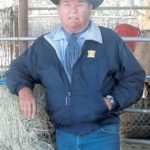
    Dick Hermann served his country well. The former saddle bronc rider and pickup man was in the U.S. Navy for 25 years, five years in active duty, mostly in Vietnam, and twenty years in the Reserve. After he was Seaman Hermann, he became a cowboy.
    Dick’s story starts as a farm kid, one of seven children born to Roy and Alta Hermann, in 1948 near Lesterville, S.D., southwest of Sioux Falls. For his twelfth Christmas, his dad gave him a set of harnesses, and Dick hitched up Corky and Princess, two of the saddle horses around the place. “They just looked at each other,” Dick laughed. His grandpa tied them together so they couldn’t split apart, and Dick trained them as a team. He remembers pulling his sisters on a toboggan on the lake near the house, behind the team. “I’d cut the corners a little sharp, and roll the girls out” of the toboggan. “They’d laugh till somebody got hurt and then it wasn’t fun anymore.”
    There were plenty of chores to do on a dairy farm, and Dick couldn’t participate in after-school sports. When he was a junior, he quit school. “I wasn’t much of a school guy,” he remembered. He did odd jobs, and youthful energy started getting him into trouble. A friend suggested they join the military. “We were going to get into trouble if we didn’t.”
    He joined the Navy in 1966, because the Marine and Army recruiter weren’t around. “The only guy there was the Navy recruiter,” Dick said. “I said, if I don’t have to milk cows, I’ll join the Navy.” Uncle Sam sent him to Vietnam for three years, and he returned to the States in 1970.
    After getting home, he went with a friend to a rodeo, where he got on a bareback horse and broke his arm. But the experience was worth it. It was a rush, and the rodeo bug bit him. He needed a place where he could work and get on as many bucking horses as possible. Someone recommended he talk to stock contractor Erv Korkow in Blunt, S.D., so he did. “I said I’d try it for a while, and I ended up staying for 30 years,” he joked.
    For the first couple years, Erv wouldn’t let him get on bucking horses. He worked, making $75 a week, plus board, which was good money, better than he had made in the military.
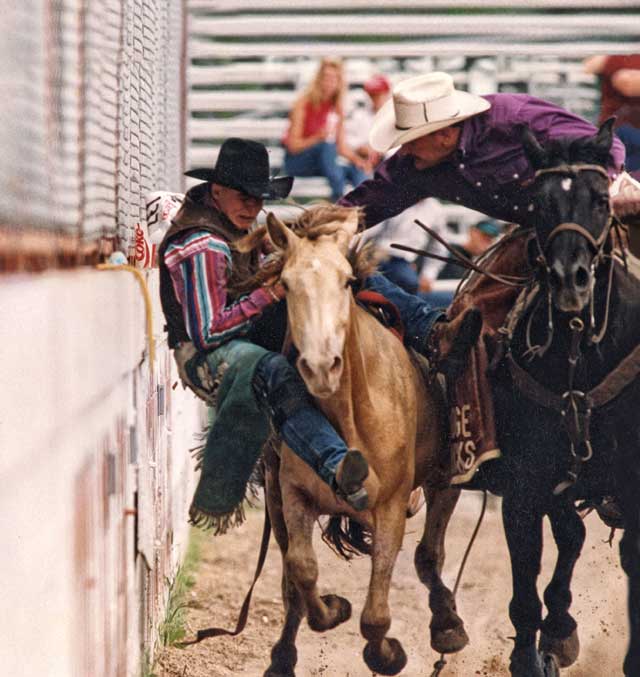
    Then he found out about the nightly rodeo held in Cody, Wyo., for six weeks during the summer. He quit work and went to Cody, where he met up with world champion saddle bronc rider Bill Smith and his nephews Jack Wipplinger and Tom Wipplinger from Red Lodge, Mont. Smith coached them in the finer points of riding saddle broncs, and Dick’s rodeo competition career began. He competed in Cody and area rodeos, becoming a member of the Rodeo Cowboys Association (the predecessor to the PRCA) in 1972 (his permit year) and often slipping off with his buddies to the Canada rodeos.
    But every fall, he’d be back to the Korkow Ranch. At that time, Erv didn’t have any fall rodeos, but he had a trucking company, so Dick hauled cattle all winter. And every spring, after helping with the rodeo school Erv put on at the ranch, he’d be off to rodeo again.
    Erv and his wife LaFola were like second parents to Dick. He “treated me good,” Dick said. “He treated me like one of his boys. He’d chew on you once in a while, but that happens to everybody. He was a good man.”
    And Erv always took Dick back on the labor crew each fall. “I’d go back to the ranch, and Jim (Erv’s son) would tell him, ‘Dick’s back in the bunkhouse’ and I’d pick up where I left off.”
    In the 1980’s, Dick started working as a pickup man. He was in Dallas, at a Steiner rodeo, on the labor list. Tommy and Bobby Steiner wanted to know if Dick would come to Austin, to work for them, and in Austin was where he first picked up.  The Steiners were bucking horses at the ranch when the pickup man didn’t show up. Would Dick pick up? He agreed to, even though he never had before.
    That fall, at the National Finals Rodeo in Oklahoma City, Erv talked Dick into returning to South Dakota the next year, to pick up for Korkow Rodeo Co.
    As time went on, he purchased a semi-tractor and used Erv’s trailer to haul a load of bucking horses and bulls to rodeos, plus ride broncs and pick up, all at the same event. In addition to working for Korkow Rodeo, he also picked up for Jim and Steve Sutton.
    Dick credits Jim Korkow with teaching him the finer points of picking up. “He was good,” Dick said of Jim. Picking up “is all about timing, being at the right place at the right time. By watching other people, I learned. And I had different people point out different things, which I appreciated.”
    In 1986, he broke his arm in June, and his leg a month later. Lying around, the realization hit him: what would he do for finances if he was seriously hurt? “I realized I had to do something different.” He decided to go into the Naval Reserve, serving one weekend a month and two weeks a year.
    Dick served until 2006. In 2002, he decided to quit as a pickup man. He knew he was to be deployed in 2003, to Iraq. He and forty others were sent to train in Italy for two weeks with the Marine Corps. After the training, the group was sent home, which disappointed Dick. “Gol dang, I wanted to go.”
    Since his retirement in 2006, he enjoys his home in St. Onge, S.D. in the summers and in Phoenix in the winters. He has a team of Belgians that he uses to pull wagons in the parades for the rodeos in Deadwood and Belle Fourche, S.D.
    In Vietnam, Dick was one of a four-man crew on the PBR river gun boats: patrol river boats. They were little gun boats, as Dick explains, 28 feet long, and ten feet wide, with a forward gunner, driver, an M60 gunner, and a 50 caliber gunner. The job of the PBR in Vietnam was to search and destroy. Dick was on many PBR patrols with the Navy SEALS, the Green Beret, and the Army, and two of those missions nearly killed him.
    Twice his life was in peril on the patrol river boats. On June 21, 1968, the boat he was in was completely destroyed, killing two of the men. He and one of his original crew, plus two new members, were assigned a new PBR, and two days later, the new boat was damaged to where Dick got blown over the side of the boat. It was 3 am, so dark a person couldn’t see the jungle tree line. When he came to the water’s surface, another boat ran over him, causing serious injury. The secret to surviving was staying in the middle of the river; the enemy was on the beach. Dick treaded water for so long his legs cramped up. He was the only survivor of the four in that incident. He nearly lost his life, but he can joke about it now. “I drank half of that dirty old river. It took me all these years of drinking beer to get rid of it,” he laughed. Out of the four men who were part of Dick’s original boat crew, he was the only survivor.
    For his bravery, he received the Bronze Star, the Purple Heart, and the Navy Commendation Medal, with Combat V and the Gold Star. At one time, his days in Vietnam troubled him at night. But the dreams have subsided. “The nightmares ain’t nearly as often as they used to be.”
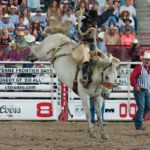
    Rodeo has provided him with a lifetime of recollections. “I got a saddle bag full of memories and friends that all of the money in the world can’t buy,” he said. He loved riding saddle broncs, and watching bucking horses. “When I got tapped out on one, it was like poetry in slow motion. You’re so engrained in what you’re doing, you don’t even hear the whistle. There’s nothing better than watching a good horse that bucks.”
  • Heith DeMoss, Hunter’s Paradise

    Heith DeMoss, Hunter’s Paradise

    Heith DeMoss has traversed the width and breadth of the United States, setting eyes on some of the most beautiful scenery the country offers. But at the end of a summer run, the saddle bronc rider can scarcely wait to return to Louisiana, the place he says feels and tastes like home thanks to the people, the landscape, and a hunter’s paradise.
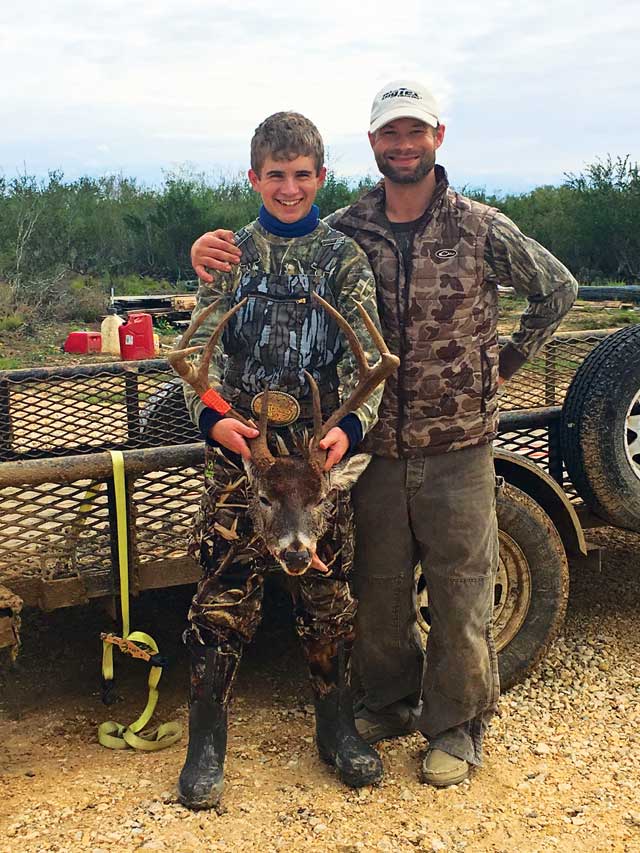
    The Bayou State offers diverse hunting opportunities, and Heith has experienced many of them, such as deer, squirrel, duck, dove, hog, rabbit, frog, and gator hunting. One of his latest trips took him to South Texas for white tail bow hunting, where a hunter recently tagged a buck nearing 200 inches. “Being in a spot like that is thanks to Record Rack, which is what they feed there,” says Heith. “I’ve never killed a big buck – I’ve always wanted to – and being out there gives me a good shot.”
    Before the eight-time WNFR qualifier started rodeoing professionally, he was an avid hunter and belonged to several hunting clubs. “Rodeo is more on my radar screen now, but my friends invite me and I go whenever I can,” he says. “I really like being out in nature, completely camouflaged so nothing knows you’re there. You get to see things happen that you wouldn’t normally just walking in the woods. Squirrels come up close and birds land on the branch next to you. It’s more of a plus just for me to be out there in the quiet and the moment of what God created.”
    Less peaceful but highly entertaining is Heith’s penchant for squirrel hunting. “It’s a big deal down here – people train dogs for it. You take your dog and horse, grab your shotgun, and go ride. It’s quite a task to shoot a running squirrel, let alone doing it from a running horse. It’s a challenge and great fun. You can eat squirrel, but there’s a special way to cook it,” Heith adds with a laugh. “For the average person to shoot a squirrel and cook it, they’d probably lose a few teeth. You can put squirrel in gumbo or a mulligan or whatever you want, but there’s a right and a wrong way to cook it.”
    Heith’s 16-year-old son, Gavin, follows close in his dad’s bootprints when it comes to hunting. His current interest is bow hunting, and father and son make a trip at least once a year to a hunting club in South Texas. They also went gator hunting last year and came home with a total of eight. “Most gator hunting is down south. We live by the Red River, and there’s gators in pretty much any river in Louisiana,” Heith explains. Gavin also competes in high school rodeo, team roping as a header. With the spring high school rodeo season on the horizon, Heith and his wife, Hallie, are always on the move to practices or team ropings with their kids.  “Our daughter, Dixie, is five, and she has a good time at whatever she’s doing. She’s a high-spirited young lady!” says Heith.

    Heith competing at the 2016 WNFR – Hubbell

    His own rodeo season starts with the RNCFR in Kissimmee, Florida, on April 7 after qualifying on the Southeastern Circuit. Only weeks after his qualification, Heith had surgery on his ACL, which he had torn in Calgary, Alberta, in 2015. “I got it fixed two days after going to the NFR, and it’s been sheer hard work since then. On top of physical therapy, I’ve been trying to get my body in shape, and at thirty-one years old, it’s time for a fellow to step up not just mentally, but physically.”
    Heith and Hallie are relocating their Louisiana roots a quarter mile down the road where they’re building a new house this year. Heith also teaches several rodeo schools a year and helps with his father-in-law’s youth camp, Redeemed Ranch. His ultimate goal is clinching a gold buckle at the WNFR, along with winning Cheyenne Frontier Days, Calgary Stampede, and Pendleton Round-Up. “I’d love to win The American as well, so those are the goals I have set thus far. I believe they’re in reach, but a fellow has to do his part!”

  • ProFile: Tatum Schafer

    ProFile: Tatum Schafer

    by Holly Wilson

    After a freak accident, high school junior Tatum Schafer had to overcome many obstacles to get back in the saddle.
    Tatum Schafer, a resident of San Tan Valley and member of the Arizona High School Rodeo Association, has been an avid horseback rider her entire life. An all-around cowgirl, Tatum competes in barrel racing, pole-bending, breakaway roping, goat-tying and cutting.
    Her father has team roped for the past 30 years, and rodeo is all she’s ever known.
    However, after a freak accident on October 27, 2015, Tatum would have to call upon her passion to survive.
    “When we got to the hospital, they told us it wasn’t good. It wasn’t what we expected at all,” Kerri said, “The paramedics had told my husband at that time that it was a pretty serious head wound, one of the most serious they’d ever seen.”
    This was caused by blunt force trauma when Tatum was ejected from the running board of her friend’s truck. The fall fractured the hardest part of her skull, and left with her with a hematoma, a skull fracture on her forehead and a skull fracture on her left temporal.
    “She had ruptured her ear canal, and her head and hair were completely covered in blood. That’s probably the only thing that saved her life,” Kerri said, “With a laceration in her ear canal, it released the pressure on her brain and allowed it to relieve itself.”
    Tatum was lucky to have survived the first 48 hours. And even then, it was a miracle that she survived the first 72.
    As a result of the accident, Tatum lost her hearing in her right ear, lost her taste and sense of smell, dislocated her ear, suffers from an unbalanced equilibrium, lives with chronic headaches and has trouble with short-term memory loss.
    “She was told that she’d never be able to ride again,” Kerri said, “She had a neurosurgeon, and we worked with that team.”
    They agreed to let Tatum ride again, but only if she wore a helmet. She underwent a conditioning program, just like any other athlete, and in March of this year she began competing again.
    “It’s the only passion she’s ever had. Everything else was taken away from her,” Kerri said.
    Tatum has overcome many obstacles in the last year, but doesn’t let them get the best of her.
    “At times it has been frustrating, but my friends and family that I have standing by my side have been giving me confidence and pushing me to keep trying when I felt like quitting,” Tatum said, “There were many challenges [when I started riding again], but the hardest obstacle was learning to compensate for my loss of balance. It involves many long practices and determination to strive to continuously do better.”
    Although she has made progress, Tatum still deals with anxiety and chronic headaches as a result of the brain damage. On top of that, Kerri explained that Tatum blacks out during times of high brain activity.  “At State Finals in June, because of the anxiety and brain stimulation, she kept passing out and blacking out,” Kerri said, “She does not remember one run at State Finals. The last thing she remembers in breakaway is backing into the box. She doesn’t remember any of it.”
    Yet, through every hard time, Tatum has had a large support system behind her every step of the way.
    “My mom has been the most supportive through my recovery and I could not thank her enough,” Tatum said, “She has sat in every waiting room, every doctor’s appointment, been there for me through all the good and bad news, and most of all supported me and helped me accomplish all my goals.”
    “I could also not be more thankful for the support that the rest of my family has given, especially my sister, Hailey, for pushing me to get back to where I was and helping me in every way possible,” Tatum said, “The love and support from all the families in the Arizona High School Rodeo Association has been incredible and I couldn’t have done it without all these people standing behind me and pushing me to be the best I can be.”
    The support that Tatum receives has enabled her to dream big.
    “My rodeo goals are to make it to High School Nationals [for] a 6th time in multiple events and be the best I can be in and out of the arena,” Tatum said, “My main goal is to get back to where I was before my accident and continuously be more successful.”
    Kerri describes her daughter as passionate and determined to make her life better, despite her circumstances.
    “She’s a fighter. She’s passionate about making her life better, making a difference and making it better for her. She wants to show anybody that, if you have a life-threatening injury, you can turn it around,” Kerri said, “She shouldn’t have made it through what she did, but she has a passion and determination for life. I’m not sure if I would use passionate or a living miracle, because that’s what she is.”

  • On the Trail with Dave Dahl

    On the Trail with Dave Dahl

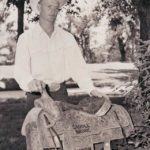
    Dave Dahl can spot one of his saddles from a mile away. When the bronc saddle maker from Ft. Pierre, S.D. watches pro rodeo, he can see the saddles he’s made aboard the bucking horses in the saddle bronc riding.

    And the list of cowboys using his saddles sounds like a “who’s who” of great saddle bronc riders: 2016 world champion Zeke Thurston, world champions Taos Muncy (2007 and 2011), Jeff Willert (2005), Glen O’Neill (2002), and Cody DeMoss, Jake Watson, CoBurn Bradshaw, Chuck Schmidt, Clay Elliott, Wade Sundell, Cort Scheer, Kyle Whitaker, Jeremy Meeks, Shade Etbauer, and more.

    The 72 year old cowboy grew up on a farm near Keene, North Dakota, next to an Indian reservation, “where there were cowboys,” he remembers. He and his friends used to go to the reservation, round up horses, and ride them. “We didn’t know what the horses were like,” he said. “We just ran in a bunch of them. There were a few chutes, and we practiced. We had some wild times,” he chuckled.  After graduating from high school in 1962, he went to the oil fields. But he knew he didn’t want to spend his life there, so he went to college in Madison, S.D.

    Eastern South Dakota wasn’t for him, either. “It was too much ‘east river’ for me, and I liked the Black Hills.” He made a phone call to Black Hills State University in Spearfish, S.D., and a few months later, he was there, on the rodeo team riding saddle broncs. As a member of the men’s team, he won the 1967 National Inter-Collegiate Rodeo Association year-end saddle bronc riding title, qualifying for the College National Finals Rodeo four times and competing there twice.

    After graduating with a teaching degree, he taught a year at Pine Ridge, S.D., a year at a country school near Fruitdale, S.D., and a year in Eagle Butte.

    He was doing construction work in Ft. Pierre, when he and a rodeo buddy, Dick Jones, ran across each other. Jones was making saddles, and Dave wanted to make his brother one. Dick helped him, and that was the beginning of Dave’s saddle career. Dick had made some saddles, and he gave instruction to Dave. “He knew a little bit, and I didn’t know much,” Dave recalled. “He showed me, and one thing led to another.” The two began a partnership in a saddle shop in Ft. Pierre.

    Dave, being a saddle bronc rider (he won the 1968 SDRA title and had a Rodeo Cowboys Association card), made bronc saddles. His saddles are different from other brands, and the cowboys who ride them, love them.

    Dahl’s bronc saddles differ from other makers in several ways, including the swells and the cantle. The swells are set higher so that a cowboy’s feet can set high in the neck of the horse, but not too high. The seat is a bit deeper, and the cantle is higher. Where a cowboy’s hips are is crucial. Chuck Schmidt, a saddle bronc rider from Keldron, S.D. and a three-time Wrangler NFR qualifer, has ridden a Dahl saddle since he started pro rodeo. “As in any sport, your hips are your power, and bronc riding is the same,” he said.
    “You almost have to sit back on your butt a little, not just sitting there straight up, like you’re going to rope. You want to set back, (to reduce) the force the horse will use to throw you forward. You counteract it it by sitting back.”

    The gullet on the saddle is also set narrower, so the saddle can sit higher up on the withers. “Beings it’s not a roping saddle, you can set your swells higher by bringing the bars in, thus allowing the cowboy to spur better,” Schmidt said.  “If the swells are set too low and too wide, it’s harder to reach your feet up into the neck. When you narrow the swells and set them up higher, your legs are closer to the horse’s neck, creating better spur contact when you ride.”


    Dahl’s saddles make riding broncs easier, Schmidt said. “Dave designed a saddle to take away half of your work as a bronc rider, the way it sets a horse and the way it sets the cowboy. It sets it up a little more natural, the way everything moves. There are minimal things to get in your way.”

    For some cowboys, switching to a Dahl saddle made them a better rider. It happened for Zeke Thurston, who won last year’s world title. The Big Valley, Alberta cowboy wasn’t riding well last spring. He decided to give Dahl a phone call. Dahl had a new saddle to him within five days, and Thurston took it to the Guymon, Okla. rodeo. “It took me a few rodeos to get it dialed in,” he said. “Once I broke it in, my spring skyrocketed. There were probably four weekends in a row where I won $12,000 or more.” He credits the saddle with giving him better spur outs and better upper body control.

    Jake Watson, Hudson’s Hope, BC., finished the 2016 season in fifth place in the world, and also uses a Dahl saddle. “The way the swells and cantle are shaped, the structure of them, they have a lot of forgiveness in them,” he said. “If you lift on your reins, you can turn loose and the saddle will do its job and keep ahold of you.” The different shaping of the swells and cantle make a difference. “Say you’re getting bucked off, and you’re still trying to spur, more often than not, you’ll end up back in the saddle and regain your position in the seat, which is definitely what you want.”

    Watson has used a Dahl saddle since June of last year, and it has made a difference for him. “It changed my career, honestly,’ from the very first horse I got on,” he said. “I was having hell. I had won $2,000 that season (up till June), and from the end of June till September I ended up winning $20,000. Itw as a big turning point in my bronc riding.”

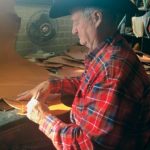
    Dahl works out of his shop, the Diamond D Western Wear and Saddle Shop, on the main street of Ft. Pierre. He sells clothing, boots, hats, tack, and ropes, and does his leather work in the back of the shop.

    And when most people are retired and drinking coffee all day, Dahl is working. He’s turning out about a saddle a week, working on number 1657 in mid-January. He puts in long days, clocking in about 8:30 am and working till 6:30 or 7 pm, six days a week, “depending on how bad I want to finish something.” The good work ethic comes from the motivation to succeed. “I guess I made up my mind that I wanted to be the best at what I’m doing. When you see the good results of the cowboys, it’s a big incentive.” And making saddles supplements the store’s income. “I’m fortunate that I can make a good living in my workshop when things are quiet in the store. That makes it nice.”

    As cowboys call him to order saddles, he chats with them, finding out how they’re doing, what rodeos they’ve been to, and how they’re riding. He checks the internet nearly every day, to see the standings, and watches rodeos on the Wrangler Netowrk. He can pick his saddles out every time. “Everybody’s saddle looks a little bit different,” he said. “I have distinct little straps, little buckles. Most everybody has a buckle through the skirt (of the saddle), but my buckle is on the little piece that goes around the front of the swells.”

    Dahl ships saddles to Australia and now the second generation of cowboys are using them. And the “old-timers” – retired bronc riders –refer young guys to him. National Finals average winner Rod Warren “sends boys to me,” Dahl said.
    Six cowboys at the 2016 Wrangler NFR rode on Dahl saddles: Thurston, Schmidt, CoBurn Bradshaw, Cody DeMoss and Clay Elliott. And the list extends beyond the NFR. Wade Sundell rode one to win the $1 million at the American Rodeo last year. Cort Scheer won the Elite Rodeo Association title, Thurston won $100,000 at the 2016 Calgary Stampede; Jeremy Meeks won last year’s Indian National Finals Rodeo on one; Clay Elliott was on a Dahl saddle for his Canadian National Finals win, and eight-time Linderman winner Kyle Whitaker uses one.

    Retirement is not on Dahl’s radar. “I have  a lot of work to do,” he said. The man who supplies the d-rings for Dahl’s saddles is 95 years old, and still going. “I”ll have to work a while to catch up to him.”
    And saddle bronc riders hope he keeps working.

  • Spaghetti Pie & No-Bake Cheese Cake

    Spaghetti Pie
    recipe courtesy of Sandra smith and dee anita bowker from cookin’ with cowboys cookbook

    Ingredients:
    1 lb. hamburger, cooked & drained
    1 jar spaghetti sauce
    1/4 c. Parmesan cheese
    2 c. shredded mozarella cheese
    1 medium-sized container of cottage cheese
    1 1 lb. package cooked spaghetti noodles
    2 Tbps butter

    DIRECTIONS: Add spaghetti sauce to drained hamburger. Warm through in a 9×13 inch pan. Pour ¼ cup Parmesan cheese with 2 tbsp. of melted butter. Immediately pour noodles in and toss until cheese and butter cover noodles. Then add cottage cheese and 1 cup shredded cheese, covering all noodles. Pour meat sauce over top and add remaining cheese. Bake at 350° for 40 minutes .


    No-Bake Cheese Cake

    recipe courtesy of michele clement from cookin’ with
    cowboys cookbook

    Ingredients:
    1 graham cracker pie shell
    1 8-oz. package soft cream cheese
    1 c. sour cream
    1/3 c. sugar
    2 tsp. vanilla
    1 8-oz container Cool Whip

    Directions: Mix cheese and sugar. Add and stir sour cream and vanilla. Fold in whipped topping. Put in pie shell and chill at least 4 hours. Serve with your choice of pie fillings. I use fresh strawberries.

  • Participation Parents

    I don’t think that participation trophies are as prevalent in rodeo as other sports, but I do think the participation trophy problems carry over into rodeo as well. I have a different take on the problem than a lot of people. The kids and participants are not the problem, the problem is the parents.
    Not many want to hear that, but the problem is the parents. I have never heard of the junior rodeo contestants budgeting for the rodeo they are putting on and making sure that they order awards for all of the other participants. At a young age prize money and prizes are not the main priority, just ask any nine year old entered in a rodeo. Most young participants in any sport are more interested in the having fun and the social aspect.
    Kids are at competitive events for one of two reasons. One reason is they like to compete and have fun competing with their friends. Two, their parents want them entered.
    Here is where the participation trophies come in. The parents want to justify the time and money they spend on and with their children, so the parents are the ones that need and want the trophies for their kids. The parents are the ones responsible for the “Participation Trophy Generation” not the kids, the problems that are developing in the students come directly from the parents’ actions. Everyone learns to win, but no one learns how to handle the disappointments, especially the parents. These parents are too protective of their kids, they don’t teach them basic life lessons of dealing with success and more importantly dealing with failure. Of work and accountability for your actions.
    Put the blame where it belongs, on the parents. So how do we fix the problem?
    At an early age students should be competing for the love of the sport, to develop their fundamental skills and improving. For this process to be complete there has to be a balance, there have to be up and downs. At an early age students need to learn how to win, but they also need to learn how to handle defeat and disappointments as well. Many times the lessons learned from losing are much better than any they learn from winning.
    As a parent and a coach this can be tough to watch. It is hard to see your kid crying in disappointment. But a disappointment can go different ways as a learning tool, use it wisely. Don’t make excuses for your kid, don’t try to make it easy for them, and don’t give them a trophy for trying. Let them learn from their experience to be better in the future; if it is something they truly want, they will work at learning from their experience. They will become stronger and achieve more in the future as long as you don’t reward them for just participating.
    Make sure you raise kids that understand that nothing is owed to them, and that nothing will be given to them for just participating.
    Our main jobs as parents and coaches are to use our sport to develop the character of our kids as much as their skills inside the arena.

  • Blake Hughes

    Blake Hughes

    by Holly Wilson

    A humble cowboy from Sulphur, Oklahoma, Blake Hughes splits his time between the roping pen and the family dairy farm.
    “My dad owns a dairy farm, and he ropes. He’s the reason I started roping, and then I got into it with my uncle. He doesn’t go to any rodeos, but he still likes to ride,” Blake said.
    “My mom is a physical therapist. She didn’t grow up around horses but she’ll ride a little bit. The dairy keeps my dad pretty tied up.”
    Blake helps his father around the dairy by feeding and checking calves, and taking care of their milking cows.
    In his spare time, Blake enjoys fishing and, of course, roping.
    After taking up horseback riding at a young age, Blake was swinging a rope by age 12.  “I was probably roping every day by that point. I was into it pretty heavy and practicing every time I got a chance,” Blake said, “As long as the weather would permit and we weren’t too busy on the dairy, we would try to rope.”
    He and his uncle live closeby, and rope together nearly every day.
    “My uncle still ropes, and he goes quite a bit. He goes to a lot of the World Series ropings,” Blake said, “He still lives close, and we still rope together about every day. It’s convenient.”
    This tight knit family dynamic has helped Blake to be successful in his roping career. “My dad’s got me good horses, that’s a big part of it. He bought [Streakin King Dandy] and he’s bought some other ones,” Blake said, “He’s always given me good horses to ride, I’m pretty thankful for that.”
    Streakin King Dandy, a 2006 gelding, is Blake’s partner in crime.
    Because of his innate ability to rate calves with precision and speed, Blake doesn’t fuss with his horse at home.
    “To prepare for an upcoming rodeo, I work on scoring. When I go to practice, I want him to score good and leave flat,” Blake said, “He knows what to do in the arena, so I just try to keep him calm and quiet, and comfortable in the box.”
    This type of training works well with Blake’s busy schedule, and allows him to be asset on the family farm. Blake gathers cattle on Streakin King Dandy, and uses him as a ranch horse at the house in-between ropings.
    Being a humble man, Blake insists that his success is all due in part to his little rope horse.
    “I don’t know if I’d be where I am without him, that’s for sure. I’ve had good horses in the past, but he’s the best one I’ve had,” Blake said, “I like to think that I’d be close to where I’m at, but he’s played a big part in my success.”
    This past year, Streakin King Dandy and Blake placed and attended several notable rodeos including; the Bob Fiest Invitational, the George Strait, the ERA finals and RFD TV’s The American.
    The duo placed second in The American qualifier, and placed third in the open. They also finished 14th overall on the ERA leaderboard with a fifth place finish in the first round of the three part championship.
    Their most notable accomplishment, was a first place finish at the USTRC US Open Champions, where they spun five steers for 31.02 with partner Brady Norman.
    The bay gelding still has a lot of life left in him though, and Blake has several goals for the next five years.
    “He’s the only good horse I have right now that I feel like I can go win on,” Blake said, “A year from now, we’re gonna try to go a lot more and try to make the national finals.”
    “If we could make the national finals two or three times over the next five years, I’d say we’d be doing pretty good,” Blake said.
    He has high hopes for his bay horse, whom he affectionately calls “Snake”.
    “He’s got a lot of personality. I named him Snake right when we got him,” Blake said, “He was hard to catch; and then after you did get him caught he was always watching and was always trying to get away from stuff.”
    “Once you get him caught, he’s pretty good,” Blake said. “I don’t know what it is, but he’s kinda funny like that.”
    Although Snake has outgrown some of his old habits, the nickname is here to stay.
    “He hasn’t outgrown that one yet, it still fits,” Blake said with a laugh.


  • Volunteers Needed for the Red Bluff Round-Up

    Volunteers Needed for the Red Bluff Round-Up

    by Ruth Nicolaus

    The Red Bluff Round-Up needs YOU!

    The Round-Up is searching for volunteers who would like to be involved in the biggest event in Northern California, who want to make a difference in the community, meet new people, and have fun!

    In its 96th year, the Round-Up is one of the largest rodeos in the nation and volunteers are needed to help produce the three-day event. Help is needed with ticket sales, merchandise sales, the fan fair area, autograph sessions, hospitality, first aid booth, livestock, grounds maintenance, and the first aid booth.

    Anyone can volunteer, said James Miller, general manager for the Round-Up. “You don’t have to be a cattle rancher or a cowboy or cowgirl.” Volunteers also don’t have to live in Red Bluff; the Round-Up has volunteers from all over, including some from Idaho who spend the week in town.

    Interested people can apply online at RedBluffRoundup.com at the “get involved/become a volunteer” link.

    The Round-Up is fun for volunteers, as well as its fans. “One thing is, during Round-Up, everybody has a good time.”

    This year’s Round-Up is April 21-23, with Eleven Days of Round-Up activities beginning on April 13. For more information, visit the website or call 530.527.1000.


  • Hastings, Nebraska Pro Rodeo, High School Rodeo, Recognize Volunteers and Committee Members

    by Ruth Nicolaus

    Four people have been recognized for their work with rodeos in Hastings.

    For the Nebraska High School Finals Rodeo, which is held each June at the Adams Co. Fairgrounds in Hastings, Neb., the annual Volunteer of the Year award went to Matt Wallin and Committee Member of the Year award was given to Patrick Niles.

    Committee Member of the Year Nate Allen

    Volunteer of the Year Matt WallinFor the Oregon Trail Rodeo, the PRCA event held each August at the Fairgrounds, Volunteer of the Year award went to Bobby Rust and Committee Member of the Year was awarded to Nate Allen.
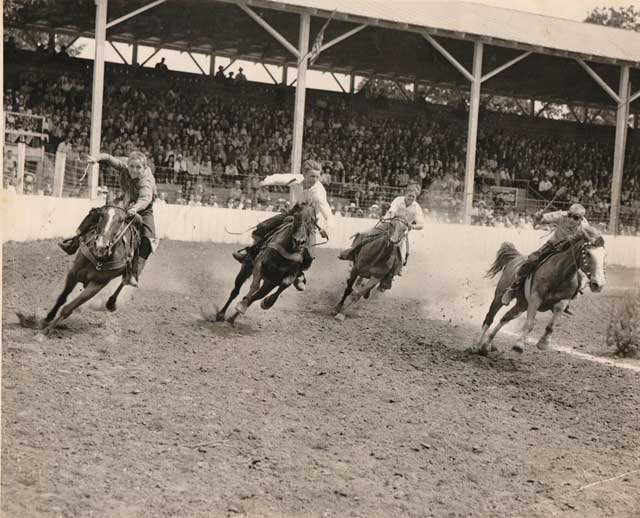
     

    Wallin, the high school rodeo volunteer of the year, has been helping with the rodeo for the past four years. He got involved through his girlfriend, Grace Woodward, another volunteer. Wallin helps with sorting livestock, setting up panels and banners, and tearing down after the event.

    He enjoys the camaraderie among the rodeo workers and their common goal: produce a rodeo. “There’s something about coming together, getting the job done, and putting on a good performance. You make some good friends.”

    Allen, a resident of Juniata, Neb., has volunteered with both the pro rodeo and the high school rodeo the past eight years and has been a member of the Adams Co. Agricultural Society for the last four and a half years.

    Like Wallin, he enjoys producing an event, “with the quality of contestants we bring to Hastings, providing family entertainment that’s good, clean fun, and having a positive economic impact on the community.”

    He competed as a steer wrestler for a year while in college at Northwest Missouri State University (Maryville), and served as chairman for the pro rodeo this year.

    Allen is the dean of instruction for skilled and technical science programs at Central Community College in Hastings.

    The 2017 Nebraska High School Finals Rodeo is tentatively set for June 15-17; the Oregon Trail Rodeo will be held August 25-26-27.

    All four honorees will receive Montana Silversmith buckles and were recognized during the Adams County Leaders-Volunteers Banquet on November 6.


  • Cowboy Downhill

    Cowboy Downhill

    Courtesy PRCA

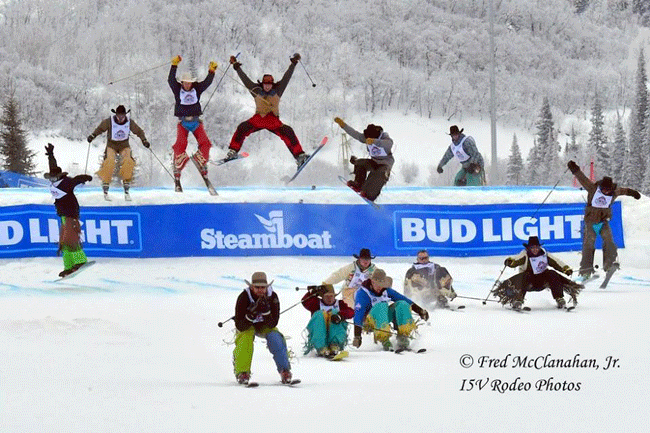
    For the second year in a row, Grant Denny, the older brother of WNFR bareback rider Wyatt Denny, was the winner of the slalom competition at the 43rd annual Cowboy Downhill in Steamboat Springs, Colo., Jan. 16. Denny clocked a 27.75-second time to edge fellow bareback rider Joel Schlegel (28.46). Saddle bronc rider Jesse James Kirby of Dodge City, Kan., won the Stampede for the second-consecutive year. Best crash of the day went to 2017 Miss Rodeo Canada Ali Mullin. There were 92 cowboys and cowgirls participating in the event. The Cowboy Downhill is held in conjunction with the National Western Stock Show and Rodeo in Denver, and began in 1975. The Downhill has become a fundraiser for the Justin Cowboy Crisis Fund, which provides financial assistance to injured PRCA cowboys. JCCF President & CEO Cindy Schonholtz attended the Downhill, and said that more than $6,000 was raised through a silent auction and merchandise sales.

  • Bulls and Broncs in their Blood

    Bulls and Broncs in their Blood

    St. Paul, Ore. (June 6, 2016) – Get the Smith family from St. Paul together, and you’ve got a whole lot of history.

    And it’s not just the history of the family who settled down, farmed, and still lives in the small community thirty miles south of Portland, but also a history of the St. Paul Rodeo.

    Three Smith brothers: Morris, Bill and Carl, were charter members of the St. Paul Rodeo in 1936, when it began, and later, a fourth brother, Claude, became a director alongside his brothers.

    The sons of J.E. Smith, the boys “borrowed” their dad’s cows and calves for the St. Paul Rodeo, returning them after the big event every Fourth of July. J.E., also known as Jim, a county commissioner and head of the Oregon Works Project Administration, wasn’t very happy about his cows being ridden and roped at the rodeo. Claude was able to smooth things out with his dad, and the boys kept using their dad’s cattle.

    Claude’s son Sam got his start with the rodeo at a young age. He rode his Shetland as a youngster, helping his parents with rodeo duties. In 1959, he married Claudia Ernst, another St. Paul resident, who had grown up going to the rodeo and whose dad ran Ernst Hardware. The couple’s involvement with the event continued.

    Sam’s main job at the rodeo when he was younger was to run the livestock out of the arena on horseback. Claudia sold tickets, working the will call window. “Sam was a cowboy and a natural,” she says of her husband. And so the Smiths were always around the rodeo, always in the background helping in whatever way was needed.

    Rodeo queens also run in the Smith family. Their oldest daughter Jennifer was queen in 1981, and her daughter, Jackie Crosby, was queen in 2012. Claudia’s aunt Virginia Ernst was the very first St. Paul Rodeo queen, in 1936, and again in 1937, mostly because the rodeo didn’t have enough money to buy a second outfit for the next year’s queen.

    The rodeo, which attracts 50,000 people over its five day run, is produced by nearly all volunteers, mostly townspeople from St. Paul, population 400. It takes every person in town to put on a show for that many people, and everybody has a role: from the barbecue chicken cooked by the St. Paul Catholic Church, to parking cars, serving beer, taking tickets, ushering, and all the myriad duties that come with hosting a celebration of that size. The Smiths were right there with everyone else. “When we grew up, everyone worked for the rodeo, your mother and dad, everyone put in hours and hours of labor because they believed,” Claudia says.

    “They bought the rodeo story,” Claudia said. “Everyone worked, but it was a big family reunion because everyone was there. Everybody was on every committee, and we had fun. We hired babysitters and went to work on those committees. It’s a wonderful story. It’s an intimate story about St. Paul.”

    Claudia remembers, in her youth, working to save money for her rodeo outfit, new jeans and a shirt to wear to the rodeo. “You had to pick a lot of strawberries to get them,” she said, “and beans, and we worked on the hop picker.”

    Even though Claudia and Sam are in their eighties, they still volunteer with the St. Paul Rodeo. They help with the annual Wild West Art Show, setting up the vendor spaces, organizing vendors, musicians and artists, and making sure things run smoothly. “We’re active in the Art Show, and I believe it has a value to the whole rodeo story. I think it’s one of the textures of the St. Paul Rodeo story.”

    Sam and Claudia are not the only Smiths who continue to volunteer with the rodeo.  Morris, Bill and Carl’s children, grandchildren and now great-grandchildren are also involved. It’s not common for a family to stay with one group for that long, and Claudia is proud of her family. “In organizations, the family generations do not always stay committed, but the Smiths have, and we’re proud of it, and we’re good at it.

    “I believe in our rodeo, and I want it to be bigger and better.”

    In addition to Jennifer, the Smiths have three other daughters: Kay, Jeanne, and Stefanie, and son, Monte, who also helps with the rodeo each year.

    This year’s St. Paul Rodeo is June 30-July 4. Performances begin at 7:30 pm each night, with a parade at 10 am on July 4 and a matinee performance on the 4th at 1:30pm. Tickets are on sale online and range in price from $16 to $26. For more information on the rodeo, visit the website at StPaulRodeo.com or call the rodeo office at 800.237.5920.

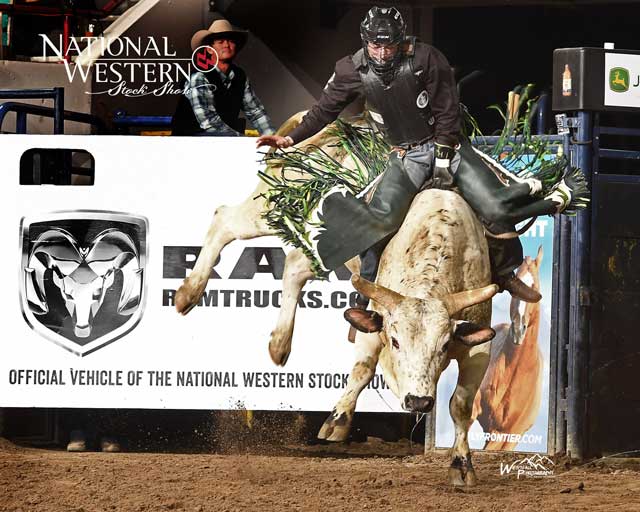
  • Bull Riders take center stage at National Western on Monday

    Bull Riders take center stage at National Western on Monday

    By Susan Kanode

    For the National Western Stock Show

    DENVER (January 17, 2017) — Jake Brown’s 2016 season got a big boost when he won the bareback riding title at the National Western Stock Show Rodeo.

    He’s back in Denver this year and working towards a similar result. Brown rode here on Monday afternoon scoring 74 points. He had his second horse on Tuesday night where he wowed the crowd with an 85.5 point effort.

    Brown, from Cleveland, Texas, is now leading the second round and is in fifth place overall. He has a good chance of being here on Jan. 22 for the U.S. Bank Championship Finals. The top 12 contestants will advance.

    After winning the National Western Stock Show Rodeo last year, he  was at the top of the Professional Rodeo Cowboys Association world standings and was on track to qualify for his second Wrangler National Finals Rodeo. Then in Jasper, Texas, last May, he sprained his thumb on his riding thumb.

    Bareback riders need a healthy and strong thumb to grip the handle in their riggings, so Brown had surgery to repair it in June. He missed three of the busiest months of the season. He came back and won two rodeos to get to rodeo’s championships in ninth place.

    His injury list is long and extensive and got a little longer in Las Vegas. He sustained a concussion and had to watch from the sidelines before returning. He is completely healthy and riding like a champion here.

    Jordan Hansen had his second successful bull ride on Tuesday night. The Okotoks, Alberta, resident scored 85.5 points on Cervi Brothers’ Hangin Ten to move into second place in the round and take command of the overall lead.

    Hansen has a total of 173 points on two rides. Dustin Bowen from Waller, Texas, is now in second with 168.5.  Joe frost also moved into the bull riding standings here. The three-time NFR qualifier from Randlett, Utah, is currently fourth with 161.5.

    There are two rodeos on Wednesday in the Denver Coliseum. The afternoon begins at 1:30 p.m. and the evening performance begins at 7 p.m.

    ###


    DENVER (January 17, 2017) — The following are unofficial results from the National Western Stock Show Rodeo sanctioned by the Professional Rodeo Cowboys Association.


    Tenth Performance —


    Bareback Riding: 1, Jake Brown, Cleveland, Texas, 85.5 points on Cervi Brother’s Ransom’s Disaster. 2, Caleb Bennett, Tremonton, Utah, 83. 3, Mike Solberg, Sunnynook, Alberta, 81. 4, Winn Ratliff, Leesville, La., 78.


    Steer Wrestling:  1, Clayton Tuchscherer, Dona ana, N.M., 5.8. 2, Wyatt Jurney, Las Cruces, N.M., 6.9. 3, Dru Melvin, Hebron, Neb.,  7.8. 4, Tanner Brunner, Ramona, Kan., 10.6.


    Team Roping: 1, Charly Crawford, Prineville, Ore., and Joseph Harrison, Overbrook, Okla., 5.2 seconds. 2, Jake Orman, Prairie, Miss, and Tyler Domingue, De Kalb, Texas, 5.9. 3, Lane Karney, Creston, Calif., and Dalton Pearce, San Luis Obispo, Calif., 6.1. 4, Rowdy Rieken, Arp, Texas, and Ace Pearce, Washington, Texas, 6.4.


    Saddle Bronc Riding: (two rides) 1, Jace Blackwell, Hermosa, S.D., 66 points on Cervi Championship’s Hello Dolly. 2, Colton J. Miller, Lance Creek, Wyo., 54.


    Tie-Down Roping: 1, Dane Browning, Coyote, Calif., 9.9 seconds. 2, Tuf Cooper, Weatherford, Texas, 10.3. 3, Paul David Tierney, Oral, S.D., 10.6. 4, Matt Kenney, Onawa, Iowa, 11.0.


    Women’s Barrel Race: 1, Jordan Moore, Mauston, Wis., 15.31 seconds. 2, Kelly Yates, Pueblo, Colo., 15.35. 3, Cranna Roberts, Lacombe, Alberta, 15.52. 4, Tiany Schuster, Krum, Texas, 15.54.


    Bull Riding: (three rides) 1, Jordan Hansen, Okotoks, Alberta, 85.5 points on Cervi Brothers Hangin Ten. 2, Jacob Smith, LaSalle, Colo., 79.5. 3, Joe Frost, Randlett, Utah, 75.


    Current Leaders —


    Bareback Riding: (first round) 1, Logan Corbett, Las Cruces, N.M., 87 points on Calgary Stampede’s Xplosive Skies. 2, (tie) Buck Lunak, Cut Bank, Mont., and Tim O’Connell, Zwingle, Iowa, 83.5. 4, Kody Lamb, Sherwood Park, Alberta, 82.5. (second round) 1, Jake Brown, Cleveland, Texas, 85.5 points on Cervi Brothers Ransom’s Disaster. 2, Richmond Champion, The Woodlands, Texas, 85. 2, Tim O’Connell, Zwingle, Iowa, 84.5. 3, Kody Lamb, Sherwood Park, Alberta, 83. 4, Seth Hardwick, Ranchester, Wyo., 81.  (total on two) 1, Tim O’Connell, Zwingle, Iowa, 168. 2, Kody Lamb, Sherwood Park, Alberta, 165.5. 3, Logan Corbett, Las Cruces, N.M., 161. 4, Buck Lunak, Cut Bank, Mont., 160.5.


    Steer Wrestling: (first round) 1, (tie) Luke Branquinho, Los Alamos, Calif.; Heath Thomas, Hemphill, Texas; Jule Hazen, Ashland, Kan.,; and Clayton Tuscherer, Dona Ana, N.M., 4.2 seconds each. (second round) 1, Ryan Swayze, Freedom, Okla., 3.4. 2, Jason Thomas, Benton, Ark., 3.8. 3, (tie) Cameron Morman, Glen Ullin, N.D.; Gary Gilbert, St. Cloud, Fla.; and Matt Reeves, Cross Plains, Texas; 4.1. (total on two) 1, Gary Gilbert, St. Cloud, Fla., 8.9. 2, (tie) Jule Hazen, Ashland, Kan., and Luke Branquinho, Los Alamos, Calif., 9.0. 4, Blaine Jones, Templeton, Calif., 9.2.


    Team Roping: (first round) 1, Kelsey Parchman, Cumberland City, Tenn., and Kinney Harrell, Marshall, Texas, 4.6 seconds. 2, (tie) Bubba Buckaloo, Kingston, Okla., and Jake Smith, Broken Bow, Okla.; and Jhett and Bret Trenary, Salida, Colo.; 5.0. 4, (tie) Robert Ansley, Moriarity, N.M., and Shad Chadwick, Cave Creek, Ariz.; and Charly Crawford, Prineville, Ore., and Joseph Harrison, Overbrook, Okla.; 5.2.  (second round) 1, Olin Pulham, Payson, Utah and Thad Ward, Howell, Utah, 4.1. 2, Tanner Baldwin, Vale, Ariz., and Tanner Luttrell, Oroville, Calif., 4.2. 3, Clay Tryan, Billings, Mont., and Jade Corkill, Fallon, Nev.; 4.3. 4, Philip McCoy, Beggs, Okla., and Josh Fillmore, Penrose, Colo., 4.6.  (total on two) 1, Kelsey Parchman, Cumberland, City, Tenn., and Kinney Harrell, Marshall, Texas, 9.6. 2, Matt Sherwood, Pima, Ariz., and Joel Bach, Mount Vernon, Texas, 11.4. 3, Tanner Baldwin, Vale, Ariz., and Tanner Luttrell, Oroville, Calif., 15.3. 4, Wade and Wylee Nelson, Faith, S.D., 16.0.


    Saddle Bronc Riding: (first round) 1, Will Smith, Marshall, Mo., 88 points on Calgary Stampede’s Stampede Warrior. 2, Audy Reed, Spearman, Texas, 86. 3, Shade Etbauer, Goodwell, Okla., 85.5. 4, (tie) Brady Nicholes, Hoytesville, Utah, and Hardy Braden, Welch, Okla., 82.5 each. (second round) 1, Jacobs Crawley, Boerne, Texas, 85 points on Calgary Stampede’s Sergeant Whitney. 2, Audy Reed, Spearman, Texas, 82.5. 3, Hawkins Boyce, Malad, Utah, 81.5. 4, (tie) Sterling Crawley, Stephenville, Texas, and Will Smith, Marshall, Mo., 81. (total on two) 1, Will Smith, Marshall, Mo., 169. 2, Audy Reed, Spearman, Texas, 168.5. 3, Jacobs Crawley, Boerne, Texas, 166.5. 4, Hardy Braden, Welch, Okla., 162.5.


    Tie-Down Roping: (first round) 1, Monty Lewis, Hereford, Texas, 7.6. 2, Marcos Costa, Childress, Texas, 7.8. 3, Ryle Smith, Oakdale, Calif., 8.0. 4, (tie) Will Howell, Stillwater, Okla., and J.D. McQuistion, Collinsville, Texas, 8.1 each. (second round) 1, (tie) Caddo Lewellan, Morrison, Okla., and Ike Fontenot, Ville Platte, La., 7.9. 3, Marcus Theriot, Poplarville, Miss., 8.0. 4, Dillon Holder, Eugene, Mo., 8.3. (total on two) 1, Marcos Costa, Childress, Texas, 16.2. 2, Monty Lewis, Hereford, Texas, 17.0. 3, Rhen Richard, Roosevelt, Utah, 17.9. 4, J.C. Malone, Hooper, Utah, 18.4.


    Women’s Barrel Race: (first round) 1, Jordan Moore, Mauston, Wisc., 15.31 seconds. 2, Kelly Yates, Pueblo, Colo., 15.35. 3, (tie) Dena Kirkpatrick, Post, Texas, and Cayla Small, Burneyville, Okla., 15.38 each. (second round) 1, Kali Parker, Wendell, Idaho, 15.34. 2, Hailey Kinsel, Cotulla, Texas, 15.46. 3, Rainy Pratt, Stephenville, Texas, 15.51. 4, Michele McLeod, Whitesboro, Texas, 15.56.  (total on two) 1, Kali Parker, Wendell, Idaho, 30.80. 2, Hailey Kinsel, Cotulla, Texas, 30.87. 3, Sidney Forest, Lipan, Texas, 31.06. 4, Cayla Small, Burneyville, Okla., 31.13.


    Bull Riding: (first round) 1, Jordan Hansen, Okotoks, Alberta, 87.5 points on Cervi Championship Rodeo’s Vitalix White Smoke. 2, Joe Frost, Randlett, Utah, 86.5. 3, Mike Sparks, Caldwell, Idaho, 85.5. 4, Cain Smith, Pendleton, Ore., 85. (second round) 1, Dustin Bowen, Waller, Texas, 86 on Cervi Championship’s Slim Kitty. 2, Jordan Hansen, Okotoks, Alberta, 85.5. 3, Trevor Reiste, Linden, Iowa, 84.5. 4, (tie) Jeff Berturs, Avon, S.D., and Elliot Jacoby, Fredericksburg, Texas, 81.5. (total on two) 1, Jordan Hansen, Okotoks, Alberta, 173. 2, Dustin Bowen, Waller, Texas, 168.5. 3, Trevor Reiste, Linden, Iowa, 163. 4, Joe Frost, Randlett, Utah, 161.5.