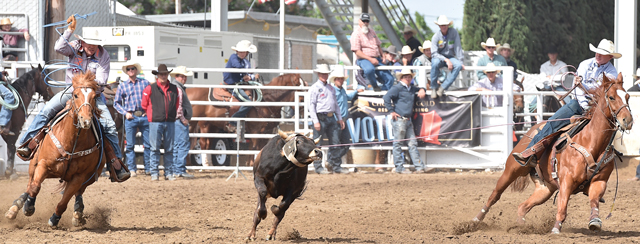
Chad Masters can’t remember a time when he didn’t rope. He does recall that he was about five years old when started roping horseback. Chad grew up in Clarksville, Tennessee where his dad, Bobby, a Pepsi executive, trained calf horses and his mom, Debbie, worked at the post office. Chad was a breakaway roper until he was about nine, when Harold Travis moved to the area and introduced them to team roping.
Chad spent much of his youth horseback, roping and helping his dad train colts. Consequently, he excelled in high school rodeo claiming the Tennessee team roping championship from ’96-’99; and tie down championship from ’98-’99. After high school Chad started going to IPRA rodeos. It was at an IPRA rodeo that he met Frankie McCleer and was offered an opportunity to head at pro rodeos.
This partnership was the start of Chad’s professional rodeo career. For the next couple of years Chad roped with several different partners before qualifying for the NFR with Michael Jones when he was 22.
Now, with two gold buckles and over $1.7 million in career earnings, Chad is able to put his success into perspective.
“It’s a privilege to be a world champion, but there are also so many guys going who deserve to win the world,” explains Chad. “At this level, where everyone ropes so well, everything has to line up just right to be successful.”
Chad won his titles in 2006 and 2012. Both championships were won with heelers that were not his partners, which can be a bittersweet victory.
In 2013, at the Timed Event Championships, Masters severely injured his leg during the Bulldogging.
“Basically my left ankle touched my left hip. One ligament and skin were holding my leg on,” says Chad. “That happened in March and I cracked back out at Reno Rodeo in June. Subconsciously I was worried about the barrier catching my leg that year and I just didn’t rope well. It was a tough year.”
Chad has qualified for the NFR ten times, and at 36, hasn’t yet decided how long he plans to rodeo professionally. He owns a 120-acre ranch in Lipan, Texas, and is preparing to build a covered arena.
“I enjoy training horses, sometimes to the detriment of my rodeo career,” says Chad. “When your first priority is your horse, sometimes it’s hard to quit “training” and just go for it. It takes a conscious effort.”
Chad is one of the most well liked team ropers in the PRCA due to his friendly and positive attitude.
COWBOY Q&A
How much do you practice?
When I’m at home and training horses, I usually ride six to eight horses a day and run about 50 steers between them.
Do you make your own horses?
Sometimes. I was lucky at the beginning, the first three or four we had trained. Since then I’ve bought a few and also made some.
Who were your roping heroes growing up?
Speed Williams and Kevin Stewart.
Who do you respect most in the world?
Clay Cooper. I’ve learned a lot from him.
Who has been the biggest influence in your life?
My dad. He’s hard working and always believes in me.
If you had a day off what would you like to do?
Take a vacation, maybe go to the beach.
Favorite movie?
Silverado
How would you describe yourself in three words?
Hard working, easygoing, friendly.
What makes you happy?
Friends, family, and horses.
What makes you angry?
Bad drivers
If you were given 1 million dollars, how would you spend it?
Buy a place in Tennessee.
What is your worst quality – your best?
My worst quality is indecisiveness. My best quality is my work ethic.
Where do you see yourself in ten years?
I would like to be in Tennessee training horses with a family.
Blog
-
Roper Review: Chad Masters
-

On The Trail with Hailey Kinsel
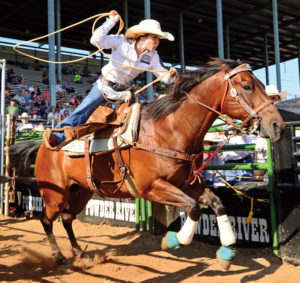
Hailey competing at the IFYR- RodeoBum Hailey Kinsel’s qualification for RFD-TV’s The American and subsequent win in the barrel racing – and a third of a million dollars – has put the 22 year old from Cotulla, Texas, on the largest stage of her life. “I don’t know if there’s a bigger stage than that besides the WNFR,” she says. “It’s not just the money – the atmosphere there is insane, and pressure wise, I like the excitement and the challenge. The crowd makes you feel happy to be there, and when I’m happy to be there, I compete at my best.”
Competing in the NHSFR, IFYR, PRCA, and CNFR prepared Hailey for the most famous run of her career thus far. But it was the support of her family, a resolute work ethic, and three horses in particular who helped her get there. Her parents, Dan and Leslie Kinsel, both rodeoed in high school and college – Leslie representing the Lone Star State as Miss Rodeo Texas in 1980 – and Hailey was rodeoing by the time she was four. “We ranch and run cattle in South Texas, and my brother and I had to learn to ride so we could work cattle. We don’t have an arena, but when I wanted to work barrel horses starting in junior high, we plowed up an area in the middle of the pasture. We’re really blessed with awesome red dirt – it’s maybe every six months that we have to disc it,” says Hailey. “Both my parents taught me how to work with what I had, and that made me more of a competitor and trainer when I could make the best of every situation. Both my grandmothers were paramount in my early years, being supportive and telling me I could do it.”
Hailey, who was homeschooled starting in seventh grade, rodeoed in THSRA Region 8 in all the girls events, while also showing steers and goats in 4-H and serving as a FFA and 4-H officer at the local and district level. Her older brother, Matt, rodeoed through junior high. “He’s very athletic and he’s had his own website design company since he was thirteen. He does all the IT work for the family business and he’s an entrepreneur in College Station. He’s probably the most supportive business man – he’ll show up at rodeos in a suit to watch me run.” Hailey was the THSRA state president, and won the state barrel racing title in 2011, returning to the NHSFR in 2013 in breakaway. But barrels are a longstanding favorite. “It’s the event I’ve done the longest, and the one my mom and I have most in common. I had good, trustworthy horses that made it fun for me. We weren’t winning, but I was going slow enough to learn to ride well, and I never had a bad experience. In junior high, my mom and I bought my first competitive horse together, Josey. She was a project, and she became my all-time favorite. Having that one good horse made me fall in love with barrel racing, and makes me look for good in other horses.”
DM Sissy Hayday, or Sister, carried Hailey to The American, but it was the mare’s half sister, Baja, who made the win possible. “Baja was running fast everywhere and coming on this year, but during everything with The American, she came up lame, and a week after The American, we lost her to melanoma. She served her purpose, because we wouldn’t have bought Sister without her.” The Kinsels bought Baja on Craiglist as a two-year-old and loved her so much they called the breeder, learning he had just one left – Sister – and was selling the broodmare. “We took a chance on Sister. She was a funny looking two-year-old, but she was pretty solid-minded and a good turner,” says Hailey. “Sister started showing some fire when she was three or four and she bucked for the first time. She was so strong willed that I kept her slow and focused for a long time and entered her in her first futurity the end of her four-year-old year. She broke pattern and ran off, but I worked her and she did awesome in the second round. Since then, she’s been running in the 1D, and when Sister wants to do something, she is going to do it.”
Hailey and Sister’s next national appearance is the CNFR, where Hailey has competed twice before in the barrel racing. Texas A&M University’s women’s team won reserve in the Southern Region, and Hailey graduated in May with a degree in agricultural economics. She’s also two classes away from her real estate license. “Training futurity horses is my ultimate goal, but I’m glad to have my degree as backup. Here at school, we have two Bible study groups that I lead – one for the college girls on the rodeo team, and one with some freshman high school girls before school in the morning,” Hailey adds. “I play the guitar and keyboard a little bit, and I always sang in church growing up. My faith is the reason I do rodeo. I have my relationship with the Lord, and he allows me to rodeo. Rodeo has led me so many places, and I know my purpose is to share the good news of the Lord and connect with people.”One of her favorite connections is with the Elizabeth Stampede, where last summer, Hailey won both her first rodeo on Sister and her first PRCA rodeo. “I’d seen it on the WPRA Today show, and I know girls that talked about the great ground. I went to it on the way to the college finals, and I had a blast! Their pancakes were amazing too, and some of the committee came out to Denver when I competed there this winter. It was so nice that they cared and stayed in touch.” Another favorite destination was the IFYR during high school, where Hailey finished third in the average in barrels her junior year, and the top 15 in the average in barrels and poles her senior year. “I always wanted to enter because I heard so much about it from my friends, and I loved the payout for a youth rodeo, as well as seeing my friends.”
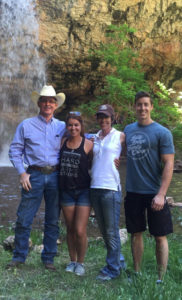
When she’s not traveling – passing time on the road listening to music, sermons, or motivational speeches – Hailey works on her family’s ranch and trains horses with her mom. “We’re mostly focused on whatever horses we need for the two of us. We start with a two-year-old each year, and we’ve gotten into some breeding. Now that I’m done with college, I’m really looking forward to taking in outside horses and having more in training at one time,” says Hailey. “I’m going to the rest of the PRCA circuit rodeos in May and I’ll see how much I get done. I’m planning on riding my two main horses and hauling some three-year-olds to give experience. If we’re doing well, we’ll go hard this summer and go as far as we can!” -
Marinated Flank Steak & Onion, Mushroom & Potato Packet
Marinated Flank Steak
recipe courtesy of Rodeo Road RecipesIngredients:

1 flank steak, average size
1/3 c. soy sauce
1/3 c. red or white wine
3 Tbsp. green onion
3 lemon slices
1/2 tsp. dry mustard
1/8 tsp. lemon pepper
1 clove garlic, mincedDIRECTIONS: Combine marinade ingredients and put 3/4 of mixture in large plastic bag with steak. Reserve 1/4 mixture for basing steaks on grill. Let steaks marinade overnight. Grill steaks over medium-high heat until they reach desired doneness.
Onion, Mushroom & Potato Packet
recipe courtesy of Rodeo Road RecipesIngredients:
5 medium potatoes, peeled and diced into
1” cubes
1/2 yellow onion, sliced
1 pkg. fresh mushrooms, sliced
1 envelope dry onion soup mix
1/2 c. butter, meltedDIRECTIONS: Preheat grill to medium heat. In a bowl, mix potatoes, onion mushrooms, soup mix and melted butter. Stir gently. Cut 4 large pieces of heavy-duty aluminum foil. Divide the potato mixture evenly between the 4 pieces of foil and bring up foil sides. Double fold top and ends to seal packet, leaving room for heat circulation inside. Place on grill, turning occasionally. Cook for 30 to 40 minutes, or until tender.

-
Back When They Bucked with Pat Ommert
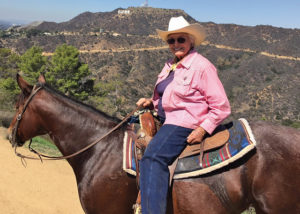
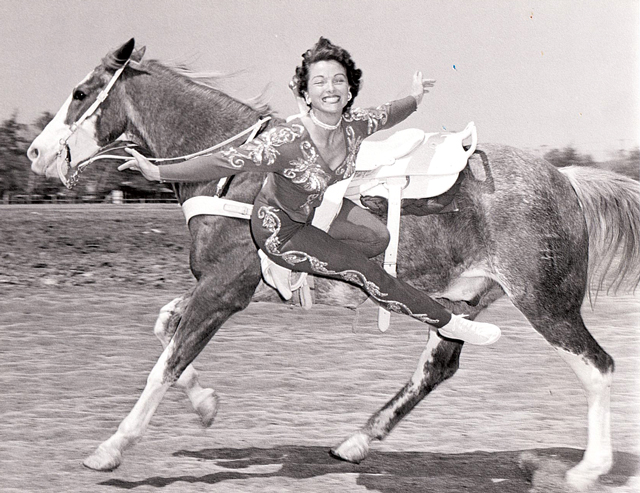
Pat riding in Hollywood, Los Angeles, CA posing near the Hollywood sign – courtesy of the family 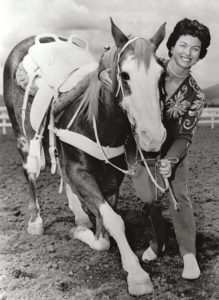
Pat Ommert with her horse, Strawberry Shortcake – Courtesy of the family Laces tied snug, tennis shoe cowgirl Pat North Ommert made hundreds of laps around as many arenas throughout the United States from the 1940s to the 1960s, dazzling crowds with her signature one-foot stand and vivid smile. The trick rider, jockey, and stunt double from California traveled and performed extensively, including 56 performances at the Madison Square Garden Rodeo in New York, and riding in Powder Puff Derbies at the Caliente Racetrack in Tijuana, Mexico. Yet her favorite place is still the back of a horse, and her accomplishments, whether astride or beside her equine friends, recently earned her an induction into the National Cowgirl Museum and Hall of Fame in Fort Worth, Texas.
Pat was nominated 18 years ago for the National Cowgirl Hall of Fame before her induction in October of 2016. “I know many of the former inductees, so I was very honored,” she says. In 1999, Pat and her husband, Dr. Willard Ommert, received the California Professional Horsemen’s Association Lifetime Achievement Award for their devotion and contributions to the horse world. Pat is also active in preserving horse trails and the equestrian lifestyle in Southern California, where she grew up and continues to live today.
Born in 1929, Pat was the second daughter of Bob and Vera North. A savvy businessman, Bob started Bob North Hardware Store in Bell, California, during the Great Depression, and the store flourished. The North’s home in Bell was eight miles away from the Los Angeles Union Stock Yards, and the vacant lots around Bell and the Los Angeles riverbed offered plenty of riding opportunities. The North family, including Pat’s sister, Laura, shared a love of horses. Vera, Pat’s mother, came to love horses after being sent to the Mohave Desert in 1912 with her younger sister. They boarded with a family to avoid the polio epidemic in Los Angeles and rode a horse to school. Vera later learned to train trick horses from a circus trainer stabled in Bell. She entered the show business, and even performed in the Hawaiian Islands with the E.K. Fernandez Wild West Show in 1934.
Pat’s sister, who had an act with their mother, was married in 1943 and retired from show business. Pat was 14 at the time and performed the Patsy North and Her Trick Horse Rex act through World War II. Her own trick riding career started when she was 16, and she performed in rodeos and fairs around California. She still holds gold card number 1890 with the PRCA. “The trick riding was easy,” says Pat, who trained her own Roman riding and jumping team of horses. “I was an athlete. During World War II, my family moved to some acreage and we raised calves and did all our own work. My Roman riding was the most fun, and I think more spectacular. The hippodrome is one of the easiest tricks, but to do it with grace is something else. The one-foot stand was really my specialty. I consider myself a tennis shoe cowgirl because I had boots, but it was usually tennis shoes for trick riding and even working the trick horse.” Rex, who was half Morgan, was Pat’s left hand horse in the Roman riding, and Juan Monroe, a registered American Saddlebred, was the outside horse. Pat competed in many of the Los Angeles Sheriff’s Rodeo Roman races, and even did several publicity shots for the rodeo.
When one of the North’s horses was sick in the 1940s, the regular vet sent his new associate, Dr. Willard Ommert, to make the farm call. Dr. Will and Pat took an instant liking to each other, and they were married in 1947. “Will was my best fan and loved what I did,” says Pat. “Like my dad, he never had a problem with me performing or being in show business. It didn’t make much money in the early days, but it did take care of the horse costs, and it was always fun.”
Pat’s dad had passed away in 1951 from a heart attack, and after Pat and Dr. Will were married, Vera greatly encouraged Pat to continue her show career. Starting in 1951, Pat performed at the Salinas Rodeo with 14 or 15 other trick riders on her horse Shortcake, working her way into bigger rodeos. “Edith Happy and I worked many California rodeos together. She was a beautiful, long-torso lady who did the most beautiful stand ever,” says Pat, who performed at Salinas for 11 years. “I’m delighted that California Rodeo Salinas is using Edith’s hippodrome stand for their poster this year.”
The year 1953 took Pat to New York City and Boston for several weeks, and Dr. Will used some of his vacation time to travel with her and watch several performances. Everett Colborn from Dublin, Texas, co-owned the World Championship Rodeo Company and produced both the Madison Square Garden Rodeo and Boston Garden Rodeo. Colborn’s own rodeo in Dublin became the Pre-Madison Square Garden Rodeo. Following the Texas performance, the entire production, joined by Pat and her husband, boarded the 24 car train for New York, stopping to perform in Fort Madison, Iowa, on the way. Many rodeo and western movie figures including Tad Lucas, Jim Shoulders, Gene Autry, Roy Rogers, and The Lone Ranger performed in Colborn’s rodeos. Pat rode Quadrille and the trick riders did publicity work for the rodeo. “That was really fun. The head of publishing for Madison Square Garden owned a white convertible, and five of us trick riders were seen around town. We were always in our western outfits,” says Pat. “We had lunch at the 21 Club, saw the premier opening of a movie, visited the Bellevue Hospital, and had a parade. We also had a rodeo parade in Boston. I rode my Roman team and my husband rode in the parade with me. After the parade, they had a Cowgirl Special thoroughbred race in Rockingham Park in New Hampshire, which I won.”
By this time, Pat and Dr. Will’s first daughter, Annie, was three, and her sister, Janie, was born in 1954. In the 1950s, Pat acquired her Screen Actor Guild card and worked in several motion pictures as a stunt double and driver. One of her friends, showman Monte Montana, needed six women for a horse catch scene in “A Star is Born”, starring Judy Garland and James Mason. Pat was one of the six, along with her mentor, Polly Burson, Faye Blessing, Shirley and Sharon Lucas, and Louise Montana. “The last movie I worked was ‘Cimmaron’, and I was in Tucson for two weeks. They needed girls to ride and drive wagons for the Oklahoma land rush scenes. We made money on those shows, but it was a hurry-up-and-wait business. I had kids and horses at home waiting on me, and I thought of how I could use that time to be home riding!”
In the 1950s, Pat also raced horses, even while on tour with the Bob Estes Wild West Show in 1957 in Mexico City. She retired from show business in 1962, and by then, her daughters were showing in the hunt seat division. Pat also showed hunters and jumpers for a time, and when she wasn’t taking Annie and Janie to horse shows, she was traveling and working with Dr. Will. Originally in the cavalry, he was transferred to the U.S. Army Veterinary Corps after the cavalry was dismounted. He worked with Dr. Bob Miller as the official veterinarians of the NFR from 1962- 1964 when it was hosted by Los Angeles, and his renown as a veterinarian was international. He advanced equine medicine in a number of ways, performing the first equine arthroscopic surgery, and even fitting a horse for contact lenses. “Will was the chief veterinary officer for the 1984 Olympics, and he was the vet for a lot of the California horse shows. I was in the horse show world with him,” says Pat. In 1969, the couple moved to Temecula, California, where Dr. Will built the state-of-the-art Los Caballos Veterinary Hospital, the first privately owned equine clinic and surgery in California. Pat managed the neighboring Los Caballos Farm, a facility for resting and retired horses, and they also raised several colts. Pat leased the ranch out several years after Dr. Will’s passing in 2004, and continues to make her home in Temecula.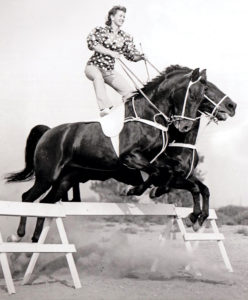
Now 87, Pat rides daily, boarding her horse a short distance away. She has four granddaughters and five great-grandsons, all of whom learned to ride from Pat. “I feel that it’s so important for kids to learn about the good earth and see livestock. I love seeing kids who know how to sit on a horse and ride,” says Pat, who supports the Pacific Crest Trail. She’s a member of Saddle Sore-Ority, along with the Rancho California Horsemen’s Association since 1970. “I feel so lucky to have been able to experience several different phases of the rodeo world. I feel I had the best of all of it.” -
Social Media Presence
Social media has become huge. Facebook, Twitter, Instagram, YouTube, Snapchat and many more are out there for everyone to use. Social media accounts are used by young and old, alike and viewed worldwide. How important is your social media presence? That is probably a loaded question, depending on what you expect to gain from your social media account. I know people that keep their social media circle very small with just friends and family. Others choose to max out their friends or have thousands of followers. Make sure your social media is an accurate reflection of you.
Some use their social media account to become popular or even famous. Videos, pictures and whatever else they can post to become popular. I will admit I follow two totally different social media accounts. Dale Brisby and Eric Thomas. Those two are on opposite sides of the social media spectrum. One I follow for the entertainment value, one I follow for education and inspiration. That is the benefit of social media, it is a venue that can be used in many different ways.
As a coach I will use social media accounts to see if a student is someone we want to bring into our program. With a quick peak at your social media accounts we can watch videos of you compete. Learn about how you treat others. The type of decisions you make on your social media accounts can and will affect the scholarships you may receive. Once you are on scholarship for an athletic team, your social media account will in some ways begin to represent not only you but your team as well. Social media has become so prominent that many schools now have policies and programs about how to use social media in a positive way.
Many sponsors now look at your social media accounts as well. I know first-hand of very talented rodeo athletes that have lost sponsors because of their social media presence. I also know of other athletes that have had doors opened for them because of how they represent themselves on social media. Simple choices of what to post or send can lead you in different directions in a hurry.
Now even most employers will check your social media account. That post that was inappropriate that you posted seven years ago may now come back to haunt you. What you put on social media is out there, once you post, you have little control. It can be shared, copied, saved, made into a meme, the possibilities are endless.
With social media we all become our own promoter? How will you be represented on social media, everyone is watching… -
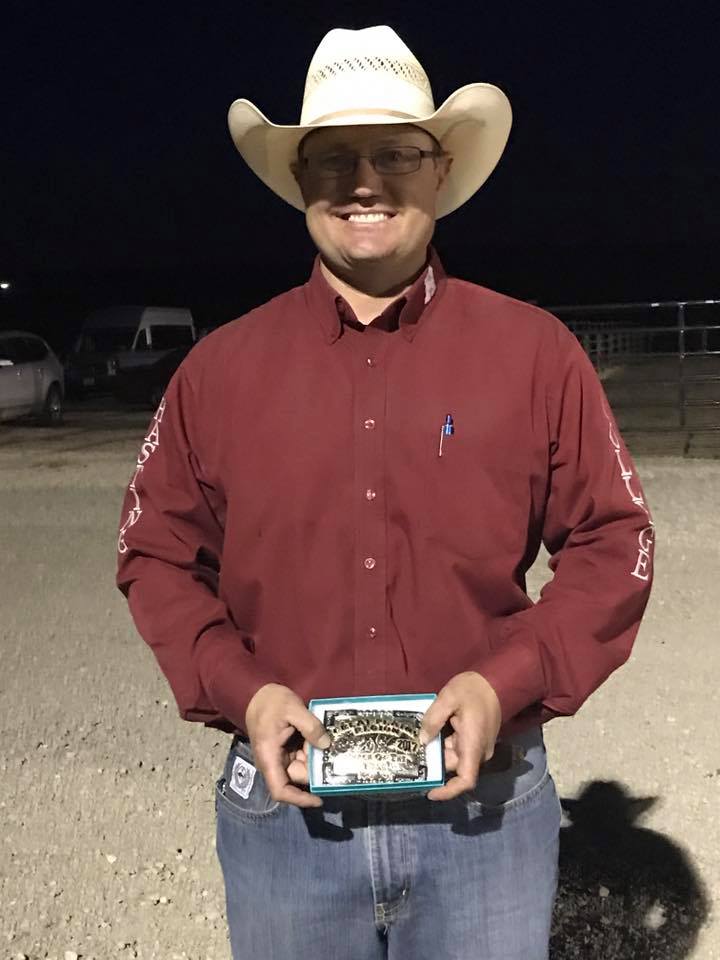
NOKES AWARDED COACH OF THE YEAR
Hastings College rodeo coach wins honor
Hastings, Neb. (May 9, 2017) – Hastings College rodeo coach Justen Nokes has been awarded the Great Plains Region College Rodeo Coach of the Year.
The Juniata man has been at the helm of the Hasting College rodeo team since the college started the club eight years ago. Winning the award “caught me off guard,” Nokes said. I didn’t expect it one bit.”
His team this year consisted of eighteen students, with two of them: Nolan Sybrant, Bassett, and Marshal Peterson, Ashland, winning titles in the Great Plains region. In the region, Sybrant finished first in the tie-down roping to qualify for the College National Finals Rodeo (CNFR) and Peterson finished fourth in the tie-down roping and fourth in the team roping (heading) to win the all-around. Peterson will compete in both of his events at the CNFR.
In his eight years as college coach, Nokes has had two other students qualify for the CNFR: steer wrestlers Richard Coats, Hastings (2013-2014) and Tom Littell, Elm Creek, (2016).
The 2016-2017 school year was supposed to be the last for the Hastings College rodeo team, due to financial constraints, but support from donors, namely Industrial Irrigation, have given the team one more year.
Nokes enjoys seeing the rodeo athletes progress throughout their college career. “Watching them mature, inside and outside the arena, is very satisfying. It’s really rewarding to see them obtain the goals they’ve set, with rodeo and outside of rodeo.”
Nokes is an accomplished cowboy, having won multiple titles in the steer wrestling, team roping and all-around in the Nebraska State Rodeo Association, the Mid-States Rodeo Association, and the Kansas Pro Rodeo Association, but winning the coaching title means more to him. “I’ve had a lot of titles, but this one is special. To be voted on by your peers, it’s fun.”
Nokes continues to compete in the steer wrestling and team roping.
The Great Plains region is one of eleven regions that make up the National Inter-Collegiate Rodeo Association. The Great Plains region consists of twelve colleges and universities in Nebraska, Iowa, South Dakota and North Dakota: Mid-Plains Community College (North Platte); Black Hills State University (Spearfish, S.D.); University of Nebraska-Lincoln; Dickinson (N.D.) State University; Iowa Central Community College (Ft. Dodge); South Dakota State University (Brookings); North Dakota State University (Fargo); Mitchell (S.D.) Technical Institute; Nebraska College of Technical Agriculture (Curtis); Iowa State University (Ames); the University of Wisconsin-River Falls, and Hastings College.
### –
-
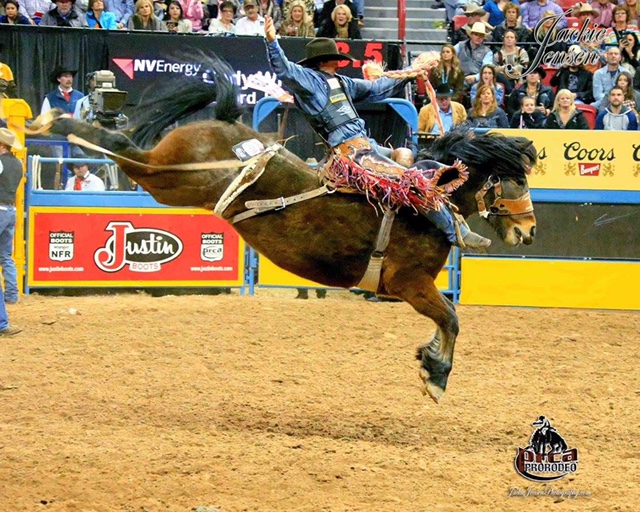
Lipstick N Whiskey passed away
Lipstick N Whiskey, a 13-year-old mare owned by Powder River Rodeo of Riverton, Wyo., died Sunday, May 6th from complications in foaling. Lipstick N Whiskey had made five trips to the Wrangler National Finals Rodeo (NFR) where she carried four saddle bronc riders to go-round wins.
Her first trip to Las Vegas for the NFR was in 2010 where the 2009 world champion Jessy Kruse rode her for 87 points. In 2015 Rusty Wright won the third round on her with an 86.5. Last year his younger brother Ryder had the exact same result. Then, their father, Cody, rode her in the eighth round for 88 points to earn another go-round buckle.
“We are devastated,” said Lori Franzen who along with her husband Hank own Powder River Rodeo. “She was an outstanding mare and not just an important part of our program, she was part of our family.”
The Franzens buried Lipstick N Whiskey on their ranch next to her sire, Cut The Cards, who was selected for the NFR 3 times. He passed away last year. Her dam, Bay Rum had also been selected for the NFR. Also buried in Powder River’s bucking horse cemetery is Khadafy Skoal, who was inducted into the ProRodeo Hall of Fame in 2012. He earned bareback horse of the year title on three occasions.
-
EXCELLENCE ON THE FIELD, THE WRESTLING MAT, AND IN THE ARENA
Burwell cowboy part has competitive drive
Burwell, Neb. (May 8, 2017) – A competitive streak runs through Tori Huffman’s veins.
The eighteen-year-old, a resident of Burwell, Neb., and a member of the Nebraska High School Rodeo Association, loves to compete.
And it shows. He was part of the Burwell High School football team that won last year’s D-1 Class Title, and he was the state champion wrestler in the 182 lb. division.
He excels in everything he does. As a linebacker and running back for the Burwell team, which plays eight-man football, he was an all-state running back, setting a new Burwell High School record with 2,272 yards of rushing this year. His stats include 32 offensive touchdowns, one defensive touchdown, and over 100 tackles.
Huffman has wrestled at the 182 lb. class for the past three years, finishing his junior year 40-6 and wining third at state. This year, as a senior, he was undefeated, won state, and helped his team win the team title as well.
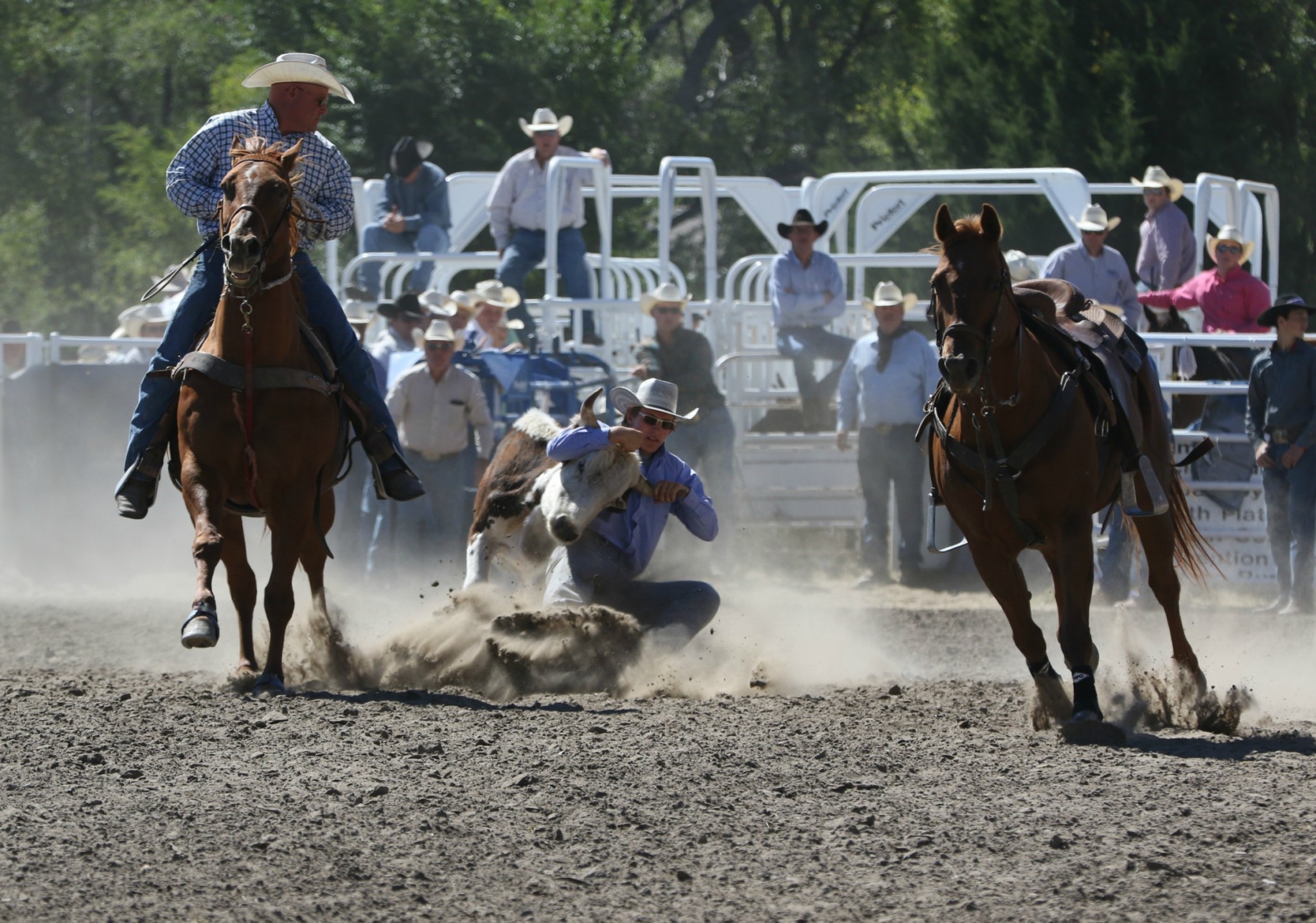
It isn’t easy to do two sports at once, but Huffman did in the fall, combining football and rodeo. There were four football games that happened on Friday nights and were followed by a Saturday rodeo, and for home games with rodeos farther away, his parents would have his horses loaded in the trailer, parked at the football field, ready to take off as soon as Huffman was done playing ball. He was a little sore on Saturday mornings following football games. “It wasn’t fun waking up the next morning and getting on a horse,” he said. In high school rodeo, he competes in the team roping, heeling for Nathan Poss, and in the tie-down roping. Last year, he competed in the steer wrestling.
And practice for two sports in the fall wasn’t simple, either. Huffman would be at football practice till 6 pm, then come home, load horses and take them to an arena twenty miles away, since the family lives in town.
Huffman excels in the classroom as well. He is on his school’s A-B Honor Roll and received academic scholarships to attend Chadron (Neb.) State College, where he will study ranch management or range management. He has been in the top ten in the FFA state range judging competition each of the last three years, and was a member of the Burwell High School team that won the state range judging in 2015.
Of his three sports, Huffman can’t pick a favorite. He loves the team aspect of football, but in wrestling “really likes to beat up on people,” he said. “I’d have to say wrestling is one of my favorites.” But he likes rodeo, too. “I love the connections I make with people, and the friendships I make, and being able to make a connection with the horses.”
He’s a true competitor, says his high school football and wrestling coach Luke Gideon. “He’s somebody you want on your team. He’s just really confident and he works really hard at being good at the little things, and that has been a huge part of why we’ve had success here.” Huffman realizes it’s not all about him, too. “He’s a great team player. He’s not in it just for himself,” Gideon said.
Gideon likens his laid-back personality to a light switch. “He’s real humble about things, but he has a switch he flips when it comes time to compete. He is kind of fiery when it comes down to it.”
Huffman has chosen to play football at Chadron State this fall, forgoing wrestling and rodeo.
He will compete at his fourth state high school finals rodeo in Hastings in June in both of his events. He finished tenth in the state last year in the team roping.
The Nebraska High School Finals Rodeo will be held in Hastings at the Adams Co. Fairgrounds June 15-17. Tickets are $7 for everyone ages five and up and are available through the office and at the gate. For more information, visit AdamsCountyFairgrounds.com or hsrodeo-nebraska.com, or call 402.462.3247.
### –
-
Glover grabs first NCFSR victory
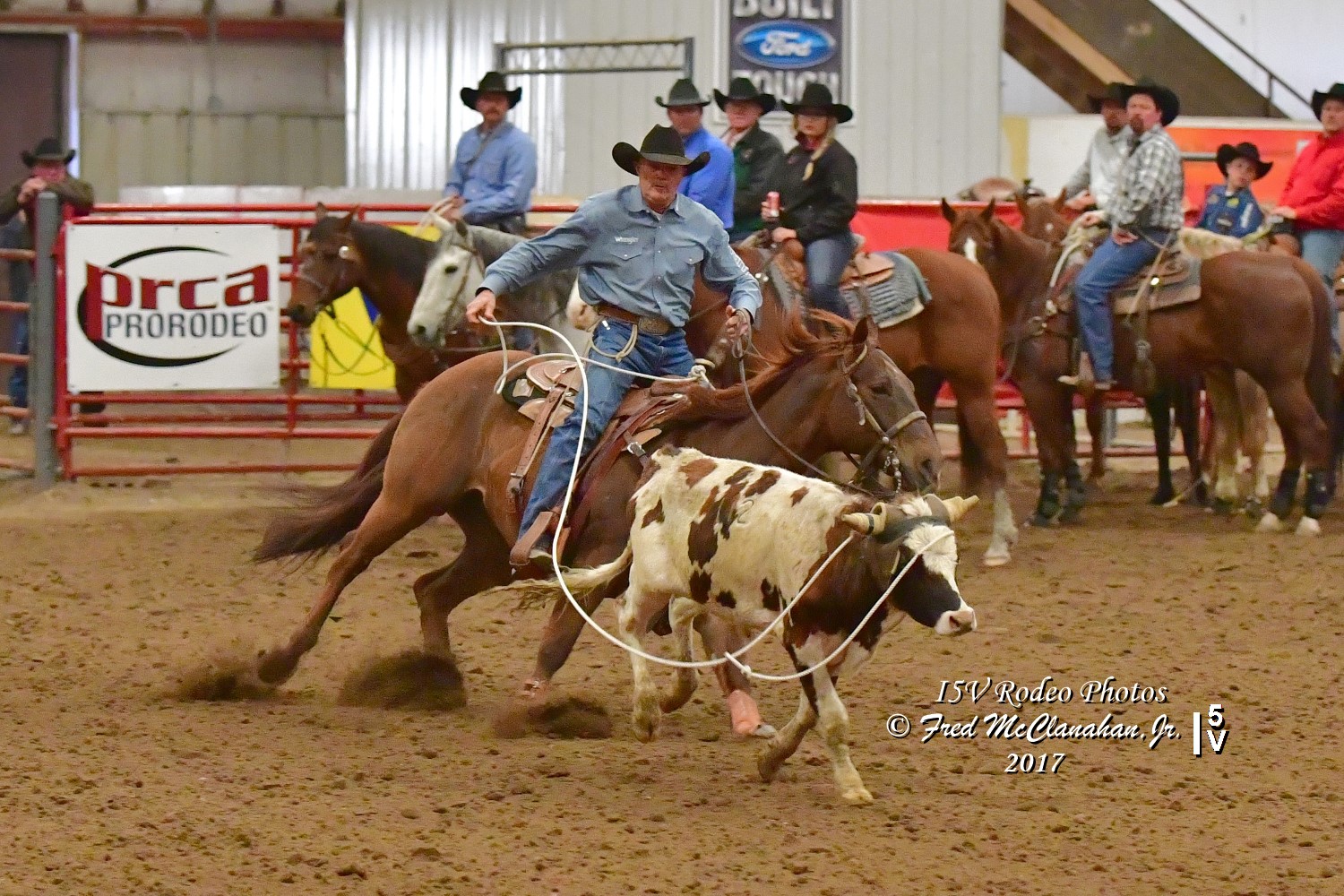
TORRINGTON, Wyo. – After five trips to the National Circuit Finals Steer Roping, Chris Glover of the Mountain States Circuit grabbed his first title with a 9.7-second run in the four-man final round April 30.
Glover, 56, kicked things off strong by tying for third place with Travis Mills in Round 1 with an 11.9. Although the second round was a 14.0-second run for Glover, he remained in the average standings, ranking third with 25.9 on two head.
“I had a tougher time in the second round,” the Colorado cowboy said. “The third round was all fresh steers and mine ducked down to the left fence and I missed him. I was a little disappointed, but I kept roping and trying – it goes back to what my dad always told me, ‘you can only rope and tie as fast he lets you.’”
Once the Top 8 cowboys are determined from the first six rounds, they’ve all got equal footing for a chance at the title. At the end of the first six rounds, Glover was tied for seventh place with Chance Kelton – both cowboys had a time of 63.7 seconds on five head.
The semi-finals featured some of the big names – Rocky Patterson, Reo Lohse, Howdy McGinn, Chet Herren, Mark Milner, Jason Evans, Kelton and Glover.
“I sat there and was counting the guys who made it and thought if they stubbed their toe and if I kept roping, I’d get to that round – and when it came, I drew a good steer,” Glover said. “He was really good and, heck, I did the same thing with him that I did with the rest of them.”
When the dust settled on the eight-man round, only four cowboys were left standing – Lohse with 9.9, Herren with 10.2, Glover with 10.6 and Kelton with 11.4.
“For the final one, I had a big peace come over me and I knew I couldn’t change my plan,” Glover said. “I would rope as fast as the steer would let me, and that’s what I did – I just felt I got off a step earlier.”
Glover shaved nearly a full second off his time in the final round, clocking in with a blazing 9.7-second time.
As if winning the NCFSR wasn’t enough, Glover’s horse, Cooper, was voted the top horse at the NCFSR.
“That young horse did good – I’m really proud of him,” Glover said.
- Jess Tierney set an arena record in Round 5 of the National Circuit Finals Steer Roping with an 8.6-second run – a half-second faster than the previous record, a 9.1 that was set by Bryce Davis in 2011.
There were a couple of changes atop the May 1 WEATHER GUARD® PRCA World Standings. Caleb Smidt surpassed Josh Peek to take the lead in the all-around standings. Smidt has earned $58,619, while Peek is right behind at $57,784. Bareback rider R.C. Landingham capped his stellar April by becoming the standings leader. With his win at the Clovis (Calif.) Rodeo, Landingham has $66,842, just ahead of reigning world champion Tim O’Connell’s $65,067 total.
-
On The Trail with Blayze Fallis
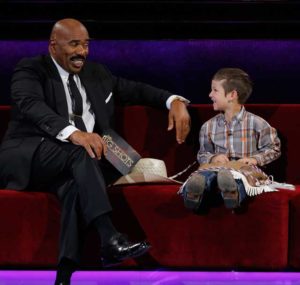
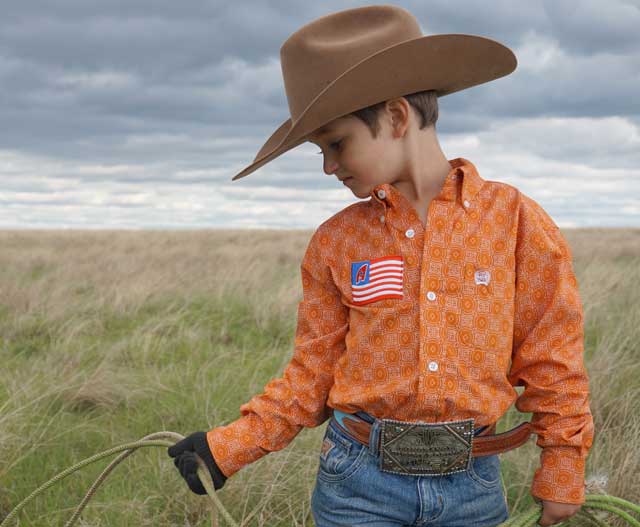
Blayze on the Little Big Shots show with Steve Harvey – courtesy of NBC What is a real cowboy? According to Blayze Fallis, a real cowboy takes care of his ranch, takes care of his horses, and takes care of each other. “It’s not what you’re wearing, it’s what’s in your heart,” says the 6-year-old cowboy from Cashion, Oklahoma. Blayze captured the hearts of America with his appearance on Little Big Shots the end of March. The show was called “There’s a new sheriff in town” and Blayze tried to teach Steve Harvey how to rope. “As soon as I saw him, I wanted to rope with him,” said Blayze of his trip to Los Angeles to film the show. Filming the show took two trips for Blayze – one for dress rehearsal and the second one to actually film the show.
He ended up on the show through a Facebook friend. “She was looking for different kinds of talent, I sent her a message and said I might have a cowboy. They asked for some videos of Blayze and a couple days later I got a call saying they would fly us out,” said Heather. “We flew out at the end of June and back again at the beginning of July” The only coaching that Blayze had for the show was where to stand for his roping.
Blayze has come by his roping by hard work and practice. “I started roping when I was two. My dad ropes, but not a lot. I picked it up and started swinging it.” Neither Heather nor Ryan rodeo competitively; they both ride horses, and Ryan ropes for fun, but Blayze practices every day to improve. He can now rope three stacked 55-gallon barrels and his goal in life is to be a cowboy. He rides rank sheep and mini broncs. He’s an only child which he likes. “I get to play with my mom and dad all day long.”
“We have never forced anything on him,” explains Heather, who grew up in Shawnee, Oklahoma. “It comes natural to him – Ryan and I try to set our best example for Blayze, and behave the way we want him to.” Ryan works long hours at his job with BP, but manages to take Blayze to sorting and team penning practice.
Aside from wearing his cowboy hat and boots day in and day out, Blayze is a typical six year old. He likes to play TBall, which is the only time he trades his boots for tennis shoes with cleats. He is a Kindergartener at Cashion school, where his favorite part of the day is recess. “I get to play cowboy with my friends,” he said.
After school, he heads to the barn to ride, rope, and play cowboy some more. The family travels to rodeos on the weekends and they plan to join National Little Britches. “Whenever he was little, he’d pick up a rope and try,” said Ryan. “That’s all he wants to do is rope. Since he’s been able to talk everyone has commented on his personality.”
For Blayze, God comes first, then roping. If he could go anywhere, he’d like to go to George Strait’s house. “Then we’d go to a lot of rodeos and rope.” His main horse is Tank. “I bought him with my money that I got from raking a lot of horse poop.” When the weather was bad, he started making signs, screwing the screws, sandpapered the wood and stenciled on the letters to make quotes and sold them. He also did a lot of work over at his Grammies and Grandpas house. “I saved up a lot of money to buy Tank. I rope on him, chase cows, barrel race, poles, and everything.” He has two other horses, Tuff and Kerosene.
“Blayze is the most determined little boy I have ever met,” said Skylar Wright who has known him since he was a baby. “For a six year old to be that determined to go rope every day is amazing. He is adorable and so much fun to be around.”
Blayze takes his new-found-fame in stride. “I just want to thank y’all. I feel blessed.” -
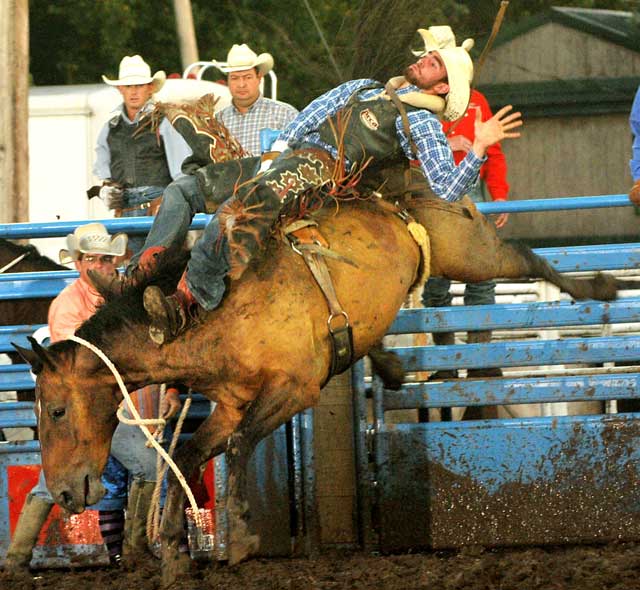
ProFile: Sandro Ferretti
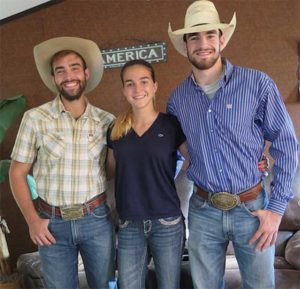
Sandro Ferretti (on the right) poses with his older brother, Enzo (on the left) and their sister Carla. Sandro is a bareback rider at McNeese State Univ.; his brother used to ride, and Carla is a high school soccer player in France. She hopes to attend McNeese State in the fall of 2017 – courtesy of the family Sandro Ferretti’s friends have given him a nickname: the Cowboy. Not that unusual for an American, but very unusual for a Frenchman.
That’s because there are no cowboys in France, except for Sandro Ferretti.
Sandro (pronounced SAHN-dro), grew up in France and learned to love cowboys and rodeo when he and his older brother, Enzo, spent summers in South Carolina.
They were raised in Noves, France, the sons of Richard and Helene Ferretti, and spent summers in the U.S. Their dad, who knows five languages, wanted his sons to learn English. So he sent the boys, who had worked for horse trainers in France and Italy, to South Carolina to work for another trainer. On Saturday nights, the boys watched the bull riding buck outs that took place. One day, they tried it, and “we liked the adrenaline rush and the way it felt,” Sandro said.
So, Enzo decided to live in South Carolina as a foreign exchange student. While there, he competed in high school rodeo in the bareback riding and steer wrestling.
As soon as Sandro was out of high school, he came to the States as well, following his brother, who was at Ft. Scott (Kan.) Community College as a rodeo contestant. There he learned from Coach Chad Cross how to ride bareback horses. He started making the short rounds at college rodeos, and “I fell in love with it.”
After earning his degree at Ft. Scott, which is a two year school, Sandro had two more years of college eligibility. He decided to attend McNeese State University in Lake Charles, La., where he has a rodeo scholarship. He’s working on a degree in business administration with a minor in entrepreneurship and enjoys competing under the tutelage of Coach Justin Browning.
Rodeo for Sandro is going well. He’s currently ranked fourth in the Southern Region. The top three in each region qualify for the College National Finals Rodeo, and Sandro is only a handful of points behind the number three cowboy.
After college graduation, he plans on staying in the U.S. and rodeoing professionally. Then, after rodeo ends, he’d like to find a job in international business. Sandro speaks French, Italian, English, and quite a bit of Spanish as well. His dad emphasized that his children know other cultures. “When my dad graduated he left home for five years and hiked from one country to another. Listening to his stories drove us to see the world and see what it’s about,” Sandro said. “I’ll hopefully rodeo as much as I can, but I’d like to get some work where I can explore internationally.”
Sandro is friends with another famous Frenchman who is a rodeo cowboy. Evan Jayne, a two-time Wrangler NFR qualifier, has helped the younger cowboy quite a bit. “He’s been my hero, since I met him,” Sandro said. “He did the same thing I did, and made it big time. He’s achieved a lot.” The two just met each other last year.
Sandro’s family has come to visit a few times, and his dad loves the U.S. and the fact that his boys are doing well. Even though his parents have never been around horses, they support their sons. They also have a daughter, Carla, who is a senior in high school and a soccer player. She hopes to attend McNeese State this fall and continue in soccer.
Sandro loves the U.S., but misses his family and friends from home, and the wine. Wine is a big thing in France, and “we’ve been drinking it at the table since we were ten or twelve years old,” he said. Wine in the U.S. “isn’t too bad but it’s definitely not as quality as what we have.”
Sandro, who can be shy, says his accent is a help when he meets people. “They fall in love with the accent,” he said.
His friends back home are intrigued by what he does. In France, “nobody knows about cowboys or rodeo. It’s not a thing back home, but they think it’s awesome. They like to joke around with it.”
And it’s something Sandro plans on doing for a long time. “I really like the way of living and thinking.” -
Back When They Bucked with “Cody” Bill Smith
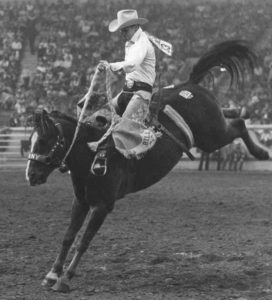
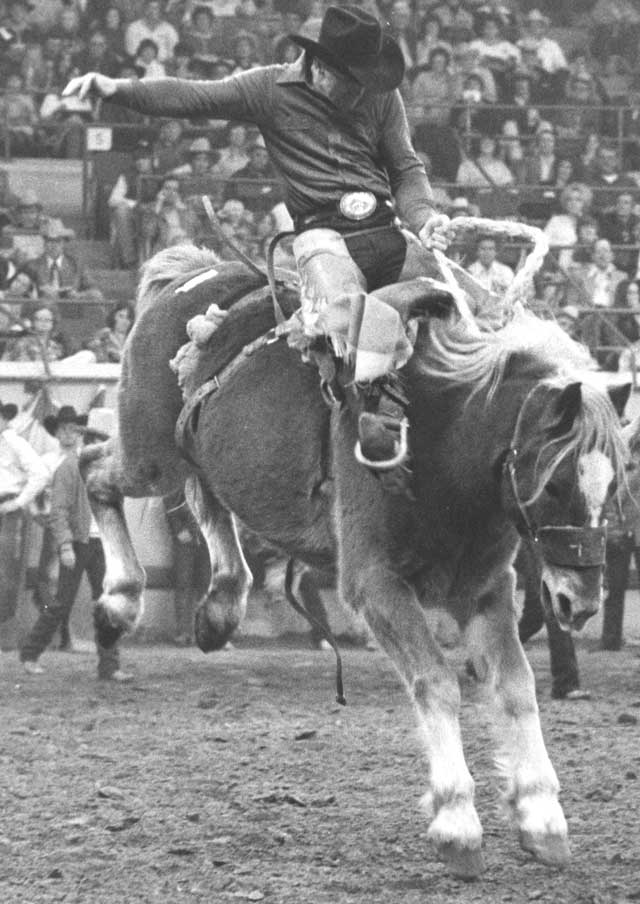
Phil on Sonny, Calgary, Alberta, Canada, NFR 1978 taken by Huffman Foto All Bill Smith ever wanted to do was ride bucking horses, and be like his heroes, the Linderman boys.
Smith, a three-time world champion saddle bronc rider, got to fulfill both of his childhood dreams.
The cowboy was born in 1941 in Red Lodge, Montana, and grew up north of Red Lodge in the little coal mining town of Bear Creek. There wasn’t much to do in Bear Creek. “All there was, for anybody to do,” Bill recalls, “was go to school and go to the rodeo on the Fourth of July. The Lindermans were the thing back then, and they were my heroes. All I ever wanted to do, ever since I could remember, was learn to ride bucking horses. It wasn’t about winning, it was to have a chance to ride bucking horses.”
And he did. The family had horses, and he’d ride anything he could catch. Back then, everybody had two or three head and they weren’t penned up; they ran out in the hills together. Bill and his longtime childhood friend, Chuck Swanson, would pen them and ride them all. “We’d ride the two- and three-year-olds, and we’d get bucked off and drug around.” But it didn’t matter. They were cowboys.
As young boys, they’d work on the local ranches, doing whatever they could, just to be cowboys. And they’d ride anything possible. “I spoiled lots of horses,” Bill mused. “Everything I rode, I tried to get them to buck with me.”When he was a senior in high school, the Smith family: Glenn and Edna and their seven children, moved to Cody, Wyo. It was perfect for a bucking-horse-crazy boy. With the nightly rodeo, Bill started going, “taking his spills,” and refining his bronc riding abilities. In 1961, he bought his Rodeo Cowboys Association card (the forerunner of the PRCA), and that year, won the amateur bronc riding at the Cheyenne Frontier Days. “That was the first money I ever really had.”
From there, he was ready to hit the rodeo road full time. Starting in 1961, he rode saddle broncs across the nation, competing at every big rodeo in the U.S. and Canada and lots of little ones. He won numerous events, and some of them more than once: Houston, San Antonio, Denver, Cheyenne, Nampa, Ida.; Cody, Prescott, Greeley, Colo.; Las Vegas, Dallas, Omaha, Oklahoma City, Tulsa, Memphis, Tenn.; St. Paul, Ore. and more.
He loved to be on the road, and was gone most of the year. But home was still Cody, and his nickname reflected that. He was known as “Cody” Bill Smith. “They latched that on to me,” and he liked it.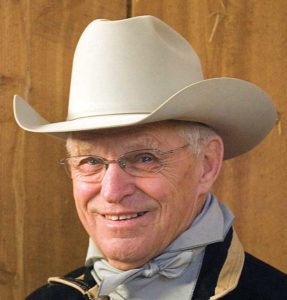
Smith made the National Finals Rodeo for the first time in 1965, and then every year except one till 1978: thirteen out of fourteen years. Saddle bronc riding wasn’t necessarily easy for him at first. “I wasn’t an instant success. It took me a while to learn. I was never a natural at it.”
His childhood friend, Chuck Swanson, had moved to Cody with the Smiths. Chuck also rode saddle broncs, and was exceptionally good, Bill remembers. But Chuck didn’t hunger to be on the rodeo road like Bill did. “He was a natural, but he didn’t have the bug quite as much as me. He wanted to be a cowboy on a ranch. I didn’t have time for that. There weren’t enough bucking horses for me.”
Bill estimates he competed at about seventy rodeos a year, with his favorites being the ones with multiple rounds. Back in the day, most rodeos would be more than one round, and cowboys would stay several days in one location. He liked Ft. Worth, which was five rounds, San Antonio, which was six, and Houston and Omaha, which each had several rounds.
Bill’s childhood dream of competing alongside his heroes, Bill and Bud Linderman, came to fruition early in his career. He was entered in the Filer, Idaho rodeo, as was Bill Linderman, and it was four rounds. Smith broke his leg on the first horse, but got on the next three. “I didn’t go far,” he said of riding with a broken leg, “but I got on them. I wasn’t about to let my hero see that I was crippled. I’d buck off after three jumps, but I got on.”
He especially remembers some special horses. His favorite and one that stood out far above the rest was the big palomino horse Descent, owned by Beutler Bros. Bill drew him nine times, riding him five and getting bucked off four. “He was the greatest horse I’ve seen to this day. He could jump higher and kick higher than any horse I ever saw.” If a cowboy drew Descent, there was a good chance he’d win the rodeo, and that was true for Bill. He won Nampa on him twice and got bucked off there once. He won Tulsa on him and placed at the NFR on him.
Other horses stick out in Bill’s mind. Trade Winds, owned by Big Bend Rodeo Co. bucked Bill off once and he covered him once. Trails End, a horse owned by Oral Zumwalt, bucked him off twice. On Harry Knight’s Sage Hen, he was the high mark at the NFR, and she carried him to his first big win in 1964 in Dallas. She bucked him off several times, too. “I wasn’t above being bucked off,” he laughs. “I could hit the ground with the best of them.”
Smith missed the NFR in 1976 due to back surgery, and two years later, decided to call it quits. He was invited to a big match bronc riding at Ft. Worth, called the Copenhagen Skoal Match Ride. It paid a huge amount and included bull riding, tie-down roping, and barrel racing, all invitational. He won it, and decided to retire. “I thought, this is a good time to quit.” So he did. He was 38 years old, and “I was starting to slow down. I was still winning, but I didn’t want to keep going till I couldn’t ride anymore.”
After retirement, he and his wife Carole moved to North Platte, Neb. in the summers where he produced the nightly rodeo. He put on 72 performances each summer, seven nights a week, from Memorial Day to Labor Day. It was good, he said, to get him started on life outside rodeo. “That helped me bridge the gap.”
Then he and Carole bought a place in Thermopolis, Wyo. and moved there. They have a semi-annual quarter horse sale, the third Saturday of May and the second Saturday in September. The sale started in 1983, and this May, they will host their fiftieth sale, with 58 geldings, ten yearlings and a dozen started two-year-olds. They are picky about their horses. He buys the geldings, and he, Carole, and Carole’s nephew Reid O’Rourke ride them. The horses are guaranteed, and they take great pride in having good horseflesh.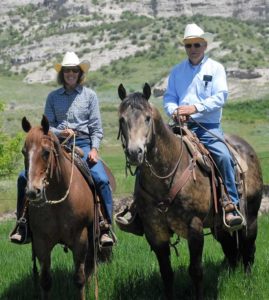
Phil and Carole Smith – courtesy of the family Rodeo was a good way to make a living, the best, in Bill’s eyes. “They were the best days of my life, right there, rodeoing. When you can rodeo, ride broncs, and win enough to pay your way, there’s absolutely nothing better. You gotta starve to death for a while, but once you get going, you don’t have a boss, and you can tell anybody in the world to kiss your butt and it won’t bother what you win, if you can ride.”
He holds a deep inclination for horses. “Horses are my life, from the biggest Clydesdale to the littlest Shetland pony. I love them all.”
Rodeo may have changed, but he loves the horses. “The horses still buck. That’s the thing that doesn’t change. Horses still buck.”
“I’ve had a great life, a fairy tale life, actually. A little kid from the coal mines, doing nothing but what I wanted to do my whole life.”