Rodeo Life

Category: TwisTed Rodeo

  • San Angelo Makes Format Changes

    San Angelo Makes Format Changes

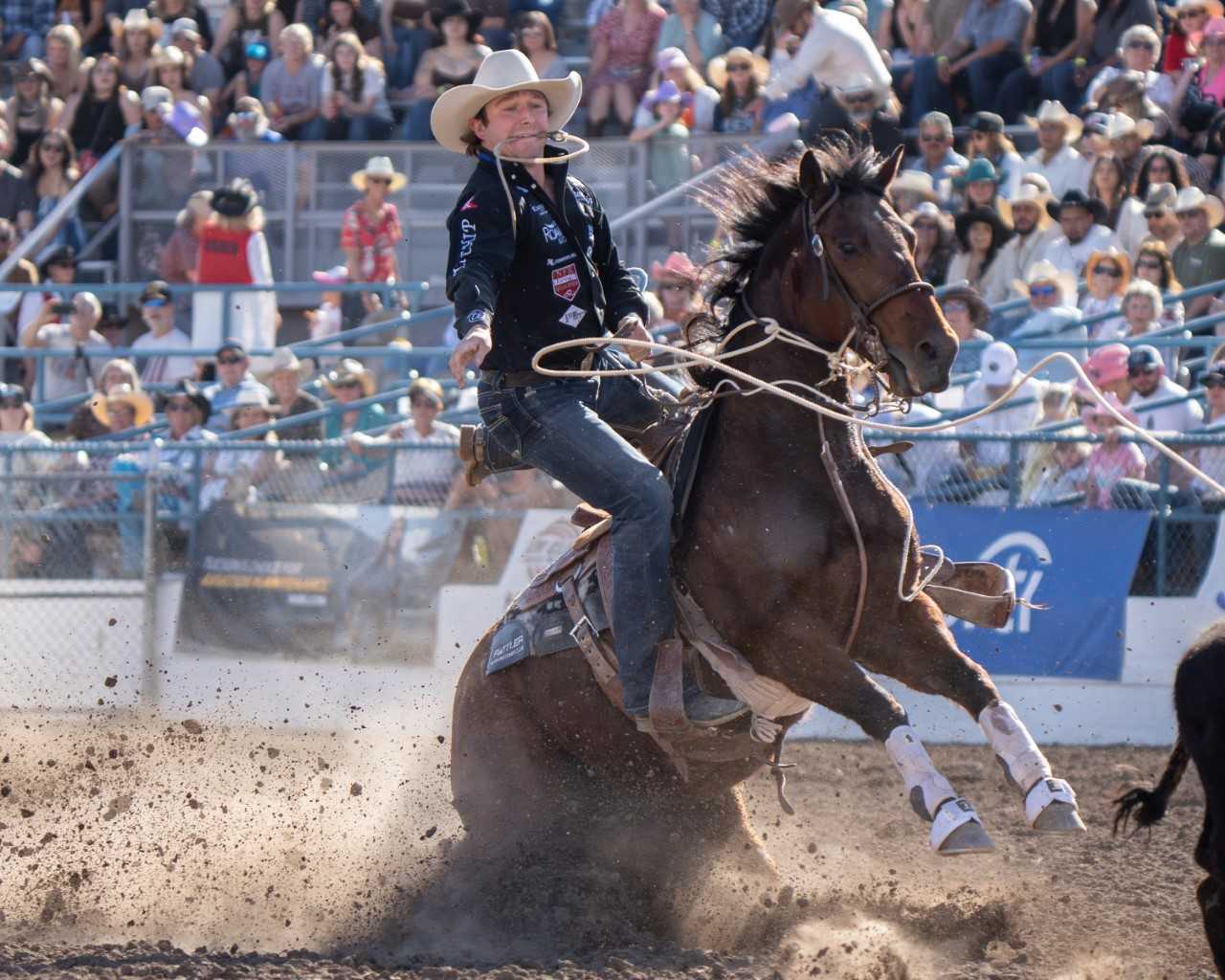
    Nearly 1,000 contestants had already competed days before last Friday’s opening performance of the San Angelo Stock Show and Rodeo.

    It’s an extensive change in workload for all involved, with contractors, contestants, arena workers and stock show staff spending numerous hours over four days to help run 958 cowboys and cowgirls through their preliminary rounds.

    It’s a distinct format change for the longstanding rodeo, which will be inducted into the ProRodeo Hall of Fame this summer. For several years, San Angelo timed events featured two go-rounds, with the top 12 advancing to the championship round on the final Friday of the three-week event. Barrel racing was the outlier, with all ladies making a first-round run; the top performers advanced to the progressive round, and the best 12 cumulative times advanced to the short round.

    While barrel racers will remain in that format – and breakaway ropers adjusting to the same schedule – the men’s events switched to a two-round progressive, with the top times advancing to the nine preliminary performances.

    “San Angelo has always been a very timed event-friendly town, and we, as a rodeo, have prided ourselves on that,” said Josh Hilton, the rodeo manager for the stock show association. “We’re a community of 100,000 people going up against communities of millions, and we’re trying to attract contestants to town.”

    He’s referring to other Texas stops like Fort Worth, San Antonio and Houston, which features larger populations and have rodeos that are payoff powerhouses. Still, San Angelo adds $45,000 per event. With entry fees, each of the timed events will have a purse greater than $70,000. Changing the format has opened the doors for as many, if not more, contestants to be part of the West Texas rodeo, which has been in existence since 1934.

    “We want to have a purse of over $1 million,” Hilton said. “It’s something we can hang our hat on that we do for the contestants. Another major factor is the fairness of it, especially with how hard it is to get cattle. The last few years, at least nine of the 12 guys in the tie-down roping short round came out of slack.

    “The way I see it, it’s a fairer circumstance to the contestants that we do it this way.”

    That $1 million mark is a stress point for the rodeo’s organizers. A year ago, San Angelo paid out more than $1.43 million. But there’s more to it.

    While the aggregate still comes into play with the final-round qualifiers and the rodeo’s titlists, the new format will be easier for fans to follow, whether they’re in person or watching on The Cowboy Channel.

    It’s better for the rodeo and better for all who experience the San Angelo Stock Show and Rodeo.


  • Fire Doesn’t Extinguish Miller Family’s Faith

    Fire Doesn’t Extinguish Miller Family’s Faith

    Bradlee Miller didn’t spend much time in the Texas capital city celebrating his bareback riding victory at Rodeo Austin.

    Instead, he had more important things to tend to 150 miles east.

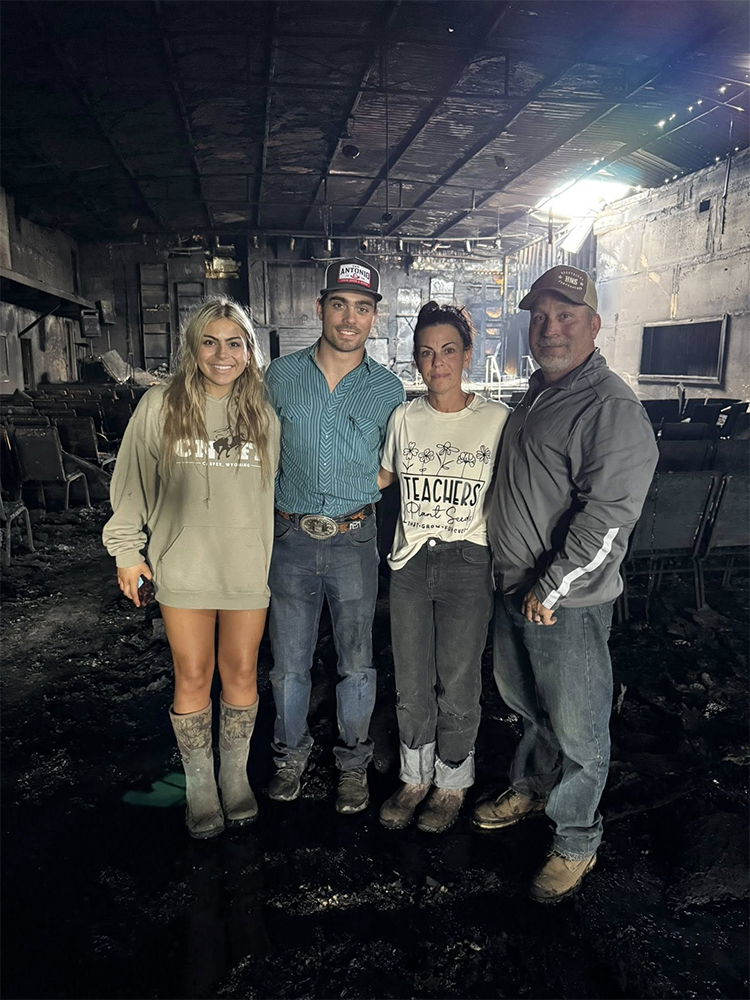
    Not far from his home in Huntsville, Texas, stands the burned skeleton of Branded for Christ Ministry, a church founded by Bubba and Tammy Miller two decades ago. It is a family ministry, involving Bradlee and his sister, Sonilyn.

    The church caught fire last Wednesday, and while there is much rebuilding ahead, the Millers and their congregation still needed to worship.

    “For the last five years or so, we’ve slowly but surely been building a really big sanctuary with classrooms for the school kids, a game room for college kids and youth events,” said Miller, who sits third in the world standings. “We were finishing up the final steps of it. Recently, we added 50-foot wings on both sides of the building for more classrooms for the private school we have. We’ll have worship there Sunday, and then we’ve got a tent donated that we’ll use until we get the building back covered.”

    School also returned to session.

    “I thought it was one of the best lessons they could learn, that no matter the hard times, disappointments and hardships we face, you don’t take a day off,” he said. “Those kids came right back to school, whether they were helping us clean up, doing the little bit of school they could, or just being there for the people who were hurt the most.

    “All the kids showed up with their families, and there’s not an event that’s going to be canceled because of the fire. We’re not letting it affect anything.”

    Resilience is part of it. Faith is, too. More than anything, the Millers and their congregation are determined to let the fire become part of their testimony, not the end of it.

    “My mom and dad started the church in 2004,” said Bradlee Miller, a two-time National Finals Rodeo qualifier. “My dad had a barn that he shod horses out of for years, and he started the church in the alleyway of that horse barn with the horse stalls on each side of the sanctuary. There may have been days when there were only four to six people in it. I know there were some days where the only people at church were me and my mom, and I was in a stroller.”

    Like most churches, Branded for Christ Ministry feels like family. In this case, though, that faith has been built by one family for years and now will be built again.

    In the photo are Sonilyn, Bradlee, Tammy and Bubba Miller. Photo Courtesy of Miller Family

  • A great deal goes into RodeoHouston

    A great deal goes into RodeoHouston

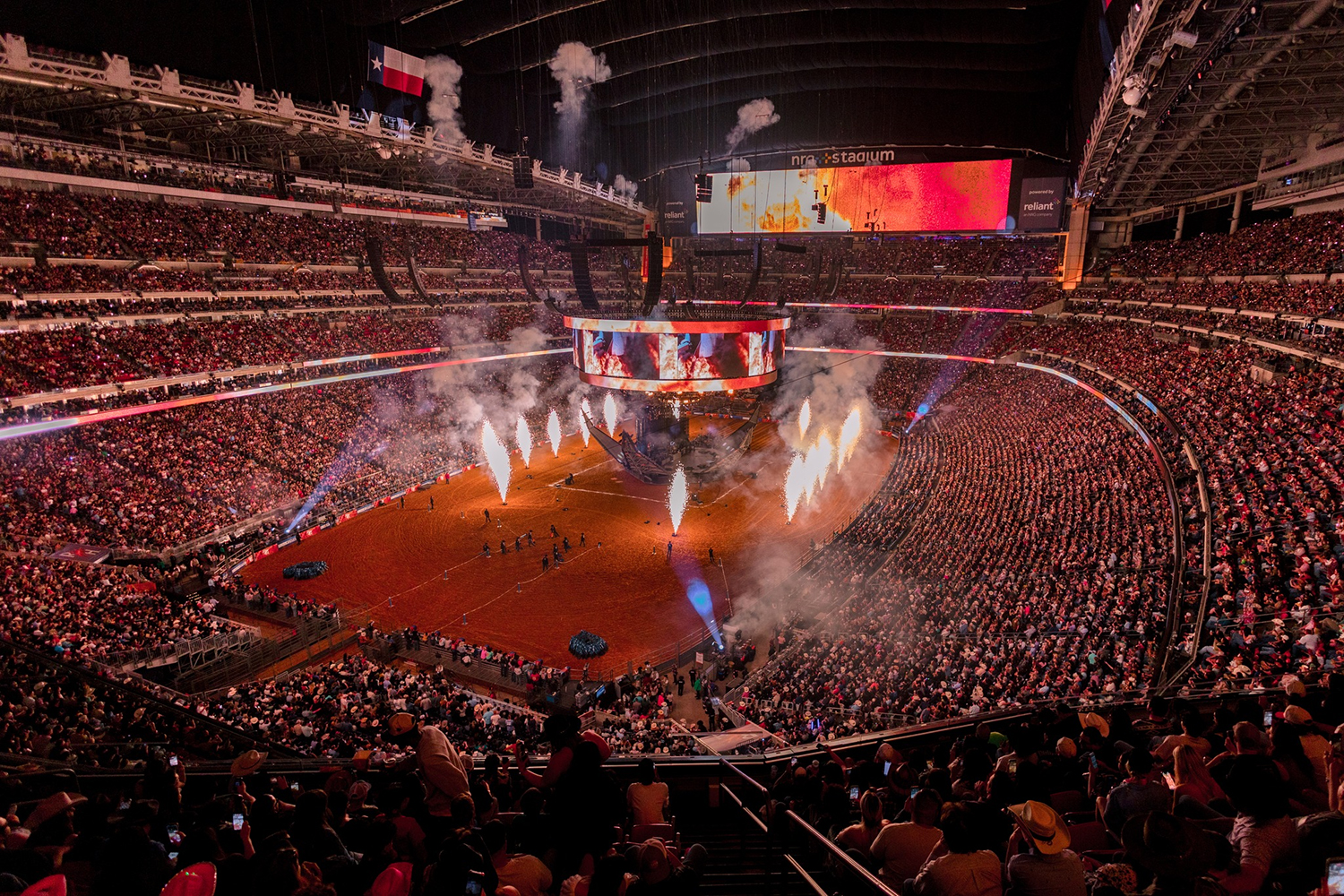
    It’s a 19-day spectacle with a total payout of $2,518,500, with $65,000 awarded to each of the nine champions. It culminated Saturday afternoon with the finale, which featured 10 contestants in each event battling in the championship round. From there, the top four advanced to the shootout.

    That’s where the big money was distributed, with $125,000 per event. That was $1.125 million awarded in one day, but big checks were just the icing on the cake. The batter that baked was filled with colorful characters and amazing feats.

    It’s hard to pick just one thing that stands out, so it’s best to start at the beginning of the four-person round. Houston kicks off each performance with tie-down roping, and the race to the championship was one to remember. The NRG Stadium record was 7.4 seconds, established in 2017 by four-time world champion Caleb Smidt.

    Shane Hanchey, the 2013 world champion, was the gunner and threw his hands in the air in 7.2 seconds. Two ropers later, Kincade Henry was 7.3. The last to rope, Riley Webb – the defending Houston champion and reigning three-time world titlist – beat them both with a 6.5. It was Webb’s third title at the stadium that also houses the Houston Texans.

    “They pushed it, and they made me step it up and go faster,” Webb said in a story I wrote for ProRodeo.com. “So, when they started breaking arena records, I just had to shorten my rope up.

    “I knew I had to try the barrier on, try the start on and just go as fast as I can and throw caution to the wind and let it all hang out. There was no choice.”

    The fans were rewarded with greatness, from Stetson Wright winning the bronc riding title after a ride-off with Shorty Garrett to all four cowboys in the shootout having a ride-off in bull riding. Canadian Jake Gardner was the only man to cover in eight attempts. After finishing outside the top 50 in 2025, the British Columbia cowboy now leads the race for rodeo gold with six months left in the season.

    Kassie Mowry has found a sweet spot at NRG Stadium. She won for the third time and was one of three contestants to repeat, joining Webb and bareback rider Rocker Steiner – all three happen to be sporting 2025 gold buckles. With its massive purse, Houston has a way of being a major push. In addition to Mowry, Webb and Steiner, earnings from the Bayou City helped pave the way for steer wrestler Tucker Allen and breakaway roper Taylor Munsell to win gold buckles last season.

    Maybe the same can happen for breakaway roper Madi Williams, the daughter of eight-time heading champ Speed Williams;steer wrestler Holden Myers, the son of 2001 titlist Rope Myers and grandson of Butch, the 1980 bulldogging champ; and team ropers Korbin Rice and Cooper Freeman.

    We’ll have to wait and see, but we can always look back at this past weekend and remember the greatness.

  • Celebrating the History of Rodeo

    Celebrating the History of Rodeo

    In a year that the Unites States celebrates its 250th birthday, it’s only natural to look at history. From the signing of the Declaration of Independence in 1776 to the 1787 Constitutional Convention to the 27 amendments to the Constitution, there’s a patriotic theme that spreads across this land.
    Rodeo has its own history, and it began about a century after the Founding Fathers signed that acknowledgement of our freedoms. The first recognized rodeo occurred on Independence Day 1869 in Deer Creek, Colorado.
    Before we get into that, let’s take a look at what led to all this. In writing the book “World’s Toughest Rodeo” with Steve Gander, I conducted many hours of research to include a little information on the history of cowboys in America. What I found was fascinating.
    As settlers made their way west of the Mississippi River, there was a ruggedness that came with it. Many were crossing into the Mexican Territory, which included Texas, Oklahoma, Kansas, New Mexico, Colorado, Wyoming, Arizona, Utah, Nevada and California. Vaqueros were prevalent, because they had incredible horsemanship and amazing talent with a rope.
    Their skills were handed on to men who became the first American cowboys, and the ranches that helped tame the Old West needed them. They herded and corralled, then they led the cattle drives to the railheads. Among these outfits were ranch hands who were quite capable, and contests emerged.
    Rodeo’s name is derived from the Spanish verb, rodear, which means to circle or round up. It’s a natural confluence of human competitiveness, amazing skills and a bit of ego.
    The “World’s First Rodeo” in Pecos, Texas, came about July 4, 1883, when two well-known drovers working for outfits that were making their way through town on their respective journeys had earned reputations of being excellent ropers. The exchanges from their cohorts led to a competition to establish the bragging rights for the best cowboy in the Old West. That hot, summer day in 1883 became launching pad to what we see in rodeo today.
    An excerpt from “World’s Toughest Rodeo”: “Like everything in the pioneering life, the daily work became the chessboard by which the cowboys played their games. Who was the best with the rope? Who could rope a steer and tie it down the fastest? Who could ride that bronc nobody wanted to try?
    “The roots of rodeo run deep. In today’s society, it’s a throwback to a way of life but also a tip of the cap to the generations of people who founded this land.”
    Rodeo’s history should be celebrated, while we also honor the champions of today.

  • Mentors almost meant the world to rookie

    Mentors almost meant the world to rookie

    Two seasons ago, Riley O’Rourke was still dipping his toes into ProRodeo.

    He was in the second year of his PRCA permit, a tryout of sorts. Once a cowboy earns enough money on a permit, he is eligible to become a card-carrying member of the association. During that stretch, the young single steer roper had accumulated $19,005 to lead the permit standings in that discipline

    He had planned to follow that with a third year on his permit. He was just 20 years old and in no rush, but he received an intervention that changed everything.

    “Thomas Smith calls and is like, ‘What are you going to do this year?’ and I was like, ‘I’m just trying to get my permit,’ ” O’Rourke recalled. “He was like, ‘Why don’t you buy your card and try to make the finals? You went to 12 rodeos and almost won $20,000, and it just takes $45,000 to make the finals.’ ”

    “That’s when I decided to do that.”

    Smith is a five-time qualifier to the National Finals Steer Roping. He was just one of the mentors who helped guide the fortunes for O’Rourke, who in 2025 finished second in the steer roping world standings as the PRCA Steer Roping Resistol Rookie of the Year.

    “I really didn’t have a choice, because Jess told me I was buying my card, too,” O’Rourke said with a laugh, pointing out that Jess Tierney is the most veteran of his advisers as a 13-time finals qualifier.

    Also in the mix is Billy Good, a three-time qualifier. The trio helped make O’Rourke’s inaugural year of ProRodeo memorable and profitable. O’Rourke spent the first half of his life in Pawhuska, Oklahoma, dubbed the “Steer Roping Capital of the World,” before his family moved to Skiatook, a town about 30 miles southeast.

    During his career-opening campaign, O’Rourke won $151,000 focused on steer roping. About $40,000 came last July, and another $55,000 was secured during the steer roping finale this past November at Mulvane, Kansas. That’s where he experienced all the emotions of playing on the sport’s biggest stage.

    “I was so nervous before my first steer I couldn’t spit,” he said. “That weekend was a mixed deal, because I roped so bad the first day.”

    He rebounded, thanks to his “big brothers,” who were also in the field with him. Smith finished the year sixth in the world standings, followed by Tierney in eighth and Good in 13th. Their protégé led the charge, though, and he’s even more motivated for 2026.

    “I really don’t like getting my ass kicked,” O’Rourke said with a laugh. “As much as it sucks, it still felt pretty good to have a chance.

    “I’ve had a lot of help this winter, and I feel better about my roping now than I did at the finals.”

    ________________________________________________________________________________________________________________________________

    Photo by Robbie Freeman

  • Any Means Possible: Planes, trucks get players from one short round to another

    Any Means Possible: Planes, trucks get players from one short round to another

    About three hours before the championship round of the San Antonio Stock Show and Rodeo, tie-down roper Ty Harris reached out on social media.
    “Anyone have room on a plane or a rig headed from San Antonio to Tucson short round?” asked Harris, a seven-time National Finals Rodeo qualifier.
    Saddle bronc rider Wyatt Casper offered an funny response: “Kade Bruno has a Dodge that can fly lol.”
    It was more than a comedic answer; it was a solution. When their competition ended inside Frost Bank Center, Harris grabbed a backpack and a piggin’ string and loaded into the passenger seat of Bruno’s white RAM pickup, along with young cowboy Jack Mitchell, who was on hand to help Bruno along that nearly 900 miles of Interstate 10.
    “We just jumped in the truck after San Antonio’s short round and put the pedal down; I guess the white Dodge did fly,” Bruno said with a laugh.
    They were just two of a dozen cowboys and cowgirls who made the short rounds at both rodeos. Four of those walked away with the La Fiesta de Los Vaqueros titles: bareback rider Jess Pope, tie-down roper Shane Hanchey, barrel racer Emily Beisel and steer wrestler Stetson Jorgensen. Bruno won the short round and moved up to share fourth in the bronc busting average.
    Before grabbing Harris as hitchhiker, Bruno had reached out to Jorgensen and Pope to see if they’d have interest. Both had flights arranged, so they pulled the plug rather quickly.
    “After the Florida run, my wife, son and I drove out to Tucson so Kellie could run barrels Tuesday morning in slack, so they were already in Tucson,” Jorgensen said. “It didn’t matter what I did in San Antonio; I was going to fly back. Kade was trying really hard. He said, ‘You don’t have to drive or pay for fuel or nothing; just sit over there.’
    “I said, ‘Man, I’m going to go to my hotel room and get a good night’s rest, and I’ll see you in Tucson in the morning.’ ”
    Many seemed to have skipped the 12-hour jaunt on the interstate, opting for flights. For his part, Harris put in the miles with Bruno, and the two found easy conversation.
    “Talking with Ty was really fun,” Bruno said. “Throughout my years of rodeoing, I’ve only ever given a ride to a handful of timed-event contestants, and it’s usually so busy in the summer that we don’t have time to visit then. It was cool to be able to sit down with somebody like that and visit about different events and different aspects of rodeo.”
    Harris didn’t stay in the pickup for the return trip to Texas. Instead, he caught a flight for Houston, where he was to compete in Monday’s opening night. That’s when Mitchell’s part of the trip came in handy. 
    “When we left San Antone, I took the first six hours, and Ty took the next six, and I saved Jack for the ride home,” Bruno said. “Right after the rodeo, I went to sleep and had him drive the first eight hours and made it home in pretty decent time.”
    It served as just a little taste of what contestants will experience during the busiest times of the summer run.
    “Yeah, it’s a little early (in the season) to catch flights, but thankfully we didn’t have to charter anything,” Jorgensen said.

    Big money is on the table, so getting a seat is important by any means possible.

    __________________________________________________________________________________________________________________________________
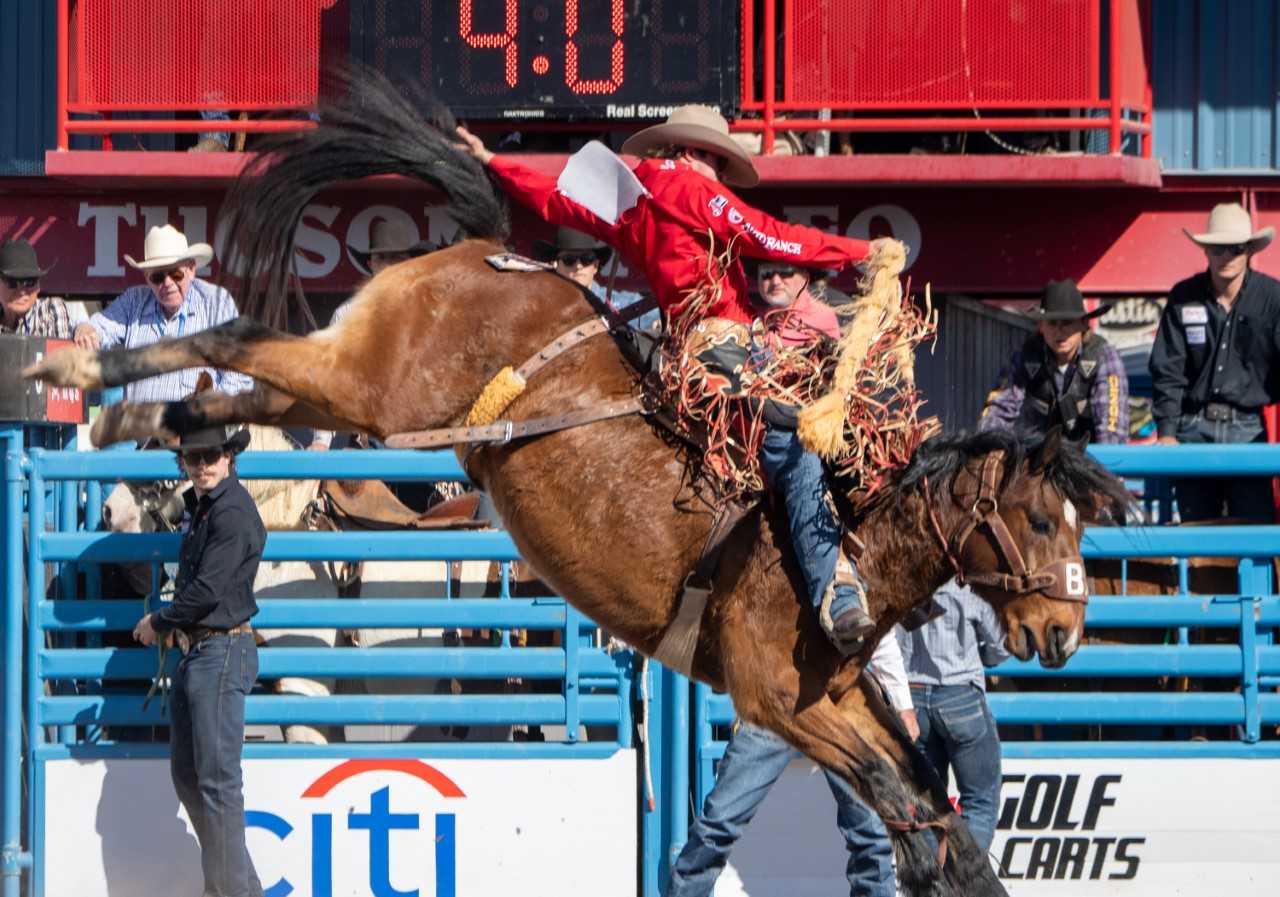
    Photos by Fernando Sam-Sin (La Fiesta de los Vaqueros in Tucson)
  • What is rodeo? Is it competition? Is it entertainment?

    What is rodeo? Is it competition? Is it entertainment?

    Like all professional sports, rodeo is a combination of both. Fans are drawn to the competitive nature of sports, the drive to excel athletically over an opponent, whether that’s a Seahawks’ enthusiast cheering for Seattle to win the Lombardi Trophy or an old cowboy in New Mexico hoping Stetson Wright adds to his collection of Montana Silversmiths gold buckles.

    But there is a delightful tone to sports. There’s a reason why the Oklahoma City Thunder has dance teams, why there are Dallas Cowboys Cheerleaders and why there’s an elaborate Super Bowl halftime show. There are hotdog races at major league ballparks and members of the audience getting a chance at big money by sinking a half-court shot at college basketball games.

    Tom Brady earns $37.5 million as an on-air talent during football games. He works, in essence, 20 weeks a year, which breaks down to $1.875 million per game. Why? Because his pedigree of seven world championships lends credence to his analysis during a game. It’s entertainment as he converses with play-by-play announcer Kevin Burkhardt throughout every broadcast.

    In rodeo, there are plenty of sideshow pieces to accentuate the competition, from rodeo clowns to public-address announcers to specialty acts. It’s a proven commodity that’s been tested over time. Well-produced rodeos feature seamless transitions from bareback riding to steer wrestling and eventually to bull riding.

    Video replay has played a big role helping keep an audience captivated. It started 43 years ago at Houston’s Astrodome, and other stadiums started picking it up from there. The Gund Arena in Cleveland or the Met Center in Minneapolis have utilized them since the 1980s. Rodeo began utilizing replay more in the early to mid-2000s.

    Video boards are just another topping that is the pizza of sports. It provides more interaction between teams and fans, whether it’s a QR code sending viewers to a poll on screen or the “Kiss Cam.”

    Rodeo exemplifies a crowd’s experience because of variety of events and man-vs.-beast mentality of the game. It shows a magnitude of athleticism, from a bull rider countering the G-force on top of a 1,600-pound bucking machine to a tie-down roper scurrying down the line to the calf or the muscles expanding when a world champion bucking bronc displays its raw power in competition.

    When it’s folded together into a two-hour performance, rodeo is entertainment at its finest.

    ________________________________________________________________________________________________________________________________

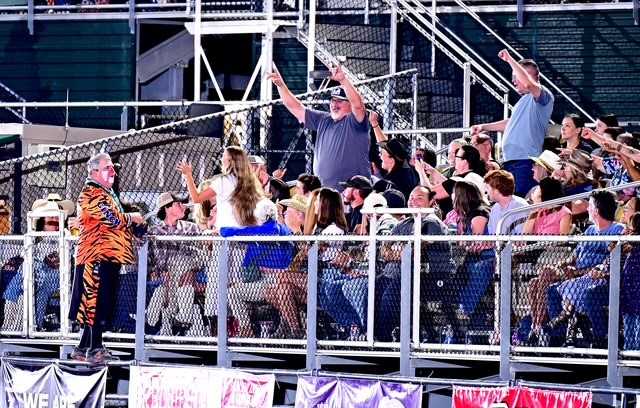
    Crowd members dance with veteran rodeo clown Cody Sosebee during Utah’s Own PRCA Rodeo this past September in Salt Lake City. 
    PHOTO BY JENNINGS FAMILY PHOTOGRAPHY
  • Northwestern Oklahoma State Bulldoggers Share Fort Worth Crown

    Northwestern Oklahoma State Bulldoggers Share Fort Worth Crown

    Alva is a community of about 5,000 people and a small college, Northwestern Oklahoma State University.

    It’s also been a home to Bridger Anderson and Trisyn Kalawaia, who shared the steer wrestling title at the Fort Worth Stock Show & Rodeo this past Saturday night. In the tournament-style format, both stopped the clock in 3.8 seconds. Each man cleared more than $20k for their Texas adventure, with Kalawaia clocking out with $20,625 and Anderson snagging $23,400.

    “Bridger’s one of my really good friends,” said Kalawaia, 23, of Hilo, Hawaii. “We hang out together a bunch, and just being from the same school and coming out to split the win in Fort Worth is really cool. I wish I could have just won it by myself, but to do it with a good friend was fun.”

    Kalawaia moved to the mainland for rodeo, with his first stop being at Central Arizona College. While there, he made the 2021 College National Finals Rodeo as a freshman. That was Anderson’s senior year at Northwestern, two years after Anderson won the intercollegiate bulldogging title on Whiskers, the horse he still rides.

    “Trisyn rode Whiskers at the college finals one year when he was going to school in Arizona,” said Anderson, 27, of Carrington, North Dakota. “I told Trisyn about Alva and said, ‘We don’t do anything but bulldog, play cards, and go to school, but if you want to get better, this is the place to go.’ ”

    Kalawaia followed that lead. Anderson stuck around Alva a few more years before heading off to Millsap, Texas. The duo practiced together and shared a bond. Both studied under the tutelage of then-coach Stockton Graves, who not only trained them but traveled with them while they were learning the lessons of professional rodeo. It’s worked for others, including two world titlists –Jacob Edler in 2020 and J.D. Struxness in 2024– and a handful of others who have made the NFR.

    “Stockton taught us a lot of things, especially how to rodeo and how to be confident,” Anderson said. “He did it leading by example, and he’s a stud. He’s an awesome mentor.”

    That’s how Northwestern became the “Bulldogging Capital of College Rodeo” and why some of steer wrestling’s best have found a home in Alva. Alas, that’s another nice tie between the two Fort Worth champs.

    “I actually bought the house Bridger and (Riley) Westhaver were living in, and I still live in that house,” Kalawaia said with a laugh.

    Fort Worth marked the biggest victory in the young Hawaiian’s career, but it’s also a stepping stone he can use to build a fortress. He and Anderson are hoping to climb every stairway they can.

    “I think Trisyn would say the same thing,” Anderson said. “We wouldn’t be where we are in our careers if it weren’t for Alva.”

    _______________________________________________________________________________________________________________________________

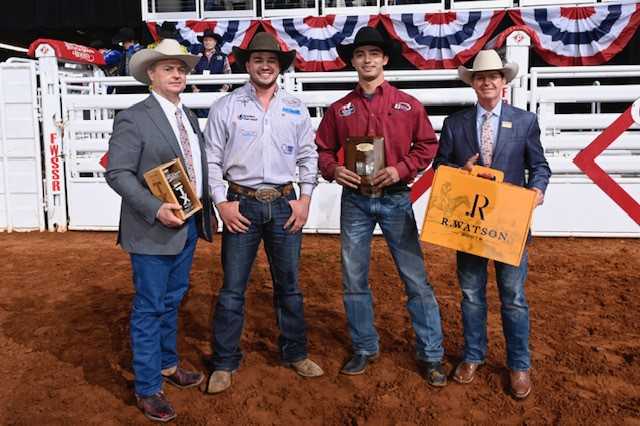
    Flanked by the Fort Worth Stock Show & Rodeo’s Matt Carter, left, and Philip Williamson, right, steer wrestling champions Bridger Anderson, second from left, and Trisyn Kalawaia pose with some of the rewards. 
    Photo by James Phifer 
  • Built for the Belt: Taylor Munsell’s Breakaway Breakthrough

    Built for the Belt: Taylor Munsell’s Breakaway Breakthrough

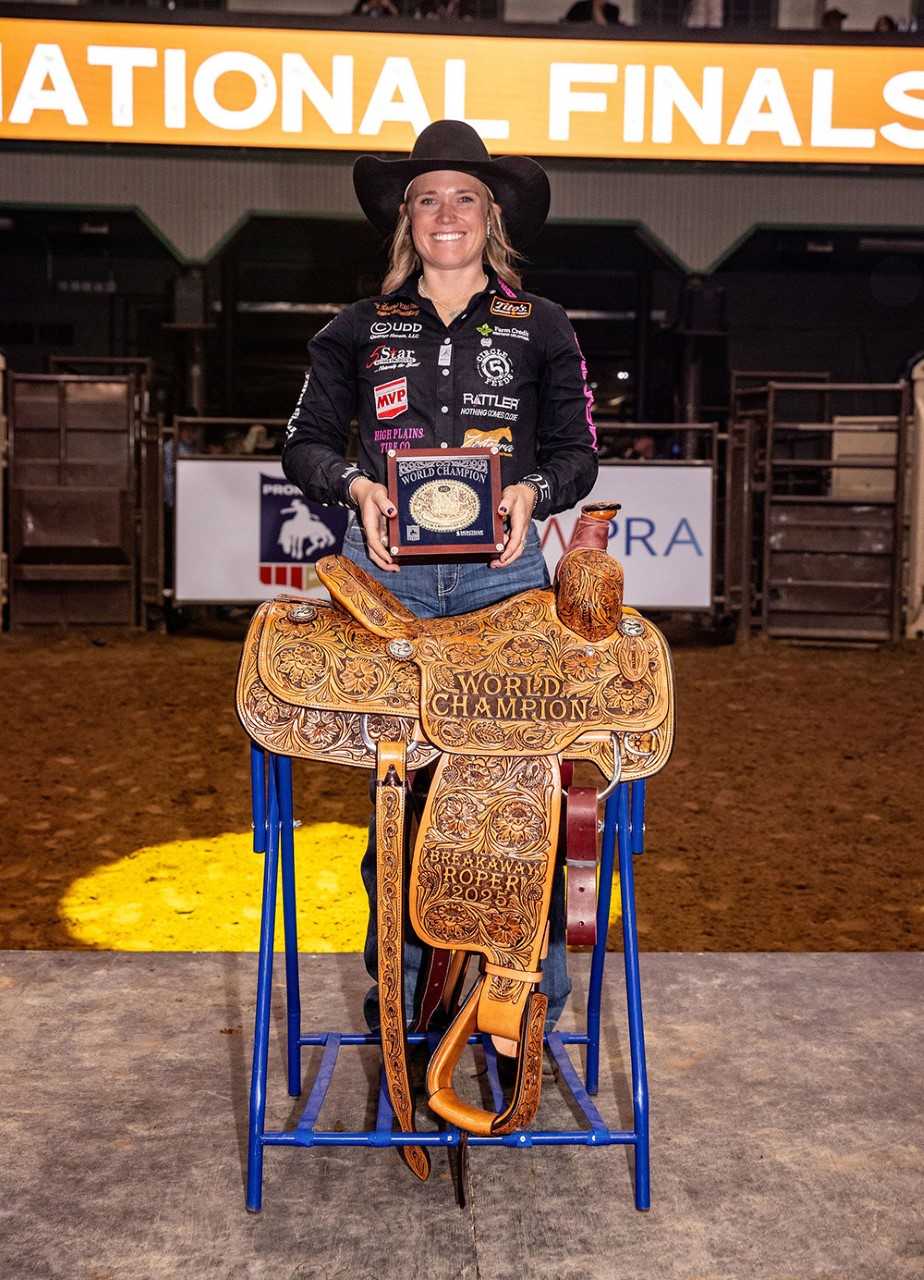
    The golden piece of designed metal weighing about half a pound hasn’t even arrived, but Taylor Munsell knows exactly where it’s going when it does.

    “Oh, it’ll for sure go on my belt,” said Munsell, the 2025 world champion breakaway roper from the northwest Oklahoma community of Alva. “Those things are meant to be worn.”

    Gold buckles are the most coveted trophy in rodeo, wearable hardware that is more than a device to tighten a belt. It symbolizes a lifetime of dreams, 365 days of work and a year’s worth of excellence. It identifies the best in a given season, and Munsell is certainly fitting.

    Raised by a roping family in the western Oklahoma hamlet of Arnett (population 495), she has always been an athlete. She thrived in the spotlight and, as a teenager, learned how to work through thoracic outlet syndrome, which is a group of disorders caused by compressed nerves or blood vessels in the space between the neck and shoulder. It had been affecting her while shooting a basketball and roping, and she’s been ardent about the stretches and exercises she needs to do to keep it at bay.

    “It was kind of a blessing in disguise that everything happened when it did for me with it coming about before I got super competitive,” she said. “It was just part of my whole journey to becoming competitive, and I was navigating that as well and taking care of it versus already being super competitive and having a shoulder injury and having to relearn to do all these things.”

    It was just a path for her. She moved to Alva to attend Northwestern Oklahoma State University and be part of the Rangers’ rodeo team, just like her big brother, Hunter, and her little sister, Lindy. While there, Taylor Munsell became Northwestern’s first cowgirl to win an intercollegiate title, taking the breakaway roping crown in 2019. Six and a half years later, she added rodeo’s gold to her resume in her fifth straight qualification to the National Finals Breakaway Roping.

    “It’s still pretty hard to wrap your head around,” Munsell said in late January. “There was a lot of craziness that led up to it.”

    Yes, there was. She won RodeoHouston and earned $70,000 for that, then won the Reno (Nevada) Rodeo for the second straight year. In November, the equine herpesvirus changed everything. The breakaway finals was postponed, then moved from Las Vegas to Fort Worth nine days after the National Finals Rodeo instead of two days prior.

    “We were all practicing with a purpose, but an unforeseen purpose, because we didn’t know when or where we were going to have the finals,” she said. “Being in Fort Worth was super cool. They welcomed us with opening arms and put on a great show.”

    Her life is considerably different than when she reigned over college rodeo. Breakaway roping has blossomed, and she’s been riding the wave. Munsell set the regular-season ($195,175) and season (209,021) earnings records in the WPRA. She’ll always be a world champion, but 2025 is already in her rearview mirror.

    “The day after the NFR, the standings had already updated top 2026, so it’s pretty easy for me to stay motivated,” Munsell said. “After winning the world title, I was pretty motivated to keep the ball rolling. Nobody’s done it twice, so that would be a cool thing, but at the end of the day, it’s all the same for me: I’ve got to win to pay my bills.”

    _____________________________________________________________________________________________________________________________________

    Photo by Kristen Schurr

  • Prairie Circuit Finals Return Despite EHV Challenges, Headed to Pawhuska

    Prairie Circuit Finals Return Despite EHV Challenges, Headed to Pawhuska

    There were questions and concerns. Ordinary people sought advice from medical professionals. The uncertainty was real, and what followed were cancellations and postponements with no real end in sight.

    On a smaller scale than the COVID pandemic five years earlier, live-event Western sports were affected by the equine herpesvirus outbreak in November. The Kimes Ranch Million Dollar Breakaway Roping moved from just the end of that month to mid-December. The National Finals Breakaway Roping was postponed and rescheduled from Las Vegas to Fort Worth, Texas. The grand entry for the National Finals Rodeo was scrubbed, and the 118 contestants, queens, and flag girls walked onto the dirt from the out-gate.

    The Prairie Circuit board faced the same uncertainty, and like the others, approached it wth an abundance of caution. Just days after the confirmation of the EHV outbreak, board members met and agreed to cancel initially, then postpone the regional championship, which had been scheduled for the week before Thanksgiving at Mulvane, Kansas.

    “It’s been kind of a headache to say the least,” said Dru Melvin, an NFR-qualifying bulldogger who serves on the board. “We felt like we owed it to our contestants, our committees that put on rodeos throughout the year, and our contractors to put on a finals. We had a couple of options, and we ended up with Pawhuska, Oklahoma. They opened their arms and said, ‘Come on.’ ”

    The Prairie Circuit finale moved dates and places and will be Jan. 30-31 at the Osage County Fairgrounds in Pawhuska, a community of about 3,000 souls in northern Oklahoma. The town will be the sixth home of the regional championship over the past two decades, the last several having been hosted by an organizational committee in Duncan, Oklahoma.

    “They did us a great job for 13 years,” Melvin said. “We appreciate everything they did, and then we understand if it’s not feasible for them, whether it was financial or they just couldn’t get volunteers. That’s all important for a committee like that.”

    The circuit board has served as its own committee in producing the finale for the 2025 season. The board is made up of representatives for contestants, stock contractors, and rodeos, and creating a rodeo isn’t typically within the purview of the governing body. Board members have been working diligently anyway.

    “As a board, we’re always open to opportunities, and we wouldn’t be doing our jobs for the people we represent if we didn’t look for those opportunities,” Melvin said. “We wouldn’t be doing them justice if we didn’t explore options. If there are options out there, we’d love to hear from people to know what they are.”

    That may mean another move; the possibilities are creating a long-term relationship with a contingent in Pawhuska, returning to Mulvane, or opening the doors to some other community interested in hosting the circuit championship.

    “Everyone deserves to have a circuit finals, and we’re glad we can have one,” Melvin said. “Yeah, it’s a little bit of a scramble, but we’re ready to go.”


    _____________________________________________________________________________________________________________________________________

    Reigning world champion breakaway roper Taylor Munsell was raised in the Prairie Circuit and is a past champion of the region. After the equine herpesvirus forced the cancelation of the Prairie Circuit Finals Rodeo at Mulvane, Kansas, circuit board members opted to move the championship to Jan. 30-31 at Pawhuska, Oklahoma. (PHOTO BY DALE HIRSCHMAN)

  • Cole Franks and Rocker Steiner Celebrate Waylon Bourgeois’ Third-Round Victory at the 2025 National Finals Rodeo.

    Cole Franks and Rocker Steiner Celebrate Waylon Bourgeois’ Third-Round Victory at the 2025 National Finals Rodeo.

    By Ted Harbin

    The only thing separating them as siblings is genetics.

    They share many of the same passions, primarily centered on rodeo. That’s what brought them together in the first place, but the camaraderie is what’s kept them in the saddle through the rigors of the sport’s season. It’s genuine.

    Traveling partners coexist out of necessity. In the rodeo business, sharing expenses is a crucial ingredient in cutting costs and maintaining a strong bottom line. The goal for any trade is to be profitable, and the same goes for cowboys and cowgirls who compete for prize money. In the process, though, true kinships develop and fortify.

    During his rookie campaign, bareback rider Cole Franks traveled with Tim O’Connell and Jess Pope, both of whom have won world titles. They were instrumental in Franks’ first qualification to the National Finals Rodeo and Resistol Rookie of the Year award.

    “When I got in with Tim and Jess, that was like a day-and-night difference,” Franks said in November. Everything they did, mentality-wise and with my riding, completely changed. Tim and Jess built me, and they helped me fine-tune everything.”

    All three were at that 2021 NFR and finished the year among the top 10 in the world standings. This past December, Franks returned to Las Vegas with his new posse, which included first-timer Waylon Bourgeois and eventual world champion Rocker Steiner. The three were more than associates; they were pals.

    Steiner said as much multiple times over the last two years. Of course, he wanted that gold buckle, but also atop his goal list was making sure Bourgeois was on the sport’s biggest stage. The feeling was reciprocated.

    “We mess with each other all the time,” Bourgeois said. “We’re together for three months at a time. They’re like brothers to me. I want them to do just as well as I do.

    “Just to qualify for my first NFR and have those two guys – that had my back throughout the entire season, pushing me to be better – is super special.”

    It’s not just roughstock cowboys, either. In the midst of his world-championship run at the NFR, steer wrestler Tucker Allen might have been most excited for the ninth round, when Justin Shaffer – his traveling partner and owner of Banker, the Steer Wrestling Horse of the Year that Allen rode to gold – won the night. It was just his fourth NFR payday and his only go-round win in two qualifications.

    “I am very pumped up for him,” Allen said of his traveling partner. “That’s a long time coming.”

    Sentiments like that come from the heart and serve as a strong reminder of the bond between traveling buddies.


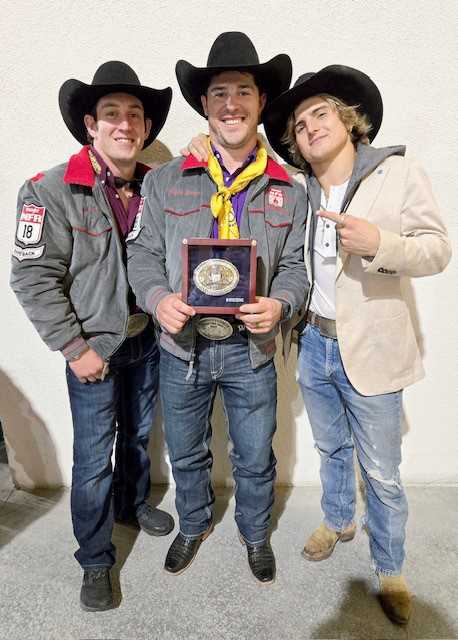
    In the photo, Cole Franks, left, and Rocker Steiner, right, celebrate Waylon Bourgeois’ third-round victory at the 2025 National Finals Rodeo.
  • INDOOR RODEOS

    INDOOR RODEOS

    By Ted Harbin

    Indoor winter rodeos offer an escape from the elements, whether it’s blistering cold in St. Paul, Minnesota, or avoiding cold rain and potential ice at Fort Worth, Texas.

    The first four months of the year feature a plethora of indoor events for good reason. While outposts in Tucson, Arizona, and Los Fresnos, Texas, are far enough south that being outdoors during winter works, that’s not the case for most rodeos this time of year. The logistics of producing an indoor rodeo are considerably different than doing summertime shows in the great outdoors.

    “It’s a nightmare,” said Will O’Connell, who owns Championship Pro Rodeo with his wife, Dusta. “You’ve got to find housing for the stock to stay that has, compared to the majority of summer rodeos, where you pull in and back up, then unload your stock. When the rodeo’s over, you load up and go home, and you never have to leave the facility.

    “Last week at Des Moines (Iowa), we had to truck 50 miles back and forth every day from where we were keeping the stock to the building. Then you’ve got to worry about the weather, getting to and from the arena, making sure it’s not 40-below zero where you are in order to keep your stock safe. You have to find feed and make sure wherever you go has water or water that’s not going to freeze. I would say it’s triple the amount of work as it is going somewhere in the summertime.”

    That’s a hefty load. O’Connell was raised in the business and in the extreme elements that hit northeastern Iowa. His father, Ray, was a pickup man who was selected to work the Great Lakes Circuit Finals Rodeo 16 times, and there’s not much in the sport Will O’Connell hasn’t done.

    In the existing role, he’s had to deal with bad road conditions and icy water, driving a semi tractor-trailer through city streets and backing into narrow alleys to arena docks. He also manages a team of animal athletes, so he has to know what each can do, whether it’s in a small pen like Columbus, Ohio, or a big arena like Guymon, Oklahoma.

    “A stock contractor is like a coach, and you have to know your players,” O’Connell said. “You have to know what horses will be like in the different arenas, so you have to know where you’re going to take each horse. A baseball coach ain’t going to put a guy up at the plate that’s been struck out 19 times by that pitcher.”

    It’s one of the many logistical challenges producers must overcome, but it’s vital to the growth of rodeo across North America