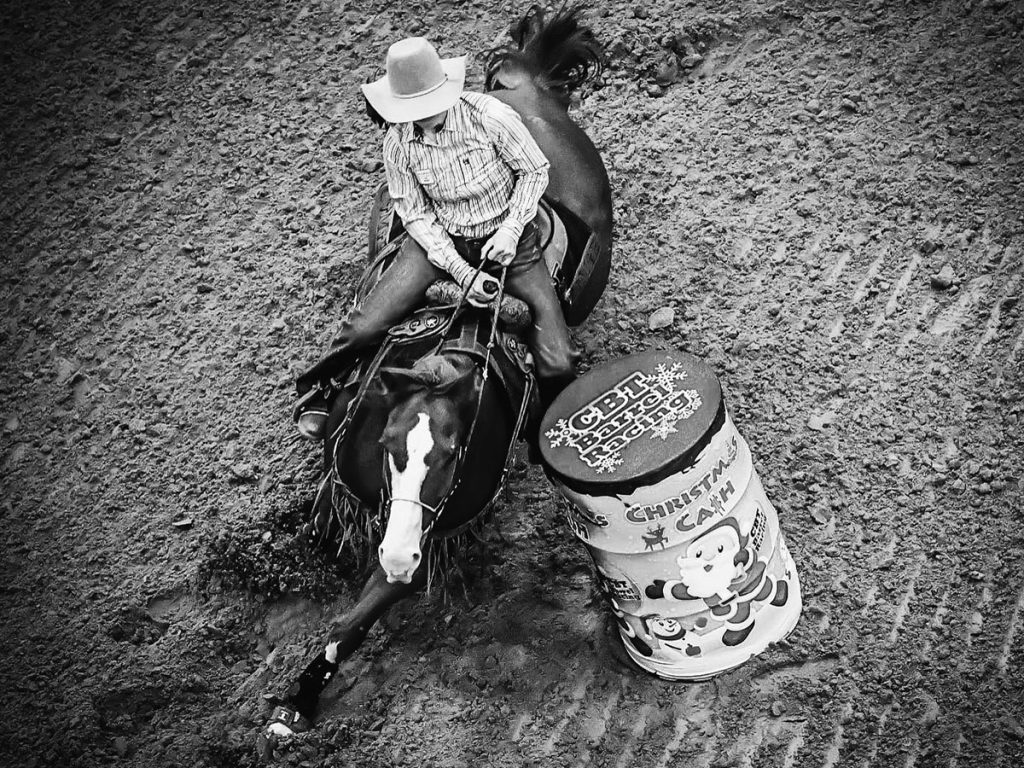
Rodeo Life

Category: Rodeo Lifestyle

  • Rodeo Queen 101: Jordan Todd

    Rodeo Queen 101: Jordan Todd

    Growing up on the road with a team roper dad and a barrel racer mom, it’s safe to say that Jordan Todd is no stranger to the rodeo lifestyle. She’s a barrel racer herself, winning her very first buckle in pee-wee barrels at just three years old at the Flickerwood Arena in Jackson, MO. Todd recalled, “I remember seeing this old picture of me standing in front of my horse at the time, and I don’t even come up to his knee, with my buckle and my hand wrapped around his leg.” Todd still enjoys competing at barrel races all over Missouri and surrounding states, as well as amateur rodeos.

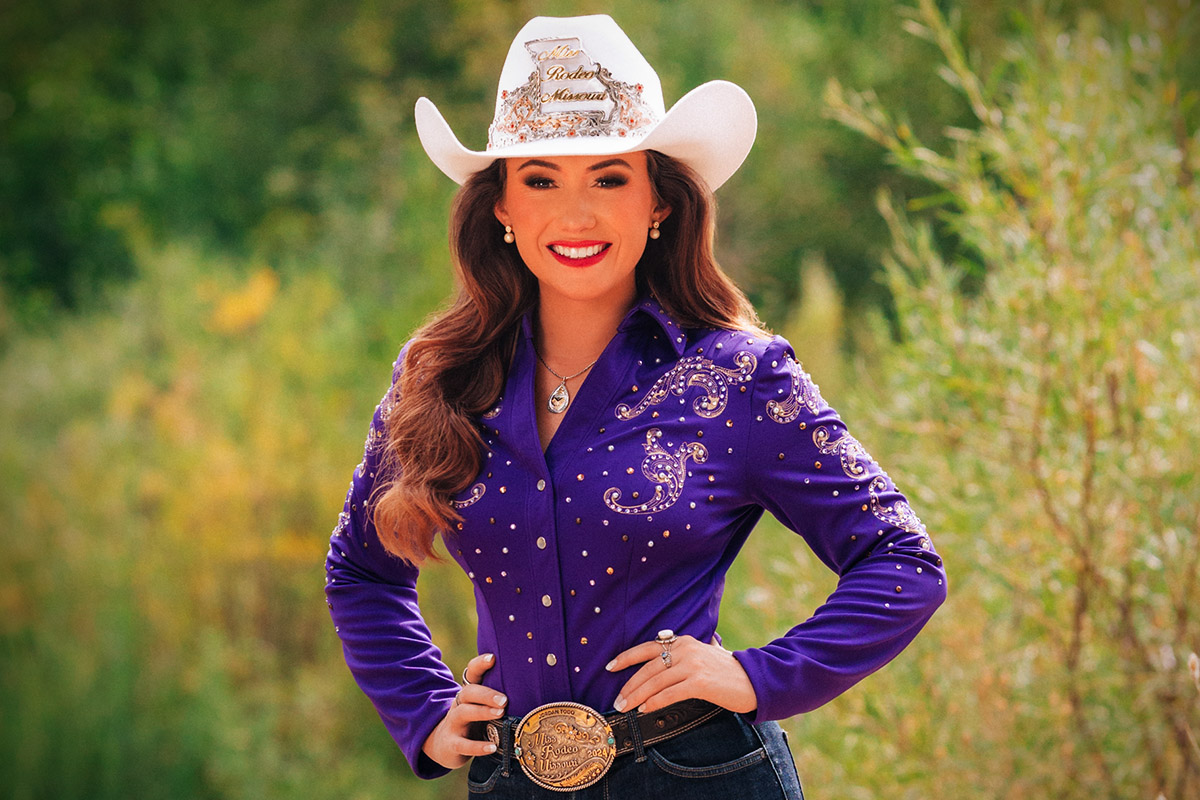
    Jordan Todd is the current Miss Rodeo Missouri 2024 and also finished law school in May of this year. Interestingly enough, this is her first Rodeo Queen title! An Instagram post unknowingly planted a seed in Todd back in 2018 by a former Miss Rodeo America and now legal attorney, Katherine Merck of Katherine Merck Law, who managed to complete her law degree during her busy reign. Todd was never able to shake Merck’s inspirational post and decided to take a leap of faith. “In 2023 I was like, all right, it’s still on my heart, still at the back of my brain. I need to do this for some reason, I’m not sure exactly what it is, but God is really pulling me in that direction.” Todd decided to go straight to the top and submitted her application to compete at the Miss Rodeo Missouri Pageant. Although she had no prior pageant experience, she was a quick study and was able to pull from her years and knowledge as a horsewoman, with some additional training for the horsemanship portion. Her dance background helped tremendously with modeling and having grace on stage, and competing on the mock trial team at the University of Central Missouri gave her excellent public speaking skills for speech and impromptu questions. She was such a natural that she impressively won all but one category! Todd said, “I have some sort of purpose here. I don’t know what it is, and there’s a possibility that I’ll never know, but I’m on this journey because God put me here and I’m just rolling with it.”

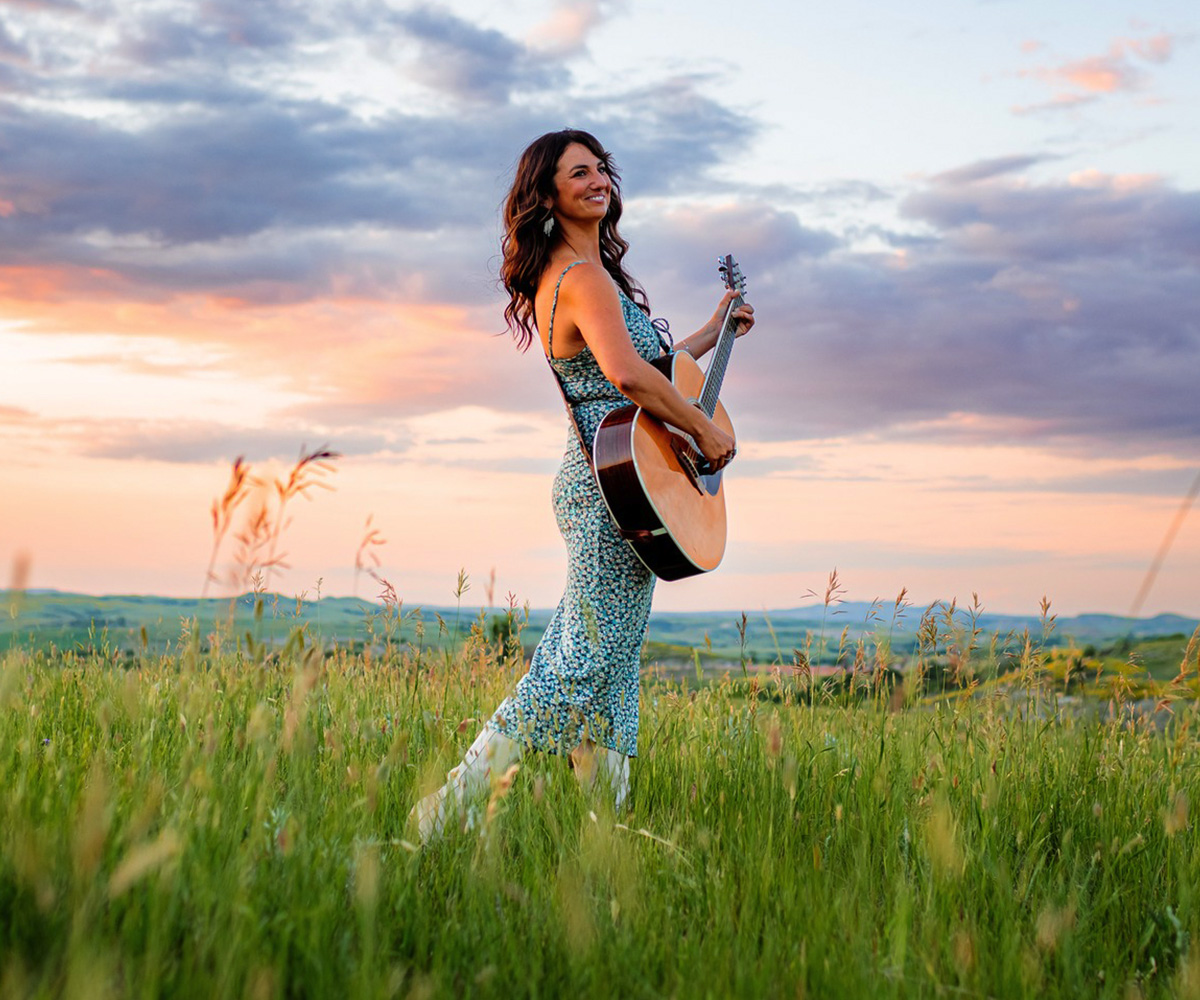
    Jordan Todd, Photo by Art of Aperture Photography

    Because Todd is passionate about both rodeo and law, she wanted to take a minute and talk about the future of Rodeo and the Working Animal Protection Act (WAPA), which is now law in Oklahoma and Arkansas. Todd asked, “What do we want the future of our industry to look like? How are we going to make it better and how are we going to keep it alive? The industry has grown exponentially in the past few years which is fantastic, however, we are inevitably getting some backlash from that.” Todd explained that the Working Animal Protection Act was created by the Cavalry Group, headed by Mindy Patterson. Simply put, it is to protect lawful animal-related businesses. This includes animal-based attractions that are used for entertainment purposes – rodeos, horse-drawn carriages, animal exhibitors, etc. This law potentially prevents local governments from making these businesses illegal. Todd encourages anyone involved in the rodeo industry to call their local representative for their State House of Representatives and tell them they need WAPA in their state. Either that or contact the Cavalry Group directly for help. “All of us rodeo personnel don’t like to get caught up in a lot of politics, but your local government officials don’t know what you want unless you tell them,” Todd said. “We like to go to our rodeos, work hard, and see our progress in the arena, but sometimes we forget about what goes on outside of the arena and how important it can be to preserve this sport on the government level.” For more information about the Working Animal Protection Act, go to www.thecavalrygroup.com.

    Jordan Todd grew up in Warrenton, MO. She spent four years at the University of Central Missouri where she received her Bachelor’s of Science in Political Science and Criminal Justice and competed on the Mock Trial Team. She then attended the University of Missouri School of Law, where she completed her law degree in May of 2024. Once Todd’s queening career comes to a close, she plans to intern with a law firm. Multiple offers are on the table, but Todd has narrowed it down to a location either in Missouri or Texas. This December 1 – 8, Todd will represent the state of Missouri at the annual Miss Rodeo America Pageant in Las Vegas, Nevada.

    Follow Jordan Todd and her many interviews with rodeo athletes and government officials on her socials. Instagram at @missrodeomissouri, Facebook at @missrodeomo, TikTok at @missrodeomissouri or visit the Miss Rodeo Missouri website at www.missrodeomo.com.

    -Article and Photos by Art of Aperture Photography

  • Western Art Round-up: Red Steagall

    Western Art Round-up: Red Steagall

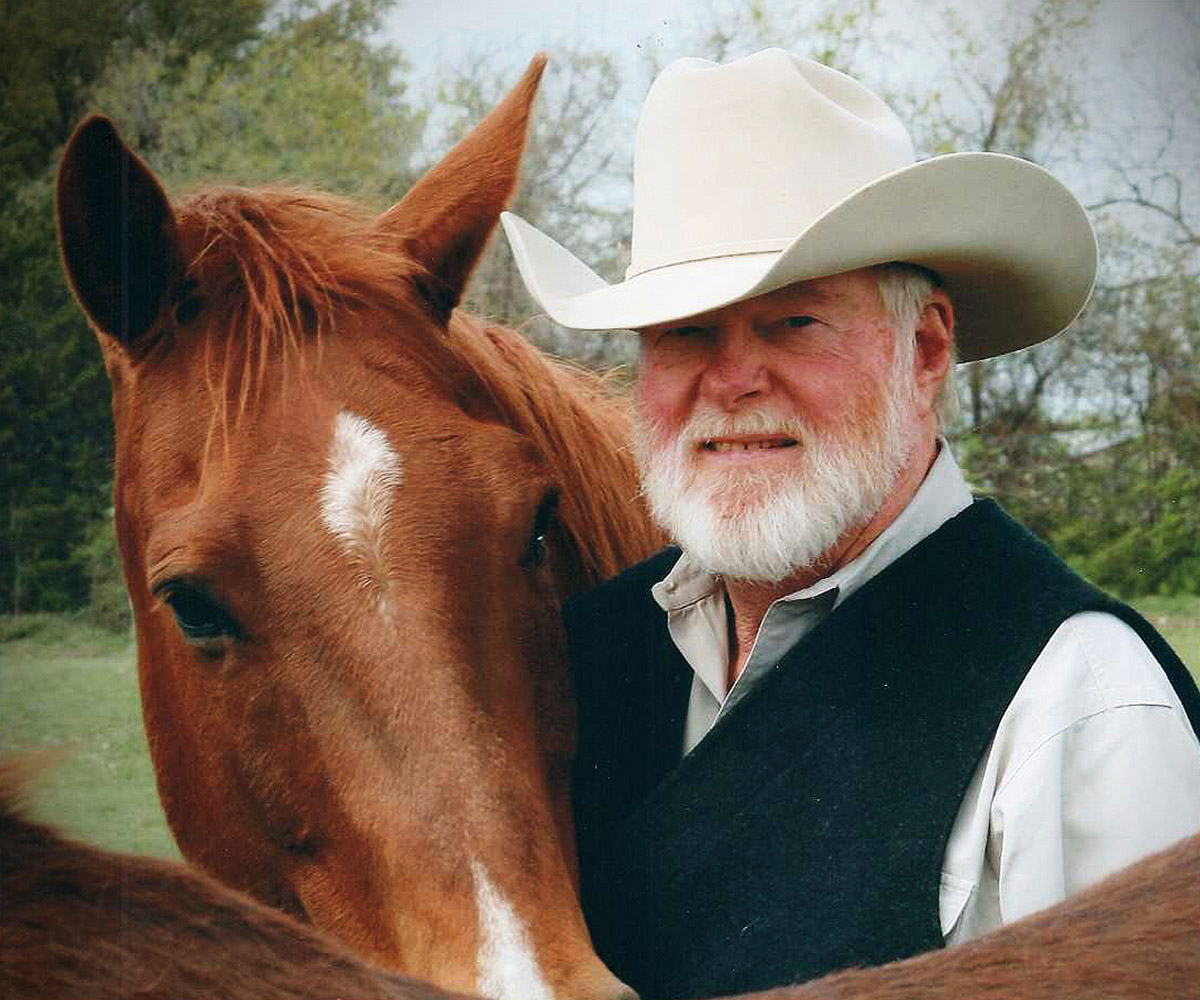
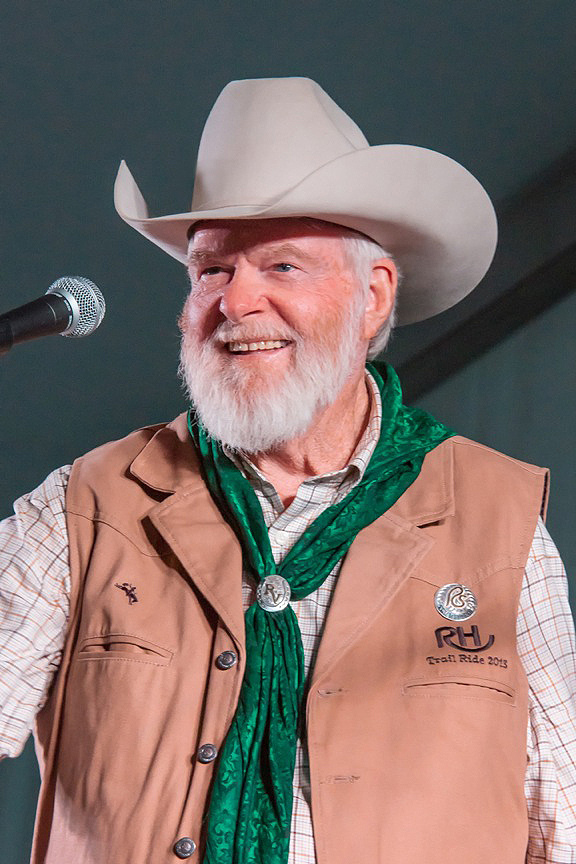
    Red Steagall’s career has been diverse, from writing western swing and cowboy songs to creating his own radio and TV shows. His music, poetry, and programs have been recognized and loved by everyone from working cowboys to U.S. Presidents, and he has inspired generations of artists. Throughout his work, Steagall has remained committed to the preservation and future of Western culture. Recently, he agreed to donate his extensive archive of creative material to Texas Tech University and to help build the Red Steagall Institute for Traditional Western Arts. The Institute will be located at the University’s Lubbock campus, adjacent to the National Western Heritage Center, and will focus on educating and building up Western artisans through interactive learning.

    Always a Cowboy

    Steagall was born in Gainesville, Texas, and spent his childhood in the Panhandle. Cowboys and music were a part of his life early on, and he dreamt of working in agriculture. “I always wanted to be a cowboy,” Steagall shared.
    He played high school football and also rode bulls at local rodeos. Bull riding was fun, but he knew it wasn’t a good long-term plan. “I never won a dime,” he laughed.
    Steagall dreamed of being a veterinarian and working cowboy until he was stricken with Polio at 15. Fortunately, the Salk vaccine was available to halt the virus four months after he became ill, but it had irreversibly damaged the deltoid muscle in his shoulder.

    No longer able to meet the physical demands of rodeo and ranching, Steagall turned to his other interest — music. His mother gifted him a second-hand mandolin and music lessons, changing the course of his life.
    Playing music helped him regain dexterity and strength, and he soon began writing songs. Following high school, Steagall was still planning to have a career in agriculture, attending college at what is now West Texas A&M to study animal science and agronomy. Following college, he took a job as an agricultural chemist. His role required extensive travel throughout the West, and he took his guitar along, playing at cafes and coffee shops on the weekends. He also formed a band, playing many rodeos and dances.

    A call from a friend again changed the direction of Steagall’s career, taking him to California to work in the music business. During his eight years as an executive in Hollywood, Steagall started making his mark as a songwriter and performer. He was in the room for a long list of chart-topping recording sessions and many of his songs became popular on the radio.
    Steagall’s life was changed forever when a song he wrote with Don Lanier was released in 1967. Lanier was sharing a simple melody he had stuck in his head with Steagall, saying that he couldn’t figure out the right words to go with it. When Lanier’s phone rang, he said, “Here we go again…”, and both he and Steagall lit up, knowing they had just landed on the hook for the song.

    They sat down, and the rest of the song came together in short order. Steagall described himself as being “bulletproof” and wasn’t afraid to pitch his songs to the top musicians of the time. He took it to Buck Owens’ record label, but Owens demanded full publishing on the song, which Steagall couldn’t agree to. After another label executive told Steagall they would need full publishing, he said he would take it to Ray Charles. This likely seemed like an unrealistic, idle threat to the label executive, but Steagall was serious, and after Charles heard the song, he wanted to sing it. They agreed on publishing, and before Steagall and Lanier knew it, they had a number-one hit on the radio.
    Here We Go Again has been recorded by a long list of notable singers, from Nancy Sinatra to Glen Campbell. Norah Jones sang the song with Ray Charles on his last album, Genius Loves Company. The album won eight Grammy awards and has currently sold over five and a half million copies.

    Getting Back to His Roots

    After living in Hollywood and then Nashville, Tennessee, Steagall moved home to the Lone Star State in 1977. He married his wife, Gail, who played a critical role in his career, soon after.

    Steagall continued writing and releasing country western music, but after playing dance halls and honky tonks across the country for years, frequently spending over 200 days a year on the road, he felt called to rethink his career.
    Fortunately for Steagall, an opportunity to shift came his way. He had been sifting through the songs he wrote, feeling more drawn to stories and ballads than classic honky-tonk songs. Coincidently, the first National Cowboy Poetry Gathering was held in 1985, which he attended with his brother. Steagall returned home with a newfound inspiration to follow the thread of cowboy stories and poetry.

    This chapter of Steagall’s career also included an expansion beyond the radio, live performance, and CDs. “I had a friend in the car business, and he asked me if I could come speak to the Rotary Club in Fort Worth,” Steagall shared. “After that, his ad agency called and asked if I would do a cowboy poetry session every morning on WBAP radio in Fort Worth.”

    The original idea was to share a minute and a half of poetry, but Steagall shared that 30 minutes of programming would be better. “I went into my studio and I cut a demo of what I thought the show should sound like,” he recalled.

    Steagall shared the demo with the ad agency and other friends in the radio business, and the response was overwhelmingly positive. Many listeners of this first demo shared that an hour of content would be even better. This started Cowboy Corner, which is now syndicated on 150 stations in 34 states. The program was born out of Steagall’s passion for western stories and includes music, interviews, and stories of the American cowboy.

    In 2010, Steagall expanded his storytelling to TV, airing the first episode of In The Bunkhouse with Red Steagall on RFD-TV. Steagall now hosts Somewhere West of Wallstreet for the network.

    Throughout these programs, Steagall has focused on sharing real cowboy stories, often interviewing people the public likely would never know about otherwise. Steagall has traveled throughout the West to historic ranches, like the 6666’s Ranch, King Ranch, and many others.

    The extensive archive Steagall has amassed now serves as a look back in time and includes interviews with legendary Western figures like Roy Rogers, Reba McEntire, and Buster Welch.

    The common thread throughout these stories is the value of western culture and an agrarian lifestyle. “I’m really attached to the western way of life,” Steagall shared. “The western way of life actually came from an agrarian society, at a time when we depended on each other for survival.”

    Steagall believes that sharing the values of western life benefits society as a whole. “We’re respectful of our neighbors, and we have a certain code of ethics, and we live by them. We honor tradition and heritage. We look to the future with an open mind and a wide, open eye. We have a set of values that make us a harmonious society. I treasure that and I want to preserve it,” Steagall explained.

    Western culture and the agrarian lifestyle have changed dramatically since Steagall started his career, and he wants to make sure the story lives on for future generations. “I’m afraid that if we don’t preserve it, in the next 50 years, nobody will know who we were, what we said, what we did, or anything about the values that we live by. I’m proud of who we are and I want the rest of the world to know,” he reflected.

    Steagall also founded the Red Steagall Cowboy Gathering and Western Swing Festival, held every October in Fort Worth, Texas, for the past 30 years. The event celebrates the music Steagall first fell in love with in West Texas.

    The Next Chapter

    Steagall’s music, poetry, and storytelling have had an indelible impact on the preservation of western culture. He is now expanding on these efforts through the Red Steagall Institute for Traditional Western Arts. The center will be located at the National Ranching Heritage Center in Lubbock, Texas, and include an amphitheater, bit and spur shop, saddle and boot shop, outdoor sculpture court, archive, recording studio, garden featuring West Texas flora, and more.

    While the center will include an archive, the primary focus is on the future, and providing a space for artisans to learn, work, and commune. Steagall wants to connect western artisans throughout the country with masters in their craft, giving them the opportunity to learn and grow. “I know how important it is to work with someone who really is a professional. It can help you find other things about your talent and help you take the next step. There are so many people who are very talented, but give up because they don’t have a platform,” Steagall shared.

    The center will also benefit the public, allowing people to explore western culture, watch artisans at work, and learn about the history of the West. “I also want to provide a research library, and over time, it will be the most complete research library in the world about ranching and the ranching industry,” he added.
    The National Ranching Heritage Center is an ideal neighbor for the Institute, already including western art, exhibits on oil and ranching, western history archives, a series of homes walking visitors through hundreds of years of life in the West, and much more.

    The Institute is currently being fine-tuned and funded, with plans to break ground in the spring of 2025. Steagall is proud to have his name and brand attached to the project and believes it will be important in preserving western culture. “I believe with all my heart that the traditional arts can keep our lifestyle alive,” he concluded.

    -Article by Lilly Platts

  • The Championship of Champions

    The Championship of Champions

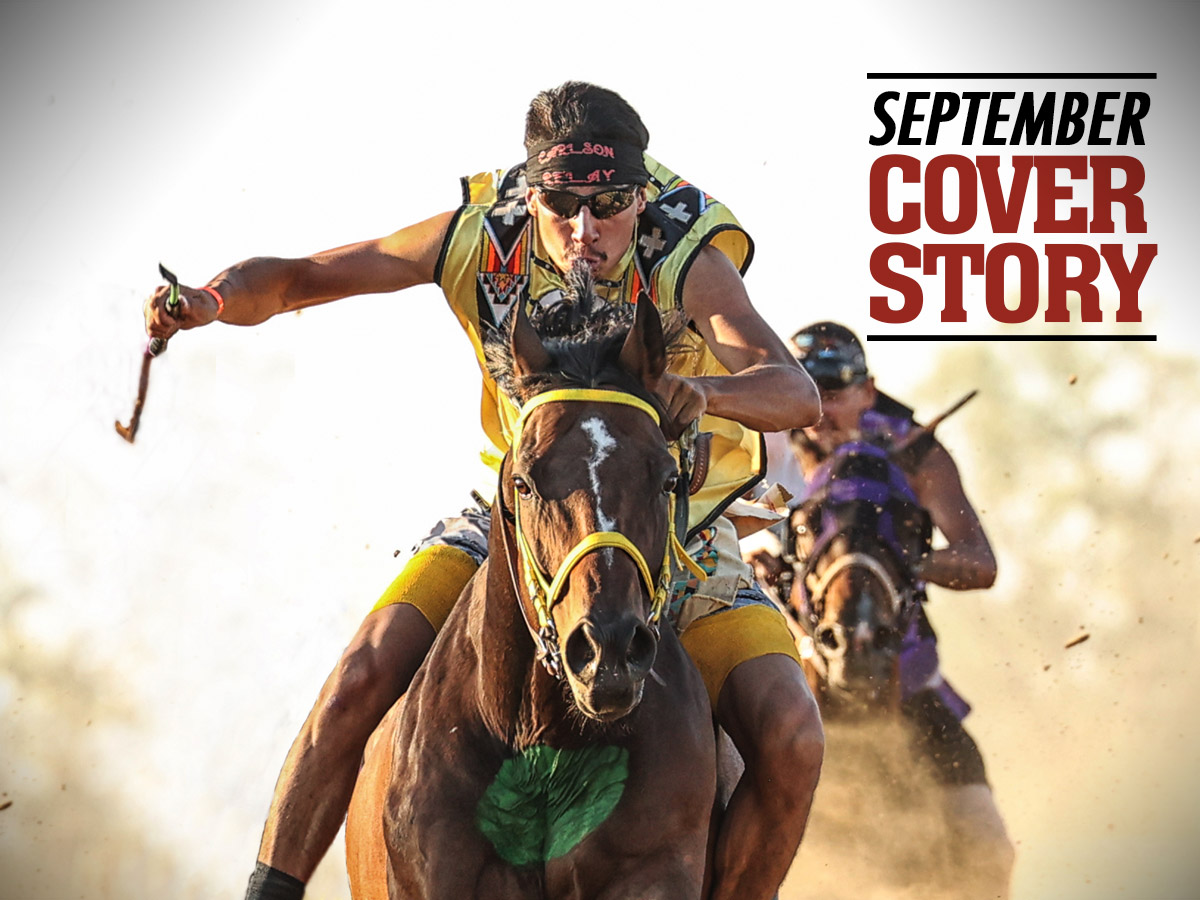
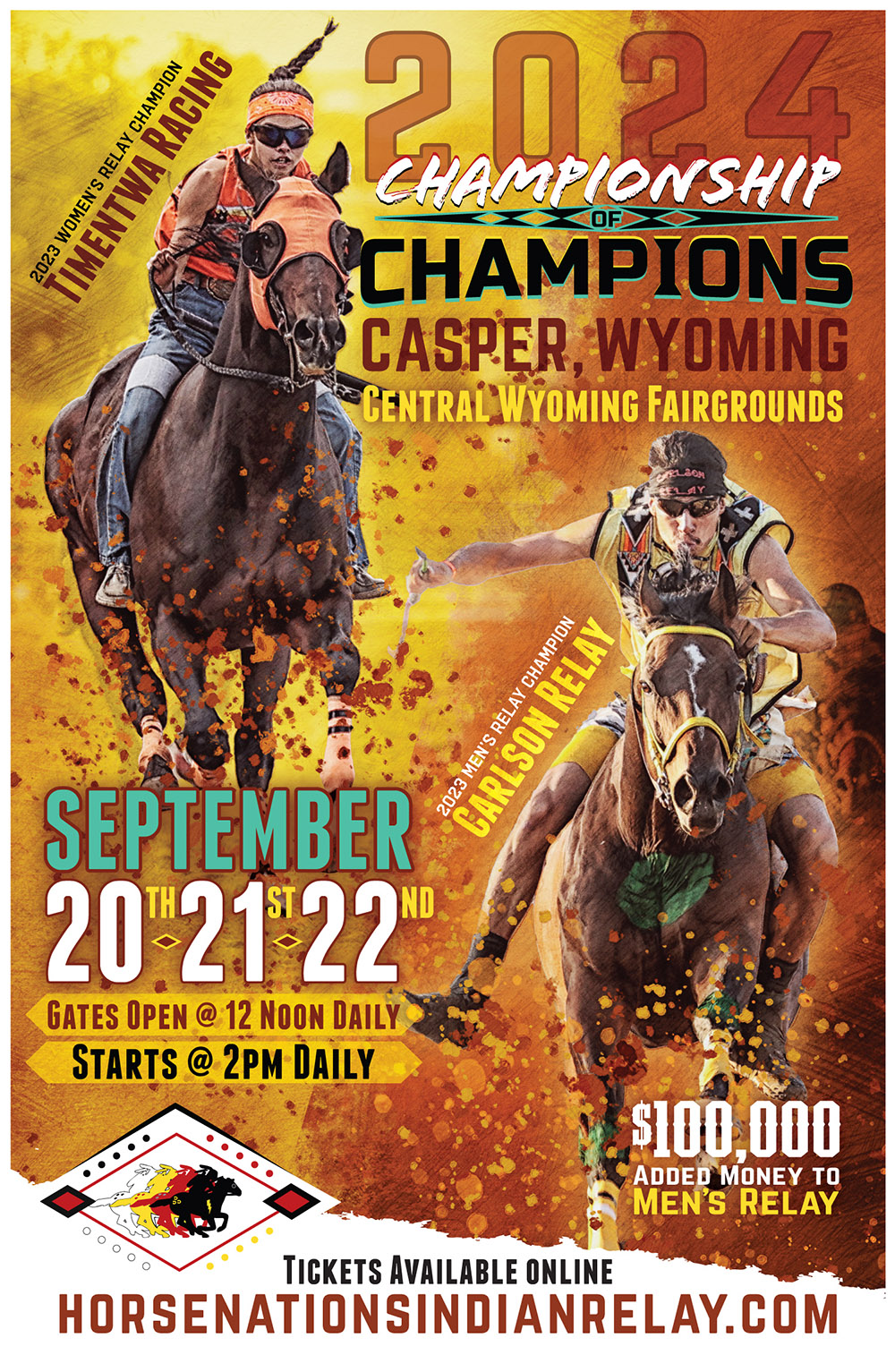
    The Horse Nations Indian Relay Council (HNIRC) is more than just an organization; it is a guardian of a vibrant cultural tradition that dates back centuries. Established in December 2016, HNIRC is dedicated to preserving and promoting Indian Relay racing, a sport steeped in Native American heritage. This unique and exhilarating sport showcases the exceptional horsemanship, speed, and agility of its participants, making it one of the most thrilling spectacles in Native American culture. As HNIRC gears up for the 2024 Championship of Champions, let’s delve into the history of both the event and the council, exploring their mission, key events, community engagement, and future goals.

    Origins and Mission of HNIRC

    HNIRC was founded with a clear mission: to honor the heritage of Indian Relay racing, support the communities involved, and inspire new generations of fans and competitors. Indian Relay is a sport that has deep roots in Native American culture, with its origins tracing back to times when horseback riding was a vital part of daily life. The sport involves riders racing bareback on multiple horses, with exchanges happening at high speeds. It is a testament to the skill and bravery of Native American horsemen and women, reflecting their deep bond with their horses and their land.

    The council’s mission is not just about preserving a sport but also about celebrating a way of life. HNIRC aims to expand the reach of Indian Relay racing, bringing its excitement and cultural significance to a broader audience. By doing so, they hope to foster a greater appreciation and understanding of Native American traditions, ensuring that these practices continue to thrive in the modern world. The council’s vision includes creating a platform where the strength, speed, and spirit of Native American horse culture can be celebrated and shared with audiences around the globe.

    The Inception and Growth of the Championship of Champions

    The Indian Relay Championship of Champions is the crown jewel of HNIRC’s efforts. This annual event gathers the best Indian Relay teams from across the United States and Canada, offering a platform for these skilled athletes to compete at the highest level. The Championship of Champions has grown rapidly since its inception, breaking records for crowd size and the number of competitors each year. It has become a major event in the Native American sports calendar, attracting thousands of spectators and participants.

    The first Championship of Champions was held in Billings, Montana, in 2017. The event was an instant success, drawing large crowds and showcasing the best talent in the sport. Following this successful debut, the event moved to Walla Walla, Washington, where it continued to grow in popularity. The choice to rotate the location of the championship is a deliberate one, designed to bring Indian Relay racing to different communities and allow a broader audience to experience this unique cultural tradition. After Walla Walla, the event moved to Casper, Wyoming, next to Fort Pierre, South Dakota, and then back to Casper, Wyoming, where it will be held in 2024.

    In 2019, a significant milestone was reached when Women’s Indian Relay was added to the Championship of Champions races. For the first time, women teams were provided with a national platform to compete, reflecting HNIRC’s commitment to promoting inclusivity and recognizing the talent of female competitors in the sport. The addition of the Women’s Indian Relay has since become a highlight of the event, attracting more participants and fans each year.

    This rotating nature of the Championship of Champions not only allows different communities to host the event but also brings a fresh environment and new challenges for the competitors. It helps keep the sport dynamic and exciting, with each location offering its unique set of conditions and atmosphere. The move to Casper was part of a three-year contract, and HNIRC plans to continue the event in Casper through 2025. This continued expansion and movement reflect the council’s commitment to spreading the excitement of Indian Relay racing and engaging with new audiences.

    The 2024 Tour of Champions: A Showcase of Skill and Culture

    The road to the Championship of Champions is paved with a series of races organized by HNIRC throughout the summer. The 2024 Tour of Champions is a carefully curated schedule of events across the United States and Canada, providing opportunities for teams to compete and qualify for the prestigious championship. The tour is not just about the races; it’s also a celebration of Native American culture, with events often featuring traditional drum groups, dancers, and vendors offering crafts and jewelry.

    The 2024 Tour of Champions includes the following events:

    • June 01-02: Season Opener, Miles City, MT
    • June 08-09: Indigenous Celebration Indian Relay, Grand Prairie, Canada
    • June 22-23: Crow Native Days, Crow Agency, MT Native Days Indian Relay
    • July 06-07: Sugar Bowl Indian Relay, Inchelium, Washington
    • July 27-28: Wyoming Downs, Evanston, WY
    • August 02: Phillips County Fair, Dodson, MT
    • August 03-04: Run with the Warriors, Pine Ridge, SD
    • August 10-11: Lower Brule Races, Lower Brule, SD
    • August 24-25: North Central Washington Fair, Waterville, WA
    • September 07-08: Turtle Mountain Indian Horse Relay, Belcourt, ND
    • September 07-08: Okanogan County Fair, Okanogan, WA
    • September 11-14: Pendleton Round-up, Pendleton, OR
    • September 20-22: HNIRC Championship of Champions, Casper, WY

    These races are crucial stops on the road to the championship, offering teams the chance to qualify for the final showdown in Casper. The Tour of Champions Indian Relay races, accredited by HNIRC, are a series of races that test endurance, skill, and strategy. To be eligible to enter the Championship of Champions, teams must participate in at least two HNIRC-accredited races throughout the season. Each race presents unique challenges, reflecting the dedication and passion of the competitors who travel long distances and train rigorously to compete at the highest level. This tour is a testament to the relentless commitment of the athletes, showcasing the best of Indian Relay racing across diverse locations.

    Leadership and Community Engagement

    HNIRC is led by a dedicated board of directors who bring a wealth of experience and passion to the organization. The current board members are:

    • Calvin Ghost Bear – President, Pine Ridge, South Dakota
    • Carol Murray – Vice President, Browning, Montana
    • Carla Ghost Bear – Treasurer, Pine Ridge, South Dakota
    • Jamie Howard – Secretary, Wayne, Oklahoma
    • Diana Volk – Marketing, Sheridan, Wyoming

    These leaders are not only committed to the success of the sport, but also to the well-being and development of the communities they represent. Under their guidance, HNIRC has made significant strides in promoting Indian Relay racing and ensuring that it continues to thrive in the years to come.

    Community engagement is a core aspect of HNIRC’s mission. The council’s events are more than just races; they are cultural celebrations that bring people together. At each event, attendees can experience the rich traditions of Native American culture, from the stirring rhythms of drum groups to the intricate designs of traditional crafts. HNIRC also works to support the development of young riders and teams, ensuring that the sport’s future is in good hands. By providing training and mentorship opportunities, the council helps nurture the next generation of Indian Relay champions.

    Past Champions and Categories

    The upcoming Championship of Champions expects to have over 50 men’s teams from six states and two provinces. The competition includes several categories:

    • Men’s Relay: Traditional three-horse teams.
    • Women’s Relay: Two-horse teams.
    • Junior Relay (12-15 years old): Two-horse teams.
    • Youth Relay (9-12 years old): Three-pony teams.
    • Kids Relay (7-9 years old): Three-pony teams.

    Past champions highlight the fierce competition and talent present in Indian Relay racing:

    Men’s Past Champions

    • 2017: Abrahamson Relay, Scott Abrahamson, Colville, Billings, Montana
    • 2018: Northwest Express, Mathew Pakootas Jr., Colville, Walla Walla, Washington
    • 2019: Abrahamson Relay, Scott Abrahamson, Colville, Walla Walla, Washington
    • 2020: S/M Express, Dustin Kruger, Crow, Casper, Wyoming
    • 2021: Buffalo Jump, Chris Carlson, Blackfeet, Casper, Wyoming
    • 2022: Omak Express, Colville, Fort Pierre, South Dakota
    • 2023: Carlson Relay, Chazz Racine, Blackfeet, Casper, Wyoming

    Women’s Past Champions

    • 2019: Timentwa Relay, Talliyah Timentwa, Colville, Walla Walla, Washington
    • 2020: Young Money, Autumn Charges Strong, Crow, Casper, Wyoming
    • 2021: Tissidimit Relay, Brailey Tissidimit, Blackfeet, Casper, Wyoming
    • 2022: Amyotte Racing, Diamond Amyotte, Crow, Fort Pierre, South Dakota
    • 2023: Timentwa Relay, Talliyah Timentwa, Colville, Casper, Wyoming

    Future Goals and the Path Ahead

    As HNIRC continues its commitment to Casper, Wyoming, for the Championship of Champions, the council is already looking to the future. They aim to offer fresh environments and opportunities for different communities and sponsors to engage with and celebrate Indian Relay racing. By expanding the sport’s reach, HNIRC hopes to inspire new fans and competitors, ensuring that the vibrant tradition of Indian Relay continues to thrive.

    The council’s future goals include not only the continued growth of the Championship of Champions but also the expansion of the Tour of Champions. HNIRC is exploring new ways to engage with fans, including potential partnerships with media outlets to broadcast the races and bring the excitement of Indian Relay to a broader audience. The council is also committed to furthering its community outreach efforts, providing more opportunities for Native Americans from other areas of the US and Canada to learn about and participate in this unique sport.

    Prize Money

    The Championship of Champions also offers significant prize money, adding to the competitive spirit of the event. The men’s relay has $100,000 in added money, with the total payout estimated at $125,000. The women’s relay features $25,000 in added money, highlighting the importance of supporting and recognizing the talent of female competitors in this sport.

    In conclusion, the Horse Nations Indian Relay Council stands as a proud guardian of a rich cultural legacy. Through its dedication to preserving and promoting Indian Relay racing, HNIRC has created a platform where the strength, speed, and spirit of Native American horse culture can be celebrated and shared with audiences around the globe. The Championship of Champions and the Tour of Champions exemplify this mission, bringing together communities, showcasing exceptional talent, and ensuring that the vibrant tradition of Indian Relay continues to thrive for generations to come.

  • Western Art Round-up: Sammy Bird

    Western Art Round-up: Sammy Bird

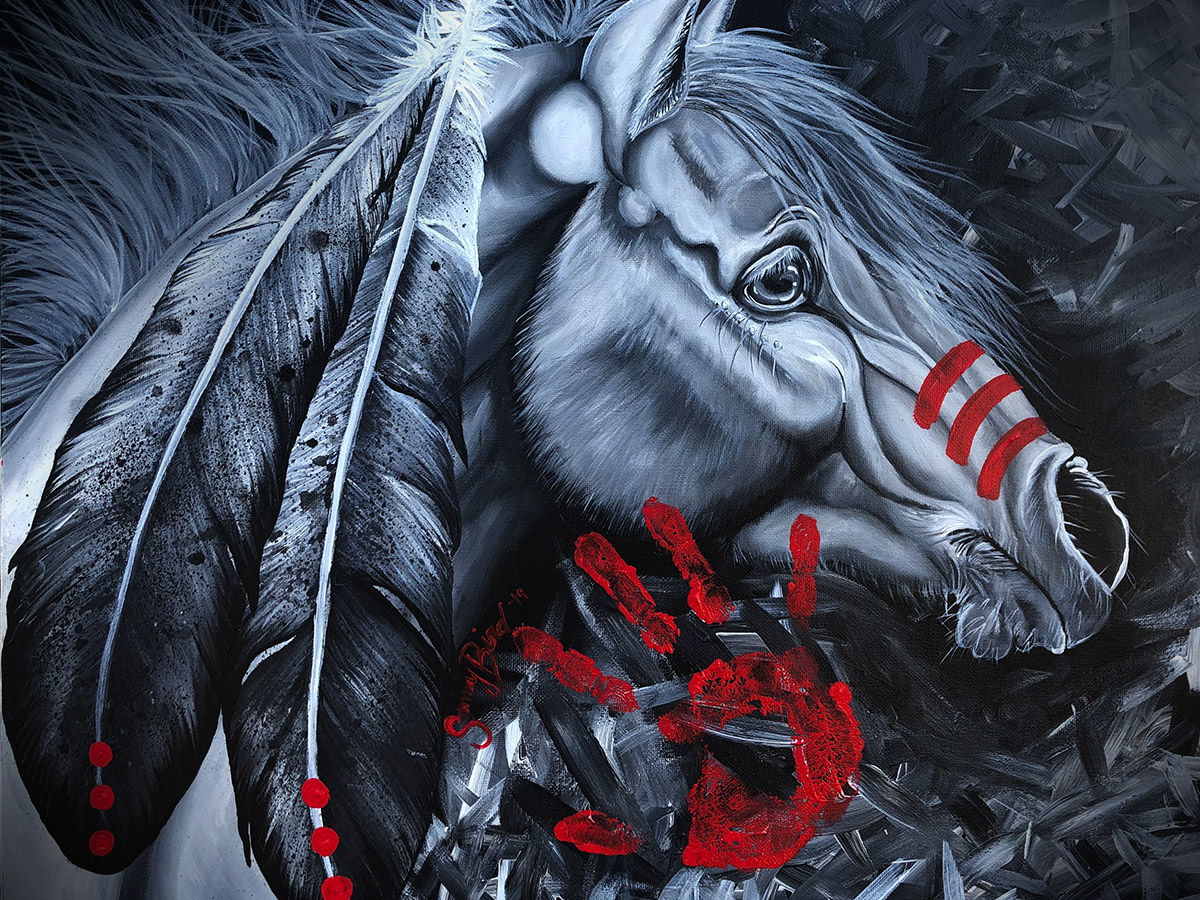
    Sammy Bird created her first painting to be auctioned off at a friend’s benefit. This spirit of giving, positivity, and hope has prevailed as her career as an artist has grown. Today, Palomino Paintings by Sammy Bird can be seen at art shows, rodeos, and in homes across the West.

    Discovering Her Talent

    Sammy Bird shares her heart and story through colorful, detailed paintings. Most of her subject matter includes horses, and elements of her Native American culture are always represented. She also expresses her style and culture through wearable art, like hats and clothing, which have been featured in western fashion shows. Bird grew up on the Blackfeet Reservation, located in northwest Montana, and comes from a multi-generation rodeo family. Today, she balances her career as an artist with life on the rodeo road.

    Bird dabbled in art projects growing up, but didn’t foresee a career as a painter. “I took high school art, but wasn’t the best one in my class,” Bird recalled.

    It wasn’t until she wanted to donate something unique to a friend’s medical benefit that she discovered her talent. “In a small town you can only get so many donations, so I thought I would try to paint,” Bird shared.

    Her donated painting was a hit, and soon another community member asked if she would donate a painting for another fundraiser. This soon snowballed into requests for commissions, and before Bird knew it she was making money as an artist. “I truly believe God works in mysterious ways,” she said. “It caught on like wildfire, and within a few years I was doing it almost full-time.”

    She continues to donate to fundraisers, but painting is much more than a hobby now. Bird participates in western art shows, is hired for commission work, and has a regular clientele she sells paintings to.

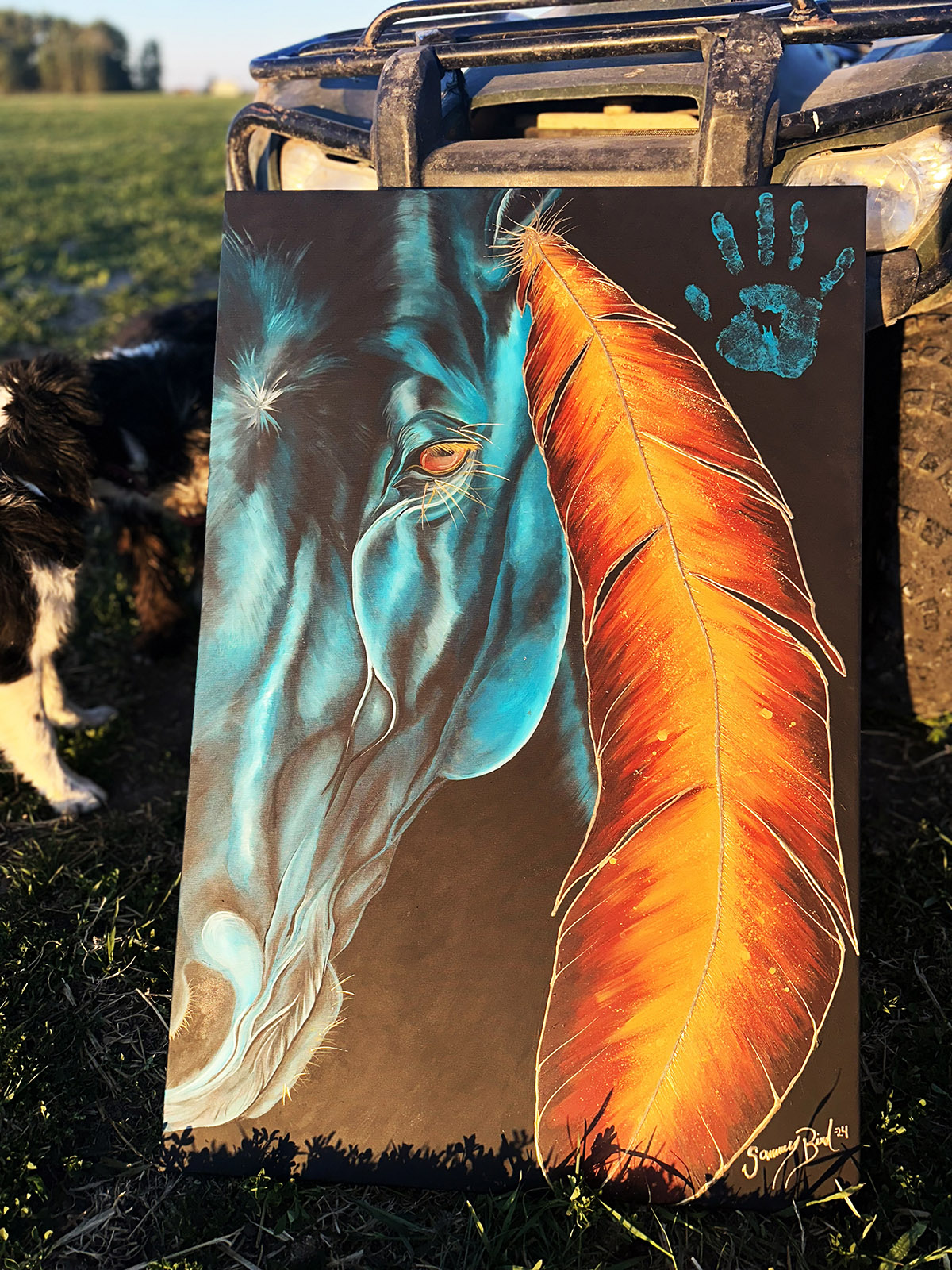
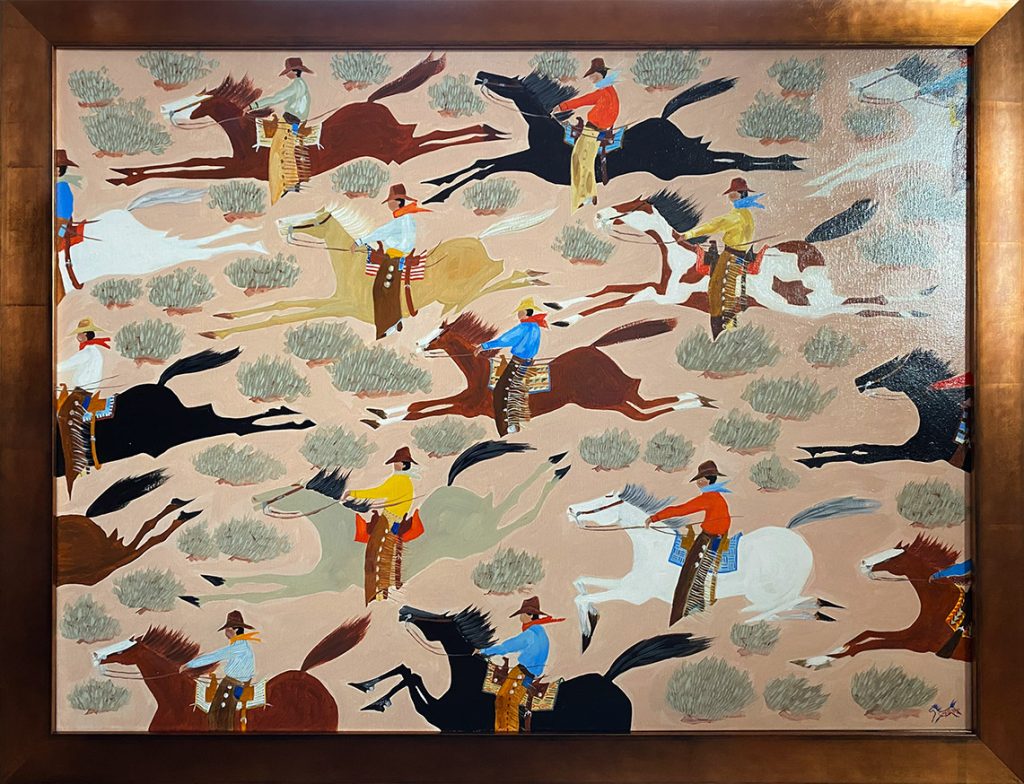
    Bird’s paintings are colorful, abstract, often large, and intricate. This style came completely from her imagination. “You do what feels right for you, and what makes you feel good,” she reflected. “Whenever I start a new painting I honestly don’t really know what I’m going to paint. I might have a general idea in my mind of what I want it to look like, but I usually start at the horse’s eye and work my way out.”

    Art is ultimately the expression of the artist, and Bird wants to spread positivity. “When someone looks at one of my paintings, I want them to feel good, even if it’s just for a moment in their day,” she shared. “For me, it’s a lot of bright, vibrant colors — hopefully it brings positivity to someone.”

    Bird’s handprint is one of the hallmarks of her work. Somewhere in each of her paintings you will see where she has pressed her hand into paint and imprinted it on the finished painting. She started doing this both because it represents her Native American culture, and as a unique way to sign her work. “The handprint stands for resilience,” she explained. “It also represents missing and murdered indigenous women. I started putting it on my paintings for awareness, and because it’s my own fun spin on things. Even if you don’t see it, there’s a handprint somewhere in each of my paintings.”

    Beyond her handprint, Bird also includes other elements of her Native American culture in each painting. “I am very proud of where I come from, and where I’m going. I have always respected and loved where I come from, and I hope to inspire kids on the reservation who feel stuck. I want to show that if I can do it, they can too,” Bird shared.

    She also shares her art through fashion. “I really got into western fashion right after college. I started creating my own pieces, and collaborating with other Native American artists. I think it’s so cool when you bring two creative minds together,” Bird said.

    Rodeos have long been events where people express their style — from contestants to viewers — and fashion shows have become increasingly popular. Bird has participated in many of these, both as a model and creator. At last year’s Indian National Finals Rodeo in Las Vegas, Nevada, she participated in a Native American fashion show that included creators from across the country. “It was really cool to see everyone’s backgrounds come out in their fashion,” she recalled.

    Bird’s business page on Facebook, Palomino Paintings by Sammy Bird, has gained a large following, and she does most of her business through this platform. While there is a lot of demand for her art, Bird has been careful to only create when she feels called to.

    Photos of Bird’s paintings on social media are often accompanied by a motivational saying or short story. “I put my heart and what’s important to me into every painting I do,” she said.

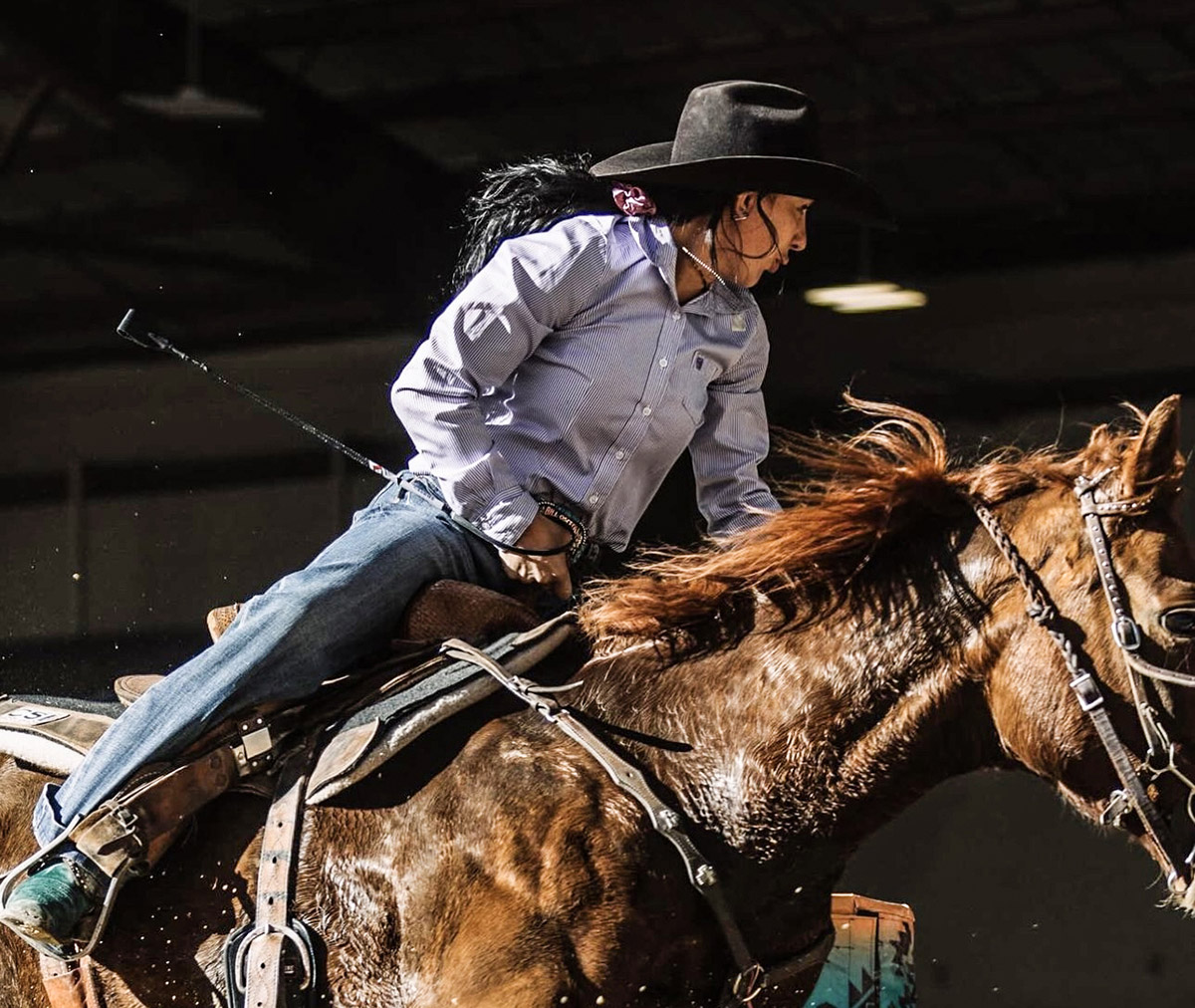
    Breakaway Roper Sammy Bird

    Raised in Rodeo

    Bird comes from a rodeo family, and has had many successes in the arena. She grew up going to rodeos, and was competing as soon as she was able. “I’ve been horseback since I was probably three years old,” she shared.

    Her mother and father both competed during her youth, and Bird spent many hours in the stands before she could even walk. Early on, she started competing in the Native American Rodeo Association, and at local and regional rodeos. These rodeos are very family-oriented, including youth, adult, and senior events. “A lot of times you’ll have families that get to travel with their kids, parents, and grandparents,” Bird explained.

    She also competed in high school rodeo, and went on to rope and run barrels at the college level while attending the University of Montana-Western.

    Recently, Bird has been taking advantage of the addition of breakaway roping to the professional rodeo circuit. “As soon as they started including breakaway roping at pro rodeos I started competing there as well,” Bird said.

    The addition of the event has been celebrated by the rodeo community, and Bird has been enjoying competing at a higher level. “It brings in contestants, brings in fans, and it’s a fast, exciting event,” she said. “It’s giving us as contestants equal money, which means everything because we travel hard, and we put just as much work in. Being included means the world. We put a lot of blood, sweat, and tears into it, so being on a stage where we can showcase that means so much.”

    Rodeo has opened up Bird’s world. The Blackfeet Reservation is isolated, and opportunity can be sparse for young people. Horses, ranching, and rodeo have always been there for Bird. “Living on the reservation can be very oppressive for kids,” Bird shared. “Rodeo really played a huge role in keeping me out of trouble, giving me responsibility, goals to shoot for, ambition, and motivation. I always give a lot of credit to the rodeo way of life, and horses in general, for inspiring me to want to be better, and to want more.”

    Something in the Orange – Many of Bird’s paintings are large, like this one, titled “Something in the Orange”.

    The Big Picture

    Bird represents her home and western culture, both through art and rodeo. She was recently featured in a Boot Barn campaign about Native American rodeo and ranching. She also has a strong online presence, sharing her style, rodeo lifestyle, and art through Instagram and Facebook.

    Artists and rodeo competitors often lead similarly unconventional lives, and these two endeavors go hand-in-hand for Bird. Finding the time to paint during the busy rodeo season can be difficult, but also motivating. “It inspires me, because I know that if I’m not winning I can go home and paint,” Bird shared. In turn, her art business allows her to have a flexible career. Winter in northwest Montana puts a damper on roping, so she and her family travel south to Arizona each winter.

    Bird spreads hope and positivity through her paintings, and also remains focused on the opportunity in her rodeo career. Skill is only one element of competing in rodeo, and keeping perspective on what really matters helps Bird navigate the pressure to win. “I have learned that you can’t define your happiness based on that one run. Your breakaway run does not define you, and it doesn’t show your value as a person,” she shared. “Any time I’m having a tough time I check and see where my heart posture is, and thank God for everything I do have.”

    Gratitude for life guides Bird every day in and out of the rodeo arena. “It’s just so easy to have a closed mindset, but we live in such an abundant time,” she concluded. “If you want something, go after it. The worst thing that can happen is you will end up back where you were. Don’t be afraid to go out and try to do whatever you want. We live in an abundant time, and you should match your mindset to that. Be inspired, and just do what you want. Do be afraid of rejection, because rejection is just redirection.”

    Article by Lilly Platts


  • Western Art Round-up: Whey Jennings

    Western Art Round-up: Whey Jennings

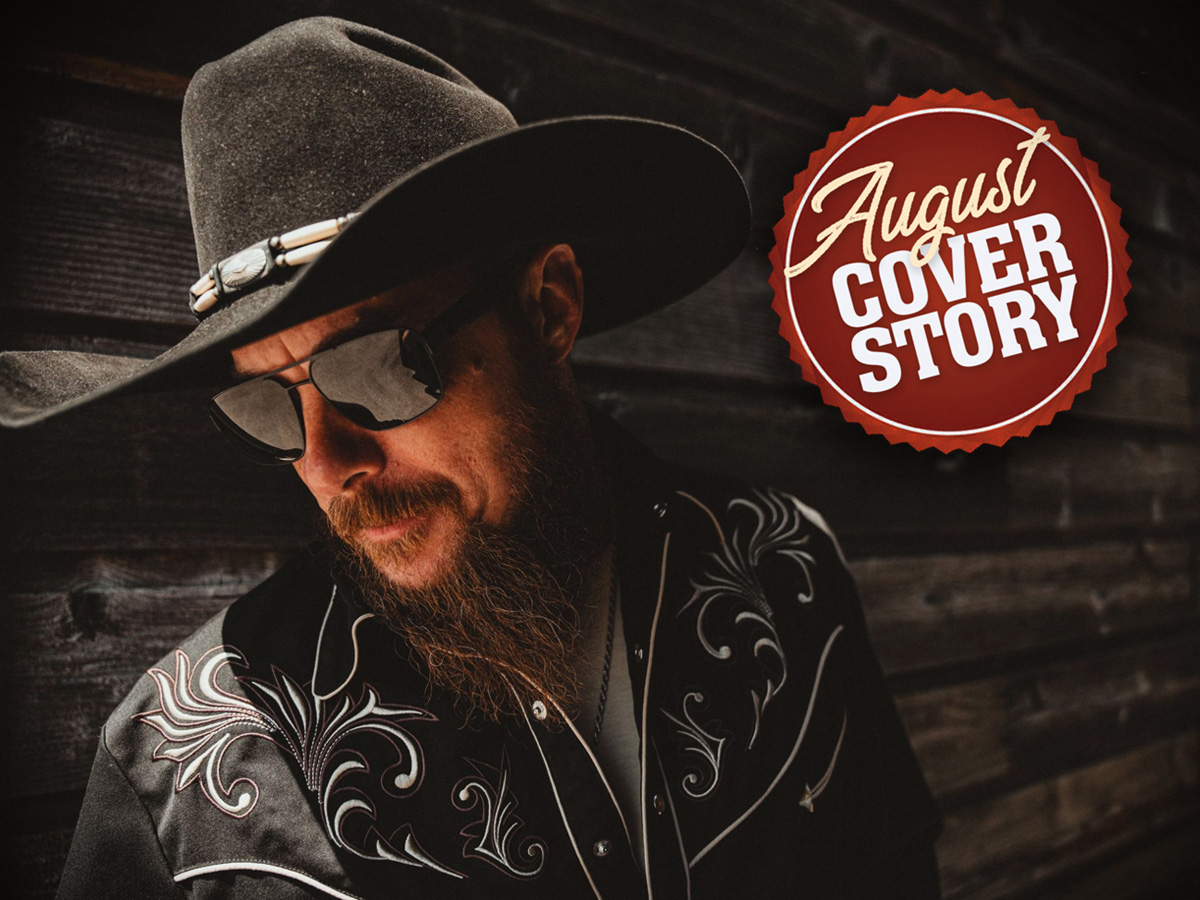
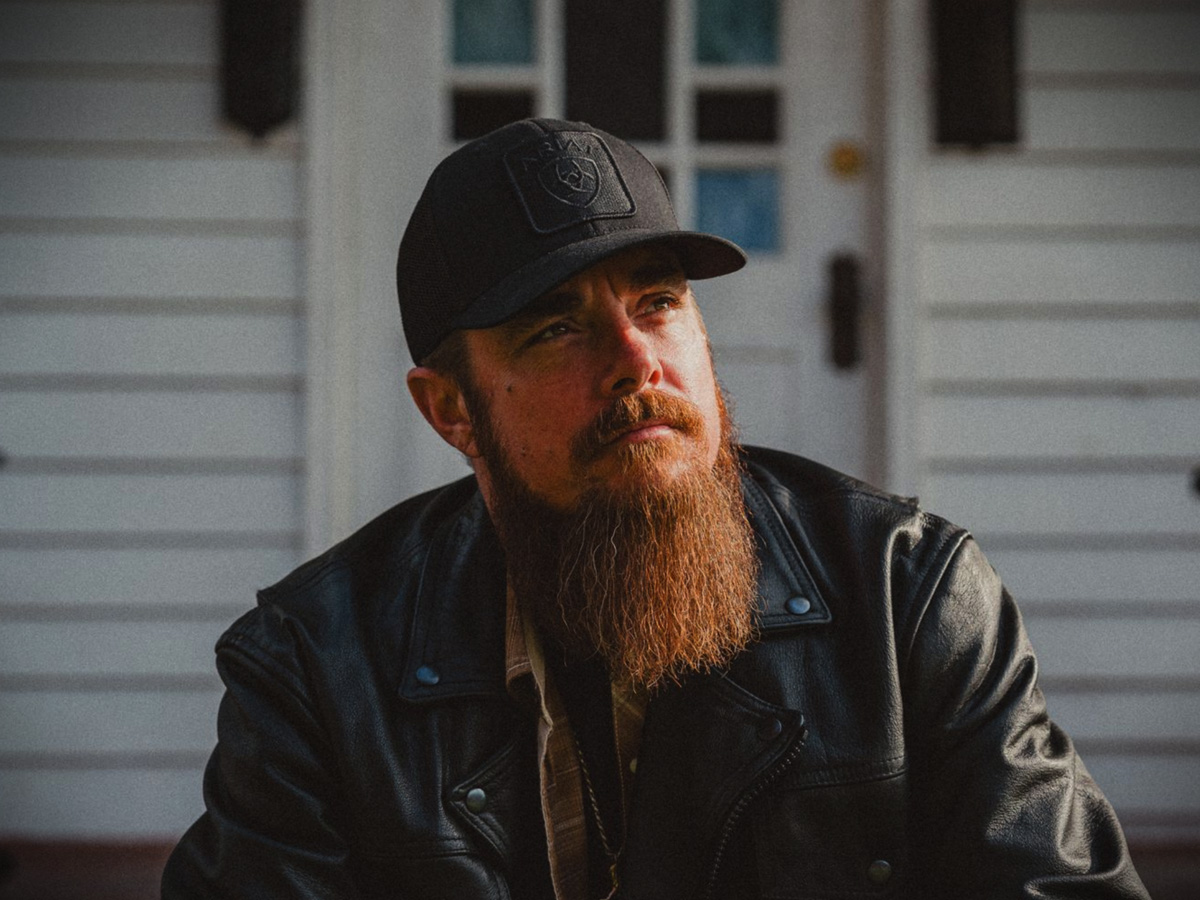
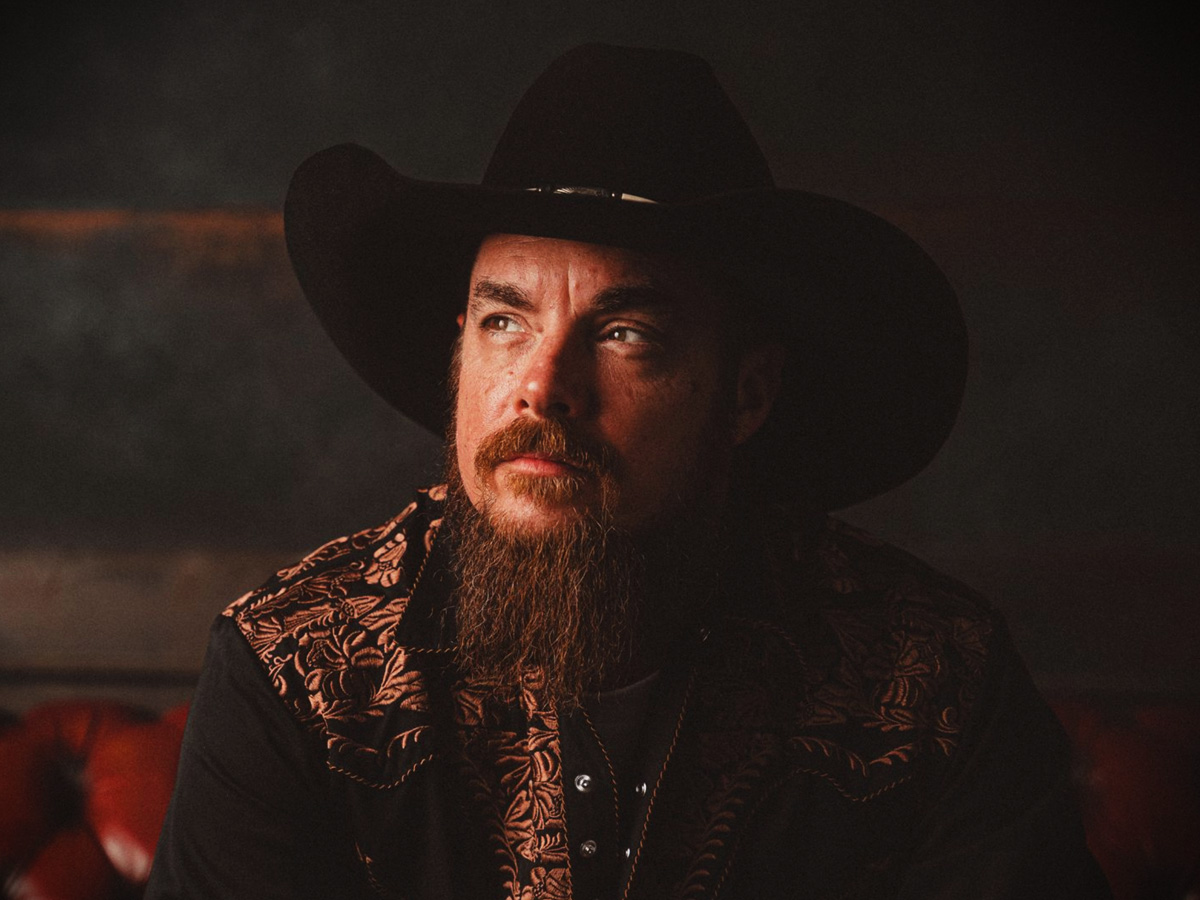
    Country singer-songwriter Whey Jennings’s story contains multitudes, from the depths of addiction to finding sobriety and peace through faith, music, and the people he loves. The grandson of Waylon Jennings, he is putting his own stamp on country music, and helping others along the way. Jennings’s most recent writing is vulnerable and reflects the years of work he has put into improving himself — and the positive that has come from it. His upcoming full-length record, Jekyll & Hyde, due out August 23 on Dirt Rock Empire, includes songs about finding sobriety, country life, horses, family, patriotism, and the future.


    Making His Way Back to Music

    Country music has always been a part of Jennings’s life, growing up around his grandfather, Waylon Jennings, and grandmother, Jessi Colter. “I learned pretty young that I had a good vocal range. I went on stage with my grandfather a few times when I was young, and I had a great time,” he shared.

    Once Jennings became a teenager, fear replaced the excitement he previously felt in the spotlight. One experience stands out in his memory. “I went out there one time when I was around 13 and was becoming a young man. It scared me to death,” Jennings remembered. “I froze like a deer in the headlights.”

    Singing remained a part of Jennings’s life, but he didn’t foresee a career in it. As a young man, he moved from his childhood home near Dallas to the high plains of the Texas Panhandle, working on a cotton farm for many years. During this time, he struggled with addiction. It took a call from his mother, Katherine, to bring him back to music. “My mom told me that she had lung cancer. So I moved back to Dallas, and I spent the rest of the time she had on this earth with her. During this time, we talked about a lot of things, and she really wished I would do something with music. She had heard me sing my whole life, so I promised her I would do it,” Jennings remembered.

    He returned to the business, but it would be several years before Jennings would find his footing and voice. Music is often the center of the party, and from bars to stadiums, alcohol and other substances are easy to come by. This puts musicians in a particularly unique and often difficult situation since their job requires constantly being around people who are letting loose. Jennings continued to struggle with addiction and admits to many missteps. “I made every mistake you could possibly make. The first mistake I made was thinking it was about a party and not about the music. It took me a lot of years to get over that,” he shared.

    Fortunately, Jennings had supportive people in his corner, like his manager, or “momager” as he lovingly calls her, Tammy Carolus, and girlfriend Taryn Rae, who later became his wife. “They sat me down and told me they weren’t going to watch me kill myself, and at that point, I felt like I had a lot to lose because no matter what I didn’t have, I always had them,” he said. He entered rehab and started finding his unique voice as an artist. Jennings chose a faith-based rehab facility, which helped him further discover who he wanted to be and how to navigate his future. “I’ve always been a faith-based person, and I felt like that was the route for me. I went to church for all 28 days that I was there and took my guitar with me,” Jennings recalled. The community he found through music changed his outlook on the future, and he remembers learning Hallelujah, which Jennings now sings for his fans and has recorded on the new album. “We made some beautiful memories in there playing and worshiping God,” he said. Jennings’s wife, Taryn, knew how to support him through this difficult time. “When I met my wife, I didn’t have two nickels to rub together, but she helped me go out and do what I knew I needed to do in my own heart, to make myself okay with the life I’m living,” he shared.


    A New Chapter

    Taryn’s support was critical for Jennings, and he is now focused on supporting her and his six children while balancing his career in music. “I thank God every day for my family,” Jennings stated. “They have really rallied around me.” His children range in age, from his youngest daughter, who is three, to his oldest son, who graduated from high school in 2023. Being there for his youngest — Jennings always travels home between gigs no matter the distance or cost — and watching his older kids begin their own adult lives brings him great joy. “They don’t live the way I did when I was young. They’re all happy and thriving. To see my family thriving means the world to me. That’s what keeps me on the straight and narrow, knowing that I’m able to support my family in a way that I was never supported,” Jennings reflected.

    Faith was important to Jennings long before he entered rehab and continues to be a guiding tenet. “My faith has always been there through life,” Jennings said. “I’ve never found a problem that I needed to solve and couldn’t find the answer to it within the walls of the Bible.”

    Jenning’s new record, Jekyll and Hyde, comes out on August 23 on the Dirt Rock Empire label and is the culmination of these years of finding his voice and learning how to tell his story. He has released three studio EPs, including 2020’s Gypsy Soul, 2022’s If It Wasn’t for The Sinnin’, and 2023’s Just Before The Dawn. This will be his first full-length record, and Jennings is extremely proud to share it with the world. “When my kids are all grown, and I’m old and looking back on my life, I feel like I’m always going to look back to this album,” he shared.

    While Jennings often sings about very personal subject matter, he maintains a grit and honesty that his fans relate to. His baritone voice carries, and like his grandfather, people pay attention when Jennings sings; this attention is going toward a worthy message. Songwriters often say to write about what you know, and Jennings is doing just that. With almost five years of sobriety under his belt, he knows first-hand how difficult it can be to get help and the positive that will come from it. Learning how to share about this in a meaningful way has been a journey in itself. “When I got out of rehab, the first thing I wanted to do was save the world. I found something I wanted to share with everyone,” he reflected. “You feel like you’re healed, but you still have a lot of healing to do before you can try to help others.”

    Looking at the bigger picture and discovering how to share the negative things in his past in a way that can help others has taken time. “What I’ve learned is that I can’t just share about where I’m currently at in my music. I have to share about everywhere I’ve been through my music because I want to be able to relate to everyone. I can’t just disregard the life I’ve led. In this new album I was able to do that. I was able to touch on every area of life that’s important to me,” Jennings shared.

    Taking responsibility for his own actions was critical. “You can dwell on horrible things. One of the biggest mistakes we make in our relationship with God is that we like to blame our lives on him,” Jennings reflected. “We forget about the fact that the first thing He gave us was free will, and with free will comes responsibility.” His own recovery story also helps him relate to others and meet people where they’re at. “I’ve come to realize that while it’s important to sing songs that push people toward recovery, that isn’t enough,” Jennings reflected. One of the most difficult aspects of recovery, and one of the primary areas where people will fail, is having a support system. Addiction pushes loved ones out of a person’s life and destroys trust, which Jennings experienced himself. One of the songs on his new album, Sleeves, explores this. “I’m trying to show people the life their loved ones keep hidden from them,” Jennings explained. “They hide the bad part of their lives and the good parts. Being an addict doesn’t mean you’re no longer human. I’m trying to open up the hearts of people who may be supporting an addict so they have a better chance of success once they decide to enter recovery.”

    Jennings balances this serious message with lighter songs, calling on subject matter that has been a part of country music for generations. One of the tracks on Jekyll & Hyde, titled 10 Day Run, tells a wild, comical tale about an angry girlfriend who has reached her tipping point from being left home alone by her truck-driving man. Jennings enjoys creating music videos to pair with his songs, which bring the stories to life and give listeners a deeper look into each song. The video for 10 Day Run can be viewed on YouTube. Four singles from Jekyll & Hyde are currently available, and the full album will be released across all streaming platforms on August 23. Jennings is playing shows across the country, backed by an all-star band, including Pat Burr on guitar, Jack Dempsey on bass, and Cameron Dudley on drums.

    Jennings is grateful to have a supportive team behind the scenes, including Jason W. Ashcraft, who handles publicity and PR; Tammy Carolus, who works as manager; co-manager David Wade, who also assists with song selection and co-writes with Jennings; Brandon Yannotti, representing Dirt Rock Empire; Gary Carter, record producer; and Gio Gotay, who produces videos for Jennings.

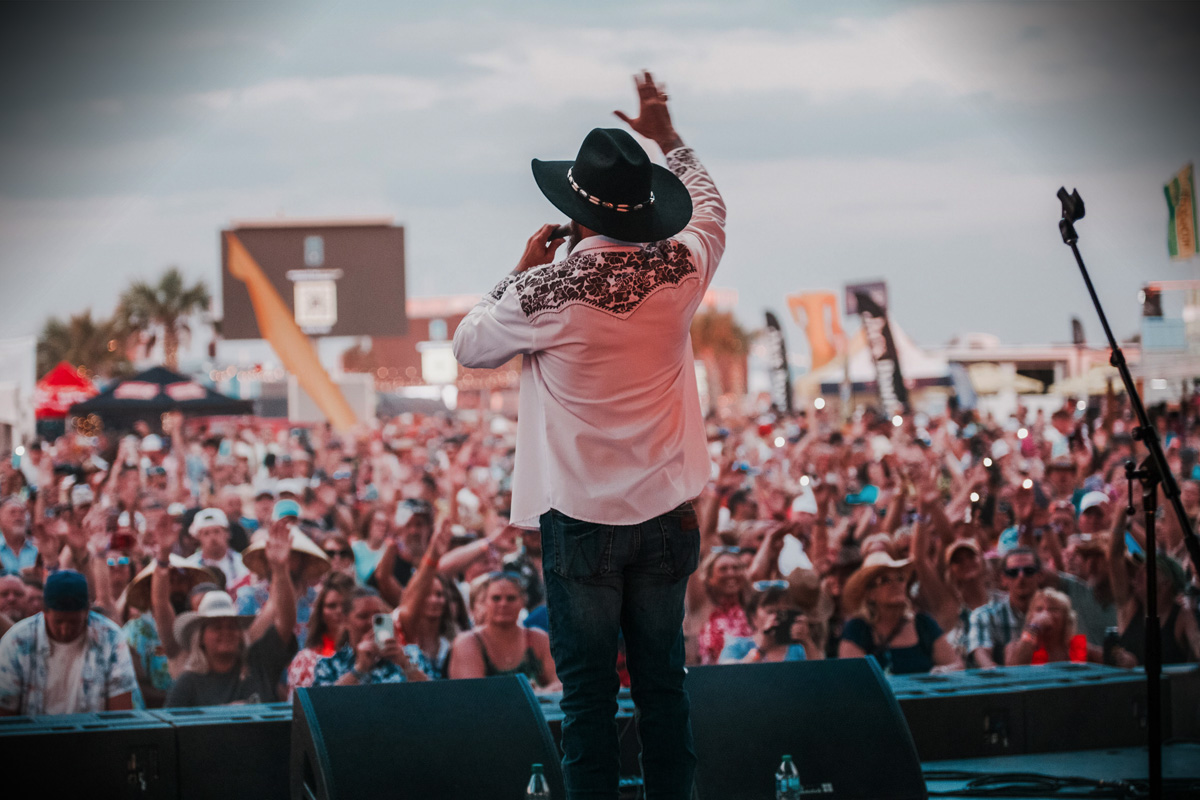
    While a lot of the music business happens from a distance online, Jennings is passionate about connecting directly with his fans. “If people didn’t come out to my shows, I wouldn’t be able to support my family,” Jennings concluded. “I make friends with people while I’m at shows, and I don’t stay hidden. I love playing music, but I also love interacting with people and supporting my family. I’m grateful.” •

    -Article by Lilly Platts

  • Western Art Roundup: Jessie Veeder

    Western Art Roundup: Jessie Veeder

    Jessie Veeder is a songwriter, musician, journalist, North Dakotan, community builder, mother, and advocate for Western life. She explores rural living through her music, popular blog, and podcast, Meanwhile, back at the ranch, and is the director of the Long X Arts Foundation. Veeder’s latest album, Yellow Roses, was released in January 2024.

    Jessie Veeder’s music evokes a feeling that can only be replicated by driving through her home state of North Dakota, off the beaten path of the interstate. Its range and farmland, as far as the eye can see, only interrupted by grazing cows, oil flares, or a sign for the next small town’s annual summer rodeo. Western North Dakota hides a lot of its beauty below the line of sight, with much of its topography going down instead of up. This might be lost on someone who doesn’t take the time to look more closely, and Veeder has been learning how to see beyond the surface for her entire life. Her songwriting and journalism explore the moments, stories, people, and experiences that make life in the rural West unique.

    Veeder has always been surrounded by the Western lifestyle and grew up singing alongside her father, Gene, a musician and rancher. From an early age, she related to songs with a story to tell, identifying elements of her own life. “I thought it was so magical to be a kid out in the middle of nowhere,” she recalled.

    Her father performed throughout the community, and Veeder started getting on stage to sing with him at a young age. She entered and won a community talent contest, and the grand prize of $50 in “chamber bucks” was enough to buy a double tape deck. Now armed with the technology to record herself, Veeder kept practicing and writing songs.
    Knowing that her story was unique, Veeder continued pulling on the thread of rural life in her songwriting. This led to recording her first album of original material, This Road, at 16. “It was just a unique thing for a kid my age to be doing something like that,” she shared. “I think about how brave that was.”

    Veeder found a lot of support in her community, but the idea of becoming a professional musician seemed out of reach. “That was a pipe dream,” she shared. “Saying I wanted to play music professionally was a hard thing for me to say out loud as a teenager. I didn’t utter it out loud, but I did to myself.”

    This changed when she left home at 17 to attend the University of North Dakota. She studied communications and was also encouraged to pursue music further. A Nashville booking agent discovered her music, and beginning her freshman year, Veeder toured up and down the Midwest. She played coffee shops and colleges, traveling alone. “I was pretty independent and totally fine getting in the car and driving hours to play,” she shared.

    This experience was formative and taught Veeder how to use her unique qualities — like her thick North Dakota accent and childhood on a ranch — to connect with people. “Not being ashamed of it, but being proud and talking about it was interesting to these college kids,” she remarked. “Once I realized that people are curious about my upbringing and my songs about rural living, I gained confidence.”
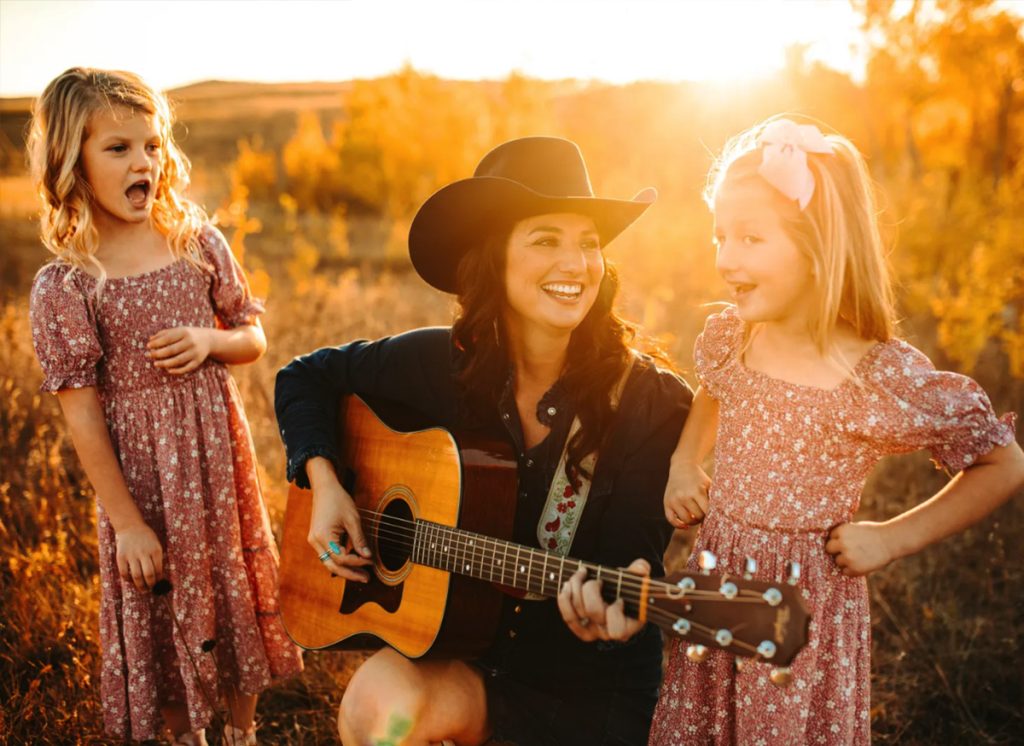
    At 23, Veeder was engaged to her now-husband and high school sweetheart, Chad. The couple moved home to Watford City, where Chad worked in the oil field, and Veeder did various jobs while continuing to write and play music. Looking for change, the couple moved to Missoula, Montana, where she worked for a nonprofit. Chad was offered a job back in North Dakota, so they returned to the family ranch, living in the house where Veeder’s dad was raised.

    Once again, her roots and history in western North Dakota were pulling Veeder toward storytelling, and she committed herself to following this thread. “I stayed home for around a year and a half and just explored my creativity. I wasn’t going to work in a bank, in the oil field, or as a teacher. I was going to tell this story,” she shared.

    She recorded Nothing’s Forever, which features her popular song, Boomtown. The oil industry had completely transformed her hometown, and the once quiet rural area was suddenly filled with people from all over the country and the world. “You almost forgot you were in your hometown because it was so wild,” Veeder shared. This sudden growth, and the negative and positive effects, made national news. Veeder had started her blog, Meanwhile, back at the ranch, and her writing had also been picked up by local and regional publications. Soon, the media was calling her to comment on Watford City’s sudden stroke of luck — or misfortune — depending on who was asked.

    Veeder chose to look at the situation positively. Her father’s work in economic development offered perspective on the generational benefits that could come from this sudden influx of money, and Veeder used her writing skills to tell their story. “I was really curious about the stories that were coming in and wanted to help create a story for our community,” she said.

    National publications grabbed onto shocking stories of violence and oil field workers living in campers during below-zero weather. Veeder saw humanity in these people’s stories, understanding that everyone was making a sacrifice of some kind to be there. “There were people coming here who just wanted a better life for their family, and we wanted to figure out a way to keep them here or get them to bring their families here,” she recalled.

    Her high school classmates started returning home, and family ranchers who once feared not being able to pass their operations on to the next generation were able to bring their kids back home. “The next generation could make a living here and do it really well,” Veeder said.

    She honed her writing skills during this time. “I became really practiced at it and worked on seeing the magical everyday moments, or the story that could come from the turn of phrase that someone said,” she recalled. “I have always been fascinated by the stories in rural America.”

    Her latest album, Yellow Roses, further explores Veeder’s life in the rural West and her family’s deep history in North Dakota. She and Chad are the parents of two girls, Rosie and Edie, and motherhood has also become a strong theme in her writing. Released in January of 2024, Yellow Roses came on the heels of several trying years for Veeder. In 2020, right before the Covid-19 lockdown, she was diagnosed with a rare form of cancer. She had been fighting breathing issues, and having been told that she had asthma, kept trucking through life, singing and performing regularly.

    After flying to Elko, Nevada, for the National Cowboy Poetry Gathering, Veeder knew that something was very wrong. An ER doctor in Elko expressed extreme concern, and after performing for the festival and returning home, she sought out a larger hospital in Bismarck. As she drove away from the hospital toward home, the doctor called her and said she needed to return immediately. A large tumor was discovered in her airway — Veeder’s lungs were over 90% blocked. Thanks to a strong diaphragm and good posture, Veeder had miraculously been able to sing but was dangerously close to an emergency. After several surgeries, a lot of treatment, and downtime, Veeder recovered. Luckily, her voice was not affected despite the extremely invasive surgery to remove the cancer. Today, she is learning to slow down and does regular preventative scans, but Veeder is back to living life full-on.
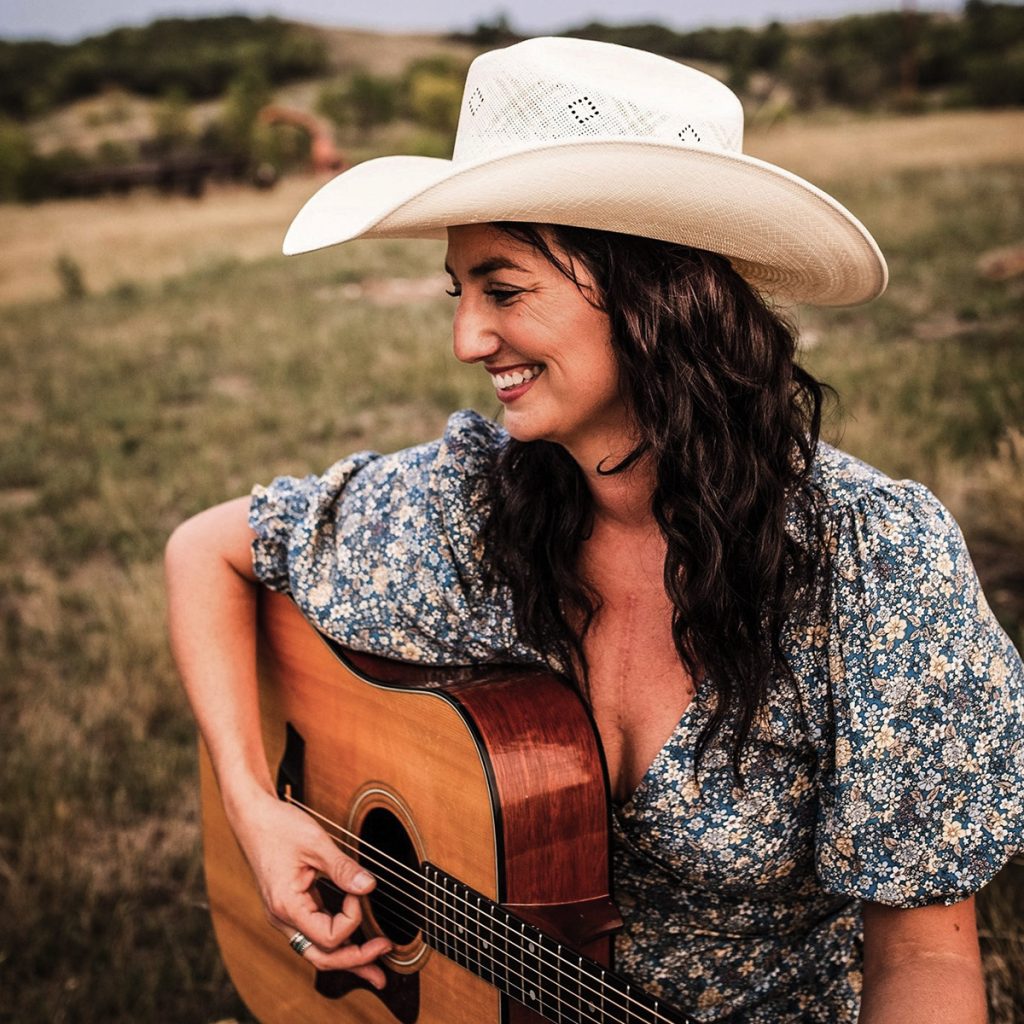
    In addition to sharing her own music, she works as the director for the Long X Arts Foundation, which brings art into the Watford City community. The organization helps plan events ranging from rodeo dances to art classes and classical piano concerts. When the oil boom brought money into the community, Veeder quickly advocated for the arts. “I knew that was something we lacked in our community because growing up here, I didn’t have as many opportunities to perform or explore the art world,” Veeder said.

    Other community members also advocated for supporting the arts, and in 2016 the Long X Arts Foundation was officially formed. “We have a permanent space in our visitor center with an art gallery and a full-time art teacher. We run a big concert series and go into the schools. We have facilitated public art projects and now are opening a retail space where we can really lift up local artists by giving them a place to sell their work,” Veeder shared.

    Art is front and center in the community, and Veeder is committed to bringing new and interesting performers into the community. Concerts have featured a Carnegie Hall trumpet player and a classical pianist.

    Veeder is an advocate for the Western lifestyle, and through her social media platforms, blog, and podcast, she shares her life on the ranch with people from across the country. Recently, she has been considering the popularity of Western culture and how that can be harnessed to benefit agriculture and Western culture. “I think we’re coming into an era where our story is our power,” Veeder shared. “I see that happening on social media in the world of agriculture, and we’re on those platforms showing people what it really looks like to be on a family ranch. This is what cowboy looks like, what being a farmer looks like, and what raising kids looks like. We’re able to grab a hold of that narrative on our own, and that’s what I think is so empowering and wonderful.”

    The newfound popularity of Western culture presents challenges, and Veeder recognizes the gap that needs to be bridged between popular culture and real life. “Let’s celebrate the culture and give people the opportunity to learn about what we do. If someone watches Yellowstone and then wants to come out to my ranch and let us show them what we do, all the better,” Veeder said.

    Rodeo is another thread connecting the general public with rural America. “I’ve been a participant in rodeo and, of course, an advocate for it. Those contestants are the ones representing our lifestyle. What we’re putting out front — and what cowboy means to us — matters to people,” she shared.

    Veeder is also the author of Prairie Princess, a children’s book written in collaboration with North Dakota artist Daphne Johnson Clark. The book celebrates rural living through the eyes of a young girl on a ranch.

    Veeder performs regularly at festivals and events throughout the country. She is a regular performer at the National Cowboy Poetry Gathering and has shared the stage with a long list of Western artists. Her efforts in music, community building, and advocacy have been recognized by several entities. Veeder is a recent recipient of the Governor’s Award for the Arts in Individual Achievement, she was named North Dakota’s favorite Folk Artist in 2016 and 2017, and she is the recipient of the North Dakota Ambassador Award.

    -Article by Lilly Platts
  • Shaley Ham: The West Desperado Way

    Shaley Ham: The West Desperado Way

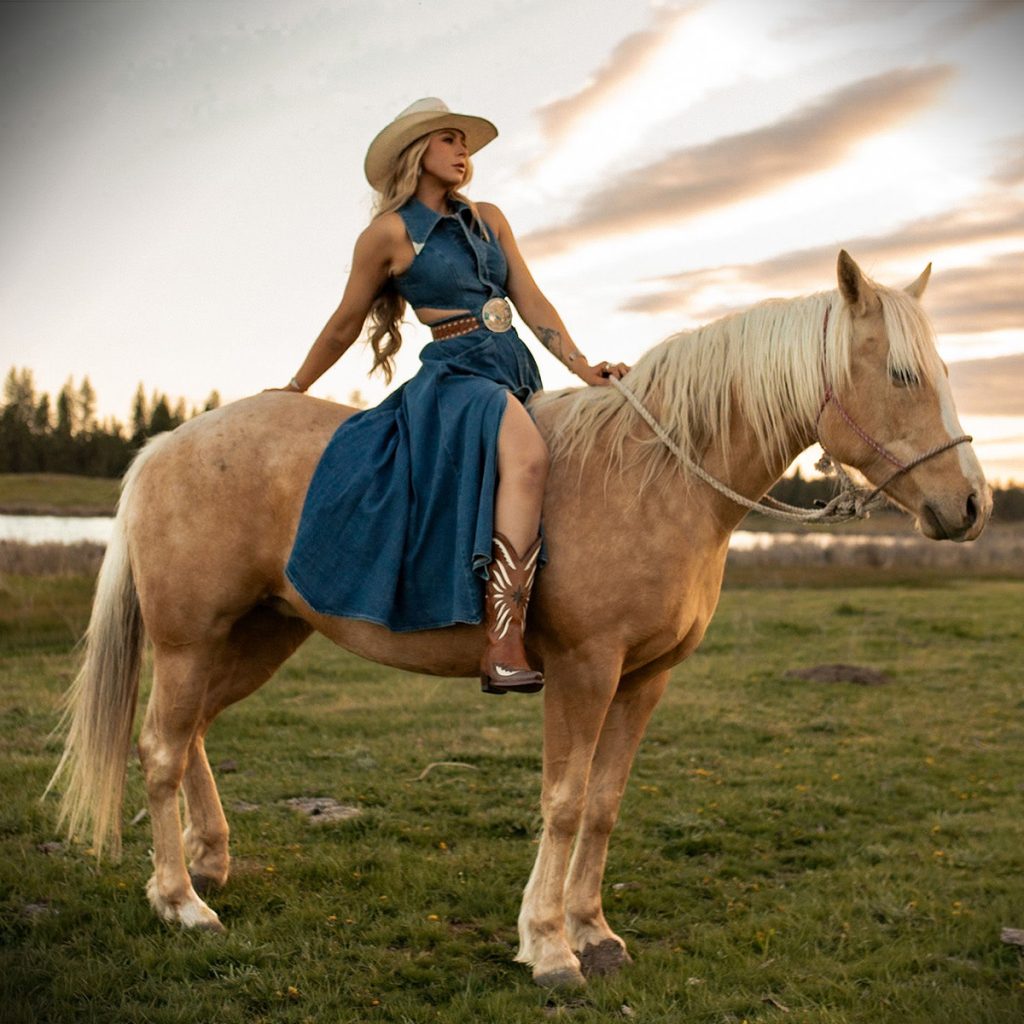
    Shaley Ham didn’t initially set out to be a fashion influencer. Though she always loved fashion — as a kid, she carried notebooks that featured her hand-drawn fashion designs — a career as a fashion icon wasn’t at the forefront of her mind during her childhood in Cheney, Washington, just outside of Spokane.

    The daughter of barrel racer Pam Capper, Ham grew up riding horses and attending rodeos on weekends, though she never really caught the competitive bug herself. But she loved traveling to the arenas alongside her mother, developing her love of the Western way of life along the way.

    “That Western lifestyle and those roots have always just been something I’ve connected with,” she says.

    Although her college years would whisk her away from Cheney, she moved back to her hometown after graduating with an accounting degree from the University of Oregon. Her return home sparked a renewed sense of passion for those Western roots.

    “I fell back in love with the romance of the Western way of life,” she says.

    The decision to return to her hometown ultimately changed her trajectory. She met bareback rider Nick Gutzwiler, who she would eventually marry. Around that time, she also began following others who sought to share their best Western-inspired outfits on social media.

    She put her accounting degree to use, cultivating a career in the field. But that job would also lay the foundation for her transition to fashion, which began after her coworkers constantly told her how much they liked her sense of style. Given the praise, she created a social presence exclusively dedicated to showing off her outfits.

    It didn’t take her long to build a community. After a couple of months, she already had a thousand followers.

    “When I hit over a thousand followers, I was like, ‘Oh my gosh, like, I’m a rock star!’ It’s funny to tell that story now because I feel like people can get a thousand followers overnight. But it was very different eight years ago,” she says.

    She now has more than 200,000 followers on Instagram, not to mention another 100,000 on TikTok. On her pages, you’ll find stylized images and videos of her in cowboy hats and boots, displaying classic Western style with a modern flair.

    While it may seem odd to some to build a Western fashion empire out of an accounting background, it has served her well. Her background in a business-adjacent field has given her an upper hand in terms of her ability to navigate the challenges that come along with being an influential personality, such as networking and maintaining a professional demeanor.

    Western fashion brands quickly identified Ham as someone they wanted to work with. They caught her attention with offers for free clothing—an irresistible perk for someone who was already fashion-obsessed. Something she’d started strictly for fun had suddenly started captivating Western fashion enthusiasts.

    That was 2016, a year her mother qualified for the National Finals Rodeo. She joined her mother in Vegas, where she also first encountered representatives of many of her favorite brands in person at Cowboy Christmas, the Western-themed holiday event that takes place in tandem with NFR festivities. This experience led to more opportunities to work with the brands she already loved.

    She also began receiving invitations to wholesale markets, such as the ones at the Dallas Market Center. These provide an early access opportunity to identify the styles and trends that Western wear brands are banking on for the coming seasons. They’re also a great opportunity to bond with the people behind the brands, which is an essential component of succeeding in the field of content creation.

    Still, even with all her success, it would take several years before she reached a point where she felt comfortable leaving behind the accounting world and transitioning into life as a full-time content creator.

    While her images often tout a carefree Western lifestyle, the truth is that success in this field requires the kind of work ethic only the most dedicated cowgirls can understand. She suggests that her background in the corporate world has proven a major asset, as her professionalism earns her kudos among her brand partners.

    “That’s always my biggest encouragement for other girls when getting started,” she says. “Set those standards because as soon as you release the reins and give some slack in the professionalism department, things can start to go sideways.”

    Presently, Ham has several collaborations with major brands — her four-year partnership with Rock n’ Roll denim stands out as a favorite among many. But Ham doesn’t foresee herself opening her own boutique anytime soon.

    However, after realizing the concho belts that are a staple of her signature style can be challenging for people to find, she wanted to be able to tell her followers how they can get their own. So, she now offers them for sale on the West Desperado website.

    “I wear them all the time. And it’s just super easy to know that I can send people somewhere to find them,” she says.

    And as with any influencer, Ham varies her style based on the season or her vibe.

    “I’m starting to love rosettes and like little accented rosettes. When they first came out, I was not vibing with them, but I’ve been seeing them incorporated in a more Western way. And I think it’s a delicate aspect to add when wearing lots of leather or fringe,” she says.

    She’s also a fan of Lariat neckties, which are becoming increasingly popular.

    “They hit the scene during this last NFR in December. And now girls are wearing them with strapless tops. A little Lariat necktie tied around your neck adds a fun kind of Western accent to any outfit.

    And then, of course, there’s the most classic of all.

    “You can’t go wrong with denim on denim,” she says.

    Follow Shaley Ham on Instagram and TikTok at @westdesperado and visit her website at www.westdesperado.com.

  • Chloé Marie Burk: Building A Life Through Art and Horses

    Chloé Marie Burk: Building A Life Through Art and Horses

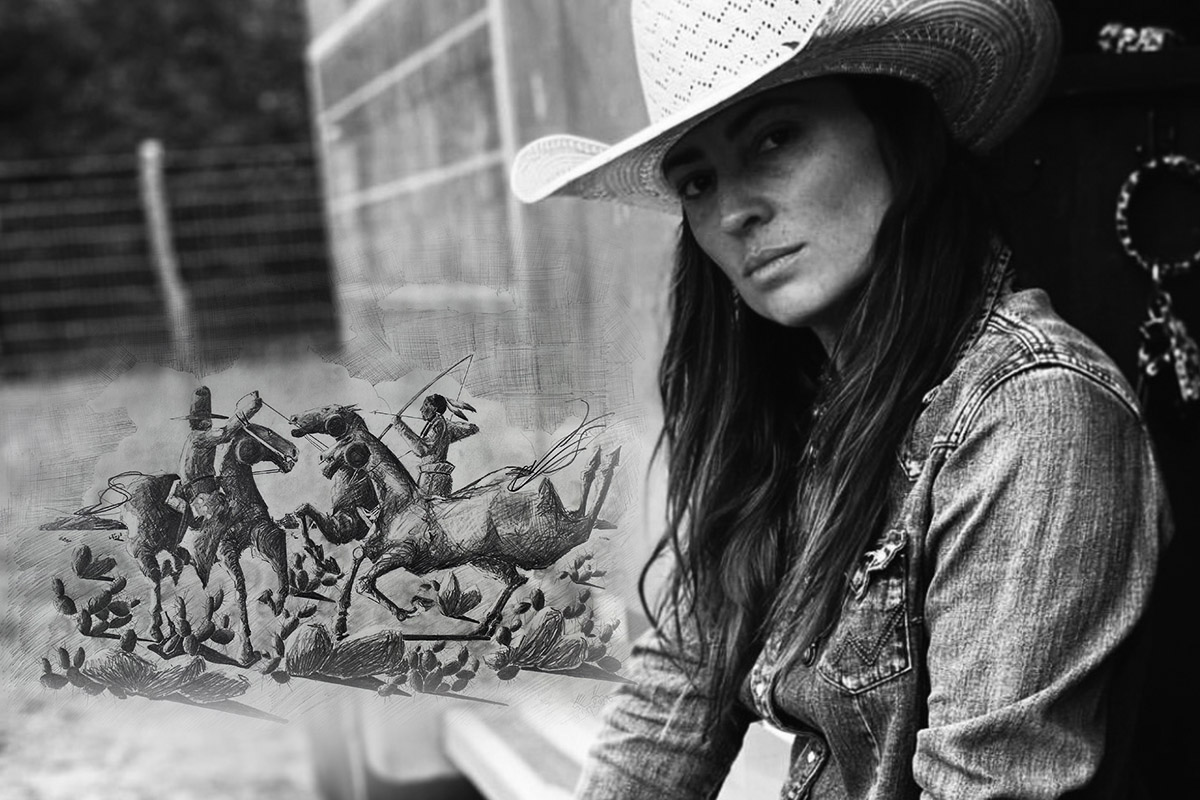
    Chloé Marie Burk has centered her life around art and horses. The French-born American artist brings western scenes to life, using movement and vibrant earth tones. Burk didn’t set out to live in the U.S., but a series of opportunities led her to eventually settle in the West. Since then, she has worked tirelessly to study and master her craft. Burk is represented by Parsons Fine Art in Taos, New Mexico. Her showings always sell out quickly, and she is supported by collectors — a serious mark of success for a professional artist. When she isn’t painting, you can find her focused on her other passion, training and racing barrel horses.

    An Artistic Upbringing

    Art has always been in Burk’s life. Growing up, her paternal grandmother was a painter, pianist, and opera director. Horses have always been there too, with her dad working as a jockey rider and farrier, and Burk riding English jumping horses throughout her youth. She first visited the U.S. at 24. “My best friend and I just wanted to visit,” Burk shared. In 2013 she returned, spending her time traveling and painting. On the last week of her trip she met Anthony and Brandi Katagas. Soon she started working for the family to make extra money, and they helped her secure a work visa. Anthony Katagas is an Oscar-winning movie producer, and the family was incredibly supportive of Burk. “They always believed in me and valued my work and who I am,” she recalled.

    Burk spent the next three years living in New York City. Her choice to stay in the U.S. wasn’t calculated, which is a common theme throughout her life. “That’s how I live my whole life. I don’t like to force things,” Burk said. “I didn’t have a goal back then. I was just finding my way through life.” After three years in New York, she was ready to get away from the chaos of the city. With $30 in her pocket and a suitcase, Burk landed in Austin, Texas, quickly finding her way to a more rural area. From there, she moved to New Mexico, where she met her husband, Thom, and started her journey in Western art. The couple has since moved between New Mexico, Montana, and Texas. Thom has worked as a roofing contractor, and most recently, founded Texas Fence and Outdoors — a custom building, deck, and fence company — alongside his best friend, Steve Cowsert.

    While moving to the U.S. wasn’t something Burk set out to do, she believes her journey here didn’t happen by accident. “It was always meant to be,” Burk shared. “It’s just a continuation of the life I started back in France. I found a similar life, just in a different culture.”

    Developing Her Style

    Western art wasn’t Burk’s first focus, but she immediately knew she wanted to pursue it after opening a Frederick Remington book. “For the first 10 years of really becoming a painter, I was doing more folk art,” Burk explained. I was exploring and knew I hadn’t found my subject yet. A friend had a book about Remington. I randomly picked it off the shelf, and I had never seen anything like it before.”
 Having moved to Taos, New Mexico, Burk was also encountering Western art throughout the community. She learned about the Taos Society of Artists, an organization of visual arts established in 1915. The small group of professional artists from the East had made Taos a focus of their work, sending their paintings across the country. This brought new audiences to Western art and made Taos one of the most important art communities in the country. Today, the work of these founding artists can be viewed in museums and through archives. Burk studied these works, and with inspiration surrounding her in the New Mexico landscape, she started to hone in on her style.

    New Mexico also led Burk to a friendship with Ashley Rolshoven-Loveless, the director and co-owner of Parsons Fine Art. “When we met we became friends right away,” Burk recalled. “She loved my studies and told me to take a year and work on it. So that’s what I did, and I became really passionate about it. Living in Taos I was really in the right place to become acquainted with Western art and learn it.” When her first show at Parsons sold out, Burk was both shocked and extremely inspired to move forward. She has continued to hold shows at Parsons, each selling out quickly.

    Style comes naturally to Burk. She studied fashion in school and has worked as a horse-savvy model for various Western brands. Finding a unique style in her art has taken time, and through dedicated work, she has landed on something truly her own. Studying painters like Remington was immensely helpful, but Burk is always conscious of how these studies affect her own painting; she always made sure she wasn’t simply copying someone else’s work. “You have to keep a very cold mind in these studies because otherwise you won’t find your style, but just “a” style.”

    “I worked hard to find my style,” Burk continued. “For years, I went through many phases to finally find it. Around four years ago I really pinned down what I wanted to do, and now I’m just refining it, year after year.”

    Daily life working horses and living in the rural West serve as inspiration for Burk’s paintings. “I am in contact with it every day,” she said. Burk calls on memories and elements of her surroundings to create subjects for her work. “All of my paintings come from my imagination. I don’t have any photo references. I just have an idea and work around it. I don’t really make a plan for each painting. If I’m going to make a series for a show, I’m going to have a larger idea of what I want,” she explained.

    Her medium of choice is oil on linen, and all of these works are sold exclusively through Parsons or select auctions. Burk’s studies, pencil drawings, and watercolors are occasionally available through her website or social media. Her partnership with Parsons has propelled Burk’s career forward and connected her with the fine art world. Many collectors of Burk’s work have become friends. “I’m completely humbled by it,” she said. “When I sold out my first show I was blown away. There are collectors who have walls of my paintings, and it’s incredible. I don’t really know how to describe it, because it makes me speechless.”

    A Passion for Horsemanship

    Burk’s friendship with Rolshoven also led her to barrel racing. Burk jumped in the truck with her for a race and immediately fell in love with the sport. “Not long after, I bought my first barrel horse. I am self-taught and have been blessed to meet a lot of people down that road who gave me pointers,” Burk shared. She has since gone all in on the sport, training her own horses and traveling to races. Currently, she has a young gelding by Corona Cartel called Hawk, and an older rope horse turned barrel horse, named Bartender.

    Burk currently lives in Texas, her husband Thom’s home state, which allows her to ride year-round. Training horses goes hand-in-hand with art, from building her schedule throughout the year to finding inspiration. “With horsemanship, you are never through with learning. Especially if you train your own horses, you are going to learn for your whole life,” she said.

    Horses are a theme in almost all of Burk’s paintings, and being around them every day feeds her work. “When I started training my horses I really enjoyed the process. It became a really strong part of my life, and I can’t see my life without it. Horses complement my art,” she shared.

    Burk is building the life that she wants, forging her own creative, unconventional path. “The main thing I enjoy is the freedom,” she concluded. “I’ve always wanted to work for myself. I get to live on my own schedule and am not dependent on anything else. I get to create my life with my hands, both with art and horses.”

    -Article by Lilly Platts, Photos Courtesy of Chloé Marie Burk