Rodeo Life

Category: Newsletter Articles

  • Cotton Rosser at the Red Bluff (Calif.) Round-Up

    Cotton Rosser at the Red Bluff (Calif.) Round-Up

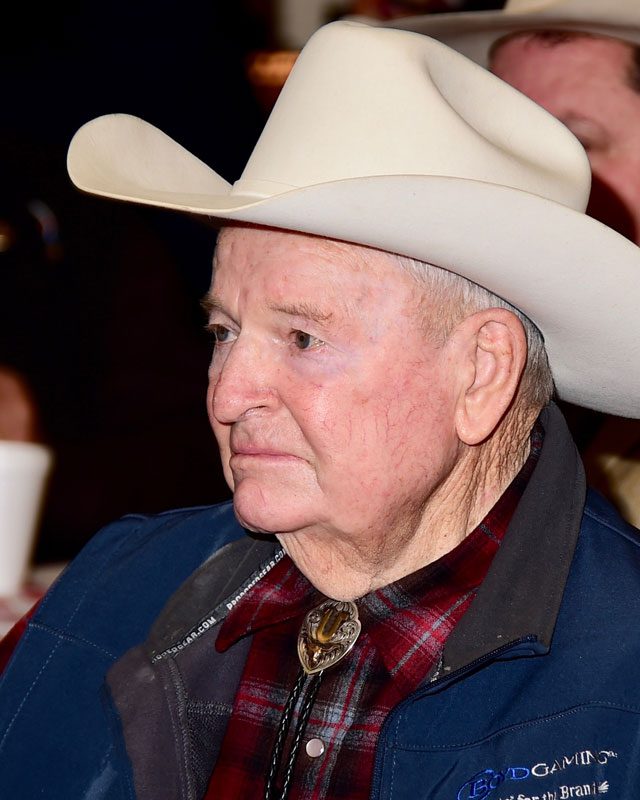
    Since he was 24 years old, Cotton Rosser hasn’t missed a year of the Red Bluff Round-Up.


    And that’s saying something, since the rodeo legend is now 89 years old.


    Cotton, who is the patriarch of the famous rodeo family, the Rossers, is well known throughout California and the nation. As owner of Flying U Rodeo Co., the Rossers put on rodeos across the Golden State and the country.


    And one of those rodeos is the Red Bluff Round-Up.


    Cotton was a rodeo cowboy in 1948 the first year he came to the Round-Up. At the time, he was a college student at Cal Poly in San Luis Obispo, Calif., and competing on the rodeo trail. He rode saddle broncs, steer wrestled, and roped calves. Three years later, he moved to Red Bluff after marrying his first wife, a Red Bluff native and a former Miss Red Bluff Round-Up. He continued to compete while he worked on the Charlie Stover Ranch, rodeoing on the weekends and working during the week.


    After he broke both legs in a tractor accident with a posthole digger, Rosser’s competition days were over. But he had another plan. In 1956 he bought a stock contracting company (a business that owns bucking horses and bulls for rodeos), the Flying U Rodeo Co., and started producing rodeos. At one time, he and various partners had three stock contracting firms and provided livestock for rodeos on the west coast, from San Diego to Vancouver.


    Red Bluff was one of his first rodeos, and in 1957, Rosser brought livestock to the Round-Up. He has never missed bringing horses and bulls to the Round-Up since then.


    Rossser, his son Reno, and the Flying U Rodeo Co. are renowned for their flamboyant and creative openings. Rosser believes in satisfying the fans. “If you don’t keep the audience entertained, they’ll go somewhere else.” His openings have included such entertainment as a big boot in the arena, with a scissors lift in it and a horse standing on the scissors lift, which raised seventeen feet in the air. Rosser also put a horse on a turntable in the arena, presenting the American flag. For the Round-Up’s 75th anniversary, he designed a memorable opening: a paper horseshoe, with the Round-Up’s logo painted on it. Rosser’s daughter Cindy, Cindy’s niece Linsay Rosser Sumpter and a third cowgirl rode black horses through the paper, as a confetti gun shot colored paper into the air. The picture is still on the side of the Flying U tack trailer. It was Rosser’s idea, now copied by rodeos across the nation, to fly the American flag in on the back of a sky diver.


    One of the most memorable spectacles Rosser has dreamt up is something that takes place at the Round-Up on the final rodeo performance each year. The Wild Ride was begun by Rosser seventeen years ago, and involves about eight to twelve cowboys, dressed in what might be called Halloween costumes, riding bucking horses. The cowboys dress up in everything from Flo from the Progressive Insurance commercials to the Statue of Liberty to characters from the Sons of Anarchy. The cowboys love it, and love to wow the crowds with special effects like baby powder that creates clouds of dust while they ride, or silly string sprayed on each other. The Round-Up awards the winner of the Wild Ride with a saddle and $1,000, and the fans love it. “It’s just the wildest ride,” Rosser said.


    Rosser and the Flying U Rodeo Co. has always been progressive in not just fan entertainment but in animal care as well. He created a special trailer, modified to transport injured or sick animals at the rodeo. Other rodeos have rented the animal care units, as they are called, including the Wrangler National Finals Rodeo, providing the best care possible for the animals.


    Four of Rosser’s five kids: Lee, Cindy, Brian and Reno (his youngest child is Katharine) competed at the Round-up, and his wife Karin, daughters and son Reno are part of the family business. Rosser has been recognized for his contributions to the sport of rodeo: he’s an inductee in the PRCA’s Hall of Fame, the Cowboy Hall of Fame in Oklahoma City, the Hall of Great Westerners, the California State Fair Hall of Fame, the PBR Legend Hall of Fame, the Western Falls Hall of Fame, a recipient of the Ben Johnson Award, and the Molalla, Ore. Rodeo Hall of Fame.


    And he still loves Red Bluff. Even though he moved to Marysville in the late 1950s, Red Bluff holds a special place in his heart. “It’s a cowboy town. It’s western, it’s cowboys and ranching, and it has a lot of wonderful people. The Round-Up is a rodeo’s rodeo.”


    The Red Bluff Round-Up takes place April 20-22 at the Tehama District Fairgrounds in Red Bluff. Tickets are on sale and range in price from $14-$30 (plus a handling fee for online sales) and can be purchased online at www.RedBluffRoundup.com, at the Round-Up office (530.527.1000) or at the gate. Performances begin at 7 pm on April 20, 2:30 pm on April 21, and 1:30 pm on April 22. For more information, visit the website at www.RedBluffRoundUp.com.
  • Wyoming Livestock Import Requirements

    Wyoming Livestock Import Requirements

    CHAPTER 8

    IMPORT RULES

    Section 7. General import requirements.

    (a)All Animals imported into Wyoming shall be accompanied by a paper or digital Interstate Certificate of Veterinary Inspection, and an Import Permit or Shipping Number when required, issued in compliance with these Rules and all applicable state and federal Animal health regulations,


    Section 8.Interstate Certificates of Veterinary Inspections (ICVI) & Permits.

    (a)ICVIs shall only be valid if properly issued by an Accredited Veterinarian or USDA/APHIS/VS veterinarian.

    (b)ICVIs shall only be issued after a visual examination of all Animals intended for importation into Wyoming has been completed and all other requirements for identification, testing, treatment, vaccinations, and declarations are met.

    (c)ICVIs are valid for thirty (30) days following proper examination of the Animal(s), unless otherwise specified by these Rules or by order of the Wyoming State Veterinarian.


    Section 18.Requirements for the importation of Horses.

    (a)An ICVI is required on all Horses entering Wyoming, unless excepted in Section 7(a)(i), (ii), (iii) or (iv).

    (b)A negative Equine Infectious Anemia test performed within twelve (12) months prior to importation is required, except for foals six (6) months of age and less, accompanying and not yet weaned from their birth mothers.


    Note: Wyoming is a Brand Inspection State, be prepared to meet all Inspection requirements.


    EHV1 Fact Sheet

    Developed by Dr Jim Logan and Dr Thach Winslow, WLSB veterinarians


    Equine herpesviruses are very common DNA viruses in horse populations worldwide. We have had EHV1 (and other equine herpes viruses) in Wyoming for decades. Since 1998 we have had at least 20 isolated cases of EHV1/EHM.

    The great majority of horses are exposed to equine herpes viruses early in life and will become lifelong latently infected (showing no signs of illness).

    By 2 years of age, almost all horses have been infected with EHV1. The initial exposure generally occurs in foals from contact with their dams. The virus can then become latent setting up a carrier state that is life-long.  Horses of any age that are carriers of EHV1 do not show any external signs of disease when the virus is in a latent form. The virus can be reactivated during times of stress, such as strenuous exercise, over exertion, long-distance transport, or at weaning.

    EHV1 (equine herpesvirus-1) is one of a large group of DNA viruses causing potentially serious disease in equine species. EHV1 can cause four manifestations of disease in horses, including a neurological form known as Equine Herpes Myeloencephalopathy (EHM), respiratory disease, abortion, and neonatal death.

    EHV1 is the primary cause of EHM which is most often due to mutant or neuropathogenic strains of EHV1, so called because of a particular mutation in the genome.

    Another strain of Equine Herpes virus,EHV4 causes a nonfatal upper respiratory tract disease in foals and is uncommonly associated with abortion and rarely with neurologic disease.

    In recent years, there has been a marked increase in the number of EHV1 cases, especially EHM, reported in the United States. There have also been several outbreaks of EHM at large horse facilities and events—at racetracks, horse show grounds, veterinary clinics, and boarding stables. The large number of horses that can be exposed on such premises and the serious nature of the disease have caused significant concern within the animal health community and the U.S. horse industry.

    EHV1 is contagious and is spread by direct horse-to-horse contact, by contaminated hands, equipment and tack, and, for a short time, through aerosol dissemination of the virus within the environment of the stall and stable. Horses may appear to be perfectly healthy yet spread the virus via the secretions from their nostrils.

    The initial clinical signs of the infection may be nonspecific and include fever of 101.5°F or greater. Fever may be the only abnormality observed. Other presenting signs may be combinations of fever and respiratory symptoms of nasal discharge and cough. Some horses have reddish mucous membranes.

    Horses with neurological disease caused by EHV1 infection can soon become uncoordinated and weak and have trouble standing. Difficulty urinating and/or defecating may also occur. Often the rear limbs are more severely affected than the front. Signs of brain dysfunction may occur as well, including extreme lethargy and a coma-like state.

    The incubation period of EHV-1 infection is HIGHLY VARIABLE, depending on the host, on the virulence of the virus, and on environmental and other factors such as stress. The AVERAGE incubation period is 4 to 7 days, with the majority of cases being 3 to 8 days, but with some taking up to 14 days. When neurological disease occurs, it is typically 8 to 12 days after the primary infection involving fever. In most cases, horses exposed to EHV1 will develop a fever and possibly nasal discharge and then go on to recover without developing more serious symptoms.

    There are many steps horse owners can take to help prevent the spread of EHV-1.

    • Stop horse movement if your animals may be infected with EHV1. This is the most important first step horse owners can take. Horses should neither enter nor leave a premises where EHM has been diagnosed until cleared by the veterinarian.
    • Do not allow horses exposed to EHM case(s) to have contact with unexposed horses on the premises.
    • Isolate sick horses. Horses that have aborted or shown signs of fever, respiratory disease, or neurologic disease should be separated from healthy horses. Ideally, the sick horse(s) should be moved into a separate building or paddock on the premises, or be transported to a veterinary hospital with an isolation facility.
    • Do not share equipment among horses on the facility. Since this virus can be spread from horse to horse via contaminated objects such as water/feed buckets or bridles, equipment  should not be shared among horses.
    • Practice proper biosecurity measures to prevent spreading the virus.


    **The WLSB has produced and distributed an educational brochure entitled Equine Herpes Virus; Prevention Tips for Exhibitors & Event Managers to help horse owners and event managers understand the disease and ways to help prevent it.


    For more information, contact the Wyoming Livestock Board: 307-777-7515


  • The Buck Starts Here

    The Buck Starts Here

    Corporate Partnership

    It’s not just about putting your hand out.

    Corporate sponsorship is a two-way street; the sponsor and the sponsored both have goals. We’re here to help you meet those goals.

    Dave Jordan is the corporate partnership coordinator for several organizations, including two NASCAR teams, horse organizations and the WPRA. He grew up in Colorado Springs, and spent five years with Randy Bernard and the PBR. When Randy left the PBR, Dave moved on to the PRCA, and ended up starting his own consulting business.

    Steve Gander has years of experience in rodeo production and marketing. He wrote a column for Rodeo News called the Business of B.I.T.S. (Butts in the seats)

    We will deliver a column once a month combining these two expert opinions and welcome your input.

    Our goal is to teach you how to compete for Corporate Partnership dollars and how to put together strategic marketing plans for events and associations. We’ll address things from marketing strategies to timelines, and to how to effectively locate partnerships and close the deal.

    His first word of advice? Don’t get caught up in excessive pride about an event. Be realistic. Would you rather have 10 sponsors at $500 a piece, or none at $5,000? It all goes in the bank, plus you have the opportunity to upsell them the following year if you do a great job with your clients. Businesses are inundated with those who use the hand-out approach without delivering anything in return … even on a local level. When presenting a partnership, remember that partnerships of varying “levels” (gold, silver, bronze, etc.) went out in the 1990s. The days of slapping up an arena banner and doing a PA announcement and expecting thousands of dollars are gone. Potential Corporate Partners expect you to create a package that best helps them leverage their brand and accomplish their Corporate goals and objectives.

    The best approach is a PowerPoint, ending with a summary slide to showcase what you have to offer. Allow the company to put together a package that works best for them.

    The best partnership options out there are local businesses. To present to them, email the PowerPoint to the business (it has to get to the right person) and follow that up with a phone call to set up a meeting.  On the national level, you have to have a connection within the company to get someone to pay attention to you – that’s the only way they are going to do it.

    If you plan to hire someone to help, you need to be prepared to give them a stipend each month to cover their time. A minimum of $500 to $1,000 a month plus 15 percent is what is required to shop your event out.

    First Things First

    Before you even begin strategizing, building a PowerPoint presentation is critical. The days of sending out sheets of paper went out in the 90s. I am amazed at how many people still use that method. Take that information and put it into a PowerPoint that tells your story.


    It has to be fresh. Come up with a slide background that pops – avoid plain white, black, or red. Remember: You have three to five minutes to capture your prospect’s attention.

    The cover slide should simply be the name of your event across the top of the screen, a logo underneath, and the words “Corporate Partnership Opportunities” at the bottom. Add a “Presented to” line, and type in the name of the company you are sending it to.

    In the very bottom left, list the name of the presenter (likely you), and in the opposite corner, place the logo of the organization or event to whom you are presenting.

    Second slide: If you have the resources to add a 30-45 second action clip from your rodeo, great. If not, this is an “About Us” slide, giving a history of the rodeo. A short paragraph here is perfect.


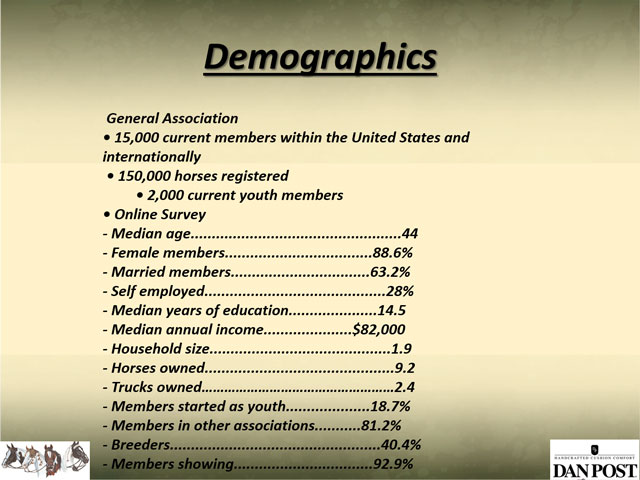
    The third slide is about the demographics – the real teeth of your presentation. Scarborough Multi-Market is a demographics leader, and a valuable resource. You can also send out questionnaires to members and have someone floating through the stands with a clipboard to begin collecting the kinds of statistics you need.


    The fourth slide is the place to go into signage. This is where you have photo examples of the chutes, arena and out-gates to give a visual presentation of the opportunities available. You want to have enough room to cut and paste your prospect’s logo onto the images – break this into two slides for clarification if you need to. It’s imperative to use a clear photo and make sure you can get their logo in.

    The fifth slide should be printed program opportunities. This is an area that is often lacking. Many rodeo programs are simply an avenue to place sponsor ads, and contain no editorial information of value. Here is where you can share the history of your rodeo, information about the contestants, photos from past rodeos, information about additional events, schedules, and other items of interest. This information will make your rodeo program much more readable, collectible and valuable. We’ll talk about this again in a later article.

    The sixth slide should explain VIP seating and hospitality. If you don’t offer this, you should. Here, you would put a photo of the designated VIP area, saying, “Special area for you and your valued clients and dealers.”


    We will cover the summary slide in the next issue, but for now, the value of the PowerPoint cannot be underestimated. Keep it short and to the point, with great images, to define the opportunities at your event.

  • PBR AND NHSRA ANNOUNCE BROAD PARTNERSHIP IN HIGH SCHOOL RODEO

    PBR AND NHSRA ANNOUNCE BROAD PARTNERSHIP IN HIGH SCHOOL RODEO

    Expanding Beyond Bull Riding, PBR Wants to Grow High School Rodeo into a Global Media Property


    PUEBLO, Colo. (February 21, 2018) – Professional Bull Riders (PBR) and National High School Rodeo Association (NHSRA) have announced a partnership to grow high school rodeo through media, marketing, and programs for youth.


    The extensive, multi-faceted partnership, which signals PBR’s further expansion into western sports beyond bull riding, includes global TV and digital rights representation for U.S. and international coverage of high school rodeo, and PBR sponsorship of NHSRA to market and support rodeo youth development programs globally.


    “The NHSRA is proud to welcome PBR as a partner of high school rodeo,” said NHSRA Executive Director James Higginbotham. “PBR’s investment in the NHSRA will benefit our student athletes by increasing exposure for our association through marketing the rights to NHSRA’s media. We look forward to a rewarding partnership for years to come.”


    PBR will focus on expanding NHRSA as both a TV and streaming product and building the profiles of the sport’s student-athletes.


    “This is a significant opportunity to grow high school rodeo as a global media property by leveraging Endeavor’s reach, shining a light on compelling NHSRA student-athletes around the world, and raising awareness of a sport every young athlete should consider,” said Sean Gleason, CEO, PBR, a division of Endeavor, a leading global sports, entertainment and fashion company. “The young men and women who compete in junior high and high school rodeo are the future of the cowboy, keeping alive an important part of our heritage yet with virtually no traditional media coverage.  We intend to change that by telling rich and compelling stories in addition to covering the events with their talents on full display.


    In addition to this major partnership in amateur rodeo, PBR also announced it is working closely on the professional side with the newly formed World Champions Rodeo Alliance. The goal is to team with WCRA to develop several million-dollar rodeos that provide increased earning opportunities for western athletes without asking them to choose among events or rodeo organizations.


    PBR will also now sanction the bull riding at Days of ’47 Rodeo to be held July 19-21 at the state-of-the-art Days of ’47 Arena at the Utah State Fair Park. A total of 256 competitors will have the opportunity to compete for a share of a $1 million purse.


    These rodeo events will be streamed for fans over the newly formed RidePass, a 24/7 digital streaming service that debuted last weekend at the PBR 25th: Unleash the Beast event St. Louis.

    “Fans have been asking for more live-event coverage, more access to the unique and compelling personalities in western sports, and additional ways to celebrate cowboy values,” Gleason said. “RidePass will allow fans to stream everything from their favorite PBR and rodeo events to original western-themed sports series available nowhere else.”


    Fans can join RidePass at www.ridepass.com


    Among the NHSRA events that PBR’s RidePass digital network will cover are the NHSRA High School Finals and the NHSRA Junior High Finals. The NHSRA High School Finals, scheduled for July 15-21 in Rock Springs, WY, is the world’s largest rodeo in terms of athletes (more than 1,600) and stock, while the NHSRA Junior High Finals, set for June 24-30 in Huron, SD, is the second largest rodeo in the world with more than 1,100 athletes competing.

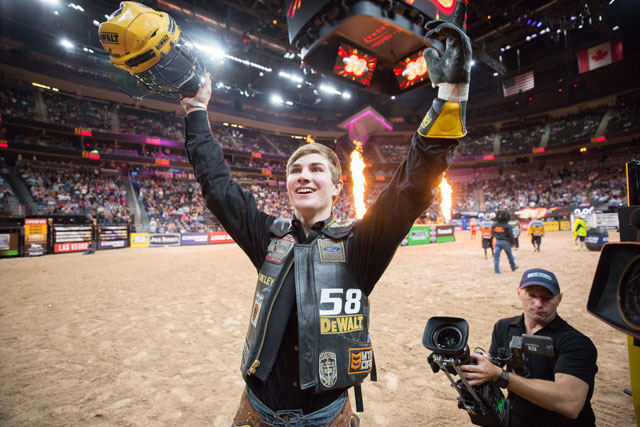
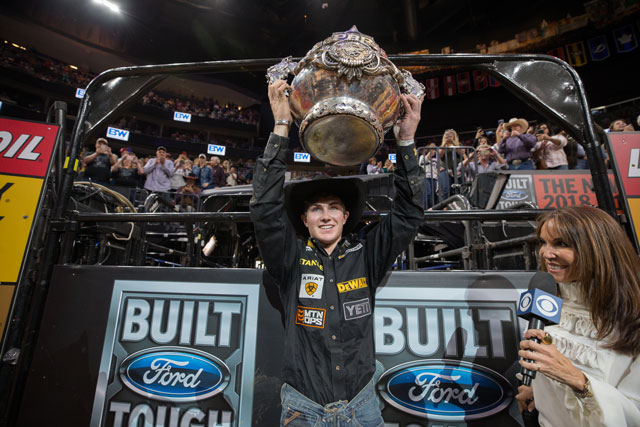
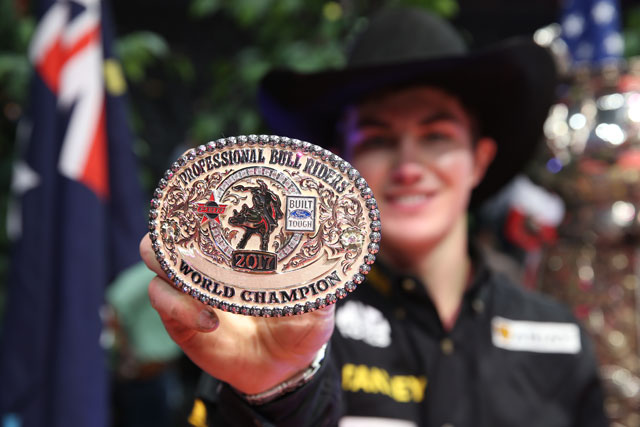
    In its new venture high school rodeo, PBR will bolster a feeder system that already produces many of its biggest stars, who often qualify for the NJHFR (National Junior High Finals Rodeo) or NHSFR (National High School Finals Rodeo). These former rodeo student-athletes include 2017 World Champion Jess Lockwood; 2016 World Champion Cooper Davis; 2013/2015 World Champion J.B. Mauney; 2014/2015 CPRA (Canadian Professional Rodeo Association) Champion Dakota Buttar; 2012 PRCA Champion Cody Teel; Gage Gay;  Derek Kolbaba; Brennon Eldred; Cody Campbell; Matt Triplett; Chase Robbins; and Keyshawn Whitehorse.


    “We’ve been big fans of high school rodeo well before Jess Lockwood was winning a quarter of a million dollars at the PBR while still competing in high school rodeo,” Gleason said. “PBR has been working to build the western lifestyle for 25 years, and we want to help the NHSRA grow and expose their great property to the world through our experience, industry relationships, and media channels.”

  • TOGETHER IN TROUBLE

    TOGETHER IN TROUBLE

    Two Phillips Co. residents battle cancer, benefit from Phillipsburg rodeo fund


    PHILLIPSBURG, KAN. (January 2018) – Charlene Ross and Charlie Stephens share a special bond.


    Ross, a Long Island, Kan. resident, and Stephens, a four-year-old girl from Almena, both shared the same disease: leukemia.


    Ross, who is retired as a para-educator at Northern Valley School in Almena, was diagnosed with acute myopic leukemia in April 2016. After three rounds of chemotherapy, the disease was in remission and she was given a stem cell transplant in July of 2017 at the University of Nebraska Medical Center in Omaha.


    She spent more than 100 days in Omaha, her husband Keith with her. Although Medicare and secondary insurance paid the bills, nearly $500,000, the couple had the expense of fuel, food and housing.


    The Rosses were recipients of funds raised by the Phillipsburg Rodeo Association and given through Hope in the Heartland, a fund for cancer patients in the area. Each year, on the Thursday night of rodeo, the rodeo hosts a Tough Enough to Wear Pink night, where funds are raised; local sponsors, including Prairie Horizon Agri-Energy, McClain Seed Sales, Rodgers and Associates, Kansas Crop Care/Nebraskaland Aviation and Farmers State Bank also contribute to the fundraiser.


    The funds were a godsend, Ross said. “We were so blessed to get the money.”


    Eleven miles southwest of Long Island, in Almena, lives a little girl, sixty-plus years younger than Ross, who is fighting the same fight.


    Charlie Stephens was diagnosed with pre-B acute lymphoblastic leukemia in September of 2015, when she was two years old. Within 29 days, and after two rounds of chemo, she was in remission. Her parents, Jason and Michelle, were told their daughter had a 95 percent chance of beating the disease.


    As part of routine checkups, Charlie has spinal taps every three months, to make sure cancer cells didn’t return. In January of this year, the unthinkable happened: the spinal tap showed cancer cells.


    So she began another round of chemo, and on July 6, 2017, had a bone marrow transplant. Because a perfect match could not be found, her mother was the donor. The transplant has not grafted yet, but doctors say it takes from ten to 28 days to graft.


    Charlie will be in the hospital 30 days following the transplant, and an additional 60 to 100 days after that, she’ll stay in Omaha, for lab work and to monitor her progress. She and her mother will stay at an extended stay hotel close to the hospital.


    That leaves Jason and Charlie’s older brother Mason, who is eight, at home in Almena, and cuts the Stephens’ income. The Stephens have been recipients of Hope in the Heartland funds as well. “Now that we are a one-income family, (the Hope funds) help with everyday bills, along with food and gas, since we are in Omaha and the boys are at home,” Michelle said.


    For the Rosses, cancer is nothing new. Keith and Charlene’s daughter, Staci Montgomery, had breast cancer, and Keith has had colon and prostate cancer.


    The family, which also includes daughters Monica Cole and Melissa McClain, both of Long Island, and son Doug Ross, who lives in Texas, love coming to the rodeo.  Keith does not usually wear pink, but “he wears pink (to the rodeo) and we’re proud as we can be to support the Phillipsburg rodeo,” Charlene said.


    Charlene Ross and Charlie Stephens are connected beyond the disease they share. When Charlene heard about Charlie’s diagnosis, she visited with Michelle about her journey. Mason is in Charlene’s granddaughter’s class in school. Charlene told Charlie that her grandkids called her “Grandma Charlie,” and the two hit it off. “We’ve adopted (Charlene) as family,” Michelle said. “The connection of the name and the same fight, it makes it that much more special.”


    Charlene is appreciative of her second chance at life, knowing that ten years ago, medical technology wasn’t as advanced and she might not have survived leukemia. “We live a very blessed life,” she said. “The Lord has gotten me through, taking my hand and leading me through.” She is not back to full health; her energy level hasn’t fully returned, but she looks forward to doing things again, like traveling with her husband, who is on the national rural electric cooperative board.


    Fans at the August 2, 2018 performance of Kansas Biggest Rodeo are asked to wear pink to show awareness and recognition of cancer. For every fan wearing pink to that night of rodeo, the Phillipsburg Rodeo Association donates one dollar to cancer research and local cancer patients, and voluntary donations will be collected that night.


    For more information on Kansas Biggest Rodeo and its Tough Enough to Wear Pink campaign, visit the website at KansasBiggestRodeo.com or call 785.543.2448.

  • BUCKS AT THE RODEO

    BUCKS AT THE RODEO

    St. Paul Rodeo provides opportunities for fundraising


    St. Paul, Ore. (June 12, 2017) – The “bucks” at the St. Paul Rodeo are more than just the horses and bulls in the arena.


    They’re the dollars that are raised by the rodeo and given back in dozens of ways, through the various organizations that provide food, drink and parking to rodeo-goers.


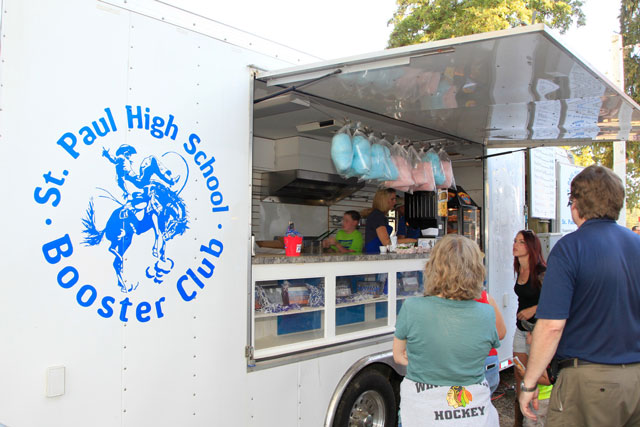
    Three groups: the St. Paul Parish, the St. Paul High School Booster Club, and the St. Paul Jaycees, all provide services to the 50,000 fans who enjoy the St. Paul Rodeo June 30-July 4, and through their work, provide funding for their groups.


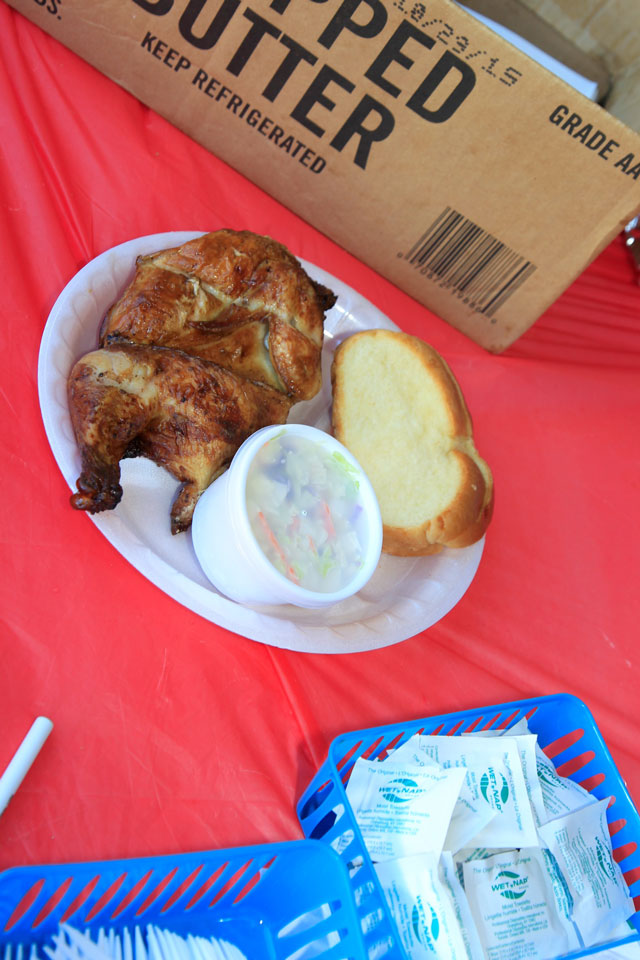
    The Parish serves barbecue chicken to rodeo fans, cooking 6,500 chickens with their secret recipe, said Laurie Nicklous, a volunteer with the St. Paul Parish Chicken Barbecue stand. The barbecue chicken is a highlight for many rodeo-goers, Nicklous said. “People come from all around, and sometimes just because of the chicken. They really look forward to it.”

    The St. Paul Parochial Elementary School benefits from funds raised, and funds also go to activities for the parish. The barbecue chicken sales are the group’s major fundraiser for the year.


    The high school booster club is responsible for concession stands in the grandstand and for parking cars, and over the five days of rodeo, more than 150 people will volunteer their time. Each sport: football, boys basketball, girls basketball, cross country, track, softball and baseball, take their turns at helping park cars, and the students can be found alongside their parents and other volunteers in selling cotton candy, hot dogs, pretzels, nachos, pop, candy, and the famous St. Paul rodeo strawberry shortcake in the concessions stands under the grandstand.


    It’s the only fundraiser the booster club holds, said Kathy Wilmes, a volunteer with the club, and it’s more convenient to work the five days of rodeo instead of holding lots of car washes and cake walks. Money raised goes towards athletics at the school: uniforms, equipment, upgrades, and just recently, new bleachers in the existing gym, to replace bleachers that were there when the school was built in the 1950’s.


    Volunteering with the parish and booster club is good for the kids who do it, says both Nicklous and Wilmes. In the chicken stand, they graduate to bigger jobs as they get older. “First you’re serving pop or buttering bread or mixing coleslaw,” Nicklous said. “And pretty soon you’re the guy who serves the chicken. Our kids learn a great work ethic, and sometimes they’re working alongside their grandma or grandpa.”


    Wilmes, whose daughters, ages 30, 28, 26 and 21, are no longer in high school, continues to volunteer with the booster club, and when it’s rodeo time, she’s right there, along with nearly everyone else in St. Paul, working at the rodeo. “There’s nothing worse to me than being home during the rodeo,” she laughed. “I can’t stand it. I have to be up there (at the rodeo grounds.) I’m sure I’m not the only one who feels that way, either.”


    The St. Paul Jaycees are responsible for the “bull pen” – the beer garden area of the rodeo. Between 500 and 600 people make their way through the bull pen during each day of the celebration, and with only thirty Jaycees, each member recruits family and friends to help. As with the parish and the booster club, no one is paid; everyone is volunteer, and all of the funds the Jaycees raise go back to the community. They donate to sports teams, several school functions, and recently, donated $2,500 to a family in need of a handicap accessible vehicle.


    The real winners of the St. Paul Rodeo are the youth of the town, said Nicklous. With most of the funds raised by the parish, the booster club and the Jaycees going to youth athletics, the school, and families in need, “the biggest benefactor is all of our kids,” she said. Organizations beyond the community of St. Paul also benefit.


    The St. Paul Rodeo kicks off June 30, and runs through July 4 with performances each night at 7:30 pm and a 1:30 pm matinee on July 4. Fireworks follow each night of rodeo; the carnival, Wild West Art Show, and the Tack Room Saloon are just a few of the activities for fans. Rodeo tickets are available online and at the gate. For more information or to purchase tickets, visit www.StPaulRodeo.com or call 800.237.5920.

  • FLOODED WITH MEMORIES

    FLOODED WITH MEMORIES

    Inter-State Fair remembers 10 year anniversary of flood


    Coffeyville, Kan.  (January 2018)  – Ten and a half years ago, a devastating flood hit the Coffeyville area, and it paused a long-standing tradition.


    When the Verdigris River flooded on July 1, 2007, the water poured over the levee and flooded the east side of Coffeyville, and the fairgrounds for the Inter-State Fair and Rodeo.


    And what would have been the 100th anniversary of the Inter-State Fair and Rodeo was canceled.


    The Verdigris River, which borders the fairgrounds on the east side, flooded the fairgrounds with ten feet of water, and with the fair and rodeo five weeks away, the decision was made to cancel that year’s event.


    Adding to the misery of the flooding was that the water reached four feet above the levees surrounding the refinery in town, and about 90,000 gallons of crude oil was added to the floodwaters.


    When the fair and rodeo committee met four days after the flood hit, it was difficult to face reality, said John Rinkenbaugh, who was the rodeo chairman then. “A bunch of us were having a hard time admitting we weren’t going to have a fair (and rodeo),” he said. Joe Humble, who was then the chief of police for the city, and now is the rodeo chairman, put it bluntly. “He had been to the fairgrounds,” Rinkenbaugh remembers, “and he said, there is no way. There is no way we can recover from this quickly enough to put on a fair and rodeo.”


    So, for the second time in its 100 year history, the fair was canceled. The only other time it had been canceled was in 1943, due to World War II.

    The arena and pens withstood the water damage, but the buildings at the fairgrounds did not. All the structures at the fairgrounds had to be cleaned to remove oil and mold damage, and the refinery cleaned them, along with every building that had flood and oil damage in the city. The old Floral Building, which was home to the inside exhibits, was so damaged it could not be renovated, and it was torn down. The Ron Stevenson building, which hosts the poultry and rabbits, was renovated, and the recreation center, which is where the 4-H and open class exhibits are housed, was not quite ready for the 2008 fair, but it was finished enough that it could be used.


    The flood hit the east side of Coffeyville the hardest, and the mold, along with the oil, damaged structures beyond repair. The refinery purchased 327 houses, and tore them down, and offered businesses to be professionally cleaned.


    For Rinkenbaugh, one of the hardest things was calling the rodeo contract personnel to tell them the rodeo was canceled. He remembers what Bennie Beutler of Beutler and Son Rodeo Co. told him. “Bennie told me, don’t worry about us,” Rinkenbaugh said. “He almost said that before I got done telling him. ‘We’ll be all right, John,’ he said. He wanted to make sure I wasn’t worried about it.”


    The flood destroyed several hotels, which were not rebuilt in time for the 2008 event, so Rinkenbaugh had to find RVs and campers for contract personnel to stay in during the event.


    The Inter-State Fair hosts a large regional junior livestock show, and even though the show couldn’t be held, it was decided that the market sale should occur. Doug Ott, a local attorney whose children showed sheep, came to the fair board meeting and pleaded that the fair host a sale. “Those kids had worked hard all summer,” Rinkenbaugh said, and even though there wouldn’t be any livestock shows, the sale took place.


    Water poured over the levee for 2 ½ days, and people were not allowed back into their homes for 10 days, said Cindy Price, city clerk.  Six of the city’s seven hotels were damaged or destroyed, along with five restaurants, four convenience stores, and a grocery store. The city sales tax decreased as people were unable to work due to damaged businesses and homes.


    But the flood also brought people together, Rinkenbaugh said. “Everybody had a common cause, a common goal. You set aside petty stuff and see the bigger picture. It’s funny how with a disaster like that, there’s a good side to it.”


    And ten years later, the Inter-State Fair and Rodeo is going strong. “The fair and rodeo came out all right, other than missing a year,” Rinkenbaugh said.


    This year’s Fair and Rodeo will be held the second week of August, at Walter Johnson Park in Coffeyville, and will include a pro rodeo and a bull riding. For more information, a complete schedule, and to purchase tickets, visit the website at www.FairAndRodeo.com or call the Coffeyville Area Chamber of Commerce at 620.251.2550.

  • Tsinigine and Lockett lock down win at NWSS in Denver

    Tsinigine and Lockett lock down win at NWSS in Denver

    Courtesy PRCA

    (Jan. 21, 2018) – The following are unofficial results from the National Western Stock Show Rodeo.

    DENVER – Snow didn’t slow down team ropers Aaron Tsinigine and Kyle Lockett as they won the National Western Stock Show and Rodeo with 16.2 seconds on three head – but it almost kept them from competing. Lockett’s flight was delayed, but he arrived at the Denver Coliseum just in time to compete.

    “He was supposed to fly in at 11 a.m., but didn’t get here until 2 p.m. and he barely got here in time,” Tsinigine said.

    “I ran through the front door and down the stairs – I was hoping I got here in time,” Lockett said. “I showed up two teams before I was up, so I didn’t have time to let it (the stiff competition) get to me.”

    Lockett was flying in from Fresno, Calif., when his flight was delayed by about four hours.

    “We drew good today, and it was wide open, and Kyle said, ‘Let’s go catch them,’” Tsinigine said.

    “This is a short go where things can fall apart easily, but we had a good steer,” Lockett said.

    Tsinigine was competing on a new horse, and it turned out well for the ropers.

    “This is his first big season – he didn’t handle the wagons too well back here (behind the stands),” Tsinigine said. “But in the arena, he is tuned in.”

    The duo entered the final round third in the average with 10.5 seconds on two head, so they had to make up 0.4 seconds to take the lead in the average.

    “At these deals with the short gos, if you win the short go, it’s all within a chance,” Lockett said.

    Luckily, they’re both familiar with high-stakes competition.

    Tsinigine qualified for the Wrangler National Finals Rodeo presented by Polaris RANGER in 2014-15 and left Las Vegas as the 2015 world champion. Lockett’s been to the WNFR seven times (1997-98, 2000-03, 2005).

    Despite their impressive rodeo résumés, this is the first time they’ve won in Denver.

    “It’s a great rodeo and a great start to the winter,” Lockett said, noting that this was his first time competing at Denver in 12 years.

    Up next, Tsinigine and Lockett are headed to the Southwestern Exposition and Livestock Show in Fort Worth, Texas.

    “We’re going to play it little by little – this is a good start,” Lockett said.

    Other winners at the $471,620 rodeo were all-around cowboys Jeff Johnston (steer wrestling and team roping) and Ty Talsma (steer wrestling and team roping), $5,042 each; bareback rider Caleb Bennett (256.5 points on three head); steer wrestler Tyler Pearson (11.6 seconds on three head); saddle bronc rider Zeke Thurston (255.5 on three head); tie-down roper Shane Hanchey (23.0 seconds on three head); barrel racer Christine Laughlin (46.24 seconds on three runs); and bull rider Chase Dougherty (252.5 points on three head).

    Hanchey smashed the previous three-head average Denver record by more than a full second. The previous record of 24.1 seconds was shared by Justin Macha (2011) and Justin Maass (2012).

    photo by Westfall Photography

    Bareback Riding – Caleb Bennett, Tremonton, Utah, 256.5 points, $9,764

    Steer Wrestling – Tyler Pearson, Louisville, Miss., 11.6, $10,331

    Team Roping – Aaron Tsinigine, Tuba City, Ariz., and

    Kyle Lockett, Visalia, Calif., 11.6 seconds, $7,125

    Saddle Bronc Riding – Zeke Thurston, Big Valley, Alberta, 255.5 points, $10,934

    Tie-Down Roping – Shane Hanchey, Sulphur, La., 23.0 seconds. $10,583

    Barrel Racing – Christine Laughlin, Pueblo, Colo., 46.24 seconds, $8,756

    Bull Riding – Chase Dougherty, Canby, Ore., 252.5 points, $8,262

    Bareback Riding: (final round) 1, (tie) Casey Colletti, Pueblo, Colo., on Cervi Championship Rodeo’s Vitalix William Wallace and Clayton Biglow, Clements, Calif., on Calgary Stampede’s Zastron Acres, 88 points and $1,450 each. 3, Luke Creasy, Hobbs, N.M., 86, $900. 4, Caleb Bennett, Tremnton, Utah, 84.5, $600. 5, (tie) Jake Brown, Cleveland, Texas; Wyatt Denny, Minden, Nev.; and Austin Foss, Terrebonne, Ore.; 83.5, $200 each. (total on three) 1, Caleb Bennett, Tremonton, Utah, 256.5, $4,852. 2, Clayton Bigalow, Clements, Calif., 255.5, $3,721. 3, Casey Colletti, Pueblo, Colo., 254.5, $2,749. 4, Luke Creasy, Hobbs, N.M., $1,779. 5, (tie) Austin Foss, Terrebonne, Ore., and Nate S McFadden, Elsmere, Neb., $970 each. 7, (tie) Wyatt Denny, Minden, Nev., and Tim O’Connell, Zwingle, Iowa, $566 each.

    Steer Wrestling: (final round) 1, Tyler Pearson, Louisville, Miss., 3.4 seconds, $1,450. 2, Riley Duvall, Checotah, Okla., 4.0, $1,200. 3, Jason Thomas, Benton, Ark., 4.1, $950. 4, Chason Floyd, Buffalo, S.D., 4.2, $700. 5, Chance E. Howard, Cedarville, Ark., 4.8, $450. 6, Cody Pratt, Pueblo, Colo., 4.9, $250. (total on three) 1, Tyler Pearson, Louisville, Miss., 11.6, $5,781. 2, Chason Floyd, Buffalo, S.D., 12.5, $5,027. 3, Jason Thomas, Benton, Ark., 12.9, $4,273. 4, Taz Olson, Prairie City, S.D., 13.6, $3,519. 5, Cody Pratt, Pueblo, Colo., 13.8, $2,765. 6, Riley Duvall, Checotah, Okla., 13.9, $2,010. 7, Chance E. Howard, Cedarville, Ark., 14.1, $1,257. 8, Newt Novich, Twin Bridges, Mont., 14.6, $503.

    Team Roping: (final round) 1, Jeff Johnston, Thedford, Neb., and Ty Talsma, Avon, S.D., 5.5 seconds, $1,421 each. 2, Aaron Tsinigine, Tuba City, Ariz., and Kyle Lockett, Visalia, Calif., 5.7, $1,176. 3, Shay Carroll, Hico, Texas, and Cody Pearson, Tucson, Ariz., 6.0, $931. 4, Luke Brown, Rock Hill, S.C., and Jake Long, Coffeyville, Kans., 6.1, $686. 5, Clayton Van Aken, Descanso, Calif., and Richard Durham, Henrietta, Texas, 10.4, $441. 6, Joshua and Johnathan Torres, Ocala, Florida, 10.8, $245. (total on three) 1, Aaron Tsinigine, Tuba City, Ariz., and Kyle Lockett, Visalia, Calif., 16.2, $5,949 each. 2, Luke Brown, Rock Hill, S.C., and Jake Long, Coffeyville, Kans., 16.3, $5,173. 3, Shay Carroll, Hico, Texas, and Cody Pearson, Tucson, Ariz., 17.0, $4,397. 4, Jeff Johnston, Thedford, Neb., and Ty Talsma, Avon, S.D., 18.9, $3,621. 5, Joshua and Johnathan Torres, Ocala, Florida, 21.4, $2,845. 6, Clayton Van Aken, Descanso, Calif., and Richard Durham, Henrietta, Texas, 21.9, $2,069. 7, Trevor Brazile, Decatur, Texas, and Patrick Smith, Lipan, Texas, 23.8, $1,293. 8, Garrett Rogers, Baker City, Ore., and Russell Cardoza, Terrebonne, Ore., 26.9, $517.


    Saddle Bronc Riding: (final round) 1, CoBurn Bradshaw, Beaver, Utah, 88 points on Cervi Championship Rodeo’s Rodeo Houston’s Two Cool, $1,650. 2, Cort Scheer, Douglas, Wyo., 87.5, $1,250. 3, Zeke Thurston, Big Valley, Alberta, 85.5, $900. 4, Jesse Wright, Milford, Utah, 85, $600. 5, Chanse Darling, Hyattville, Wyo., 84, $350. 6, Isaac Diaz, Desdemona, Texas, 78, $250. (total on three) 1, Zeke Thurston, Big Valley, Alberta, 255.5, $5,668. 2, (tie) CoBurn Bradshaw, Beaver, Utah, and Cort Scheer, Douglas Wyo., 249.5, $3,778 each. 4, Jesse Wright, Milford, Utah, 246, $2,078. 5, Chanse Darling, Hyattville, Wyo., 244.5, $1,322. 6, Isacc Diaz, Desdemona, Texas, 242, $945. 7, Alex Wright, Milford, Utah, 237, $756. 8,  (on two) Joey Sonnier III, New Iberia, La., 163.5, $567.


    Tie-Down Roping: (final round) 1, Shane Hanchey, Sulphur, La., 7.4 seconds, $1,450. 2, Marcos Costa, Childress, Texas, 7.8, $1,200. 3, (tie) Jake Pratt, Ellensburg, Wash., and Ryan Thibodeaux, Stephenville, Texas, 7.9, $825. 5, Blane Cox, Cameron, Texas, 8.3, $450. 6, Cody Quaney, Cheney, Kans., 8.5, $250. (total on three) 1, Shane Hanchey, Sulphur, La., 23 seconds, $5,781. 2, Marcos Costa, Childress, Texas, 24.1, $5,027. 3, Ryan Thibodeaux, Stephenville, Texas, 24.3, $4,273. 4, Jake Pratt, Ellensburg, Wash., 24.7, $3,519. 5, Blane Cox, Cameron, Texas, 24.9, $2,765. 6, Cody Quaney, Cheney, Kans., 25.5, $2,011. 7, John Douch, Huntsville, Texas, 25.6, $1,257. 8, Ace Sloan, Cuero, Texas, 26.4, $502.


    Women’s Barrel Race: (final round) 1, Carley Richardson, Pampa, Texas, 15.32 seconds, $2,557. 2, Lisa Lockhart, Oelrichs, S.D., 15.34, $1,917. 3, Christine Laughlin, Pueblo, Colo., 15.35, $1,278. 4, Wendy McKee, Craig, Colo., 15.37, $639. (total on three) 1, Christine Laughlin, Pueblo, Colo., 46.24 seconds, $5177. 2, Kylie Weast, Comanche, Okla., 46.26, $4,437. 3, Carley Richardson, Pampa, Texas, 46.28, $3, 698. 4, Taci Bettis, Round Top, Texas, 46.29, $3,205. 5, Wendy McKee, Craig, Colo., 46.33, $2,465. 6, Lisa Lockhart, Oelrichs, S.D., 46.41, $1,972. 7, Haley Wolfe, Flora Vista, N.M., 46.45, $1,479. 8, (tie) Tiany Schuster, Krum, Texas, and Tammy Fischer, Ledbetter, Texas, 46.51, $863 each. 10, Lori Todd, Willcox, Ariz., 46.56, $493.


    Bull Riding: (final round – three rides) 1, Reid Barker, Comfort, Texas, 91 points on Cervi Championship Rodeo’s Slim Kitty, $1,650. 2, Chase Dougherty, Canby, Ore., 88, $1,250. 3, Brody Yeary, Brock, Texas, 86, $900. 4, Eli Vastbinder, Athens, Texas, 84, $600. 5, Jared Parsonage, Maple Creek, Saskatchewan, 78, $350. 6, (tie) Joe Frost, Randlett, Utah, and Shane Proctor, Grand Coulee, Wash., 74, $125 each.  (total on three) 1, Chase Dougherty, Canby, Ore., 252.5 seconds, $5,878. 2, Brody Yeary, Brock, Texas, 250.5, $4,506. 3, Shane Proctor, Grand Coulee, Wash., 234.5, $3,330. 4, (tie) Jared Parsonage, Maple Creek, Saskatchewan, and Joe Frost, Randlett, Utah, 233.5, $1, 763 each. 6, Eli Vastbinder, Athens, Texas 215, $979. (on two) 7, Reid Barker, Comfort, Texas, 176.5, $783. 8, Ty Wallace, Collbran, Colo., 173.5, $588.

  • A Giant Step Backwards for Animal Welfare – ELD Mandate

    A Giant Step Backwards for Animal Welfare – ELD Mandate

    courtesy of Protect the Harvest

    HOW THE ELD MANDATE AND HOURS OF SERVICE IMPACTS AGRICULTURE

    The livestock hauling and other live cargo industries are asking the Federal Motor Carrier Safety Administration (FMCSA) to provide the industry with a longer-term extension to comply with the ELD Mandate than the initial 90-day extension that has been granted. They have asked for this longer extension because it is clear that both the ELD Mandate and the Hours of Service are not appropriate for the care and transportation of livestock. They believe, and we agree, that following the Hours of Service to the letter as is required with an ELD will be a giant step backwards for animal welfare and agriculture.

    Hauling livestock – A job for a specialist

    There are approximately 250,000 stockmen that haul all forms of livestock in the United States.  Livestock haulers have two primary responsibilities.  They must master the skills to drive a truck safely with a live load on our highways and they are responsible for animal husbandry; the health and wellbeing of the animals they are transporting. Livestock haulers are more than just drivers, they are stockmen as well.   Their job is to transport animals from one place to another with the least amount of stress to the animals as possible.

    Why cattle are hauled long distances

    The Western United States is an area where there are Cow-calf operations.  Cattle spend most of their lives out on pasture, primarily in areas that are not suitable for growing crops and are then shipped to finishing yards for several months.  There they are fed and closely monitored as they finish growing to production weight.

    The grazing areas, where the cattle are born and raised, and thrive are often 1000 miles or more away from most of the finishing yards. The reason for this is two-fold; the best land for growing crops is reserved for that purpose, and cattle thrive in areas where growing crops is not as productive.  The area of highest crop production for cattle feed during the finishing stage is in the Midwest.  So, cattle are born and raised in grazing areas that are not as productive for growing crops and then sent to crop-growing areas where finishing yards have been established.   Most processing plants are located close to the finishing yards as well.

    Cattle are not the only animals shipped

    A variety of animals are shipped every day in the United States, these range from livestock animals commonly known to most people like cattle, pigs, and poultry, to bees.  However, there are other animal industries that will also be impacted by the ELD mandate for example, fish (aquaculture), horses, pets, wildlife and even the transportation of bees.  Handling each species properly has its own set of problems related to the ELD Mandate.


    Bees – The unsung heroes of crop production

    Bees are the unsung heroes of crop production.  Billions and billions of bees are shipped all throughout the country each year.  They play a vital role in crop production and help the farmer to maximize land and water use.  Concentrated pollination, called saturation pollination by the industry, improves harvest yields by ensuring that the maximum number of fruit, vegetable and nut producing plants are pollinated during the critical bloom time.   The list of vital crops that rely on the timing of bee pollination is long.  Here are some examples of crops that are dependent on the delivery of bees during bloom; nuts, tomatoes, pomegranates, avocados, citrus trees, cucumbers, pumpkins, melons, blueberries, strawberries, and canola.   Essentially, any plant that has a flower needs to be pollinated.

    There are simply not enough local bee colonies to support the agricultural demands of a hungry nation.  This is why bees are shipped across the country from as far away as Bakersfield, California to Maine.

    How the ELD Mandate will devastate bees and crop production

    There is an art to hauling bees.  Approximately 400-500 bee hives are loaded onto step-deck flatbed trailers and then covered with specialized netting.  The bees are typically loaded and unloaded at night or in the early morning hours.  Bees are hugely susceptible to high temperatures and will die in the heat.  To avoid this, when temperatures are warm or high, drivers cannot stop during the day as the air moving over the netting both keeps the bees cool and contained in their hives.  Drivers can only stop during daylight hours if the temperature dips below 50 degrees and there are cloudy conditions.   Drivers can’t stop during warm conditions or the bees will leave their hives.   Even though the netting is specialized and secured, a certain number of bees escape which is a loss to the bee producer and can be a hazard and danger to the public.

    The rules outlined in the Hours of Service and tracked to the letter under the ELD mandate do not allow bee haulers the flexibility they need in order to deliver the bees safely and without major losses.  Asking bee haulers to comply with the ELD mandate will cause many to not be able to do their jobs properly, thus devastating crop production.  There are simply not enough wild bees to help feed us.  Without enough bees, food crops are not produced.


    Animal welfare – education and technology

    Not only is focusing on the welfare of animals the right thing to do, it has an impact on business, improving both efficiency and product.  Bottom line, animals that are treated well and cared for, produce a better product.  Focusing on animal welfare is good for all concerned; the animals, the producers and the consumer.

    Animal Behaviorist and Professor, Temple Grandin of Colorado State has been a pioneer in advancing changes that have improved how livestock are cared for and handled, especially during transport and processing.  In addition to Ms. Grandin’s work, researchers at agricultural universities have evaluated a variety of factors when seeking to improve both  animal welfare and food safety .   One such focus over the years has been evaluating and controlling cortisol levels which rise when animals are under stress.  The rise in cortisol levels has an impact on animal behavior while they are in transit and at producer facilities as well as the quality of the food products they provide.


    In response, the livestock industry has made significant changes over the years.   Processing plants have adjusted to reduce stress to the animals by changing their corrals, lead ups and chutes as well as other equipment.  Advances have also been made in how the animals are handled to keep them calm and to reduce stress.  Livestock trucking has evolved as well with trailers equipped with venting for  air flow and air-ride suspension to keep the animals comfortable and to reduce stress while they travel.


    ELD – A setback for animal welfare

    Simply put, the Hours of Service and the ELD Mandate will compel livestock haulers to make changes that are not good for the animals in their care, nor is it good for the safety of our food.   The Hours of Service as they stand and the subsequent ELD Mandate do not make allowances for the needs of animals in transport.


    UNLOADING ANIMALS DURING THE 10-HOUR DRIVER REST PERIOD

    The trailers that move livestock have been designed with the animals’ well-being in mind.  They have a special suspension system as well as venting that allows for air flow.   Air flow is especially important on hot days to keep the animals in the trailer cool and comfortable.   Animals are not inanimate cargo that can sit in a trailer for an extended period.  Animals are transported every day, all thorough the year.  If a trailer is stopped during hot days on the side of the road or at a rest area, there are no good outcomes if the animals have to stay on the trailer during that time.


    LACK OF INFRASTRUCTURE

    Following the 10-hour rest period to the letter would require that animals are unloaded at a facility because they cannot stay in the trailer during that time.  Facilities that can handle the unloading, lay over care, and reloading of livestock onto trucks are few and far between.  There simply are not enough facilities on major transportation routes to handle the numbers of livestock that are transported across the country every day.


    LOADING AND UNLOADING STRESS ON THE ANIMALS

    Even if there were plenty of suitable facilities to off-load and lay over animals, no matter how carefully stockmen and women handle their livestock, there is a certain level of stress that can occur when groups of animals are moved.  Frequent loading, unloading and re-loading again puts both the animals and stockmen at risk of injury.

    The Hours of Service as written and if followed to the letter via the electronic logging device (ELD), do not allow for the livestock hauler to make decisions about what’s best for the animals in their care.  Instead, it creates the requirement for livestock haulers to unload and then reload animals in order to comply with rules set forth by a committee of people in Washington D.C., who do not have any experience with trucking, livestock, nor experience with the proper care of animals during transportation.


    ELD – A setback for food safety

    Our livestock transportation system today allows for the direct tracking of animals from point A to point B.  As the system works now, if a disease outbreak occurs, officials can quickly isolate the group of animals infected and sick animals can be traced back to their source.

    Following the 10 Hour Rest period to the letter as would be required with an ELD, could create a bio-security risk.  Even if there were layover facilities available, with the thousands of animals that are transported daily, it would be almost impossible to fully sterilize facilities in-between each load.  It would also create additional steps for officials or businesses if they need to track disease outbreaks back to their source, which is paramount in stopping the spread of disease.  This is a concern because there are diseases that can be spread between species.   In addition to that, there are diseases that can be transferred from animals to humans (zoonotic diseases).  We simply do not want the possibility cross-contamination.


    The ELD has no provision for livestock transportation

    Unfortunately, the hours of service and ELD Mandate were not written with consideration for all of the different sectors of commercial transportation.    In the case of the livestock and live cargo carrier situation, they simply do not fit.

    Other forms of transportation are not a solution

    When the challenges of livestock transportation are discussed, some have made the suggestion that livestock be transported by rail instead of truck since the Hours of Service and ELD compliance were not practical.  This is actually a dangerous proposition for livestock and it is the reason transport has moved primarily to trucking.  Livestock need to be monitored and cared for during transportation.  This is not feasible during rail travel, nor is it feasible to stop a train easily if there is the need to do that.  History has proven that it is not humane to transport animals without a caretaker to look after them.  Because of incidents with cattle, the industry stopped hauling them by rail cars many years ago.

    Team drivers are not an easy solution

    Have you noticed that just about every truck you see on the road today that is not an owner-operator has a sign on the back that says, “We’re hiring”.  There is a reason for this.  Already our nation is facing a critical driver shortage.  Transportation companies have trucks in their yards they can’t put into service because they don’t have drivers for them.  Add to that the fact that livestock hauling is a job for a specialist.  There is no 90-day school that can teach animal husbandry.  They need to understand the animals they care for, their needs, behaviors and requirements.   They also need to be a skilled, experienced driver that can handle live loads.   If the standard logistics sector cannot find enough drivers, where are these specialists going to come from if we need to go from 250,000 livestock haulers to 500,000?

    Its not a safety issue

    Contrary to claims otherwise, safety is not improved with the Hours of Service and electronic logging devices.  Unfortunately, that’s what the public and lawmakers have been led to believe.  In reality, reports from insurance carriers that cover the transportation industry show the facts of the matter.  Insurers that cover trucking companies report that livestock carriers have 44% fewer claims than other trucking sectors.  Additionally, in a recent report, of the 1,123 accidents that occurred last year only 5 (0.4% – less than 1%)  involved livestock carriers.  Please note, these are incidents involving trucks, not incidents where truck drivers were at fault.


    In summary

    Animal welfare has come a long way with improvements in technology and husbandry.   Livestock haulers do not need a computer to tell them how to take care of the animals in their charge.  Nor do the animals need a computer determining their fate.

    As a nation, we simply do not want to compromise those advances in the aim of following arbitrary rules set forth by a committee that does not understand the far-reaching consequences.   We do not want to take a step backward.  There is no “one size fits all”.


    List of concerned groups

    It is important to know about all the groups that will be negatively impacted by the ELD Mandate and Hours of Service to understand the magnitude of the issue.  Here’s a partial list of the parties that have serious concerns and have alerted their members, and/or asked for extensions or exemptions:


    Alabama Cattlemen’s Association             Mississippi Cattlemen’s Association

    American Beekeeping Federation            Montana Stock Grower’s Association

    American Farm Bureau Federation          National Aquaculture Association

    American Foods Group National Cattlemen’s Beef Association

    American Honey Producers Association National Cutting Horse Association

    American Horse Council                National Paint Horse Association

    American Quarter Horse Association       National Pork Producers Council

    American Sheep Industry             National Reined Cow Horse Association

    Arizona Cattle Feeders Association          National Reining Horse Association

    Arizona Cattle Grower’s Association        Nebraska Cattlemen’s Association

    Calico Beef Consulting   Nevada Cattlemen’s Association

    California Cattlemen’s Association           New Mexico Cattle Grower’s Association

    Colorado Cattlemen’s Association            New Mexico Wool Growers, Inc.

    Colorado Livestock Association  North American Meat Institute

    Cooper Horse Transportation     North Carolina Cattlemen’s Association

    Florida Cattlemen’s Association North Dakota Stockmen’s Association

    Georgia Cattlemen’s Association              Ohio Cattlemen’s Association

    Iowa Cattlemen’s Association    Pennsylvania Cattlemen’s Association

    Kansas Livestock Association      South Dakota Cattlemen’s Association

    Kentucky Cattlemen’s Association           Southwest Meat Association

    Livestock Marketing Association               Tennessee Cattleman’s Association

    Minnesota Honey Producers Association              Texas and Southwestern Cattle Raisers Association

    Minnesota State Cattlemen’s Association             U.S. Cattlemen’s Association

    Utah Cattlemen’s Association

    Virginia Cattlemen’s Association

    Wisconsin Cattlemen’s Association

    Wyoming Stock Growers Association

    Zoological Association of America


    List of Concerned Lawmakers and Public Officials

    Indiana Attorney General

    Curtis Hill, Indiana Attorney General is the only Attorney General thus far that has recognized the problems with this new mandate and has addressed it by writing a letter to the Federal Motor Carrier Administration.


    US Senate

    Here’s a list of United States Senators that have signed a request letter to the Honorable Mitch McConnell, Majority Leader and Charles Schumer, Democratic Leader regarding the ELD Mandate and Hours of Service:


    Barrasso, John   Enzi, Mike           Hoeven, John    Lee, Mike            Roberts, Pat

    Cassidy, Bill         Gardner, Cory   Heller, Dean       Manchin, Joe     Rubio, Marco

    Crapo, Mike       Grassley, Chuck                Inhofe, James   Moran, Jerry      Tester, Jon

    Ernst, Joni           Heitkamp, Heidi                Lankford, James               Risch, James       Tillis, Tom


    US Congress

    Texas Congressman, Brian Babin introduced HR3282, August 18, 2017, that asked for a 4-year extension to the ELD Mandate.  Unfortunately, it was defeated.  However, there are a large number of United States Congressmen and Congresswomen who understand the implications of the ELD Mandate and co-sponsored the bill.  Here’s a list of their names:


    Abraham, Ralph Lee [R-LA-5]      Griffith, H. Morgan [R-VA-9]      Norman, Ralph [R-SC-5]

    Allen, Rick W. [R-GA-12]              Grothman, Glenn [R-WI-6]         Olson, Pete [R-TX-22]

    Banks, Jim [R-IN-3]         Hartzler, Vicky [R-MO-4]              Pearce, Stevan [R-NM-2]

    Bost, Mike [R-IL-12]       Herrera Beutler, Jaime [R-WA-3]             Peterson, Collin C. [D-MN-7]

    Brady, Kevin [R-TX-8]    Higgins, Clay [R-LA-3]    Posey, Bill [R-FL-8]

    Brooks, Susan W. [R-IN-5]           Huizenga, Bill [R-MI-2]  Rokita, Todd [R-IN-4]

    Chabot, Steve [R-OH-1]               Hurd, Will [R-TX-23]       Scott, Austin [R-GA-8]

    Cheney, Liz [R-WY-At Large]      Jenkins, Lynn [R-KS-2]  Sensenbrenner, F. James, Jr. [R-WI-5]

    Coffman, Mike [R-CO-6]              Johnson, Bill [R-OH-6]   Sessions, Pete [R-TX-32]

    Comer, James [R-KY-1] Johnson, Mike [R-LA-4]                Shimkus, John [R-IL-15]

    Conaway, K. Michael [R-TX-11] Kelly, Mike [R-PA-3]      Smith, Jason [R-MO-8]

    Cramer, Kevin [R-ND-At Large] King, Steve [R-IA-4]       Smucker, Lloyd [R-PA-16]

    Culberson, John Abney [R-TX-7]              Knight, Stephen [R-CA-25]          Stivers, Steve [R-OH-15]

    Curtis, John R. [R-UT-3]                Labrador, Raul R. [R-ID-1]            Thompson, Glenn [R-PA-5]

    Faso, John J. [R-NY-19] LaHood, Darin [R-IL-18]                Thornberry, Mac [R-TX-13]

    Franks, Trent [R-AZ-8]  LaMalfa, Doug [R-CA-1]                Tiberi, Patrick J. [R-OH-12]

    Garrett, Thomas A., Jr. [R-VA-5]               Lucas, Frank D. [R-OK-3]              Tipton, Scott R. [R-CO-3]

    Gianforte, Greg [R-MT-At Large]             Luetkemeyer, Blaine [R-MO-3] Valadao, David G. [R-CA-21]

    Gohmert, Louie [R-TX-1]             Marchant, Kenny [R-TX-24]        Walorski, Jackie [R-IN-2]

    Gosar, Paul A. [R-AZ-4] Marino, Tom [R-PA-10]                Weber, Randy K., Sr. [R-TX-14]

    Graves, Tom [R-GA-14]                Marshall, Roger W. [R-KS-1]       Wenstrup, Brad R. [R-OH-2]

    Massie, Thomas [R-KY-4]             Yoder, Kevin [R-KS-3]

    Noem, Kristi L. [R-SD-At Large] Young, David [R-IA-3]

  • 2018 20X High School Showcase Rodeo winners

    2018 20X High School Showcase Rodeo winners

    2018 20X High School Showcase Rodeo winners

    1 Lante Swallow                Batesland            67

    2 Jose Alaniz       Faith     65


    Breakaway Roping

    1 Sawyer Gilbert               Buffalo                 2.64

    2 Jaicee Williams               Wall                       3.42

    3 Shantell Brewer            Dupree 12.74


    Tie Down Roping

    1 Trevor Olson   Mud Butte          10.50

    2 Blake Kontz     Flandreau            15.06

    3 Cord Roberts  Rapid City            16.85


    Goat Tying

    1 Mikenzy Miller               Faith      6.62

    2 Tatum Lauing  Oral        7.10

    3 Emilee Pauley Wall       7.13


    Saddle Bronc

    No scores


    Steer Wrestling

    No times


    Barrel Race

    1 Taylor Hanson                Belle Fourche    13.695

    2 Jessica Peterson           Rapid City            14.063

    3 Sami Schumacher         Beresford            14.122


    Pole Bending

    1 Trista Reinert  Wall       20.930

    2 Riley Donnelly                Elk Point               21.060

    3 Sydney Fuerst                Belle Fourche    21.360


    Team Roping

    1 Wyatt Tibbitts, Hot Springs       Payton Pirrung, Hartford                6.12

    2 Chantel Kolb, Belle Fourche     Sadie Podzimek                11.48

    3 Wynn Schaak, Wall       Tanner Fite,  Hermosa   13.29


    Bull Riding

    1 Hunter Johnson            Kadoka 68

    2 Zach Faehrich Mobridge            64


  • SWIFT BUILT NEWS RELEASE

    SWIFT BUILT NEWS RELEASE

    Courtesy of Swift Built Trailers


    Swift Built trailers proudly announces the promotion of Doug Fryer to managing partner and John Murdock to technical coordinator. Doug will be in charge sales and dealer relations while John will be in charge of online marketing and related services and products.

    Swift Built is one of the few trailers designed and constructed to maximize your animals’ comfort and safety on and off the road. The trailers heavy duty construction helps minimize bumps and rattles.

    Swift Built ranch ready trailers have evolved to the current third generation of trailer development, a continuous process of designing and improving has resulted in the trailer you see today.

    The Swift Built story started with a design on a napkin and has evolved into CAD blueprints and with precise laser cut steel and components.

    This exclusive product design and manufacturing design can be seen at swiftbuilttrailers.com

  • Jarrett takes simple approach to NFR

    Jarrett takes simple approach to NFR

    Courtesy of  Ted Harbin


    The pace of life around here is a bit slower than most places in the world.

    It’s definitely much different than the bright lights and hustle of Las Vegas. That’s just the way Ryan Jarrett likes it. Still, his annual trek to the Nevada desert comes with the possibility of great rewards.

    “It’s a madhouse,” he said of Vegas, home of the Wrangler National Finals Rodeo, the sport’s 10-night championship that features only the top 15 contestants in each event at the conclusion of the regular season. “Sometimes I just like to drive away from there. I like the simpler things.”

    Jarrett will return for his 11th qualification to the finale, set for Dec. 7-16 at the Thomas & Mack Center on the University of Nevada-Las Vegas campus. He first qualified in 2005, the same year he left the City of Lights with the most cherished prize in the game: the all-around gold buckle.

    That year, he qualified in both steer wrestling and tie-down roping. His nine subsequent trips to Las Vegas have come strictly in tie-down roping. This year, he enters the NFR as the No. 8 man in the standings with $96,056.

    “All summer long and the fourth quarter of the season were pretty good,” said Jarrett, who was raised near Summerville, Ga., in the northwestern part of the state. “I can’t complain a bit.”

    What’s even more impressive is that he only competed during seven months of the year-round season. He had hand surgery on Dec. 15, 2016, just four days after concluding last year’s NFR. He returned to action prematurely in March, but then took the time off necessary to make sure his hand was in perfect working order.

    He returned to action in mid-April, which gave him just five and a half months to make up some serious ground. He accomplished it by being consistently good over that time.

    “In April, I went to some pretty good circuit rodeos,” he said of regional rodeos primarily in Oklahoma, Kansas and Nebraska. “That pretty much got me lined out.”

    After winning the championship at the Reno (Nev.) Rodeo in late June, Jarrett moved into the top 20 in the world standings for the first time. He just kept moving. By mid-August, he was inside the top 15 and didn’t fall out the rest of the season, which concluded Sept. 30.

    Remember those circuit rodeos? Jarrett also excelled close to home. He won the year-end championship. It’s another key goal in a rodeo cowboy’s career, because it earns him a chance to compete at the RAM National Circuit Finals Rodeo next spring.

    But his sights are set on Vegas right now. That’s the richest rodeo in the world, with go-round winners earning more than $26,000 each night. It’s not only a chance for him to cash in, but he is eager to earn a tie-down roping world championship – in rodeo, dollars equal points, so the contestants in each event with the most money earned after the NFR will be rewarded with the coveted gold buckles.

    “I’m going to take my little horse out there,” he said of Snoopy, a 7-year-old sorrel gelding that guided him to an October victory at the All American Finals in Waco, Texas. “I had my doubts about him, but winning in Waco ensured I could win something on him. I’m looking forward to that.”

    Snoopy was a helpful part of his season. A rule change allowed the tie-down ropers to compete at 100 rodeos this year – previously it was 75 – so Jarrett took advantage of it. He competed at as many as he could. He was able to go to some rodeos with his wife, Shy-Anne, who is a barrel racer.

    “She went with me the latter part of the season, but I didn’t drive by any rodeos,” he said. “This year I went to 26 rodeos I’ve never been to in my life, and I’ve competed since 2004. I may not go to a bigger rodeo if I could work four other ones in that time.

    “I rodeoed a little smarter. It probably cost me some money in the standings, but I made more rodeo.”

    An example was focusing on rodeos closer to home instead of making the trek to the West Coast during the spring.

    “I used to go to Redding (Calif.), and it’d take three days to work that rodeo. This year I stayed right here and went to four rodeos in two days. You put in that prize money, and it equals as much as you could win in Redding, and the profit margin is much bigger.”

    He has to. Rodeo is his primary business, so it makes sense to watch the bottom line. But it’s also a sport, so it takes considerable athleticism to pull it all off. It’s not just him, either; he has to trust in his horse. He has big plans for Snoopy, but he’s ready for anything that comes his way in Las Vegas.

    “I have a backup horse lined up out there,” Jarrett said. “It’s Marty Yates’ hors that I rode quite a bit this summer. Hopefully I can avoid paying mount money (to Yates) and ride my own.”

    There’s that business mindset coming into play. Since the season concluded, he has kickstarted the 2018 campaign in a good way. He sits second in those standings with more than $14,000 earned since Oct. 1. He has competed sparingly but has plenty of other things to help keep his mind and body sharp.

    “I’ve been riding the bicycle a little bit,” Jarrett said. “I’ve done a lot of jogging in the past, but it has made my knee pretty sore. Riding the bicycle helps keep me in shape, so I’m going to continue to be riding. I stay so busy when I’m home with my cattle and other things, there’s no down time for me.”

    That’s just the way he likes it, even at the smaller pace of Comanche, Oklahoma.