Rodeo Life

Category: Western Art Round-Up

  • Elora Kiddle

    Elora Kiddle

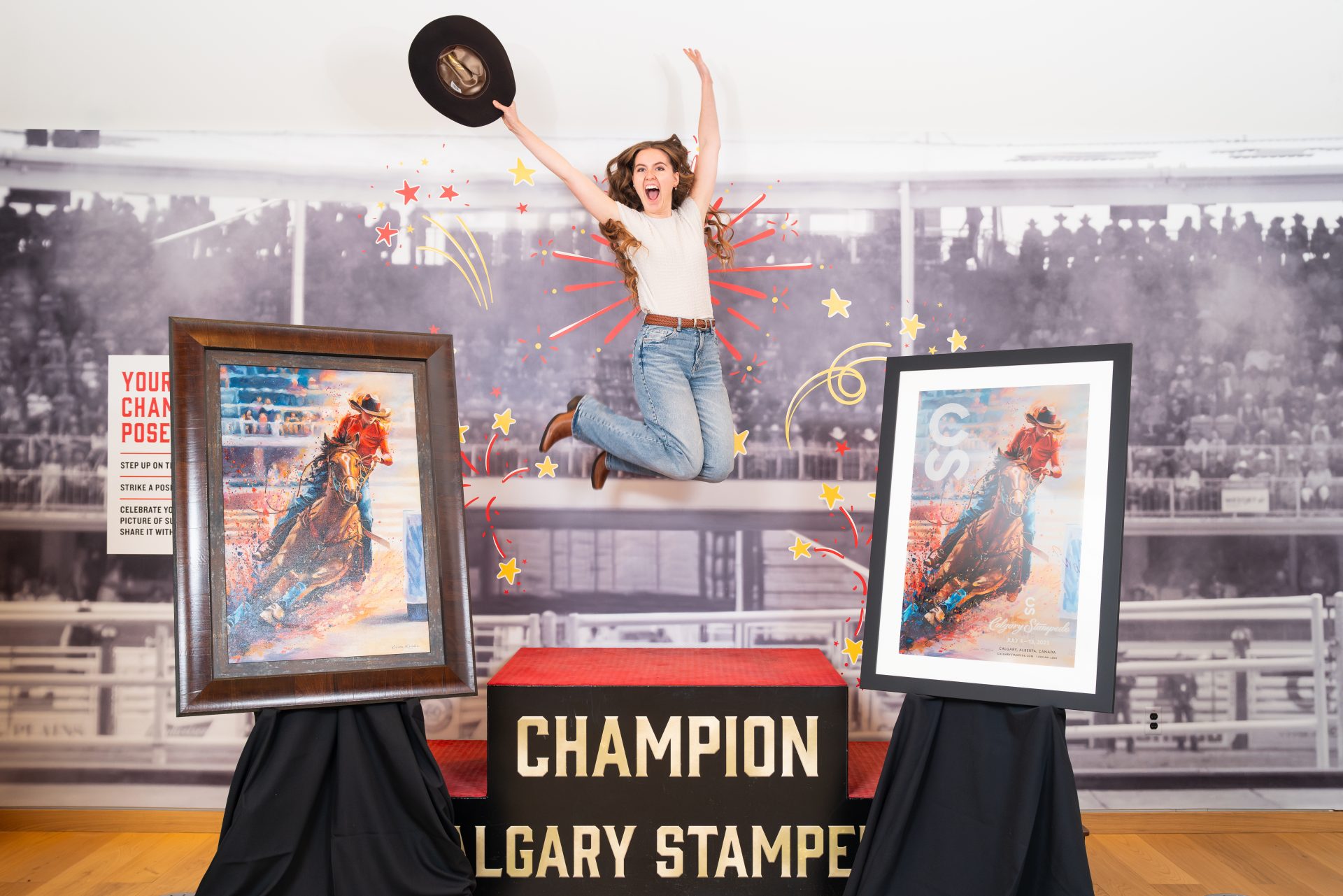
    Each year, the Calgary Stampede draws attention from around the world, not only for the historic rodeo but also for the iconic poster created to promote the event. With the Stampede now celebrating its 113th year, the posters have become valuable, collectible pieces of art; for artists, having a piece be used for this promotion is a career milestone. In 2018, the Calgary Stampede started the Youth Poster Competition, which offers education and guidance to young artists and, for the winner, the opportunity to showcase their work on the official poster. This year’s piece, which features splashes of color and the fast-paced action of barrel racing, was created by 22-year-old Calgarian Elora Kiddle. Titled Grit to Greatness, the piece captures the combination of determination and grace required to succeed in rodeo. In addition to education, the Youth Poster competition offers significant scholarship funds with the first-place winner receiving $10,000 for future education, and the total funds equaling $20,000 each year.

    Meet the Artist: Elora Kiddle 

    Elora Kiddle was born and raised in Calgary, Alberta, and has been attending the Calgary Stampede with her family for many years. Her first job was working in the Grandstand at the Stampede along with her twin sister Emily, who is now a trombonist with the Calgary Stampede Showband. The recent college graduate has also been painting and creating since she was young, and after learning about the Youth Poster Competition in high school, she applied to participate. “I had a great high school art teacher who encouraged me to apply,” Kiddle recalled.
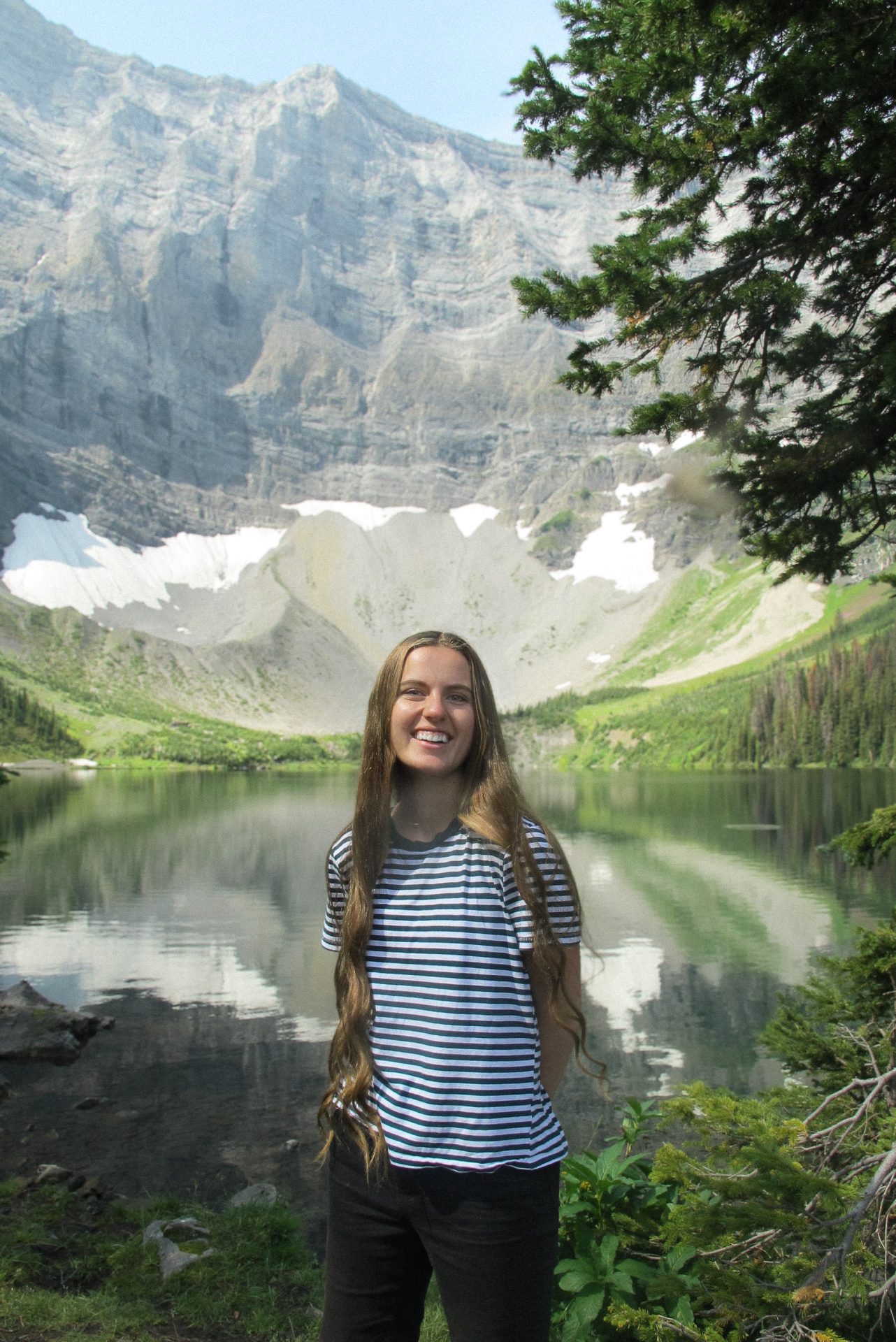
    Photo Courtesy of Elora Kiddle

    This was her third year participating in the program, which began with 30 applicants aged 15-24; eight young artists were chosen for the final round. In the previous two years, Kiddle took advantage of the program’s education, making it into the top eight and furthering her skills as an artist. The third time was a charm, and her piece was chosen as the official poster. “This year was finally my year, and I was just so excited,” Kiddle said.

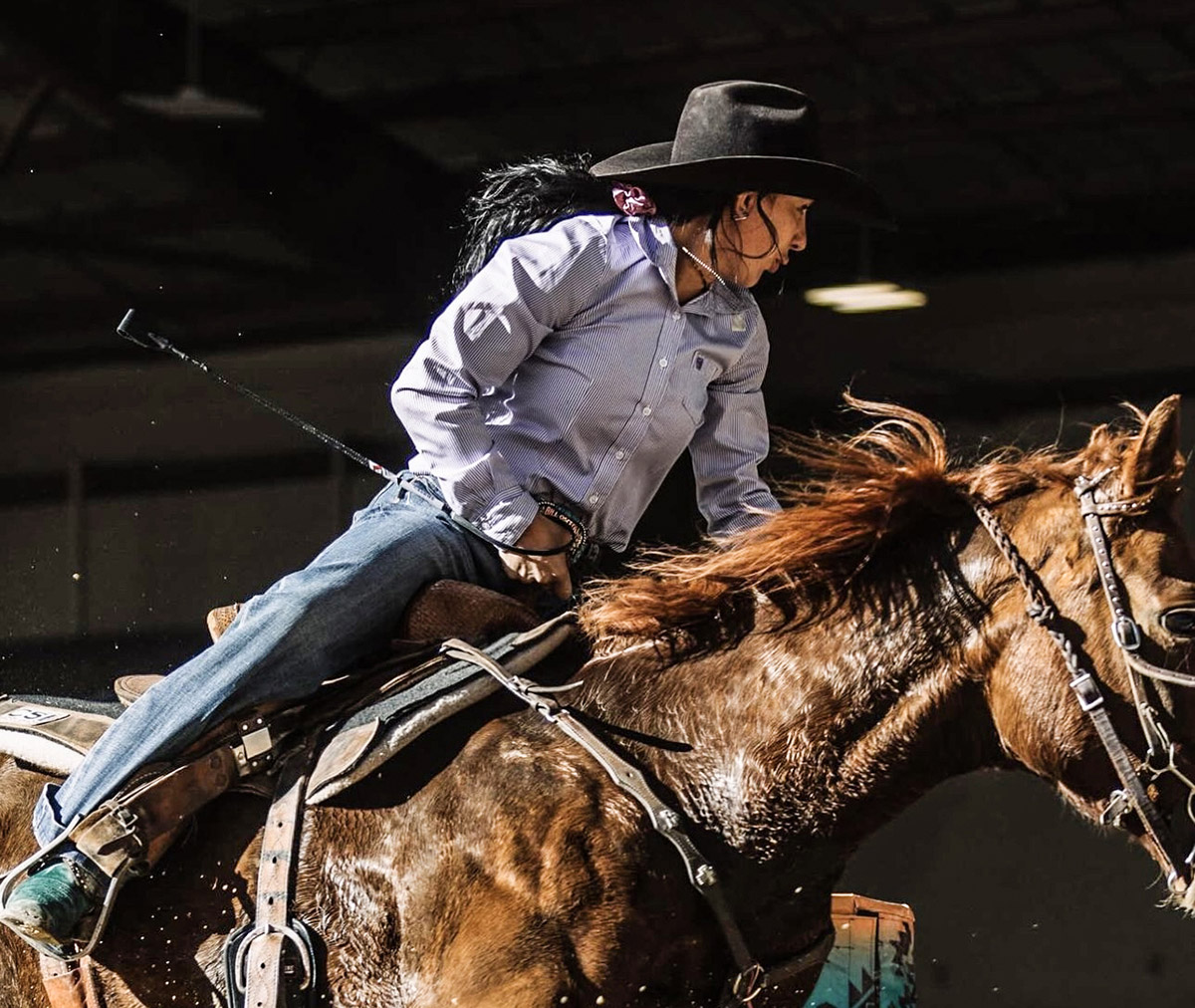
    All applicants initially submit two pieces of work for consideration for the program. Once the top 30 are selected, they participate in educational opportunities and receive guidance from professional artists. Each participant creates a concept piece for the poster, and the top eight are selected for the final round. The idea for Kiddle’s winning poster came from a photo of Kellie Jorgensen on her horse Salty, competing at the Stampede in 2021. The photo caught Kiddle’s eye.

    “She just looks so fierce on her horse,” she shared.

    After being selected for the top eight, Kiddle started by drawing the base for her piece, which is 24 by 36 inches, and then completed it with acrylic paint, which is her favorite medium. A valuable part of the Youth Poster Competition is one-on-one guidance from professional artists; Kiddle’s mentor helped her fine-tune her painting, watching her work and offering advice on colors to add or proportions to adjust. “It was great to get actual critique from someone in person,” she said.
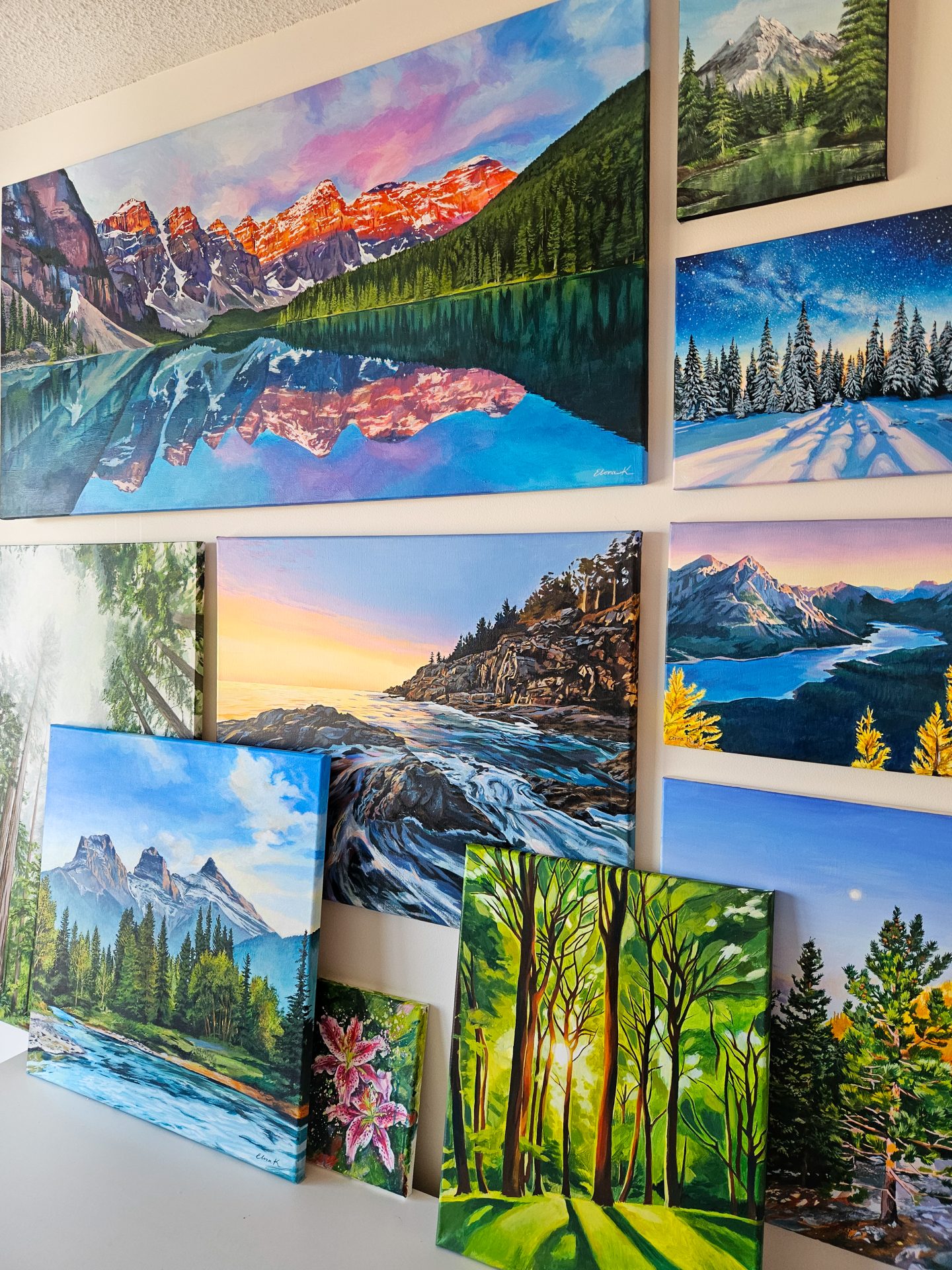
    Photo Courtesy of Elora Kiddle

    Kiddle explained that through working on pieces for the Youth Poster Competition, she has learned many skills. Getting the proportions of both people and animals right can be challenging, and her mentor helped her fine-tune this skill.

    “My mentor challenged me to adjust the figure in my work — not to mimic the photo, but to trust my eye. They explained that cameras can warp perspective, and what feels true to life often differs from what’s captured through a lens. I would practice visualization and figuring out what I felt looked right,” Kiddle shared.

    The 2025 poster is vibrant, with the dirt coming up behind the barrel horse depicted as splashes of color. Kiddle enjoys experimenting with bright colors, which acrylic lends itself to. Kiddle does commission work and will paint anything a customer wants. Much of her work is inspired by nature, which is vast and breathtaking outside her home city. She works as a graphic designer for a Calgary-based design firm, where she contributes to a variety of environmental and experiential projects. Her work often supports spaces like cities, airports and national parks, blending her love for travel, nature and visual storytelling. Kiddle shared that the Youth Poster Program’s value reaches beyond winning, and she encourages other young artists to apply. “I would say to go for it. You just have to push through, and there is no harm in trying,” Kiddle shared.

    Empowering Young Artists     

    The Calgary Stampede’s Youth Poster Competition is a unique departure from how many large rodeos obtain their yearly poster. Susan Arthurs, Youth Education Programs Manager for the Calgary Stampede Foundation, shared that the program was founded in 2018 based on an idea Dana Peers had while serving as First Vice President for the Stampede.

    “His vision was to bring a youth perspective to the way the Stampede is represented each year through the poster,”Arthurs explained.

    Simply putting out a call for young artists to create the artwork was an option, but Peers wanted to think beyond that — the Calgary Stampede poster is sent throughout the world to collectors, and becomes an iconic piece of Western history — so he suggested an educational element and mentors to ensure that the final piece is of the same quality as a piece that would be commissioned from an experienced adult artist. Following the formation of an advisory committee, the program was launched and has been evolving ever since. Kiddle is the seventh young artist to be selected.

    The scholarship monies awarded to the top competitors are through the Dustin Peers Memorial Scholarship, funded by the Brandon Flock Foundation. The winner receives $10,000, and the Brandon Flock Foundation also awards an additional $10,000 in scholarships across the competition, which is a total of $20,000 awarded annually to the top eight finalists.
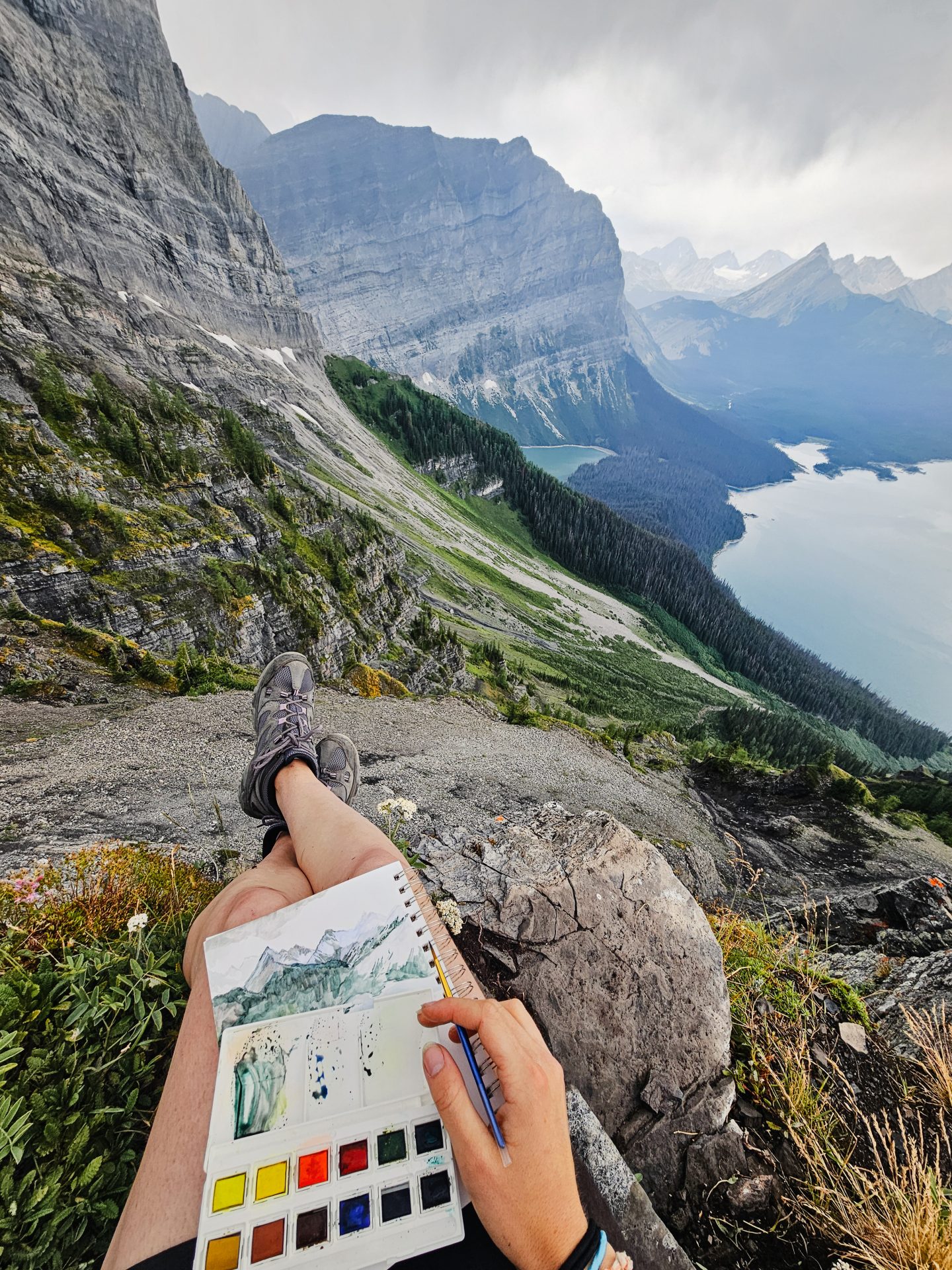
    Photo Courtesy of Elora Kiddle

    Beyond mentorship and art education, the program also helps young people learn about the historic Stampede, as well as rodeo and agriculture. “This year, we organized a field trip for the participants to a ranch where they got to have an up-close and personal horse experience. There were bulls we were able to view. We also had a rodeo photographer come in and talk to them about tips and techniques for taking reference photos,” Arthurs shared.

    The scholarship money can be used in a number of ways, from undergraduate art programs to study abroad trips. The funds can also be used for endeavors outside of the arts. “They could be doing pre-med,” Arthurs shared. “It’s very generous, and is one of the largest scholarships in Canada.”

    Arthurs has enjoyed watching Kiddle advance through the competition.

    “Her confidence grew, and that confidence, boldness and creativity is really what came through in her artwork for her to become the 2025 Poster Competition winner,” Arthurs commented.

    The holistic vision of the Youth Poster Competition is something Arthurs values, too. “I really enjoy seeing people who come back year after year to participate in the competition with an open mind. They’d love to be the winner, of course, but they get so much more through their participation in the educational activities and the mentorship opportunities. You can’t put a dollar amount on the opportunity they have to work with professional artists,” Arthurs reflected.

    To learn more about the Calgary Stampede’s Youth Poster competition, please visit calgarystampede.com/postercompetition.
  • Western Art Round-Up: Shea Fisher Durfey

    Western Art Round-Up: Shea Fisher Durfey

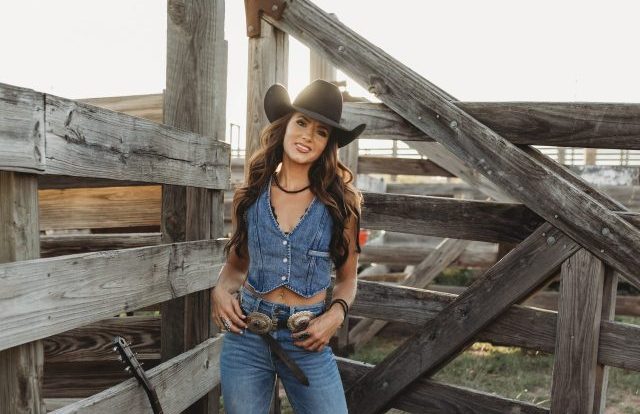
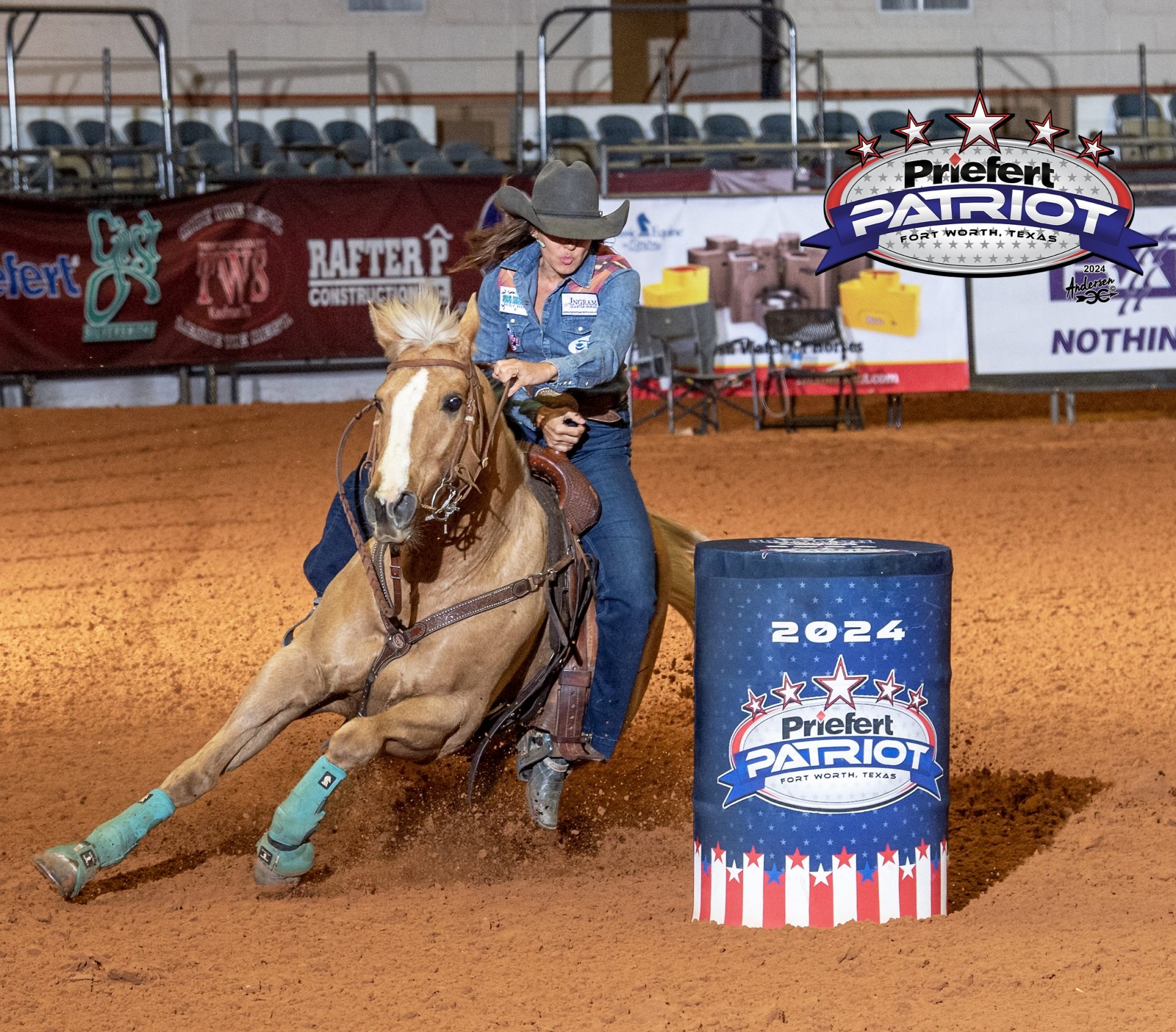
    Shea Fisher Durfey wears many hats — mother, musician, songwriter, wife, entrepreneur, business owner, and barrel racer to name a few. Born in Australia, Shea began singing and competing in rodeo as a young girl. Her passions have been woven together from the beginning; she first focused on singing with the goal of performing the National Anthem at rodeos and would do so while also competing. A recording contract at 16, six No. 1 songs in Australia, a Nashville record deal, moving to Texas, marrying World Champion Tie-Down Roper Tyson Durfey, growing a family, building businesses, running barrels, and more have led to her current focus: rekindling her music career. Shea is preparing to launch a new album campaign in 2025, which will include music videos, three singles, and, eventually, a full album.

    Western Roots

                Growing up in Australia, rodeo and Western life weren’t central to the culture. Still, with her father, Eddie Fisher, competing in the PBR and her mother, Joanne Fisher, a champion barrel racer, Shea developed a love for all things horses and rodeo at an early age. She first became interested in country music while traveling to rodeos with her dad in the U.S. “My family lived in the U.S. for a couple of years, starting when I was 9. My dad was riding bulls with the PBR, and I remember traveling to rodeos with him and listening to 90s country. I fell in love with Shania Twain and Garth Brooks,” Shea recalled.

                Back in Australia, Shea decided to try her hand at singing and playing country music. “I decided that I was going to start singing the National Anthem at rodeos because I heard that was how Reba McEntire was discovered,” she remembered.

                Shea also started entering talent competitions in her early teens. It took many losses before she got a win, but when she finally beat her competition, she had the opportunity to perform on the main stage at a large festival in Australia. “That was my first real experience performing for a crowd,” Shea shared. “I was hooked.”

                Her first big industry break came at 16. Shea was set to sing the National Anthem at a rodeo and decided to knock on the main music act’s bus door. Steve Forde, an Australian country singer, answered. Shea boldly asked if she could open the show for him, and it just so happened that the opening act was sick. Concertgoers rarely show up in time to catch opening acts, but Shea didn’t care. “There was no one in the crowd, but I had the best time performing on that big stage,” she recalled.

                Taking a chance paid off. Forde asked Shea’s parents if they would be willing to let her open the rest of the shows on the tour, and they agreed. Forde also helped Shea write and record her first album. The album was self-funded, and their next task was to see if a record label would pick it up. In Australia, there are only a few major labels, making it difficult to get signed. Fortunately for Shea, a label liked what they heard and decided to add her to their roster. “Never in my wildest dreams did I think I would get a record deal at 16”, she reminisced.

                Rodeo was still a priority in Shea’s life, and she was doing well at it. She had won a rookie breakaway title and was the first girl to qualify for the junior bull riding. The record label didn’t love knowing their new talent was crawling on bulls and asked her to put that aside for the time being. Shea continued competing in other events and singing but did hang up her bull rope.

    Taking a Big Leap  

                Shea continued singing and performing in Australia into her early 20s. She had felt drawn to the U.S., with its love for rodeo and country music, and was offered the opportunity to make this dream a reality. She was at a rodeo when a life-changing call came through. “I was offered a record deal in Nashville right before I turned 21. I packed up and moved my whole world to the U.S., including my band and my manager.”

                While this was a huge change, rodeo and her family’s time in the U.S. gave Shea an existing network and safety net. Three weeks after her first single was released on the new label, Shea’s streak of good fortune came grinding to a halt — the label shut down. This left Shea with a lot of decisions to make. “Everything looked great, and then the record label shut down. I definitely had to sit back and think about what my life could look like,” she remembered. “I knew I could go back to Australia, pursue music there, and make a good living. But I just felt like I wasn’t done in the U.S.”

                Unwilling to give up, Shea started thinking about where she could go and how she would pay her bills. She liked Nashville but couldn’t see herself there long-term. When she lived in the U.S. as a young girl, Shea fell in love with the Lone Star State. “I’ve always had a calling to Texas,” she recalled. “When we lived here when I was younger, I felt like Texas was home.”

                Shea made her way from Nashville to Texas, and her rodeo family was there to provide support while she figured out her next move. She spent time at Cliff and Dena Kirkpatrick’s house, as well as with Trevor and Shada Brazile. Her friendship with the Brazile family led to another big moment. While at Rodeo Houston, Shea was introduced to World Champion Tie-down Roper Tyson Durfey. It took a lot of persistence on Tyson’s part, but the two eventually started dating and were married. “I was a pain,” Shea laughed. “He probably messaged me for a year before I let him take me out to breakfast.”

                The record label shutting down also pushed Shea to build a business that continues to support her family — Shea Michelle Buckles. Her family had established a contract with a metals manufacturer, and when Shea needed to figure out a way to pay her bills, she asked if she could take over that contract. Her father agreed, and Shea started cold-calling rodeo associations trying to sell trophy buckles. “At the time, it was just enough to pay my bills,” she recalled. “Today, we sell thousands of buckles.”

                This was a life-changing, difficult time, but Shea chose to pivot and look for a new open door. “I do believe that everything happened for a reason. The American record deal got me to the States,” she reflected.

                Since moving to Texas and marrying Tyson, Shea’s priorities have ebbed and flowed with her dedication to growing a family, running two businesses, competing in rodeo, and playing music. In addition to her talents in music, Shea is also known throughout the rodeo community for her unique Western style. When she had her first daughter, Shea quickly discovered that most of the children’s clothing on the market didn’t fit her style. She decided to do something about it, founding Shea Baby, a Western wear brand for children.

                Shea designed the first line of clothes, ironed out the details of having the products manufactured, and then started selling online. After landing her first wholesale account with Cavender’s, Shea had to turn their garage into a warehouse for the time being. Since then, Shea Baby has expanded into Western wear stores across the country. As her three children, Praise, Risyn, and Tyen, have grown, Shea has adjusted and added to each collection. “Starting this was just a huge blessing,” she said. “We grew organically and had to embrace the growth as we went.”

    The Next Chapter

                With the family businesses running smoothly, Shea began feeling drawn back to music over the last year. Singing and songwriting have remained a part of her life, but promoting her music had to be set aside while she grew her family and businesses. Shea will be launching an entire album campaign in 2025, which will include the release of three singles, music videos, and, eventually, a full-length album.

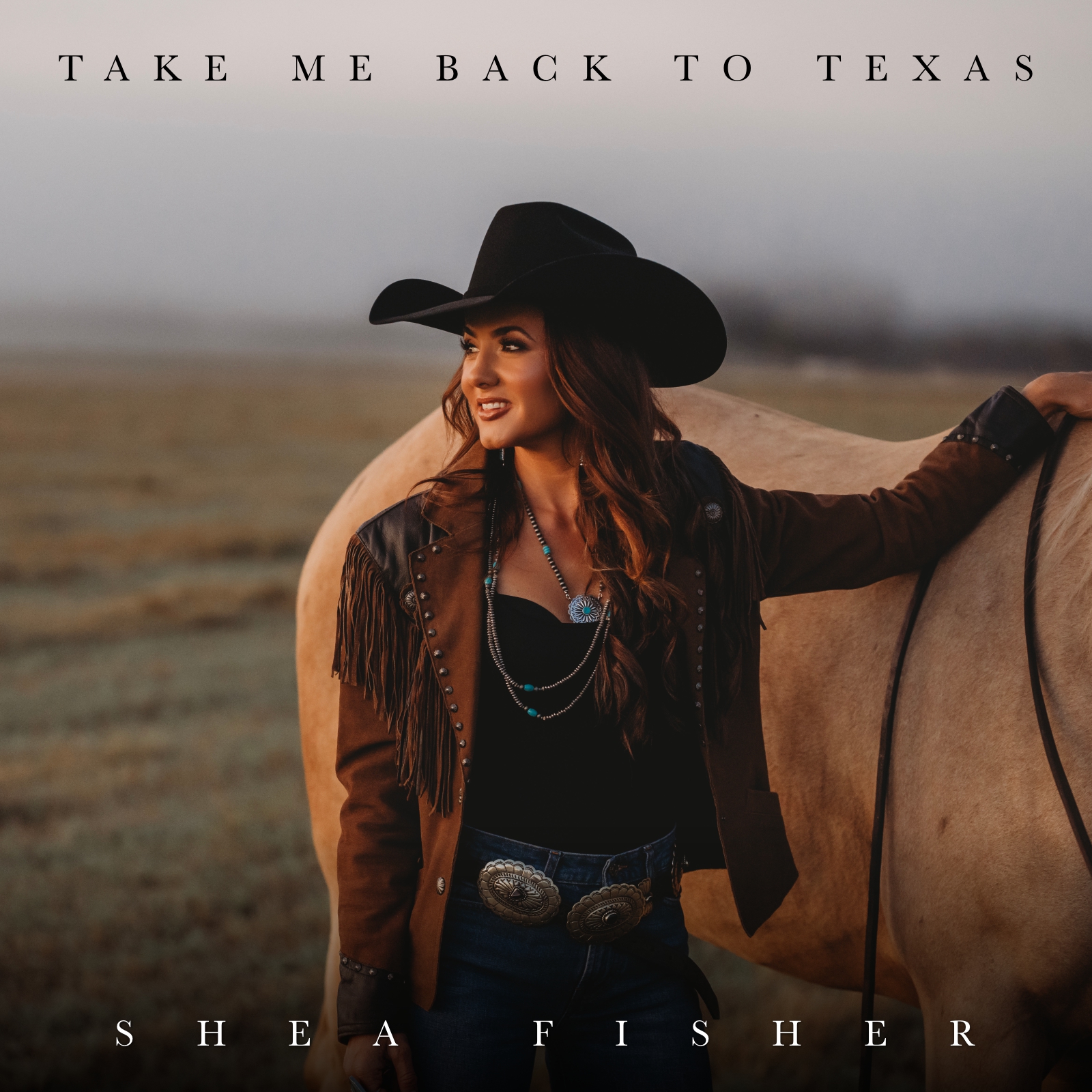
                Shea enjoys co-writing with other songwriters and has been collecting songs for the album for some time. Walker Hayes, one of her favorite people to write with, contributes significantly to the upcoming album. The first single to be released, “Take Me Back to Texas,” pays homage to Shea’s home state. The remainder of the album is similarly personal for Shea, who looks at songwriting with others as “the cheapest way to do therapy.”

                Her decision to launch a new project was also spurred by her young daughters. Women are often held to unrealistic standards in the music business, with many believing their chances at a career are over after 30. Shea wants to show her daughters that anything is possible. “Times have changed, and I want women to see that anything is possible. I don’t want age to matter. This is something I want to do for myself and for my family,” she said.

                Shea is also taking advantage of the freedom of not having a record label telling her how to pursue this next step in her career. “I had been signed to a major record label for 15 years of my career, and I no longer wanted to do that. I don’t want to be told what to say, wear, or sing. I get to do it on my terms,” Shea explained.

                In preparation for the album campaign, Shea has been sharing more about her music and life on social media. Doing so has been met with significant enthusiasm and support. In four months, her Instagram following grew from 30,000 to 275,000, which Shea is taking as a sign that she is putting her energy into something important and impactful.

                Like everything in her life, Shea didn’t want to only have one foot in the door on this new project. “I decided to hold myself accountable and flew my Australian video director over to shoot three music videos in September. I have a year’s worth of videos ready to release — I’m really doing this,” she said.

                Shea and her family are also preparing for a big year in the rodeo arena. Tyson has shared his plans to come out of retirement and make another run at qualifying for the NFR. Like Shea’s endeavors in music, Tyson is motivated by sharing the journey with his children. The couple has a lot on their plate, which they are able to balance by working as a team. “We are very supportive of each other,” Shea shared. “It’s very important, especially living a busy life and being somewhat in the spotlight. You have to be very secure with each other and supportive, which makes it work.”

                Shea is also going to be running her little palomino barrel horse, Itchy, over the next year. After gaining momentum last summer, Itchy slipped and fractured his hock at a rodeo. Surgery and rehab have a high success rate with this injury, but it put a halt to Shea’s plans last year. She hopes to run Itchy at Texas races over the winter, enter any summer rodeos that align with Tyson’s schedule, and move up the ranks enough to enter more rodeos in 2026. An NFR qualification is Shea’s ultimate goal. Itchy is fast, quirky, and athletic. “He has the biggest heart,” Shea shared. “He isn’t easy to ride, but he’s electric.”

                Rodeo and the West are woven throughout Shea’s endeavors, from country music to running barrels, raising a family, and supporting Tyson. “Everyone has each other’s back, and it’s such a family,” Shea concluded. “I’ve always loved the Western culture. It’s really like nothing else.”

  • Western Art Round-Up: Jens Berg – Bits and Spurs

    Western Art Round-Up: Jens Berg – Bits and Spurs

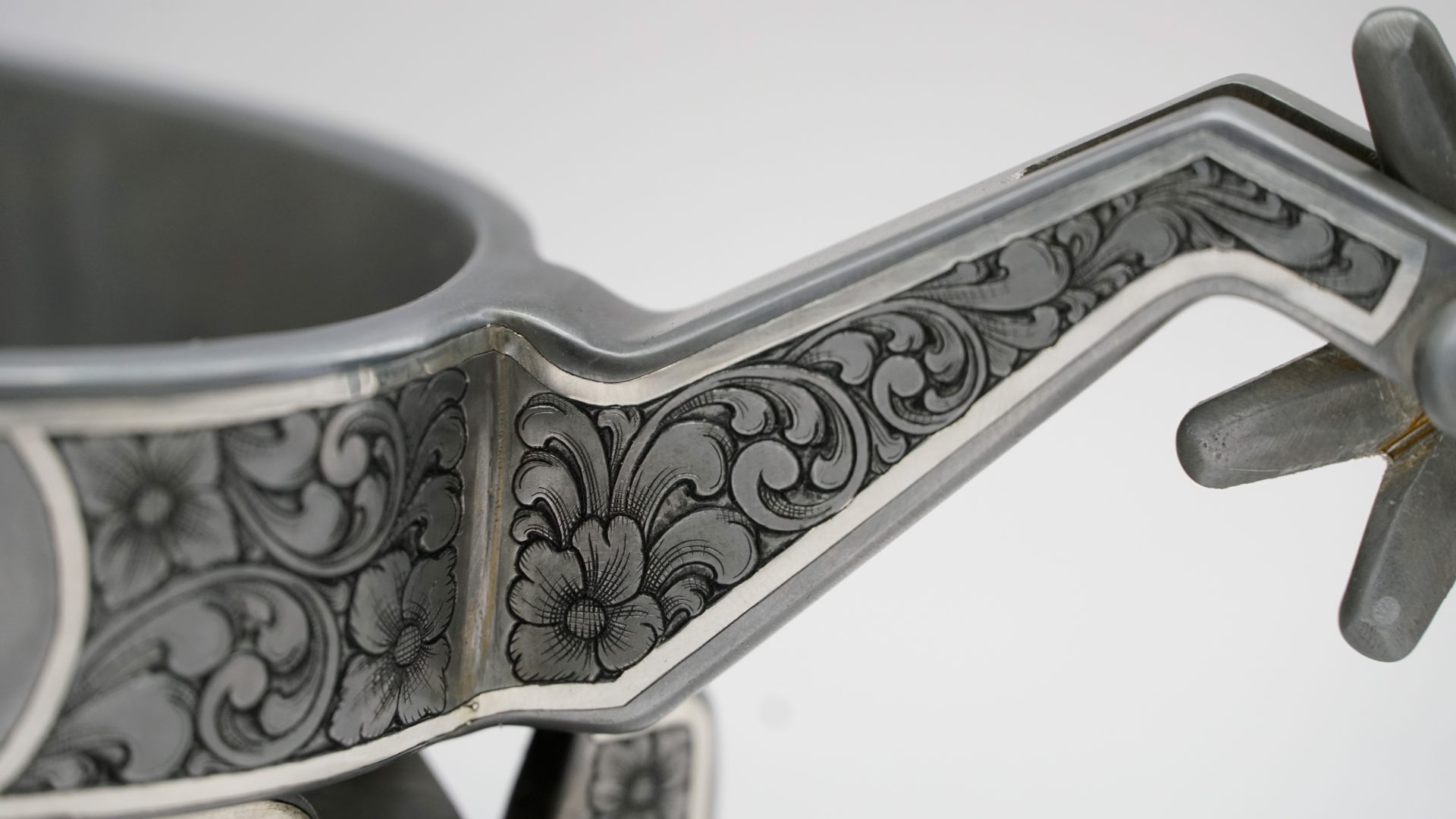
    Cowboys and cowgirls take a lot of pride in their gear, seeking out items that are both beautiful and functional. Bit and spur maker Jens Berg is creating handmade silver and metal gear that fits this bill perfectly. The Wyoming-born, Texas-based artisan grew up knowing he had a knack for art and, after starting out on leather, found his niche in metalsmithing. Unique silver engraving and overlay, which often feature the brands or initials of customers, are placed on top of functional handmade bits and spurs. Berg’s customers include rodeo competitors, working ranch hands, horsemen and women, and collectors from across the U.S. and beyond. 


    Wyoming Roots 

    Berg grew up outside the remote interstate town of Kaycee, Wyoming, which is best known for being the hometown of Chris LeDoux. The surrounding area is mostly occupied by cattle and sheep producers. Berg grew up in the ranching community — his father, Pat, worked as a farrier, and his mother Lila’s family ran cattle and sheep – and he developed a passion for Western life and an understanding of gear early on. His father was artistic, and Berg soon picked up drawing as a way to fill the time. “I always had to entertain myself quite a bit. The only neighbors who were kids were way up the road, so most of the people around were older than me,” Berg shared. 

    As an adult, Berg became interested in family history, which has informed his own life in the West. His father’s family immigrated to the United States from Norway, landing at Ellis Island on July 3, 1891. The family made their way to Minnesota, and his great-grandfather, also named Jens, moved to North Dakota. His grandfather, Leo, settled near Fargo, and Jens’s father eventually left North Dakota for Wyoming. His mother’s family settled in Johnson County, Wyoming, many generations ago. 

    Berg’s first gear project was tooling leather, with the goal of eventually building a saddle. He found that leather projects were difficult to balance with other work — leather is usually dampened for stamping, has to dry for a certain period of time, and can be finicky — so he decided to try engraving after seeing Wilson Capron’s work. “I saw one of his bits, and he’s just an amazing artist,” Berg recalled. “I knew right then and there that I wanted to know more about it.” 

    He messaged Capron, seeking advice for getting into engraving. Capron suggested that Berg attend an engraving class hosted by GRS in Emporia, Kansas. Berg started purchasing tools and silver as he was able but held off on attending the class. Over the coming years, Berg worked a number of jobs before deciding to try his hand at silverwork full-time. He and his wife, well-known Western broadcaster Katy Berg (Lucas), had just moved south to Texas, which was another motivator for Berg to try a new career path. He attended the GRS class Capron had suggested and finished purchasing tools. “Those tools couldn’t get here fast enough,” Berg remembered.
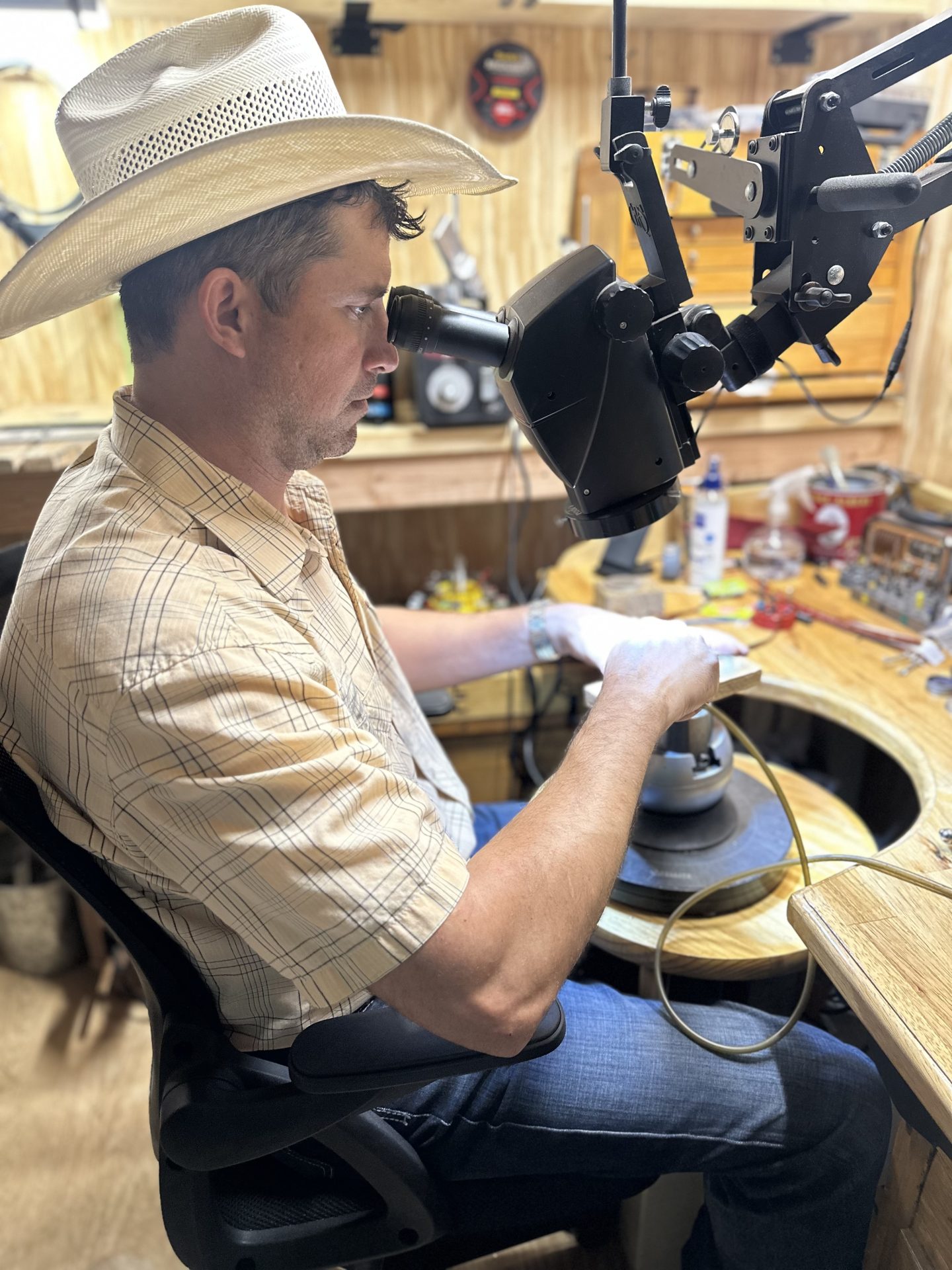
    Berg set up a simple workspace and started honing his craft on copper cuffs and other small projects. Soon after, he traveled to Capron’s shop and spent a week building a bit, learning the fundamentals of making a product that can be used. 

    Silver is a soft metal, and adding it to bits and spurs requires soldering. To learn how to do this, Berg enlisted the help of Gordy Alderson, who was just up the road from their home in Texas. With this new knowledge, Berg was able to build Katy a bit for Christmas. After posting a photo of the bit on social media, he started receiving inquiries for custom projects. Since then, Berg has created custom bits and spurs for a long list of customers from across the U.S. and Canada. 


    Honing His Craft

    The seeds that have grown into Berg’s current style were planted many years ago, starting on the Wyoming prairie. His mother’s family ranch and his father’s work with horses put Berg around livestock and ranch life every day. Western art and culture were also early influences. “I’m a big Charlie Russell fan,” he shared. “If you look at his paintings, those cowboys didn’t have much, but they had silver-mounted bits and spurs and a really nice saddle.” 

    Berg’s style is also the product of many years of studying the work of others and spending time experimenting with designs. “I landed on my own style by studying other people’s work. I’m able to find little things I like.” Berg reflected. “I’m always working on drawing a design or studying work. I’m just always working at it.” 

    Sheridan, Wyoming, which is the home of many legendary Western gear maker
    s, also influenced Berg. “I lived in Sheridan for around six years and fell in love with Sheridan-style tooling. I knew some of the famous saddle makers, and I spent a lot of time in King’s [Saddlery]. Also, Jim Jackson is my favorite leathertooler,” he shared. 

    Beyond artistic style, there are a number of lanes a maker can choose when it comes to the functional style of bits and spurs. Berg has largely chosen to stick with simple, straightforward products using a lot of the knowledge he gained from Alderson, including how to properly set the purchase of a bit and make sure it’s balanced. All of Berg’s orders are custom, so the mouthpiece style, measurements, and other details a

    re determined by the customer. “It doesn’t matter how pretty a bit is. If it’s not a functional piece, it’s just a paperweight. I like to build things that are nice enough to put on a shelf but are also functional,” Berg said. 

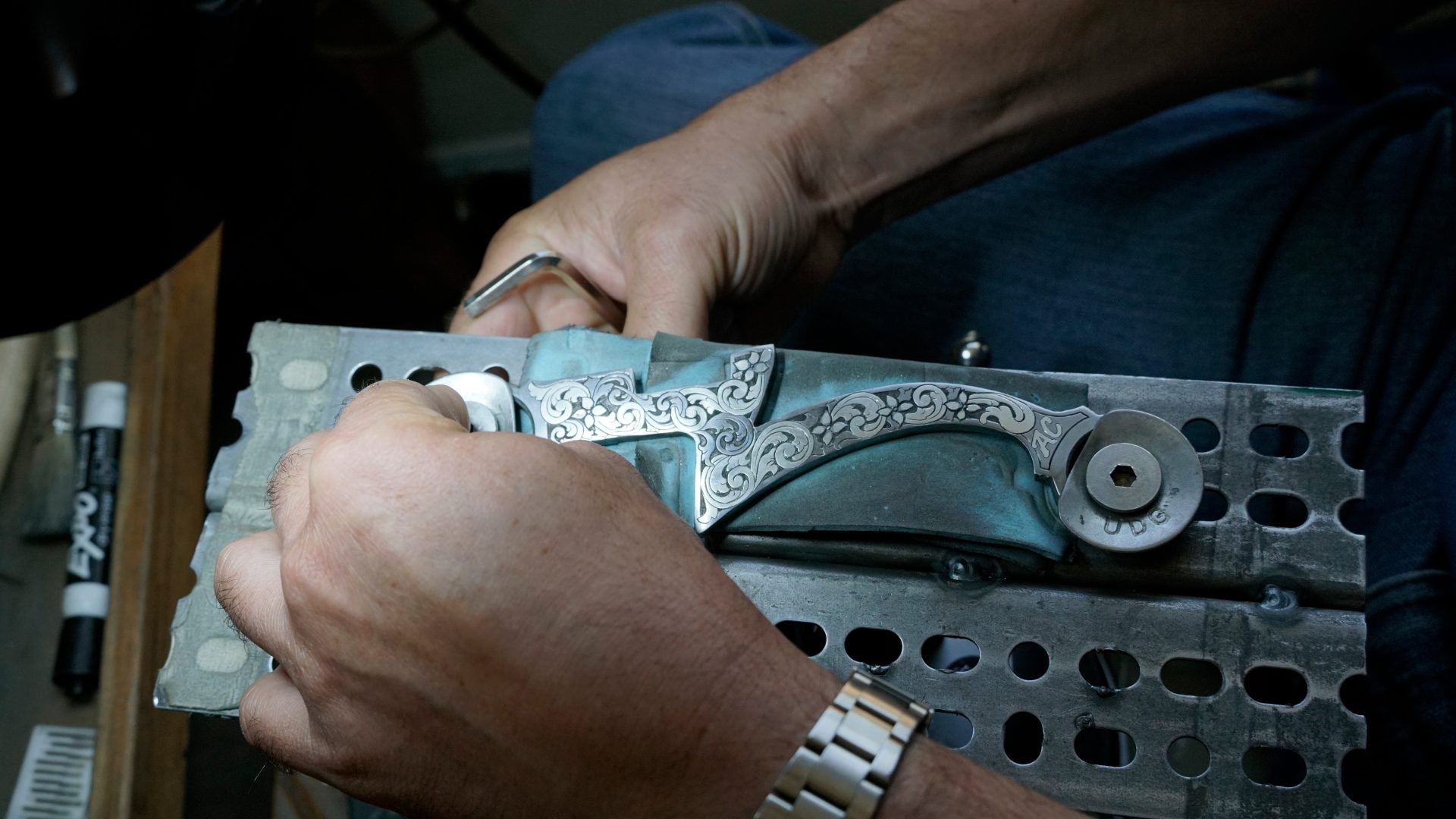
    Many of Berg’s bits and spurs feature silver overlay, which is designed, engraved, cut out, and soldered to iron. He decided to try this filigree-style design after seeing other designs he liked. This process is tedious and requires the precise use of a silver saw. “If you saw out enough stuff, you’ll get good at it,” Berg laughed. “It’s time

    -consuming, but it’s a fun process to see what you imagined come into true form.” 


    Catering to the Customer 

    Each of Berg’s projects starts with a custom order. After posting the first bit he built for Katy on social media, Berg started receiving inquiries for other projects. As his business grew, Berg also started receiving orders from people who were seeing his work in person. 

    Customers come to Berg with an idea, which may be broad or specific. After gathering the necessary measurements and customer ideas, he crea

    tes a concept drawing. After the customer approves the concept, Berg is able to start building. Berg’s designs are elegant and classic, with detailed silver scrollwork and flowers. Many customers also add unique elements, like brands, initials, bucking horses, and more. 

    Berg wants to make each item unique, which has also ha


    ppened naturally as he has focused on improving his skills. “I don’t use the same pattern twice. I might steal some concepts out of another project if I really liked it,” he shared. 

    Bits were Berg’s first focus, and after his work started appearing online and at events, he was asked to build trophy spurs. His first pair were commissioned for the Professional Rodeo Cowboys Association’s Xtreme Broncs tour, and since then, he has built prizes for other rodeos and events. This also kick-started custom orders for custom spurs. “I build more spurs now than I do bits,” Berg shared. 

    Berg’s customer base has grown organically with the help of Katy, who helps with marketing and social media. Katy’s work in broadcasting and the flexibility of Berg’s work has also been beneficial, allowing him to travel to rodeos across the country. “This last year, I felt like I was on the rodeo circuit,” Berg laughed.

    The Western and rodeo community have been extremely supportive of Berg’s work. “In the Western world, people are just really good,” he concluded. “It’s really fun to be around people who support you. We’re very blessed to be in the groups that we’re in.” 


  • Western Art Round-up: Red Steagall

    Western Art Round-up: Red Steagall

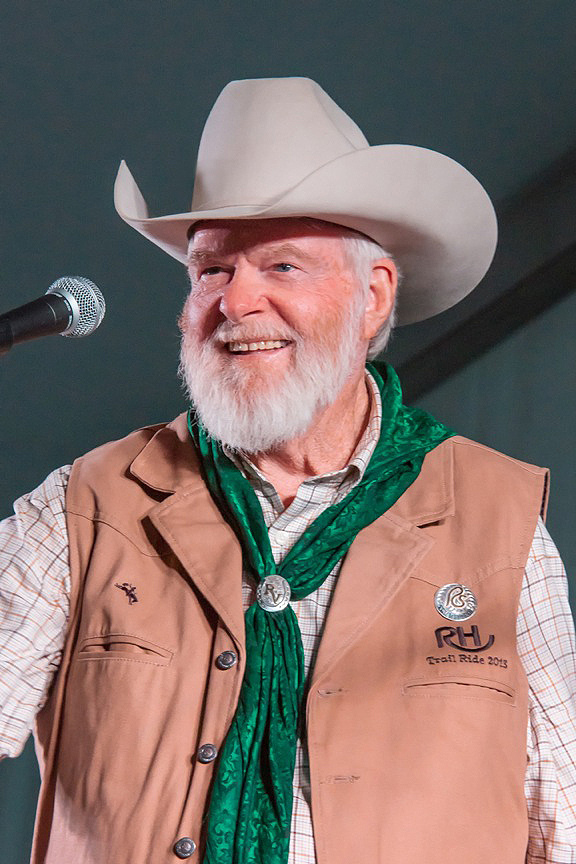
    Red Steagall’s career has been diverse, from writing western swing and cowboy songs to creating his own radio and TV shows. His music, poetry, and programs have been recognized and loved by everyone from working cowboys to U.S. Presidents, and he has inspired generations of artists. Throughout his work, Steagall has remained committed to the preservation and future of Western culture. Recently, he agreed to donate his extensive archive of creative material to Texas Tech University and to help build the Red Steagall Institute for Traditional Western Arts. The Institute will be located at the University’s Lubbock campus, adjacent to the National Western Heritage Center, and will focus on educating and building up Western artisans through interactive learning.

    Always a Cowboy

    Steagall was born in Gainesville, Texas, and spent his childhood in the Panhandle. Cowboys and music were a part of his life early on, and he dreamt of working in agriculture. “I always wanted to be a cowboy,” Steagall shared.
    He played high school football and also rode bulls at local rodeos. Bull riding was fun, but he knew it wasn’t a good long-term plan. “I never won a dime,” he laughed.
    Steagall dreamed of being a veterinarian and working cowboy until he was stricken with Polio at 15. Fortunately, the Salk vaccine was available to halt the virus four months after he became ill, but it had irreversibly damaged the deltoid muscle in his shoulder.

    No longer able to meet the physical demands of rodeo and ranching, Steagall turned to his other interest — music. His mother gifted him a second-hand mandolin and music lessons, changing the course of his life.
    Playing music helped him regain dexterity and strength, and he soon began writing songs. Following high school, Steagall was still planning to have a career in agriculture, attending college at what is now West Texas A&M to study animal science and agronomy. Following college, he took a job as an agricultural chemist. His role required extensive travel throughout the West, and he took his guitar along, playing at cafes and coffee shops on the weekends. He also formed a band, playing many rodeos and dances.

    A call from a friend again changed the direction of Steagall’s career, taking him to California to work in the music business. During his eight years as an executive in Hollywood, Steagall started making his mark as a songwriter and performer. He was in the room for a long list of chart-topping recording sessions and many of his songs became popular on the radio.
    Steagall’s life was changed forever when a song he wrote with Don Lanier was released in 1967. Lanier was sharing a simple melody he had stuck in his head with Steagall, saying that he couldn’t figure out the right words to go with it. When Lanier’s phone rang, he said, “Here we go again…”, and both he and Steagall lit up, knowing they had just landed on the hook for the song.

    They sat down, and the rest of the song came together in short order. Steagall described himself as being “bulletproof” and wasn’t afraid to pitch his songs to the top musicians of the time. He took it to Buck Owens’ record label, but Owens demanded full publishing on the song, which Steagall couldn’t agree to. After another label executive told Steagall they would need full publishing, he said he would take it to Ray Charles. This likely seemed like an unrealistic, idle threat to the label executive, but Steagall was serious, and after Charles heard the song, he wanted to sing it. They agreed on publishing, and before Steagall and Lanier knew it, they had a number-one hit on the radio.
    Here We Go Again has been recorded by a long list of notable singers, from Nancy Sinatra to Glen Campbell. Norah Jones sang the song with Ray Charles on his last album, Genius Loves Company. The album won eight Grammy awards and has currently sold over five and a half million copies.

    Getting Back to His Roots

    After living in Hollywood and then Nashville, Tennessee, Steagall moved home to the Lone Star State in 1977. He married his wife, Gail, who played a critical role in his career, soon after.

    Steagall continued writing and releasing country western music, but after playing dance halls and honky tonks across the country for years, frequently spending over 200 days a year on the road, he felt called to rethink his career.
    Fortunately for Steagall, an opportunity to shift came his way. He had been sifting through the songs he wrote, feeling more drawn to stories and ballads than classic honky-tonk songs. Coincidently, the first National Cowboy Poetry Gathering was held in 1985, which he attended with his brother. Steagall returned home with a newfound inspiration to follow the thread of cowboy stories and poetry.

    This chapter of Steagall’s career also included an expansion beyond the radio, live performance, and CDs. “I had a friend in the car business, and he asked me if I could come speak to the Rotary Club in Fort Worth,” Steagall shared. “After that, his ad agency called and asked if I would do a cowboy poetry session every morning on WBAP radio in Fort Worth.”

    The original idea was to share a minute and a half of poetry, but Steagall shared that 30 minutes of programming would be better. “I went into my studio and I cut a demo of what I thought the show should sound like,” he recalled.

    Steagall shared the demo with the ad agency and other friends in the radio business, and the response was overwhelmingly positive. Many listeners of this first demo shared that an hour of content would be even better. This started Cowboy Corner, which is now syndicated on 150 stations in 34 states. The program was born out of Steagall’s passion for western stories and includes music, interviews, and stories of the American cowboy.

    In 2010, Steagall expanded his storytelling to TV, airing the first episode of In The Bunkhouse with Red Steagall on RFD-TV. Steagall now hosts Somewhere West of Wallstreet for the network.

    Throughout these programs, Steagall has focused on sharing real cowboy stories, often interviewing people the public likely would never know about otherwise. Steagall has traveled throughout the West to historic ranches, like the 6666’s Ranch, King Ranch, and many others.

    The extensive archive Steagall has amassed now serves as a look back in time and includes interviews with legendary Western figures like Roy Rogers, Reba McEntire, and Buster Welch.

    The common thread throughout these stories is the value of western culture and an agrarian lifestyle. “I’m really attached to the western way of life,” Steagall shared. “The western way of life actually came from an agrarian society, at a time when we depended on each other for survival.”

    Steagall believes that sharing the values of western life benefits society as a whole. “We’re respectful of our neighbors, and we have a certain code of ethics, and we live by them. We honor tradition and heritage. We look to the future with an open mind and a wide, open eye. We have a set of values that make us a harmonious society. I treasure that and I want to preserve it,” Steagall explained.

    Western culture and the agrarian lifestyle have changed dramatically since Steagall started his career, and he wants to make sure the story lives on for future generations. “I’m afraid that if we don’t preserve it, in the next 50 years, nobody will know who we were, what we said, what we did, or anything about the values that we live by. I’m proud of who we are and I want the rest of the world to know,” he reflected.

    Steagall also founded the Red Steagall Cowboy Gathering and Western Swing Festival, held every October in Fort Worth, Texas, for the past 30 years. The event celebrates the music Steagall first fell in love with in West Texas.

    The Next Chapter

    Steagall’s music, poetry, and storytelling have had an indelible impact on the preservation of western culture. He is now expanding on these efforts through the Red Steagall Institute for Traditional Western Arts. The center will be located at the National Ranching Heritage Center in Lubbock, Texas, and include an amphitheater, bit and spur shop, saddle and boot shop, outdoor sculpture court, archive, recording studio, garden featuring West Texas flora, and more.

    While the center will include an archive, the primary focus is on the future, and providing a space for artisans to learn, work, and commune. Steagall wants to connect western artisans throughout the country with masters in their craft, giving them the opportunity to learn and grow. “I know how important it is to work with someone who really is a professional. It can help you find other things about your talent and help you take the next step. There are so many people who are very talented, but give up because they don’t have a platform,” Steagall shared.

    The center will also benefit the public, allowing people to explore western culture, watch artisans at work, and learn about the history of the West. “I also want to provide a research library, and over time, it will be the most complete research library in the world about ranching and the ranching industry,” he added.
    The National Ranching Heritage Center is an ideal neighbor for the Institute, already including western art, exhibits on oil and ranching, western history archives, a series of homes walking visitors through hundreds of years of life in the West, and much more.

    The Institute is currently being fine-tuned and funded, with plans to break ground in the spring of 2025. Steagall is proud to have his name and brand attached to the project and believes it will be important in preserving western culture. “I believe with all my heart that the traditional arts can keep our lifestyle alive,” he concluded.

    -Article by Lilly Platts

  • Western Art Round-up: Sammy Bird

    Western Art Round-up: Sammy Bird

    Sammy Bird created her first painting to be auctioned off at a friend’s benefit. This spirit of giving, positivity, and hope has prevailed as her career as an artist has grown. Today, Palomino Paintings by Sammy Bird can be seen at art shows, rodeos, and in homes across the West.

    Discovering Her Talent

    Sammy Bird shares her heart and story through colorful, detailed paintings. Most of her subject matter includes horses, and elements of her Native American culture are always represented. She also expresses her style and culture through wearable art, like hats and clothing, which have been featured in western fashion shows. Bird grew up on the Blackfeet Reservation, located in northwest Montana, and comes from a multi-generation rodeo family. Today, she balances her career as an artist with life on the rodeo road.

    Bird dabbled in art projects growing up, but didn’t foresee a career as a painter. “I took high school art, but wasn’t the best one in my class,” Bird recalled.

    It wasn’t until she wanted to donate something unique to a friend’s medical benefit that she discovered her talent. “In a small town you can only get so many donations, so I thought I would try to paint,” Bird shared.

    Her donated painting was a hit, and soon another community member asked if she would donate a painting for another fundraiser. This soon snowballed into requests for commissions, and before Bird knew it she was making money as an artist. “I truly believe God works in mysterious ways,” she said. “It caught on like wildfire, and within a few years I was doing it almost full-time.”

    She continues to donate to fundraisers, but painting is much more than a hobby now. Bird participates in western art shows, is hired for commission work, and has a regular clientele she sells paintings to.

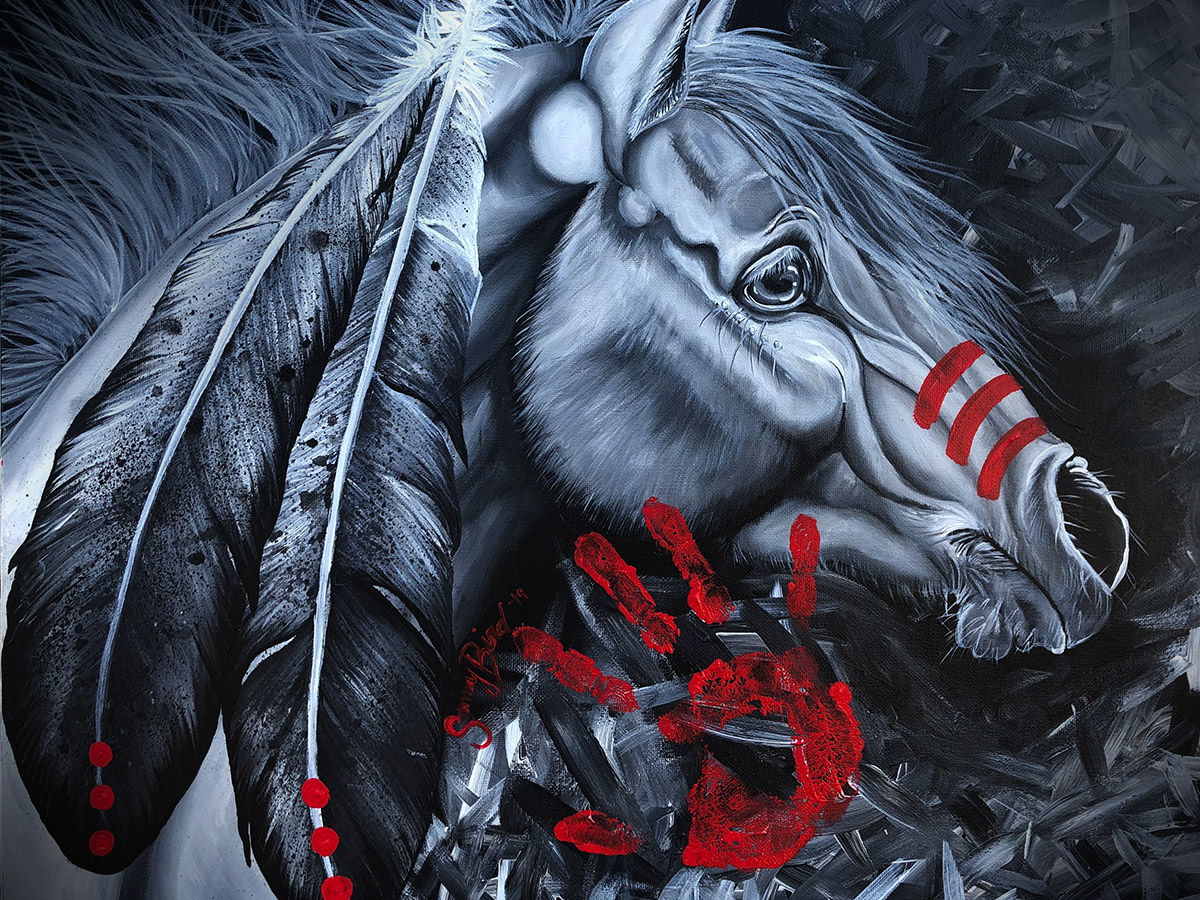
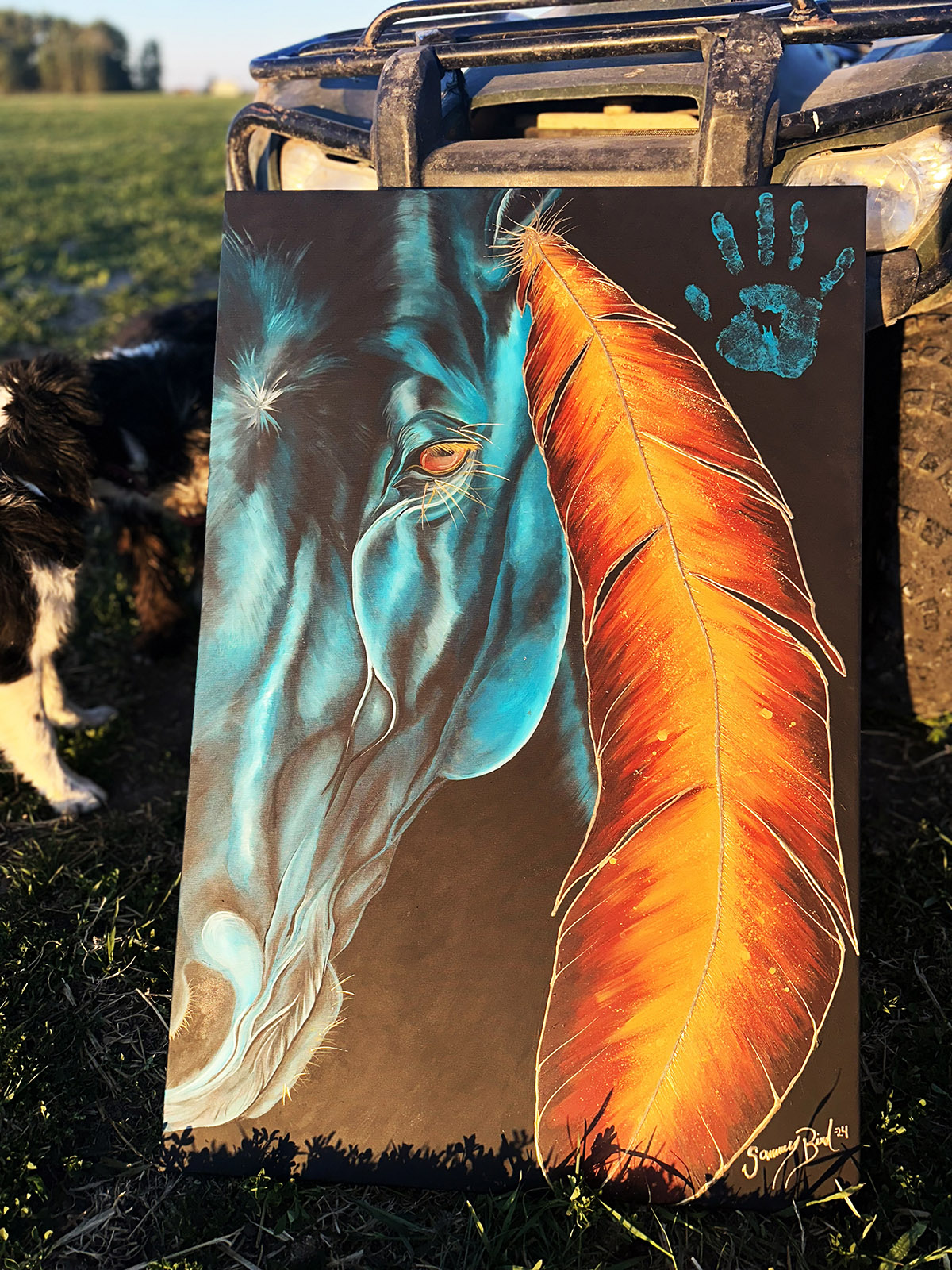
    Bird’s paintings are colorful, abstract, often large, and intricate. This style came completely from her imagination. “You do what feels right for you, and what makes you feel good,” she reflected. “Whenever I start a new painting I honestly don’t really know what I’m going to paint. I might have a general idea in my mind of what I want it to look like, but I usually start at the horse’s eye and work my way out.”

    Art is ultimately the expression of the artist, and Bird wants to spread positivity. “When someone looks at one of my paintings, I want them to feel good, even if it’s just for a moment in their day,” she shared. “For me, it’s a lot of bright, vibrant colors — hopefully it brings positivity to someone.”

    Bird’s handprint is one of the hallmarks of her work. Somewhere in each of her paintings you will see where she has pressed her hand into paint and imprinted it on the finished painting. She started doing this both because it represents her Native American culture, and as a unique way to sign her work. “The handprint stands for resilience,” she explained. “It also represents missing and murdered indigenous women. I started putting it on my paintings for awareness, and because it’s my own fun spin on things. Even if you don’t see it, there’s a handprint somewhere in each of my paintings.”

    Beyond her handprint, Bird also includes other elements of her Native American culture in each painting. “I am very proud of where I come from, and where I’m going. I have always respected and loved where I come from, and I hope to inspire kids on the reservation who feel stuck. I want to show that if I can do it, they can too,” Bird shared.

    She also shares her art through fashion. “I really got into western fashion right after college. I started creating my own pieces, and collaborating with other Native American artists. I think it’s so cool when you bring two creative minds together,” Bird said.

    Rodeos have long been events where people express their style — from contestants to viewers — and fashion shows have become increasingly popular. Bird has participated in many of these, both as a model and creator. At last year’s Indian National Finals Rodeo in Las Vegas, Nevada, she participated in a Native American fashion show that included creators from across the country. “It was really cool to see everyone’s backgrounds come out in their fashion,” she recalled.

    Bird’s business page on Facebook, Palomino Paintings by Sammy Bird, has gained a large following, and she does most of her business through this platform. While there is a lot of demand for her art, Bird has been careful to only create when she feels called to.

    Photos of Bird’s paintings on social media are often accompanied by a motivational saying or short story. “I put my heart and what’s important to me into every painting I do,” she said.

    Breakaway Roper Sammy Bird

    Raised in Rodeo

    Bird comes from a rodeo family, and has had many successes in the arena. She grew up going to rodeos, and was competing as soon as she was able. “I’ve been horseback since I was probably three years old,” she shared.

    Her mother and father both competed during her youth, and Bird spent many hours in the stands before she could even walk. Early on, she started competing in the Native American Rodeo Association, and at local and regional rodeos. These rodeos are very family-oriented, including youth, adult, and senior events. “A lot of times you’ll have families that get to travel with their kids, parents, and grandparents,” Bird explained.

    She also competed in high school rodeo, and went on to rope and run barrels at the college level while attending the University of Montana-Western.

    Recently, Bird has been taking advantage of the addition of breakaway roping to the professional rodeo circuit. “As soon as they started including breakaway roping at pro rodeos I started competing there as well,” Bird said.

    The addition of the event has been celebrated by the rodeo community, and Bird has been enjoying competing at a higher level. “It brings in contestants, brings in fans, and it’s a fast, exciting event,” she said. “It’s giving us as contestants equal money, which means everything because we travel hard, and we put just as much work in. Being included means the world. We put a lot of blood, sweat, and tears into it, so being on a stage where we can showcase that means so much.”

    Rodeo has opened up Bird’s world. The Blackfeet Reservation is isolated, and opportunity can be sparse for young people. Horses, ranching, and rodeo have always been there for Bird. “Living on the reservation can be very oppressive for kids,” Bird shared. “Rodeo really played a huge role in keeping me out of trouble, giving me responsibility, goals to shoot for, ambition, and motivation. I always give a lot of credit to the rodeo way of life, and horses in general, for inspiring me to want to be better, and to want more.”

    Something in the Orange – Many of Bird’s paintings are large, like this one, titled “Something in the Orange”.

    The Big Picture

    Bird represents her home and western culture, both through art and rodeo. She was recently featured in a Boot Barn campaign about Native American rodeo and ranching. She also has a strong online presence, sharing her style, rodeo lifestyle, and art through Instagram and Facebook.

    Artists and rodeo competitors often lead similarly unconventional lives, and these two endeavors go hand-in-hand for Bird. Finding the time to paint during the busy rodeo season can be difficult, but also motivating. “It inspires me, because I know that if I’m not winning I can go home and paint,” Bird shared. In turn, her art business allows her to have a flexible career. Winter in northwest Montana puts a damper on roping, so she and her family travel south to Arizona each winter.

    Bird spreads hope and positivity through her paintings, and also remains focused on the opportunity in her rodeo career. Skill is only one element of competing in rodeo, and keeping perspective on what really matters helps Bird navigate the pressure to win. “I have learned that you can’t define your happiness based on that one run. Your breakaway run does not define you, and it doesn’t show your value as a person,” she shared. “Any time I’m having a tough time I check and see where my heart posture is, and thank God for everything I do have.”

    Gratitude for life guides Bird every day in and out of the rodeo arena. “It’s just so easy to have a closed mindset, but we live in such an abundant time,” she concluded. “If you want something, go after it. The worst thing that can happen is you will end up back where you were. Don’t be afraid to go out and try to do whatever you want. We live in an abundant time, and you should match your mindset to that. Be inspired, and just do what you want. Do be afraid of rejection, because rejection is just redirection.”

    Article by Lilly Platts


  • Western Art Round-up: Whey Jennings

    Western Art Round-up: Whey Jennings

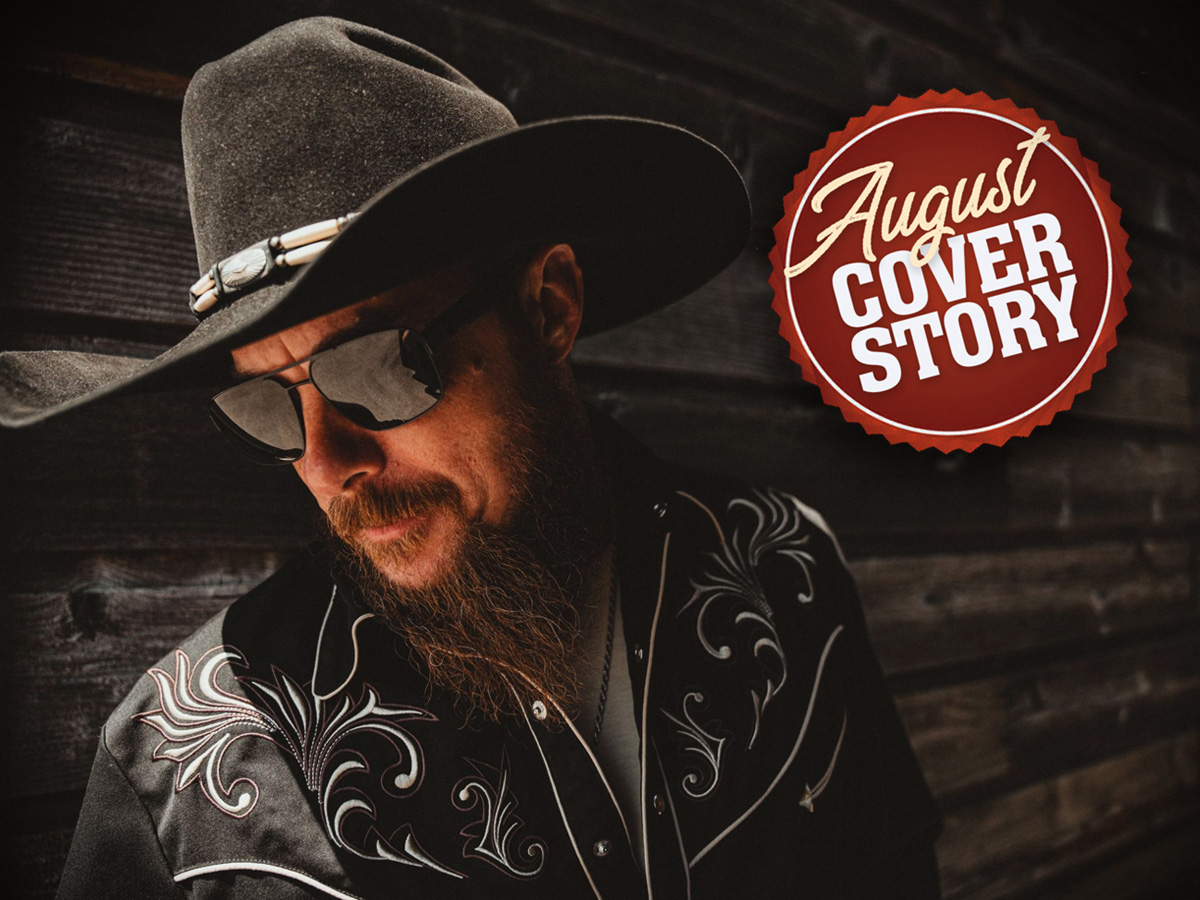
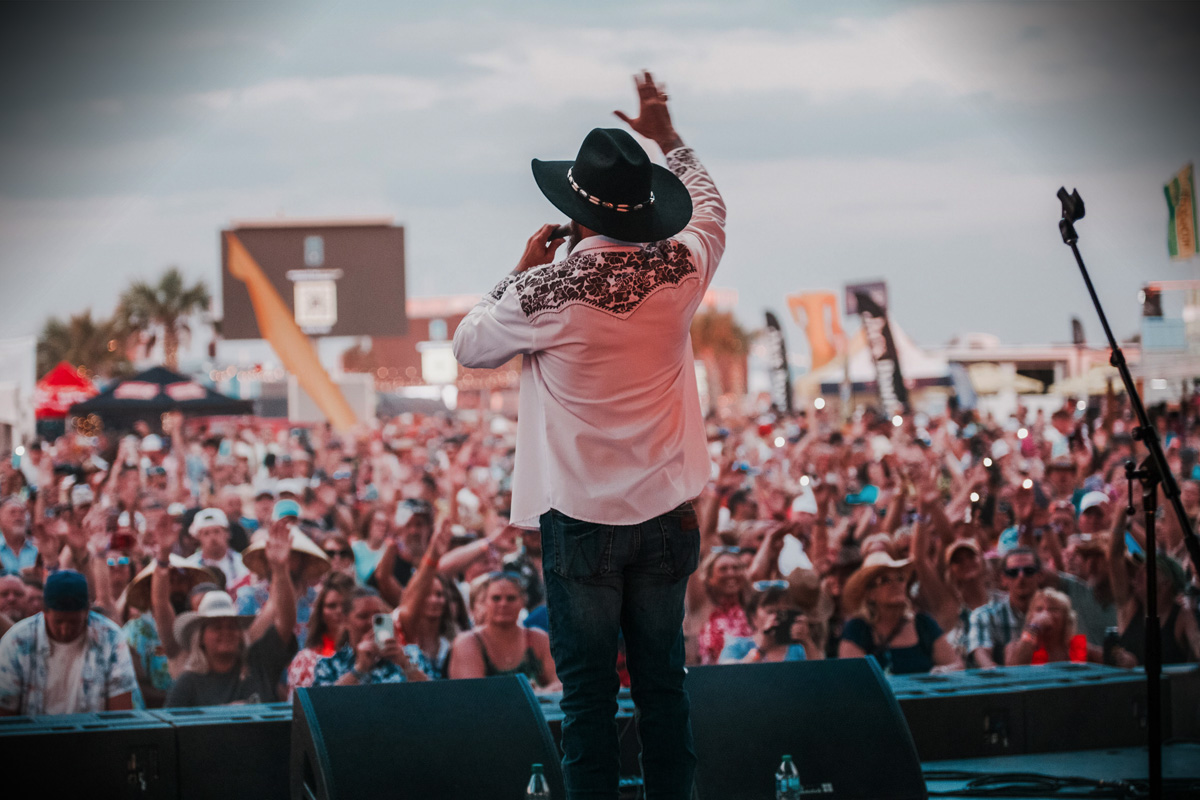
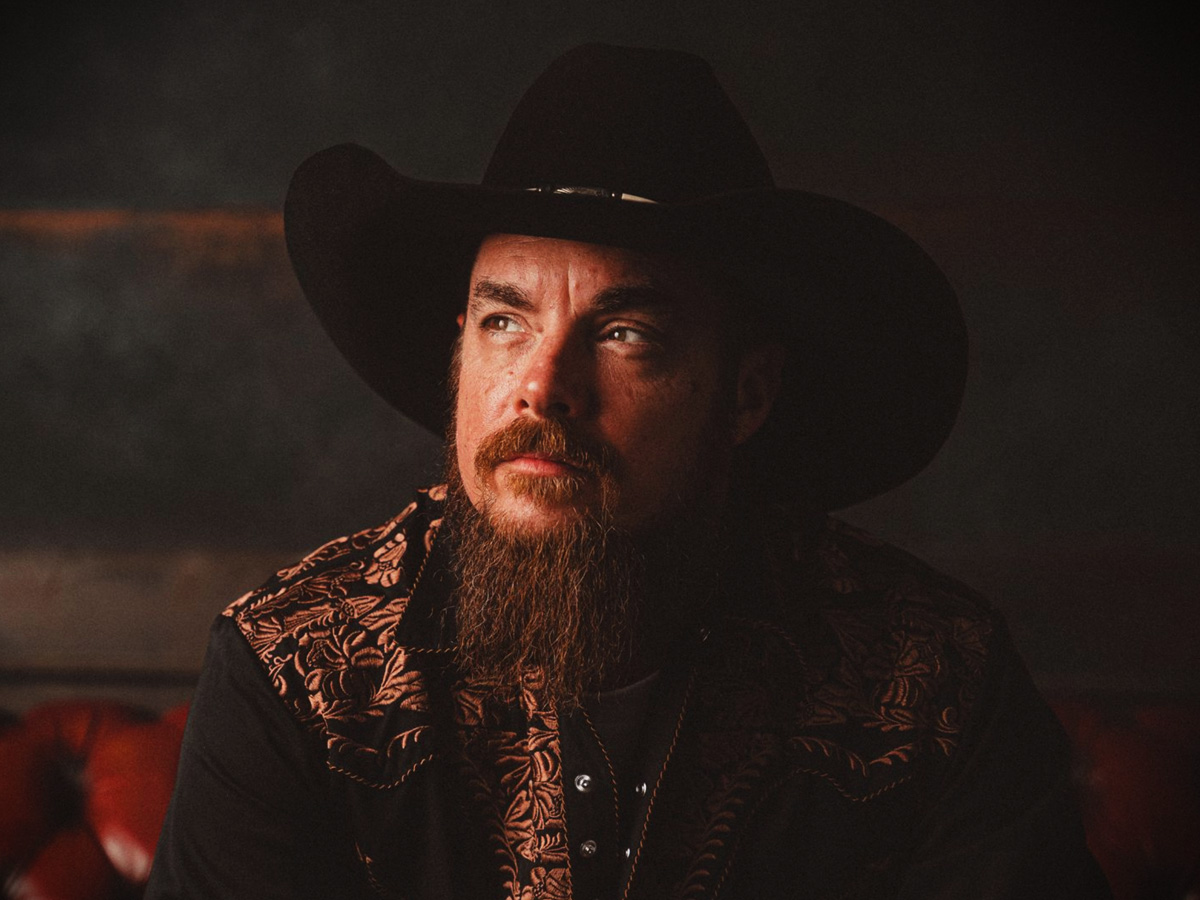
    Country singer-songwriter Whey Jennings’s story contains multitudes, from the depths of addiction to finding sobriety and peace through faith, music, and the people he loves. The grandson of Waylon Jennings, he is putting his own stamp on country music, and helping others along the way. Jennings’s most recent writing is vulnerable and reflects the years of work he has put into improving himself — and the positive that has come from it. His upcoming full-length record, Jekyll & Hyde, due out August 23 on Dirt Rock Empire, includes songs about finding sobriety, country life, horses, family, patriotism, and the future.


    Making His Way Back to Music

    Country music has always been a part of Jennings’s life, growing up around his grandfather, Waylon Jennings, and grandmother, Jessi Colter. “I learned pretty young that I had a good vocal range. I went on stage with my grandfather a few times when I was young, and I had a great time,” he shared.

    Once Jennings became a teenager, fear replaced the excitement he previously felt in the spotlight. One experience stands out in his memory. “I went out there one time when I was around 13 and was becoming a young man. It scared me to death,” Jennings remembered. “I froze like a deer in the headlights.”

    Singing remained a part of Jennings’s life, but he didn’t foresee a career in it. As a young man, he moved from his childhood home near Dallas to the high plains of the Texas Panhandle, working on a cotton farm for many years. During this time, he struggled with addiction. It took a call from his mother, Katherine, to bring him back to music. “My mom told me that she had lung cancer. So I moved back to Dallas, and I spent the rest of the time she had on this earth with her. During this time, we talked about a lot of things, and she really wished I would do something with music. She had heard me sing my whole life, so I promised her I would do it,” Jennings remembered.

    He returned to the business, but it would be several years before Jennings would find his footing and voice. Music is often the center of the party, and from bars to stadiums, alcohol and other substances are easy to come by. This puts musicians in a particularly unique and often difficult situation since their job requires constantly being around people who are letting loose. Jennings continued to struggle with addiction and admits to many missteps. “I made every mistake you could possibly make. The first mistake I made was thinking it was about a party and not about the music. It took me a lot of years to get over that,” he shared.

    Fortunately, Jennings had supportive people in his corner, like his manager, or “momager” as he lovingly calls her, Tammy Carolus, and girlfriend Taryn Rae, who later became his wife. “They sat me down and told me they weren’t going to watch me kill myself, and at that point, I felt like I had a lot to lose because no matter what I didn’t have, I always had them,” he said. He entered rehab and started finding his unique voice as an artist. Jennings chose a faith-based rehab facility, which helped him further discover who he wanted to be and how to navigate his future. “I’ve always been a faith-based person, and I felt like that was the route for me. I went to church for all 28 days that I was there and took my guitar with me,” Jennings recalled. The community he found through music changed his outlook on the future, and he remembers learning Hallelujah, which Jennings now sings for his fans and has recorded on the new album. “We made some beautiful memories in there playing and worshiping God,” he said. Jennings’s wife, Taryn, knew how to support him through this difficult time. “When I met my wife, I didn’t have two nickels to rub together, but she helped me go out and do what I knew I needed to do in my own heart, to make myself okay with the life I’m living,” he shared.


    A New Chapter

    Taryn’s support was critical for Jennings, and he is now focused on supporting her and his six children while balancing his career in music. “I thank God every day for my family,” Jennings stated. “They have really rallied around me.” His children range in age, from his youngest daughter, who is three, to his oldest son, who graduated from high school in 2023. Being there for his youngest — Jennings always travels home between gigs no matter the distance or cost — and watching his older kids begin their own adult lives brings him great joy. “They don’t live the way I did when I was young. They’re all happy and thriving. To see my family thriving means the world to me. That’s what keeps me on the straight and narrow, knowing that I’m able to support my family in a way that I was never supported,” Jennings reflected.

    Faith was important to Jennings long before he entered rehab and continues to be a guiding tenet. “My faith has always been there through life,” Jennings said. “I’ve never found a problem that I needed to solve and couldn’t find the answer to it within the walls of the Bible.”

    Jenning’s new record, Jekyll and Hyde, comes out on August 23 on the Dirt Rock Empire label and is the culmination of these years of finding his voice and learning how to tell his story. He has released three studio EPs, including 2020’s Gypsy Soul, 2022’s If It Wasn’t for The Sinnin’, and 2023’s Just Before The Dawn. This will be his first full-length record, and Jennings is extremely proud to share it with the world. “When my kids are all grown, and I’m old and looking back on my life, I feel like I’m always going to look back to this album,” he shared.

    While Jennings often sings about very personal subject matter, he maintains a grit and honesty that his fans relate to. His baritone voice carries, and like his grandfather, people pay attention when Jennings sings; this attention is going toward a worthy message. Songwriters often say to write about what you know, and Jennings is doing just that. With almost five years of sobriety under his belt, he knows first-hand how difficult it can be to get help and the positive that will come from it. Learning how to share about this in a meaningful way has been a journey in itself. “When I got out of rehab, the first thing I wanted to do was save the world. I found something I wanted to share with everyone,” he reflected. “You feel like you’re healed, but you still have a lot of healing to do before you can try to help others.”

    Looking at the bigger picture and discovering how to share the negative things in his past in a way that can help others has taken time. “What I’ve learned is that I can’t just share about where I’m currently at in my music. I have to share about everywhere I’ve been through my music because I want to be able to relate to everyone. I can’t just disregard the life I’ve led. In this new album I was able to do that. I was able to touch on every area of life that’s important to me,” Jennings shared.

    Taking responsibility for his own actions was critical. “You can dwell on horrible things. One of the biggest mistakes we make in our relationship with God is that we like to blame our lives on him,” Jennings reflected. “We forget about the fact that the first thing He gave us was free will, and with free will comes responsibility.” His own recovery story also helps him relate to others and meet people where they’re at. “I’ve come to realize that while it’s important to sing songs that push people toward recovery, that isn’t enough,” Jennings reflected. One of the most difficult aspects of recovery, and one of the primary areas where people will fail, is having a support system. Addiction pushes loved ones out of a person’s life and destroys trust, which Jennings experienced himself. One of the songs on his new album, Sleeves, explores this. “I’m trying to show people the life their loved ones keep hidden from them,” Jennings explained. “They hide the bad part of their lives and the good parts. Being an addict doesn’t mean you’re no longer human. I’m trying to open up the hearts of people who may be supporting an addict so they have a better chance of success once they decide to enter recovery.”

    Jennings balances this serious message with lighter songs, calling on subject matter that has been a part of country music for generations. One of the tracks on Jekyll & Hyde, titled 10 Day Run, tells a wild, comical tale about an angry girlfriend who has reached her tipping point from being left home alone by her truck-driving man. Jennings enjoys creating music videos to pair with his songs, which bring the stories to life and give listeners a deeper look into each song. The video for 10 Day Run can be viewed on YouTube. Four singles from Jekyll & Hyde are currently available, and the full album will be released across all streaming platforms on August 23. Jennings is playing shows across the country, backed by an all-star band, including Pat Burr on guitar, Jack Dempsey on bass, and Cameron Dudley on drums.

    Jennings is grateful to have a supportive team behind the scenes, including Jason W. Ashcraft, who handles publicity and PR; Tammy Carolus, who works as manager; co-manager David Wade, who also assists with song selection and co-writes with Jennings; Brandon Yannotti, representing Dirt Rock Empire; Gary Carter, record producer; and Gio Gotay, who produces videos for Jennings.

    While a lot of the music business happens from a distance online, Jennings is passionate about connecting directly with his fans. “If people didn’t come out to my shows, I wouldn’t be able to support my family,” Jennings concluded. “I make friends with people while I’m at shows, and I don’t stay hidden. I love playing music, but I also love interacting with people and supporting my family. I’m grateful.” •

    -Article by Lilly Platts

  • Western Art Roundup: Jessie Veeder

    Western Art Roundup: Jessie Veeder

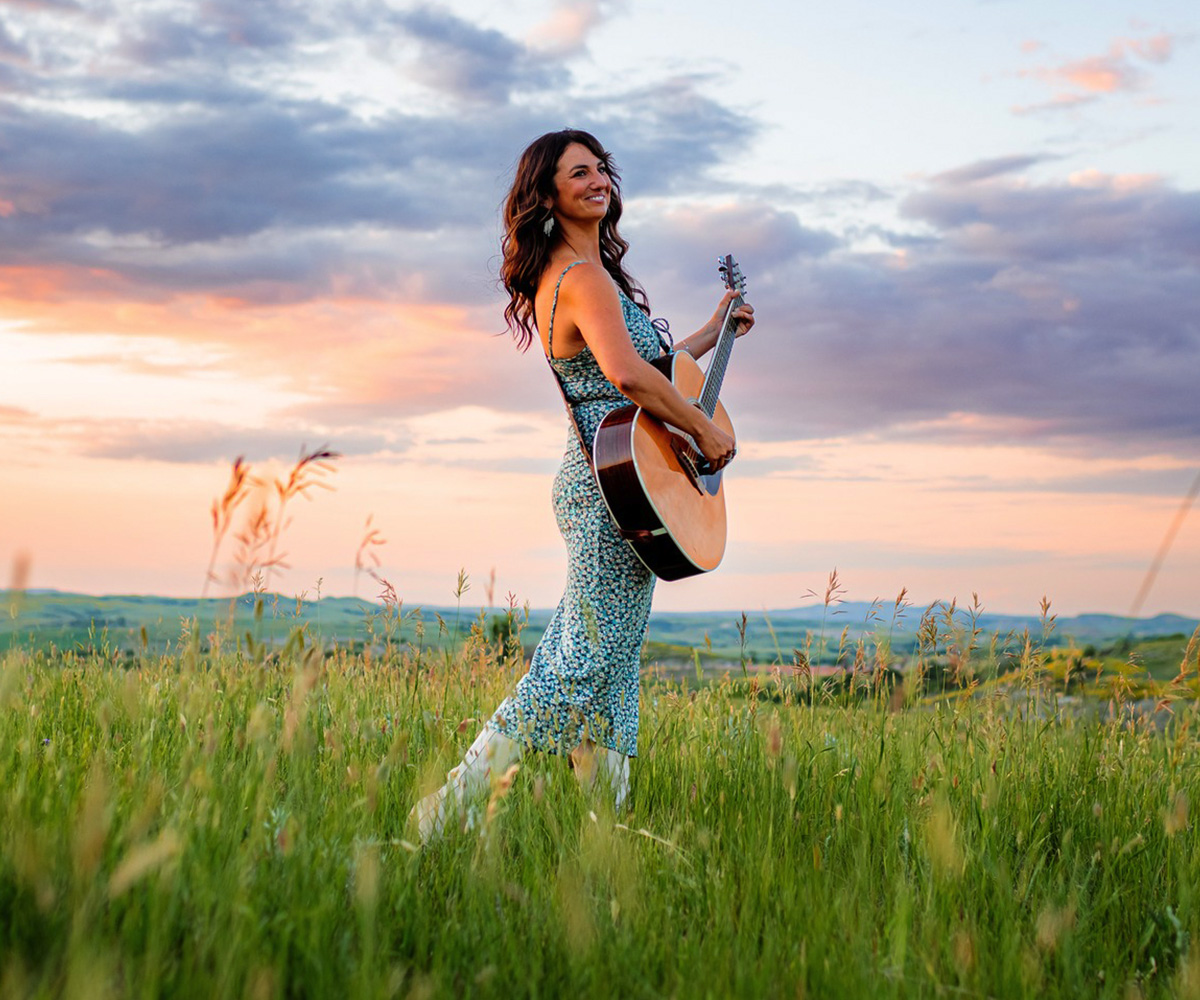
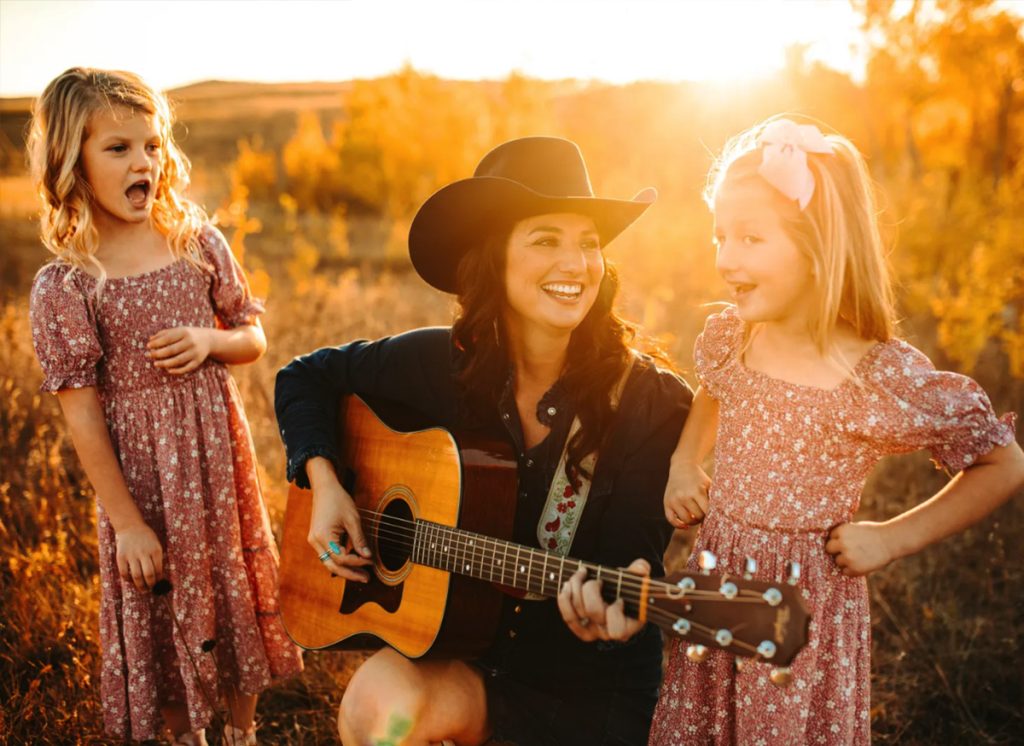
    Jessie Veeder is a songwriter, musician, journalist, North Dakotan, community builder, mother, and advocate for Western life. She explores rural living through her music, popular blog, and podcast, Meanwhile, back at the ranch, and is the director of the Long X Arts Foundation. Veeder’s latest album, Yellow Roses, was released in January 2024.

    Jessie Veeder’s music evokes a feeling that can only be replicated by driving through her home state of North Dakota, off the beaten path of the interstate. Its range and farmland, as far as the eye can see, only interrupted by grazing cows, oil flares, or a sign for the next small town’s annual summer rodeo. Western North Dakota hides a lot of its beauty below the line of sight, with much of its topography going down instead of up. This might be lost on someone who doesn’t take the time to look more closely, and Veeder has been learning how to see beyond the surface for her entire life. Her songwriting and journalism explore the moments, stories, people, and experiences that make life in the rural West unique.

    Veeder has always been surrounded by the Western lifestyle and grew up singing alongside her father, Gene, a musician and rancher. From an early age, she related to songs with a story to tell, identifying elements of her own life. “I thought it was so magical to be a kid out in the middle of nowhere,” she recalled.

    Her father performed throughout the community, and Veeder started getting on stage to sing with him at a young age. She entered and won a community talent contest, and the grand prize of $50 in “chamber bucks” was enough to buy a double tape deck. Now armed with the technology to record herself, Veeder kept practicing and writing songs.
    Knowing that her story was unique, Veeder continued pulling on the thread of rural life in her songwriting. This led to recording her first album of original material, This Road, at 16. “It was just a unique thing for a kid my age to be doing something like that,” she shared. “I think about how brave that was.”

    Veeder found a lot of support in her community, but the idea of becoming a professional musician seemed out of reach. “That was a pipe dream,” she shared. “Saying I wanted to play music professionally was a hard thing for me to say out loud as a teenager. I didn’t utter it out loud, but I did to myself.”

    This changed when she left home at 17 to attend the University of North Dakota. She studied communications and was also encouraged to pursue music further. A Nashville booking agent discovered her music, and beginning her freshman year, Veeder toured up and down the Midwest. She played coffee shops and colleges, traveling alone. “I was pretty independent and totally fine getting in the car and driving hours to play,” she shared.

    This experience was formative and taught Veeder how to use her unique qualities — like her thick North Dakota accent and childhood on a ranch — to connect with people. “Not being ashamed of it, but being proud and talking about it was interesting to these college kids,” she remarked. “Once I realized that people are curious about my upbringing and my songs about rural living, I gained confidence.”

    At 23, Veeder was engaged to her now-husband and high school sweetheart, Chad. The couple moved home to Watford City, where Chad worked in the oil field, and Veeder did various jobs while continuing to write and play music. Looking for change, the couple moved to Missoula, Montana, where she worked for a nonprofit. Chad was offered a job back in North Dakota, so they returned to the family ranch, living in the house where Veeder’s dad was raised.

    Once again, her roots and history in western North Dakota were pulling Veeder toward storytelling, and she committed herself to following this thread. “I stayed home for around a year and a half and just explored my creativity. I wasn’t going to work in a bank, in the oil field, or as a teacher. I was going to tell this story,” she shared.

    She recorded Nothing’s Forever, which features her popular song, Boomtown. The oil industry had completely transformed her hometown, and the once quiet rural area was suddenly filled with people from all over the country and the world. “You almost forgot you were in your hometown because it was so wild,” Veeder shared. This sudden growth, and the negative and positive effects, made national news. Veeder had started her blog, Meanwhile, back at the ranch, and her writing had also been picked up by local and regional publications. Soon, the media was calling her to comment on Watford City’s sudden stroke of luck — or misfortune — depending on who was asked.

    Veeder chose to look at the situation positively. Her father’s work in economic development offered perspective on the generational benefits that could come from this sudden influx of money, and Veeder used her writing skills to tell their story. “I was really curious about the stories that were coming in and wanted to help create a story for our community,” she said.

    National publications grabbed onto shocking stories of violence and oil field workers living in campers during below-zero weather. Veeder saw humanity in these people’s stories, understanding that everyone was making a sacrifice of some kind to be there. “There were people coming here who just wanted a better life for their family, and we wanted to figure out a way to keep them here or get them to bring their families here,” she recalled.

    Her high school classmates started returning home, and family ranchers who once feared not being able to pass their operations on to the next generation were able to bring their kids back home. “The next generation could make a living here and do it really well,” Veeder said.

    She honed her writing skills during this time. “I became really practiced at it and worked on seeing the magical everyday moments, or the story that could come from the turn of phrase that someone said,” she recalled. “I have always been fascinated by the stories in rural America.”

    Her latest album, Yellow Roses, further explores Veeder’s life in the rural West and her family’s deep history in North Dakota. She and Chad are the parents of two girls, Rosie and Edie, and motherhood has also become a strong theme in her writing. Released in January of 2024, Yellow Roses came on the heels of several trying years for Veeder. In 2020, right before the Covid-19 lockdown, she was diagnosed with a rare form of cancer. She had been fighting breathing issues, and having been told that she had asthma, kept trucking through life, singing and performing regularly.

    After flying to Elko, Nevada, for the National Cowboy Poetry Gathering, Veeder knew that something was very wrong. An ER doctor in Elko expressed extreme concern, and after performing for the festival and returning home, she sought out a larger hospital in Bismarck. As she drove away from the hospital toward home, the doctor called her and said she needed to return immediately. A large tumor was discovered in her airway — Veeder’s lungs were over 90% blocked. Thanks to a strong diaphragm and good posture, Veeder had miraculously been able to sing but was dangerously close to an emergency. After several surgeries, a lot of treatment, and downtime, Veeder recovered. Luckily, her voice was not affected despite the extremely invasive surgery to remove the cancer. Today, she is learning to slow down and does regular preventative scans, but Veeder is back to living life full-on.

    In addition to sharing her own music, she works as the director for the Long X Arts Foundation, which brings art into the Watford City community. The organization helps plan events ranging from rodeo dances to art classes and classical piano concerts. When the oil boom brought money into the community, Veeder quickly advocated for the arts. “I knew that was something we lacked in our community because growing up here, I didn’t have as many opportunities to perform or explore the art world,” Veeder said.

    Other community members also advocated for supporting the arts, and in 2016 the Long X Arts Foundation was officially formed. “We have a permanent space in our visitor center with an art gallery and a full-time art teacher. We run a big concert series and go into the schools. We have facilitated public art projects and now are opening a retail space where we can really lift up local artists by giving them a place to sell their work,” Veeder shared.

    Art is front and center in the community, and Veeder is committed to bringing new and interesting performers into the community. Concerts have featured a Carnegie Hall trumpet player and a classical pianist.

    Veeder is an advocate for the Western lifestyle, and through her social media platforms, blog, and podcast, she shares her life on the ranch with people from across the country. Recently, she has been considering the popularity of Western culture and how that can be harnessed to benefit agriculture and Western culture. “I think we’re coming into an era where our story is our power,” Veeder shared. “I see that happening on social media in the world of agriculture, and we’re on those platforms showing people what it really looks like to be on a family ranch. This is what cowboy looks like, what being a farmer looks like, and what raising kids looks like. We’re able to grab a hold of that narrative on our own, and that’s what I think is so empowering and wonderful.”

    The newfound popularity of Western culture presents challenges, and Veeder recognizes the gap that needs to be bridged between popular culture and real life. “Let’s celebrate the culture and give people the opportunity to learn about what we do. If someone watches Yellowstone and then wants to come out to my ranch and let us show them what we do, all the better,” Veeder said.

    Rodeo is another thread connecting the general public with rural America. “I’ve been a participant in rodeo and, of course, an advocate for it. Those contestants are the ones representing our lifestyle. What we’re putting out front — and what cowboy means to us — matters to people,” she shared.

    Veeder is also the author of Prairie Princess, a children’s book written in collaboration with North Dakota artist Daphne Johnson Clark. The book celebrates rural living through the eyes of a young girl on a ranch.

    Veeder performs regularly at festivals and events throughout the country. She is a regular performer at the National Cowboy Poetry Gathering and has shared the stage with a long list of Western artists. Her efforts in music, community building, and advocacy have been recognized by several entities. Veeder is a recent recipient of the Governor’s Award for the Arts in Individual Achievement, she was named North Dakota’s favorite Folk Artist in 2016 and 2017, and she is the recipient of the North Dakota Ambassador Award.

    -Article by Lilly Platts