Rodeo Life

Category: Special Features

  • Benny Binion Statue at South Point

    Benny Binion Statue at South Point

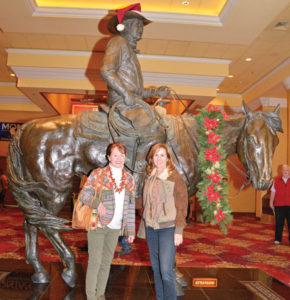
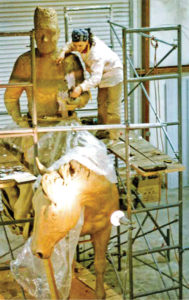
    The huge statue sitting in the walkway of the South Point Hotel and Casino in Las Vegas of Benny Binion on his horse, Trece, has traveled far to find a home here in this very busy thoroughfare within the confines of the headquarters of the Professional Rodeo Cowboy Association and the World Series Finale when the National Finals Rodeo comes to town. It is a larger than life bronze 15 feet tall and 16 feet long, weighing 2,800 pounds created by well-known sculptor, Deborah Copenhaver.
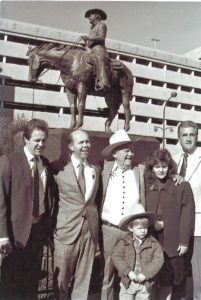
    Benny Binion was a successful businessman, who found his fortune in gambling in Dallas, Texas before moving to Las Vegas. The horse was owned by his daughter, Brenda, but Benny, who always wanted to live the western way of life, wanted her to sell him to her to use on his ranch in Montana. “No dice,” she said. Trece was one of 18 foals from the mare, Brenda Joe. “I think my dad thought if he made a bronze of him, I’d let him have the horse,” explained Brenda Binion Michael. The Texas Historical Society paid for Copenhaver to sculpt the bronze. It was placed in front of the famous Billy Bob’s, The Largest Honky Tonk in the World, in the Stockyards at Fort Worth, Texas and was unveiled on Benny’s 80th birthday. When Billy Bob’s was sold, Ronnie Campbell hauled the statue to Las Vegas and it was placed in front of the parking garage of The Horseshoe, Benny’s casino, on 2nd Street in downtown Las Vegas.
    Michael Gaughan, owner of South Point, wanted it once Binion’s were no longer owners of The Horseshoe. “It was out in a back street collecting bird shit,” said Michael. “Mr. Binion was very close to me – he never said no to me. I tried to get the statue a couple of times, and finally got it for $1. Getting it into South Point was a challenge. First it had to be cleaned – which took two people three days working on it. “We were told not to tilt it or use steel wool,” explained Michael, “so we used warm water, soap, and Irish-cut oatmeal to get it cleaned up. They cut a hole in the building, and a second hole to get it into the casino. It took an entire day – it was like moving a Trojan horse.”
    Benny Binion had a love of the west, and a high regard for cowboys. He was very instrumental in getting the Professional Rodeo Cowboys Association National Finals Rodeo to move to Las Vegas. Since South Point has become the destination of the PRCA Convention, the Benny Binion World Famous Bucking Horse Sale, the World Series Finale, and so much more during the National Finals Rodeo plus so many other western events and competitions held there during the year the bronze of Benny Binion and Trece is destined to be a focal point at South Point forever.
  • Forrie J. Smith

    Forrie J. Smith

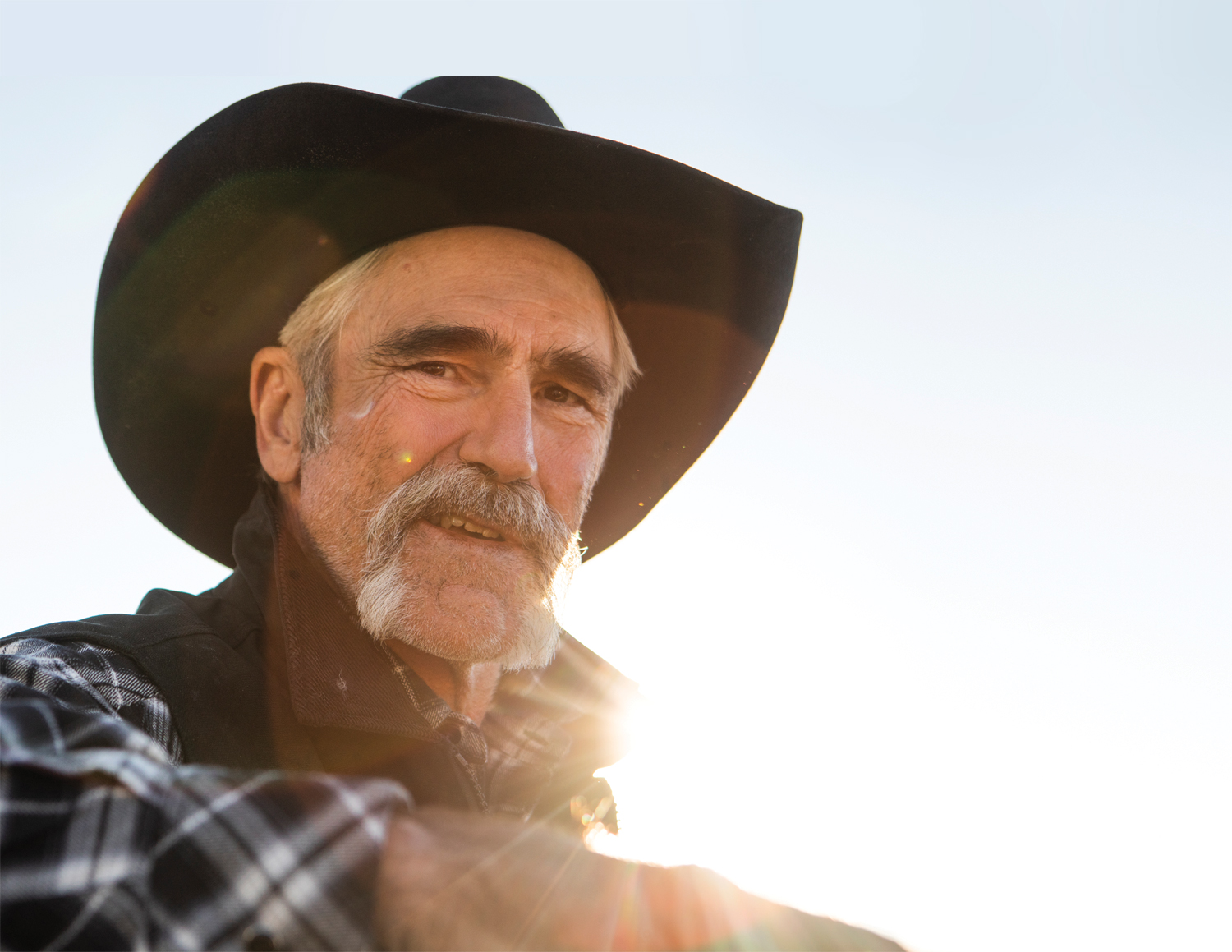
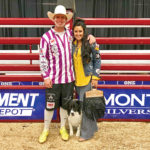
    Forrie Smith fell off a horse in front of his mom and step dad when he was 6 and proclaimed that he was going to be a stunt man. 54 years later, he’s doing just that. Forrie plays Lloyd Pearce on Paramount Network’s hit series Yellowstone and recently completed shooting the third season of the show. He has been involved in Yellowstone since season one. “I was a guest star and now I’m on contract. I’m the cow boss. We started shooting season three the first week of August, and just finished up. It takes 8 days to do an episode.”
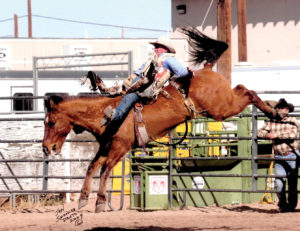
    Rodeo paved the path from bronc rider to stunt man. Born in Helena, Montana, and raised on his grandpa and grandma’s ranch southwest of there, he spent his early years going down the rodeo road with his parents. “I went to grade school at Montana City – there were 13 kids in 8 grades.” He started competing in rodeo when he was 8. “I was on my second pair of chaps already – I wore one out riding at home.” His grandma (Josephine Palmer) didn’t want him riding bucking stock, so he was raised in the timed events. “My granddad rodeoed when they circled the cars and snubbed the horses,” recalls Forrie. “I was drawn to it. I’m known as a horseman. I’ve started a lot of warm bloods for the equestrian people.” He always knew his call was riding bucking stock. He started riding bareback horses when he was 11. “I would get on turnout horses and people like Pat Linger and Steve Loney would help me out.”
    He was still spurring bucking horses in 2009, taking after his dad. “I was raised in the back seat of a station wagon. My dad was winning checks until he was 52 in the RCA.” His mom, Chick, was a barrel racer and when she had troubles with her horse she would time and secretary. “I started working the labor list when I was eight under guys like Sonny Linger, Reg Kesler, and the Big Bend Rodeo Company.” Through the years, he did anything necessary at a rodeo including flanking, loading, and riding. “I’ve been on 17 horses in one day and 11 head of bulls in one day. Everything good in my life was because of rodeo.”

    He is quick to say that it was rodeo that got him into the film business. “I use a lot of the things I learned from rodeo in the film industry – like breaking things down into steps, thinking positive and not being negative. Thinking about what you did wrong and forgetting it; thinking about what you did right and building on it. Hurry up and wait – that’s all learned from rodeo.” He relates his acting to riding a bucking horse. “You read that dialog and figure out the scene and why you’re saying what you’re saying. If you look at the script and say ‘I got this’ – that positive attitude will work out for you and the energy will carry you – same as riding a bucking horse. If you say you’re not going to ride it, you probably won’t.”
    Forrie has been a stunt man for 25 years. His first part was in Desparado. “I had started in the movie business a year before as a wrangler, my first movie was that remake of Stagecoach with Willie Nelson. Then they needed a guy that could rope a guy off a roof. I was the only one that showed up with a rope long enough to reach him. Then I had to get the dialog … my name was Harley.” He had only been in the film business for a week when he went to sign up for the teamsters union. “I had to have references and they were all old rodeo partners. The guy looked at me and said ‘who are you, you come with some of the best and highest recommendations I’ve ever seen’ – that was 1986 – almost to the day I got my screen actors guild card.”
    With his look and voice, he was encouraged to take acting lessons. “I just wanted to do stunts .. but I went to Lawrence Parks for acting lessons and learned how to break down a character and a script. That was 25 years ago and I’ve been in it ever since.” Everybody that was in the stunt business back then had some kind of rodeo background. The hardest stunt he’s had to do are horse falls. “There’s a lot of components that go into that – you’ve got to hit your mark, set your horse up and follow through with it. Doing high falls isn’t as bad – it’s just that first step that’s hard. And I didn’t really like the fire gigs – you usually lose all your eyebrows.”
    Forrie was raised in Helena, Montana, and moved to Arizona 30 years ago, and now calling San Acacia, New Mexico, home. “I fed cows with a team and sleigh when it was 50 below and it was 106 in August when I was setting posts,” he recalls of his days in Montana. “I drove my cousin back to Texas – 20 years ago – right after Urban Cowboy came out and cowboys were in.” He started doing day work and rodeoing, competing in open rodeos and he filled his permit in 1982 and started competing in pro rodeos. “That was easy back then, there were 100 rodeos in Texas.” He was part of the National Senior Pro Rodeo Association, joining in 2006, when he was 47. He competed for three years there, never winning the world, but winning his circuit twice and taking the average at the Finals. “I was raised to make money – if I didn’t make money rodeoing, I didn’t do it.” He spent his off time wrangling or hauling horses before getting his gig with Yellowstone. He still does wrangling jobs, the latest one for an upcoming Tom Hanks movie.
    At 60, Forrie has no plans to slow down. “Thank God to the movie business I’ll have a decent retirement through the teamsters guild. As long as I can stick my feet in the stirrup, I’ll always do day work and I’ll still do movies.” Any chance he gets, he goes home. “I like sleeping in my own bed, petting my own dogs, and saddling my own horses. It’s getting better around home about going out and having a meal and not getting interrupted. I’m not complainin’ – it’s so cool – the excitement and joy you bring people with just a hug and a picture. Without them, I wouldn’t have a show. It’s kind of wild.” Season three of Yellowstone comes out in summer 2020. “I’m a very blessed man – I thank God and my Lord and Savior Jesus Christ that I’m still on the ride. It ain’t over yet.”

  • Evan Allard

    Evan Allard

    When Evan Allard was a kid, while his friends were playing football under the bleachers during the Vinita, Okla. rodeo, he was glued to the rodeo, watching the rodeo clown.
    He loved rodeo, and every time the Will Rogers Memorial Rodeo came to town, he was there, with a singular focus, observing. And when he showed cattle at the Inter-State Fair and Rodeo in Coffeyville, Kan., just thirty miles north of Vinita, he was watching there, too.
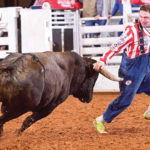
    And now he’s headed to the biggest stage in pro rodeo: as a bullfighter at the Wrangler National Finals Rodeo.
    Allard grew up around cattle in a family that didn’t rodeo, but he idolized the rodeo clowns and bullfighters.
    When he was fifteen years old, he snuck behind the chutes in Coffeyville and introduced himself to Cory Wall, who was fighting bulls. Wall invited him to a Sankey rodeo school in late August, where Wall was the bullfighter instructor, and Evan went. “I wanted to do it so bad I couldn’t stand it,” he remembered.
    He got ahold of a Humps and Horns magazine, with a listing of stock contractors and associations, and started making phone calls, asking for jobs. “I didn’t know any better,” he said. “I didn’t know the difference between the PRCA and the NFL, for that matter. It didn’t matter to me. I sure wanted to fight bulls and wanted somebody to give me a shot.”
    He began working a junior bull riding association, two events a month for thirty dollars an event. “I was uptown,” he said, thinking he had it made. Ironically, he was working with Cody Webster, who he’ll work alongside in front of the yellow chutes in Las Vegas. “He was just a pup,” Evan said. “We were just babies.”
    In 2005, thanks to Jim McClain, he got introduced to freestyle bullfighting, which became his forte. “That’s where I really made a name for myself,” Evan said. He worked Two Bulls Protection shows, which were owned and produced by McClain.
    In 2006, he went to his first freestyle bullfighting competition, and four years later, he won his first freestyle national championship, with two more titles after that, in 2014 and 2015.
    At the time, he worked a fulltime job as a journeyman substation technician, testing and maintaining high voltage transformers. His job supplemented his rodeo income, helping him buy his place, the Hookin’ A Ranch, and start his herd of fighting bulls.

    Then he got a call to work a rodeo as a bullfighter. He had done plenty of cowboy protection, but freestyle was his main work. He couldn’t refuse this job, but didn’t have any vacation time away from work. “I thought, one of these days, I’ll work when I can’t fight bulls,” he said. “So I quit my job.” It was 2015, and he became a PRCA member.
    He estimates he works more than 100 performances a year protecting cowboys, at rodeos from Oklahoma to California and everywhere in between: the Ft. Worth Stock Show, several PBRs, the Texas Circuit Finals, and more.
    There’s more to Evan than rodeo. He got his pilot’s license three years ago, with the sole purpose of flying to rodeos. Last year, he got his aerial applicator’s license, to crop dust, and this year, he bought an agricultural plane. He’s growing his business, spraying farmers’ crops and pastures in northeast Oklahoma and southeast Kansas, with his long-time girlfriend, Kelsea Walker, helping out.
    When he got the call that he was selected to work the WNFR, it was a surreal feeling. “Getting that phone call was an unreal moment,” Evan said. “I instantly was glad it was six weeks away. I don’t want to lose that feeling.” The two bullfighters who signed for his PRCA card four years ago are the men he’ll work alongside in December; Cody Webster and Dusty Tuckness.
    When he was a little bitty kid, he never thought his dream would take him this far. As a kid, all he wanted to be was a rodeo clown, because he didn’t understand the difference between the clown and the bullfighters. Having the natural athletic ability to fight bulls took him in that direction instead of clowning. He knows there might be a kid in the audience who looks up to him, just like when he was young. “That’s why it’s important to me to put on the face paint and the baggies,” he said. He knows that for the kids in the crowd, the bullfighters and clowns are bigger than life. “At the end of the day, protecting bull riders is very important, and it has turned into an art, but without somebody in that crowd, we have no job, and the only way to get people in that crowd is to entertain them. There’s more to it than just fighting bulls and going home.”
    Evan knows that when he gets to Las Vegas, the ten days will fly. He’s not ready for that, but he’ll savor every moment. “I don’t want it to be over. I know once I get out there, it will go so fast it’ll seem like it’s over before it starts.”

  • Premier Timed Event

    Premier Timed Event

    Casey Mahoney; Founder of the Premier Timed Events website, an Online Roping Jackpot

    Casey Mahoney is not a computer guy, but owns an online company that is built on a custom-program platform. “I don’t talk the computer coding language, but I tell my developer what I need the website to do and he converts it all and we go from there,” said the 29-year-old from College Station, Texas. His company, Premier Timed Events, started with an idea from his college days. After graduating with an Ag Leadership, Education, and Development degree from Texas A&M in 2009, Casey rodeoed full time for a little over five years. “When I was on the road, I eventually got tired of the traveling. And if I wasn’t at a rodeo, I wasn’t making money.” He figured there had to be a way to make money without traveling.
    “Basically during the week while you are practicing and preparing for whatever the next event you maybe heading to, no matter at what level, you can now get paid for all the hard work you are putting in by winning money while you practice.”
    The way it works is simple. As the roper is practicing, they video their runs. Each week there’s a new jackpot (Books open every Sunday at 12:01 am and close the following Saturday at 11:59 pm) and each week the contestant(s) uploads three runs. All the videos are timed by Premier Timed Events as they are received and the money is paid out based on the time from a 3 head average. As soon as the week closes (Saturdays at 11:59pm), they use Sunday as the time to verify the results and times, then on Monday the winning videos, the ropers, and their times are posted to social media as well as the website. There are no membership fees, and no hidden fees. It’s an 80% payout, with all the transaction fees taken by the company.
    “I’m trying to make this as roper friendly and user friendly as possible.” The online team roping jackpot has been live for three months, and breakaway roping and calf roping were added a month ago. “We are in four countries now and set up to accept any credit card, debit card, or PayPal. We pay one money for every ten teams entered.”
    Casey grew up hunting, fishing, surfing and playing basically ever other sport under the sun in Corpus Christi Texas. “I didn’t put a rope in my hand until I was 18,” he said. “One day I just decided to learn to rope and a good friend agreed to help me learn how to ride and rope. I was blessed to meet and learn from some great pros in the team roping and rodeo world along the way as I was learning the “ropes” and ended up roping in college and at the professional level.”
    His biggest thing in regards to his company is customer service. “We answer the phone 24 hours a day 7 days a week. Since we are international, we’ve got to have the phones covered. Nine times out of ten it’s me, but once in a while it’s someone that works for the company.”
    The future is to get into all the rodeo events, and eventually get into other sporting events. “It’s been fun watching it grow, spreading into other countries has been neat. I didn’t realize that team roping was so big in other countries, so watching the videos from other arenas and countries has been real fun.”