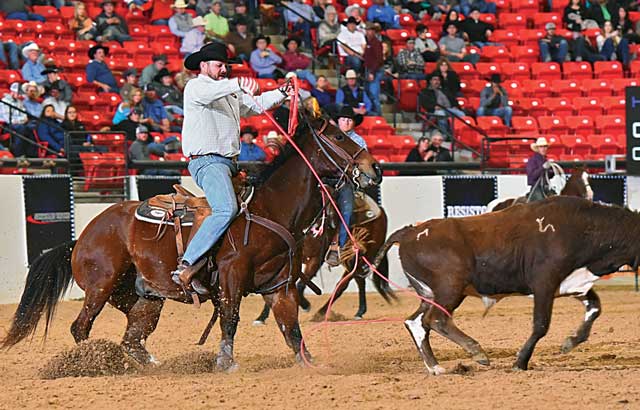
Most ropers only dream of winning the kind of money paid at the World Series of Team Roping finale in Las Vegas. Those dreams recently came true for Shane Brown, Robstown, TX, and his partner, J. R. Wood, Sinton, TX. The duo won the #13 on December 6th, splitting $254,000. The team previously won the #12 roping at the World Series roping in Sinton, TX earlier this year. Brown and Wood both had their numbers raised, to a #8 heeler and #5E header, respectively, forcing the pair into the #13 Finale. The duo came from sixth high call to win the roping with a 29.65 aggregate time on four head.
Shane, and older brother Scot, grew up in a farming and ranching family and were riding before they were walking. They started roping young and team roped and roped calves through school. Growing up, Shane won a couple of TYRA state championships in calf roping. In 1997 he was the Texas High School rodeo team roping champion header. In college Shane eventually dropped calf roping and focused solely on team roping.
After high school Shane pursued an education at Texas A&M where he earned his degree in Animal Science and a Masters in Agri-Business. After graduation, Shane was a commodities broker for five years and is now a Vice President and the Robstown branch manager for Texas Farm Credit.
Shane is married to his lovely wife, Ravyn, and the couple has two daughters, Bailey, 8; and Blakely, 5.
“I met my wife in college,” says Brown. “We both grew up in rodeo. Once we married, she slowed down to raise our girls. Now she’s a stay at home mom and far busier than I am.”
Brown admits to being fiercely competitive. This trait benefits his other hobby and passion – golf where he carries a #3 handicap. Being competitive and handling pressure runs in this family. Two years ago, his brother Scot, won the #11 at the World Series finale.
Undoubtedly family comes first for Brown, “We do a lot as a family. Right now my girls are active in gymnastics and volleyball. I haven’t been roping as much lately. Basically just enough to qualify for the World Series finale.”
COWBOY Q&A
How much do you practice?
Once or twice a week. But in preparing for the WSTR Finals, we would practice several times a week.
Do you make your own horses?
Typically yes. My dad raised the horse I rode in Vegas, and I broke and trained him.
Who were your roping (rodeo) heroes?
Phil Lyne. I grew up roping with him and rodeoed with his daughters. My dad was an extremely good roper and gave it up so we could rope.
Who do you respect most in the world?
My family.
Who has been the biggest influence in your life?
My parents, my wife, and God.
If you had a day off what would you like to do?
A perfect day would be playing golf in the morning. Then hanging out with my family and roping in the afternoon.
Favorite movie?
Lonesome Dove.
What’s the last thing you read?
Emails.
How would you describe yourself in three words?
Driven, family-oriented, competitive.
What makes you happy?
Being with family and friends.
What makes you angry?
Laziness.
If you were given 1 million dollars, how would you spend it?
Buy some acreage that my family and I could enjoy.
What is your worst quality – your best?
My worst is lack of patience for people who don’t try. My best is lots of patience for people who try hard.
Category: Roper Review
-
Roper Review: Shane Brown
-
Roper Review: Courtney Small
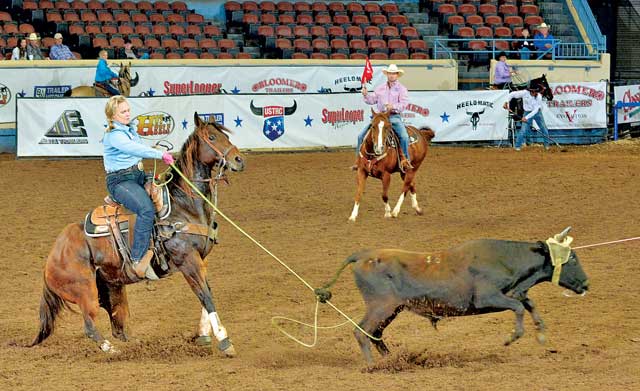
Everyone who enters the USTRC Finals has dreams of clean runs and big paychecks. Unfortunately, only a handful of ropers realize those dreams. One such dream come true was Courtney Small, and header, Lari Dee Guy, who came from third high call to win the Cruel Girl Roping. The pair posted a time of 37.25 on four head to win the roping and split $16,000 in cash plus prizes.
“Actually I prefer being third high call. From there the goal is to make a nice run and put pressure on the top two teams,” says Small.
Courtney, 24, started roping when she was just eight. She and her dad started roping at the same time. Eventually her brothers, Zac and Blair, rope as well.
“We would rope almost every night,” explains Courtney. “That’s where my addiction to roping started.”
Small is grateful to her parents for giving them the opportunity to rope and pursue their passion.
“My dad blessed us with the chance to rope every day during the summer. He wanted us to succeed in whatever we wanted to do,” says Small. “Every day we would start out roping the dummy, then saddle our horses and rope the mechanical dummy. That was our routine from about ten to fifteen years old. We were consumed by it.”
Courtney admits to a life long passion for horses and roping. When she was about thirteen, the family built an indoor arena where they roped and also had a church.
“The arena has been a huge blessing. God has used our arena to bless the lives of many people; and given young people a place to come and rope. We still rope in our arena every day and I’m very thankful for it.”
The Blair kids were homeschooled and well educated using the accredited Christian based A Beka Academy. To see how her education measured up, Courtney attended public school during her sophomore year and found it very easy.
After high school Courtney attended Tarleton University in Stephenville, Texas before transferring to and graduating from Oklahoma State University. Currently she is working with her father at the family cattle embryo laboratory near Welch, Oklahoma. She will soon pursue a Masters in Animal Science, a degree that will be helpful as they expand their business.
“There are some new things we want to do,” says Courtney. “I so enjoy working with my family. I also have lots of time to rope, which is a huge plus.”
“I am very grateful and give the glory to God. Without Him, none of these blessings would be in my life. I have to thank my parents and am so blessed to have them. I realize not many people get the opportunity to do what I do. I also want to thank my sponsor, Classic Ropes.”COWBOY Q&A
How much do you practice?
About five days a week.
Do you make your own horses?
Yes. My brothers and I have made every horse we own.
Who were your roping heroes?
I always looked up to my dad because he got me started. He had won quite a bit and was my idol.
Who do you respect most in the world?
My father.
Who has been the biggest influence in your life?
My father.
If you had a day off what would you like to do?
Rope.
Favorite movie?
The new Magnificent Seven was very good.
What’s the last thing you read?
A textbook of some sort.
How would you describe yourself in three words?
Leader, dedicated, shy.
What makes you happy?
When I win.
What makes you angry?
When I miss.
If you were given 1 million dollars, how would you spend it?
I would set quite a bit back and probably build a horse barn on my property.
What is your best quality – your worst?
Best quality is independent thinking. Worst quality is procrastinating.
Where do you see yourself in ten years?
Hopefully more involved in our lab with the expansion, and enjoying the growth of business. -
Roper Review: Blake Teixeira
 Blake Teixeira grew up in a ranching family near Salinas, California, where he spent much of his youth with his grandpa who roped and raised horses. As a youngster he roped with his family at local jackpots in lieu of Junior Rodeo. In high school he qualified for the National High School Finals and earned a scholarship at Tarleton University in Stephenville, Texas.
During his four years at Tarleton, Blake qualified for the college finals with heeler, York Gill, where they won three of four rounds and set an arena record.
Teixeira recalls going to his first jackpot in the Stephenville area and seeing many of the world champions he had watched on television.
“In the beginning it was very surreal. I’m at a jackpot and there are the Tryans, Speed Williams, Clay O’Brien Cooper, etc. Over time I got to rope with them and know them on a personal level.”
In fact, during his college years Blake took every opportunity to work for and with some of the best ropers in the world. He moved in with Jake and Jimmie Cooper during his sophomore year. At various times he worked for Randon Adams and Shawn Darnell. He helped both Ryan Motes and Michael Jones during their preparation for the NFR.
After graduating from college Blake drove for Chad Masters and Jade Corkill one summer and laughs, “It’s funny how much you can learn when you’re not entered.”
Afterwards, he helped Speed Williams for a couple of years. Blake says that’s where he saw first hand how professionals practice and prepare.
“While at Speed’s I learned a lot. I learned how to ride my horse better and basically learned how to win,” explains Teixeira. “It was then I realized how much it really took to rope at that level.”
When his grandfather passed away, Blake moved home to California to help his family. He took a break from rodeo after his head horses were injured. During that time he got his license and started selling insurance.
Now he has some good horses going, this year he’s been riding a nice black mare owned by Deforest Performance Horses that Chant Deforest rides at the rodeos, “Chant and I both rode the Black this spring and three of us rode her at Pendleton this year. I won third in the first round and Chant placed in the second round on her.” He is currently riding and winning on a bay mare, named Fanny, owned by York Cattle and Performance Horses.
“She has been awesome. I rode her at the rodeos all summer and at the BFI. She’s what I was riding to win the ACTRA Finals Open yesterday.”
Blake is thankful for the experience and exposure he’s had to the best ropers in the world. He credits that experience to the success he enjoys today. He also lost 75 lbs. this year, making a significant difference in the way he feels and rides his head horse.
“I used to really fight to get in front of my horse,” laughs Teixeira. “After losing the weight, I would almost crawl out too far.”
Now, at 31 years old, Teixeira is enjoying a healthy balance between work and roping. This fall he is roping with B. J. Campbell and the team has plans for some 2017 rodeos.
“I’ve been very fortunate to meet people who helped me and taught me. I’m thankful to my sponsors: Best Ever Pads, Fast Back Ropes, Remington Construction, Elko, NV, Great Basin Orthopedics, Yeti, Hansen Western Gear and Les Schwab tires. I’m immensely grateful to my girlfriend, Brooke Kieckbusch, and our families for their support.”COWBOY Q&A
How much do you practice?
Every day.
Do you make your own horses?
Some.
Who were your roping heroes?
Speed Williams, Dan Green, Wade Wheatly.
Who do you respect most in the world?
My grandpa.
Who has been the biggest influence in your life?
My grandpa.
If you had a day off what would you like to do?
Play golf and go fishing with my girlfriend.
Favorite movie?
Tombstone
What’s the last thing you read?
The Score Takes Care of Itself by Bill Walsh.
How would you describe yourself in three words?
Easy going, honest, determined.
What makes you happy?
Seeing other people happy.
What makes you angry?
When the 49’ers lose.
If you were given 1 million dollars, how would you spend it?
Buy a ring, a house, a head horse and invest the rest.
What is your worst quality – your best?
Worst quality is procrastinating. Best quality is willing to help anyone if I can.
Where do you see yourself in ten years?
Married with kids and a home. I would still rope but would like to be a rodeo coach at a good school or give lessons. I enjoy helping people get better at their roping. -
Roper Review: Butchie Levell
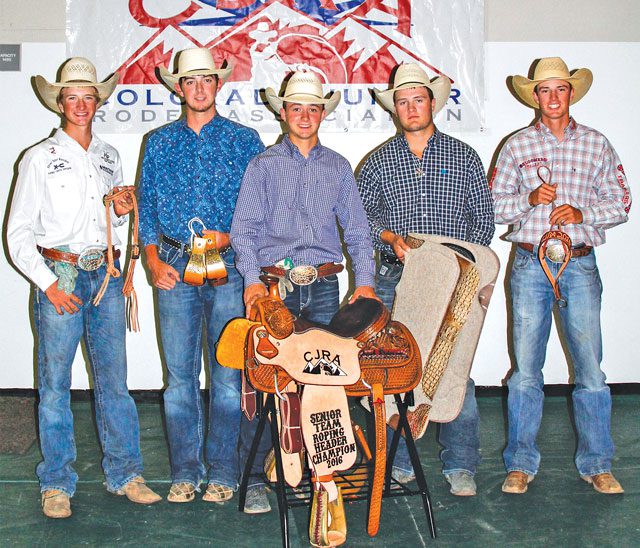
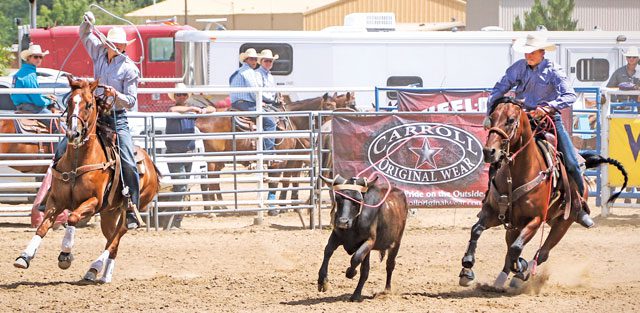
Butchie Levell, Senior Team Roping Header Champion – Lazy HH Photography Butchie Levell (Butch Levell III) has gone to a lot of USTRC ropings in order to be tied for first with Keith Elkins from Clinton, Louisiana, in the Scholarship Standings. If he holds onto that lead until the end of the Finals, he will win $10,000 in scholarships.
The 18-year-old form Omaha, Nebraska, has been roping since he was 10, and is now a #6+ header and #6 heeler. “I like heading better, that’s been my strong point. Heeling is a little tough, but heading has been easy going for me.” His family, dad, Butch, mom, Pam, and older sister, Jennifer, were not into horses at all. “We have two houses on our property,” he explained. “The people that rented the house had horses and roped and I decided one day I wanted to be a cowboy and it started from there.” He started with the neighbors, and then got in with Jeff Straight, JD Yates, and Jay Wadams. “They helped him the most,” he said. Butchie started showing horses in the AQHA at the same time he was learning to rope and this year he stayed the summer in Colorado at JD Yates house, roping in the Colorado Junior Rodeo Association, and winning their year end Senior Team Roping saddle with his partner, Colton Reed.
This is his first year out of high school and he decided to stay home a year to rope, work for his dad, and take care of 50 head of cattle that he has accumulated over the years. “They are old roping heifers that I kept as momma cows and now I rope their calves.” He keeps them on leased pasture and at his place.
Butchie is headed to his fifth USTRC Finals. “It’s awesome being down there for a week, hanging out with friends, and going up against the best in the world and lots of money,” he said. He will haul four of his six horses to Oklahoma to enter everything from the open prelims to the #10; he’s entered mostly as a header, but is roping as a heeler as well.
His dad, Butch, owns a recycling business, Lakeside Auto Recyclers, and his mom is a stay-at-home mom. When he’s not roping or working with his herd, Butchie helps his dad with the company. His plans are to attend college and get an Ag Business degree and make his way to the NFR someday. “I rope until my arm gets tired and I don’t want to stop,” he said. “I rope until 8 or 9 every night.” He knows that’s what it’s going to take to get to the NFR. “My goal is to work hard every day and push to get better.”____________________
The USTRC launched the scholarship program this year. “We had talked about this for a long time,” said Kirk Bray, USTRC President. “With putting $100,000 up and making it available for any age, up to 24, potentially a kid that’s 13 or 14 can start building a scholarship bank with us.” The USTRC Scholarship Program will award $100,000 in scholarship funds annually. Sixty (60) scholarships will be awarded to the top point earners during the 2016 season (November 1, 2015 thru October 31, 2016). “They had to opt in to the program because we wanted to make sure they are serious about going to college. It’s a pretty strict program, but we want to award the kids that go to college and get good grades. It’s a way to give back.”
-
Roper Review: Justin Loya
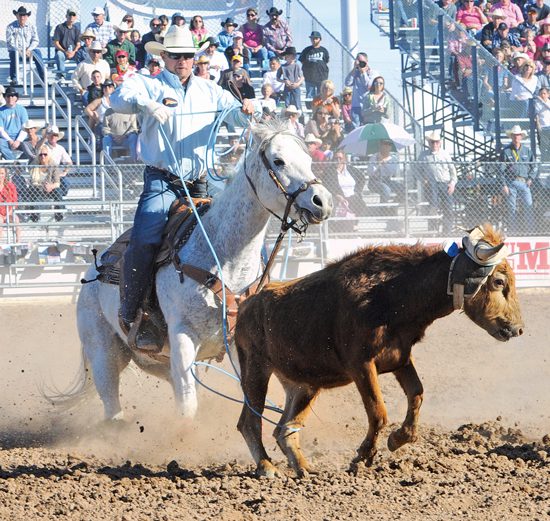
As a kid, Justin Loya had big dreams. Just not the NFR dreams most rodeo kids have. From the age of five, Justin craved baseball. Both parents, Sam and Marilyn, competed in rodeo and as a youngster Justin roped calves, winning the Tie Down title in New Mexico Junior Rodeo more than once.
He also played football, wrestled, and competed in other sports during school. But baseball was always his first passion and the thing he wanted to pursue to the highest level.
Consequently, as a high school freshman, Justin sold his horses to focus solely on baseball. This passion earned him a scholarship at Benedictine College in Kansas. As a senior, he was selected to play on Team USA and traveled to Australia where he ultimately threw his arm out. Corrective surgery soon followed, but Justin found he was not able to throw as he had before.
With the option of an academic scholarship at University of New Mexico, Justin decided to stay close to home and learn to team rope. After a year and a half of roping close to home, Justin was offered a rodeo scholarship at Frank Phillips College in Borger, Texas. There, he completed his Associates Degree before transferring to West Texas A&M the following year.
When Justin started roping at 19 years old, he was a #2. In 2006, he missed making the NIRA finals by just one spot. His college rodeo team went on to win the region and nationals. And by the time he was 22, he was rated a #8.
“I roped all day, every day. I set up my classes where I was done by noon,” explains Loya. “My roommate and I would visit three or four roping pens every day and rope until dark. My parents furnished me with nice horses and that helped quite a bit.”
Now, at 33, Justin works as a Senior Real Time Trader for PNM (Public Service Company of New Mexico). There he monitors and balances New Mexico’s energy load and generation. He also buys and sells energy as needed throughout the United States.
Additionally, Justin owns and operates Loya Performance Horses, in Los Lunas, New Mexico, where he trains and sells some nice horses. He is also teaching his seven-year old son, Payson, to rope on his retired rope horse.
How much do you practice?
About five days a week.
Do you make your own horses?
I’ve made some and bought some. Right now I’m making more than buying.
Who were your roping (rodeo) heroes growing up?
I didn’t really have any because I was playing baseball. At the time I was more of a calf roper and Brent Lewis was from New Mexico so I paid attention to him.
Who do you respect most in the world?
My father.
Who has been the biggest influence in your life?
My parents always have been, now my son is a big influence.
If you had a day off what would you like to do?
Play golf.
Favorite movie?
Lonesome Dove.
How would you describe yourself in three words?
Honest, driven, fun.
What makes you happy?
Knowing I’m setting a good example for my son.
What makes you angry?
When I don’t do well from lack of preparation.
If you were given 1 million dollars, how would you spend it?
I would invest in property and save the rest for my son’s education.
What is your worst quality – your best?
My best is striving for perfection. My worst is being overly competitive.
Where do you see yourself in ten years?
Hopefully I will be getting ready to take my son to college. Much of the next ten years will be about him and me roping when I can. -
Roper Review: John Gaona, Jr.
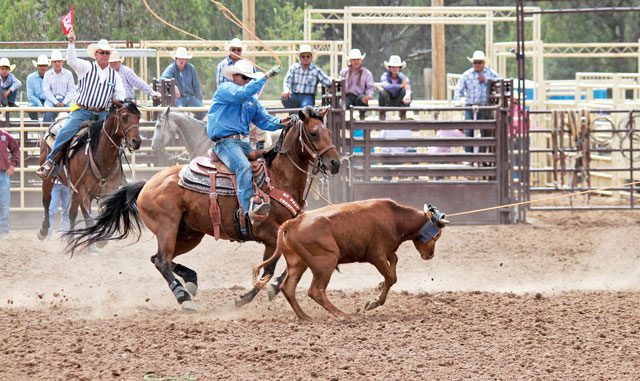
John Gaona, Jr., may be a senior at Hayden High School with plans for college, but he already knows what he wants to do with his life – rope. He’s been roping competitively since just five years old, and this summer, the 17 year old from Winkelman, Arizona, won the team roping at the NHSFR with his partner, Marcos Martinez. It was John’s first year heeling in high school rodeo, having qualified for the NHSFR his freshman year in the heading, where he finished tenth in the nation. “I felt pretty confident about Nationals – I’ve been there plenty of times, and I knew Marcos just had to do his part and I had to do mine,” says John. The friends have been roping together at least six years, though this was their first season rodeoing together. “We were mainly doing jackpots before. It helps that we’ve roped together for a while, and Marcos is fully committed to heading and everything being perfect.”
John inherited the roping gene from his dad, John Gaona, and receives pointers from both him and his older brother Steven. They tell the two Johns apart by calling John Jr. his nickname, Gordo. “I was chubby when I was little, so that’s my nickname,” John says with a laugh. He and his dad and brother compete in the USTRC, while Steven holds cards with the GCPRA and PRCA, and won the NIRA Grand Canyon region in the team roping last year. “I rope with my dad or my brother every day – we have an arena, plus I have heeling dummies outside and in the house to practice on.” John enjoys heading and heeling equally, but switched to heeling when he and Marcos teamed up for the AHSRA this year. John’s first qualification at the national level was his seventh grade year, where he won reserve in the team roping, followed by another trip to the NJHFR in eighth grade.
The high school rodeo season in Arizona doesn’t start until mid-September, but John stays occupied with jackpots, team ropings, and training horses with his brother. Steven trained John’s head horse, Kansas, while John trained his heel horse, Sparticus, using them for practice, jackpots, and the occasional rodeo. His main mount is Frito, Steven’s ten-year-old palomino gelding. John and Marcos flew to Nationals and met Steven, who was rodeoing in Wyoming, where they competed on Frito and Penny, Steven’s other horse.
The brothers have a sister and older brother, also ropers, and they leave the roping pen just long enough to go fishing on the Salt River or deer hunting in the winter. Their mom, Angie Gaona, doesn’t rope, but is skilled in the art of hauling horses and packing food for the entire family.
A senior at Hayden High School, John enjoys playing basketball and dodgeball in P.E. He played football last year, but chose to focus on rodeo this season. “I’m pretty happy with just rodeoing,” he explains. John never pulls out of the driveway for a rodeo without his roping dummy to warm up on, and his favorite high school rodeo is the state finals held in Payson, where he can also compete in jackpots following the performances. His plan is to start pro rodeoing in the next few years, though he also intends to college rodeo. “I’m still looking at schools, but I want to stay in Arizona,” he finishes. “My current goal is to try and win Nationals again. -
HASTINGS RODEO WRAPS UP
Louisiana cowboy moves up the world standings ladder with a win at the Oregon Trail Rodeo
HASTINGS, NEB. – (August 28, 2016) – Cody DeMoss nearly didn’t come to Hastings, Neb., but the Heflin, La. man is sure glad he did.
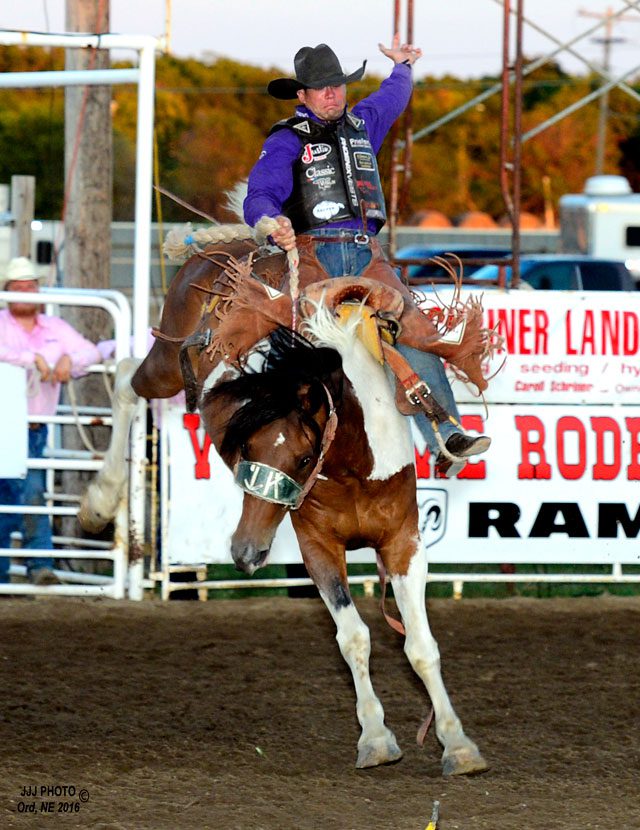
The saddle bronc rider had planned on “turning out” – not competing in the Oregon Trail Rodeo in Hastings, Neb. on August 27, but at the last minute, changed his mind.
Inky, the saddle bronc horse owned by Korkow Rodeo of Pierre, S.D., helped change it.
DeMoss made an 82 point ride on the horse to win the 25th anniversary of the Oregon Trail Rodeo.
He had planned on competing in Kennewick, Wash., instead of Hastings. “I got to thinking about it,” he said, “and prayed about it a bit and a couple of other guys I talked to, they said, you might ought to get on Inky there.”
He took their advice. DeMoss spent $850 on a plane ticket from Seattle to Omaha, where he met up with fellow saddle bronc rider Logan Allen from Crescent, Iowa. The two traveled to Hastings, where DeMoss ended up winning the rodeo.
The $1814 check he won couldn’t have come at a better time. With only five weeks left in the rodeo year, DeMoss is outside the top fifteen in the world standings, who qualify to compete at pro rodeo’s “world series”, the Wrangler National Finals Rodeo (Wrangler NFR) in December in Las Vegas. He’s been to the Wrangler NFR eleven times, but didn’t start rodeoing hard this year till mid-June. “I only went to twelve rodeos by the time Reno (Nev.) started,” he said. “I stayed at the house and baled hay.”
But then it was time for the 35 year old cowboy to make a decision: either rodeo full time or stay home more. “Me and my wife were talking. Are you going to do it or not do it? I said, I guess I’ll go.”
DeMoss hit the road, winning $8,000 over the Fourth of July run and second at the Calgary Stampede. He was doing OK, but not up to the standard he was used to.
Things have started to click, however. “You know, it feels good right now. I kind of wish we had a couple more months” before the rodeo season ends, he said.
DeMoss would like to earn $20,000 more in the next five weeks. He’s only $5400 from fifteenth place, but the extra money would give him some security.
And there’s a chance he can do it. He will rodeo every day except for six between now and September 30. But this week includes a little down time. His wife Margie will meet him in Denver, where they’ll enjoy Tuesday and Wednesday off.
Then it’s back to the road, in pursuit of his twelfth qualification for the Wrangler NFR.
An Oklahoma man won the bull riding at the Hastings rodeo.
Newt Brasfield, Lane, Okla., scored 85 points on the Korkow Rodeo bull No. 208 to win $1706.
Brasfield had seen the bull at the Dickinson, N.D. rodeo in late June. “He was nice there,” he said. “I was pumped to have him.” And his trip on the bull was good. “I felt like he was a little buckier than the last time I saw him. I needed that, anyway. Eighty-five (points), you can’t complain about that.”
The 22 year old cowboy is in his first year of PRCA competition, and it’s not going quite as well as he’d like. “I’ve stayed afloat, stayed healthy and made a decent living,” he said. “I went pretty hard this summer, but didn’t have the year I wanted to.”
Even then, he’s ranked eighth in the Prairie Circuit, pro rodeo’s regional designation for rodeos in Nebraska, Kansas and Oklahoma, and he’ll compete at the Prairie Circuit Finals Rodeo in October.
After his ride on Saturday night, Brasfield was in a hurry to make the eight hour trip home. The third birthday party for he and his wife Brooke’s son Briar was on Sunday, and he didn’t want to miss it. He gave credit to his wife, Brooke. “I couldn’t do this without her. She’s in her last year of nursing school, and she’s raised a kid and gone to school while I’ve been out here. I have to give her props for that.”
This was Brasfield’s first trip to Hastings, but it won’t be the last. “I’ll be back after tonight.”
Other champions at the 25th annual rodeo are bareback rider Casey Breuer, Mandan, N.D. (77.5 points), tie-down roper Cody Quaney, Cheney, Kan. (9.1 seconds), steer wrestler Justin Shaffer, Hallsville, Texas (4.0 seconds), team ropers Caleb Mitchell, Mason, Texas and Dustin Harris, O’Neill, Neb. (4.7 seconds), barrel racer Emily Miller, Weatherford, Okla. (16.43 seconds), and all-around Ty Talsma, Verdigre, Neb. Talsma competed in the steer wrestling and team roping and placed in both events.
The 2016 Miss Oregon Trail Rodeo queen was crowned during the Sunday performance. Jenna Langer, Superior, Neb., won the crown and the title. She is the 18 year old daughter of Larry and Jody Langer.
The 26th annual Oregon Trail Rodeo will take place August 25-27, 2017. For more information, visit the fairgrounds website at AdamsCountyFairgrounds.com. For complete results, visit ProRodeo.com.
###
Results, 2016 Oregon Trail Rodeo, Hastings, Nebraska
Bareback riding
- Casey Breuer, Mandan, N.D. 77.5 points on Korkow Rodeo’s Hot Pickett; 2. Nate McFadden, Elsmere, Neb. 76.5; 3. Troy Vaira, Richey, Mont. 75; 4. Caine Riddle, Vernon, Texas 74.5; 5. Logan Patterson, Goodwell, Okla. 73.5; 6. Casey Colletti, Pueblo, Colo. 73.
Tie-down roping
- Cody Quaney, Cheney, Kan. 9.1 seconds; 2. Sterling Smith, Stephenville, Texas 9.6; 3. Boe Brown, Valentine, Neb. 9.9; 4. Shank Edwards, Tatum, N.M. 10.4; 5. (tie) Brady Graff, Ainsworth, Neb., Stephen McLauchlin, Rockwall, Texas and Shade Etbauer, Goodwell, Okla. 10.5 each; 8. Chase Lako, Arthur, N.D. 10.8.
Saddle bronc riding
- Cody DeMoss, Heflin, La. 82 points on Korkow Rodeo’s Inky; 2. (tie) Cole Elshere, Faith, S.D. and Doug Aldridge, Carthage, Mo. 81.5; 4. Taylor Tupper, St. Onge, S.D. 77.5; 5. Shade Etbauer, Goodwell, Okla. 76.5;6. (tie) Jace Lane, Stephenville, Texas and Jacobs Crawley, Boerne, Texas 75.5 each.
Steer wrestling
- Justin Shaffer, Hallsville, Texas 4.0 seconds; 2. Jeff Johnston, Thedford, Neb. 4.9; 3. Ty Talsma, Verdigre, Neb. 5.8; 4. Cody Doescher, Oklahoma City, Okla. 5.9; 5. Taz Olson, Prairie City, S.D. 6.1; 6. (tie) Kyle Whitaker, Chambers, Neb., and Trell Etbauer, Goodwell, Okla. 6.2 each; 8. Jon Herl, Goodland, Kan. 6.4.
Team roping
- Caleb Mitchell, Mason, Texas/Dustin Harris, O’Neill, Neb. 4.7 seconds; 2. Cale Markham, Vinita, Okla./Nick Simmons, Colcord, Okla. 5.2; 3. Payden Emmett, Ponca, Ark./Justin Pruitt, Victoria, Texas 5.5; 4. Miles Baker, Mountain Park, Okla./Dustin Searc, Mooreland, Okla. 5.9; 5. Reece Weber, Valentine, Neb./Ty Talsma, Verdigre, Neb. 6.3; 6. Brett Christensen, Alva, Okla./Dawson McMaster, Madison, Kan. 6.4.
Barrel racing
- Emily Miller, Weatherford, Okla. 16.43 seconds; 2. Calyssa Thomas, Harrold, S.D. 16.45; 3. Kyra Stierwalt, Leedey, Okla. 16.56; 4. Conny Winkers, Woodman, Wisc. 16.72; 5. Mattie Jackson, Goldsby, Okla. 16.73; 6. (tie) Trula Churchill, Valentine, Neb. and Jordan Moore, Mauston, Wisc. 16.74 each; 8. (tie)Tracy Nowlin, Nowata, Okla. and Ceri McCaffery, Wayne, Okla. 16.77 each; 10. Kara Large, Bromide, Okla. 16.79.
Bull riding
- Newt Brasfield, Lane, Okla. 85 points on Korkow Rodeos’ No. 208; 2. Trevor Reiste, Linden, Iowa 76; 3. Richard Schleicher, Stockton, Kan. 75.5; 4. Brody Yeary, Brock, Texas 71; 5. Bart Miller, Pleasanton, Neb. 21; no other qualified rides.
All-around champion:
Ty Talsma, Verdigre, Neb. (won money in both the steer wrestling and the team roping)
-
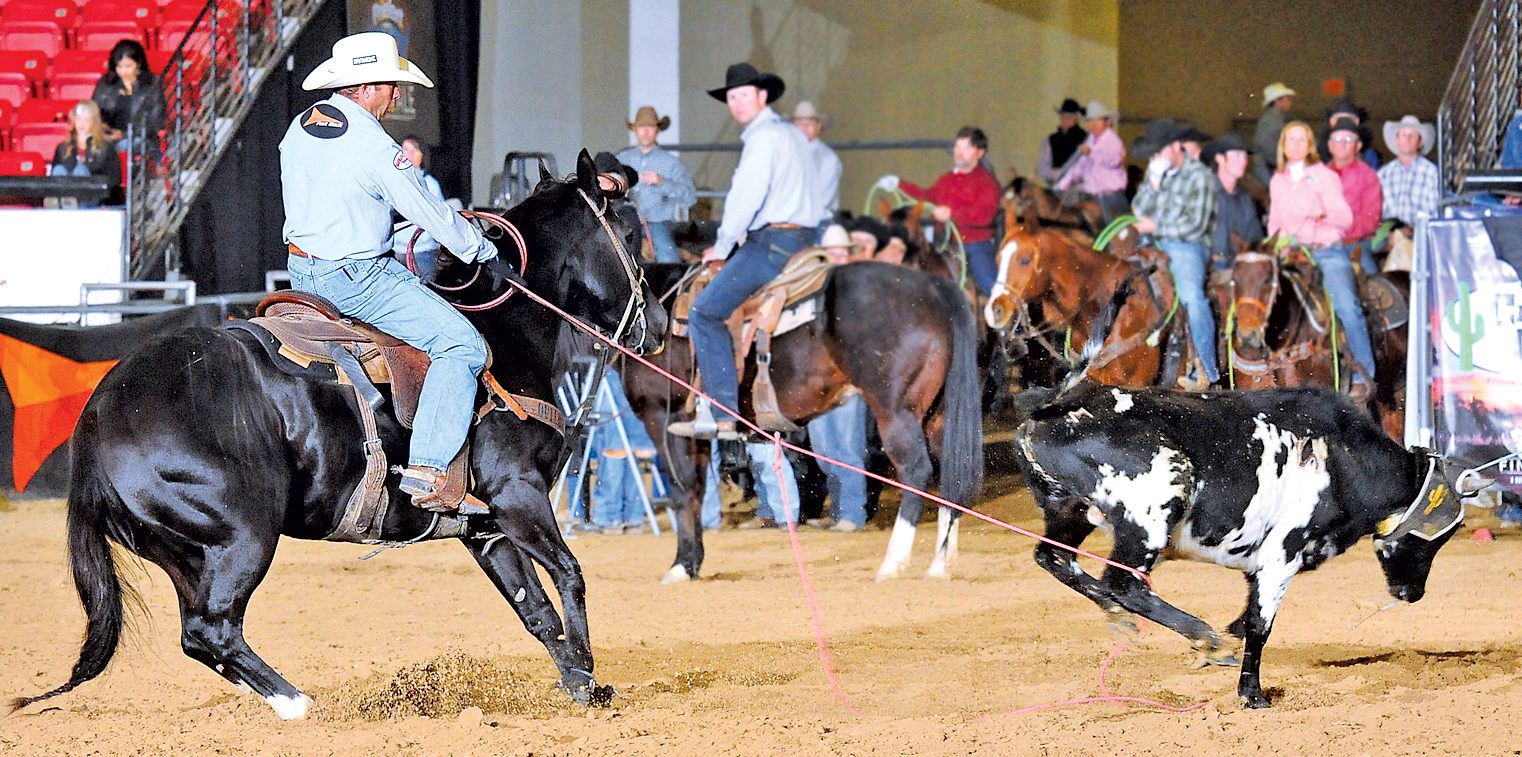
Roper Review: Mike White
A good and positive attitude is a common trait amongst people who excel at anything. A trait not as common, though respected as much or more, is humility. When asked about his life and accomplishments, Mike’s first reaction is to talk about the people who helped him.
Mike White grew up in Lake Charles, Louisiana where rodeo was a way of life. His older brother, Pat, was a bull rider, bullfighter, and stock contractor who Mike fondly describes as a workaholic.
“Pat rode bulls outstanding,” says Mike. “Probably better than me. What he didn’t like was traveling and being gone, so he never made a career of it.”
As a youngster Mike took part in most rodeo events including team roping, bull dogging, calf roping and riding bulls. He was given a lot of responsibility at a young age and by the time he was sixteen he was driving a semi hauling bucking stock to rodeos.
At age 15, he was also riding racehorses as a jockey and fought to keep his weight down. When he got his jockey license at 16, he was also trying to ride bulls. Two fellow jockeys, Chris and Aaron Emigh, helped with his decision.
“They told me I needed to choose between the two. In order to be a jockey I would have to stay sick and puny to keep my weight down. If I didn’t want to do that, I needed to ride bulls.
“I chose to ride bulls and had every opportunity in the world to become good because of my brother. He was my teacher, my mentor, and would help me at any time of the day or night.”
Mike’s rookie year in the PRCA was 1997. He made the finals that year and set the record for the most money earned as a rookie, finishing 5th in the standings. The next year he returned to the NFR with a good chance at winning the world. After five rounds and no qualified rides, Mike was getting more advice on bull riding than he could process. He called his brother, Pat, who said, ‘What you’re going to do, after the next perf, is get on a redeye flight, come home and get on some bulls. Then you can fly back to Vegas in time for the next performance.’
“I told Joe Baumgartner my plan and he told me to hold up. He got me hooked up to ride some bulls at Michael Gaughan’s place, and told me I could get on as many as I wanted,” says White. “I got on three bulls, got my confidence back and rode four out of the next five bulls at the NFR.”
In 1999 Mike hit the rodeo trail hard. It was the end of July and he was winning the world when he realized he was burned out. He told his traveling partner, Myron Duarte, that he was done and headed home. Myron said, ‘You can’t do that, you’re winning the world.’ Mike didn’t care; he was tired of the road.
Fast forward to the last three weeks of the rodeo season. White has fallen out of the top fifteen when he calls Myron and told him to enter him in the remaining rodeos.
“Don’t worry, you’re already entered,” responded Duarte. “You’re going to have to turn out some because I have you double entered. This is what you get for being lazy.”
White admits it was costly as he took last minute flights to get to the rodeos where he had drawn the best. He made the finals in 13th place by several hundred dollars. He went on to have an outstanding NFR and rode eight of the ten bulls and winning the world that year.
“I was burned out and tired of going,” explains White. “If you’re tired, you’re not going to perform to the best of your ability. By the time I went back, I was hungry for it.”
In July of 2000 White suffered a broken neck, keeping him out of action until the following year. After returning to competition, at a PBR event in Shreveport, Louisiana, his first bull stepped on and crushed his ankle. That injury kept him sidelined for seven months. At the third event, after recuperating, he was thrown and dislocated his shoulder, breaking the ball in it.
Admittedly being hardheaded, White refused the help of the Justin Cowboy Crisis Fund and used his own savings for bills and living expenses. When he did finally return to the arena, he had a total sum of $300, virtually starting completely over.
“I’ve dealt with a lot of injuries,” says Mike. “But that particular time was rough and a real eye-opener for me. It made realize just how short and humbling a bull-riding career is. I learned you should save and invest every dime earned for the end of your career.”
Mike always enjoyed team roping and training horses, but never found the time when he was riding bulls for a living. Upon retiring from bull riding in 2010, he and his wife, Hannah, started training and roping more.
“I love to rope and am probably addicted to it. It’s a very humbling sport. One day you’re a rock star and the next you can’t catch.”
Now rated a #7, Mike recalls being at an all time low with his roping and being entered in the Big 12, the day after the George Strait Team Roping. He called his nephew, Tyler Domingue, whom he taught to rope as a youngster, and asked for help.
“In true Tyler fashion, he pulls in at 11 p.m. to rope. In seven steers, he had me catching 95%. It’s ironic that I taught him and now I’m going back to him for advice. There are people who can rope well, but can’t explain it; then there are people who can break it down where it makes sense, and that’s Tyler.”
White, who turns 40 this year, has found his passion in training quality rope horses. They’ve sold three horses to past NFR qualifiers, mostly recently Clayton Grant from California. The Grants are enjoying the six-year old heel horse, calling him a “true gentleman.”
“There’s not a horse we sell that I won’t stand behind,” says White. “I don’t train or sell junk. I like nice horses.
“In life, the one thing you will always have is your name. Once you ruin that, you’re ruined for life. I will always stand behind mine.”
As a professional athlete, Mike is quick to point out the importance of sponsors and his responsibility to them.
“When one of your sponsors asks you to do something, your response should be ‘You bet, when and where do you need me.’ I’ve been blessed with great sponsors and I appreciate them very much. When you’re hurt, sometimes the only income will be from your sponsors. If you’re asked to do something by your sponsors and you don’t want to, don’t think people aren’t going to notice. In the rodeo world people see everything you do.
“Some of the sponsors that stuck with me after I retired from riding bulls are Big Tex Trailers, Fast Back Ropes, and Cooper Tires. I’ve always respected that.”
Mike and Hannah live in DeKalb, Texas, with their two sons, Logan, 12, and Morgan, 4. Each year they host Mike White’s Annual Pasture Roping & Benefit, a non-profit organization benefitting Ropin Dreams, an organization that benefits children with serious illnesses or injuries.COWBOY Q&A
How much do you practice?
Every day.Do you make your own horses?
Yes.Who were your roping heroes?
Jory Levy. He really broke it down for me. He took the time to help me and that meant a lot.Who do you respect most in the world?
My grandpa and my parents. Until the day he died, my grandpa opened the door for my grandmother. He never walked in a building with his hat on. He had a lot of respect for people and I learned a lot from him.Who has been the biggest influence in your life?
My brother, Pat.If you had a day off what would you like to do?
Take my wife to the beach.Favorite movie?
Talladega Nights – “If you’re not first, you’re last.”What’s the last thing you read?
The BibleWhat makes you happy?
Roping and riding horses.What makes you angry?
Losing.If you were given 1 million dollars, how would you spend it?
I’d build a covered arena and donate most to a foundation, Ropin Dreams.What is your worst quality – your best?
Best quality is honesty. Worst quality is being a workaholic. -
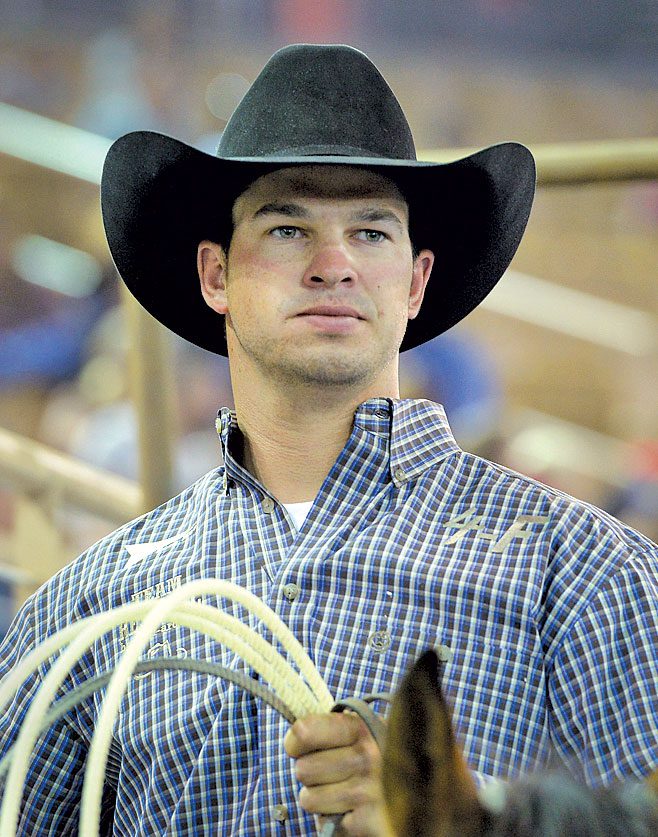
Roper Review: Tyler Domingue
It’s doubtful you could have convinced ten-year-old Tyler Domingue that in fifteen years he would win over $26,000 at a four-day rodeo. After all, he was riding motorcycles and competing in Motocross with no interest in roping.
It was about that time his parents, Mitch and Paula, relocated the family from Lake Charles, Louisiana, to DeKalb, Texas, near his uncle, Mike White, world champion Bull Rider. In addition to his bull riding career, Mike and his wife, Hannah, enjoyed riding colts and team roping. They often invited young Tyler down to rope, but he just wasn’t interested.
“Tyler never would come rope with us, until one day I told him, ‘Tyler there’s lots of pretty girls at the ropings.’ After that he was all in,” laughs Mike.
Once he started, at fifteen, Tyler fell in love with the sport and went to work at it. He started out as a #2 and won his first roping heading as a #3. The next year he was bumped to a #4 and won a saddle heeling for Hannah. Tyler’s number steadily increased to the #9 he is today.
“I’ve been very fortunate and had a lot of help through the years,” says Tyler. “Growing up watching the success my uncle had in his rodeo career was very influential for me.”
“The first clinic I ever went to was with Tyler Magnus. My uncle knew a lot of the better ropers and that was beneficial for me. Jory Levy came to our house for a few days when I was 17 and he was a big help. I still call him for help from time to time.”
Each year the PRCA holds the Ram National Circuit Finals Rodeo where the top two contestants in every event of all twelve circuits compete. Tyler and partner, Jake Orman, were actually sitting third in the Texas circuit. However the top ranked team was participating in the ERA, disqualifying them from competition. The RNCFR was held April 7th – 10th in Kissimmee, Florida.
Tyler and Jake were 5.3 on their first steer, winning the round and earning $6,182 each. They then split the two-head average earning another $5,433 each. A quick 6.5-second run won the Semi-finals and another $7,493 each.
“For the Finals, the first team out was 5-flat,” explains Domingue. “We had already won over $19,000, so I told Jake just do what he wanted. He wanted to be fast.”
Orman and Domingue won the Finals with a 4.4-second run, earning an additional $7,493 for a total of $26,601 at the RNCFR.
When he’s not on the rodeo trail, Tyler rides horses at the 4F Performance Ranch in DeKalb, Texas. His dad, Mitch, is in the construction business, and his mom, Paula, is a nurse. His sister, Shelby, is currently competing at the Texas High School Finals in Abilene.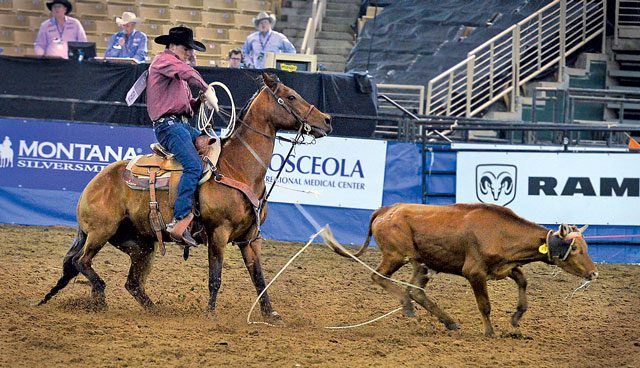
COWBOY Q&A
How much do you practice?
Every day.
Do you make your own horses?
Not all of them.
Who were your roping (rodeo) heroes?
Jory Levy.
Who do you respect most in the world?
My parents.
Who has been the biggest influence in your life?
My dad and my Uncle Mike.
If you had a day off what would you like to do?
Go to a beach.
How would you describe yourself in three words?
Dedicated, Happy, Winner.
What makes you happy?
Being successful.
What makes you angry?
Losing.
If you were given 1 million dollars, how would you spend it?
I’d give part of it to charity, give some to my family, and invest the rest.
What is your best quality – your worst?
My best quality is the ability to analyze and overcome situations. My worst quality is second-guessing myself. -
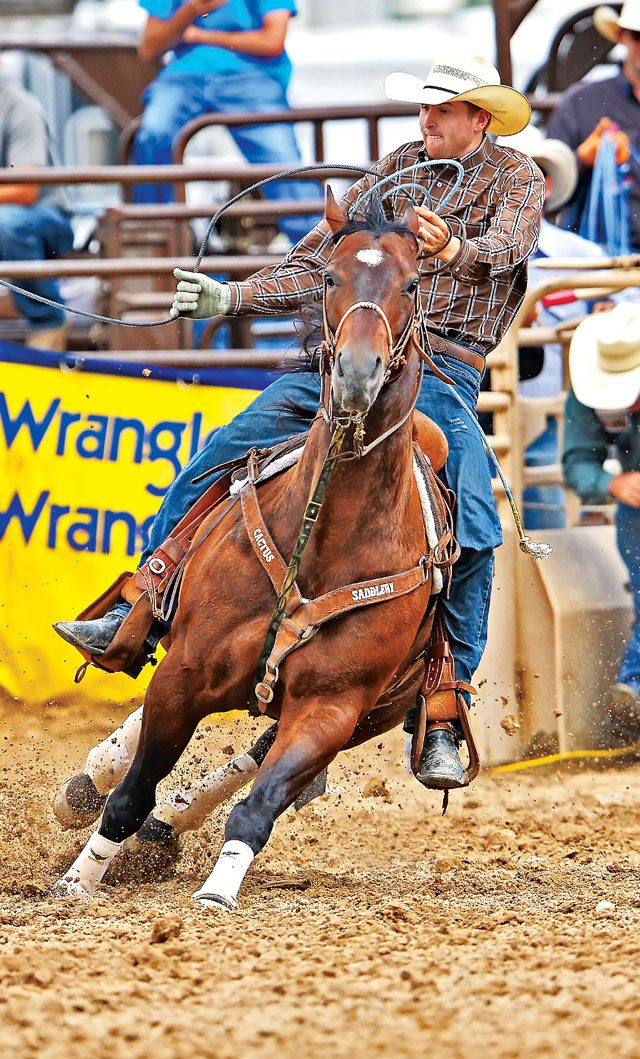
Roper Review: Cody Snow
Cody Snow will head out June 18, and be back to his home in Santa Ynez, Calif., when the season is over. This is the second year for this 19-year-old to cross the country in hopes of winning a chance to turn ten steers at the Thomas & Mack. “I like it,” he says of being on the road all summer. “It’s fun
He ended last season as Resistol Rookie of the Year in the team roping as a header, turning steers for his partner, Dugan Kelly. “Dugan is a veteran at this and makes it easy for me,” he said. “He does all the entering and maps out where we’re going.” The race for Resistol Rookie was a tight one, and Cody didn’t know he was the winner until the last couple weeks of the season. “You can win a lot of money at the end, so it’s not done until it’s done.”
Cody learned how to rope from his dad, Van, who was a noted orthopedic veterinarian. “My dad was my biggest help as well as influence. He got me a good start. He had a vet clinic at the house and we worked out of the house. I saw a lot of lame horses, and learned how to take care of horses and how to keep them sound.” He also learned from other people. “I’ve been around a lot of people that roped and I practiced a lot and figured it out. I had plenty of help.”
Cody was home schooled from the seventh grade through high school. He plans to take a few classes online, but not be a fulltime student, instead concentrating on his roping career. “It’s a job, and I make money at it,” he said. To make it fun, when he gets to the rodeo, he finds something to do in the town he’s in. “I don’t like sitting around, so I rope the dummy.” He likes to bowl so he tries to find a bowling alley when he has some down time.
He has made all his own horses. “I bought younger horses and brought them along and rodeoed on them.” Right now he has nine, and hauls two or three. His goal for this year is to make it to the WNFR. “I want to make the finals, and then do it consistently.” -
Roper Review: Cody Thornton
On the Friday before Thanksgiving in 2015, Cody Thornton was in the roping pen training an outside horse. He had already headed ten steers and was getting ready to throw his rope on number eleven. As he stood to throw, without warning, his horse buried his head and bucked, hard. And Cody landed, hard. After spending a night sick from pain he ended up at an Urgent Care clinic the following morning where he learned he had fractured his C5 vertebrae. The injury resulted in two rods, four screws, and his C4 and C5 vertebrae being fused together. After spending seven weeks recuperating, Cody started back riding.
Cody grew up in Huntsville, Texas where he was raised roping and catching wild cows. He started team roping about the age of five. While growing up he went to high school rodeos and earning a rodeo scholarship. Cody graduated from Sam Houston University with a degree in General Agriculture and a minor in Management.
For the six years following college Cody chose to train horses, riding up to 13 per month. Putting his degree to good use Cody now manages the Steinhauser’s Feed Store in Navasota, Texas, where they carry just about everything including a full line of feed, ranch supplies, and even home décor. Steinhausers has total of eleven stores located in southeastern Texas.
As a #9 heeler, Cody enjoys rodeoing on the weekends and giving roping lessons. When he’s not working or roping, you can usually find him spending time in the woods hog hunting with his friends and family.
Cody’s dad, Lynn Thornton, is a farrier in south Texas and shoes some of the best barrel horses in the country. His mom, Tamera Gann, is the City Manager of Huntsville, Texas.
Cody owns and lives on 20 acres next to his sister and brother-in-law, Kassie and Chad White. He spends much of his time with them and their two sons, Cougar and Riggins.
How much do you practice?
Three or four times a week.
Do you make your own horses?
Yes.
Who were your roping (rodeo) heroes?
Clay O’Brien Cooper, Leo Camarillo.
Who do you respect most in the world?
The good Lord for sure. My grandpa and my sister.
Who has been the biggest influence in your life?
My sister.
If you had a day off what would you like to do?
Go hog hunting.
Favorite movie?
Lonesome Dove and Where the Red Fern Grows.
What’s the last thing you read?
The Bible.
How would you describe yourself in three words?
Caring, loyal, hard working.
What makes you happy?
Being in the country.
What makes you angry?
Being in the city.
If you were given 1 million dollars, how would you spend it?
Buy a ranch.
What is your best quality – your worst?
Best quality is I’m very honest. Worst quality is being too independent.
Where do you see yourself in ten years?
Having a nice piece of property with a nice herd of cows. -
Roper Review: Chris Anderson
Chris Anderson, his wife, Sarah, and their two children, Ike, who will be two in June, and Tinsley, who just turned two months, make their home in Fort Morgan and own and operate CA Performance Horses. “I’ve been out on my own professionally since 2008,” he said. “I qualified my first horse in the Open AQHA show in 2008.” The mare, Darling Catichi, won the Junior All Around in 2012, beating out every other five and under horse in the nation. “I would say that and making the National Circuit Finals in the steer roping (2010) are my biggest accomplishments so far with my horse training.”
He has trained and ridden horses that made it in the top five, as well as winning Congress, and his next goal is to take his snaffle bit horse to Reno this year. “I’ve also got a really nice talented mare that a customer would like to win Super Horse at the World Show. JD Yates thinks she is good enough and if the stars are right and I do my job, we’ll have a chance. There’s a lot that’s got to go right ,but she’s a good enough mare.”
Chris got his start in the training world with a really nice gelding. Thanks to the help of JD Yates and Jay Wadham, he was able to break into the business. “JD took me under his wing, and I showed some in the youth an amateur at college.” As a kid growing up in Merino, Colo., Chris had always wanted to rope steers and with the help of Tom Gibson and JD, he was able to learn how. “I had a fair amount of success in the Circuit Finals and made the National Finals once.”
Of all the events that Chris competes in; team roping, calf roping, reined cow horse, and steer roping; he favors the steer roping. “I don’t get to do it as much as I used to, but I think it’s pretty unreal what a steer roping horse has to do.”
A close second, in his opinion is cow horse work. “Those horses have to work all three events, cutter, dry work pattern, and down the fence.” He was excited to see the reined cow horse added to the high school rodeo events. “The horsemanship that goes with the cow horse stuff is so important.”
He splits his time between training his own horses and working on outside horses. At any one time, there can be 20 outside horses in the pens that need tweaked for his growing clientele. “Not all of the horses I own are young ones in training; some are solid finished rodeo horses.” When he’s working on a horse for a customer, he has to have solid horses to help him. “If you sent me a heel horse to train, I can’t ask him to do a good job for me if the head horse we are working with is a green, goofy horse, so I have to keep a certain amount of good quality horses in my program so I can do my job. When I go to the horse shows, I have guys turning steers for me to show my horses and I have to have good solid horses to take with me for them to ride.”The other part of his business is rodeoing for himself. “I keep a couple really good rodeo horses and jackpot horses of my own.” The amount of money that can be won at these jackpots keeps growing, and Chris is ready to take some of that home. “Look at the World Series Finals in Vegas… you don’t have to get that much done to win $20,000.”
He believes in spending money on a good finished roping horse. “For the average person that wants to go rope and enjoy themselves and have a good time, spend the $15,000 to buy a horse that is seasoned – that’s a cheap investment when you think about it. Look what’s out there to win. If you are a #4 header and you know how to do your job; score well and catch consistently; there is so much money out there you’re going to pay for that horse. That’s what people don’t understand – it’s not what did this horse cost, but the way I look at it, what did this horse cost me from being able to win – that’s how I look at the price of a horse.”