Rodeo Life

Author: Chris

  • Ride Aggressive ~The Fierce Resolve of Ty LaVergne

    Ride Aggressive ~The Fierce Resolve of Ty LaVergne

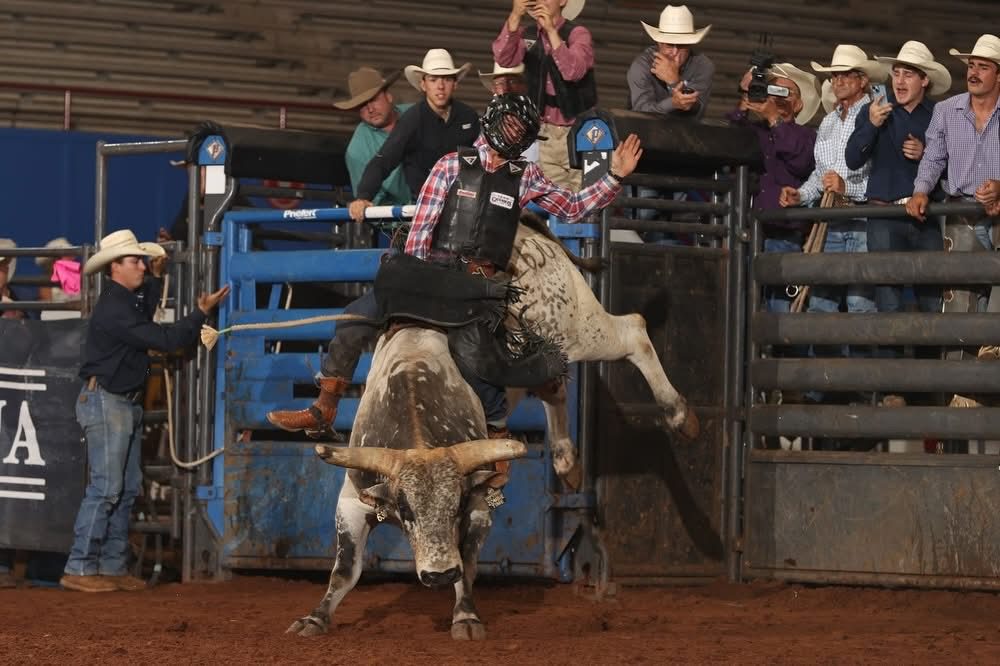
    There’s something steady, not loud and not showy, about Ty LaVergne, just tough minded in a way that doesn’t need announcing. As a Cavender’s team member, he carries that same quiet steadiness with him, the kind that shows up in how he rides and how he represents the people standing with him.

    When I asked him how he would describe himself, he didn’t reach for anything dramatic. “I would describe myself as a confident person, and I know what I am capable of. I am also the one people go to when they need help. Like, say a guy behind the chutes needs a hand, I tend to be the one to help.” That tells you more than a buckle ever could.

    Bull riding doesn’t reward ego for long. It rewards presence, discipline, and the willingness to show up again, especially after you’ve been humbled. Ty knew early this would be his event. “I first realized bull riding was going to be my event when I was young. Probably around 6 years old, I would beg and beg my dad to let me start riding bulls, and he finally gave in, and now here I am today.”

    He didn’t stumble into bull riding. He chased it. “I think the main thing that hooked me to bull riding was the adrenaline rush and the feeling of hearing the buzzer go off, knowing that you rode the bull. It is the greatest feeling you can feel, and words can’t even describe it.”

    Most people stop at adrenaline, but adrenaline doesn’t keep you here. The mind does. “I think bull riding is more mental. This is because someone can be in the best shape possible and still fall off of bulls constantly. If your mind isn’t where it’s supposed to be, then you normally won’t ride very well.”

    When the chute gate opens, there isn’t chaos in his head. “Surprisingly, not a lot goes through my mind when the chute gate opens. The main thing that I tell myself is I’m about to strap this bull. Another way is just having confidence to set yourself up for success and not failure.” That kind of clarity is built over time, and his dad has been central to that foundation. “My dad has taught me about everything I know about bull riding, but the thing that sticks with me the most is riding aggressively. If you don’t ride aggressively, then the outcome isn’t going to be great all the time because it’s a battle between you and the bull every second until you step off of him.” It’s not recklessness or chaos, it’s resolve.

    Freshman year, Ty missed qualifying for nationals by eleven points, close enough to taste it and far enough to sting. “I would say winning High School Nationals is my favorite win because back in my freshman year of high school, I got humbled at the state finals by missing nationals by 11 points. This lit a fire underneath me and drove me to get better and make it to nationals the next year. I ended up winning it, and I felt a sense of relief because I had been looking forward to just making it to nationals, and I tried my heart out and ended up pulling off a win.” Relief is the word he chose, not spotlight or pride, but the kind of relief that comes from answering disappointment with discipline.

    “Bull riding has taught me so much about discipline because it has taught me that if you don’t get on practice bulls, then you won’t get much better because you aren’t fixing what you need to fix and working on your fundamentals. This will start showing at rodeos, getting on bulls is the best way to get better.” Humility, for him, looks like owning the ride, even when it did not go his way, “It has taught me a lot about humility because you don’t always win, and you have to take the losses and learn from them and keep that drive to win.”

    Along the way, Ty has also earned a place as a Cavender’s team member, and he does not talk about that like a logo, he talks about it like a responsibility. He knows he is representing more than himself when he puts his hand in the rope.

    Before every ride, he prays. “I pray before every ride. It brings me peace and lets me know God is protecting me. If it’s his will, it will work out.” In a sport where nothing is guaranteed, not the draw, not the score, not the landing, peace matters. “Everything I have accomplished was because of him.” That perspective carries beyond the arena. “They treat me like family, and I’m grateful to represent them. I’m not just representing a company. I’m representing a family.” The way he describes Cavender’s is the same way he describes the people who shaped him, with gratitude and a sense of loyalty that runs deeper than business.

    When I asked what he hoped people would see when they watched him ride, his answer was simple. “I hope they see that I’m humble and grateful because there are so many kids who wish they were in my position.” And when he talks about the future, he doesn’t just talk about winning, he talks about providing for a family one day.

    The aggression his dad talks about, the kind required for eight seconds on a bull, isn’t reckless. Instead, it’s fierce resolve: full commitment, learning, adjusting, and going again. While bull riding may last only eight seconds, the person it shapes you into lasts much longer.

    Ty’s Accolades/Courtesy of Cavender’s Team:

    2023 LJHSRA State Bull Riding Champion

    2023 NLBRA World Bull Riding Champion

    2025 LHSRA State Bull Riding Champion

    2025 NHSRA Bull Riding World Champion

    2025 Cinch WCJR Junior Bull Riding World Champion
  • Kyle Lucas ~Holding the Standard

    Kyle Lucas ~Holding the Standard

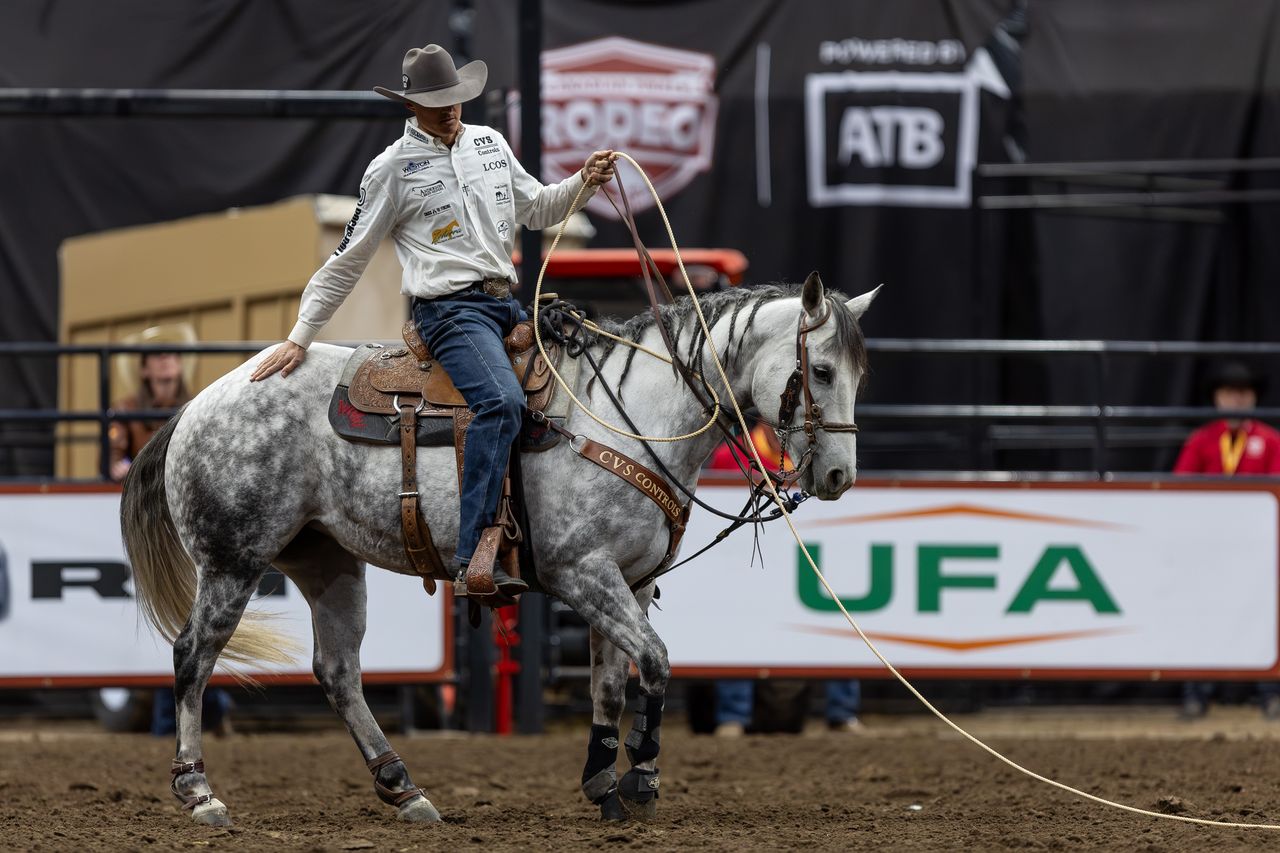
    Canadian tie-down roper Kyle Lucas says his relationship with American Hat Company began years before a partnership was ever discussed. For most of his career, he chose American hats on his own, believing they were the sharpest and most reliable in the industry. He wanted his appearance to reflect the level of professionalism he brought into the arena, and he felt American Hat Company helped him do exactly that.

    “I’ve been wearing American hats for about six years,” Lucas said. He already felt loyal to the brand long before the idea of an official relationship came up. He admired the clean structure of the hats and their consistent shaping. As he traveled from damp Canadian springs to dry summer rodeos across the United States, his hats stayed solid and polished.

    To Lucas, that consistency matters because rodeo athletes represent their sport the moment they arrive at a venue and step into the arena.

    “We have to act like professionals and think like professionals,” Lucas said. “We have to dress like it, too. America is the leader in that.”

    Lucas grew up in Alberta as the son of Canadian standout tie-down roper Joe Lucas. He remembers following behind the chutes while his father competed, watching the standard Joe set in both performance and presentation. Joe retired in 2006 after a final season that Lucas still clearly remembers. Those early years helped fuel the desire that eventually led him into junior rodeos, high school rodeos, and amateur associations throughout Alberta.

    Lucas began in breakaway roping because he was smaller than many of the other kids. As he grew, he fully transitioned to tie-down roping. In 2013, he purchased his Canadian and PRCA cards and qualified for his first Canadian Finals Rodeo. This year, he reached two major milestones: qualifying for his tenth CFR and earning his first Canadian championship.

    Along the way, Lucas developed a close friendship with world champion tie-down roper Tuf Cooper. He spent several winters living and practicing with the Cooper family and credits that time with shaping his roping in lasting ways. Cooper taught him small details that did not always make sense at first but later led to breakthroughs. Cooper also helped connect Lucas with American Hat Company, though by that point, Lucas said he already believed in the product.

    Nothing about the partnership felt forced. Lucas said it developed the same way his loyalty to the hats did, naturally, without a single defining moment.

    Lucas said spending time with Cooper’s late father, Roy, was just as influential. Roy called him weekly or every other week, and each call lasted about thirty seconds. They usually ended the same way, with Roy telling him he was good enough and that he loved him. Lucas said those brief conversations carried weight, especially coming from an eight-time world champion whose belief mattered, no matter how difficult a season felt.

  • San Angelo Makes Format Changes

    San Angelo Makes Format Changes

    Nearly 1,000 contestants had already competed days before last Friday’s opening performance of the San Angelo Stock Show and Rodeo.

    It’s an extensive change in workload for all involved, with contractors, contestants, arena workers and stock show staff spending numerous hours over four days to help run 958 cowboys and cowgirls through their preliminary rounds.

    It’s a distinct format change for the longstanding rodeo, which will be inducted into the ProRodeo Hall of Fame this summer. For several years, San Angelo timed events featured two go-rounds, with the top 12 advancing to the championship round on the final Friday of the three-week event. Barrel racing was the outlier, with all ladies making a first-round run; the top performers advanced to the progressive round, and the best 12 cumulative times advanced to the short round.

    While barrel racers will remain in that format – and breakaway ropers adjusting to the same schedule – the men’s events switched to a two-round progressive, with the top times advancing to the nine preliminary performances.

    “San Angelo has always been a very timed event-friendly town, and we, as a rodeo, have prided ourselves on that,” said Josh Hilton, the rodeo manager for the stock show association. “We’re a community of 100,000 people going up against communities of millions, and we’re trying to attract contestants to town.”

    He’s referring to other Texas stops like Fort Worth, San Antonio and Houston, which features larger populations and have rodeos that are payoff powerhouses. Still, San Angelo adds $45,000 per event. With entry fees, each of the timed events will have a purse greater than $70,000. Changing the format has opened the doors for as many, if not more, contestants to be part of the West Texas rodeo, which has been in existence since 1934.

    “We want to have a purse of over $1 million,” Hilton said. “It’s something we can hang our hat on that we do for the contestants. Another major factor is the fairness of it, especially with how hard it is to get cattle. The last few years, at least nine of the 12 guys in the tie-down roping short round came out of slack.

    “The way I see it, it’s a fairer circumstance to the contestants that we do it this way.”

    That $1 million mark is a stress point for the rodeo’s organizers. A year ago, San Angelo paid out more than $1.43 million. But there’s more to it.

    While the aggregate still comes into play with the final-round qualifiers and the rodeo’s titlists, the new format will be easier for fans to follow, whether they’re in person or watching on The Cowboy Channel.

    It’s better for the rodeo and better for all who experience the San Angelo Stock Show and Rodeo.


  • Fire Doesn’t Extinguish Miller Family’s Faith

    Fire Doesn’t Extinguish Miller Family’s Faith

    Bradlee Miller didn’t spend much time in the Texas capital city celebrating his bareback riding victory at Rodeo Austin.

    Instead, he had more important things to tend to 150 miles east.

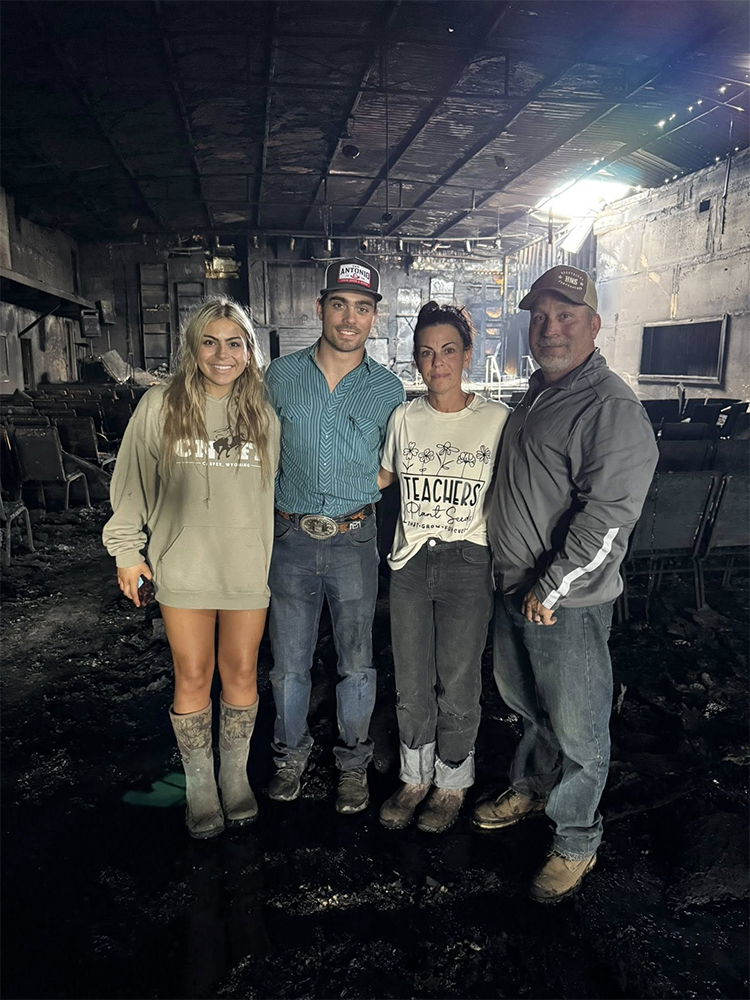
    Not far from his home in Huntsville, Texas, stands the burned skeleton of Branded for Christ Ministry, a church founded by Bubba and Tammy Miller two decades ago. It is a family ministry, involving Bradlee and his sister, Sonilyn.

    The church caught fire last Wednesday, and while there is much rebuilding ahead, the Millers and their congregation still needed to worship.

    “For the last five years or so, we’ve slowly but surely been building a really big sanctuary with classrooms for the school kids, a game room for college kids and youth events,” said Miller, who sits third in the world standings. “We were finishing up the final steps of it. Recently, we added 50-foot wings on both sides of the building for more classrooms for the private school we have. We’ll have worship there Sunday, and then we’ve got a tent donated that we’ll use until we get the building back covered.”

    School also returned to session.

    “I thought it was one of the best lessons they could learn, that no matter the hard times, disappointments and hardships we face, you don’t take a day off,” he said. “Those kids came right back to school, whether they were helping us clean up, doing the little bit of school they could, or just being there for the people who were hurt the most.

    “All the kids showed up with their families, and there’s not an event that’s going to be canceled because of the fire. We’re not letting it affect anything.”

    Resilience is part of it. Faith is, too. More than anything, the Millers and their congregation are determined to let the fire become part of their testimony, not the end of it.

    “My mom and dad started the church in 2004,” said Bradlee Miller, a two-time National Finals Rodeo qualifier. “My dad had a barn that he shod horses out of for years, and he started the church in the alleyway of that horse barn with the horse stalls on each side of the sanctuary. There may have been days when there were only four to six people in it. I know there were some days where the only people at church were me and my mom, and I was in a stroller.”

    Like most churches, Branded for Christ Ministry feels like family. In this case, though, that faith has been built by one family for years and now will be built again.

    In the photo are Sonilyn, Bradlee, Tammy and Bubba Miller. Photo Courtesy of Miller Family

  • A great deal goes into RodeoHouston

    A great deal goes into RodeoHouston

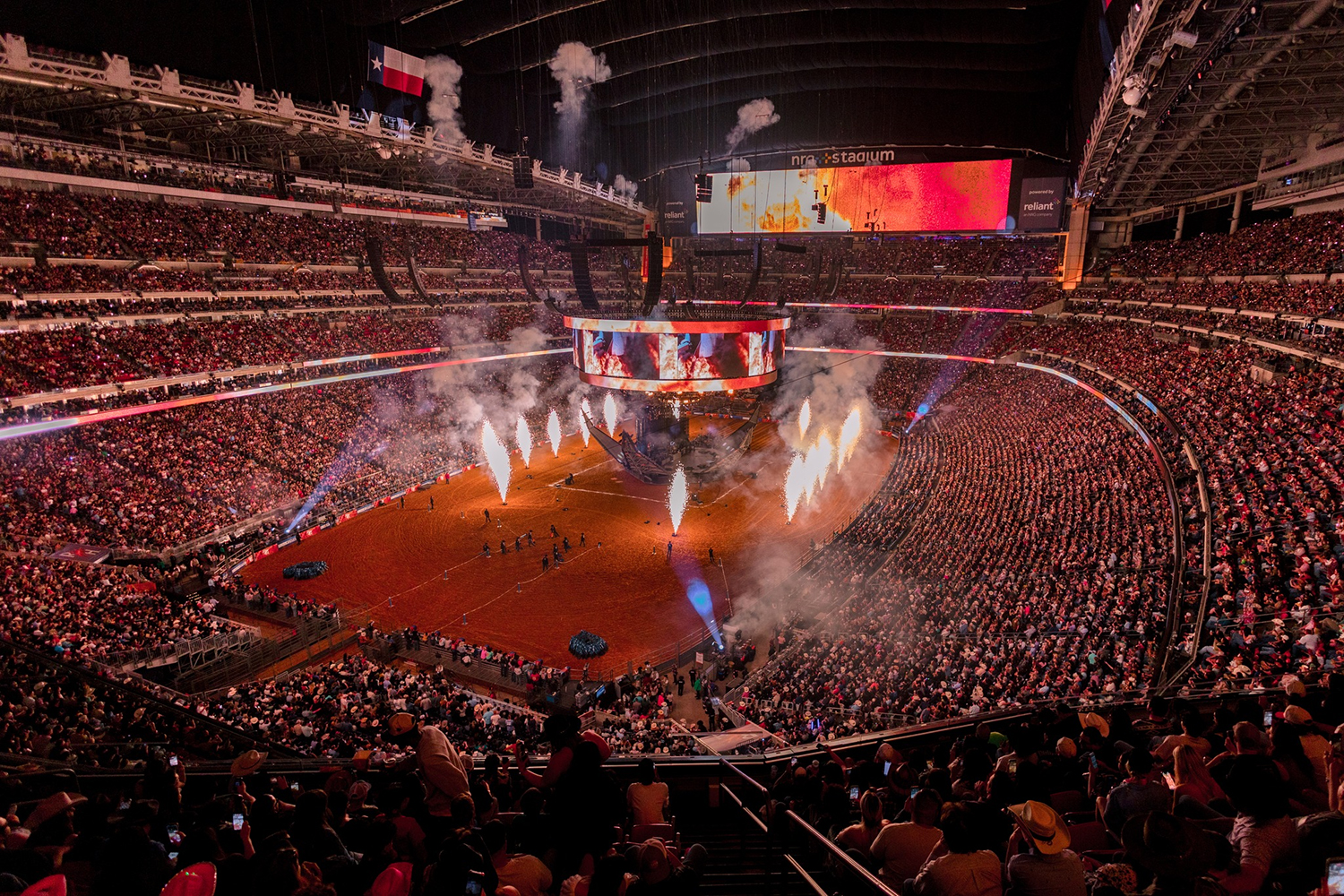
    It’s a 19-day spectacle with a total payout of $2,518,500, with $65,000 awarded to each of the nine champions. It culminated Saturday afternoon with the finale, which featured 10 contestants in each event battling in the championship round. From there, the top four advanced to the shootout.

    That’s where the big money was distributed, with $125,000 per event. That was $1.125 million awarded in one day, but big checks were just the icing on the cake. The batter that baked was filled with colorful characters and amazing feats.

    It’s hard to pick just one thing that stands out, so it’s best to start at the beginning of the four-person round. Houston kicks off each performance with tie-down roping, and the race to the championship was one to remember. The NRG Stadium record was 7.4 seconds, established in 2017 by four-time world champion Caleb Smidt.

    Shane Hanchey, the 2013 world champion, was the gunner and threw his hands in the air in 7.2 seconds. Two ropers later, Kincade Henry was 7.3. The last to rope, Riley Webb – the defending Houston champion and reigning three-time world titlist – beat them both with a 6.5. It was Webb’s third title at the stadium that also houses the Houston Texans.

    “They pushed it, and they made me step it up and go faster,” Webb said in a story I wrote for ProRodeo.com. “So, when they started breaking arena records, I just had to shorten my rope up.

    “I knew I had to try the barrier on, try the start on and just go as fast as I can and throw caution to the wind and let it all hang out. There was no choice.”

    The fans were rewarded with greatness, from Stetson Wright winning the bronc riding title after a ride-off with Shorty Garrett to all four cowboys in the shootout having a ride-off in bull riding. Canadian Jake Gardner was the only man to cover in eight attempts. After finishing outside the top 50 in 2025, the British Columbia cowboy now leads the race for rodeo gold with six months left in the season.

    Kassie Mowry has found a sweet spot at NRG Stadium. She won for the third time and was one of three contestants to repeat, joining Webb and bareback rider Rocker Steiner – all three happen to be sporting 2025 gold buckles. With its massive purse, Houston has a way of being a major push. In addition to Mowry, Webb and Steiner, earnings from the Bayou City helped pave the way for steer wrestler Tucker Allen and breakaway roper Taylor Munsell to win gold buckles last season.

    Maybe the same can happen for breakaway roper Madi Williams, the daughter of eight-time heading champ Speed Williams;steer wrestler Holden Myers, the son of 2001 titlist Rope Myers and grandson of Butch, the 1980 bulldogging champ; and team ropers Korbin Rice and Cooper Freeman.

    We’ll have to wait and see, but we can always look back at this past weekend and remember the greatness.

  • Celebrating the History of Rodeo

    Celebrating the History of Rodeo

    In a year that the Unites States celebrates its 250th birthday, it’s only natural to look at history. From the signing of the Declaration of Independence in 1776 to the 1787 Constitutional Convention to the 27 amendments to the Constitution, there’s a patriotic theme that spreads across this land.
    Rodeo has its own history, and it began about a century after the Founding Fathers signed that acknowledgement of our freedoms. The first recognized rodeo occurred on Independence Day 1869 in Deer Creek, Colorado.
    Before we get into that, let’s take a look at what led to all this. In writing the book “World’s Toughest Rodeo” with Steve Gander, I conducted many hours of research to include a little information on the history of cowboys in America. What I found was fascinating.
    As settlers made their way west of the Mississippi River, there was a ruggedness that came with it. Many were crossing into the Mexican Territory, which included Texas, Oklahoma, Kansas, New Mexico, Colorado, Wyoming, Arizona, Utah, Nevada and California. Vaqueros were prevalent, because they had incredible horsemanship and amazing talent with a rope.
    Their skills were handed on to men who became the first American cowboys, and the ranches that helped tame the Old West needed them. They herded and corralled, then they led the cattle drives to the railheads. Among these outfits were ranch hands who were quite capable, and contests emerged.
    Rodeo’s name is derived from the Spanish verb, rodear, which means to circle or round up. It’s a natural confluence of human competitiveness, amazing skills and a bit of ego.
    The “World’s First Rodeo” in Pecos, Texas, came about July 4, 1883, when two well-known drovers working for outfits that were making their way through town on their respective journeys had earned reputations of being excellent ropers. The exchanges from their cohorts led to a competition to establish the bragging rights for the best cowboy in the Old West. That hot, summer day in 1883 became launching pad to what we see in rodeo today.
    An excerpt from “World’s Toughest Rodeo”: “Like everything in the pioneering life, the daily work became the chessboard by which the cowboys played their games. Who was the best with the rope? Who could rope a steer and tie it down the fastest? Who could ride that bronc nobody wanted to try?
    “The roots of rodeo run deep. In today’s society, it’s a throwback to a way of life but also a tip of the cap to the generations of people who founded this land.”
    Rodeo’s history should be celebrated, while we also honor the champions of today.