Rodeo Life

Blog

  • Roper Review : Craig Branham

    Roper Review : Craig Branham

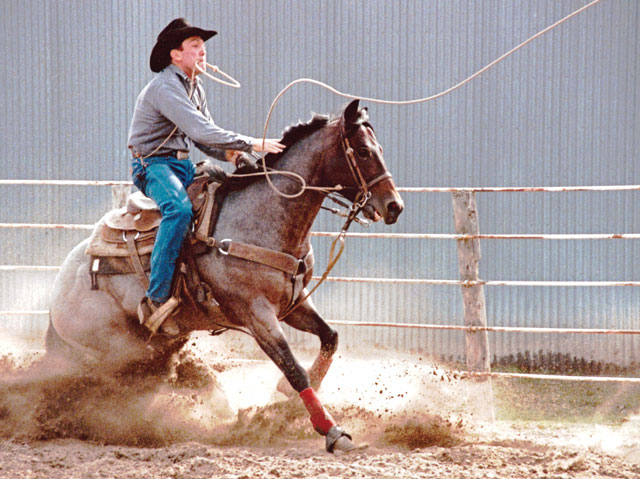
    Craig Branham, 58, grew up, the eldest of three boys, in Tombstone, Arizona. When he was six, his mom, Sue, married Jack Branham, and the family moved to Oakdale, California. Jack was a roper and Reserve World Champion to Ken Luman, in 1966, before Heading and Heeling were recognized as two events.
    Craig and his brothers, Chris and Daryl, started roping the dummy and the entire family would go rodeos and ropings. The boys would find a kid and pay him .25 to be their “steer” so they would have something to rope.
    “My mom loves to tell the story of finding us at a rodeo eating snow cones with our pockets full of candy,” laughs Branham. “When she asked where we got it, we told her we won it.”
    An avid athlete, Craig was a four event state champion in track and field; and a first team all state basketball player his junior and senior year. Craig received a scholarship and played basketball for Eastern Arizona College before transferring to Pima where he excelled in track.
    In the spring semester he was second in the nation in the Decathlon and fifth in the Triple Jump. The following year Branham won the National Decathlon and set a national record. After graduating from Pima, Craig received a full ride at the University of Arizona.
    There, he met modeling agent, Pam Grissom, who talked him into going to New York City for a modeling convention. After winning the male model competition, Branham found himself in demand by modeling agencies.
    “At the time I was living with my grandparents in Tucson,” recalls Craig. “I went home and told them I was going back to New York to model. They weren’t too happy about that.”
    Branham signed with Legends agency and quickly received a contract in Milan, Italy. Soon after, he was booked for a spread with GQ magazine and also worked with the Italian version of men’s Vogue. A flourishing modeling career found Branham living in Milan, Paris, Manhattan, and Dallas, TX.
    While in Dallas, Craig booked some acting jobs where he realized what he wanted to do with his life. At 25 he bought his first home in Dallas, which he leased the following year before moving to Hollywood.

    Soon after relocating, Craig was enjoying steady work with jobs on shows like “Cheers,” and “Murder She Wrote.” He was able to study with renown acting coaches and started booking national commercials, in addition to his modeling.
    After seeing the television show, American Gladiators, Craig tried out for the second season and ultimately won the 1990-1991 American Gladiators Grand Championship. Craig recalls this as “one of the most fun things I’ve ever done.”
    Shortly after the win, People magazine included Branham in their “50 Most Beautiful People” issue. Branham also got married that year and celebrated the birth of his daughter, Sarah, in July.
    “At some point I started roping again,” says Craig. “I hadn’t roped in a long time and though I was originally a header, I wanted to heel. I worked hard at it and eventually got to where I thought I could rodeo.”
    “In 1998, I got to rope with David Motes and ended up finishing 20th in the world on my permit. In 1999, I bought my card and won the PRCA Heeling Rookie of the Year. I was 40 years old and am still the oldest Heeling Rookie ever.”
    Branham came close to qualifying for the NFR several times with year-end finishes in 20th, 22nd, and 25th place.
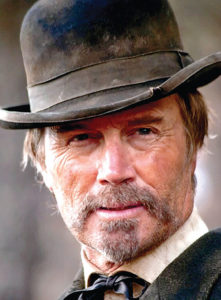
    Not long after returning home from rodeo, Craig was contacted by his friend and stunt coordinator, Charlie Croughwell, about a stunt job. Craig got the job to double for Josh Lucas, on the show the “Hulk.” This was the beginning of a successful career as a stunt man.
    “I quickly realized this is what I need to be doing. It’s a fun job that I really enjoy. I’ve gotten to double Robert Redford. In 2005 I got to double Pierce Brosnan for three months on a movie call “Seraphim Falls.”
    “About ten years ago, I met Robert Patrick on a show where I doubled him and I’ve been his stunt double ever since. I’ve been working with him on the show “Scorpion” for four years now. I also got to play the Headless Horseman on “Sleepy Hollow” for four years and that show just ended last January.”
    Branham lives with his wife of three years, Nathalie, in Canyon Country, California. Craig strives for a balance between work and team roping. As a #8, Craig often competes at the World Series ropings and won $26,000 in the #15 with Andy Holcomb at the 2016 WSTR Finals in Las Vegas.

    COWBOY Q&A
    Who were your roping (rodeo) heroes?
    My dad and probably Jake and Clay.
    Who do you respect most in the world?
    My mom.
    Who has been the biggest influence in your life?
    My grandfather, Roscoe Christopher. I still think of so many things he taught me.
    If you had a day off what would you like to do?
    I’d love to work on my place and plan my next build. I’m studying an architectural program now. I really love that.
    How would you describe yourself in three words?
    Friendly and outgoing, compassionate, understanding.
    What makes you happy?
    My wife. I’m a happy person overall. I wake up happy.
    What makes you angry?
    Bad or aggressive drivers.
    If you were given 1 million dollars, how would you spend it?
    I would try and find a cause, probably to do with the heroin epidemic and try and support an organization that could put those kids in the western way of life. I would travel.
    What is your best quality – your worst?
    My best quality is a good heart. My worst is sometimes I feel I may be selfish, by doing what I want when I want.

  • Back When They Bucked with Tom Miller

    Back When They Bucked with Tom Miller

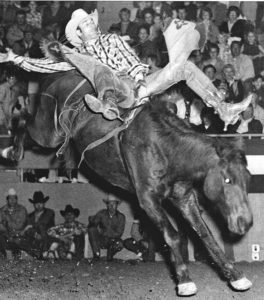
    From competing in college rodeo, to the PRCA, to becoming a judge and a coach, Tom Miller has left his mark on the rodeo world. Excelling in both ends of the arena, Tom led a rodeo team at Black Hills State University that dominated the National Intercollegiate in the 1970s, winning All Around Champion in 1970 and 1971.Tom was also the Badlands Circuit Saddle Bronc Champion in 1979 and 1980. Tom qualified for the NFR six times and shares the record for most saddle bronc average titles.
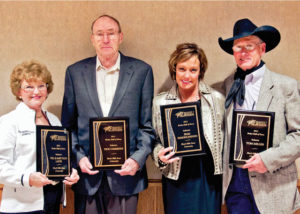
    Tom was recently inducted into the National Cowboy & Western Heritage Museum Rodeo Hall of Fame in Oklahoma City. His friend and 1974 world champion saddle bronc rider, John McBeth nominated him. “Tom is of the quality of bronc rider that should be in there. He is world championship quality – in fact – one year he lost it by $5.28 – 1981. Everything about Tom is outstanding, from ranching to judging – he has his principles and he holds to them.”
    Born in Rapid City, South Dakota, on December 27, 1948, Tom was raised 100 miles from there on a ranch in between Faith and Red Owl, that his dad (JP Miller – Bub) put together. “I was born before the blizzard of 1949 – it took two weeks for them to get me home,” he said. His dad roped calves, but Tom and his older brother, John, never competed until high school. “We stayed home and worked – when we quit in the evening, we would rope. Nobody competed much in youth rodeos back then – there wasn’t the activities going on for the youth like there is now.” His mother (Patsy) didn’t want him riding broncs or bulls so he rode bareback until his junior year in high school. “My folks had gone to Texas and I snuck off to ride a bronc – it was easy. I didn’t get on a bull until I started college.” He learned from the hired man until he met John McBeth. “I was riding broncs pretty good but I didn’t think I was riding them right. So I called John and went to his school. He put me on 16 head in two days and it turned me around. It got me doing things I didn’t know I could do. John is a great teacher.”
    He went to Black Hills State University where he competed in every event. “My dad let me take one horse, so I had to do all the events on that horse.” He studied education. “My dad gave me a choice when I got out of college – after I won the NIRA All Around for the World – he said – ‘are you going to rodeo or are you going to come home.’ He said if I was going to rodeo, he was going to sell the place. I went home for three years. I felt like I had to go try it.” He made a deal with his dad. “He said: ‘If you don’t go to the Finals, you go home, put the saddle up and we won’t talk about it.’ He also added he wasn’t a sugar daddy – my dad was black and white, right or wrong, that’s the way it was. When I first cracked out I rode all three events. It was looking like it was going to break me, so I stuck with bronc riding.”

    When Tom won the average at the finals the first year, his dad was in the arena and said ‘You can’t quit now can you?’ “I’d spend falls at home and calving in March and April.” He met his wife, Vivian, at a match bronc riding in Texas. He met her again in Fort Worth at a rodeo. “She had a boy’s saddle from South Dakota that she thought he needed it that night. There was only two or three of us there yet – I’d flown in – and she gave me his saddle.” Three years later they were married.
    He continued rodeoing, making the finals three more times after their marriage. He was the Badlands Circuit Saddle Bronc champion from 1977 to 1980. He qualified for the National Finals Rodeos six times, and won the average in 1975, 1979 and 1981, coming up short of winning the world title in 1981 by $5.28. He was able to hit multiple rodeos in one weekend due to his traveling partners, Johnny Morris, a bareback rider, and Bobby Brown, a bronc rider, who also had a plane and flew Tom to many rodeos.
    Tom broke his leg one fall riding a good horse – doctoring yearlings. “He rolled over me and broke my leg in 1982. I didn’t get on one after that. I was in a cast for quite a while – all winter actually. The screws in my leg made it hard to ride again.” Johnny Holloway, who he worked with for years putting on bronc schools, invited him to a match bronc riding the next year, and one horse laid on his leg in the chute. “I thought the screw heads were going to come through my leg,” Tom said. “I was at the age — I was getting into my upper 30s — where it’s hard to get it back; it took a long time to get over that injury.”
    He focused his attention on his ranch, his family; two boys – Jeff and Ryan – and his judging, which included judging five National Finals Rodeos. “When I started judging, there weren’t any judging schools. They started them shortly after that and it’s a good thing. Really familiarize yourself with the rules.” He served on the Rules committee, requested to do so by Shawn Davis.
    His priorities shifted again the past couple years, and he has stayed close to the ranch. “My great great granddad came over as an immigrant from Germany – he kept a diary every day. He said the best cow country was in South Dakota – Western South Dakota. He put together 168,000 acres in Coleman County in Texas; he built a boulevard, library and built on to the Methodist Church,” explains Tom. “My grand dad took over management of that ranch at 18. When my dad got out of World War II, he went to South Dakota to find that best cow country.
    “I always felt like I had so many big shoes to fill,” said Tom about his family. “My dad flew over the signing of the treaty of WWII – he didn’t tell me that – he flew and was the youngest one in his crew.” He passed away at the age of 85. “The day before, I called him and told him we needed some more cows in Texas. I asked him if he could go and check out some cows for me. He said how about if I sell you my cows. And he knew exactly what they were worth. He died the next day. He was sharp as a tack.”
    Tom has carried on that legacy, priding himself in raising good cows and horses. He has been inducted in the Black Hills State University Rodeo Hall of Fame and the Casey Tibbs Foundation. He wants to be remembered as kind and considerate; a good horseman, and a good cowman. “The rodeo part of the deal –I’m getting honored for something I was going to do anyway. My roots are in the cow business and I’d hope to be remembered as one of the better cowboys in our country.”

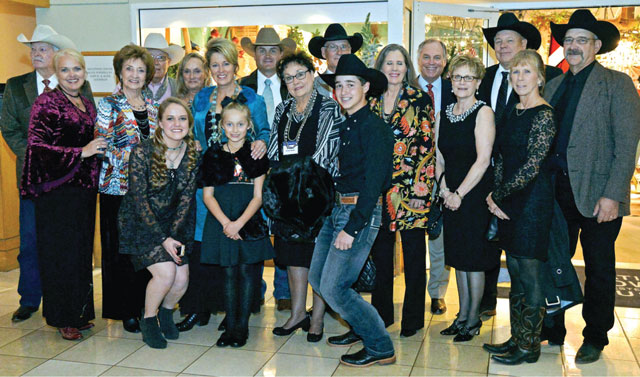
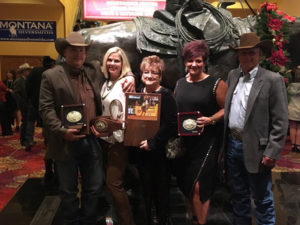
    Tom with his family at the 2017 National Cowboy Hall of Fame – Rodeo News
  • ProFile: Bridger Anderson

    ProFile: Bridger Anderson

    Bridger Anderson is getting a good start on his career rodeo resume.
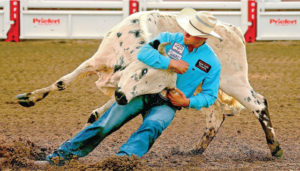
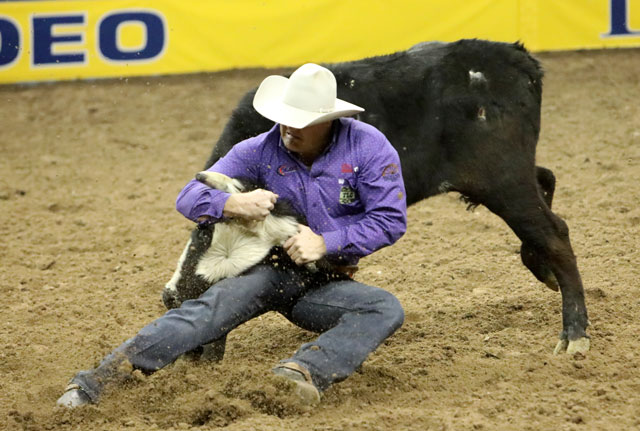
    The Carrington, N.D. cowboy won the steer wrestling at Ote Berry’s Junior Steer Wrestling World Championship, held at the Junior National Finals Rodeo (NFR) in Las Vegas in mid-December.
    He’s a North Dakota High School Rodeo champ, and he’s secured two entries in the semifinals for the RFD-TV’s The American.
    Anderson, the son of Glenn and Robin Anderson, grew up riding. His dad trained horses and roped, his mom was a breakaway and team roper, and by the time he was six, he was tying goats and roping at youth rodeos.
    His career progressed to junior high, then high school rodeo, winning the state steer wrestling title twice and the short go at the National High School Finals Rodeo in 2016. He also won the International Finals Youth Rodeo in Shawnee, Okla. in 2015.
    Bridger graduated from Carrington (N.D.) High School in 2017 and is a freshman at Northwestern Oklahoma State University in Alva, under the guidance of rodeo coach Stockton Graves. Graves, a National Finals Rodeo qualifying bulldogger, has improved Bridger’s skills. He’s competed at four college rodeos last fall, placing at two of them, and he plans on being at the six spring rodeos. Alva (population 5,100) may not have a big social scene, but that’s OK, Bridger says. “There’s not a whole lot to do in Alva but steer wrestle so it works out pretty good.” One of Bridger’s classmates is another NFR qualifier, J.D. Struxness, and “it’s good to have J.D. around there.”
    Last December was the first time steer wrestling was part of the Junior NFR, and Bridger qualified for it at two events: the Dupree (S.D.) Cinch Chute-Out last May, and the Melvin-Swanson-Halligan Memorial Steer Wrestling in Sutherland, Neb. in June. Fifty-two steer wrestlers, ages 19 and under, qualified for the Junior NFR, competing in two rounds. The top twenty made it to the short round. Anderson tied for first in the first round with a time of 4.3 seconds (along with Gabe Soileau and Clay Iselt), was 4.9 in the second round, and in the short round, had a time of 4.0 seconds. His average time of 13.2 was two-tenths of a second better than Marc Joiner of Loranger, La.
    His win at the Junior NFR is an automatic qualification to the semi-finals for the American Rodeo, held Feb. 25 at AT&T Stadium in Arlington, Texas. The semi-finals for the American in the steer wrestling (each event is different) is in Alvarado, Texas on February 20; the twenty fastest times from that event go on to compete at Cowtown Coliseum in Ft. Worth, Texas on Feb. 22-24 (along with other event qualifiers). From Cowtown, about five qualifiers in the steer wrestling will compete at the American, along with the invites: the top ten in the PRCA world standings from 2017.
    The American allows steer wrestlers two qualifications, and Bridger earned his second qualification in Rapid City at the qualifier on December 17. Two qualifications double a cowboy’s chance to make it to the American and compete for $1 million. If he should make two qualifying runs, he would be allowed only one berth at the American.
    Bridger credits a strong team in getting him where he is today. His mom and dad taught him horsemanship and roping, and another North Dakota bulldogger, Tyler Schau and his wife Jackie, helped get him going. “I’m kind of their adopted son,” he said. Tyler and Jackie train horses, and every opportunity Bridger had, he was at their place at Almont, N.D., even though it was more than a two hour drive from Carrington to the Schaus.
    The Schaus have known Bridger since he was twelve years old, and they love him. “He’s a good kid, and fun to be around,” Tyler said. As soon as he had his driver’s license, Bridger would load up and spend a weekend, or during the summer, a week, at the Schaus.

    He has what it takes to be a good bulldogger, Tyler said. Bridger wrestled since sixth grade, winning a state championship in 2015, and “that helps with his athletics. He has athletic ability, he’s strong, and he’s not afraid to get hurt. Those are three requirements for being a good steer wrestler.”
    He also knows how to work. “He ain’t afraid to come over when it’s fifteen degrees out and practice. There’s not a lot of people willing to do that.” The Schaus, who have an eleven year old daughter, help out other steer wrestlers. “If they call and want to practice, I do everything I can to make sure we’re available.”
    Bridger is riding a horse purchased from the Schaus. Whiskers, a nine-year-old gelding, was raised and trained by Diamond S Performance Horses, the Schau’s business. He’s a bigger built horse, taller than most steer wrestling horses, which fits Bridger’s style. “He’s got a lot of power, and he’s long strided. It looks like he’s running slow, but he’s covering more ground,” Bridger said.
    Whiskers “can power out of there,” he said. “Some guys feel out of time with him and they think he’s too tall. He runs hard, and I don’t mind crawling off a few extra inches.”
    Whiskers, a former race horse, shouldn’t be warmed up on a race track. “If you let him run and try to loosen him out, you might not get him stopped,” Bridger said. “I’ve had to run him into a corner to get him to slow down. If somebody else is warming him up, I don’t let them open him on the track.”
    Whiskers is also independent-minded. “He likes to do his own thing. He likes to irritate you. He’ll step on your foot when he’s cinched up or run into you.” But Bridger can live with his quirks, because he’s good. “I think he knows that (he’s a winner) and he uses it to his advantage.”
    When he was three years old, as he watched the NFR on television with his parents, Bridger announced to his mom that he wanted to be a steer wrestler when he grew up. Advancing from high school, to college, the amateurs, and now professional rodeo is a big step. Bridger has had his PRCA card since the fall of 2016. “College rodeo is glorified high school (rodeo.) But pro rodeo is another level,” he said. “You can go to college rodeos, make a few mistakes, and get by. At pro rodeos, they don’t pay any money if you make a mistake. It’s another level.” In Livingston, Montana last July, Bridger made a 4.3 second run, “and they threw rocks at me,” he joked. “You had to be 3.9 there to place.”
    His ultimate goal is to make the NFR, and he’s realistic about what it takes. “You have to sacrifice everything to focus on one task at hand, and that’s rodeoing and winning enough to make the NFR.”
    Part of pro rodeo is learning how and what rodeos to enter. Bridger rodeos with Tyler and Jackie, who have helped him sharpen his mental game and stay healthy. He’s also relied on world champion Luke Branquinho and his rodeo coach Graves. Being confident is a big part of rodeo. “It’s huge to move from high school to amateur to pro rodeo and not let that intimidate you. It’s intimidating to bulldog against guys who have rodeoed for twenty years and have been to the NFR. But you have to surround yourself with those guys to get better.”
    He also has Plan B. He’ll graduate in 2021 with a degree in ag business, and as of now, he plans on getting his college degree. “If I don’t, I won’t go back and get it. I think going to school is something I should do. You never know what will happen in this sport. Hopefully I won’t need a backup plan, but if I do, it’ll be good to have one.”
    Bridger has two younger sisters: Cedar, a senior in high school and a high school rodeo athlete, and Dawsyn, an eighth grade student.

  • Breeding with Brains

    Breeding with Brains

    [ Race Horse Turns, Roping Horse & More ]

    Brian and Lisa Fulton bought A Streak of Fling (Streaker) in October of 2003. “Brian retired off the (rodeo) road in 2001 when he blew his knee out,” recalls Lisa. “He couldn’t find the type of horse he wanted to rodeo on while he was rodeoing, so his idea was to find a stud that he thought would produce rodeo type horses and raise our own.” Lisa laughs as she admits she figured she would be 100 before he found the stud because Brian was so picky. “We found him in October and we were shipping cattle – so Brian didn’t have a lot of time to go look.” Jerry Sipes had advertised Streaker in the back of the Speed Horse magazine in two lines and no picture. There were a lot of people that called on him but did not buy him.
    Jerry Sipes bought Streaker off the race track from Jack Marley. “I had him for six months and I bought him for three reasons – He’s the only sire I’ve seen that is colored like that – it’s like looking for a movie star – there’s something unique about them – in Streaker’s case, he was from an exceptional race horse named Streakin Six – he was a great big stout 16 H, 1,300 lb. race horse. His mother, a mare named Moon Fling, had a speed index of 102 AAAT. He’s the prettiest bay roan you’ll ever see.” When Streaker was a long yearling, Jerry had an offer to buy him, and he turned it down. Streaker qualified for the Blue Ribbon Futurity, but cracked a tendon bone and was scratched from the Finals. The horse showed great ability, but still made money. Jerry has no regrets selling Streaker to Brian and Lisa. “The horse went where he needed to be and I doubt anyone in the country would have promoted that horse as good as Lisa and Brian did. I’m thrilled they spent the money to promote him and invest in him the way they did. It takes lots of guts.”
    Brian was dragging his feet to head to Oklahoma City to look at a stud right in the middle of fall cattle work. “I bought Brian a one-way ticket to Oklahoma City and had phoned Billy Etbauer and to see if he could pick Brian up and then also called John Rothwell whom was in Texas and headed back to Nebraska and asked him if he could call Brian and if Brian bought the stud could John come through Norman, OK to pick them up.” Brian and Billy looked at the horse, and Brian dickered with Jerry. They then left for coffee and took some time to think it through. “Brian bought him with the condition that he could take him home and ride him before Jerry cashed the check.”
    Brian and Billy were longtime good friends, and for Billy, it was a simple act of kindness. “I was picking a friend up and looking at a horse – it was fun to see Brian and it helped him out. I could never have imagined – but I’m glad it worked out that way – that would be a guy’s dream. Thankfully it all worked out – it was a tough decision for him and a lot of kicking the dirt, but it all worked out.”

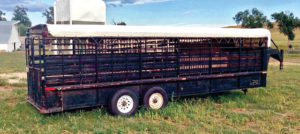
    John Rothwell was hauling calves from that area. “I was in the truck south of Oklahoma City when Brian called me – he always knew how to get things done. He said he was trying to buy this horse and I met him in Oklahoma City. We sat there for a couple hours while Brian got the sale done. We threw the horse in the back of the trailer and we drove all the way back to Brian and Lisa’s ranch.” Streaker was loaded in the dark into a canvas topped stock trailer that had the last gate plyboarded off at the end of the trailer; he was sharing the ride home with calves. “He was in the back – he got the cold spot,” said John, who was hauling calves back to Nebraska. They drove straight through and got home and unloaded Streaker. That was the story – Streaker came home in a cattle trailer.
    Brian rode him the next day and called Jerry and told him to cash the check. Brian had Streaker roping in the indoor barn less than 8 weeks after the 700-mile trip from Oklahoma to South Dakota. “To come off the track and transition so easily into roping – he can run and he has a brain,” said Lisa. “Sometimes when they come off the track they are frazzled. Streaker was easy for Brian to train.” The first year Streaker stood in Ainsworth, Nebraska and bred 100 mares at $1,000 a pop. Thirteen years later the fee has gone up to $5,500.
    The first weanlings were sold in Kearney, Nebraska, in 2005. The first riding 2-year-old was the 2007 crop which included 23 Streakers between weanings and 2-year-olds. There were a total of 66 horses on the sale that year. “We were still standing our Frenchmans Bullet stud and sold 7 head out of him,” said Lisa. There was no sale in 2006, which was a good thing. “The weekend that we should have had a sale was the weekend that Brian had his first brain tumor, 9/11/2006. Fortunately we didn’t have a sale.” The sale continued for two more years in Kearney and then moved to Valentine, NE in 2009.
    2010 was the last year Streaker stood in the north country, Ainsworth Vet Clinic with Dr Chris Finney 2004-2010, seven years. “We moved Streaker for Business reasons to Oklahoma where we thought more people could view him. We knew we had to get him in the horse mecca world,” said Lisa. “The James Ranch stood A Streak Of Fling for five years and then the boys & I moved Streaker the year after Brian passed to High Point Performance Horses in Pilot Point, TX in July of 2016.” 2013 A Streak Of Fling booked full for the first time. “We closely monitor the number of mares Streaker breeds each year. He is a very fertile stud and has been a plentiful producer. We will continue to breed him until he tells us it is time to retire.”
    “One day A Streak of Fling will come home to retire with us here at the ranch when he stops producing.”
    For now, he continues to prove his genetics with offspring taking contestants to the past six Wrangler National Finals Rodeos. “Breeding with brains, along with speed is obviously Streaker’s game.” concludes Lisa about Streaker. “I want to thank all the people that believed in us and had faith in us and Streaker when we first started standing him and all the breeders, buyers and trainers that continue to believe in Streaker. “The dream of a cowboy of finding the right type of stud to help bring more rodeo type horses into our part of the world are the reasons for Streaker’s prominence in the Horse World.”

  • Roper Review: Tanner Brown

    Roper Review: Tanner Brown

    If you start roping the sawhorse at nineteen months old, and enter your first junior rodeo at five years old… that’s considered an early start by any standard.
    Mississippi Junior High School Association allows contestants in Kindergarten through 8th grade to compete. However, National contestants must be in 6th, 7th, or 8th grade. Now a freshman, and 14 years old, Tanner has a long and impressive resume.
    “Dad let me enter my first rodeo in breakaway when I was five,” explains Tanner. “But I didn’t start team roping off a horse until I was six or seven.”
    Tanner and his father, Robbie, give much of the credit for his success to their friend and horse trainer, T. D. Ramsey.
    “I wanted to give Tanner the very best opportunity to succeed,” says Robbie. “All of our calf horses have come from T.D. I’ve helped Tanner with his heeling, but overall T. D. has been most instrumental in Tanner’s rodeo career.”
    The early start resulted in early wins for Tanner. By the time he was six, he was placing in the top ten in the Breakaway of the MJHSA. Tanner won the state title in the 4th grade, and again in the 6th, 7th, and 8th grade.
    In addition to winning the Little Britches National Breakaway title in 2014, Tanner also won his division at Rising Stars calf roping.
    In 2016, Tanner won the All Around title for MJHSA. He also qualified for the National Junior High School finals all three years of middle school.
    Tanner is homeschooled. He does school work in the morning, then rides colts at Ramseys’ to improve his horsemanship.
    East Mississippi Community College has already talked to Tanner about joining their rodeo team after high school.
    “I might go there for the first two years of college,” says Tanner. “But ultimately I would like to attend a big college in Texas where the competition would be more challenging.”
    When asked to describe Tanner, his dad says, “He’s a typical teenager. He’s very passionate about what he does and cannot stand to lose. He has a good work ethic and literally lives with a rope in his hand. We spend time in church and Tanner’s very good hearted. In his own way he wants everyone to win.”

    COWBOY Q&A

    How much do you practice?
    Every day. I tie every day and rope steers at least four times a week.
    Do you make your own horses?
    No.
    Who are your roping heroes?
    My dad and Jake Long.
    Who do you respect most in the world?
    The good Lord. I couldn’t accomplish what I have without him.
    Who has been the biggest influence in your life?
    My parents.
    If you had a day off what would you like to do?
    Probably hunt.
    Favorite movie?
    The Gambler.
    What’s the last thing you read?
    An article in the Rodeo News.
    How would you describe yourself in three words?
    Competitive, hardworking, outgoing.
    What makes you happy?
    Winning.
    What makes you angry?
    Missing steers or calves.
    If you were given 1 million dollars, how would you spend it?
    Pay off my parents’ bills. Then buy some land and cattle.
    What is your best quality – your worst?
    My best is my work ethic. My worst is procrastination.

  • Effective and Fun Practice

    Effective and Fun Practice

    Teaching people to rope, and improve their roping, is what I do for a living. I enjoy teaching riding and roping and seeing the improvements people make. I think it’s important to be ready to rope when you get to your cow, especially with the popularity of the World Series ropings and their barrier.
    One of the big conversations I have with parents is about the practice pen. I absolutely believe kids need to make their horses work correctly. They need to prepare their horses for competition by mastering the fundamentals of scoring, running across the line, rating, pulling, and facing…. But it also needs to be fun.
    If at all possible, kids need a practice horse in addition to the horse they compete on. Because, when getting your horse ready for competition and working at the fundamentals described above, it’s not necessarily helping your roping. The focus is on the horse and what he needs to do. I think kids need to have a horse to ride so they can work on their roping. A horse they can practice on and test their ability without worrying about how their horse is working.
    In the practice pen when someone tells me he can catch 15 in a row without missing, I think that’s a guy who’s not challenging himself. To truly improve and be prepared, it’s important to work at different scenarios… not just make the same runs over and over. Having a good practice horse, that you don’t have to train, makes this enjoyable. I believe you have to ride your competition horse differently than your practice horse. The reason a practice horse is so valuable is it allows you to work on what you need to do to be faster.
    A great practice horse is one that scores just a little and leaves flat across the line. He may not be the fastest, but you can practice riding, swinging, and roping. The same goes for heel horses. They don’t need to be fast, but they do need to stop correctly. Practice horses need to be good enough that kids can work and focus on their roping.
    Some parents have a tendency to make their kids do everything correctly in the practice pen and the kids don’t really have a chance to enjoy it. I don’t disagree that they need to work at their roping, but the fact is, if they don’t enjoy it they will find something else to do.
    There are many beneficial videos on speedroping.com for kids and adults. If you want to watch some of my daughter’s runs with my tips, visit the site and do a search with her name, Hali. Most are free to watch.

  • National Western Stock Show Rodeo gets off to a rousing start

    National Western Stock Show Rodeo gets off to a rousing start

    DENVER, Colo. (Jan. 6, 2017) — Opening day of the National Western Stock Show has featured three action-packed rodeo performances that have had fans on the edge of their seats for the last seven years.

    Known as Super Saturday, the first performance features contestants representing rodeos across the country for the Cinch Jeans World Team. Beginning at 11 a.m., 10 bareback riders, steer wrestlers, saddle bronc riders, barrel racers and bull riders competed to represent the “World” in the semifinals.

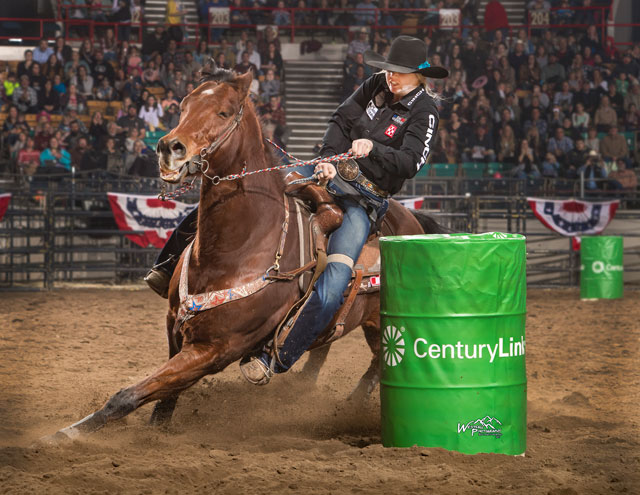
    The second performance kicked off at 3:30 with the same events, but these contestants were part of CenturyLink’s Colorado Team. The top four in each event for each team advanced to the semifinals which started at 8 p.m.

    The tournament format narrowed the field from 10 to four, then one from each team. The best world contestant competed against the best from the Colorado team, going head-to-head for an $8,000 winner-take-all purse in each event.

    To be part of the World team, contestants were invited to represent rodeos in North Platte, Nebraska.; Guymon, Oklahoma; Rapid City, South Dakota; Cheyenne, Wyoming; Austin, Texas; Fort Worth, Texas; Calgary, Alberta; Dodge City, Kansas; San Angelo, Texas; and Houston, Texas.

    For the Colorado team, three contestants represented the National Western Stock Show Rodeo in each event. Additionally, the following rodeos participated: Loveland; Pueblo, Greeley; Estes Park; Elizabeth; and Colorado Springs. To complete the 10-person roster, a contestant was invited as a wildcard.

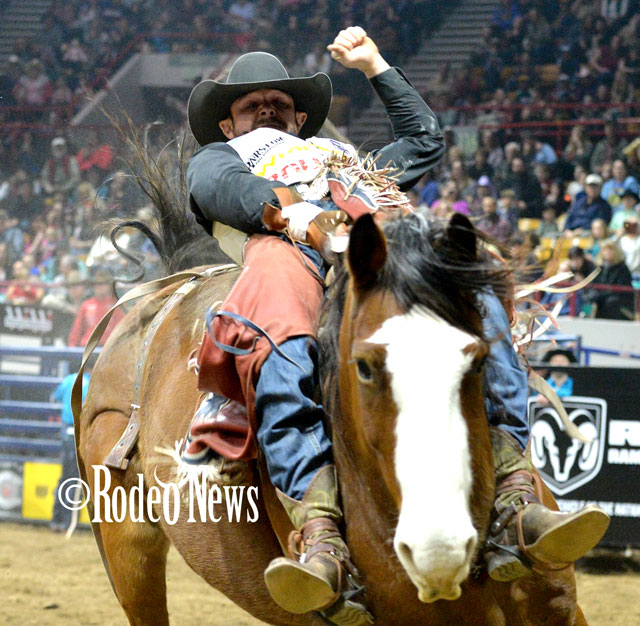
    In the final round of bareback riding it was rising star Mason Clements that got the championship. Clements had an 87.5-point ride to take the first event for the world team.

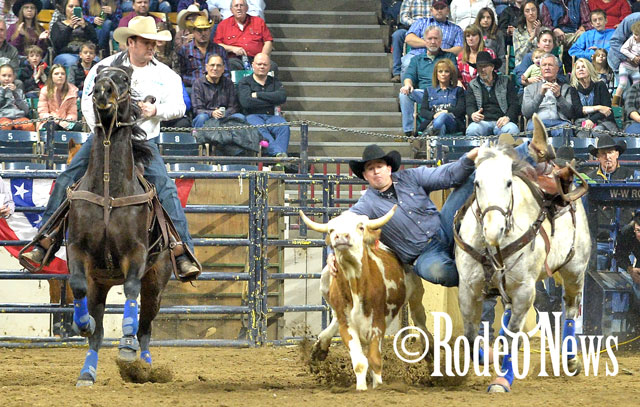
    The steer wrestling got exciting as Timmy Sparing, of the world team, stopped the clock in under four seconds to take the lead, then officials signaled that he got a 10-second penalty for not giving the steer a head start. The ball was in Dru Melvin’s court who was the top gunner for the Colorado team.

    Getting a handle on the steer proved to be a challenge for Melvin who was underneath the four-footed bovine at one point. However, Melvin prevailed and got the 600-pound animal layed down just in time to beat Sparing and win for Colorado.

    Cody DeMoss is a familiar name at the National Western Stock Show Rodeo having won the saddle bronc riding championship in Denver on multiple occasions. He added another notch to his rodeo belt with a win here on Saturday night for the world team beating Colorado team’s CoBurn Bradshaw.

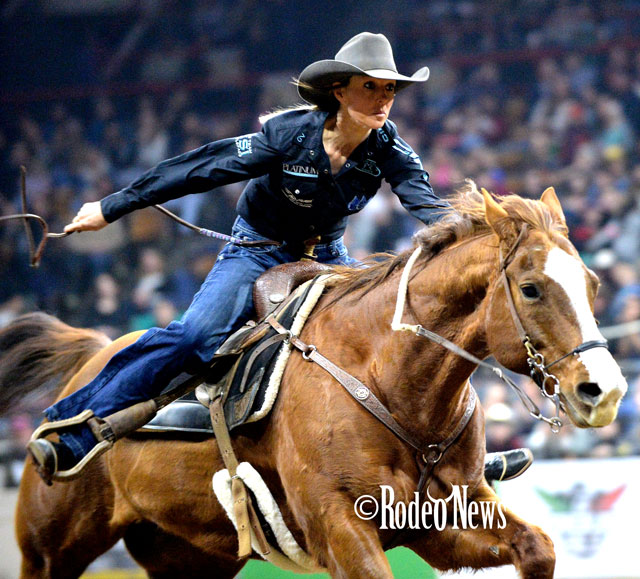
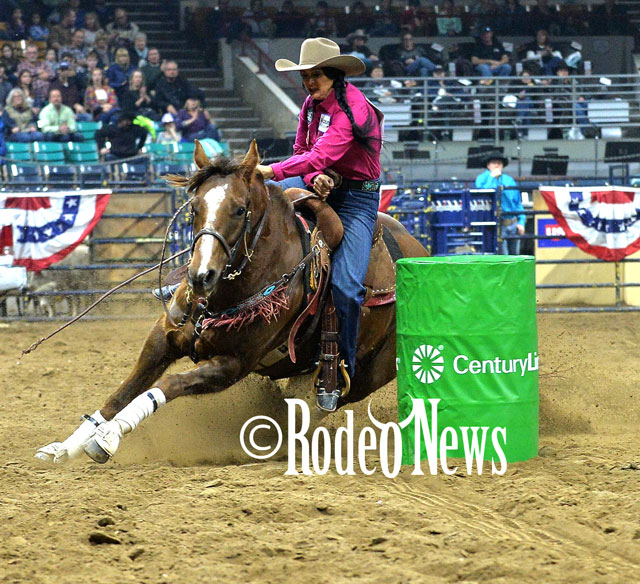
    Carly Richardson had a mere tenth-of-a-second edge to win the barrel racing title for the world team over Colorado team’s Sydni Blanchard. Richardson stopped the clock in 15.745 seconds aboard her 11-year-old gelding named Money. Richardson will be back here to compete in the Women’s Professional Rodeo Association barrel race during the rodeo on January 19th and 20th.

    “I’m pretty excited about this,” Richardson said. “Today was good practice for us. After making three runs in one day, I think we will all sleep good tonight.”

    Colorado got the final win of the night when Riker Carter won the bull riding with an outstanding 88-point effort representing the National Western Stock Show. Carter rode all three of his bulls and added $9,700 to his checking account. Reid Barker represented the world team in the bull riding but an early buck off saw him leave the arena with no score.

    The 111th National Western Stock show will see a cross-cultural event in the Mexican Rodeo Extravaganza in the Denver Coliseum on Sunday. Performances are at 2 and 6:30 p.m.


    ###


    DENVER, Colo. — The following are results from Super Saturday, Colorado Versus the World rodeo, Jan. 6, 2018.


    Cinch Jeans World Team Performance – contestant, hometown, rodeo represented


    Bareback Riding: 1, Orin Larsen, Inglis, Manitoba, (Calgary Stampede) 85 points, $1,000. 2, Devan Reilly, Sheridan, Wyoming, (Fort Worth, Texas) 80, $700. 3, Mason Clements, Springville, Utah, (Austin) 77.5, $500. 4, David Peebles, Redmond, Oregon, (Cheyenne, Wyoming) 77.5, $200.


    Steer Wrestling: 1, Timmy Sparing, Helena, Montana, (Houston) 4.95 seconds, $1,000. 2, Cody Cassidy, Donalda, Alberta, (Calgary) 5.25, $700. 3, Taz Olson, Prairie City, South Dakota, (North Platte, Nebraska) 6.34, $600. 4, Tom Lewis, Lehi, Utah, (Dodge City, Kansas) 6.96, $500.


    Saddle Bronc Riding: 1, Rusty Wright, Milford, Utah, (Austin), 86 points, $1,000. 2, Spencer Wright, Milford, Utah, (Fort Worth, Texas) 83.5, $700. 3, Cody DeMoss, Heflin, La., (Houston) 82, $600. 4, Tate Owens, Dublin, Texas, (Rapid City, South Dakota) 81, $500.


    Women’s Barrel Race: 1, Tracy Nowlin, Nowata, Oklahoma, (Guymon, Oklahoma) 15.475 seconds, $1,000.  2, Carly Richardson, Pampa, Texas, (Houston) 15.506, $700. 3, Laura Lambert, Wiggins, Colorado, (Calgary) 15.675, $600. 4, Christine Laughlin, Pueblo, Colorado, (San Angelo, Texas) 15.747, $500.


    Bull Riding: 1, Clayton Savage, Yoder, Wyoming, (Guymon, Oklahoma) 86 points, $1,000. 2, Reid Barker, Comfort, Texas, (Dodge City, Kansas) 84.5, $700. 3, Trevor Kastner, Sulphur, Oklahoma, (North Platte, Nebraska) 80.5, $600. 4, Wyatt Edwards, Sulphur, Oklahoma, (Cheyenne, Wyoming) no score, $500 – made it back based on time rode.


    Century Link’s Colorado Team Performance – contestant, hometown, Colorado rodeo represented


    Bareback Riding: 1, Kody Lamb, Sherwood Park, Alberta, (Denver) 86.5, $1,000. 2, Jared Keylon, Union Town, Kansas, (Colorado Springs) 82, $700. 3, Anthony Thomas, Palestine, Texas, (Denver) 81.5, $600. 4, (tie) Hunter Carlson, Sheridan, Wyoming, (Elizabeth) and Seth Hardwick, Ranchester, Wyoming, (Loveland) 81 and $350 each. Carlson advanced based on tie-breaker.


    Steer Wrestling: 1, Clayton Hass, Weatherford, Texas, (Denver) 4.13, $1,000. 2, Dru Melvin, Hebron, Nebraska, (Greeley) 4.65, $700. 3, Sterling Lambert, Fallon, Nevada, (Denver) 5.14, $600. 4, Chisum Docheff, Longmont, Colorado, (Colorado Springs) 6.35, $500.


    Saddle Bronc Riding: 1, Audy Reed, Spearman, Texas, (Denver) 84.5, $1,000. 2, CoBurn Bradshaw, Milford, Utah, (Pueblo) 84, $700. 3, Jade Blackwell, Piedmont, South Dakota, (Colorado Springs) 76, $600. 4, Ty Manke, Piedmont, South Dakota, (Denver) 75, $500.


    Women’s Barrel Race: 1, Sydni Blanchard, Albuquerque, New Mexico, (Loveland) 15.551, $1,000. 2, Kim Schulze, Larkspur, Colorado, (Elizabeth) 15.904, $700. 3, Kellie Collier, Hereford, Texas, (Denver) 15.977, $600. 4, Amberley Snyder, Elk Ridge, Utah, (wildcard) 16.129, $500.


    Bull Riding: 1, Brody Yeary, Weatherford, Texas, (Greeley) 85.5, $1,000. 2, Riker Carter, New Plymouth, Idaho, (Denver) 81.5, $700. 3, Trey Kimzey, Strong City, Oklahoma, (Denver) 80, $600. 4, Jake Smith, LaSalle, Colorado, (wildcard) 79, $500.


    Showdown – Colorado Vs. The World —


    Bareback Riding: (semifinals) 1 Jared Keylon, Colorado, 85 points. 2, Mason Clements, World, 84.5. (champion) Clements, 87.5 points, $8,000.


    Steer Wrestling: (semifinals) 1, Timmy Sparing, World, 4.36 seconds. 2, Dru Melvin, 4.71.  World, 5.70, $1,000. (champion) Melvin, $8,000.


    Saddle Bronc Riding: (semifinals) 1, Cody DeMoss, World, 85.5. 2, CoBurn Bradshaw, (Colorado) 83. (champion) DeMoss, 90.5, $8,000.


    Women’s Barrel Race: (semifinals) 1, Carly Richardson, World, 15.450. 2, Sydni Blanchard, Colorado, 15.8. (champion) Richardson, 15.745, $8,000.


    Bull Riding: (semifinals) 1, (tie) Reid Barker, World, and Riker Carter, Colorado, 84.5 points each. (champion) Carter, 88 points, $8,000.


  • Back When They Bucked with Butch Stewart

    Back When They Bucked with Butch Stewart

    Butch Stewart spurred his first bronc in the IPRA — known then as the IRA — in 1966 as a senior in high school. It was the start of a long and wide-ranging career in the association, from winning World Champion Bareback Rider in 1973, to working as an IPRA field representative, and eventually, serving as the executive director for five years. “One of the things I admire and respect about Butch is his integrity,” says IPRA General Manager, Dale Yerigan. “He’s an old-school, look you in the eye and tell you the truth kind of guy. When he tells you something, you don’t have to wonder if he’s going to do what he says.”
    Butch was born into that dependable lifestyle in 1946 on the ranch his dad, Bill, managed in Arkansas. The family later moved to North Carolina, and Butch and his three brothers all rodeoed. His two older brothers, Billy and Jim Bob, competed in timed events, and his younger brother, Ricky, rode bulls. Their dad rodeoed, but he passed away when Butch was 10. “I’d go to the rodeos in my early days, and the bareback riding would be the event I’d watch. Why I don’t know, but that’s what I wanted to be,” Butch recalls. “There were no rodeo schools, but when I was 13 or 14, there was a horse trader in town and my family was good friends with him. He would have something he thought might buck, and I just started getting on them. When I got up into high school, I went to rodeos in North Carolina and South Carolina and Georgia. It took me forever before I won any money, but I never did give up. One night at a rodeo, it just clicked, and from that point on my skills got better and better, but I really had to work on it. I won second at Rock Hill (South Carolina) and won $57, and I thought there would never be another dry time.”
    Butch continued practicing on anything that would buck and traveled to rodeos with his older brother or his good friend Charles Malcolm, a bull rider who also helped Butch in the bareback riding. In 1966, Butch bought his IRA card and ventured into Florida for several rodeos, where he met Harry Watt of Meeker, Colorado. “Harry rodeoed for a living, and I told him I was going to graduate from high school and (asked) what would be the chances of me getting in and going to rodeos with him. He’s a very plain-spoken person, and he said, ‘Just tell me where you want me to pick you up. But I tell you right now, you hold your end up or you can go home.’” Butch graduated and left the same night on a Greyhound bus to meet Harry. “My mother, Pauline, was standing in the door just bawling. I stayed in contact with her and my oldest brother, and I’d call once a week.”
    While in the past Butch made it to 15 rodeos a year at most, he and Harry entered 120 rodeos in 1966 throughout the eastern half of the country. Butch would eventually rodeo as far away as California, and even tried bull riding, but he primarily entered on the IRA circuit. He and Harry traveled in the Coloradoan’s single-cab pickup and camper, minus air conditioning, with as many as four other cowboys joining them at times. “I loved it! I couldn’t get to enough of them,” says Butch. “Those first rodeos we went to I drew some great horses and won first, and everything just clicked. Harry taught me how to get to rodeos, where to go, and how to enter. He’s been a great friend and we still talk all the time, and he’s the one who really taught me how to rodeo.”

    Butch had to set his gear bag aside when he was drafted into the Army in 1967, but after serving two years in Germany, he returned to the IRA. By that time, he had a world title on his mind and was runner up to the IRA world bareback riding champion in 1971 and 1972. “I went back home in the fall of ’72 and saw a friend of mine, R.D. Thompson. We went to school together and he was a teacher and a coach, and he wanted to know what I was doing. I told him I got real close to winning a world title the year before. He said, ‘You can win if you want it worse than anybody else,’ and that stuck in my mind. That following year I won my world title. Maybe my skills got to a higher level, but it was just the want-to. I set my sights on something and I went after it. It was a great feeling.”
    Several years before winning the world title, Butch met his future wife, Brenda, at a rodeo in Eunice, Louisiana. They were married in 1971, and Brenda’s background in ranching and high school rodeoing fit the newlywed’s lifestyle like a hand to a roping glove. She worked with the IRA on merchandise while Butch worked for the association as a field representative from 1977 to 1983. He traveled often and worked with current stock contractors and recruited new ones, along with staying in touch with the contestants. Once Butch and Brenda’s two children, Heath and Carissa, were born, however, he wanted to stay closer to home. Butch took a job managing several large cattle ranches in North Carolina and Oklahoma from 1983 — when he retired from rodeo — until 1999.
    The family moved from ranch to ranch sometimes every six or seven years, and the ranching lifestyle and Butch’s work in the IPRA proved valuable for his children. Carissa started working in the association in the early ‘90s as a receptionist and is now in charge of the IPRA rodeo sanctions, results, and standings. Heath started working with Jerry Nelson’s Frontier Rodeo Company in the early ‘90s as well, and is now the rodeo manager of the company. “Dad ran Five R Rodeo Company for a guy, and he always made sure his family was taken care of, and the livestock, before he went on the road,” says Heath, who took 18 horses and two bulls to the 2017 WNFR. “He took good care of things and has a good work ethic.” Heath’s sister, Carissa, adds, “I’m glad my dad chose to be a rodeo cowboy back in the day. The people you meet in rodeo become your rodeo family, and some of my lifelong friends I met through my dad rodeoing.” When Butch returned to work in the IPRA in 1999, Brenda started helping with the IFR, the IPRA convention credentials and check-in, and securing sponsors to cater food for the VIP room.
    In 2002, Butch became the executive director. “It was the day-to-day business of running the association, the bills, the IFR, the sponsorships, and the contestants’ needs and concerns,” says Butch. He and Ronnie Williams, a longtime IPRA member and former executive director, were also instrumental in working with the governor of Oklahoma at the time, Frank Keating, on declaring the third week of January “IFR Week.” “I enjoyed seeing the success of the association and the new contestants coming on, the friends that you meet, the awesome staff, and the people in Oklahoma City that we worked with.”
    Butch retired from his job as executive director in 2007 and managed a ranch in Davis, Oklahoma, for six years until it was sold. Presently, he works for Jerry Nelson’s Frontier Rodeo Company in Freedom, Oklahoma, feeding the livestock and running the ranch when the crew is on the road. “I really love what I’m doing, being around these bucking horses, and Brenda and I are very proud of our two kids and our grandkids.” He and Brenda make their home just a few hundred yards from Heath and his wife, Shay, and their children, Jade, Brooke, and Chase, who is on the Northwestern Oklahoma State University rodeo team. Butch is happiest caring for the equine athletes who made his rodeo career possible, but he often travels to the WNFR, and he never misses an IFR. “I tell them if there’s anything I need to do for them, I’m glad to do that, but I just have a good time, sit back and watch, and visit with old friends.”

  • On The Trail with Kim and Taycie Matthews

    On The Trail with Kim and Taycie Matthews

    When the lights shine down on the grand entry of the 48th Annual International Finals Rodeo this January in Oklahoma City, two cowgirls will have a stronger connection than most in the arena.

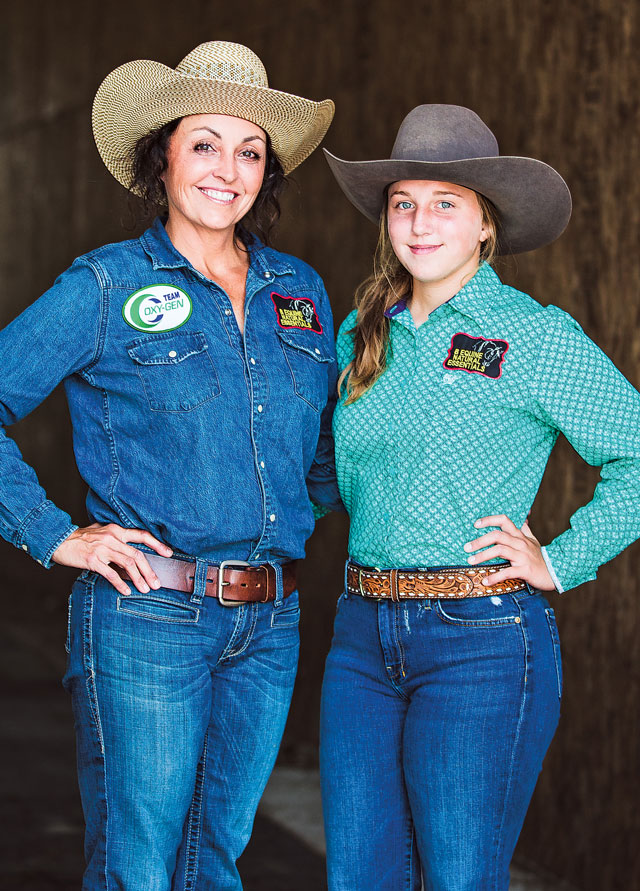
    Kim and Taycie Matthews, currently ranked no. 4 and no. 5 in the IPRA world standings, are mother and daughter qualifiers in the barrel racing. They’ve had a strong year in the IPRA, with Kim holding steady and Taycie making a late-season surge as a rookie. Did we mention Taycie was only 14?

    The Matthews family, from Wynne, Arkansas, has been involved in barrel racing for many years. Kim’s parents trained barrel horses as she was growing up in Caruthersville, Missouri before she went on to college at the University of Tennessee Martin on a rodeo scholarship. After college Kim kept up barrel racing some, but got married in 2000 and quit for eight or nine years to start a business and a family with her husband Terris.
    Together they own Matthews Ridgeview Farms, a large sweet potato operation where they supply to many major retailers across the United States.
    But when Kim had two young daughters, Jaylie who is 16 and Taycie, who just turned 15 in December, it was practically written in the stars the girls would have horses. Their grandparents were quick to ensure they had ponies as babies and grew up horseback from there.

    “They started riding, and that gave me an opportunity to get back in it,” Kim explains adding, “we were going to barrel futurities and big open shows, not really going to any rodeos, and three years ago we decided we were going to go to some rodeos. We went to about three or four with Kindyl Scruggs [the IPRA’s 2016 world champion barrel racer] and then we went back to the barrel races and barrel futurities,” But 2017 would be special Kim describes, “this year Taycie just begged, she said ‘I want to try to make the IFR, so I said ‘okay, if I’m going to have to haul you, I’m going to run too. So we just decided to go this year, and we went… a whole lot…” Kim laughs.

    All three Matthews women joined the IPRA’s 2017 season. And though Jaylie didn’t go as hard as Kim and Taycie, she plans to rodeo with them in 2018. Being involved in horses and on the rodeo road together with her daughters has been important to Kim.

    “I think it’s awesome. It’s a lot of bonding time and just keeps us having so many things in common. We got to spend a whole lot of time together this summer.” Taycie echoes that sentiment. “It’s fun. It’s just built our relationship more together,” she says.

    Going from the barrel racing and futurity world has been a fun change for the girls in particular.

    “You’ve got more driving, but a lot of it’s easier because you get there, and you’ve got all day to just rest until your run, and you don’t have as many horses to take care of because you can only run one horse at the rodeo,” Kim says. “We go to the futurities and the derbies, and we may carry 9-10 horses so that’s a whole bunch to take care of,” she laughs and adds of rodeo, “It’s a whole different life. You’ve got a whole different set of people, and you have no idea what the ground is going to be like when you get there. You have no idea what the weather is going to be. You just have to adapt or don’t run, which I did that a few times this year,” she laughs, but adds seriously, “it’s all about your horse. You can’t do it without your horse so you’ve got to take care of them first.”

    Being in the IPRA specifically has afforded the girls the opportunity to travel to rodeos internationally and places different than they were used to.


    “Going to Canada was an amazing experience in itself. We went up there three different times and the culture, the scenery, the hospitality, we loved it all, we really enjoyed the trip and not just that, but it changed my whole view of going north,” Kim says. “I could not believe the hospitality that we received from so many different people in so many different states. It changed my whole view about northerners, because you kind of hear they have that stigma just like we do as southerners, but we just had an awesome summer. As far as IPRA it’d been a long time since I’d been back going to IPRA rodeos, and it was really good. There were a lot of places I was amazed at how good the ground was and just how they treated us, and I was very impressed.”

    For Kim and Terris, giving their children a life with horses has a much bigger impact than the adventures. It teaches accountability, responsibility and confidence Kim says. “I just think it helps you be a well-rounded individual. It keeps you out of trouble, because it keeps you busy, and it teaches you. You’re responsible for a life. It’s not a human life, but it’s a horse that’s as important as a human, because you can’t go down the road without it,” Kim assures.

    And it’s clear the year has had an impact on Taycie.

    “I’ve learned how to ride different horses. It taught me how to be more responsible and to be more grateful for what I can do,” she says.
    The year for Taycie did not start off strong, and the Matthews’ stud horse she was riding got hurt, but Taycie rebounded when Kim let Taycie share her horse Feelin’ the Firewater, the newly crowned 2017 IPRA Barrel Racing Horse of the Year. The move to share the horse paid off big time. Taycie broke the arena record at the IPRA’s largest regular-season rodeo, the Festival Western de St. Tite in Quebec.

    “The beginning of the year was rough. I was getting ready to quit and just go back to barrel races, and it got better in about June, and it’s been getting better from then on,” Taycie describes, saying of her incredible accomplishment at St. Tite, “I was excited I couldn’t really believe it.”

    That win secured Taycie’s qualification to the IFR, and so now mother and daughter will get to share the experience together.

    “It means a whole lot to have qualified with my daughter, because she had a slow start to the year. It was just a struggle, because I’ve never seen as many tough barrel horses and as many people going and continuing up until the end as this year,” Kim says adding, “there were a couple of times where she got discouraged, and I almost was discouraged but tried not to let her know it, because things may not have been going her way, and we’re thinking ‘is she going to make it, is she not going to make it,’ and I made the comment, ‘if she doesn’t make it, I don’t want to go. It was just going to be special for both of us to do it.”

    Now that they both have done it, it will be exciting to watch them compete together in Oklahoma City Jan. 19-21 at the IFR. Then it’s full steam ahead for 2018.

    The Matthews have been expanding their farm business, and Kim is excited for her studs and breeding operation and to bring along some babies. By the end of the year she’ll have some 3-year-old horses ready to start their careers. “That’ll be a huge milestone, and I’m very excited about that,” Kim says.

    And as for her girls, Taycie wants to take up breakaway roping in addition to running barrels, and Jaylie plans to hit the trail hard too, so no telling what will happen for IFR49.


    The Matthews want to thank husband/ father Terris for his support of their endeavors, as well as hauling partners in the IPRA; Kindyl Scruggs, Cayla Fielder, Travis Gardner, Kylie Brueggeman and Sherry Rhea for helping with the driving. They also give credit to their sponsors; B Equine Essentials a therapeutic mud and poultice, Oxy-Gen Products and JHA Saddle and Tack.

  • Setting Goals

    The New Year brings new hope to athletes in all sports. Along with the New Year everyone likes to set goals for the year. Here are a few tips from observing those who are successful at reaching their goals and holding themselves to a higher standard.
    Write your goals down and share them with those who will help you achieve them. This adds a level of accountability to your goals. If someone shares them with you, take the responsibility to be part of their journey. It is rewarding to reach your goals, it is equally rewarding to help others reach theirs.
    Once you have them down you need to develop a plan of action to help you reach your goals. Daily goals, weekly goals, monthly goals, yearly goals. You should have a detailed plan to reach all of them. The more detailed the better.
    The next step is to make the commitment. Each goal and person will make a different level of commitment to reaching their goals. Most of the time the success or failure of reaching your goals depends solely on your level of commitment.
    Once you make a commitment, you need to stay focused. It is easy to be committed for a few days a week, stay focused on your commitment. Stay focused on your goals. Focus your priorities to achieve your goals.
    Be purposeful with your actions. Make sure your actions reflect your commitment to achieving your goals. Make sure your practices are purposeful. Your actions should be purposeful over a long period of time, not one or two days a week.
    Visualize what you want. Know what you want and put a time frame on it. This year’s State Champion? This year’s regional Champion? This year’s National Champion? This year’s World Champion? None of them happen by accident. The person who earns each of those titles this year will have put in the time and effort into achieving the goal.
    Have a belief in what you want, no one will help you achieve your goals if you don’t have confidence and a belief that you can accomplish them. Surround yourself with those who believe in you and your goals.
    And finally there is no time like the present to get started. Everyone has the same time frame each day to work towards their goals. Others are working today towards their goals, start today on your journey towards reaching yours.
    Hopefully I will see you achieve your goals this year at the High School National Finals, the College National Finals, or at the Wrangler National Finals Rodeo.

  • Kimzey rides to fourth straight bull riding title

    Kimzey rides to fourth straight bull riding title

    LAS VEGAS – For the second year in a row, bull rider Sage Kimzey did what no one has done before. He actually did two things nobody has done before. Photos by Steve Gray
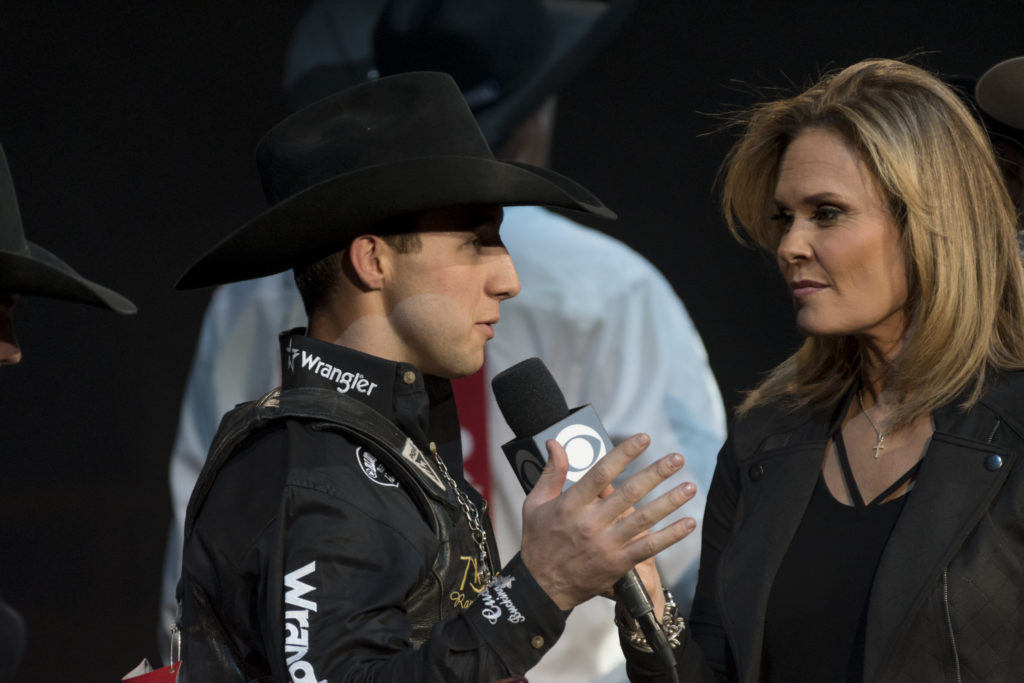
    At the age of 23, Kimzey won his fourth consecutive world title in his fourth attempt, the first bull rider to ever do that. He won the fourth one in style, riding 4L & Diamond S Rodeo’s Girl Money to the tune of 88 points to win Round 10 and take home the gold buckle at the Thomas & Mack Center on Saturday in front of 16,954.

    His fourth title has him halfway to tying Don Gay’s record of eight bull riding world titles.

    “Each one of them is a step on the way up the mountain, and each is special because the road is so different each year,” Kimzey said. “The trials and tribulations are different, and this being the fourth one, I’m halfway up the mountain that Donnie Gay set. I usually have a healthy lead, but this year I was hurt and banged up and sore, but I got the ball rolling in the spring.”

    In addition to the world title, Kimzey also won the average title with 601.5 points on seven head. Girl Money was the first bull Kimzey had ridden to the whistle since Round 7. It was his second outright round win of the Finals – he also shared the Round 3 victory – and he placed in two other rounds.

    Kimzey became the only bull rider to break the $400,000 mark in a single season. The champion won $192,134 at the Finals to give him a PRCA-record for most money won in bull riding in a year at $436,479, smashing the record he set of $327,178 in 2015.

    He’s not done winning yet.

    “I don’t see any reason not to win nine or 10 in a row,” Kimzey said. “I’ve got the talent and drive and ability, and the Lord has blessed me in ways I can’t imagine.”


    Ryder Wright is youngest saddle bronc riding champ
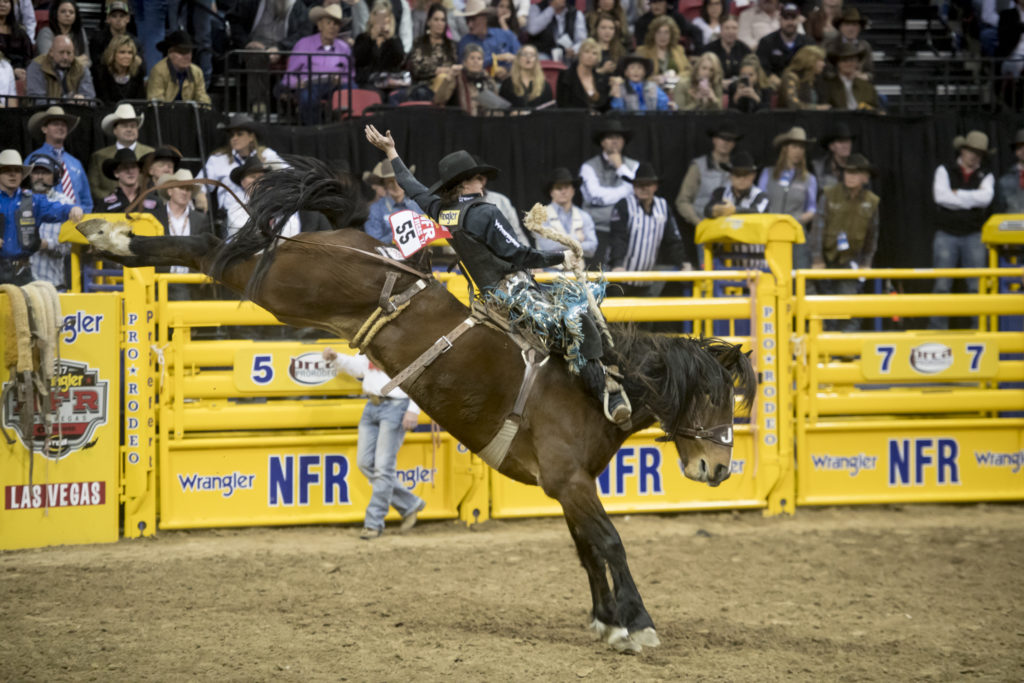
    All Ryder Wright had to do in Round 10 was ride a saddle bronc to the whistle and the 19-year-old could revel in his first world championship.

    Wright actually missed the horse out, but held on to win the world title with $284,938 – breaking the record for most money won in a saddle bronc riding season. Wright took home the gold buckle by $2,651 and became the youngest saddle bronc riding world champion of all time.

    “The world title is won by pennies,” said Wright, the fourth in his famed family to win a world title. “It’s crazy, I don’t even know what to say but it’s a dream come true. I could sit and stare at it (the buckle) all day.”

    When Wright saw the judge’s flag fly his heart skipped a beat.

    The mark out made me sick, I saw it out of the corner of my eye – they throw it right in your face – I know they don’t really, but it seems like they do,” Wright said.

    Adding to the Wright family trophy case is something Ryder Wright will always cherish.

    “Oh, it’s special, something I’ve dreamed of since I saw my dad (Cody Wright) win his and it’s awesome to follow in his footsteps.”

    Wright won four rounds, including three of four at one point, and placed in eight. He took home $185,577 at the Finals.

    Brody Cress won the average with 841.5 points on 10 head. Taos Muncy won Round 10 with 87.5 points on Bar T Rodeo’s Son of Sadie.


    It’s title No. 2 for bareback rider O’Connell
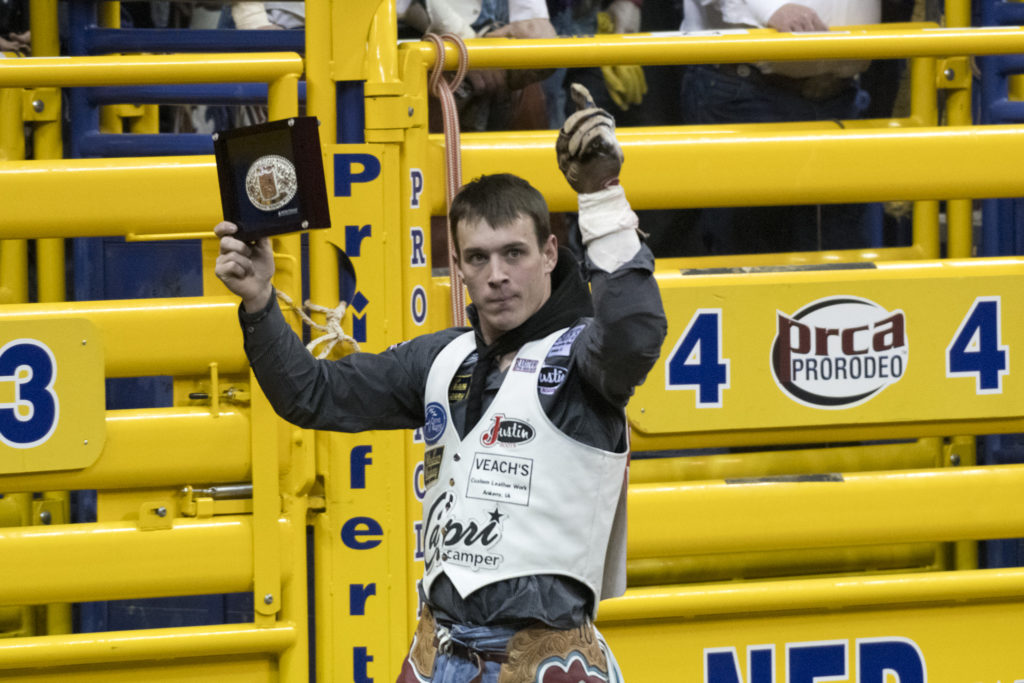
    As Tim O’Connell continued to place and sit in the top two of the bareback riding average and No. 1 in the world by more than $80,000, it remained nearly inevitable that the 26-year-old Iowan would win his second consecutive gold buckle.

    O’Connell secured that world title Saturday night with an 85.5-point ride, which also locked up his second consecutive WNFR average title. O’Connell won the average with 853.5 points on 10 head to cash for $67,269 in the average.

    “I can’t even put it into words,” O’Connell said. “To do it back-to-back, to have both these buckles sitting in my hands again going back to Iowa, what a blessing. It was harder this year, way harder this year than it was last year. The group of guys that are here are better than any of the guys that have set foot in this arena. This is the best set of 15 bareback riders that ever hit this arena.”

    Over the course of 10 days in December, O’Connell won Round 3 and placed in six others, giving him checks in seven of the 10 rounds. O’Connell made $169,500 at the WNFR to make $371,416 over the course of the 2017 season.

    “Consistency is key,” O’Connell said. “If you’re 85 (points) every time, you’re going to win a lot of money. That’s just plain as day. You don’t have to win every time, but if you can be consistent and you can show up and put the best spur ride you can every single time, then you’re going to win; it’s going to pay off in the long run just doing the same thing each and every day.”

    Steven Dent and Mason Clements split the Round 10 win as each scored 88 points. Dent did it on Pete Carr’s Classic Pro Rodeo’s Scarlett’s Web, while Clements did it on Pickett Pro Rodeo’s Top Flight.


    Costa is first Brazilian tie-down roping champ
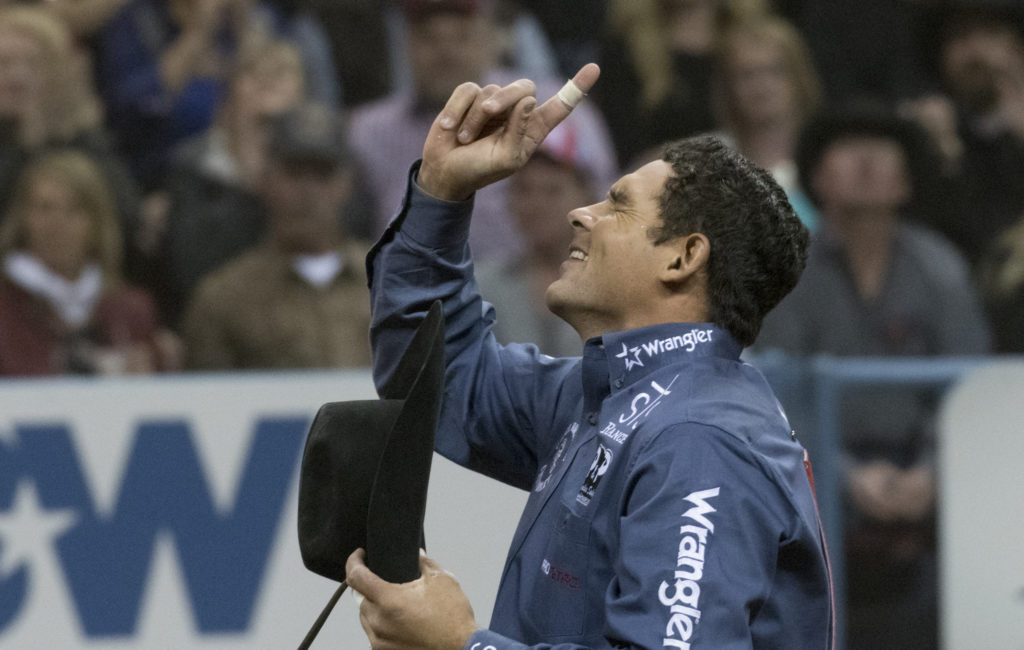
    Marcos Costa was hoping he could land his first tie-down roping title. But he wanted to make sure there was no doubt about it.

    So, the Brazilian cowboy went out and won the round in 7.8 seconds, clinching the average, the world title and the chance to say he’s the only tie-down roping world champion from Brazil.

    “I didn’t have much growing up and Stran (Smith) went down to Brazil and found me down there and watched me and brought me here,” Costa said. “Stran taught me how to rope and he taught me almost everything about roping here (in the PRCA). I’m just happy to be here. God is great to me. I’m the happiest man in the world.”

    In the process of winning $195,519 at the Finals, Costa also won the RAM Top Gun Award for taking home the most money at the WNFR in a single event.

    “I don’t have words to say about the Top Gun Award,” said Costa, who received a RAM 3500 Heavy Duty Truck for the award. “This is just one more blessing I received this night.”

    Costa won Round 10 and placed in another six rounds along the way. He finished in 81.3 seconds on 10 head for the average title. Heading into the final round, he knew what he needed to do.

    “I was thinking about just go rope that calf and try and win the title,” he said. “When I was praying today, I was saying that I was going to give everything I got to try and win the world if I had a chance. God’s plan is different than ours, and if you trust in him in all of your heart, things will happen for you.”


    Rogers/Petska score team roping world title

    Team roping header Erich Rogers was just slightly more than $200 behind the world standings leader when the WNFR started.

    His partner, team roping heeler Cory Petska, was less than a $1,000 behind the heeling leader.

    Both of them made the most of their 10 days in Las Vegas, as they teamed to win $131,705 each at the Finals and capture their first gold buckles for their respective events – and set records in the process.

    “Man, this is a great feeling to get a championship,” Rogers said. “I’ve been here several times and to finally get an opportunity to capitalize on it, and to have Cory behind me, especially to have him heeling for me, it’s a great feeling to have him there and the confidence that he has in both of us is just one of the greatest feelings a guy could have.”

    Rogers set the record for most money won by a header in a year, while Petska did the same for heelers.

    The fact that Rogers and Petska are such good friends only added to the pride in their title.

    “It’s awesome, because he’s like my best friend and my brother,” Petska said. “We spend so much time together that you’d want to win it with someone you like, and you want to be around. We spend hours together and we’re really good friends, so to win it with one of your best friends is dang sure better than winning it with someone you don’t like.”

    Rogers and Petska finished the 2017 season with $265,417 each. The pair placed in seven rounds, splitting the win in Round 5.

    They tied for second in the Finals average, finishing behind only Chad Masters and Travis Graves, who won with 61.2 seconds on 10 head. Garrett Rogers and Jake Minor won Round 10 in 4.1 seconds.


    Pearson wins first career steer wrestling title

    As the Finals wore on, steer wrestler Tyler Pearson refused to look at the standings. He didn’t want to know where he was or what he needed to do.

    Instead, in the 10th Round, Pearson went out and put up a 5.2-second time to take second in the average and win his first gold buckle with $265,457.

    “I didn’t want to know (what the numbers were),” said Pearson, of Louisville, Miss. “That would just make me more nervous. I didn’t want to look and see what somebody else did and then see what I had to do. I just wanted to go throw my steer down and let the cards lay. After I finished my run, I didn’t know where that put me and then they came out and told me I won. I thought Ty (Erickson) won it and I was proud for him, and then they told me I won and that was awesome. I was ecstatic.”

    Pearson placed in five rounds, but never won one. He didn’t need to, as his worst round was 6.3 seconds. He had two seconds, two thirds and split another second-place finish.

    Now, he’s sporting a nice, new, shiny buckle.

    “This is unreal,” he said. “This is always what I wanted to do, but this is going to take me a week or two to believe this happened. This is nuts. I’ve been around a bunch of world champions and hung out with a lot of them, and I’m just blessed to be a world champion, and now to always be known as a world champion is unbelievable.”

    Dakota Eldridge won the average with 45.4 seconds on 10 head. Tyler Waguespack won Round 10 in 3.2 seconds, setting a round record.


    Miller, Sister win barrel racing title
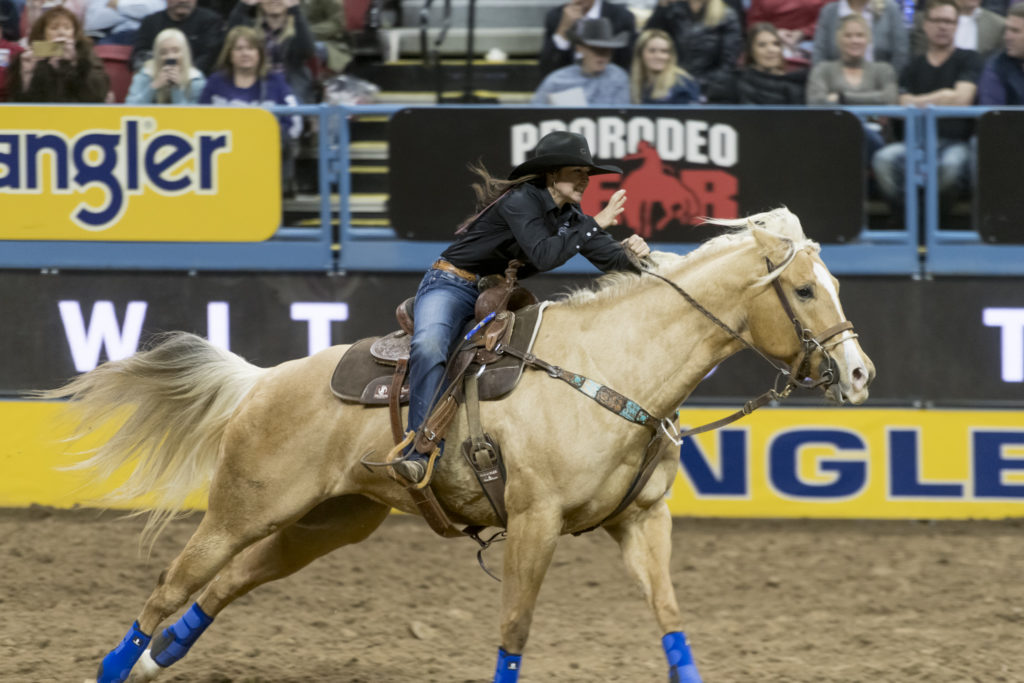
    When the WNFR opened on Dec. 7, barrel racer Nellie Miller was third in the world standings by a margin of $119,841.

    Ten days later, Miller left the Thomas & Mack Center with $177,961 to give her $308,498 on the year and a world title gold buckle.

    “I just have no words,” said Miller, who was aboard Sister.

    Miller won the average in 137.32 seconds on 10 runs. She won Round 1 to set her on the right track. Then she placed in six of the next nine rounds.

    “This is just so great for my family,” Miller said. “Rodeo is what we do. I mean, this is the biggest event that you can win.”

    Hailey Kinsel closed the barrel racing competition with her fourth go-round win. She set a Round 10 record by finishing in 13.17 seconds.

    “When I was at the NFR in 2010 we struggled, so, to come back this year and have this type of year is just really amazing,” Miller said.


    Cooper wins all-round title on final night


    Thanks to placing second in the average in tie-down roping, Tuf Cooper locked up his first all-around cowboy title.

    Cooper, who trailed his brother-in-law Trevor Brazile in the final days leading up to Round 10, scored $54,577 with the second-place finish in the average.

    “This is the best title and the best buckle you can win in rodeo,” Cooper said. “Trevor really created this award by winning it all those times. I just grew up as a kid who wanted to rope calves like my dad and brother-in-law. They both have won the all-around, and now I have one, too. This one feels different than the three tie-down roping gold buckles I have because this one says, ‘Cowboy,’ on it.”

    Cooper finished with $341,560 in earnings across tie-down roping and steer roping. Brazile was second and Dakota Eldridge third.


    10th Performance Results, Saturday, Dec. 16, 2017


    Bareback riding: (tie) Steven Dent on Pete Carr’s Classic Pro Rodeo’s Scarlett’s Web and Mason Clements on Pickett Pro Rodeo’s Utah Top Flight, 88 points, $23,481 each; 3. Bill Tutor, 87.5, $15,654; 4. (tie) Richmond Champion and Ty Breuer, 86.5, $8,885 each; 6. J.R. Vezain, 86, $4,231; 7. Tim O’Connell, 85.5; 8. Caleb Bennett, 84; 9. Tanner Aus, 82.5; 10. Clayton Biglow, 82; 11. Orin Larsen, 81.5; 12. Wyatt Denny, 81; 13. R.C. Landingham, 79.5; 14. Jake Vold, NS. Jake Vold (out for the last two rounds after dislocated knee). Average standings: 1. Tim O’Connell, 853.5 points on 10 head; 2. Richmond Champion, 847.5; 3. J.R. Vezain, 842; 4. Caleb Bennett, 835.5; 5. Tanner Aus, 829.5; 6. Steven Dent, 825; 7. Ty Breuer, 814.5; 8. Bill Tutor, 802.5. World standings: 1. Tim O’Connell, $371,416; 2. Richmond Champion, $268,511; 3. Tanner Aus, $235,715; 4. J.R. Vezain, $220,831; 5. Clayton Biglow, $200,557; 6. Caleb Bennett, $195,088; 7. Jake Vold, $185,706; 8. Orin Larsen, $171,009; 9. Steven Dent, $170,709; 10. Mason Clements, $166,486; 11. Bill Tutor, $166,398; 12. Jake Brown, $161,866; 13. Ty Breuer, $145,645; 14. Wyatt Denny, $140,084; 15. R.C. Landingham, $106,031.


    Steer wrestling: 1. Tyler Waguespack, 3.2 seconds, $26,231; 2. Scott Guenthner, 3.6, $20,731; 3. J.D. Struxness, 4.2, $15,654; 4. Ty Erickson, 4.5, $11,000; 5. Jon Ragatz, 4.7, $6,769; 6. Kyle Irwin, 4.8, $4,231; 7. Olin Hannum, 4.9; 8. Chason Floyd, 5.1; 9. (tie) Tyler Pearson and Dakota Eldridge, 5.2 each; 11. Ryle Smith, Baylor Roche, Tanner Milan, Nick Guy and Rowdy Parrott, NT. Average standings: 1. Dakota Eldridge, 45.4 seconds on 10 head; 2. Tyler Pearson, 45.9; 3. Kyle Irwin, 46.6; 4. J.D. Struxness, 56.5; 5. Scott Guenthner, 58.3; 6. Ty Erickson, 66.0; 7. Rowdy Parrott, 41.4 on nine; 8. Olin Hannum, 43.5. World standings: 1. Tyler Pearson, $265,457; 2. Ty Erickson, $263,267; 3. Dakota Eldridge, $245,333; 4. Tyler Waguespack, $231,277; 5. Kyle Irwin, $194,819; 6. Scott Guenthner, $186,839; 7. J.D. Struxness, $185,921; 8. Tanner Milan, $156,266; 9. Olin Hannum, $145,631; 10. Baylor Roche, $144,455; 11. Chason Floyd, $143,018; 12. Rowdy Parrott, $142,704; 13. Jon Ragatz, $137,178; 14. Nick Guy, $110,878; 15. Ryle Smith, $103,463.


    Team roping: 1. Garrett Rogers/Jake Minor, 4.1 seconds, $26,231; 2. Kaleb Driggers/Junior Nogueira, 4.7, $20,731; 3. Coleman Proctor/Billie Jack Saebens, 4.8, $15,654; 4. Chad Masters/Travis Graves, 5.4, $11,000; 5. Erich Rogers/Cory Petska, 8.3, $6,769; 6. Riley Minor/Brady Minor, 9.6, $4,231; 7. Charly Crawford/Joseph Harrison, 9.8; 8. Dustin Egusquiza/Kory Koontz, 10.0; 9. Luke Brown/Jake Long, Clay Smith/Paul Eaves, Cody Snow/Wesley Thorp, Dustin Bird/Russell Cardoza, Clay Tryan/Jade Corkill, Tom Richards/Jeremy Buhler and Jr. Dees/Tyler McKnight, NT. Average standings: 1. Chad Masters/Travis Graves, 61.2 seconds on 10 head; 2. Erich Rogers/Cory Petska, 53.9 on nine; 3. Riley Minor/Brady Minor, 56.7; 4. Coleman Proctor/Billie Jack Saebens, 61.6; 5. Charly Crawford/Joseph Harrison, 43.0 on eight; 6. Dustin Egusquiza/Kory Koontz, 45.3; 7. Kaleb Driggers/Junior Nogueira, 58.9; 8. Luke Brown/Jake Long, 36.2 on seven. World standings: (headers) 1. Erich Rogers, $265,417; 2. Kaleb Driggers, $254,471; 3. Riley Minor, $220,183; 4. Luke Brown, $216,804; 5. Clay Smith, $197,556; 6. Chad Masters, $195,778; 7. Coleman Proctor, $184,398; 8. Dustin Egusquiza, $182,206; 9. Charly Crawford, $156,552; 10. Clay Tryan, $153,999; 11. Jr. Dees, $149,887; 12. Garrett Rogers, $133,069; 13. Dustin Bird, $114,519; 14. Cody Snow, $112,716; 15. Tom Richards, $111,511. (heelers) 1.Cory Petska, $265,417; 2. Junior Nogueira, $255,201; 3. Brady Minor, $220,183; 4. Jake Long, $208,275; 5. Travis Graves, $202,688; 6. Paul Eaves, $201,673; 7. Billie Jack Saebens, $197,295; 8. Kory Koontz, $179,421; 9. Joseph Harrison, $160,793; 10. Jade Corkill, $153,999; 11. Tyler McKnight, $150,297; 12. Russell Cardoza, $136,004; 13. Jake Minor, $133,069; 14. Wesley Thorp, $114,317; 15. Jeremy Buhler, $98,102.


    Saddle bronc riding: 1. Taos Muncy, 87.5 points on Bar T Rodeo’s Son of Sadie, $26,231; 2. (tie) CoBurn Bradshaw and Jake Wright, 86.5, $18,192 each. 4. Brody Cress, 86, $11,000; 5. Clay Elliott, 83.5, $6,769; 6. (tie) Cody DeMoss and Hardy Braden, 82, $2,115 each; 8. Zeke Thurston, 79.5; 9. Jacobs Crawley, Layton Green, Sterling Crawley, Ryder Wright, Heith DeMoss, Audy Reed and Jesse Wright, NT. Average standings: 1. Brody Cress, 841.5 points on 10 head; 2. Hardy Braden, 764 on nine; 3. CoBurn Bradshaw, 757.5; 4. Sterling Crawley, 742.5; 5. Audy Reed, 721.5; 6. Jake Wright, 718.5; 7. Ryder Wright, 702.5 on eight; 8. Jacobs Crawley, 649.5. World standings: 1. Ryder Wright, $284,938; 2. Brody Cress, $282,287; 3. CoBurn Bradshaw, $274,577; 4. Hardy Braden, $262,966; 5. Jacobs Crawley, $233,274; 6. Sterling Crawley, $215,530; 7. Zeke Thurston, $199,917; 8. Jake Wright, $168,450; 9. Layton Green, $156,292; 10. Cody DeMoss, $155,887; 11. Taos Muncy, $142,402; 12. Audy Reed, $133,033; 13. Heith DeMoss, $129,568; 14. Clay Elliott, $121,755; 15. Jesse Wright, $109,053.


    Tie-down roping: 1. Marcos Costa, 7.8 seconds, $26,231; 2. Cory Solomon, 8.1, $20,731; 3. Tyson Durfey, 8.2, $15,654; 4. Caleb Smidt, 8.3, $11,000; 5. (tie) Marty Yates and Cade Swor, 8.9, $5,500 each; 7. Trevor Brazile, 9.9; 8. (tie) Ryan Jarrett and Cooper Martin, 10.1 each; 10. J.C. Malone, 10.9; 11. Tuf Cooper, 11.0; 12. Matt Shiozawa, 11.4; 13. Timber Moore, 11.5; 14. Randall Carlisle, 13.7; 15. Shane Hanchey, 14.1. Average standings: 1. Marcos Costa, 81.3 seconds on 10 head; 2. Tuf Cooper, 91.0; 3. Cory Solomon, 96.5; 4. Cade Swor, 103.7; 5. Shane Hanchey, 103.9; 6. Marty Yates, 84.5 on nine; 7. J.C. Malone, 86.2; 8. Timber Moore, 87.1. World standings: 1. Marcos Costa, $317,421; 2. Tuf Cooper, $301,983; 3. Marty Yates, $233,673; 4. Cade Swor, $210,748; 5. Caleb Smidt, $209,098; 6. Shane Hanchey, $203,460; 7. Cory Solomon, $202,460; 8. Trevor Brazile, $177,010; 9. Cooper Martin, $151,284; 10. Timber Moore, $148,423; 11. Ryan Jarrett, $144,979; 12. Tyson Durfey, $139,846; 13. Matt Shiozawa, $135,094; 14. J.C. Malone, $132,261; 15. Randall Carlisle, $130,681.


    Barrel racing: 1. Hailey Kinsel, 13.17 seconds, $26,231; 2. Sydni Blanchard, 13.39, $20,731; 3. Amberleigh Moore, 13.42, $15,654; 4. Taci Bettis, 13.54, $11,000; 5. Ivy Conrado, 13.60, $6,769; 6. Lisa Lockhart, 13.76, $4,231; 7. Nellie Miller, 13.85; 8. Tiany Schuster, 13.92; 9. Kathy Grimes, 13.97; 10. Tillar Murray, 14.0; 11. Brittany Pozzi Tonozzi, 14.08; 12. Kellie Collier, 14.25; 13. Stevi Hillman, 14.35; 14. Kassie Mowry, 18.49; 15. Kimmie Wall, 21.83. Average standings: 1. Nellie Miller, 137.32 seconds on 10 runs; 2. Ivy Conrado, 137.4; 3. Lisa Lockhart, 138.12; 4. Tillar Murray, 142.89; 5. Brittany Pozzi Tonozzi, 144.01; 6. Hailey Kinsel, 144.95; 7. Kathy Grimes, 149.55; 8. Kellie Collier, 153.08. World standings: 1. Nellie Miller, $308,498; 2. Hailey Kinsel, $288,092; 3. Tiany Schuster, $285,339; 4. Amberleigh Moore, $240,806; 5. Ivy Conrado, $232,521; 6. Tillar Murray, $203,904; 7. Lisa Lockhart, $203,550; 8. Stevi Hillman, $199,619; 9. Kassie Mowry, $189,047; 10. Taci Bettis, $162,446; 11. Brittany Pozzi Tonozzi, $161,173; 12. Kathy Grimes, $150,978; 13. Sydni Blanchard, $144,516; 14. Kellie Collier, $108,146; 15. Kimmie Wall, $86,294.


    Bull riding: 1. Sage Kimzey, 88 points on 4L & Diamond S Rodeo’s Girl Money, $28,981; 2. Jordan Spears, 86, $23,481; 3. Joe Frost, 82.5, $18,404; 4. Ty Wallace, 80.5, $13,750; 5. Garrett Smith, Trey Benton III, Tim Bingham, Cole Melancon, Dustin Bowen, Jordan Hansen, Roscoe Jarboe, Trevor Reiste, Guthrie Murray, Brennon Eldred and Boudreaux Campbell, NS. Average standings: 1. Sage Kimzey, 601.5 points on seven head; 2. Joe Frost, 585; 3. Trey Benton III, 530.5 on six; 4. Ty Wallace, 500.5; 5. Cole Melancon, 340 on four; 6. Jordan Hansen, 338; 7. Jordan Spears, 254 on three; 8. Garrett Smith, 252.5. World standings: 1. Sage Kimzey, $436,479; 2. Trey Benton III, $322,208; 3. Ty Wallace, $305,352; 4. Joe Frost, $304,566; 5. Garrett Smith, $260,143; 6. Cole Melancon, $200,350; 7. Jordan Spears, $197,057; 8. Jordan Hansen, $180,295; 9. Roscoe Jarboe, $156,855; 10. Boudreaux Campbell, $144,601; 11. Tim Bingham, $129,515; 12. Guthrie Murray, $124,576; 13. Trevor Reiste, $107,121; 14. Dustin Bowen, $104,668; 15. Brennon Eldred, $102,991.


    All-around world standings: 1. Tuf Cooper, $341,560; 2. Trevor Brazile, $319,337; 3. Dakota Eldridge, $268,553; 4. Erich Rogers, $260,470; 5. Junior Nogueira, $256,923; 6. Marty Yates, $225,784; 7. Caleb Smidt, $218,894; 8. Ryle Smith, $150,876; 9. Russell Cardoza, $149,026.


  • Ryder Wright takes world standings lead with record ride

    Ryder Wright takes world standings lead with record ride

    LAS VEGAS – There’s just something about the bright lights of Las Vegas that Ryder Wright loves.

    Wright won four straight rounds, and five total, during his inaugural trip to the Wrangler National Finals Rodeo presented by Polaris RANGER in 2016. In his last five saddle bronc rides at this year’s event, the 19-year-old has three first-place finishes.

    The latest came in impressive fashion Thursday night in front of 16,810 rodeo fans at the Thomas & Mack Center.

    Wright scored 92 points aboard Powder River Rodeo’s Show Me Again – his first PRCA ride of at least 90 points – to win his third go-round of the 2017 WNFR.

    Just as importantly, it moved him into first place in the WEATHER GUARD® PRCA World Standings with $247,285.

    It also keeps him solidly in first place in the RAM Top Gun Award standings, given to the competitor who scores the most points in his event at the Finals.

    “Hopefully they (the rest of his rides) are just like this,” said Wright, who has made $147,923 at this year’s Finals. “At this time last year, I was struggling a bit, but I’ve been riding good all week and it definitely helps when you’re riding consistently. This game is 98 percent mental.”

    In posting 92 points, Wright set the Round 8 record.

    “That’s awesome, any record you set is cool,” said the Utah cowboy. “That’s crazy, I really don’t know what to say. … Let’s go break some more.”

    Jacobs Crawley is in second place in the world standings with $226,927.


    Team ropers Brown/Long tie with Tryan/Corkill

    Team ropers Luke Brown and Jake Long stopped the clock in 4.1 seconds to tie with Clay Tryan and Jade Corkill to win team roping in Round 8.

    More importantly, the first-place tie bumped Brown into first place in the world standings among team roping headers, while Long moved into second place in the team roping heeling world standings.

    The win marked the fifth time in the 2017 Finals that Brown and Long placed, and the second time they had won a go-round.

    “It’s been a blessed week so far,” Brown said. “It sure has been our week.”

    The pair are hoping to keep things rolling over the last two nights.

    “It’s been a great week,” Long said. “We started off kind of bad but we rallied and put ourselves in a good spot to make a lot of money.”

    For the second time in four days, Tryan and Corkill found themselves at the top of the clock.

    “It feels pretty good, really, especially since I thought I broke the barrier,” Tryan said. “The steer wasn’t very good, he kind of came left, so it was good to win the round. We lucked out tonight.”

    The win put another $23,481 in each of the four winners’ pockets.

    “We came in here with around $50,000, so I’m thinking more about making a living, and so now whatever happens I’m able to make a good living financially,” Corkill said.

    Heeler Cory Petska moved into second first place in heeler standings after he and header Erich Rogers tied for third place in Round 8.


    Canadian Hansen notches historic bull riding win

    On Canada night, Canadian Jordan Hansen rode Corey & Lange Rodeo’s Tequila for 86 points, the win and a check for $28,981 after only four bull riders rode until the whistle.

    The ride marked the first time since 2000 – Kagen Sirett in Round 6 – that a Canadian bull rider won a round at the WNFR.

    That bit of patriotism had Hansen feeling good after his first Finals go-round win.

    “I don’t think I could have picked a better night, especially having family here and it being Canada Night meant that much more,” said Hansen, of Okotoks, Alberta.

    The win marked the third consecutive ride that saw Hansen place in the money and gives him $67,538 at the 2017 Finals.

    “I’m at the point in my life now to save up and buy a house,” he said. “I’m trying to be smart with my money for once, but I’ll go have some fun tonight.”

    The win also has Hansen in seventh place in the world standings and sixth in the average with 338 points on four head.

    “Oh, you know, it’s a ‘let’s keep things rolling’ kind of thing,” he said. “I swapped ropes and it’s feeling awesome and I’m just excited for tomorrow. My other one was worn out and wasn’t feeling great, so I figured it was time to switch. Last time I used a new rope it worked out for me, and luckily it is now.”

    Three-time defending world champion Sage Kimzey continues to lead in both the average (513.5 points on six head) and the world standings with $340,229.


    Champion grabs second go-round bareback win

    Richmond Champion notched the highest score of Round 8 on Thursday to win his second round of the 2017 WNFR, his first outright victory after splitting Round 2.

    Champion scored 88 points on Hi Lo ProRodeo’s Pretty Woman, a horse he knew nearly nothing about.

    Champion was extremely excited by his ride and result, saying he hadn’t expected that much success on Pretty Woman.

    “The E-Pen is one of those rounds where you’re never comfortable,” Champion said. “You can feel as good as you want to, but those creatures, those horses are humbling. You’re not so much worried about the average or the score at all. You’re just wanting to win that fight. As you saw tonight, it’s a dogfight.”

    Champion entered the Finals in ninth place in the world standings. That has changed over the course of the WNFR.

    After winning $103,853, Champion finds himself up to second in the world and second in the race for the average.

    “It’s unreal,” said Champion, of The Woodlands, Texas. “Like I said, you looked at the matchups on that sheet and to have it go the way it did is unreal. I’m bummed there are only two more nights of this because I’m having a blast.”

    Champion still trails defending World Champion Tim O’Connell by about $93,000.


    Floyd wrestles first go-round victory

    In his first trip to the WNFR, Chason Floyd has his first go-round victory.

    Floyd, 29, won the steer wrestling in 3.7 seconds to earn $26,231.

    “It was a dream come true to make it here,” Floyd said, “and then to win a round, words can’t express how happy I feel.”

    The Buffalo, S.D., cowboy won by 0.1 seconds. It was the third time he’s placed through eight rounds, his previous best being second place in Round 4.

    After the fifth round, Floyd opted to switch horses, and he’s stuck with it since Round 6.

    “They were both Sean Mulligan’s horses, but I switched to the back-up horse, Miss Kitty, and she’s feeling good,” Floyd said. “She just felt great. I was using Sean’s horse Holly in the first five rounds, and I just wanted to change some stuff up. Jon Ragatz is still riding Holly here.”

    Floyd had been trying to take in the entire experience of the WNFR and Las Vegas.

    “Unless you’re here, it’s hard to describe, it’s unreal,” he said. “It’s so cool to be a part of the lights and the electricity and the atmosphere. I’m just going to try and score sharp the final two rounds.”

    Ty Erickson entered the WNFR with a lead in excess of $50,000. That lead is now less than $25,000, but he is in first place in the aggregate with 34.7 seconds on eight head.


    Smidt and Solomon split tie-down roping go-round

    Caleb Smidt and Cory Solomon each stopped the tie-down roping clock in 7.6 seconds to split Round 8 and get their first go-round wins of the 2017 Finals.

    Both tie-down ropers had experienced a tough go of it through the first seven rounds. Smidt had placed in two rounds previously, while Solomon had placed in one.

    “This feels awesome to get this win,” said Smidt, from Bellville, Texas. “It has been a rough week and it just seems like little things here, and they were keeping me from winning. I’m glad we finally got it all worked out.”

    Solomon echoed his counterpart.

    “It has been long week,” said Solomon, of Prairie View, Texas. “You’re roping against the best guys in the world and you have to have a good calf if you want to win good in the round, and every night I’ve come here with the one I would not prefer to run. It’s tough to wait to the next night to try and win because everybody ropes so hard. Tonight, I didn’t necessarily want the draw I had, but it worked out good.”

    Solomon tried to put the early results behind him and focus on the task ahead.

    “It’s tough, but I try and stay positive no matter what, but the Finals, that’s tough because this is what everybody watches,” Solomon said. “We put our heart and soul in all year, and we go up and down the road. It’s a little late (in the WNFR), but things are coming together.”

    Tuf Cooper continues to lead the world standings with $247,406.


    Moore wins third barrel racing round of ’17

    Barrel racer Amberleigh Moore notched the trifecta, winning her third go-round of the 2017 Finals in 13.54 seconds, putting her over the $100,000 mark in winnings at this year’s WNFR.

    Aboard her horse, Paige, Moore won her third go-round in the last seven.

    “With all three go-round buckles I’ve won here this year, they have all been really close in the 13.5’s,” Moore said. “So, this has been pretty consistent for Paige.”

    Moore and Paige continued to dominate in Round 8.

    “Yeah, this is Paige’s playpen, but we didn’t get here because we were perfect,” Moore said. “We don’t have consistency on the ground, and these horses have to adjust every single night we come out there. I am very proud of her.”

    Moore has won $104,346 at this year’s WNFR, putting her in second place in the world standings.

    World standings leader Tiany Schuster continues to top the barrel racing chart with $285,339, about $60,000 ahead of Moore.


    Brazile adds to all-around total

    Trevor Brazile tied for fifth place in tie-down roping to increase his all-around total to $319,337 in the race for the all-around title.

    Tuf Cooper, Brazile’s brother-in-law, continues to sit in second.

    Meanwhile, tie-down roper Caleb Smidt moved into third place with $207,894 after tying for first in Round 8.


    Eighth Performance Results, Thursday, Dec. 14, 2017


    Bareback riding: 1. Richmond Champion, 88 points on Hi Lo ProRodeo’s Pretty Woman; $26,231; 2. Clayton Biglow, 86.5, $20,731; 3. Jake Brown, 86, $15,654; 4. (tie) Tim O’Connell and J.R. Vezain, 85, $8,885 each; 6. Bill Tutor, 84.5, $4,231; 7. Steven Dent, 84; 8. (tie) Caleb Bennett and Ty Breuer, 81.5 each; 10. Mason Clements, 81; 11. Tanner, 78.5; 12. R.C. Landingham, 78; 13. Orin Larsen, 75.5; 14. Wyatt Denny and Jake Vold, NS. Average standings: 1. Tim O’Connell, 683 points on eight head; 2. Richmond Champion, 682.5; 3. J.R. Vezain, 671; 4. Caleb Bennett, 665; 5. Tanner Aus, 661; 6. Steven Dent, 650. World standings: 1. Tim O’Connell, $298,647; 2. Richmond Champion, $205,050; 3. Tanner Aus, $201,868; 4. Clayton Biglow, $200,557; 5. Jake Vold, $185,706; 6. Orin Larsen, $171,009; 7. J.R. Vezain, $167,946; 8. Caleb Bennett, $147,703; 9. Bill Tutor, $144,398; 10. Mason Clements, $143,005; 11. Wyatt Denny, $140,084; 12. Jake Brown, $135,636; 13. Ty Breuer, $125,337; 14. Steven Dent, $109,998; 15. R.C. Landingham, $106,031.


    Steer wrestling: 1. Chason Floyd, 3.7 seconds, $26,231; 2. Rowdy Parrott, 3.8, $20,731; 3. (tie) Dakota Eldridge and Jon Ragatz, 4.1, $13,327 each; 5. (tie) Ty Erickson and Tanner Milan, 4.4, $5,500 each; 7. J.D. Struxness, 4.7; 8. Olin Hannum, 5.2; 9. (tie) Tyler Pearson and Kyle Irwin, 5.5 each; 11. Scott Guenthner, 5.6; 12. Ryle Smith, Tyler Waguespack, Baylor Roche and Nick Guy, NT. Average standings: 1. Ty Erickson, 34.7 seconds on eight head; 2. Tyler Pearson, 36.2; 3. Dakota Eldridge, 36.7; 4. Rowdy Parrott, 36.8; 5. Kyle Irwin, 38.0; 6. J.D. Struxness, 48.6. World standings: 1. Ty Erickson, $235,767; 2. Tyler Pearson, $210,880; 3. Tyler Waguespack, $189,393; 4. Dakota Eldridge, $157,333; 5. Tanner Milan, $156,266; 6. Kyle Irwin, $147,434; 7. Baylor Roche, $144,455; 8. Chason Floyd, $135,684; 9. Olin Hannum, $131,951; 10. Rowdy Parrott, $131,281; 11. J.D. Struxness, $131,203; 12. Jon Ragatz, $130,409; 13. Scott Guenthner, $117,032; 14. Nick Guy, $110,878; 15. Ryle Smith, $103,463.


    Team roping: 1. (tie) Luke Brown/Jake Long and Clay Tryan/Jade Corkill, 4.1 seconds, $23,481 each; 3. (tie) Erich Rogers/Cory Petska and Dustin Egusquiza/Kory Koontz, 4.2, $13,327 each; 5. Chad Masters/Travis Graves, 4.3, $6,769; 6. Garrett Rogers/Jake Minor, 4.7, $4,231; 7. Charly Crawford/Joseph Harrison, 5.5; 8. Dustin Bird/Russell Cardoza, 5.7; 9. Coleman Proctor/ Billie Jack Saebens, 9.0; 10. Clay Smith/Paul Eaves, 9.2; 11. Kaleb Driggers/Junior Nogueira, 11.6; 12. Riley Minor/Brady Minor, Cody Snow/Wesley Thorp, Tom Richards/Jeremy Buhler and Jr. Dees/Tyler McKnight, NT. Average standings: 1. Erich Rogers/Cory Petska, 45.6 seconds on eight head; 2. Chad Masters/Travis Graves, 50.4; 3. Luke Brown/Jake Long, 36.2 on seven; 4. Riley Minor/Brady Minor, 43.1; 5. Coleman Proctor/ Billie Jack Saebens, 52.9; 6. Charly Crawford/Joseph Harrison, 28.2 on six. World standings: (headers) 1. Luke Brown, $210,457; 2. Erich Rogers, $204,071; 3. Kaleb Driggers, $196,086; 4. Clay Smith, $176,825; 5. Riley Minor, $161,798; 6. Dustin Egusquiza, $161,475; 7. Clay Tryan, $153,999; 8. Jr. Dees, $149,887; 9. Charly Crawford, $133,706; 10. Coleman Proctor, $121,360; 11. Chad Masters, $117,509; 12. Dustin Bird, $114,519; 13. Cody Snow, $112,716; 14. Garrett Rogers, $106,838; 15. Tom Richards, $104,742; (heelers) 1. Cory Petska, $204,071; 2. Jake Long, $201,929; 3. Junior Nogueira, $196,816; 4. Paul Eaves, $180,942; 5. Brady Minor, $161,798; 6. Kory Koontz, $158,690; 7. Jade Corkill, $153,999; 8. Tyler McKnight, $150,297; 9. Joseph Harrison, $137,947; 10. Russell Cardoza, $136,004; 11. Billie Jack Saebens, $134,257; 12. Travis Graves, $124,418; 13. Wesley Thorp, $114,317; 14. Jake Minor, $106,838; 15. Jeremy Buhler, $91,333.


    Saddle bronc riding: 1. Ryder Wright, 92 points on Powder River Rodeo’s Show Me Again, $26,231; 2. Jake Wright, 88, $20,731; 3. Clay Elliott, 87.5, $15,654; 4. CoBurn Bradshaw, 87, $11,000; 5. Hardy Braden, 84.5, $6,769; 6. Heith DeMoss, 84, $4,231; 7. Brody Cress, 83.5; 8. Audy Reed, 82; 9. Sterling Crawley, 79; 10. Cody DeMoss, 78.5; 11. Jacobs Crawley, 77.5; 12. Zeke Thurston, Layton Green, Taos Muncy and Jesse Wright, NS. Average standings: 1. CoBurn Bradshaw, 671 points on eight head; 2. Brody Cress, 670; 3. Sterling Crawley, 656; 4. Audy Reed, 641; 5. Ryder Wright, 615.5 on seven; 6. Hardy Braden, 596.5. World standings: 1. Ryder Wright, $247,285; 2. Jacobs Crawley, $226,927; 3. CoBurn Bradshaw, $213,231; 4. Zeke Thurston, $199,917; 5. Hardy Braden, $192,947; 6. Brody Cress, $190,690; 7. Sterling Crawley, $163,069; 8. Layton Green, $156,292; 9. Cody DeMoss, $153,772; 10. Heith DeMoss, $129,568; 11. Jake Wright, $128,257; 12. Taos Muncy, $116,171; 13. Clay Elliott, $114,986; 14. Jesse Wright, $109,053; 15. Audy Reed, $104,687.


    Tie-down roping: 1. (tie) Caleb Smidt and Cory Solomon, 7.6 seconds, $23,481 each; 3. Marty Yates, 8.4, $15,654; 4. Marcos Costa, 8.5, $11,000; 5. (tie) Trevor Brazile and Cade Swor, 9.1, $5,500 each; 7. Randall Carlisle, 9.5; 8. Shane Hanchey, 9.8; 9. Tuf Cooper, 10.8; 10. Matt Shiozawa, 12.7; 11. Tyson Durfey, Ryan Jarrett, J.C. Malone, Timber Moore and Cooper Martin, NT. Average standings: 1. Marcos Costa, 65.1 seconds on eight head; 2. Tuf Cooper, 70.1; 3. Cade Swor, 77.9; 4. Cory Solomon, 81.0; 5. Shane Hanchey, 83.0; 6. Timber Moore, 64.5 on seven. World standings: 1. Tuf Cooper, $247,406; 2. Marcos Costa, $223,921; 3. Caleb Smidt, $198,098; 4. Marty Yates, $196,019; 5. Trevor Brazile, $177,010; 6. Cade Swor, $173,517; 7. Shane Hanchey, $154,383; 8. Cooper Martin, $142,400; 9. Timber Moore, $142,077; 10. Ryan Jarrett, $140,748; 11. Randall Carlisle, $130,681; 12. Cory Solomon, $129,691; 13. Tyson Durfey, $124,192; 14. J.C. Malone, $120,838; 15. Matt Shiozawa, $114,363.


    Barrel racing: 1. Amberleigh Moore, 13.54 seconds, $26,231; 2. Tillar Murray, 13.73, $20,731; 3. Ivy Conrado, 13.86, $15,654; 4. Nellie Miller, 13.87, $11,000; 5. Lisa Lockhart, 13.93, $6,769; 6. Kellie Collier, 13.95, $4,231; 7. Kimmie Wall, 14.07; 8. Brittany Pozzi Tonozzi, 14.16; 9. Taci Bettis, 18.43; 10. Hailey Kinsel, 18.57; 11. Kassie Mowry, 18.95; 12. Kathy Grimes, 18.97; 13. Sydni Blanchard, 18.98; 14. Stevi Hillman, 19.05; 15. Tiany Schuster, 23.56. Average standings: 1. Ivy Conrado, 109.93 seconds on eight runs; 2. Nellie Miller, 109.95; 3. Lisa Lockhart, 110.36; 4. Tillar Murray, 115.04; 5. Brittany Pozzi Tonozzi, 116.03; 6. Hailey Kinsel, 118.35. World standings: 1. Tiany Schuster, $285,339; 2. Amberleigh Moore, $225,153; 3. Nellie Miller, $220,498; 4. Hailey Kinsel, $219,128; 5. Stevi Hillman, $199,619; 6. Kassie Mowry, $173,394; 7. Ivy Conrado, $166,944; 8. Tillar Murray, $165,404; 9. Lisa Lockhart, $156,166; 10. Taci Bettis, $140,446; 11. Kathy Grimes, $139,555; 12. Brittany Pozzi Tonozzi, $138,327; 13. Sydni Blanchard, $123,785; 14. Kellie Collier, $101,799; 15. Kimmie Wall, $86,294.


    Bull riding: 1. Jordan Hansen, 86 points on Corey & Lange Rodeo’s Tequila, $28,981; 2. Ty Wallace, 84, $23,481; 3. Guthrie Murray, 82.5, $18,404; 4. Joe Frost, 81, $13,750; 5. Sage Kimzey, Garrett Smith, Trey Benton III, Tim Bingham, Cole Melancon, Jordan Spears, Dustin Bowen, Roscoe Jarboe, Trevor Reiste, Jordan Spears, Dustin Bowen, Brennon Eldred and Boudreaux Campbell, NS. Average standings: 1. Sage Kimzey, 513.5 points on six head; 2. Joe Frost, 502.5; 3. Trey Benton III, 442.5 on five; 4. Ty Wallace, 420; 5. Cole Melancon, 340 on four; 6. Jordan Hansen, 338. World standings: 1. Sage Kimzey, $340,229; 2. Ty Wallace, $259,872; 3. Garrett Smith, $253,797; 4. Trey Benton III, $236,747; 5. Joe Frost, $231,585; 6. Cole Melancon, $177,504; 7. Jordan Hansen, $163,795; 8. Jordan Spears, $162,154; 9. Roscoe Jarboe, $156,855; 10. Tim Bingham, $129,515; 11. Guthrie Murray, $124,576; 12. Trevor Reiste, $107,121; 13. Dustin Bowen, $104,668; 14. Brennon Eldred, $102,991; 15. Boudreaux Campbell, $102,294.


    All around world standings: 1. Trevor Brazile, $319,337; 2. Tuf Cooper, $286,983; 3. Caleb Smidt, $207,894; 4. Erich Rogers, $199,123; 5. Junior Nogueira, $198,539; 6. Marty Yates, $188,130; 7. Dakota Eldridge, 180,553; 8. Ryle Smith, $150,876; 9. Russell Cardoza, $149,026.