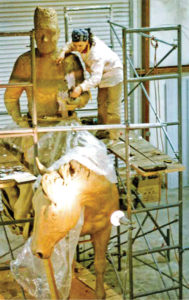
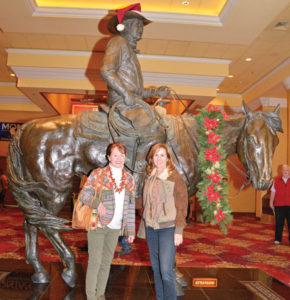
The huge statue sitting in the walkway of the South Point Hotel and Casino in Las Vegas of Benny Binion on his horse, Trece, has traveled far to find a home here in this very busy thoroughfare within the confines of the headquarters of the Professional Rodeo Cowboy Association and the World Series Finale when the National Finals Rodeo comes to town. It is a larger than life bronze 15 feet tall and 16 feet long, weighing 2,800 pounds created by well-known sculptor, Deborah Copenhaver.
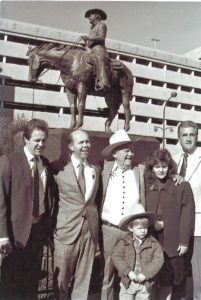
Benny Binion was a successful businessman, who found his fortune in gambling in Dallas, Texas before moving to Las Vegas. The horse was owned by his daughter, Brenda, but Benny, who always wanted to live the western way of life, wanted her to sell him to her to use on his ranch in Montana. “No dice,” she said. Trece was one of 18 foals from the mare, Brenda Joe. “I think my dad thought if he made a bronze of him, I’d let him have the horse,” explained Brenda Binion Michael. The Texas Historical Society paid for Copenhaver to sculpt the bronze. It was placed in front of the famous Billy Bob’s, The Largest Honky Tonk in the World, in the Stockyards at Fort Worth, Texas and was unveiled on Benny’s 80th birthday. When Billy Bob’s was sold, Ronnie Campbell hauled the statue to Las Vegas and it was placed in front of the parking garage of The Horseshoe, Benny’s casino, on 2nd Street in downtown Las Vegas.
Michael Gaughan, owner of South Point, wanted it once Binion’s were no longer owners of The Horseshoe. “It was out in a back street collecting bird shit,” said Michael. “Mr. Binion was very close to me – he never said no to me. I tried to get the statue a couple of times, and finally got it for $1. Getting it into South Point was a challenge. First it had to be cleaned – which took two people three days working on it. “We were told not to tilt it or use steel wool,” explained Michael, “so we used warm water, soap, and Irish-cut oatmeal to get it cleaned up. They cut a hole in the building, and a second hole to get it into the casino. It took an entire day – it was like moving a Trojan horse.”
Benny Binion had a love of the west, and a high regard for cowboys. He was very instrumental in getting the Professional Rodeo Cowboys Association National Finals Rodeo to move to Las Vegas. Since South Point has become the destination of the PRCA Convention, the Benny Binion World Famous Bucking Horse Sale, the World Series Finale, and so much more during the National Finals Rodeo plus so many other western events and competitions held there during the year the bronze of Benny Binion and Trece is destined to be a focal point at South Point forever.
Blog
-

Benny Binion Statue at South Point
Deborah Copenhaver creating the statue – courtesy Statue dedication – courtesy of family Brenda Michael and Mindy Johnson – Rodeo News -

Forrie J. Smith
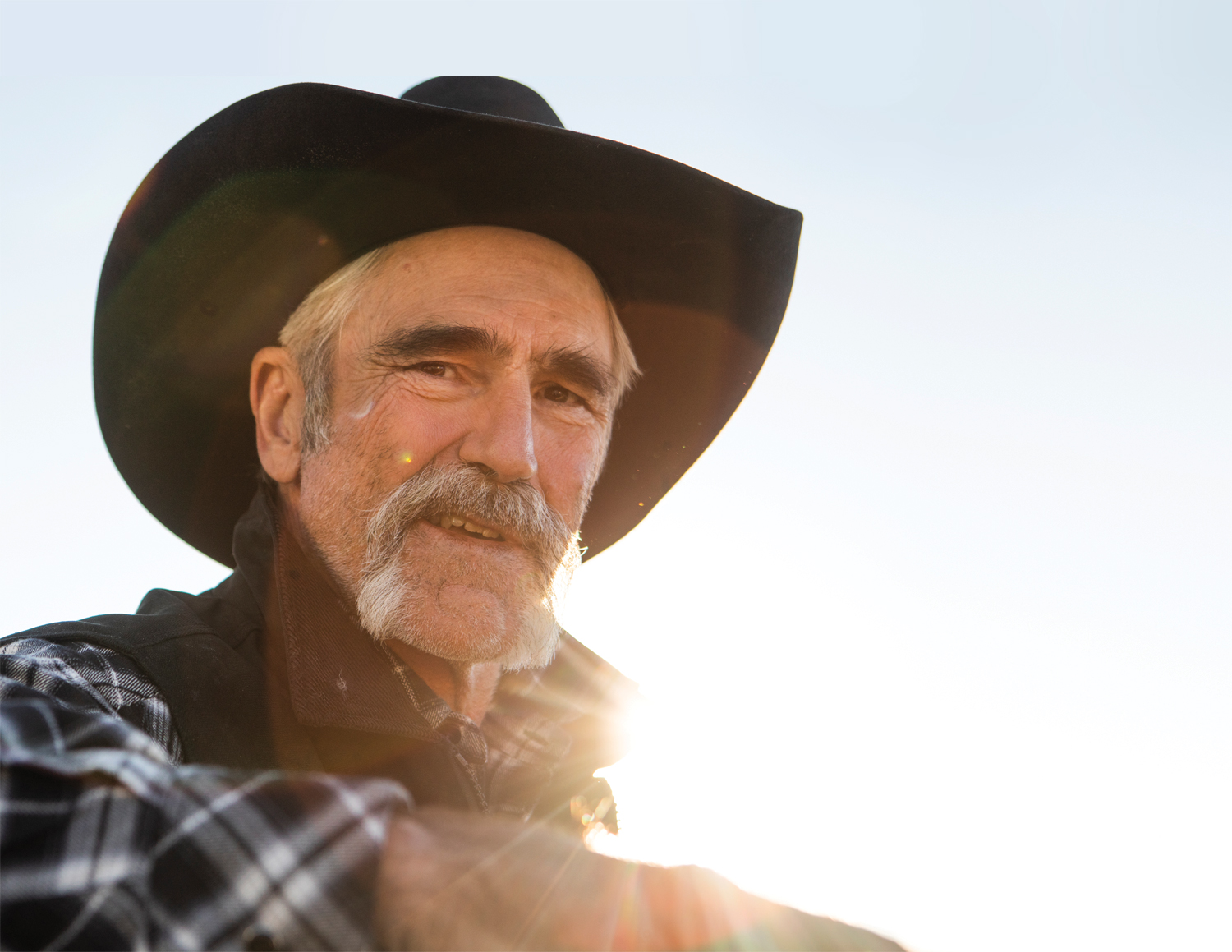
Forrie Smith fell off a horse in front of his mom and step dad when he was 6 and proclaimed that he was going to be a stunt man. 54 years later, he’s doing just that. Forrie plays Lloyd Pearce on Paramount Network’s hit series Yellowstone and recently completed shooting the third season of the show. He has been involved in Yellowstone since season one. “I was a guest star and now I’m on contract. I’m the cow boss. We started shooting season three the first week of August, and just finished up. It takes 8 days to do an episode.”
Rodeo paved the path from bronc rider to stunt man. Born in Helena, Montana, and raised on his grandpa and grandma’s ranch southwest of there, he spent his early years going down the rodeo road with his parents. “I went to grade school at Montana City – there were 13 kids in 8 grades.” He started competing in rodeo when he was 8. “I was on my second pair of chaps already – I wore one out riding at home.” His grandma (Josephine Palmer) didn’t want him riding bucking stock, so he was raised in the timed events. “My granddad rodeoed when they circled the cars and snubbed the horses,” recalls Forrie. “I was drawn to it. I’m known as a horseman. I’ve started a lot of warm bloods for the equestrian people.” He always knew his call was riding bucking stock. He started riding bareback horses when he was 11. “I would get on turnout horses and people like Pat Linger and Steve Loney would help me out.”
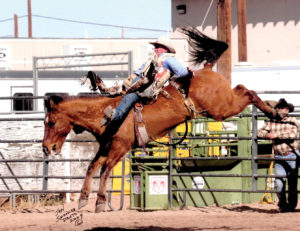
He was still spurring bucking horses in 2009, taking after his dad. “I was raised in the back seat of a station wagon. My dad was winning checks until he was 52 in the RCA.” His mom, Chick, was a barrel racer and when she had troubles with her horse she would time and secretary. “I started working the labor list when I was eight under guys like Sonny Linger, Reg Kesler, and the Big Bend Rodeo Company.” Through the years, he did anything necessary at a rodeo including flanking, loading, and riding. “I’ve been on 17 horses in one day and 11 head of bulls in one day. Everything good in my life was because of rodeo.”Forrie bareback riding, 2009 – Jan Spencer Forrie competing at a National Senior Pro Rodeo – Rodeo News Forrie talking with Kevin Kostner on set – Photo by Paramount Network He is quick to say that it was rodeo that got him into the film business. “I use a lot of the things I learned from rodeo in the film industry – like breaking things down into steps, thinking positive and not being negative. Thinking about what you did wrong and forgetting it; thinking about what you did right and building on it. Hurry up and wait – that’s all learned from rodeo.” He relates his acting to riding a bucking horse. “You read that dialog and figure out the scene and why you’re saying what you’re saying. If you look at the script and say ‘I got this’ – that positive attitude will work out for you and the energy will carry you – same as riding a bucking horse. If you say you’re not going to ride it, you probably won’t.”
Forrie has been a stunt man for 25 years. His first part was in Desparado. “I had started in the movie business a year before as a wrangler, my first movie was that remake of Stagecoach with Willie Nelson. Then they needed a guy that could rope a guy off a roof. I was the only one that showed up with a rope long enough to reach him. Then I had to get the dialog … my name was Harley.” He had only been in the film business for a week when he went to sign up for the teamsters union. “I had to have references and they were all old rodeo partners. The guy looked at me and said ‘who are you, you come with some of the best and highest recommendations I’ve ever seen’ – that was 1986 – almost to the day I got my screen actors guild card.”
With his look and voice, he was encouraged to take acting lessons. “I just wanted to do stunts .. but I went to Lawrence Parks for acting lessons and learned how to break down a character and a script. That was 25 years ago and I’ve been in it ever since.” Everybody that was in the stunt business back then had some kind of rodeo background. The hardest stunt he’s had to do are horse falls. “There’s a lot of components that go into that – you’ve got to hit your mark, set your horse up and follow through with it. Doing high falls isn’t as bad – it’s just that first step that’s hard. And I didn’t really like the fire gigs – you usually lose all your eyebrows.”
Forrie was raised in Helena, Montana, and moved to Arizona 30 years ago, and now calling San Acacia, New Mexico, home. “I fed cows with a team and sleigh when it was 50 below and it was 106 in August when I was setting posts,” he recalls of his days in Montana. “I drove my cousin back to Texas – 20 years ago – right after Urban Cowboy came out and cowboys were in.” He started doing day work and rodeoing, competing in open rodeos and he filled his permit in 1982 and started competing in pro rodeos. “That was easy back then, there were 100 rodeos in Texas.” He was part of the National Senior Pro Rodeo Association, joining in 2006, when he was 47. He competed for three years there, never winning the world, but winning his circuit twice and taking the average at the Finals. “I was raised to make money – if I didn’t make money rodeoing, I didn’t do it.” He spent his off time wrangling or hauling horses before getting his gig with Yellowstone. He still does wrangling jobs, the latest one for an upcoming Tom Hanks movie.
At 60, Forrie has no plans to slow down. “Thank God to the movie business I’ll have a decent retirement through the teamsters guild. As long as I can stick my feet in the stirrup, I’ll always do day work and I’ll still do movies.” Any chance he gets, he goes home. “I like sleeping in my own bed, petting my own dogs, and saddling my own horses. It’s getting better around home about going out and having a meal and not getting interrupted. I’m not complainin’ – it’s so cool – the excitement and joy you bring people with just a hug and a picture. Without them, I wouldn’t have a show. It’s kind of wild.” Season three of Yellowstone comes out in summer 2020. “I’m a very blessed man – I thank God and my Lord and Savior Jesus Christ that I’m still on the ride. It ain’t over yet.” -

Evan Allard
When Evan Allard was a kid, while his friends were playing football under the bleachers during the Vinita, Okla. rodeo, he was glued to the rodeo, watching the rodeo clown.
He loved rodeo, and every time the Will Rogers Memorial Rodeo came to town, he was there, with a singular focus, observing. And when he showed cattle at the Inter-State Fair and Rodeo in Coffeyville, Kan., just thirty miles north of Vinita, he was watching there, too.
And now he’s headed to the biggest stage in pro rodeo: as a bullfighter at the Wrangler National Finals Rodeo.
Allard grew up around cattle in a family that didn’t rodeo, but he idolized the rodeo clowns and bullfighters.
When he was fifteen years old, he snuck behind the chutes in Coffeyville and introduced himself to Cory Wall, who was fighting bulls. Wall invited him to a Sankey rodeo school in late August, where Wall was the bullfighter instructor, and Evan went. “I wanted to do it so bad I couldn’t stand it,” he remembered.
He got ahold of a Humps and Horns magazine, with a listing of stock contractors and associations, and started making phone calls, asking for jobs. “I didn’t know any better,” he said. “I didn’t know the difference between the PRCA and the NFL, for that matter. It didn’t matter to me. I sure wanted to fight bulls and wanted somebody to give me a shot.”
He began working a junior bull riding association, two events a month for thirty dollars an event. “I was uptown,” he said, thinking he had it made. Ironically, he was working with Cody Webster, who he’ll work alongside in front of the yellow chutes in Las Vegas. “He was just a pup,” Evan said. “We were just babies.”
In 2005, thanks to Jim McClain, he got introduced to freestyle bullfighting, which became his forte. “That’s where I really made a name for myself,” Evan said. He worked Two Bulls Protection shows, which were owned and produced by McClain.
In 2006, he went to his first freestyle bullfighting competition, and four years later, he won his first freestyle national championship, with two more titles after that, in 2014 and 2015.
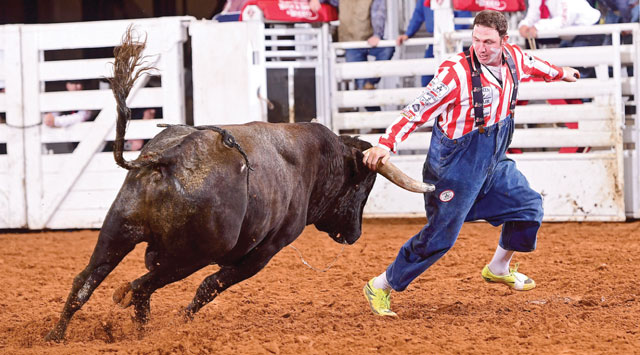
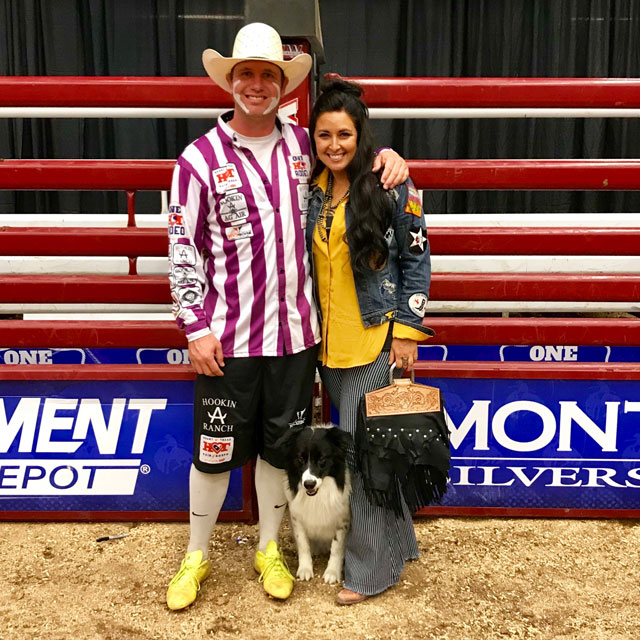
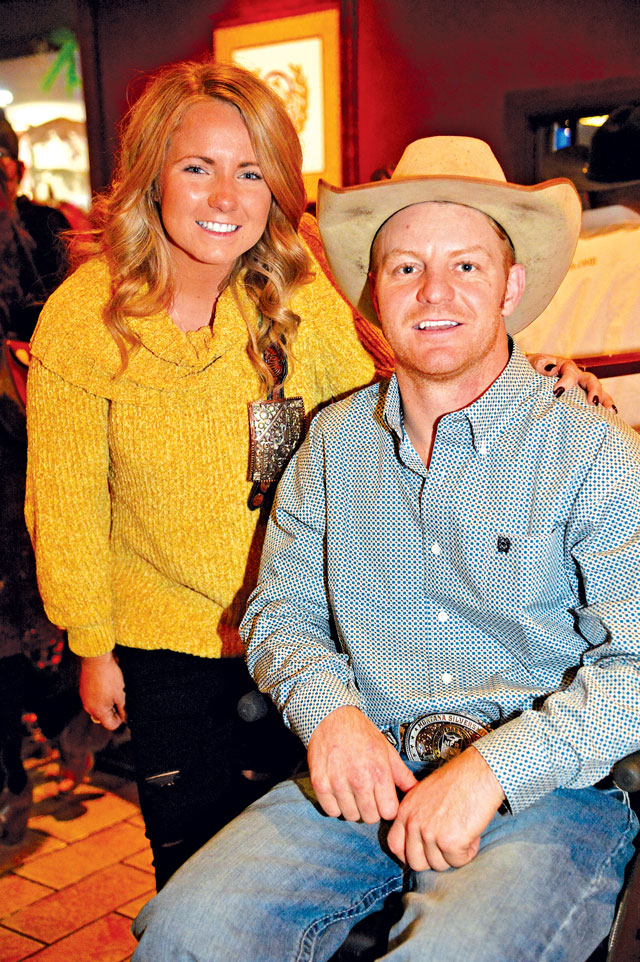
At the time, he worked a fulltime job as a journeyman substation technician, testing and maintaining high voltage transformers. His job supplemented his rodeo income, helping him buy his place, the Hookin’ A Ranch, and start his herd of fighting bulls.Evan bull fighting at the Fort Worth Stock Show & Rodeo 2019 – rodeobum.com Evan poses with his longtime girlfriend Kelsea Walker. The two live outside Vinita, OK Then he got a call to work a rodeo as a bullfighter. He had done plenty of cowboy protection, but freestyle was his main work. He couldn’t refuse this job, but didn’t have any vacation time away from work. “I thought, one of these days, I’ll work when I can’t fight bulls,” he said. “So I quit my job.” It was 2015, and he became a PRCA member.
He estimates he works more than 100 performances a year protecting cowboys, at rodeos from Oklahoma to California and everywhere in between: the Ft. Worth Stock Show, several PBRs, the Texas Circuit Finals, and more.
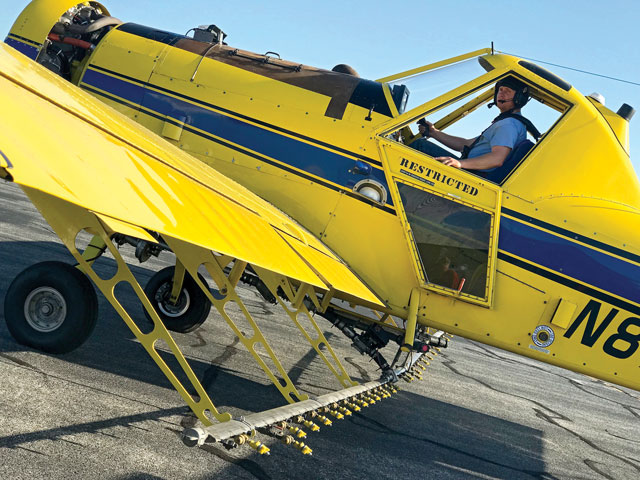
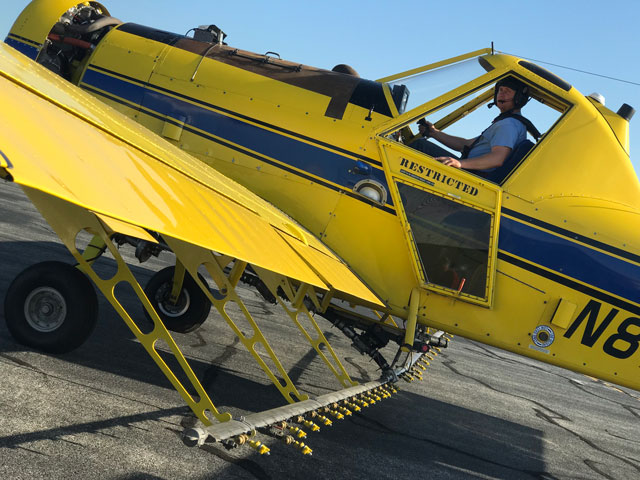
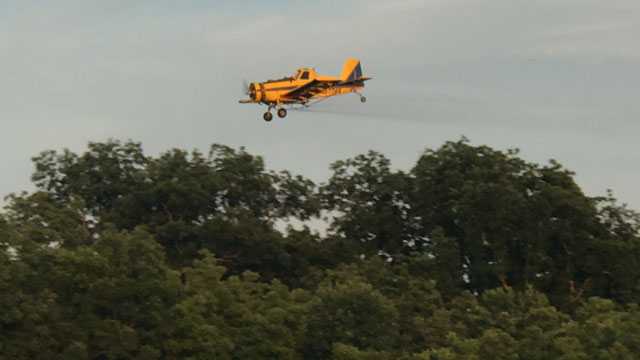
There’s more to Evan than rodeo. He got his pilot’s license three years ago, with the sole purpose of flying to rodeos. Last year, he got his aerial applicator’s license, to crop dust, and this year, he bought an agricultural plane. He’s growing his business, spraying farmers’ crops and pastures in northeast Oklahoma and southeast Kansas, with his long-time girlfriend, Kelsea Walker, helping out.
When he got the call that he was selected to work the WNFR, it was a surreal feeling. “Getting that phone call was an unreal moment,” Evan said. “I instantly was glad it was six weeks away. I don’t want to lose that feeling.” The two bullfighters who signed for his PRCA card four years ago are the men he’ll work alongside in December; Cody Webster and Dusty Tuckness.
When he was a little bitty kid, he never thought his dream would take him this far. As a kid, all he wanted to be was a rodeo clown, because he didn’t understand the difference between the clown and the bullfighters. Having the natural athletic ability to fight bulls took him in that direction instead of clowning. He knows there might be a kid in the audience who looks up to him, just like when he was young. “That’s why it’s important to me to put on the face paint and the baggies,” he said. He knows that for the kids in the crowd, the bullfighters and clowns are bigger than life. “At the end of the day, protecting bull riders is very important, and it has turned into an art, but without somebody in that crowd, we have no job, and the only way to get people in that crowd is to entertain them. There’s more to it than just fighting bulls and going home.”
Evan knows that when he gets to Las Vegas, the ten days will fly. He’s not ready for that, but he’ll savor every moment. “I don’t want it to be over. I know once I get out there, it will go so fast it’ll seem like it’s over before it starts.” -

Trevor Brazile captures seventh steer roping gold buckle
MULVANE, Kan. – More history was made by legendary cowboy Trevor Brazile on Saturday night.
Brazile, the most-decorated cowboy in PRCA history, added another chapter to his story-book career.
The Decatur, Texas, cowboy won his record 25th gold buckle by capturing the title at the 2019 Clem McSpadden National Finals Steer Roping at the Kansas Star Arena.
Brazile finished with $128,552 in the PRCA | RAM World Standings to edge runner-up Vin Fisher Jr.’s $120,834.
“We were in a battle, and I wanted to do whatever it took to win here,” said Brazile, 43. “All the gold buckles are special. This one was really cool because I was able to stay home because the steer roping schedule fit the new lifestyle I have chosen.”
Just before the start of the 2018 Wrangler National Finals Rodeo, Brazile announced that season was going to be the final one for him rodeoing full time so he could spend more time with his family – wife, Shada; son, Treston, 11; and daughters, Style, 9, and Swayzi, 4.
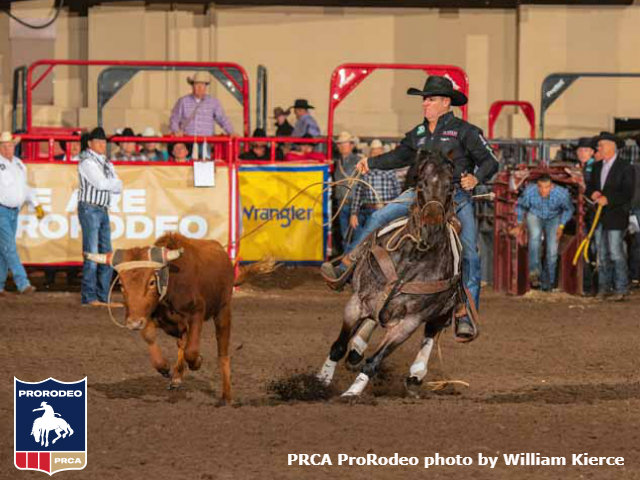
Brazile placed in six rounds at the NFSR and won the average with a time of 131.0 seconds on 10 head to collect his seventh steer roping gold buckle to go with the ones he won in 2006-07, 2011 and 2013-15.
When Brazile roped his steer in 14.1 seconds in Round 10, it gave him the average win because he was the only competitor to tie down 10, and that in turn clinched his world championship.
“I knew if I tied my steer down (in Round 10) I could win it,” said Brazile, who was the last roper out in Round 10. “It is a great scenario, but then again, it takes out trying to win something in the last round for money. It’s just one of those things where you just have to go do your job. I wasn’t scared of the barrier, that was probably the biggest difference in that scenario because I was going to be the only man to tie (10 down) even if I broke the barrier. I wanted to have an aggressive start.”
Fisher was gracious in defeat.
“Trevor Brazile is a hard man to beat,” Fisher said. “I thought I threw everything at him. He never stubbed his toe. Looking back over time, I’m going to realize that is the best roping I have ever done in my life.”
Brazile has won a PRCA-record 25 gold buckles – a PRCA-record 14 in all-around (2002-04, 2006-15, 2018), three in tie-down roping (2007, 2009-10) and one in team roping (2010) to go with the NFSR buckles.
Brazile’s seven steer roping gold buckles are second on the all-time list behind only ProRodeo Hall of Famer Guy Allen’s 18.
“Guy Allen is the legend,” Brazile said. “Nobody ever dominated a single event like he has. He’s in no danger of me catching him. I just marveled watching him, and that’s good enough for me. If anybody deserves a record it is him.”
Brazile earned $56,707 at the NFSR, including $27,347 for winning the average. Fisher was second in the average with a time of 114.1 seconds on nine head.
This was the fourth time Brazile has won the NFSR average. He also accomplished the feat in 2012 and 2014-15.
Brazile was riding J.R. Magdeburg III’s horse, Raider, 16.
“That’s a great horse,” Brazile said. “When you’re going to a 10-header he has what it takes. He’s just really, really solid and doesn’t take anything away from you.”
Nothing came easy for Brazile during his 22nd trip to the NFSR. He came into the event first, and Fisher was second.
It all came down to Round 10.
Brazile roped his steer for the win, and Fisher, who competed right before Brazile, clocked an 11.3-second run, which was fifth in the round and good for a $2,841 check.
“I know a lot of guys were wanting me to be eight seconds in the final round, but in my mind if I missed that last steer everything I did all weekend would have meant nothing,” Fisher said. “That run I made in Round 10 was the best run I made in my life because I gave myself a chance to win a gold buckle. I put the pressure on (Trevor), and it shows you why he has all those gold buckles because he doesn’t fold under pressure.”
Fisher earned more money than any cowboy at the 2019 NFSR, taking home $60,990.
After nine rounds, Brazile held a $5,844 lead over Fisher in the world standings. Fisher split sixth place in Round 9 with a 12.6-second run, while Brazile was out of the money with a 14.4-second run.
Brazile led the average after nine rounds with a 116.9-second time, followed by Tony Reina’s 124.3 seconds on nine head and Fisher’s 102.8 seconds on eight.
The average played the final factor in deciding the world champion because it paid six places – $27,347 for the winner, $22,632 for second, $17,917 for third, $13,202 for fourth, $8,487 for fifth and $4,715 for sixth. The round wins paid $9,155.
“I can’t speak for anybody else, but I didn’t want any surprises going into Round 10,” said Brazile when asked if he was calculating different outcomes. “I knew what I had to do. I just had to go execute and make a run.”
Things became more interesting when Reina received a no time in Round 10, so the world championship and average title were going to be decided between Brazile and Fisher.
Fisher was the second-to-last roper to go in Round 10. With Tuf Cooper leading the round at 8.7 seconds, Fisher clocked his 11.3-second run.
Brazile then rose to the occasion like he has done countless times throughout his illustrious career.
“Everybody can do it in their backyard, and I have a lot of horses that are good at the house, but if they can’t compete when it counts it is irrelevant,” Brazile said. “Every one of my heroes did it (thrived under pressure). This was a really special steer roping Finals. There were so many guys that I looked up to my whole career, and it was odd that they were all here. It was cool competing in front of them. I had guys I looked up to and that made me want to do things even better.”
-

Life changing situation brings rodeo expert to Nebraska
By Greg Rook, Lancaster Event Center Operations Director & 13 NHSFR experiences
Rodeo touches the lives of so many throughout the world–especially thousands of youth in National High School Rodeo Association (NHSRA), known for having the world’s largest rodeo. While I’ve been a rodeo athlete, I’ve spent most of my career behind the scenes of National High School Finals Rodeo (NHSFR) ensuring it runs smoothly and is a memorable experience for all the participants.
In 2019 my life changed when my daughter pursued a job opportunity in Omaha, Nebraska. Having successfully coordinated 13 NHSFR’s in Wyoming, when NHSRA announced Lancaster Event Center (LEC) in Lincoln, Nebraska as the NHSFR location for July 2020, 2021, 2026 & 2027, I approached LEC about potential job opportunities. Being offered the position of LEC Operations Director gave my wife and I the chance to move near our daughter and make a big impact on NHSFR and all LEC events. Ready for new adventures, we took the leap.
Our transition to Nebraska’s capital city has been great. We’ve found Lincoln to be very friendly, with a small community feel in a big town setting. Located in the middle of America, LEC is truly at the center of it all, a big reason it attracts 120+ regional and national events annually and making it your ultimate rodeo destination. Just off I-80 and near I-29, Lincoln has 70+ hotels with over 5,000 rooms, from full-service to economy options; over 900 restaurants; plenty of shopping; and numerous places offering family-friendly fun including feeding giraffes at the Lincoln Children’s Zoo. Plus, there’s plenty to see and do as you make the drive to Lincoln.
Transitioning to LEC has been a breeze too. My first week here was during the Lancaster County Super Fair, Nebraska’s largest county fair with 130,000 attendees, giving me my first look at the amazing LEC staff. The genuine care the entire staff has for the facility and its numerous events has impressed me the most in my first months here. They’re willing to do almost anything to ensure all events run smoothly and are successful. LEC is proud to have four NHSFR Alumni on staff, competitors from 1978 to 2017, meaning we know first-hand how it feels to compete and we’re all the more committed to providing you an incredible rodeo experience.
As Operations Director, I’m focused on ensuring NHSFR preparation is on track for July 2020. With 400,000 square feet of buildings on our grassy fairgrounds, I’m excited for the rodeo to be less spread out than previous locations. LEC received $7 Million in funding to make improvements to host NHSFR, including additional and upgraded campgrounds, expanded outdoor multi-purpose arena and new 3,500-person covered grandstand.
Driving from Wyoming to Nebraska, it was easy to see how rodeo skills continue to be an integral part of Nebraska life, as they are in mine. I’m eager to continue making NHSFR’s great for thousands of youth at LEC with this incredible, dedicated staff. We hope to see you when the world’s largest rodeo rides into Lincoln, July 19-25, 2020!
While making your plans to attend NHSFR Lincoln or if you want to volunteer, are a vendor or sponsor, reach out to us on NHSFRLincoln.org and follow us on social media @NHSFRLincoln.