Rodeo Life

Blog

  • Casey Sellers

    Casey Sellers

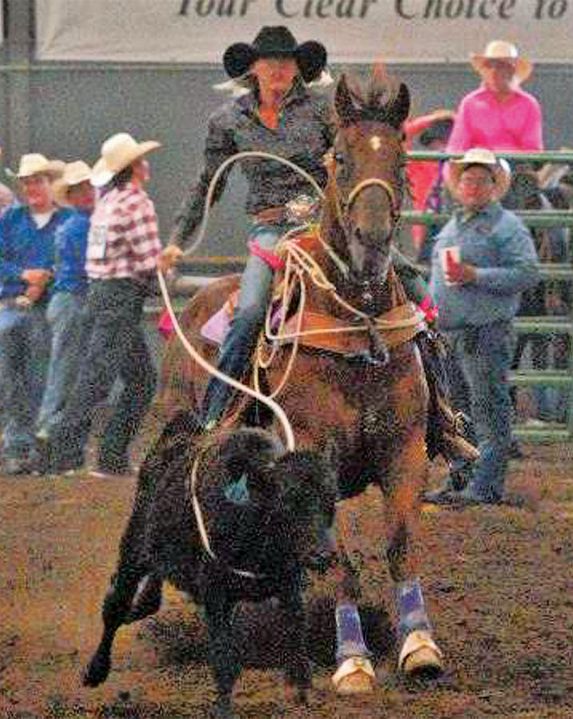
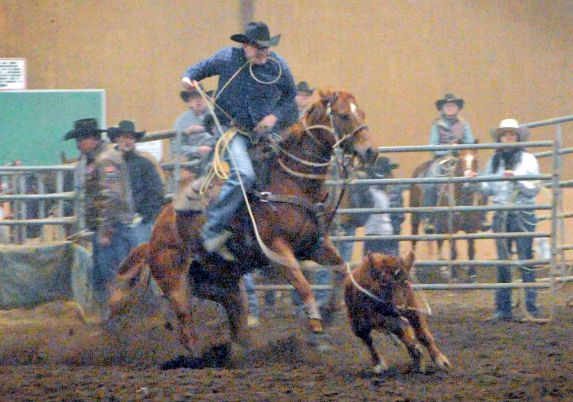
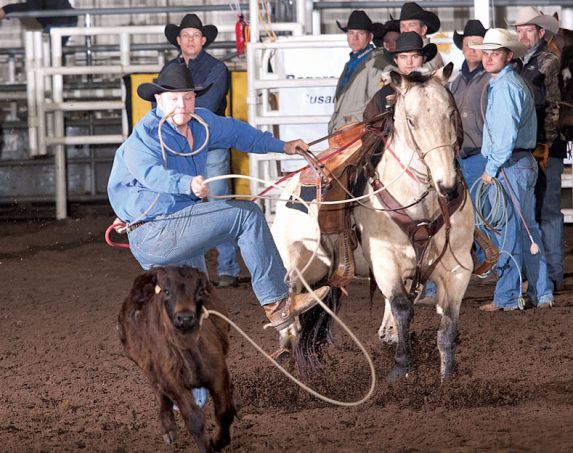
    Casey Sellers is a persistent cowboy from Buffalo, Wyo. In 2013, that persistence paid off when the 18-year-old was able to win the 2013 WHSRA All-Around Cowboy. Among other achievements last year, won the year-end tie down roping in the WHSRA and set an arena record at the National Little Britches Finals Rodeo with a 7.5 in tie-down roping. “I’ve always loved being around horses and roping, and seeing guys do good,” said Casey. “I’m working to become one of those winners, and be like the guys that I look up to. This last year I started winning more consistently, and to see that start paying off – that was really motivating for me.”

    Casey competes in tie-down roping, steer wrestling, and team roping as a header. “I guess whichever one is going the best that day is my favorite,” he said with a laugh. Casey and his older brother, Colter, who attends college in Texas on a rodeo scholarship, are the first of their family to compete in rodeo. Their dad, Dan Sellers and his mother, Vickie Sellers, competed in ranch rodeos, and support their sons to compete in the sport of rodeo. “They’ve been behind me and my brother all the way. They give us all that we need to compete,” Casey explained. “I’d like to thank my mom, my dad, and my brother, the Spratt families, the Jase and Deb Ready family, and Dean Finnerty for all of their help and support. And everyone else that’s helped me!”

    Born in Montana, Casey and his family moved to Buffalo, Wyo. when he was six. Since they live in town, the Sellers keep their horses a short distance from their house. Having to haul his horses to an arena whenever he wants to train hasn’t always been easy, but he always makes the most of his practices.

    Okie is Casey’s tie-down roping horse. Casey and Okie set the arena record at the NLBFR with a 7.5 in calf roping. Casey steer wrestles off of Cutter, a horse that belongs to his friend Klay Ready. Caseys best steer wrestling time is a 3.5 sec run on Cutter. Yankee is his best team roping horse, but is currently hurt, so Casey is team roping off of his other horse Shaggy. “I’ve got good horses underneath me,” said Casey. Casey is homeschooled and is currently taking dual Credits at Sheridan College. He will have 27 college credits when he graduates. He played football for three years on the Buffalo High School football team and was the school’s All Conference Linebacker his junior year. He decided not to play his senior year. I’ve decided to invest my time and money in rodeo. At least I got to experience high school football, and I loved it!” Casey also enjoys skiing and snowmobiling in the winter, as well as hunting and fishing with his dad.

    Encouraged by his rodeo achievements in 2013, Casey is very optimistic about his 2014 rodeo season. He aims to win the WHSRA all-around title again, as well as adding WHSRA tie-down roping champion and steer wrestling champion to his résumé. Casey also wants to enter in more amateur rodeos and begin circuit rodeoing. He plans to earn a Business degree and study to be a real estate appraiser at Gillette College in Wyoming. He currently co-owns a patent for their invention, the Hooey Tuf Kaf.

    “Rodeo is like when you get a disease,” Casey concluded. “You catch it and keep going and trying to win. That’s what fires me up!”

  • Sammi Jo Gaudet

    Sammi Jo Gaudet

    Sammi Jo Gaudet is the rodeo pioneer of the family. Although her parents, Donna and Steve Gaudet, had never owned horses and did not consider themselves “horse people”, they lovingly supported Sammi Jo in her passion. Sammi Jo was introduced to horses and rodeo by friends of the family when she was in eighth grade. “My first year of riding was absolutely horrible,” she remembers. “I don’t know how many times I fell off!” She bought her first horse from a friend and her parents secretly built her a barn behind their meat market – Gillis Grocery and Café, and Gillis Meat Market. “I still can’t figure out how they got that past me!” Sammi Jo said with a laugh. With horse and trailer in tow, it was time to rodeo. But it didn’t come easy at first. “When everyone was winning buckles and saddles and awards, I got a participation buckle and t-shirt,” she says. “The next year I stepped up my game and won the reserve saddle in the all-around.”

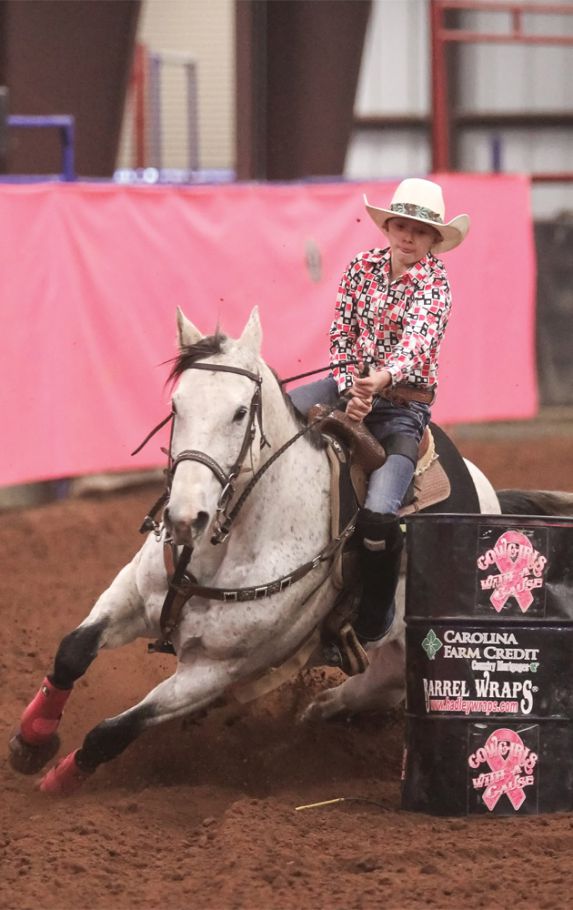
    Today, the 18-year-old from Lake Charles, La. competes in barrel racing, pole bending, goat tying, ribbon roping, and trail course. Pole bending is her favorite event right now, as she is back to competing in the event on her gelding, Jack, who has just recovered from being sick. Sammi Jo’s other horses are Hemi, her barrel horse, and Eli, her trail and goat tying horse. A person who has been very influential in coaching Sammi Jo and her horses is Stacy Elias.

    In addition to rodeoing with NLBRA, Cajun Little Britches, and Louisiana Little Britches, Sammi Jo is finishing her second semester of school at Louisiana College. She is majoring in business with a minor in theater. She says of theater, “It’s so much more fun than I thought it would be! We all help with everything (in theater) but I’ve worked the most on sets. That’s really fun.” Sammi Jo’s older sister Morgan also attended Louisiana College. She graduated in 2013 and now teaches second grade.

    Like many NLBRA members, Sammi Jo’s favorite part of the summer is competing at the NLBFR in Pueblo, Colo. Not only does she enjoy the competing and the camaraderie, Sammi Jo also loves cooking for everyone at the finals. Her dad and several other families, including Chad Richard, cook three meals a day every day of the finals, except on Wednesday, when everyone goes to see the sights of Pueblo. Sammi Jo always cooks the fajitas. She and her family haul a large chest freezer to the finals in the back of their horse trailer. “The men get together, and some of the women, and come to the meat market to prepare the food. They slice veggies and meat, then vacuum seal it and we keep it cool in the freezer on the two and a half day trip to Colorado,” says Donna, Sammi Jo’s mom. “It’s a lot of fun!”

    Not only that, the Gaudets and several other families started Cajun Little Britches, which recently finished its second season. Donna volunteers as the treasurer of the association, and Steve, Sammi Jo’s dad, volunteers as a gate man and works the derigging chutes. Sammi Jo is serving on the NLBRA youth board as the 2014 Vice-President. She has helped the youth board plan social events for the members of the association, and the youth board flew to Las Vegas during the WNFR and helped run the booth on the concourse of the Thomas and Mack Center. “We also did Bowling with the Stars where we got to meet a lot of people and raise money for the Justin Cowboy Crisis Fund.”

    Sammi Jo has one more season with the NLBRA. She says of her future plans, “I haven’t thought about it much because I don’t want it (Little Britches) to be over! I’d like to compete in some jackpots and barrel races, but for this year in Little Britches, I want to make it to the short go at nationals in barrels. I’ve never been super cut-throat competitive. I look at rodeo as fun!”

    Noble Outfitters recognizes youth accomplishments and supports programs like NLBRA. Sammi Jo will receive a  Hands Duffle!
    Learn more at nobleoutfiters.com

  • Steve Gramith

    Steve Gramith

    Steve Gramith considers himself a “foot soldier” in the sport of rodeo. The humble man was involved as both a contestant and a pickup man, and even though he may deny it, he’s contributed his share to the sport.

    He was born in St. Louis Park, Minnesota, in 1942, the son of Clifford and LuVern Gramith. The family had no ties to rodeo, but his mother’s parents had a couple hundred head of cattle, and when they left Dupree, S.D., after their general store burned down twice, his grandfather gave the cattle to a neighbor and friend.

    Years later, Steve’s family would drive past the grandfather’s friend’s ranch in South Dakota. That started my enthusiasm for ranch life,” Steve remembers. From then on, he spent every summer on the family friend’s ranch, located seven miles upriver from White Horse, on the Moreau River and the Cheyenne Indian Reservation in north central South Dakota.

    In 1960, Steve graduated from Waconia (Minn.) High School and went straight back to the ranch, “as fast as my little legs could carry me,” he jokes. It was college that introduced him to rodeo. He  spent his freshman year at Colorado State University, and then took a year off, returning to the ranch near White Horse. He began learning to rope calves with a neighbor, Harlan Gunville. He and Harlan would head to the Timber Lake arena in the evenings, where they would rope calves. “We played, and visited, and practiced,” Steve says.

    After a year off, Steve returned to college, but this time to South Dakota State University, and as a member of the rodeo team. Roping calves was his first event, but not his best. “I basically started from scratch at South Dakota State, and was really inconsistent. I’d maybe win a go-round, and then miss. The calf roping was not something I was good at.” But he soon found an event at which he was good: steer wrestling. With roping he was nervous. Bulldogging was different. “Steer wrestling was just like getting out of bed,” he says. “It was easy. There was nothing to it. There were no nerves there. I’d just grab ahold and go to the mat.”

    It was at his home college rodeo, his senior year that he won the buckle he still wears: for winning first in the steer wrestling. He also won the SDSU all-around saddle that year, because he placed in the calf roping. After graduating in 1966 with an animal science degree and a minor in economics, he moved to Canning, S.D., and went to work for Erv Korkow. He had met one of Erv’s sons, Jim, at the Highmore rodeo, and Erv needed a pickup man. He became friends with Jim, and Steve found himself picking up alongside him at high school, college, and pro rodeos, and when they weren’t on the road, doing chores, feeding horses and bulls, riding colts, and driving truck. And while he was on the road with the Korkow and Sutton Rodeo Co., as it was owned by Erv Korkow and James Sutton at the time, he was able to bulldog professionally.

    Steve wasn’t the only college student recruited by Jim to work for the company. Alvin Chytka, Gary Chytka, Gerald Dewey, David Daul, and others were at the ranch. And even though Erv was the boss, it was his son Jim who was the reason for the crew. “We worked for Erv and James (Sutton), but we came there for Jim. It was because of Jim. We worked like dogs, but he was friends with everybody and he was fun to be around.”

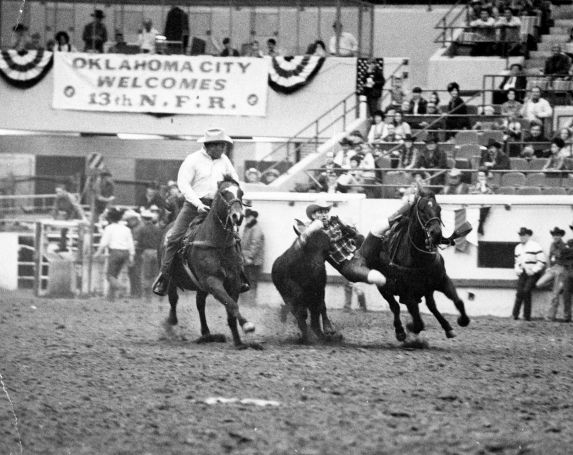
    Along with picking up, Steve steer wrestled, qualifying for the National Finals Rodeo in 1971. Because he was working as a pickup man, he got to fewer rodeos than the other bulldoggers. On the weekends he wasn’t picking up, he’d make three or four. But when he picked up, he competed at that rodeo only, while other cowboys were hitting several on the same weekend. In 1971, he went to forty rodeos, “the most I’d ever gone to,” he remembers. The 1971 year end champion, in comparison, went to more than 100 rodeos.

    He also held the record for the fast time at the NFR, winning the third go-round in 3.7 seconds. That record held till Tom Ferguson broke it in 1975. In those days, the steers were big Corrientes and arenas were larger, including the NFR arena at the state fairgrounds in Oklahoma City. “You could win money being ten (seconds) or under,” Steve says.

    In 1972, Steve left South Dakota and moved to Tunas, Missouri, southwest of the Lake of the Ozarks. He had started a cattle herd by then, and his friend Jim Korkow trucked them to his new home. Land was cheaper in Missouri than it was in South Dakota, the acres per unit for a cow/calf pair were lower, and the winters weren’t as severe. Steve still picked up for the Korkows, but his emphasis was turning to cattle. He had seen Simmental cattle at Jim Sutton’s, and he began crossing Herefords with Simmentals. Eventually, he became a purebred Simmental breeder. He lived near Tunas for about eight years, then moved to Marionville, Mo., where he lived for another eight years. In 1992, when he married his wife Beth, they moved to Willard, Mo., and on to Neosho, where they live now.

    In 1976, Steve ran his last steer. He went to two pro rodeos that year. “It wasn’t that much fun anymore,” he says. His cattle herd was demanding more and more attention. “I was working too hard to really rodeo properly.” He won first at the first rodeo he went to that year, and at the second rodeo, missed his steer and got run over by his hazer. It was time to quit. He didn’t own a bulldogging horse anymore, and the work at home was his focus. “I was always so busy, that the mental aspect was more difficult than the physical aspect. When you have bills to pay at home, and you want to win too bad, it doesn’t go well.”

    His wife, Beth, holds an important place in his heart. They began dating in 1989. She had divorced and was raising three kids. “We’d date some, then she’d want to do things with her kids, then we’d date some more. Finally I wore her down,” Steve laughs. Actually, it was her youngest child, daughter Christine, who helped her mother see what Steve was. “Christine was my champion,” he says. “She said to her mom, “That’s a pretty good guy.’”

    It was through God’s intervention that he found Beth. “I was just out twirling in the wind, until I decided I could not do life alone. It was my decision to ask Christ to come into my life, and I was 48 years old. I didn’t grow up till then. “It not only made a world of difference,” he says, “but I met someone of value that He put in my path. She’s my soul mate, my best friend. I found someone to spend the rest of my life with, and I have the comfort of knowing that Jesus Christ is my Lord and Savior and He died for my sins.”

    Steve has three step-children: Christine Ryan, an OB/GYN in Colorado Springs, Stephen Shank, who works with The Navigators in Texas, and Nathan Shank, a missionary in northern India.

    Of his work as a steer wrestler and a pick up man, he is most proud of picking up. “I think my picking up was more important to me than the steer wrestling, mostly because of my friendships, especially with Jim (Korkow). The work was very satisfying. We had some really nice horses to ride, and it was just such a pleasure because it was cowboying. It wasn’t rodeoing, it was cowboying. We were riding, working, and it was old time cowboyin’.”
  • Lyle Kathrein

    Lyle Kathrein

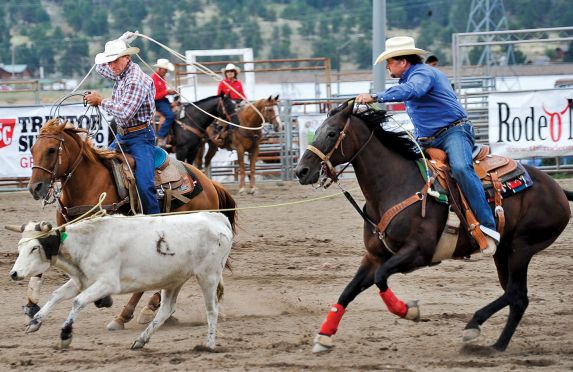
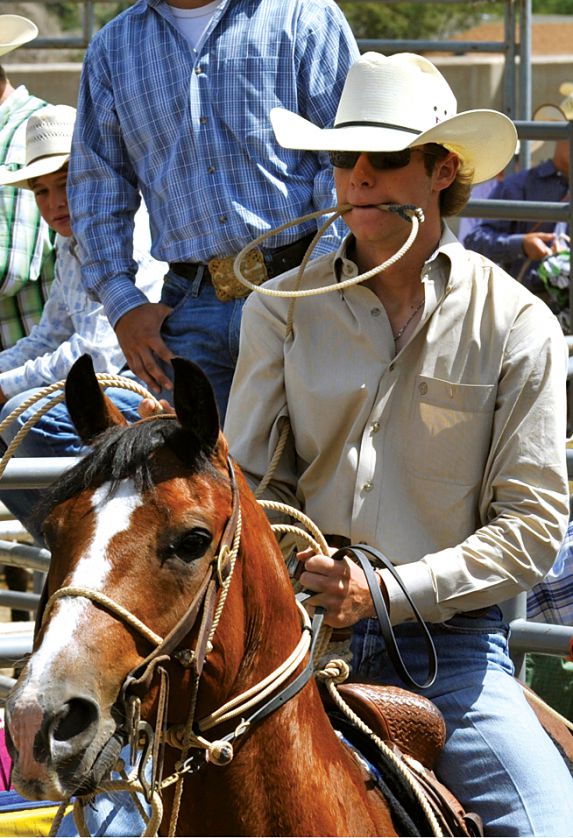
    At age 45, he has at least four more years to repeat his championship titles that he claimed in 2013. Those titles are the World Champion All Around, the Reserve World Champion Tie Down roper, and the Reserve World Champion Ribbon Roper, all in the 40’s age class. The 2013 rodeo season was Lyle Kathrein’s first year in the National Senior Pro Rodeo Association. Not bad for a ‘rookie’ year. It was his second year in the Canadian Senior Pro Rodeo Association and he finished on top of the 40’s tie down roping and ribbon roping there, too.

    He talks about his 2013 season, “That’s the first time I was able to really compete for those kinds of titles and it was quite an honor for me. Things just sort of came together for me and I had a really good horse and that’s a big part of it. It was really neat to be competing in the ribbon roping with my wife; she was my runner and did great. I was quite happy with it, for sure.” He is quick to give credit to his horse and says that without a good horse he would not have been able to achieve all that he has. He looks at the conformation of a horse first then the papers and says, “If the build is there, then the papers probably won’t dissappoint.”

    For Lyle the Senior Pro association has provided opportunities to travel and meet people from all over the U.S. and Canada. “I’ve been able to meet a lot of people that have helped me and they just welcome you into the group.” While Lyle is competing in the tie down roping and team roping, his wife, Michelle competes in the barrel racing.

    Lyle had an interest in rodeo and roping from the time he was a young boy. “As a boy I always had a rope in my hands so everything around home got roped. Nobody else in my family was a roper, but my granddad rode broncs when he was young. We always had some horses around and would work with them. I can remember being able to go to the spring rodeo in Edmonton, and I just knew that there was something there for me.” His first rodeo competition was in the Wild Rose amateur circuit. “My mom was the secretary for that and I was a director on the committee several times. I was in some other amateur associations back then and they don’t even exist anymore.”

    He tried steer wrestling but eventually gravitated to tie down roping as his primary event. “I never was big enough for the bull dogging and it was always calf roping that caught my interest. You tend to go to the events that you’re better at, and that’s what I did.” To learn the technical aspects of calf roping, Lyle went to several clinics and honed his skills. “I went to some Buck Weimerich schools and Bill Reeder clinics. I’ve probably been to a dozen Larry Robinson calf roping schools. It really helps to go to the guys that you look up to, to learn calf roping.”

    He lives in Mayerthorpe, Alberta near where he was born and raised. He and Michelle have a 12-year-old daughter, Dani. During the winter, Lyle does oil field work, stays busy shoeing horses in the warmer months, he does some farming and putting up hay. Lesure time spent with the family and maybe a little golf. Goals for the future are to continue to rodeo in both Senior Pro associations and “…win whatever is available to me.”

  • Jamie Christensen

    Jamie Christensen

    Jamie Christensen is a big fan of the Rocky Mountain Rodeo Association. “Every Rocky Mountain rodeo I go to is big, it’s fun, and it’s a show. The events payout well and that makes it well worth your time to go. I always feel like I’m going to do well at Rocky Mountain rodeos. I try to go to all of the rodeos that don’t conflict with my college rodeo schedule.” Jamie has been a member of the RMPRA for three years and competes in breakaway and barrel racing. She also is a member of the Utah Barrel Racing Association. She would like to say ‘thanks’ to the RMPRA for putting on great rodeos where the competition is always tough.

    She is a member of the NIRA and competes for Utah Valley University on a rodeo scholarship. The sophomore is studying communications for TV broadcasting and is working to get an internship by her junior year at a television station. “Then by my senior year and graduation, I would have my foot in the door and be able to start a career in broadcasting.” In addition to her rodeo scholarship, she serves as a school ambassador. “I go to transfer colleges, junior colleges, or schools where students want to move up to university level schools, and talk about the Utah Valley programs and what the school has to offer. I like meeting people and helping them to pursue their dreams.”

    For Jamie to start her rodeo career was a natural. “My father was a bull rider in the PRCA and trained horses, my mom ran barrels, and I grew up going to all my older sister’s high school rodeos. So, I was kind of an arena rat. I was in the little Buckaroo Rodeo, Junior rodeo, Junior High rodeo, and High School rodeo.”

    Like most top athletic competitors, Jamie spends plenty of time watching ‘game film’. “I have the videos of my runs on my phone and I watch them every night before I go to sleep. I have to keep my mind ready, and then it’s just muscle memory when you get to the rodeo. I don’t ‘safety-up’ on any run; I go for it every time.” Just to be sure there is plenty of good karma in the arena, she’ll keep track of the shirts that she does well in and save them for competition.

    A big part of her preparation was instilled by here father. “He always taught me, ‘If you want to be champion, you need to act and look like one.’ When I was real young, I never understood why I had to have my shirts ironed, but it matters how you look and act, being a good sport, and acting like a champion.”

    When she’s not at school in Orem, Jamie is at home in Erda, Utah with her parents, Wade and Ruth. She makes weekend commutes home to reunite with family, pets, and horses.  Leisure time is spent doing some drawing or painting.

    She says that her parents have been her biggest influence in her life. “They have always kept me on track and have gotten me where I need to be. They’ve taught me to be the best person that I can be. Two other people that mean a lot to me and have helped me in rodeo are Doyle Rollie and Edria Day. Doyle is a great roper and has helped me a lot with my roping skills and has put me on some great horses. Edria did the first 30 days training on my barrel horse and she is helping me become a much better barrel racer.”Goals for the future are to be working in the broadcasting industry, possibly in news programs and eventually into talk shows.

  • Sam Felber

    Sam Felber

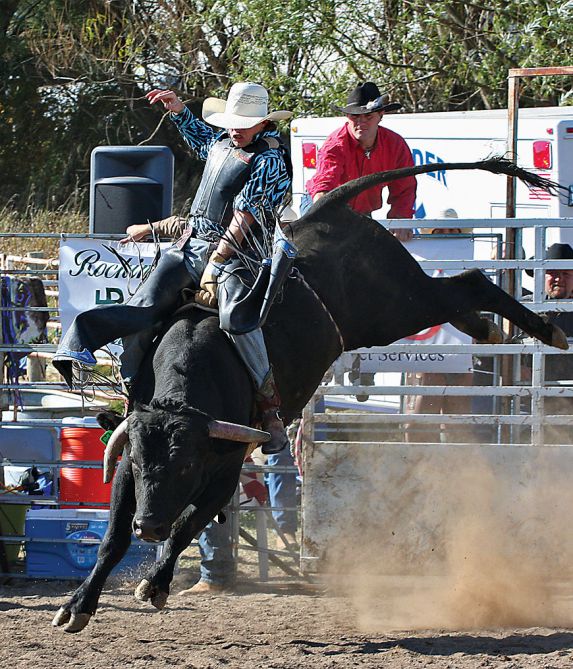
    There are a few people that are fortunate enough to find that one event, that one activity that becomes their life’s passion. Sam Felber is one of those fortunate individuals. The 28-year-old cowboy has been riding bulls for the last eight years and still has that fire-in-belly desire to ride as much today, as when he started. “I’m the first one in my family to compete in any rodeo event. My younger brother tried it, but it wasn’t for him.” He has been in the Mid-States association for the last six years and says the Mid-States rodeos are well run, close to home and, “…they have good money added and they pay out pretty good.”

    Besides Mid-States he competes in the Nebraska State Rodeo Association and Bull Riders of America. “I’ll only get to about 10 rodeos this year, but I went to about 50 or 60 bull ridings. The bull ridings are set up where you might have two in a day and they pay better. But, there is more travel. Mid-States rodeos are a lot closer. This year I plan to hit more rodeos and maybe stay a little closer to home.”

    Sam got his start bull riding with the help of some of his friends and recalls, “I had a couple of buddies that were riding and I started going with them. Then I started climbing on a few bulls and I was hooked and I went on from there. I was 20 when I got on my first bull.” He says that his mother has been his biggest influence to him and always been there with encouragement to weather the inevitable slumps that happen in rodeo. “It doesn’t matter whether I buck off or ride 10 in a row; she is always there for me.”

    Learning to stay aboard 1,500 pounds of mad bovine takes some doing and seeking out some expert support is the way to go. Sam explains, “I had a lot of help from Cody Bode when I started. Then I went to a Gary Leffew school and he helped me out a lot with the mental side of bull riding and keeping a positive mental attitude.” Sam’s preparation for nodding his head and opening the gate means staying loose and relaxed. “One of my buddies always told me to have fun with it. If you’re not having fun, why even do it? I think that’s the biggest thing for me; and that holds for everything you do in life. I am thankful for being able to do this, I don’t take it for granted.”

    When it comes time to bare down in the arena, Sam has a competitive spirit that comes to life. “If I see one of my buddies put up an 85 score, and I know I have just a good of bull as he does, then I’ll go out and try to get that 86 or 87 score. It’s like, ‘Watch this. I’ll one-up ya!’ I have always been competitive since I was a kid.”

    Sam, 28 makes his home in Newman Grove, Neb. where he was born and raised. His parents are Eugene and Jonell and he has a younger brother, Seth. During the week Sam works construction jobs. After hours, he and his dad are working the cows that they run together. Leisure time is spent hanging out with friends or going hunting or fishing. Goals for the future are to continue to ride bulls and develop his own string of bucking bulls to haul to rodeos or bull ridings. “I would like to win a Mid-States bull riding title once or twice before I’m done.”

  • Jaclyn Corcoran

    For Jaclyn Corcoran, nearly everything in her life revolves around rodeo – and she loves it that way.  The barrel racer from Earlville, Ill. is preparing for her eleventh year of competing in the IPRA. Jaclyn, 34, did not grow up rodeoing. While she started showing horses in 4-H when she was in junior high, Jaclyn says, “I didn’t even know rodeo existed until I was 19. When I was 22 I really got into it.” Jaclyn began rodeoing seriously in 2004. Before that, she was competing extensively in the Illinois Paint Horse Association at horse shows from the APHA World Championship Show to the World Wide Paint Horse Congress.

    Although Jaclyn loved competing in barrels and poles at the horse shows, she found that banding manes and keeping her horses gleaming and clean was not how she wanted to spend all of her time. Jaclyn had bought her IPRA card in 2003, and in 2004 she sold her pleasure horse, bought a barrel horse, and embarked on a new adventure. “I feel like coming from that, (horse showing) that I am a good rider. I’m able to take some of those (horsemanship) concepts and put them into barrel racing.” Today, in addition to the IPRA, Jaclyn also barrel races in the CSRA and the NBHA. Several of her accomplishments include winning third in the average at the CSRA finals rodeo in 2013 and sitting high in the standings of the NBHA.

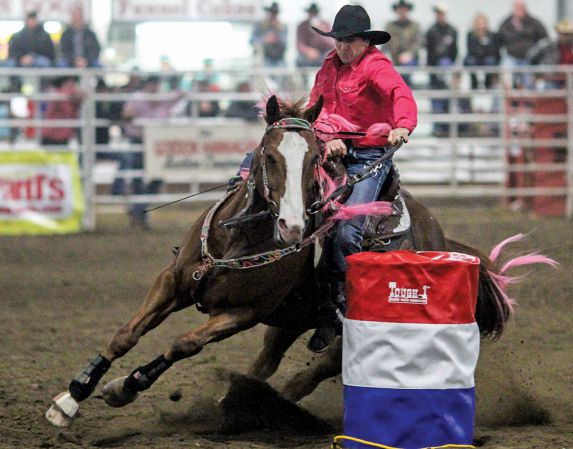
    Jaclyn credits her two horses as the reason she has been able to go so far in rodeo over the past 11 years. “Hussy is 21 this year, but she hasn’t gotten the memo yet,” Jaclyn says of one of her barrel horses. “She’s the horse I’ve had the longest and she’s done the most for me.” Jaclyn prefers to use Hussy for summer rodeos and smaller pens. Her other horse is Wanda, a 12-year-old mare. She rides Wanda in some of the larger arenas and for the more demanding rodeos. Jaclyn rides through the Illinois winters to keep her horses in shape, either riding in the snow or travelling to indoor arenas to practice.

    Jaclyn lives outside of Earlville on what she calls a “farmette” with her husband, Dave, and their three-year-old son Casen. She and her husband buy calves in the spring for him to practice tie-down roping. In addition to their horses, they also have a pony for Casen. “He likes to go for little trail rides and he does like to rope the dummy already. He’s pretty good at that. Recently he’s been riding his toy bucking bull and pretending to buck off, but I’m trying to steer him towards timed events,” Jaclyn said with a laugh. Casen loves to watch his parents compete, and Jaclyn is especially pleased that rodeo is something her whole family can do together.

    In addition to the full time job of being a mother, Jaclyn works as a nurse, both in a nursing home, in a hospital, in-home nursing and home health. In the midst of it all, she still makes time to rodeo and go to barrel races. Jaclyn is also planning to start one of her colts on barrels this year. She explained her goals for the coming year in rodeo. “I want to become a more consistent rider and do the best I can for each of my horses. I start out every year going to rodeos and seeing where I have won money, and then I will try to make those finals!”

  • Ed “Woody” Stavovy

    Ed “Woody” Stavovy

    Ed Stavovy, better known as “Woody” among his friends, has been competing in the APRA since he was 18. Today, at 35, Ed is still happily competing in the association in tie-down roping. Ed grew up on a cow farm in Washington, Pa. and although none of his family had a background in the sport, Ed entered his first rodeo when he was five. He caught the rodeo bug, and went on to ride bulls and team rope when he was in high school. At age 21, Ed decided to quit his roughstock event. “I quit riding bulls ‘cause I was too beat up,” he explained. Still wanting to compete, Ed decided to pursue roping more seriously. He did so with the help of several friends, including Dan Minick and Justin Yost. “They taught me a lot. I had the opportunity to go all over the country with Justin. We went down to Florida two years in the winter when the weather got bad up here.”

    Following high school, Ed was pursuing several other career possibilities while he kept up his roping. He attended the Academy of Equine Dentistry in Glenns Ferry, Idaho and worked in that area of training for several years. He also worked in construction where he eventually settled in to building fences for a company out of Pennsylvania. He has been working for the company for nearly 14 years, building fences for horse farms, construction sites, residential areas, and agricultural purposes.

    Over that period of time, Ed had been roping off of his horse Taco, but Taco’s many years of competing were catching up to him. Not having another horse ready to rope off of at the time, Ed decided to quit rodeoing. He bought a Harley Davidson motorcycle and went to bike rallies. However, riding a motorcycle couldn’t quite measure up to roping, and after several years, Ed decided to start rodeoing again. His young mare, Betty, was old enough to start roping off of. Having raised and trained Betty with the help of his friend, Ed was ready to see how she did at rodeos. He started hauling her to rodeos in October of 2012, and by May the following year, Betty proved a good roping horse. She has helped Ed to win a number of rodeos in the last year. While Ed lives in Pennsylvania, he keeps his horses at his friend Dave Trehorne’s house, which is in Ohio. Trehorne has an indoor arena, and Ed makes the hour drive across the state line about four days a week to ride and practice.

    Ed likes to spend his spare time going to concerts or seeing a good movie, but he loves nothing better than the feel of his rope in his hand. He is sitting fifth in the tie down roping. “I just love going to rodeos. It’s so expensive that I want to win every time I go, but it’s not easy to win money in tie down roping.” Fortunately for Ed, several of his friends at work also rodeo, and their employer gives them the flexibility to come and go during rodeo season. Ed tries to keep his weekends booked with rodeos throughout the summer, and one of his favorite rodeos in the APRA is held in Attica, N.Y. “I’ve done well there, and there’s a fun party,” he explained with a laugh. Ed said of his goals for this year, “I’ve always been just out of the finals, so I want to make the finals this year. I’d like to try to stay in the top ten, catch most of my calves, and have fun!”

  • Reagan Humphries

    Reagan Humphries

    At just 11 years old, Reagan Humphries will enter the 2014 Junior Southern Rodeo Association (JrSRA) season as the youngest competitor within the senior age division. Fear is not something that enters her mindset, instead, eagerness and determination has set her goals for the year. “I’m so excited to compete at the next level and want to make the finals in my first year as a senior,“ she said. “As the youngest senior, I think it would be really cool if I could make it.“

    The quadruple event contender completed her final season in the junior age division with a fourth place finish in the pole bending, fifth in the all-around and a top ten finish in the barrel racing. “I like how the JrSRA is so competitive, you have to ride hard and be tough to succeed. It teaches you how to better yourself by competing among those who are better than you,” the third-year member said of why she likes the organization.

    A barrel racer, pole bender, breakaway roper and goat tier, Reagan says that it is a toss-up between the barrels and poles for her favorite events to compete in. “I’ve recently got a new barrel horse [a nine-year old dapple gray – Frosty Ted, who she refers to as “Ted“], and although, I’ve only had him for a little while, we have found a chemistry together. At the same time, I use my old barrel horse to do poles on [a 15-year old bay, “Bonnie“]. She is very automatic and we just work really well together as a team,” explains Reagan. In the goat tying, Reagan uses her dad’s roping horse and has found a two-event horse in Ted, whom she will breakaway on this year. “We are new together, but I’m excited with what we can come up with,” she said.

    Reagan is a third generation rodeo athlete, starting with her granddad (Leonard Atwell), who competed in the tie down and team roping within the Southern Rodeo Association (SRA). The family tradition continues through her dad (Clint), who is a current team roper and finished in the top 20 of the 2013 SRA standings. But like most athletes, Reagan has already experienced a huge setback, when she broke her femur while getting off in the goat tying during her second rodeo of the 2011 season. After three surgeries and a six-week recovery period, Reagan was back in the saddle. “It was a big rebound, but I started riding as soon as I could walk again,” she said.

    A straight-A fifth grader at Lincoln Charter in Denver, N.C., where she says that science is her favorite subject. “I want to be a vet and science really interests me,“ she said. Reagan is the example of a true student-athlete, setting the bar high for herself, she plans to attend North Carolina State University and major in veterinary medicine. Outside of rodeo and school, she is a member of the Gaston County 4-H Blazing Saddles, where she won the county, district and state level with her presentation on Diving Horses. “It’s a five minute presentation with posters and props,“ explained her mom, who included that Reagan was also the high-point winner in the junior and senior divisions. Furthermore, Reagan is a former three-year competitive gymnast, but quit in order to focus on rodeo.

    The accomplished youngster is the only child of Clint and Amy Humphries and the family resides in Lincolnton, N.C. While Amy does not compete, she takes on the many roles to support Reagan. “I’m the rodeo mom and tack girl,” she said. Amy is a dental assistant at Hills Orthodontics in Huntersville, N.C., Clint is a fire fighter on the Charlotte Fire Department and the owner and operator of Humphries Landscaping.

  • Justin Pendry

    Justin Pendry

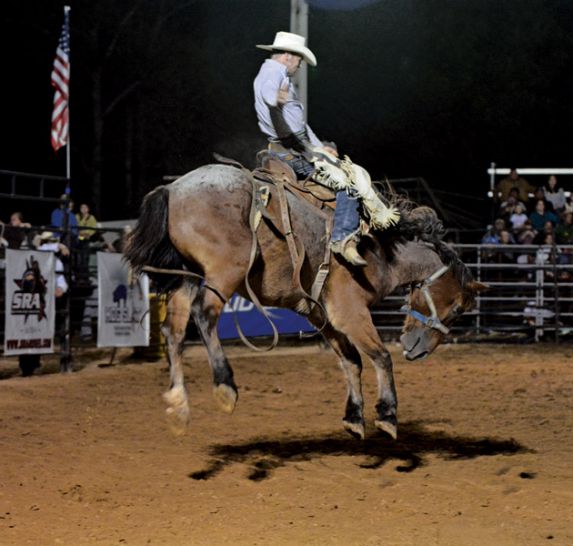
    Southern Rodeo Association (SRA) saddle bronc rider, Justin Pendry, may be a man of few words, but he lets his actions do the talking. After closing out with a first place 77-point ride in the first-round and grabbing second in the average at the SFR-40 to finish sixth in the year-end standings, he has already come out guns-a-blazin’ to rank in the top three in the 2014 standings. “My goal is to win the year-end,” he declared.

    While riding in his fifth year, Justin’s roots reach far beyond his own competition within the organization as his dad (Kelly) is an alumni SRA member, where he competed in the bareback riding and dabbled in the steer wrestling for approximately 15 years. “It’s a good association that carries on the cowboy tradition from generation to generation. I know everyone, because of my dad,” he said. Although, his mom (Cheyrl Michalec) has never competed and is not fond of him riding rough stock, Justin says that she wants him to do the best he can.
    Justin and his younger brother (Dillon) have followed in their dad’s footsteps through their own competitiveness.

    While Dillon climbs on a different style of buckin’ horses in the bareback riding and finished the 2013 season ranked in the top ten of the SRA standings, Justin got his start in the bull riding at about 18 years old and rode for approximately seven years. “The injuries caught up with me, and because I always rode horses and colts, it made the most sense to go to an event that was more natural to me,” he said of the switch. But the 29-year old does not cling to just one event as he also plays in the tie down and bareback riding. His associations also include the Professional Armed Forces Rodeo Association, where he competed for about three years while serving as a E4 Corporal in the United States Army. Last year, he expanded his recent competition to the International Professional Rodeo Association. “I can’t explain it. It’s just something that I do that I love,” he said of why he likes to rodeo.

    The father of two has already begun to pass along the family tradition to his six-year old daughter (Alaina) and his two-year old son (Dayton). While Alaina likes to ride horses and enjoys her daddy’s sport, Dayton has started riding in the mutton bustin. “It’s a small step, but it’s how everyone gets their start,” said Justin of his youngsters.

    When he is not rodeoing, the Smith Mountain Lake, Va., resident works as a cowboy jack-of-all-trades – shoeing horses, helping his dad and picking up day work when he can. But his busy schedule is worked around his own education as he has recently finished his first semester at Virginia Western Community College in Roanoke, Va., where he is working toward a major in Early Childhood Education. “I just want to make a living and survive,” he said.

  • Carol Clark

    Carol Clark

    Carol Clark has been competing in the CSRA for three years. She competed in her first rodeo when she was eight years old, and today, at 49, Carol continues to enjoy the sport. The barrel racer from Fairmount, Ill. is following closely in the footsteps of her mother, Nancy Clark, who taught Carol how to barrel race. Carol grew up going to rodeos with her parents. She and her mom would compete, and her dad, Ted Clark, would be their driver. “I learned the ropes with her and my dad. We’ve seen a lot of country,” said Carol. During her 41 years of rodeoing, Carol says that what has kept her dedicated, in addition to a core love for the sport, is the goal to always improve her competition. “It’s highly sophisticated now,” she explained. “It’s changed a lot.”

    Growing up, Carol stuck close to home. Following high school, she college rodeoed and competed in the IPRA, having been a member of the association since she was eight. Today, Carol works for the United States Post Office as a mail carrier, which she has been doing for 16 years. She does her route on foot Monday through Friday. “This time of year the weather makes it a challenge,” said Carol. She bundles up warm, and puts on her cleats when its icy. What Carol especially appreciates about the CSRA is that most of the rodeos are only a few hours away, allowing her to rodeo around her work schedule. Carol’s mom travels with Carol to her rodeos. She is now 73, and only just retired from barrel racing a year ago.

    Carol lives on her five acre farm with her two horses and five dogs. She has an indoor and an outdoor arena, and what ground is not devoted to horse pasture she uses for growing hay. Her two barrel horses are a pair of geldings. Jinks is her main barrel horse, and she has been running the cloverleaf pattern on him for nine years. Carol says of the 15-year-old gelding, “He’s very consistent, and he’s not the fastest horse in the world but he loves his job. He’s 16.1 (hands) and people make fun of him for being so big, but he can run a 12.8 pattern like he’s 14.2 hands.” Carol’s backup horse is 9-year-old named Dancer. She is working to get him seasoned, but admits that riding him is vastly different from riding Jinks.

    When she is not rodeoing, Carol loves to travel. She has been to 47 of the 50 states, with one of her favorite destinations so far being in Scottsdale and Phoenix, Ariz. Carol and her mom, as well as several other friends, have gone to Las Vegas, Nev. for the Wrangler NFR over the past several years. In addition to the rodeo, Carol enjoys a little bit of gambling as well. One of her ideas of a relaxing day would be to, “Hang around the house and relax with the horses, and just enjoy the day.”

    One of Carol’s greatest dreams is to compete at the International Finals Rodeo like her mother, who competed in the IFR in 1975. She also hopes to go on an Alaskan cruise and visit New York City to top off her travelling experiences. For this year, Carol wants to qualify again for the CSFR. “I’ve never won a bunch, but I’ve had consistent horses that will place me. I’m one of the low key ones,” she said with a laugh. Carol summed up her goals with, “I want to continue to make the Central States finals and someday make it to the IFR.”

  • Tyrell Rumford

    Tyrell Rumford

    Coming from a very distinguished and accomplished rodeo family, Central Plains Rodeo Association (CePRA) triple-event contender, Tyrell Rumford, is on his way to paving his own trail in the rodeo world. Currently sitting fourth in the steer wrestling and fifth in the tie down roping standings, Tyrell also competes on both ends of the team roping. “Something that I always tell my friends is: the reason we rope is because it’s fun. At the end of the day, if you can look back and say you had fun, then it was a success,” he said of his reasons for rodeoing.

    Although a four-year card holder, Tyrell competed within the organization off-and-on throughout high school and, after becoming a member, worked his way to the reserve champion tie-down roper in 2012. “The rodeos are run good with decent entry fees and good payouts, but most importantly, they are fair to everyone,” he said of the base that sets a long future with the CePRA.

    A cowboy with deep roots in the sport, Tyrell credits his family for his start. “It’s a family thing and I have them to thank for all of their support, help and encouragement along the way,” he said. While being involved in the once owned family rodeo company [Rumford Rodeo Company], the branches start with his dad (Bronc), who rode barebacks and later competed in the steer wrestling and calf roping in the Professional Rodeo Cowboys Association (PRCA). He is now the Fort Hays State University rodeo coach. His mom (Kate) has worked hard in training barrel horses and competing within the CePRA, but has recently started team roping and is working Pro-Am events. “I hope to be able to at least hit some jackpots with her this year,” said Tyrell. The list does not end there, for both of Tyrell’s siblings have earned a name through their own accomplishments. His brother (Justin), who once competed in the saddle bronc and steer wrestling in the PRCA and the CePRA, is now best known as a two-time PRCA Clown of the Year and the Coors Man in the Can. His sister (Haley Schneeberger) is a six-time PRCA rodeo secretary of the year. “I think I’m the only member of my family that has not been on the cover of the Rodeo News,” Tyrell humored of his family’s achievements.

    It wasn’t until his freshman year of high school that Tyrell got interested in the tie down roping. Upon finding his center for rodeo competition, he expanded to the steer wrestling, which he says his brother helped him get his start. “Justin is so very encouraging and has helped me in so many ways,” he said. Later, he picked up the team roping, but continues to explore other areas in which to master in the arena. Dabbling as a pick-up man since the early years of high school, Tyrell has found himself getting more and more jobs such as the World‘s Toughest Rodeo Series. “It’s a wonderful thing to be able to work with your family,” he said. “And I would love to be selected as a pick-up man for the Prairie Circuit Finals this year.”

    The 23-year old Fort Hays State University senior is working on a major in general studies with an emphasis in leadership, where he is looking into coaching for his future. While he has served as the rodeo club and team president for the past two years, Tyrell is also interested in the arts. He says that at one time he had worked in western, mainly pencil, drawings, but now focuses his talents in braiding much of his own tack and is a self-taught guitarist.

    As a member, of not only the CePRA, but the PRCA and the KPRA, Tyrell qualified for the National Western Stock Show and Rodeo in Denver, Colo., to kick his 2014 season off. But his goals rest in making the CePRA Finals and the Prairie Circuit Finals.