Rodeo Life

Blog

  • Back When They Bucked with J.C. Trujillo

    Back When They Bucked with J.C. Trujillo

    [ “Never did I think I would be that caliber of cowboy to be inducted into the hall of fame.” ]

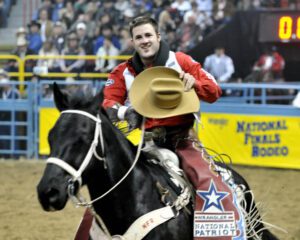
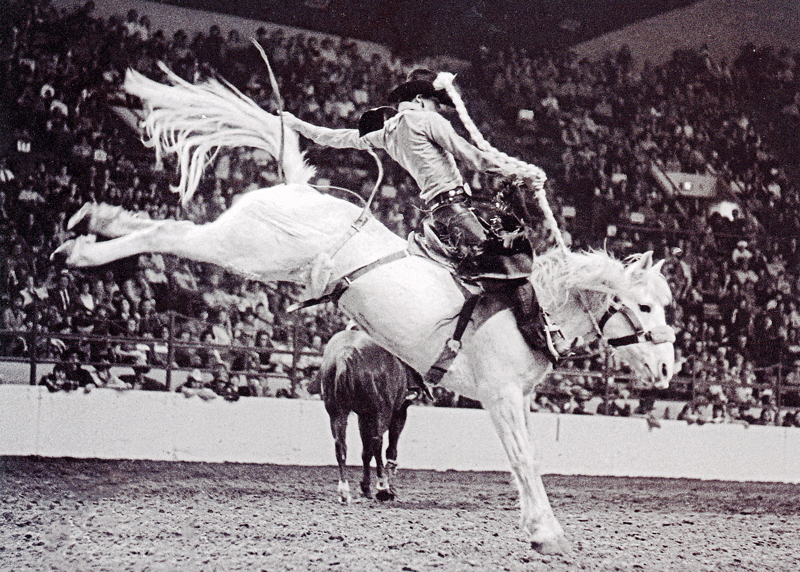
    “I think I was just cut out to be a bareback rider. I love that event and the attitude it took to be a bareback rider. And a bunch of my lifetime heroes ended up being bareback riders. It was what turned me on,” says J.C. Trujillo. When the Arizona-born cowboy nodded his head and burst into the sport of rodeo as a child, it swiftly became a way of life, presenting him with opportunities, lifelong friendships, and numerous accomplishments, which he rode to the buzzer and continues to enjoy today. One of these accolades includes his induction in November to the National Cowboy Hall of Fame in Oklahoma City, an honor that J.C. says comes from the many people who stood behind him all his life.
    Born May 10, 1948, in Prescott, Arizona, J.C. started rodeoing at age 6. He and his older brother and sister, Frank and Irene, were launched into the sport by their parents, Albert and Stella Trujillo. “My mom and dad were so instrumental through my whole rodeo career that I just wish they were here to see this also,” says J.C. of his recent induction. “They drug us around to rodeos, paid entry fees, bought horses and horse trailers. They were by no means wealthy people, but we pinched our pennies and got to all our rodeos. Every honor I receive is because of my mom and dad.”
    J.C. and his siblings and cousin, Joe Vecere, who grew up with them, competed in all the events of the Arizona Junior Rodeo Association. J.C. moved into high school rodeo and won state his senior year in the bareback riding, traveling with his dad to the NHSFR held in Watonga, Oklahoma in 1966. On the way, they stopped at the National Cowboy & Western Heritage Museum and walked through the hall of fame. “Never did I think I would be that caliber of cowboy to be inducted into the hall of fame.”
    J.C. took third in the nation at the NHSFR, and despite his rodeo successes, thought he wanted to be a football player. He joined the Eastern Arizona Junior College team in 1967. “Those were big guys. I was too little and too slow, and it was a good thing, because they were the ones who convinced me I wanted to be a bareback rider. I was only there for a semester and then I went to Mesa Community College and rodeoed on their team.” From there, J.C. competed on the Arizona State University rodeo team, winning the college finals in 1968. He had already obtained his PRCA card in 1967 and pro rodeoed while finishing his degree in elementary education, graduating from ASU in 1972. “But I went to rodeoing and never used it. But teaching runs in my blood, because I used what I gained there to do rodeo schools all over the country.” J.C. taught with his good friend and a fellow rodeo champion, saddle bronc rider Shawn Davis, along with champion bull rider John Davis, and later, Gary Leffew. “We did three or four a year while we were going down the road, sometimes more. I really enjoyed those schools. It was fun to get to know the kids and I could see myself in a lot of them, trying to learn how to win.”
    Winning came to J.C. with hard work and the sacrifice of thousands of miles on the road. He crisscrossed the country, sometimes flying but more often driving. J.C. clinched more than 30 PRCA wins alongside his 12 qualifications to the NFR, including the Turquoise Circuit title in 1975, Mountain States Circuit title in 1985, four wins at California Rodeo Salinas, two at the Pendleton Round-Up, four at his hometown World’s Oldest Rodeo Prescott Frontier Days, and many more. One of his most unique achievements was splitting the bareback riding title with T.J. Walter at the Command Performance Rodeo in 1983, a White House invitation-only event. President Ronald Reagan awarded them their buckles.
    J.C. won the world title at the NFR in 1981, a newlywed to his wife Margo, the backbone of their rodeo life, whom he married in 1980. They met through mutual rodeo friends, and Margo was no stranger to the rodeo world, having grown up with her brothers, John and Mike, who eventually founded Growney Brother Rodeo Company in 1979. Margo and J.C. welcomed their two daughters, Annie and Sammie, into the world, and the family traveled to as many of J.C.’s rodeos as possible, sometimes sleeping overnight in a van. There were not luxurious living quarters trailers at the time. They made Steamboat Springs, Colorado their home in the early 1980s. J.C. purchased a 50-acre ranch outside of town with his $50,000 winnings from the Calgary Stampede, won in 1982. “I had a friend that owned it, and when he was changing things around, I bought it. I’d seen so many people in the rodeo business that did well, but when they retired they ended up with nothing to show for it. But we were fortunate enough that we have a little to show for it, other than great memories.”
    A year later, J.C.’s rodeo career took a hit when he got hung up on a bronc during the 1983 NFR in Oklahoma City. He was aboard Jim Sutton’s bronc Big Bud when he got hung up, dislocating his knee, breaking several ribs, and puncturing a lung. J.C. sat out much of the 1984 season as he recovered, competing in enough rodeos to land him in the top 20 that year. He contemplated retirement, but wanted to experience the finals one last time, which moved to Las Vegas in 1985. “I made the finals that year, but I was missing a pretty important part of raising kids and it was time for me to bow out. That year at the finals I was 36, the oldest guy in the bareback riding there. I won third in the average and about $28,000 and thought it was time to quit. It was pretty important for me to quit a winner.”
    J.C. traded his bronc rein for ski poles after that, taking a job in the race department at the Steamboat Ski Area. Margo also worked there, teaching in the ski school. A few years earlier in 1982, J.C. had attended the second Cowboy Downhill after hearing what fun it was from all his friends who attended the year before. “I’d never been on skis, but I went to the Cowboy Downhill and started skiing, and it became a great love of mine.” Larry Mahan, who was one of the founders of the Cowboy Downhill, introduced J.C. to Billy Kidd, an Olympic skier who lives in Steamboat, and the two champions of their sports hit it off. As part of the race crew, J.C. set up courses and prepared the ski mountain for everything from world cup competitions to amateur races. “I got to hang out with guys who really skied well, like Billy Kidd, Hank Kashiwa, Dick Haller, and Jim “Moose” Barrows, who were pro ski racers. One of the reasons I liked it so well was that ski racing and rodeo had a lot of things in common. Both are a single sport, not a team sport. It was me and a bareback horse or me and the ski mountain, and I liked that challenge,” says J.C. who was even invited to a celebrity ski race in Vale, Colorado by President Gerald Ford.
    Never one to let the grass grow beneath his cowboy boots, J.C. ran an outfitting business from his and Margo’s ranch for more than 20 years. He guided elk hunts, along with three or four other guides he hired, and Margo hosted and cooked for the visiting hunters, even packing a few elk out herself. “We had six mules and about ten saddle horses, and when they started getting old and I started getting old, we decided it was time to bow out. Our last year was in about 2017.”
    While running the outfitting business, J.C. also divided his time between Colorado and Arizona, working as the general manager of Prescott Frontier Days from 2004 until 2020. He and Margo had moved back to Prescott, where J.C.’s parents were still living at the time. “I enjoyed it. It was being part of the rodeo business, and it was a whole different experience on the other side of the fence. We were there for 16 years and then we decided we needed to spend more time in our Colorado place. Now we spend most of our time up here.”
    J.C. and Margo know the road between Colorado and Arizona well, however. They spend their winters in Aguila, Arizona, heading south in their RV before too much snow accumulates at their ranch, which sits at about 8,000 feet with the National Forest out their back gate. They load up their horses and stay at Silver Bit Ranch, owned by their friend Scott Whitworth. “We stay until the snow is about gone, which is late April or early May. Margo and I both team rope. She’s a really good header and a really good heeler, so I just do whatever other end. We jackpot a little bit but not much. We’re practicers, and we enjoy the camaraderie and being horseback.”
    Their two daughters and their families also live in Arizona. J.C. and Margo’s seven grandchildren all rodeo, from the Arizona Junior Rodeo Association all the way up to the professional level. Their grandson JC Mortensen finished 21st in the PRCA bull riding this season, and his brother Jaxton Mortensen, competes in the PBR.
    All of their children and grandchildren attended J.C.’s induction into the National Cowboy Hall of Fame, along with his brother and sister, cousin, and members of Margo’s family. “I was thrilled in 1994 when they inducted me into the Pro Rodeo Hall of Fame, and to be in the same halls as all my rodeo heroes I had in my lifetime is just unbelievable for me. It’s very surreal. Probably the biggest honor I have received is that my family can be part of it.”
  • On The Trail with Kirsten Vold

    On The Trail with Kirsten Vold

    [ “I will always have bucking horses in my life. I can’t imagine my life without them.” ]

    “Rodeo is my passion,” said Kirsten Vold, who has continued her father’s (Harry Vold) legacy as a stock contractor. “Rodeo has fed me, given me a college education, and allowed me to be part of a lot of firsts – from a young PRCA cowboy to a young horse. To watch a bucking horse go from when you saw them buck for the first time to being an experienced veteran where every cowboy knows them – that brings me great joy.”
    The youngest of six children, Kirsten Vold was born in 1973 and started taking over the Vold Rodeo Company when she was 25 years old. She spent her young years traveling with her parents, Harry and Karen Vold, to all corners of the US and Canada producing and providing stock for rodeos. “I always worked for the company growing up. I had a tutor and didn’t attend public school until high school.” When her parents were traveling, the people working at the ranch, looked after her. The school bus came to the red gate at the end of the ranch, she drove the feed truck up to the gate, and rode the bus an hour and 15 minutes each way. In the beginning it was fun, because I got to sit in the back row with my friend.”
    Kirsten was sure she wanted to be a lawyer. “I watched LA law and that was the life I wanted.” She went to the University of Southern Colorado, graduating in 1996 with a BA in Communications. “After graduation, I knew I wanted to do something with rodeo, but at the corporate level. I didn’t enjoy being in an office and I was ready to go back to the ranch.” She has no regrets about her stint in the bright lights. “I got to do a lot of things with that – I flew all over the place – I was 23 and very social. I had a great time but I came to the realization that I missed the hands-on, grass roots aspect of rodeo.”
    Harry Vold was having a tough time finding someone to take hold and run things. He had foremen in the past, but he didn’t really have anyone to take that job over at the time and run it. “He was looking for a change and so was I; the timing was right.”
    Harry had built the company from scratch and over the past 60 years, the Vold name has become synonymous with rodeo. “It’s very important to me to uphold what he started. We’ve got a reputation of quality, professionalism and ethics.” She does a few things differently than her dad; she doesn’t travel as much as he did and she has incorporated more time in the chutes for the stock. Kirsten stopped going south for winter rodeos, preferring to be home. “I’ll never be sad to be home.” She lives a stone’s throw from her mom, Karen Vold, who is still involved in her church, trick riding clinics, and spending time in her kitchen preparing some of the recipes in her cookbooks. Kirsten travels solid from June until September, creating a string of great rodeos that have been part of the Vold name for years. She does a few spring, fall, and winter rodeos, but is careful to pencil out each trip to be profitable. “The events I have now, I’m lucky to have. I work with great people, and we have been with them multiple years and the people are amazing.”
    She keeps her stock close to home to handle and see them every day. “From the time we wean them, we keep them up close, and we feed them daily until they are yearlings.” The young stock runs through the chutes several times, learning by the time they are five years old that the chute isn’t a scary place to be. “It’s different from how my dad did things; the horses were five before they got bucked and handled for the first time.”
    Kirsten has been married twice and admits that her lack of free time doesn’t help. “The majority of my failed relationships are because I didn’t have enough time to devote to the relationship.” She admires couples in the rodeo industry that make it work.
    For the first time since the inception of the NFR 65 years ago, the Vold Rodeo Company did not have bucking stock selected to go to the 2023 Wrangler National Finals Rodeo.
    “It makes me focus on doing a better job in 2024.”
    In order to get stock to the NFR, contestants pick the animals from the animals that stock contractors nominate – each animal must make 8 trips in a year to be eligible. The top 15 riders select the final animals. “I don’t have any il will, it’s a drawing contest on our end too – the animal must draw the right cowboy at the right time.”
    Kirsten has had her time to shine in the past, raising a stud, Painted Valley. “Painted Valley was one that I raised myself and he was actually mine. He was the first I put my brand on and was my own. He was very dear to my heart. I raised him in my back yard and he was very gentle.” The stud was selected to six Wrangler National Finals Rodeos, and was voted best Saddle Bronc Horse of the WNFR in 2009 and in 2010 Painted Valley was named PRCA Saddle Horse of the Year.
    “If you ask me the number one reason why I do what I do, it’s because of the animals,” she said. “I love working with animals.” Life has been very good to me; not the way I planned, it but that’s not a bad thing. You look back in your 20s and think you know, but you realize in your 40s that you are what you are and you accept life as it is. I’m trying new things, but I’m more self-accepting – accepting failure and success. I’m a lot more chilled out now than I was 20 years ago.”

  • American Hat Presents: Andre Trevino

    American Hat Presents: Andre Trevino

    [ “If you never give up you cannot be beaten” – Keith Maddox ]

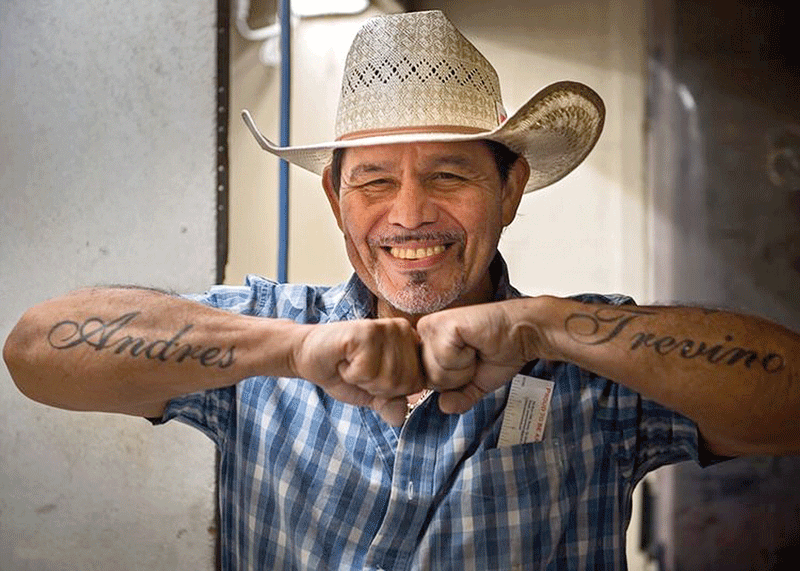
    I went to the home of American Hat in 2015, in Bowie, Texas, and spent several hours visiting with Andre Trevino, the factory manager, and a few days gathering information on the story behind the company. To hear company president Keith Mundee tell it, it just wouldn’t be American Hat Company without the dedication of Andre and the other  employees. The story goes that when Andre was 12, he saw a bag in the company’s parking lot. It was a bag of money that belonged to Bubba Silver. He picked up the bag, walked it into the building, and returned it. “I don’t want a reward,” Andre recalls. “I wanted a job. He said I was too young, so I asked if I could work in the evenings.” Andre obtained permission for school to get out a little early and he was hired as a cleaning boy at .90 an hour. 50 years later – Andre retired. “He was here at 5 a.m. every day,” Keith says. “He’s the most loyal, honest guy, and he loves hats. He says, ‘I would come to work here even if you didn’t pay me.’  That’s how much he loves it.”
    It’s the power of the cowboy hat itself and American Hat’s mantra of quality that inspire that kind of devotion. But it’s a dream that nearly ended in catastrophe the year after Maddox moved the company to Bowie. On November 27, 2005, a grassfire swept through town; the blaze was so close to American Hat that firefighters used the parking lot as a command post. “The factory building wasn’t flamed out; it was smoked out,” Keith said. “The loss was devastating: $13.5 million in raw hat bodies and not enough insurance to cover it.” But Mr. Maddox kept the employees working. He ordered more hat bodies. He went into his 401(k) and second-mortgaged his house. He did everything he could to keep it alive. A lesser man would have quit. But his attitude was, I can’t quit — it’s this or nothing.
    Rodeo News and American Hat unite in that integrity and grit. To Susan, Mercedes, and Treasure Maddox and Keith and Teri Mundee – thank you for believing in this dream and may both companies be blessed and remember that none of this would be possible without God – we are honored to be the stewards. As Keith Maddox told me many years ago, sitting at his home, “It’s not the destination it’s the journey – once you get close, you need to change the goal.” Well said Mr. Positive Times.

  • Feild’s Day: PRCA’s top bareback rider ever – Kaycee Feild – calls it a career

    Feild’s Day: PRCA’s top bareback rider ever – Kaycee Feild – calls it a career

    The cowboy who set the gold standard for PRCA bareback riders has called it a career. 


    Kaycee Feild, who has won a record six PRCA Bareback Riding World Championships (2011-14, 2020-21), confirmed to the ProRodeo Sports News that he’s retiring. 


    “Man, it’s actually kind of a weight lifted off my shoulders,” said Feild, 36, about announcing his retirement. “What I’m feeling, it is a pretty dang good feeling. I’m happy where I’m at, it feels good to be home with my family and look forward to being here, not missing games, junior rodeos.” 


    Feild obtained his PRCA card in 2007 and qualified for the National Finals Rodeo 13 times – (2008-15, 2018-22) tied for fifth most ever for bareback riders. The Genola, Utah, cowboy won the average – a bareback riding record – five times in 2011-14 and 2020. 


    “I’m so grateful for the sport of rodeo,” Feild said. “What I have from the sport, the opportunities it presented me with are humbling experiences. I got to go overseas with the National Patriot Tour and that was a lifechanging event to go over and see war firsthand and give thanks. That was presented to me because I had a cowboy hat, a pair of cowboy boots and a bareback riggin.  


    “It is just a humbling place I’m in and I’m extremely grateful for the career I had and the success I had and the friendships I developed with the committeemen, cameramen, traveling partners, competitors, pickup men, gatemen, you name it. I have friendships that are special to me. 


    “The bucking horses and accolades I have in the sport mean a lot to me. It was an extremely fun career that I was blessed to have. I was blessed with a durable body and a lot of people who kept me motivated. My family was a big part of every bit of it. My wife (Stephanie) was the best teammate a guy could have. The things I learned along the way, the ups and downs that the humbling sport of rodeo is, it makes me so excited for the next chapter and confident in the direction I’m going.” 

    Kaycee and his wife, have three children, daughters Chaimberlyn, 10, and Remi, 5; and son, Huxyn, 8. 


    Feild, who also has a PRCA bareback riding record 29 NFR round wins, was coming to grips with retirement for a little while. 


    “I had my goals set at the beginning of the year to take my family as much as could and that was the No. 1 goal,” Feild said. “Obviously, a goal of mine was to be the world champion and not crossing that off hurts and to not retire at the NFR hurts. It is not the dream I had but it (retiring) is what I wanted more than anything. 


    “It’s been five years that I have been talking to my wife (about retirement) and listening to some older athletes and friends who have retired over the years. It was evident to me last year come July if it wasn’t going to retire at the end of 2022, then for sure in 2023.” 


    Feild said his decision has nothing to do with injuries. 


    “I still feel great physically and mentally,” he said. “It’s crazy that I have the least inflammation in my body since 2012. I was worried about what was going to be my motivator when I was done rodeoing to stay physically fit. I thought it was going to be hard to get in the gym, but I have found motivation of ‘How good can you feel.’ You’re not going to go to the rodeo and get beat up and start getting hurt. Your ribs aren’t going to hurt. Your shoulder is OK, your wrist is just fine, this is amazing. ‘How far are you going to push and how good are you going to feel.’ This makes it a little more fun.” 


    Kaycee followed in the footsteps of his father, the late Lewis Feild, a ProRodeo Hall of Famer, and five-time PRCA World Champion in all-around 1987-89; and bareback riding 1985-86. 


    Kaycee had eight 90-point rides at the NFR, including five in the last three years. His last ride at the 2022 NFR he won Round 10 with a 92-point ride on Pickett Pro Rodeo’s Night Crawler. 


    Since 2011, Feild has registered 25 90-point rides or better. 


    “I find it hard to talk about it still,” Feild said of his career accomplishments. “It’s unreal and extremely humbling now that I’m able to look back on it. I’m not lying in bed and dreaming of riding bucking horses and the competing, it is lay my head down and rest and dream of what I have accomplished and how to utilize those tools into the next chapter into the next discipline.” 


    During his decorated career, Feild found enjoyment in the arena in different ways. 


    “It varied throughout my career,” Feild said. “I obviously loved riding bucking horses. I knew from a young age that’s what I wanted to do. Throughout my career, my favorite thing was drawing the toughest horses. I loved the challenge. I loved the hype behind big bad bucking horses and to be in the mental state to go at that horse with full confidence that was extremely fun. The most fun thing for me is when my family could be at the rodeos and have a win. It always fun to have them there and when I got to have my family come out on the stage and accept the awards with me and have my wife and kids feel that, because it was a full team, was special. I also can’t deny the friendships.” 


    Outside of rodeo, Field has several businesses he’s involved with.


    “That’s something I’m excited and motivated about,” Feild said. “I still have PWR PRO that we have had for five years, and it is doing well. Our products are well liked in the Western community and to feel that support is humbling. My brother Shad and I have Warbonnet Cowboy hats, and he operates it and having a business with my brother is a blast. I’ve learned a lot from him. My newest venture is called KTK Fulfillment. We are Fulfillment center, and we will store your products and fulfill your orders. It is a very fast-paced business, and it is fun.


    “My business partners in KTK, Kaden (Mower) and Thomas (Mower) are very sharp guys and they have taught me a lot. We are great friends, so it makes it even more fun. It is a lot like a traveling partner, they are going to call me on my BS, just like Tilden (Hooper) did my whole career. They let know if you made a mistake and they support you and educate you in the coolest way. They are very successful guys.”


    As for rodeo plans, Feild has no long-term plans.


    “I’m going to go down and fulfill my obligations with my endorsements and brands I represent at the (2023 NFR),” Feild said. “Then, after that I find myself thinking I will probably step away from rodeo and pursue some different things for a year or two. But I love the sport and I have a lot of passion for it and there are so many great people in it. There are so many great things I love about the sport. I see myself a few years down the road somehow being involved. I will do a couple of schools next, and I plan on helping bareback riding and hopefully I can create more bareback riding athletes.


    “Right now, my passion and my focus are my family and KTK, PWR PRO and Warbonnet. It is a crazy fast pace and I find the more I live my life like an eight-second ride and stay busy hustling all day, it helps me stay grounded.”

  • 5 Star Champion: Kim Thomas

    5 Star Champion: Kim Thomas

    Kim Thomas has been a horse trainer most of her life. Her business savvy and horsemanship skills have carried her to compete in the Barrel Futurities of America World Championship, the Dodge National Circuit Finals Rodeo, serve on the WPRA board, and teach clinics in the United States and abroad.
    While she now calls Noble, Oklahoma her home, Kim, 65, grew up in the rural Florida town of Wauchula. “There were a lot of day-working cowboys there that rodeoed. My parents were not horse people, but they got me and my sister a horse and we went to gymkhanas when we were little. Then we high school rodeoed. Nobody college rodeoed back then,” says Kim. “I trained my own horses.”
    Kim purchased her WPRA card in 1980 and went to her first Southeastern Circuit Finals that year. She rodeoed hard through the 1980s and ‘90s, qualifying for the Southeastern Circuit Finals a total of 10 times, along with three Prairie Circuit Finals and two trips to what was the Dodge National Circuit Finals Rodeo at the time. “I’m kind of glad I rodeoed back when I did,” says Kim. “Everybody had one horse, and they trained their own horses.”
    The training skills Kim developed turned into a career. While rodeoing, Kim also competed in barrel futurities on her horses and sold them. At the BFA World Championships, where many of Kim’s horses won, she met renowned horse breeder Jud Little, who invited Kim to come train his horses at his ranch in Oklahoma.
    Not long after joining the WPRA, Kim also began serving on the board of directors and was instrumental in forming the Florida Chapter of the WPRA in the mid-1980s. They produced futurities including the Florida Sunshine Classic, and put on the Wauchula Rodeo in 1987. In all, Kim served around 10 years on the board in many different capacities, most recently as the Prairie Circuit Director.
    During her rodeo and futurity days, Kim was also raising her son and daughter, Matt and Marsee Ferguson. Matt preferred playing other sports to rodeo, but Marsee followed in her mom’s bootprints. Despite being born with a heart defect and having her first open heart surgery when she was eight days old, with four more surgeries to follow, Marsee excelled in the arena. “When she was about 10 years old, Marsee won the NBHA state championship in both the youth and the open on two different horses, and she won the Speed Horse derby when she was 11, which is a very professional event,” says Kim. “She’s very competitive and won a lot. She high school rodeoed and went to the national high school finals.” Marsee got married and she and her husband Hunter McCown have a 10-year-old son, Kellen. Unfortunately, she suffered a massive stroke due to birth control several years ago, but she recently started riding her horse again. “It’s brought her a lot of joy to have this horse,” says Kim, who lives just 30 minutes from Marsee and sees her often.
    Kim continues to be very involved in the horse world, though in new and unique ways. She went back to training horses on her own in 2003, and that eventually morphed into teaching barrel racing clinics. She’s been all over the Southeast with her two-day clinics and even taught in Brazil and Bolivia. “I teach all ages, and I’m a big foundation and horsemanship person. We usually spend the first half of the day working on getting control of the horse and learning where the rider’s body needs to be, and then we do slow work. The second day I usually work with the riders one on one. I truly enjoy it.”
    Kim’s clinics are sponsored by 5 Star Equine, who provide her shirts and hats, which she awards to the most improved horse and most improved rider at each clinic. She teamed up with 5 Star when she began riding horses for owner Terry Moore in the early 2000s, and coached his daughter Rachel Moore-Lowrey, who high school rodeoed at the time. “I bought their pads and helped them market along the way,” says Kim. “I’ve always believed that the best thing for a horse’s back is 100 percent wool, and theirs are, so those have always been my pad of choice.” Kim used all of their products, though the pads and mohair cinches are her favorites. “The horses never get any kind of girth itch or rash with them, they’re easy to clean, and the horses don’t seem to sweat as much in them. All of their products are very high quality, and they are good family people.” 5 Star even sent a new saddle pad to Marsee for her birthday.
    Kim is recently engaged to Chip Bennett, a former PRCA steer wrestler. “I’ve known him for 40 years and we’re best friends,” says Kim. Along with teaching 8-10 clinics a year, she travels for her work as a sales rep for SUCCEED equine products. Her work will take her to the upcoming WNFR for 12 days, where they are running the hospitality tent for two days and cheering on their sponsored riders in the Finals.

  • Community Coffee: Coleman Proctor

    Community Coffee: Coleman Proctor

    Community Coffee strives to serve with consistency, integrity and excellence. This is only one aspect 7x Wrangler National Finals Rodeo qualifier Coleman Proctor loves about the family-owned brand.
    “They keep the freshness coming to you,” said the 38-year-old from Pryor, Oklahoma. “Having fresh coffee is something that us rodeo guys, particularly, can appreciate.
    “We [rodeo contestants] get a lot of 4 a.m. truck-stop coffee that has been on the cooker for way too long and isn’t always the best,” he said.
    “They [Community Coffee] package their coffee and ship it straight to your door and ensure freshness that makes a difference.”
    Proctor said he drinks a variety of flavors and blends sold by the company, but he starts every morning with Pecan Praline. He added the company also offers a variety of iced late and espresso that are kept cold.
    Another thing he said brings Community Coffee and what he is doing now together is the way the brand began in 1919. In 2022, Proctor started a podcast titled “Toter Tales.”
    “When you think about people sitting around, telling stories in the mornings, they are enjoying a good cup of coffee,” he said. “So, a podcast setting goes hand in hand with Community Coffee.
    “I started by putting little video clips on Facebook to update people on what I am doing and where I’m at,” he said. “The first one posted was because I was trying to figure out how icy the roads were from Texas to Oklahoma.
    “People seemed to enjoy the videos, so I coined them the “Toter Tales” because I drive a toterhome,” he said. “And then a buddy said I should start a podcast.”
    “It has certainly been a learning experience, but I have been having a lot of fun with it,” he said. “I really enjoy doing it, and as long as people are enjoying it with me, I’ll keep doing it.”
    He added it offers an opportunity to feature and promote sponsors and companies, including Community Coffee.
    So far, Proctor has released 12 episodes and has featured people like Jess Tierney, Justin McKee and Clay Smith.
    According to the “About” description on Spotify, Toter Tales provides an insight into Proctor’s daily life and interaction while on the rodeo trail.
    The newest episode features his team-roping partner, Logan Medlin. Together, Proctor and Medlin most recently won the aggregate at the 2023 RAM Prairie Circuit Finals Rodeo in Duncan, Oklahoma.
    According to the official results released by the Professional Rodeo Cowboys Association, the team averaged 18.1 seconds on three head and won the second go-round with a 4.1 second time.
    Heading into the 2023 WNFR, Proctor said he and Medlin are one go-round win away from leading the world standings in the team roping.
    “The first time I saw Logan run one, I thought, ‘Man, this kid ropes good,’” he said. “And then we got a chance to start roping together in 2021.
    “We were both between partners, and it just worked out for us,” Proctor said. “We have really good chemistry because we’re kind of at the same place in life and have a lot of the same values and work ethic.”
    Proctor said teaming up with Medlin has made a huge difference in the direction of his ProRodeo career.
    They have made two straight WNFR appearances and have qualified for their third. The pair ended their 2022 rodeo season sixth in the team roping world standings and won two rounds at the WNFR.
    The day before their round-eight win, Proctor received a bachelor’s degree in General Studies with an emphasis in Agricultural Business from Northwestern Oklahoma State University.
    “It was always a huge regret for me,” he said. “I never finished my degree, and I felt like I had let up just before the finish line.
    “When I was in college, I always thought I’d make the Finals and not need a degree,” he said. “Then I made the finals, and I was disappointed that I hadn’t finished college and gotten my degree.”
    Proctor added he had set a goal to maintain a 4.0 Grade Point Average in his senior year of college. While his final year may have been untraditional, he was proud to say he finished the semester with a perfect GPA.
    Another aspect of his life Proctor spoke proudly of was his family. He said they own and live on a ranch in Pryor, Oklahoma, where they are not far from his mother-in-law.
    “I am married to the love of my life, Stephanie,” Proctor said. “And we have two beautiful daughters.
    “Our oldest, Stella, will be six later this month [October 2023]. Our middle child, Caymbree, is four,” he said. “And we just found out we are expecting a third beautiful little girl come April.
    “God knew I wouldn’t have been able to handle boys,” he said. “I am a girl dad through and through.”

  • Back When They Bucked with Wally Badgett

    Back When They Bucked with Wally Badgett

    [ Pro rodeo cowboy-turned-cartoonist entertains with “Earl” cartoons about the western way of life ]

    Wally Badgett was a ranch kid-turned rodeo cowboy, then deputy sheriff -turned cartoonist.
    And through it all, he’s had a sense of humor.
    The Miles City, Montana man was born in 1952 on a ranch 75 miles south of Miles City, the son of Kirk and Lora Badgett.
    Wally was intrigued by the sport of rodeo because of his older brother, who competed, and after high school, attended Sheridan (Wyo.) College, where he rode bulls and was the 1971 National Intercollegiate Rodeo Association champion bull rider.
    He competed in high school rodeo in every event but steer wrestling. After high school graduation in 1970, Badgett went to Sheridan, where he rodeoed collegiately two years, before he moved back to Montana.
    From 1972 to 1975, he was on the pro rodeo trail, competing in the saddle bronc riding, calf roping, and bull riding, and qualifying in the bull riding for the 1974 National Finals Rodeo, finishing eighth in the world standings.
    By 1975, he stayed closer to home, rodeoing in Montana and the surrounding states, and four years later, he was done. A self-professed homebody, he was married to Pam (they married in 1973) with two little children at home. And it was time to quit. “I had never left the arena in an ambulance,” he said, “and I thought, I’m way overdue.” With a family to support, “you start to think of other things.”
    And he was pain-averse, he joked. “I’ve always hated pain, and I’m kind of a no-pain guy. Obviously, riding roughstock can be fairly painful at times.” His worst injuries were a broken ankle and pulled groins.
    Wally and his brother leased part of the family ranch for awhile (his mother had had a serious stroke when he was four years old, and his dad was forced to sell the ranch to pay for her care.) Then, one day, while in Ashland, Montana, he ran into the deputy sergeant. The sergeant mentioned that they were looking to hire a police officer, so Wally applied and got the job.
    For three years, he was a deputy sheriff in Rosebud County,(Forsyth), then the next nine years he spent as deputy sheriff in Custer County (Miles City).
    It was an injured back that drew him into his next profession: drawing.
    While laid up due to the back injury, he drew cartoons to entertain himself. He’d drawn as a child, but never anything serious.
    And thus Earl the rancher was born.
    As Badgett’s cartoons featuring Earl and his wife in various ranching situations grew in popularity, he got busier with the artwork.
    “People were starting to call the sheriff’s office looking for the cartoonist instead of the cop,” he quipped.
    He had to make a choice: continue in law enforcement, or build on the cartoon skills.
    “I chose (cartooning) because there’s less chance of getting shot,” he joked. “I was always worried about getting shot (as a sheriff). I might have been the shakiest gun in the west. I was always worried someone would steal my gun and beat me up with it.”
    Badgett’s cartoons with Earl and his situations tickle the fancy of ranchers, farmers, and those in the western lifestyle. They can be found in about 150 publications, from Texas to Canada, in rural and livestock newspapers.
    When he started, his cartoon content was “inside cowboy humor, and if you weren’t a cowboy, you might not get it,” he said. “I realized, if I’m going to make this work, I have to draw so the butcher, the baker and the candlestick maker can understand it, and it’s still funny.”
    Badgett is always looking for content that he can work Earl into. “I keep my ears open. In our western world, you can be talking to someone, and they say something not intended to be funny, but it’s hilarious. I write those things down.”
    Earl is depicted as a hard luck rancher whose cows tend to be thin, and whose wife often outwits him. He drives a 1950s truck and does some of his ranch work with a team. It’s a throwback to Badgett’s youthful years on the family ranch. He fed cattle with a team and has always been fascinated with that.
    Badgett never gave a name to the wife, but occasionally, tongue-in-cheek, he’ll call her “She Who Must Be Obeyed.”
    Every Earl cartoon Badgett draws has a dog in it (“I don’t think I’ve ever known a rancher that didn’t have a dog,”) and a magpie.
    The magpie came by accident. Badgett included the bird occasionally, but one day, someone told him he looked for but couldn’t find the magpie in the latest Earl cartoon he’d read.
    So Badgett, whose pen name is M.C. Tin Star, went back and included the bird in his previous cartoons and now draws one in every one. “It’s my trademark,” he said.
    Much of his drawing is done in the winter, when the weather is cold. “The days are short, and sometimes I might do two or three or four in a day. I usually operate in a state of disorganization and confusion,” he joked.
    Badgett served as the rodeo coach at Miles City (Mont.) Community College for about twenty years, first as assistant coach, then as head coach. He retired from that role in 2021.
    Justin Miller was one of Wally’s rodeo athletes from 2008-2010.
    The Lockwood, Mont. cowboy rode barebacks in college rodeo and appreciated his coach’s willingness to help.
    “If you were going to work hard (in college rodeo), he was going to work hard with you. He would do whatever it took, for whatever you wanted,” Miller said. “He wouldn’t give up on you or leave you wanting. He’d help you out as much as you wanted.”
    In his pro rodeo career, Wally held the record for the high marked ride bull ride in Houston for several years, at 85 points. “That doesn’t sound like much now,” he said, noting that markings have gotten higher.
    He also said that bullfighters are more proficient now. “Back in my day, there might be one bullfighter, and he may or may not be any good. He might outrun you to the fence, but at least there might be someone to help you up if you got there, too.”
    He and Pam have a son, Brett, who is married to Joni and lives in Miles City, with a daughter, and a daughter, Whitney, who is marked to Fakhrul Hasan; they have a son and a daughter and live in California. Both children are artistic; one of Brett’s sculptures, a half-life size of a steer roper, stands at the Pro Rodeo Hall of Fame in the back garden.
    He cowboys for a local ranch, when they need him, but mostly stays home and enjoys Montana and rural life.
    He refuses to use any digital device, social media, and doesn’t text. “I’ve seen a lot of changes, and I’ve been against almost all of them,” he joked. “But they happen anyway.”
    Badgett is a 2023 Montana Cowboy Hall of Fame inductee and the third recipient of the Saddle of Honor, joining the 2018 Saddle of Honor recipient Charles M. Russell and 2019 recipient Jay Contway.

  • On The Trail with Alex Phelps

    On The Trail with Alex Phelps

    [ Life is short, be happy and be a blessing to those who surround you. ]

    Alex Phelps has been on a mission to have a positive mindset through his experiences and lessons in rodeo. His attitude was evident to others around him when he won the Ramsey Award as a high school senior in Ulysses, Kansas, which celebrated rodeo athletes who had a bright attitude. His mindset poured into his time at Southwestern Oklahoma State University when he received the Walt Garrison Scholarship Award as a college rodeo athlete in 2016. The scholarship celebrates one recipient from each of the National Intercollegiate Rodeo Association’s (NIRA) region who demonstrates determination, loyalty, leadership and integrity. 14 years later, Alex relfects on the meaning of the award. “I’m competitive, so I was involved in a softball tournament the next day, and it didn’t really sink in. That award had meaning and I have always tried to represent the values inside and outside the arena, my values have not changed.”
    Alex was raised by his grandparents, Donnie and Peggy Phelps, in Ulysses, Kansas. “My mom committed suicide when I was 8. I grew up at a young age and I grew up faster after having that experience,” he said. “The village of people that raised me taught me two things: stand true to your values and life is short. You don’t get a second chance and the first impression should be the same as the rest; having good character and moral values is what people see in me.” His grandpa, Donnie, started out riding bulls at a young age and transitioned to team roping, which he competed in until he passed away in 2021. Alex is forever grateful for his grandparents who gave him the foundation of his rodeo knowledge. “They raised me to the person I am today.” The Mentzer family of Toby, Janet and Peyton took him in and helped him get to the next level. “They prepared me for college rodeo and life.” Alex is appreciative of all who have encouraged him. “Without the support of my grandparents, the Mentzers’, the Munsells’, and many others, my rodeo career would not be where it is at today,” he said.
    “He’s like my little brother,” said Wacey Munsell, who is seven years his senior. “He’s got a deep background on both ends of the arena and I’m super proud of what he’s been able to do.”
    Alex competed in the Kansas High School Rodeo Association, making it to Nationals in Gillette in 2015. He served as the regional student director while attending college. He also served as the 2016-2017 NIRA National Student President. “We were instilled as directors to encourage and help the production of rodeos. As a student director, I took advantage of that, in thinking of spectators and sponsors and families, we always work to produce a show that is timely.” He took the knowledge he learned through his rodeo career to help other rodeos work better. Alex is a board member for the Ulysses Stampede, a bull fighter at the College National Finals and served as the chute boss for the 2023 Kansas Pro Rodeo Association (KPRA) Finals in Dodge City, Kansas. Alex has been a member of KPRA for several years. He appreciates the association’s heart for rodeo. “The sky’s the limit because they have a passion for rodeo,” Alex said.
    Alex is also active in the NIRA, fighting bulls at the 2023 College National Finals Rodeo (CNFR) in Casper, Wyoming. He sees college rodeo as a stepping stone for contestants. College can be a doorway towards making it into pro rodeos in addition to giving athletes an education to fall back on. During his time in college, Alex competed in tie down roping, steer wrestling, team roping and bullfighting. He competed on three different occassions the CNFR; twice in the team roping in 2016 and 2018; steer wrestling in 2017. He has been fortunate to work as a bull fighter at the last three CNFR’s.
    Alex loves the adrenaline rush of bullfighting and being able to protect contestants. He started fighting bulls at 14 years old. He remembers the Munsell family- Doug, Lorrie, Wacey and Baleigh- were raising bucking bulls at that time. “I attempted to ride a bull and failed miserably,” Alex said. “Wacey, a World Champion Bull Fighter and my best friend, recommended that I end my bull riding career and try bullfighting.” Alex also attended the final school that Rex Dunn put on in Waurika, Oklahoma in 2011. Rex Dunn had a professional bullfighting career for 16 years and worked three National Finals Rodeos. After ending his bullfighting career, he began conducting bullfighting schools like the one Alex attended. Alex is grateful for the Munsell’s hand in shaping his bullfighting experience. “They have all been instrumental in getting my bullfighting where it is today,” he said. He continues to compete in team roping and steer wrestling but wasn’t able to compete this season due to breaking his wrist while bullfighting.
    Alex’s favorite aspect of rodeo is the community and the relationships he has been able to build throughout it. “You get to meet so many good people,” he said. “We all share the same passions and that’s our western heritage.” He remembers the first time he went to Las Vegas for Benny Binions Bucking Horse & Bull Sale in 2015. He was traveling alone and planned to meet other bullfighters and friends in Las Vegas. He was worried that he wouldn’t know many people there. In the airport he ended up seeing people he knew and continued to come across other friends throughout his travels. He appreciates the way that these relationships changed his outlook for that rodeo.
    Alex feels that these relationships have grown his character just as rodeo has grown his attitude and mindset. “I do remember saying to myself, there’s probably several people that would love to be doing what you’re doing so be appreciative and stay positive; be positive for being able to do it,” Alex said. Alex feels supported in his passion for rodeo by his loved ones, including his wife of six years, Tiana “I couldn’t continue my rodeo career without my wife’s support,” Alex said. “I am very blessed to have her in my life.” They met through a mutual friend. As a traveling X-ray and Cat Scan technician, she works through an agency and can pick a place to work. ”We always sit down before she goes, and we are able to schedule around my contracts. Currently, she works four tens and comes home for three days.”
    Tiana loves to travel with Alex. “Rodeo people are the best people and some of our closest friends. They are the nicest people you can meet. We go everywhere – from college rodeos to pro.” The couple got married in September of 2017 and spent their honeymoon at the National Finals Rodeo in Las Vegas. “I had never been before.”
    His first job out of college was a loan officer at Bank of Ulysses. After three years, he decided to switch it up and took a job at Pioneer Communications, a telecommunications company, headquartered in southwest Kansas as a business support specialist. “We serve 14 counties, and my job is to advise businesses on their telecommunication needs. “There’s satisfaction to that,” he said. “I get to network with our community members and assist their needs.”
    Alex is grateful for the community who has aided him in his rodeo career. “I’m thankful for my family and friends and anybody who’s had a hand in raising me or being a part of my life, and I’m grateful to be a part of theirs.”

  • Team Cavender’s Natalie Peacock

    Team Cavender’s Natalie Peacock

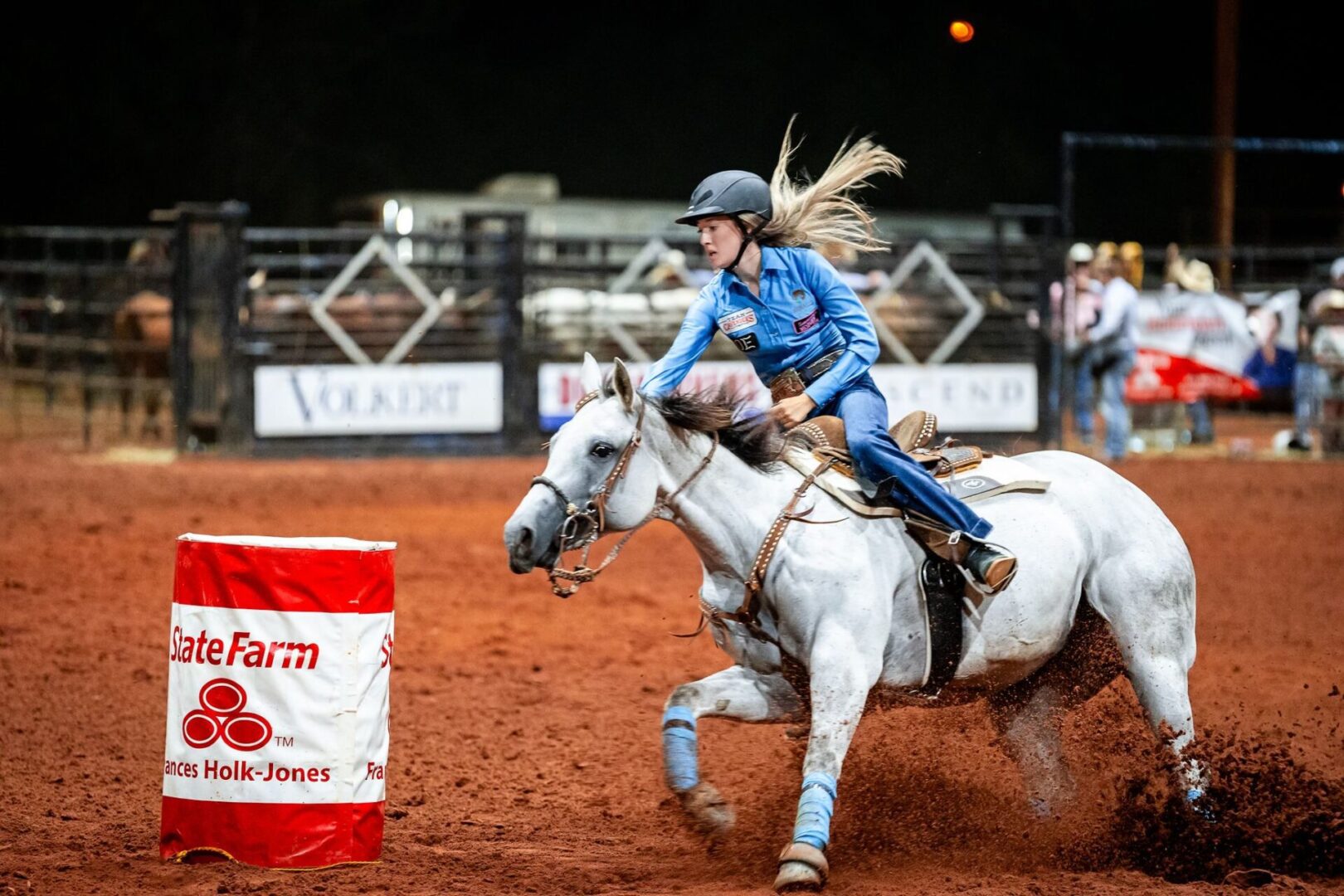
    “Work with me, Blue Bell,” Natalie says. Their hearts begin to race as they jet out into the arena. They make their way around three barrels, and the duo returns home, stopping the clock. It all came together. Natalie Peacock becomes the 2023 Alabama High School Rodeo Association champion barrel racer.
    Natalie didn’t start her barrel racing career until four short years ago. She was raised around horses and as a young girl participated in hunter-jumper and horse showing. As time went on she watched many barrel racing athletes on TV compete and the desire began to grow within Natalie. She decided to step back from her horse showing and jumping competitions to pursue a more fast-paced sport of barrel racing.
    Her parents decided to get her a pony to run on. They wanted to make sure it wasn’t a phase.
    “We didn’t buy her a cookie-cutter horse,” said Kimberly Peacock, Natalie’s mother. “She had to earn it.” When Natalie proved she was in it for the long haul, her parents brought Blue Bell into their lives.
    Natalie trained Blue Bell from the day she arrived at her house. They have become one, and she describes her as her heart horse. “It’s the connection with her that makes that pattern perfect.” Blue Bell is a dapple grey mare who loves her job. Natalie shares that one of her special quirks is always running with her tail in the air. When the duo is warming, up Natalie mentioned she likes to find the quietest place with some natural sounds to relax and connect with her horse. She will always eye down the pattern to give herself the best chance to bring home a win.
    Blue Bell is a name you rarely hear at rodeos and barrel races. “I wanted to have a name that was different that you didn’t hear all the time. Blue Bell’s name is one in a million, and the nickname I gave her is Bluelulu when she’s being silly, or I call her Bluelulu, short for Blue Bell.”
    Natalie and Blue Bell have traveled all across the country together, from WPRA, high school, andto open rodeos from Alabama to Florida. Natalie said out of all the places they have competed her favorite arena is Andalusia, Alabama. She explained her choice because that is always where she will remember winning her state barrel racing title.
    When you see Natalie run, she is always wearing a helmet. Her biggest idol is Fallon Taylor, who also is found sporting the helmet. Natalie’s mother had a severe head injury while running barrels when she was younger and has always ensured Natalie has a helmet. Natalie’s mother likes that she admires Fallon. “It’s the safety that Fallon promotes,” said Kimberly.
    Although horses are Natalie’s life day in and day out, when she isn’t busy with school or rodeo, she can be found bedazzling tack sets. She also finds time to be with friends and spend some time at the beach 30 minutes from her home in Ardisal, Alabama.
    Natalie is excited for the next step in her life and rodeo career. She hopes to become a vet tech while also competing in the WPRA, PRA and the PRCA. When Natalie joined Team Cavender’s, the good news came when she needed it the most. Her grandmother had recently passed away. Natalie was very sad and mourning her loss. It was then that she received the call, informing her that she made the team. The news renewed her excitement and helped her get that energy back in time for the National High School Finals. “I am so thankful to be a part of this amazing team.” said Natalie.

  • American Hat Presents: Garrett Yerigan

    American Hat Presents: Garrett Yerigan

    Take care of our lifestyle. We are living the dream that most can only dream of. Our sport could go away in a moment’s notice, and we need to take care of the sport and each other – that’s what makes us cowboys.

    “For me, American Hats embodies a lot of things – the American spirit, the cowboy spirit, and a family spirit.” Garrett has worn American hats for at least 15 years. “I started as a customer and built a relationship from there.” He is proud to wear the hat – “It’s a brand and lifestyle I’m proud to ride for.”
    Garrett Yerigan was born into the rodeo lifestyle. His mom and dad, Dale and Kathy Yerigan, were involved in rodeo his entire life, as were his maternal grandparents, Bob and Barbara Ink. Dale was an 11 time IPRA world champion steer wrestler and went on to be the general manager of the IPRA for 20 years. Kathy was an IPRA barrel racer. From the age of 7, Garrett set his sights on announcing – starting with jackpots and barrel races, at the age of 10, he got his first paying gig. He learned many aspects of rodeo, including a 15,000 song playlist. Garrett was a highly sought-after tractor driver for arena work. “I was kind of a tractor nut,” he admits. “I was only about 6 or 7 when I realized being an announcer would be a cool way to be involved in rodeo without being a contestant,” he said. “I figured the announcer gets a for-sure paycheck, and he’s not tearing up his body every week. Garrett graced the cover of Rodeo News in January, 2014, the year he was selected to announce the International Finals Rodeo.
    https://reader.mediawiremobile.com/RodeoNews/issues/100160/viewer?page=14
    Fast forward ten years and the 29-year-old phenomenon from Pryor Creek, Oklahoma is the youngest ever to receive PRCA Announcer of the Year, 2021 and again in 2022 “I’m still blown away it’s happening – its surreal.” For many, it’s no surprise. Garrett has studied the sport, the contestants, and the art of announcing. “I listen and take tips from here and there – using the pipes God gave me.”
    I see little signs each day that God put me on the earth for a reason. The microphone has taken me all over the world and I never thought that I’d get that as young man. Those are signs and proof that I’m doing what I’m supposed to be doing on this earth.”
    “It’s a thrill every year,” he said of Cheyenne. “When you are there, you realize the magnitude of the history of that event, and then you understand why it’s called the “Daddy of ‘em All.” Garrett spends hours of preparation before each perf. He not only knows the contestants and latest news in the rodeo world, but he also studies the rodeos themselves to better learn their rhythms.
    He is right where he wants to be – surrounded by a family of rodeo people that love God and support each other. “I never want to grow up.”

  • Josh Frost named 2023 Linderman Award recipient

    Josh Frost named 2023 Linderman Award recipient

    COLORADO SPRINGS, Colo. – The PRCA Linderman Award is one of the most prestigious awards in ProRodeo. It recognizes a cowboy who won at least $1,000 in three events, and those events must include at least one roughstock and one timed-event.


    The 2023 Linderman Award winner is Randlett, Utah, cowboy Josh Frost.


    This past season Frost earned $232,034 in bull riding, $2,395 in tie-down roping, $1,976 in the steer wrestling, and another $482 in team roping. Frost said he takes great pride in the award and its a goal he sets out for himself at the beginning of every year.


    “It means a lot to win this award, I put a lot of work into it every year to make it happen,” said Frost, 28. “It can be hard to balance two timed events when you’re trying to win a gold buckle in the bull riding. It’s always more challenging than you think, winning $1,000 sounds easy, but there aren’t easy events to win money in the PRCA that’s for sure.”


    Frost’s focus remains on winning a world title in the bull riding, where he sits third in the PRCA | RAM World Standings headed into the Wrangler National Finals Rodeo, but he said if there was another event that’s his favorite and best it would probably have to be tie-down roping.


    “The tie-down roping is definitely the best of the two events for me, I practice that one a lot more,” he said. “I’m more competitive there and can win a little bit more money, whereas with the steer wrestling my size can hold me back a little bit at times.”


    Frost has now won four straight Linderman awards. His first came back in 2019, followed up by 2021, 2022, and now 2023. He hopes to be remembered as not just a bull rider, but a cowboy. He’s gained even more respect for the other events along the way. The Linderman Award was not awarded in 2020.


    “I think competing for this award just goes down to my cowboy roots and wanting to be remembered as a cowboy,” Frost said. “I have a lot of respect for the other cowboys and the other events in our sport of rodeo.”

  • Colorado cowgirl selected as Wrangler NFR saddle horse boss

    Colorado cowgirl selected as Wrangler NFR saddle horse boss

    Raina Hudson-Chavez has been selected as the saddle horse boss at this year’s Wrangler National Finals Rodeo.

    As boss, she is responsible for the 74 horses ridden for various uses at the Wrangler NFR, and the eleven people under her, who help care for, tack, and exercise the horses.
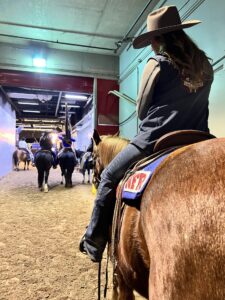
    Those animals include 24 black flag horses, ridden by the flag girls for the grand entry pivot and sponsor flags (called the front end horses), 30 horses ridden by the saddle bronc and bull riders during the states grand entry, two horses for judges, four ushers’ horses, and pickup horses, owned by the pickup men but housed at the Thomas and Mack Arena in Las Vegas.

    Her and her cohorts’ workday starts at about 6:30 am, when they come in to clean, feed, water and exercise horses. They usually leave at about 11 am, then come back by 2 pm for that evening’s performance. They’re there till the rodeo is over, at about 9:30 pm, after the last of the horses, the pickup horses, are unsaddled, cooled out and settled in for the night.

    Of the eleven people under her management, two cowgirls are assigned to the pickup horses. The other nine people each get six to seven horses to care for, water, feed and ride, the same  horses every day.

    It’s a tight-run ship; everything has to run on schedule for rodeo production, Raina said.

    The saddle bronc and bull riders come for their horses for the states’ flags grand entry in a staggered fashion, not all at once. But when the grand entry is over, when all of those horses return, “they all come back at the same time, so you’re trying to make sure the horses get put in the right stalls.”

    The two cowgirls assigned to the pickup horses help with the switch of horses during the bareback and saddle bronc riding. It’s a fifteen second switch, Raina said. “The pickup men are running at you with their hot horses, and you’re holding the fresh horses. (The cowgirls) needs to swap that off fluidly to where you’re not in their way, but you’re also keeping everybody safe and the horses are not out of control.

    “Those swaps are exciting and it’s fast-paced and you have to be on your game.” The crew helps exercise the pickup horses in the morning, and warm them up during the performances.

    Horses are usually exercised in the morning. The exercise pen is the same area where the arena dirt for the Thomas and Mack arena is stored throughout the year. The dirt is gone, leaving an area of about 200 feet long by 100 feet wide. Contestants warm up their horses in the same pen, but when it gets crowded, everyone is respectful of others, Raina said.

    Their work begins a week before the Wrangler NFR starts. The state grand entry horses are borrowed from stock contractors, and Raina and her people ride every one of them, “getting any kinks worked out of them,” she said. “We can see where each horse is at.” (The timed event contestants and barrel racers ride their own horses and the bareback riders don’t ride in the states grand entry; they’re getting ready to compete.)

    Before the Finals starts, the crew gets stalls ready and bedding put out for not only the horses in their care, but for the contestants and rodeo acts as well.

    After the ten days of the Wrangler Finals are over, she and her people tear down, storing the water hoses, tack, and other equipment in a storage unit. They help in organizing the stock contractors’ tack and their horses as they are loaded and ready to leave.

    Raina grew up in Michigan, the daughter of Howard and Joyce Overholt, competing in the IPRA but mostly helping her dad at horse sales and with training horses. The family often had 300 head that her dad, a horse and cattle dealer, bought and sold.

    “I was the guinea pig,” she said, of her youth. “Any horse my dad bought, I was the one who got to jump on and see what was broke and what wasn’t.”

    Raina was given the “problem” horses and often had a string of 15 to 20 to ride. “I would work with them, and my dad would usually sell them.” The experience she gained working with those horses is part of how she makes a living now.

    Living in Brighton, Colo., with her husband, Adrian Chavez, she puts on clinics, gives riding lessons and works with a variety of horses. “My clients bring me all types of horses, and it’s been fun getting to work with them,” she said. She’s compiled a list of what she’s termed the “micro-expressions” a horse gives: a slow eye blink or the flick of an ear, for example, and teaches her clients how to read those expressions. “My clinics teach people how to connect with their horses and read their body language. It’s stuff we take for granted when we grow up with it.”

    She and Adrian operate the Twisted Arrow Ranch in Brighton, where they breed their own horses and raise them for roping and barrel racing.

    Raina got her start at the Wrangler NFR in 2013, through Floyd Campbell, who worked with the Finals saddle horses. She was galloping race horses at the Arapahoe Park Race Track in Aurora, Colo., where Campbell also worked, when he asked her to help. For the first few years, she was assigned to the grand entry horses, then to the pickup horses. She helped wherever she was needed. “Whatever job needed to be done, I would jump in and help. It got to where people came and asked me for help.”

    TVs are placed around the tunnel and warm up tents where Raina and her crew work, but they don’t get to watch much of the rodeo, and she’s fine with that.

    “I like the behind the scenes stuff. But you can stop and watch and catch up with things.”

    Working behind the scenes at the Wrangler NFR calls for a disciplined person, she said. “For the job to be done correctly, you need people who are self-starters and self-motivators. You show them the job, then they understand it and want to keep doing it. You don’t want to have to micromanage people at the Finals. They need to be able to do the job they’re hired for, and be able to think through things on their own.”

    The job isn’t easy, but it’s very enjoyable. “You have to love rodeo and the whole atmosphere of it, because it’s a lot of work, and hard work, but if you love it, it’s not.

    “I enjoy the rodeo crew and all the people, the way they come together. I don’t think you get that in any other sport. We’re all there for one cause.

    “It’s an honor just to be there.”